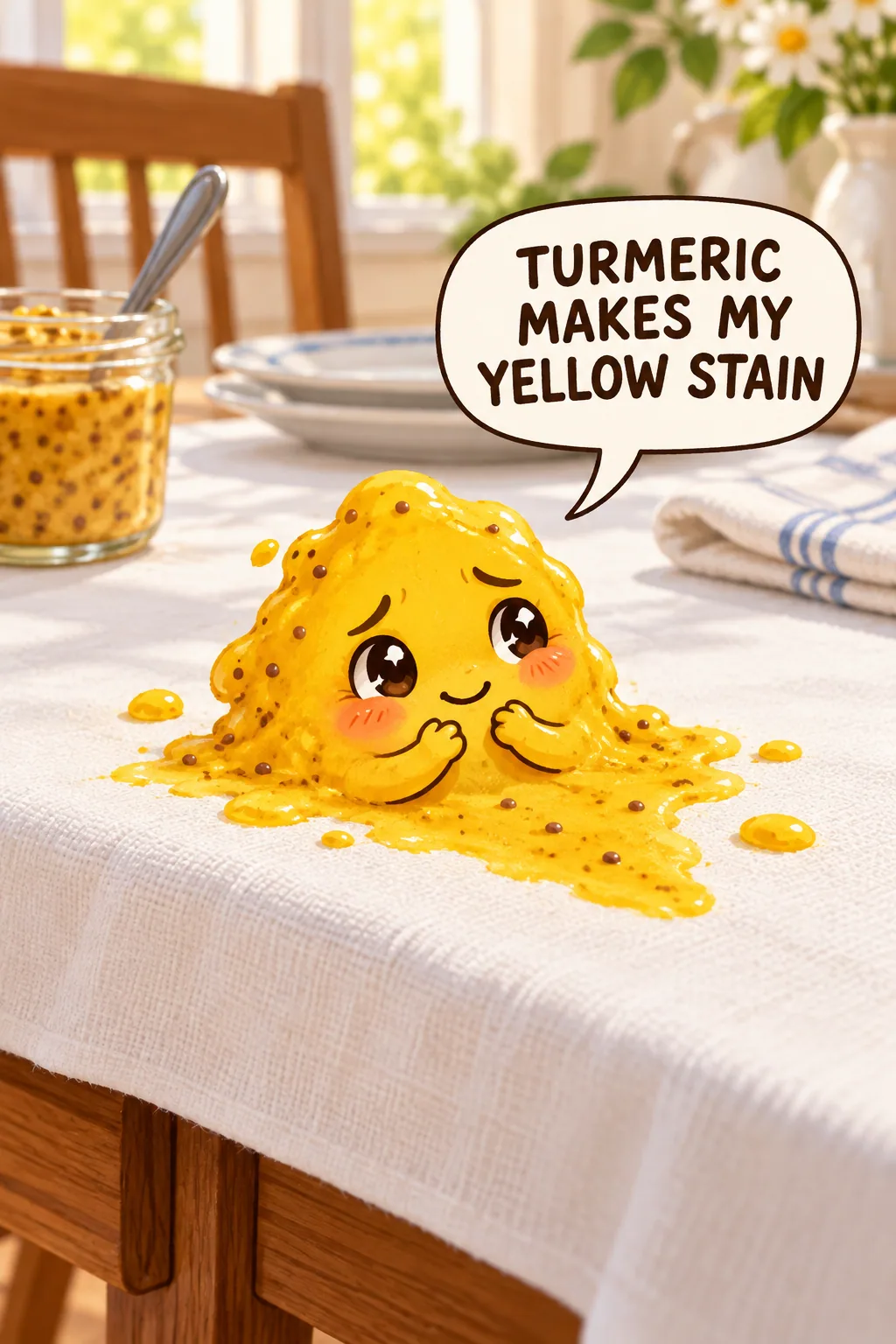
The quick answer
Lift excess mustard with a spoon, then flush the washable cotton from the back with cool water. Work a prewash stain remover or liquid detergent into the mark and let it sit for the label’s stated time. Wash using the warmest water allowed by the care label, with bleach only if the tablecloth and product label both permit it. Check the stain before drying; repeat treatment while it is still visible because dryer heat can make turmeric-yellow pigment much harder to remove.
What you’ll need
- Dull spoon
- Cool running water
- Liquid laundry detergent or prewash stain remover
- Color-safe or chlorine bleach only if label-approved
- Clean white towel
Why mustard leaves a stubborn yellow mark
Prepared mustard contains turmeric, whose curcumin pigment creates the familiar yellow color. A tablecloth can also absorb mustard’s oils, vinegar, salt, and spices. Removing the thick condiment is only the first stage; a pale yellow shadow may remain after the surface looks clean, especially if the cloth sat folded or went through a hot dryer before anyone noticed the stain.
Check whether the cloth is plain cotton, a cotton blend, printed, embroidered, or finished with a stain-resistant coating. Read the care label and inspect the reverse side. A cotton label does not guarantee that every dye, trim, or decorative finish is bleach-safe. If the tablecloth is antique, hand-dyed, embroidered with silk, or marked dry-clean-only, blot away excess and ask a textile cleaner rather than soaking it at home.
Remove excess without spreading the stain
Treat the stain promptly, but do not panic and reach for a strong cleaner. A careful rinse and a measured prewash treatment are more predictable than a mix of household products. Keep the garment away from heat until you can confirm the mark is gone.
- 01
Lift thicker mustard from the surface with the edge of a spoon. Keep the spoon nearly flat and work from the outside of the spot inward.
- 02
Do not wipe with a napkin or rub the fabric together. That can push pigment into the weave and enlarge the mark.
- 03
If the tablecloth is still on the table, place a clean white towel underneath the stained area so loosened mustard does not transfer to the table or another layer of fabric.

Flush from the back with cool water
Rinsing from the back helps move loose pigment outward rather than forcing it farther through the cotton. If the stain has dried, gently re-wet the area with cool water to soften the residue, then rinse. Do not scrape dried mustard aggressively; the fibers of a woven tablecloth can snag.
- 01
Take the cloth to a sink and hold the reverse side of the stain under cool running water. Let the water push mustard out through the same side it entered.
- 02
Continue until visible sauce stops transferring. If the cloth is too large to hold easily, support the stained panel so it does not drag through the sink or pick up dirt.
- 03
Blot the damp area with a clean white towel. Do not use hot water at this first rinse; cool water is the stain-removal guidance for mustard from the American Cleaning Institute.

Pretreat, then wash according to the label
ACI recommends cold-water flushing, a prewash remover, and washing mustard stains at the hottest temperature safe for the fabric, with bleach only when safe. The warmer wash comes after flushing and pretreatment; it is not a reason to pour hot water onto a fresh stain. If the tablecloth has colored stripes, lace, metallic thread, or a printed border, treat those areas as a separate dye risk.
- 01
Apply a prewash stain remover or a small amount of liquid laundry detergent to the remaining yellow area. Follow the product label and gently work it into the weave with fingertips.
- 02
Let it sit for the recommended time. Do not let a concentrated product dry on the cloth, and do not combine it with bleach or another cleaner.
- 03
Wash the tablecloth by itself or with similar colors using the warmest water permitted by its care label and the detergent directions.
- 04
For white cotton, use chlorine bleach only if the garment care label allows it and the bleach label confirms it is suitable. For colored or patterned cloth, use only a color-safe product approved for the fabric and test first.

Inspect before you use the dryer
After washing, check the stain in good light while the cloth is still damp. Look at both sides, because a faded mark can be easier to see against a window or white towel. If any yellow remains, repeat the pretreat-and-wash cycle before drying. A tumble dryer, hot iron, or heated press can make the remaining pigment much more difficult to remove.
For a set stain, repeat once with a fresh application of the labeled prewash product. If the mark remains, check whether an oxygen-based bleach is approved for the cloth and use it only as directed. Avoid indefinite soaking or a stronger homemade mix: repeated harsh treatment can fade the tablecloth without removing the last pigment. A specialist is safest for heirloom linens.
What to avoid and how to prevent repeat stains
When using any bleach product, follow its label, protect nearby surfaces, and keep it away from children and pets. CDC guidance says not to mix household cleaners; some combinations can release hazardous gases. After successful treatment, air-dry first if you want one more opportunity to inspect before applying heat.
A tablecloth that has been stored for a long time may have more than one mark: mustard can dry into the weave while food oils attract surrounding dust. Treat the visible spot first, then inspect the rest of the cloth after washing. Do not apply a stain remover to the entire tablecloth unless its label allows broad use; concentrated product can leave a lighter patch on some dyes.
- Do not rub the mustard across the weave or rinse from the front into the cloth.
- Do not dry or iron the tablecloth while any yellow mark remains.
- Do not use chlorine bleach on colored prints, trim, or fabric whose label forbids it.
- Do not mix bleach with vinegar, ammonia, or another cleaning product.
- For meals, place a washable napkin or runner under serving dishes and treat drips before laundering.
Adjust the treatment for colored, printed, or older cotton
A white tablecloth and a colored tablecloth can react differently even when both are made from cotton. Print dyes, stitched borders, embroidery, and decorative coatings may bleed or fade during soaking. Before pretreating a visible area, test the selected product on an inside hem or another concealed section. Apply the product at the label dilution, wait for its stated contact time, then blot with a white cloth and rinse the test spot. If color transfers or the fabric changes texture, stop and use a professional cleaner. Do not assume a product is safe simply because its label says it is intended for laundry.
For a large tablecloth, treat one stain at a time and keep untreated panels away from the wet area. Fold or drape the cloth so the mustard mark does not contact a clean section while it is damp. Place a white towel under the spot during hand treatment, and replace the towel if it becomes yellow. This prevents pigment from transferring through several fabric layers and helps you see when the rinse water is no longer carrying sauce.
If the tablecloth was already washed and dried, start with the care label and a cool re-wet rather than an aggressive scraping step. Use a labeled prewash product and give it the directed dwell time; then wash and inspect before applying any heat. A stubborn yellow trace may need a second cycle, but repeated bleaching can weaken cotton and fade colored designs. Stop if fibers feel thin, the print lightens, or the stain no longer responds. For antique linen, sentimental pieces, or a cloth with unstable dye, a textile specialist can test the pigment before attempting a stronger treatment.
Common questions
FAQ
Does mustard permanently stain a white cotton tablecloth?
Not always. Fresh mustard often responds to a cool rinse, pretreatment, and a wash at the warmest label-safe setting. Turmeric pigment can become stubborn, so check the cloth before drying and repeat treatment if yellow remains.
Should I use hot water on a mustard stain?
First flush from the back with cool water. After pretreatment, wash at the warmest temperature allowed by the fabric-care label, as recommended by ACI.
Can I bleach a colored tablecloth to remove mustard?
Only use a bleach product specifically labeled safe for that fabric and color, and follow its directions. Chlorine bleach may strip color or damage trim; a hidden-area test is essential.
Can mustard come out after the tablecloth has been dried?
It may fade with repeated pretreatment and washing, but dryer heat can set the remaining turmeric pigment. Avoid further heat, treat again according to the label, and stop if the fabric begins to fade or weaken.
Sources reviewed
Keep reading
Related guides

Sweet potato casserole on Cotton tablecloth
Remove Sweet Potato Casserole From a Cotton Tablecloth
Lift sweet potato casserole from a cotton tablecloth, then treat its orange pigment and butter or marshmallow residue without setting the stain.
Candle wax on Linen tablecloth
How to Remove Candle Wax From a Linen Tablecloth
Remove candle wax from a linen tablecloth by hardening and lifting it first, then address oily or colored residue without scorching the fibers.

Turkey gravy on Cotton apron
How to Remove Turkey Gravy From a Cotton Apron
Lift holiday gravy and grease from a washable cotton apron with label-first steps, careful pretreatment, and a dryer check to avoid setting the mark.

Blood on Cotton sheets
How to Remove Blood From Cotton Sheets, Fresh or Dried
Remove fresh or dried blood from cotton sheets with cold water and a care-label-safe soak before heat sets the stain.