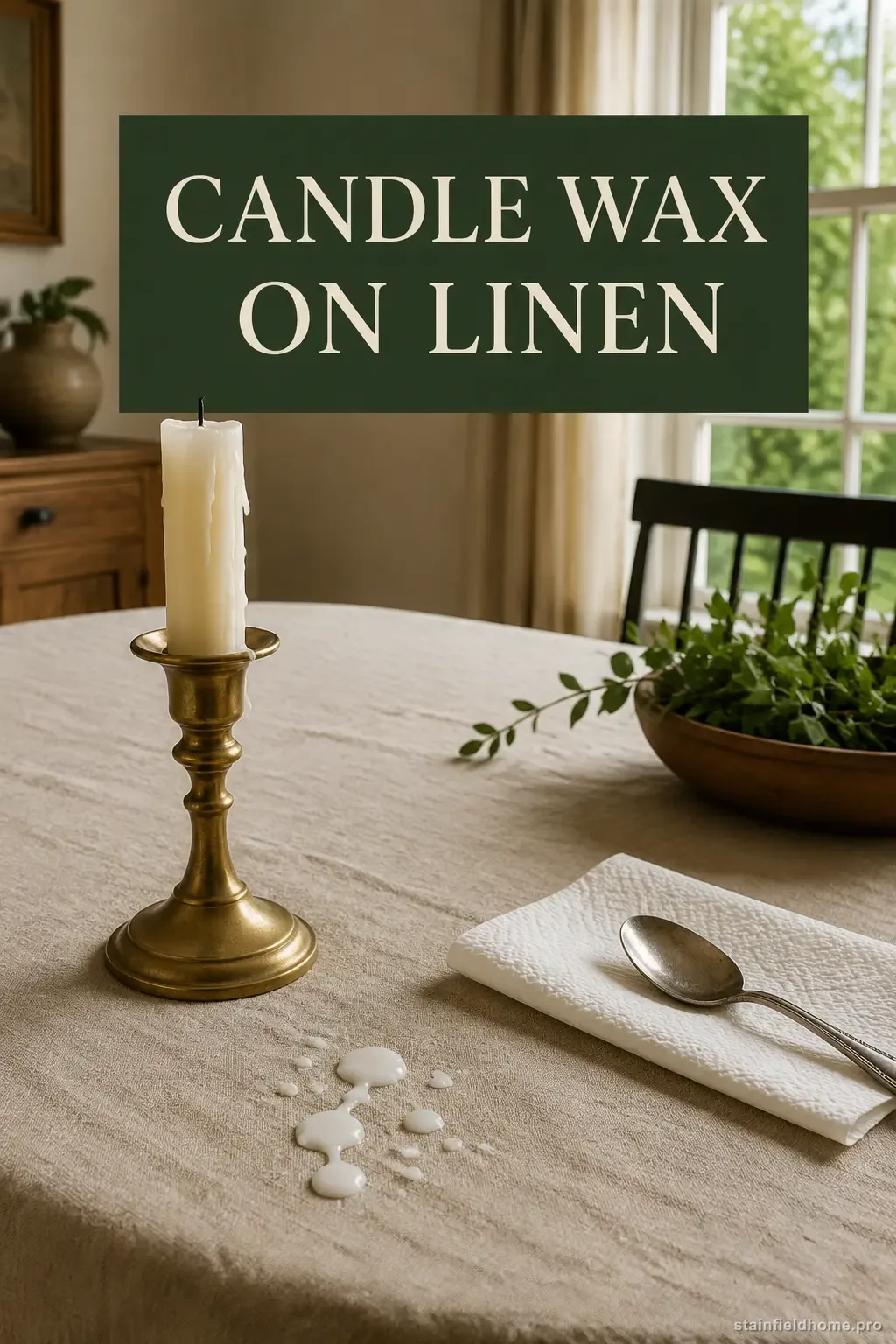
The quick answer
Let the wax harden, then lift the thick layer with a dull knife or spoon. If the care label allows ironing, sandwich the mark between clean white paper towels and press briefly from the back with a warm—not hot—iron, moving to clean paper as wax transfers. Pretreat the remaining oily or colored mark, launder by the label, and air-dry until you know the stain is gone.
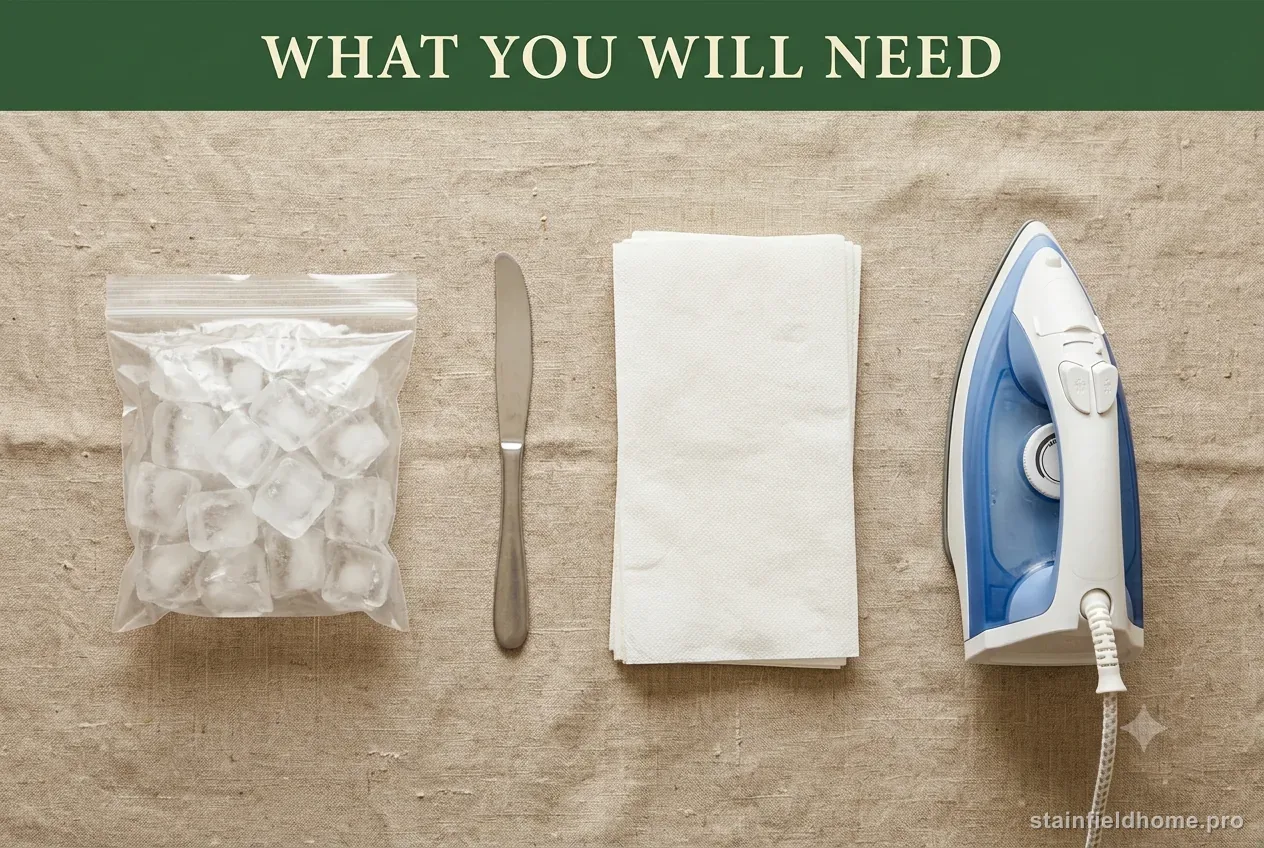
What you’ll need
- Ice in a sealed plastic bag
- A dull table knife, spoon, or plastic card
- Plain white paper towels or absorbent white cloths
- A warm iron, only if the care label permits
- Liquid laundry detergent or a care-label-safe prewash treatment
- Oxygen bleach labeled safe for the linen, if colored residue remains
Check the linen before adding heat
This guide is for washable linen that can tolerate a warm iron. Read the care label first. Antique, hand-embroidered, metallic-thread, coated, heavily dyed, or dry-clean-only tablecloths should go to a textile conservator or cleaner rather than through a home heat-transfer method.
Identify the candle if you can. Plain paraffin, beeswax, soy blends, colored wax, fragrance oils, and glittered candles do not leave identical residues. The first steps remove the physical wax. A separate oily halo or dye shadow may remain afterward and needs laundry treatment, not a hotter iron.
Harden and lift the surface wax
Do not pick aggressively with a sharp blade. Linen yarns can snag, and a small wax spot is easier to repair than a cut or pulled thread.
- 01
Let the spill cool completely. Smearing warm wax pushes it farther into the weave.
- 02
Place ice in a sealed bag and rest it on the wax for a few minutes. Keep melting ice water off the linen.
- 03
Support the fabric on a flat surface. Use a dull knife, spoon edge, or plastic card to lift wax in thin flakes.
- 04
Work from the outer edge toward the thick center. Stop when only wax embedded in the yarns remains.
- 05
Shake or vacuum away loose flakes before bringing out the iron so they cannot melt somewhere else.
Transfer the wax with gentle warmth
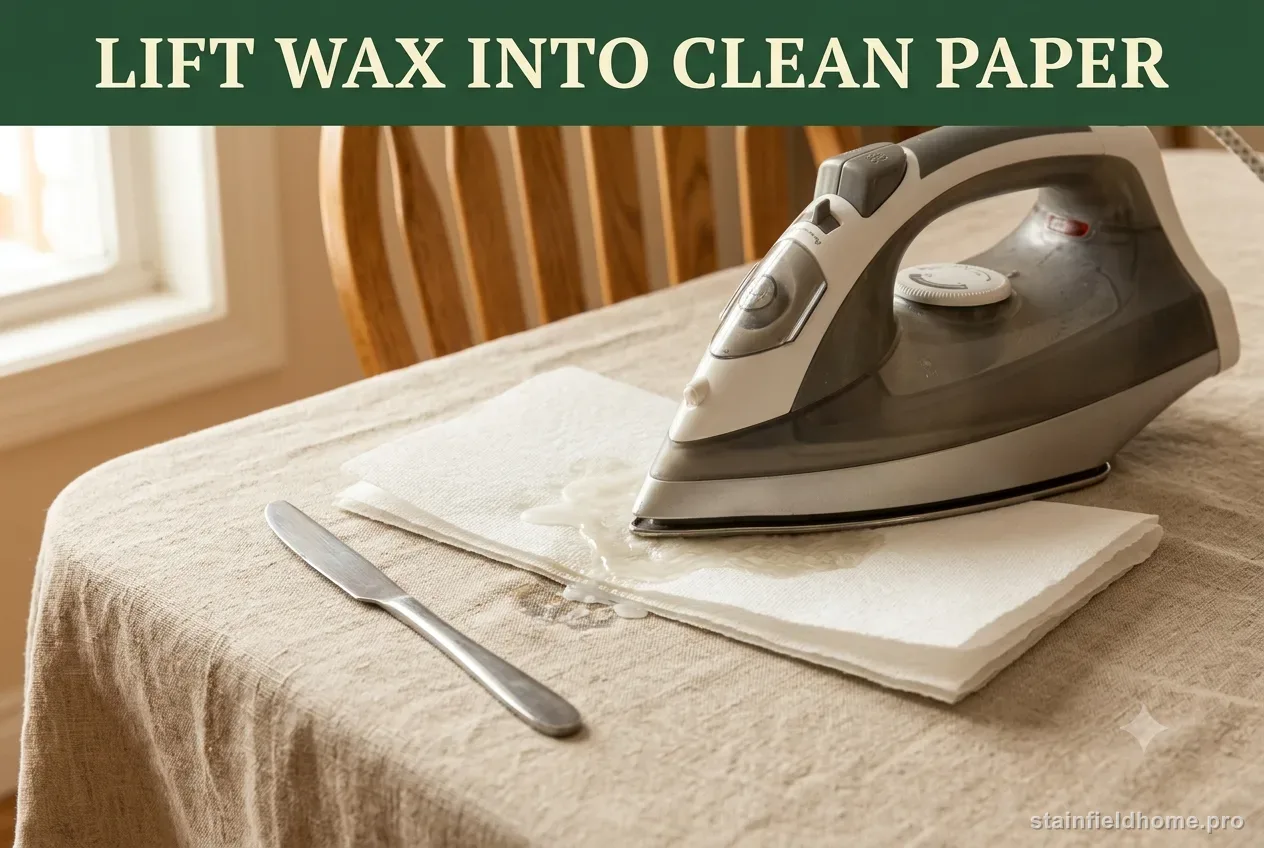
Both the American Cleaning Institute and University of Georgia Extension recommend a dull scraping step followed by warm-iron transfer between clean paper towels for washable fabric. The care label still controls the maximum safe heat for your specific tablecloth.
- 01
Put several layers of plain white paper towel beneath the stain and one layer over it. Avoid printed paper, brown bags with ink, or colored cloths.
- 02
Set the iron to a warm, no-steam setting that is safe for the tablecloth. Test at a hidden corner first.
- 03
Press briefly from the back of the fabric; do not slide the iron around. Lift and check for translucent wax on the paper.
- 04
Move the linen to a clean section of paper and repeat. Reusing a waxy area can put the stain back into the cloth.
- 05
Stop when wax no longer transfers. More heat is not better and can spread dye or oil.
Treat the halo or candle dye
Turn the cloth stain-side down on fresh white towels. Apply a small amount of liquid laundry detergent or a prewash stain treatment that is approved for the linen, working from the back so residue transfers into the towels below. Follow the product’s dwell-time limit, then rinse thoroughly.
If colored wax left a tint, use an oxygen bleach only when both the tablecloth care label and bleach label allow it. Test a hidden hem. Do not use chlorine bleach on natural, colored, trimmed, or uncertain linen simply because the cloth looks white; finishes and embroidery may react differently.
Launder at the warmest temperature permitted by the care label. Air-dry and inspect. Repeat pretreatment if you still see an oily outline. A dryer can make that outline harder to remove.
Match the next step to the wax that spilled
Hard paraffin often flakes cleanly once cold, while a softer soy blend may leave more oily residue in the yarns. Beeswax can feel tackier and may need several brief transfers with fresh absorbent paper. Fragrance oil can create a translucent halo even after no solid wax remains. Colored candles add a separate dye problem. These differences explain why the ironing stage should end when wax stops transferring—not when every trace of color has disappeared.
Begin with the lowest useful warmth and increase only within the tablecloth’s care limit. If the paper shows grease but the stain spreads outward, stop, let the linen cool, and replace all absorbent layers before one final short press. Continuous heat can move softened wax sideways. A thick pad of clean white towels beneath the cloth provides support and keeps transferred wax away from the ironing board cover.
Soot from a smoking wick is another separate residue. Do not rub black particles into the weave or combine soot treatment with warm wax transfer. Shake off loose material outdoors, vacuum through a screen if the textile is sturdy enough, and follow the care label or consult a cleaner. An heirloom cloth with wax, dye, and soot is a good candidate for professional treatment because each residue calls for a different sequence.
Work carefully around folds, hems, and large spills
Open the tablecloth completely before chilling the wax. A spill can pass through a fold and bond two layers together; pulling them apart while warm may stretch yarns or spread the spot. Harden the wax, support both layers, and separate them a little at a time with a dull edge. Place fresh absorbent paper between the layers before applying any warmth so wax from one side is not transferred to the other.
At a hem or embroidery border, the cloth may be several layers thick and may include a thread with a lower heat tolerance. Use the hidden test on the actual trim, not only on plain linen. If the iron cannot reach evenly, avoid turning it hotter to compensate. A textile cleaner can use controlled solvent and suction without flattening raised stitching or creating a dark tide line at the edge.
For a large pool of wax, divide the area into small zones and finish the lifting stage across the whole spill before using heat. Number the zones mentally and use new paper for each. After laundering, inspect from the front and back in daylight. Linen’s slubs and weave can hide a faint oily residue from one direction, so air-dry flat or on a line and check again before storing or pressing the cloth for its next use.
What not to do
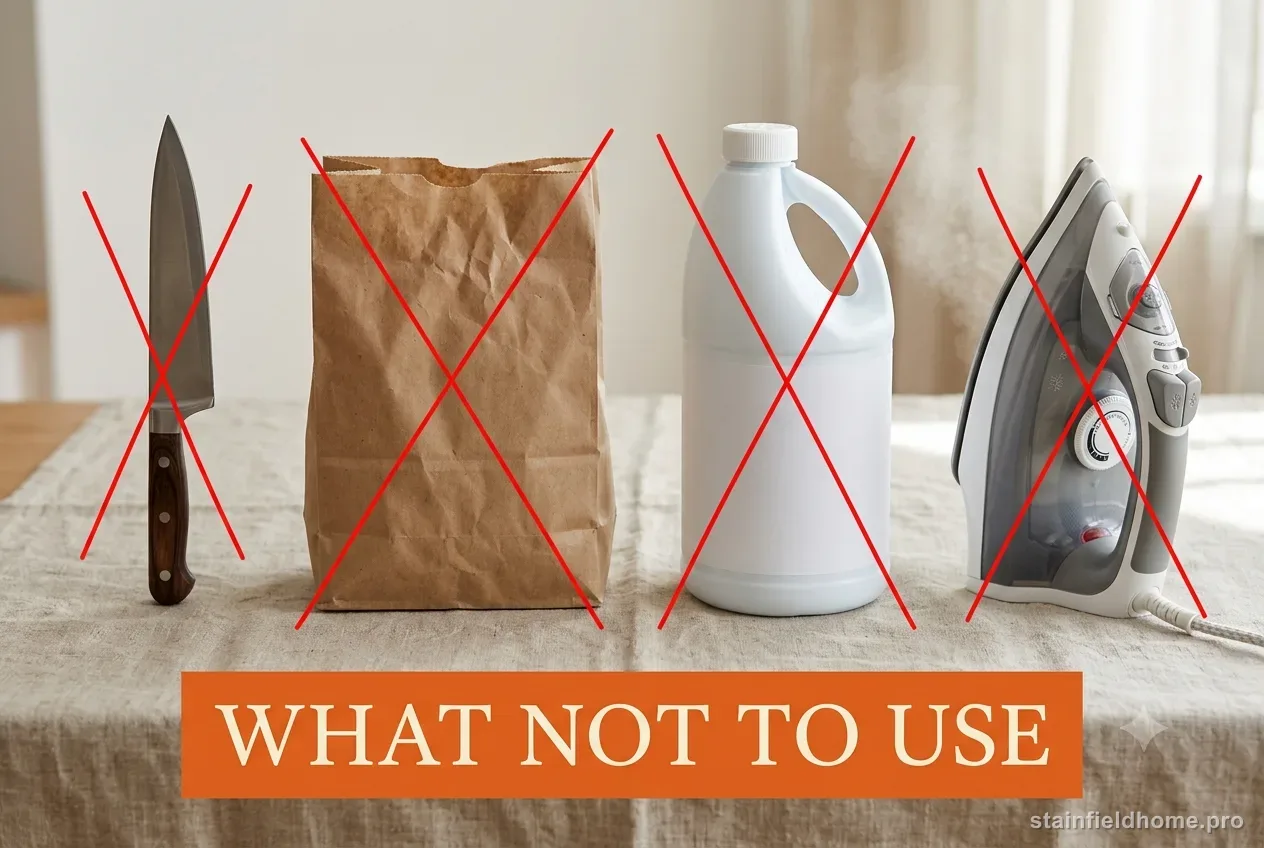
- Do not wipe molten wax with a napkin; let it harden first.
- Do not use a sharp knife or scrape unsupported fabric in midair.
- Do not put the iron directly on wax without absorbent layers.
- Do not use a high-heat or steam setting as a shortcut.
- Do not tumble-dry until both wax and any oily or colored halo are gone.
- Do not apply this method to dry-clean-only, antique, coated, or embellished linen.
Prevent wax from reaching the cloth
Use drip collars or stable candle holders with wide catch trays, and trim candle wicks according to the candle maker’s directions. Keep tapers away from air vents where a flame and wax stream can lean. For heirloom linens, place a clear heat-safe candle plate over the cloth rather than relying on stain removal later.
Common questions
FAQ
Can I use a brown paper bag instead of white paper towels?
Plain white absorbent paper is safer because printed or dyed paper can transfer color under heat. Replace it frequently as wax appears.
What if the candle wax was red or blue?
Remove the physical wax first. Treat the remaining tint separately with a prewash product or oxygen bleach only if both are approved for the linen and pass a hidden colorfastness test.
Can I put the tablecloth in the freezer?
A sealed ice bag gives better local control and avoids folding wax into clean areas. For a small washable cloth, brief chilling may help, but do not bend frozen wax through delicate embroidery or trim.
Sources reviewed
Keep reading
Related guides
Slime on Carpet
How to Remove Slime From Carpet Without Damaging the Fibers
Lift dried or fresh slime out of carpet fibers with an ice-and-scrape method plus a vinegar or rubbing alcohol rinse, without soaking the backing or bleaching the color.
Essential oil and reed-diffuser oil on Finished wood furniture
How to Remove Essential Oil and Diffuser Stains From Wood Furniture
Blot a diffuser-oil spill on finished wood, use a cautious absorbent step, and recognize when the finish needs a furniture repair professional.
Pumpkin (carving, decorating, or puree) on Carpet
How to Remove Pumpkin Stains From Carpet
Remove pumpkin pulp and treat any remaining orange mark on carpet with a careful, low-moisture sequence that follows the carpet maker's guidance.
Sweat on Baseball cap
How to Remove Sweat Stains and Odor From a Baseball Cap
Lift yellow sweat stains and odor from the sweatband of a baseball cap without warping the brim or shrinking the crown.