
The quick answer
Blot a diffuser-oil spill immediately with a clean, dry cloth, lifting rather than wiping. Follow the furniture maker's care instructions before applying powder or any liquid: diffuser oils can damage some painted, stained, or lacquered finishes. Do not rub, use vinegar, apply solvent, or polish the spot as a first step. If the finish looks cloudy, tacky, or softened, stop and ask a furniture repair professional.
What you’ll need
- Dry microfiber cloths
- Baking soda or cornstarch
- A soft-bristled brush
- A mild dish soap
- The furniture maker's care instructions or product-care contact information
- A soft cotton cloth for buffing, only if the maker recommends it
Why essential oil is tougher on a finish than most spills
Reed-diffuser and essential oils are oily mixtures, and the furniture finish is the vulnerable surface. A furniture maker warns that diffuser spills can stain wood or fabric and damage painted, stained, or lacquered surfaces. Once a spill has dulled or softened a clear coat, the mark may be damage to the finish rather than oil sitting on top.
That distinction changes what a safe cleanup can achieve. A dry cloth can remove excess liquid, but a cleaner that removes the remaining mark may also remove or cloud the finish. The wood species, finish type, age, and diffuser formula all matter. Use the maker's care advice and avoid trying a water-ring remedy or a solvent just because the mark looks like a ring.
Blot first: every minute it sits, it spreads further
- 01
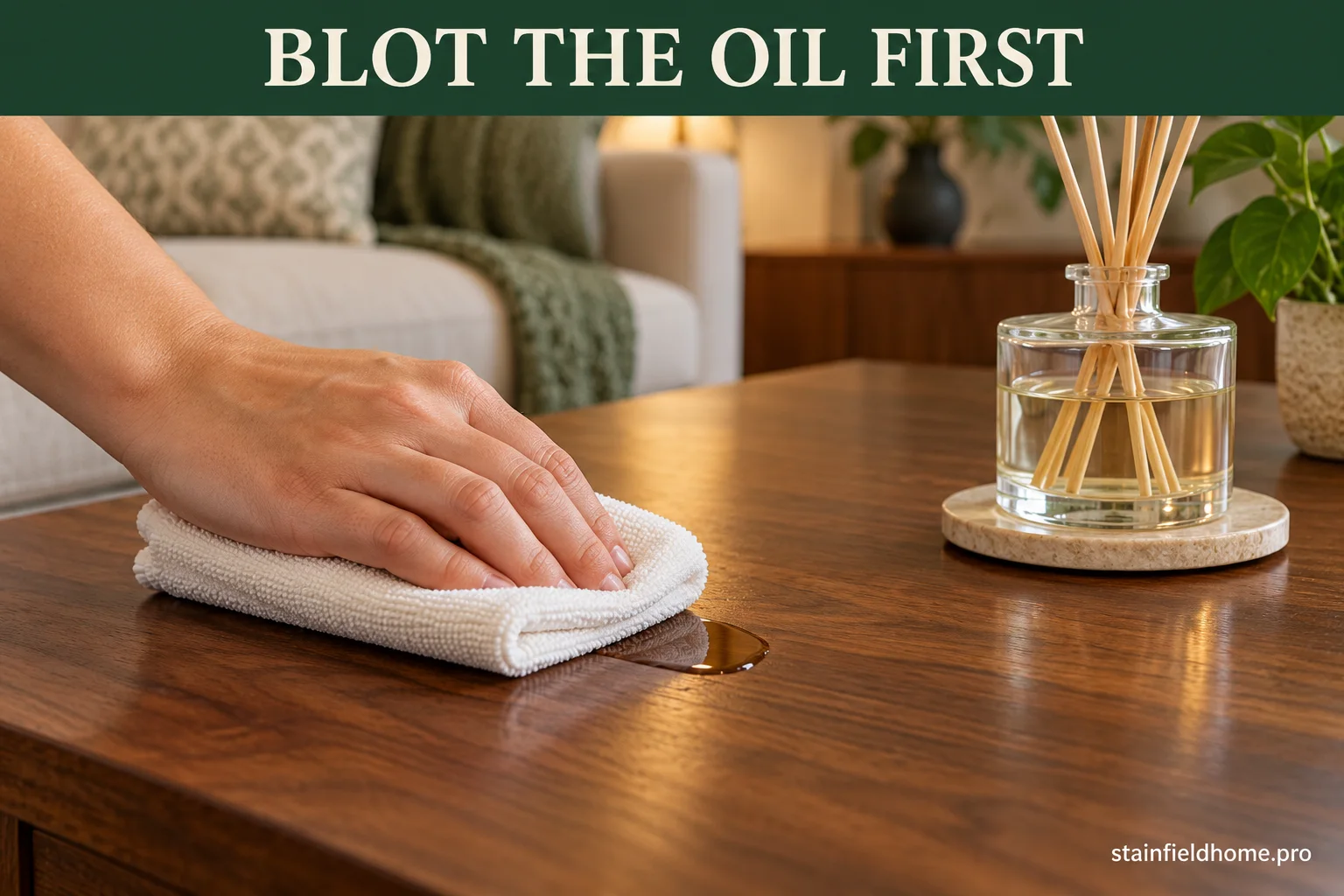
Press a dry microfiber cloth straight down onto the spill and lift straight back up. Don't wipe or rub, which spreads the oil across more of the finish.
- 02
Repeat with a clean section of cloth until the cloth stops picking up visible oil.
- 03
Note whether the wood feels tacky or the finish looks slightly dulled where the oil sat. That tells you whether you're dealing with a light spill or one that's already started to soften the finish.
- 04
Move straight to the absorbent step below instead of reaching for a cleaner first; on a fresh spill, powder alone often finishes the job.
Draw the oil out with an absorbent powder
- 01
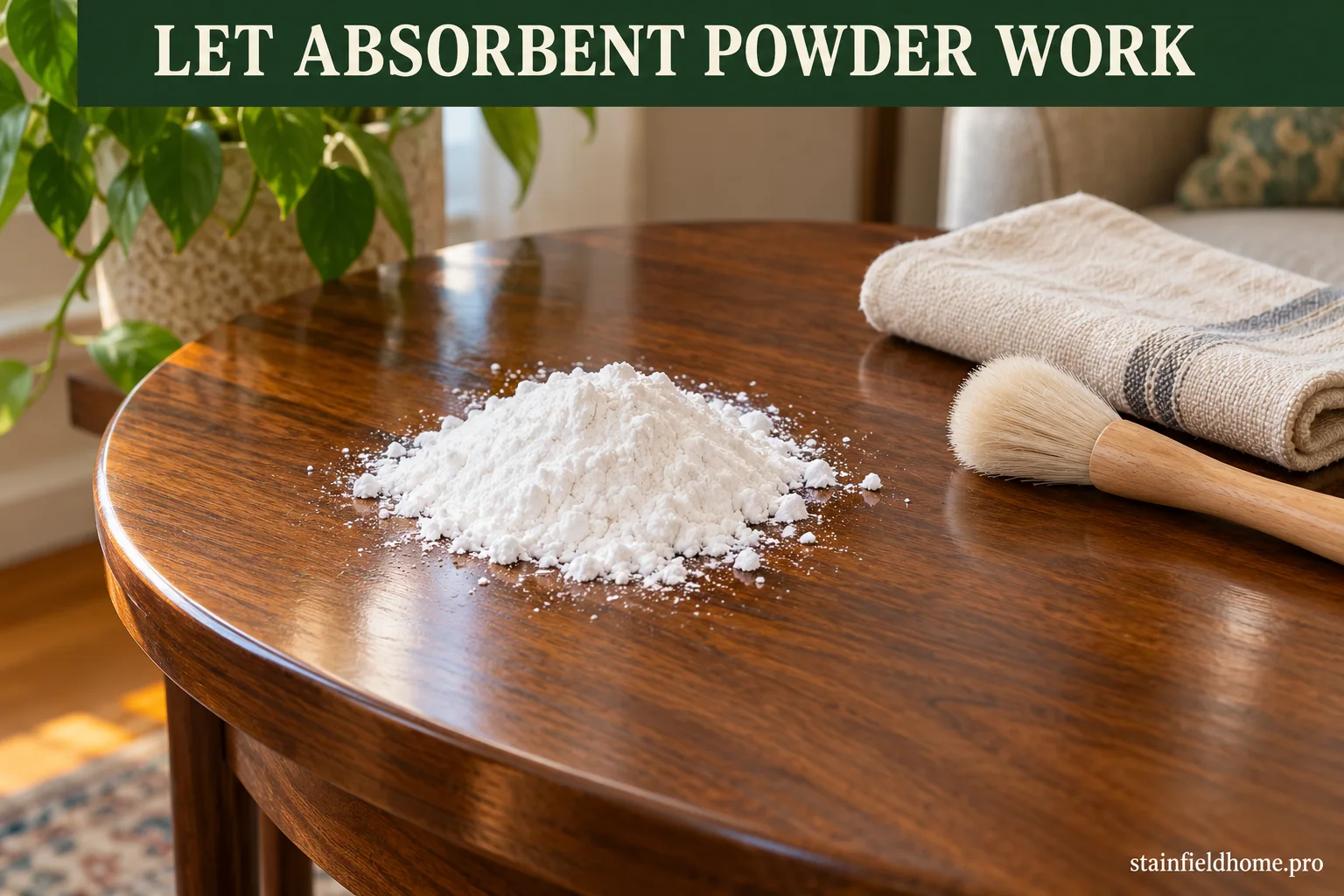
First check whether the furniture maker permits an absorbent powder on this specific finish. Do not assume baking soda, cornstarch, or talc is harmless on a delicate, waxed, painted, or textured surface.
- 02
If the care instructions approve it, test a pinch on a hidden area and remove it gently after the stated interval. Keep powder away from seams and hardware, and do not grind it into the finish.
- 03
Lift the powder with a soft cloth or brush using minimal pressure. Avoid rubbing back and forth, which can leave fine scratches or spread oil across a softened finish.
- 04
Inspect in indirect light. If the finish looks different from the surrounding area or feels sticky, stop; another powder application or liquid cleaner may enlarge the damaged patch.
Solid wood or veneer? Check before you use any liquid
Veneer is a thin slice of wood glued over a base layer. Too much water, or a solvent that reaches the seam, can lift the edges or leave a bubble. Look at the edge of the tabletop. On solid wood the grain lines usually run around the corner. On veneer you often see a thin seam or a strip of edging, and the top grain looks cut off at the edge.
If you can't tell, treat it as veneer. Use a barely damp cloth, dry the spot right away, and skip anything that needs soaking.
If a hazy or dark ring is still there
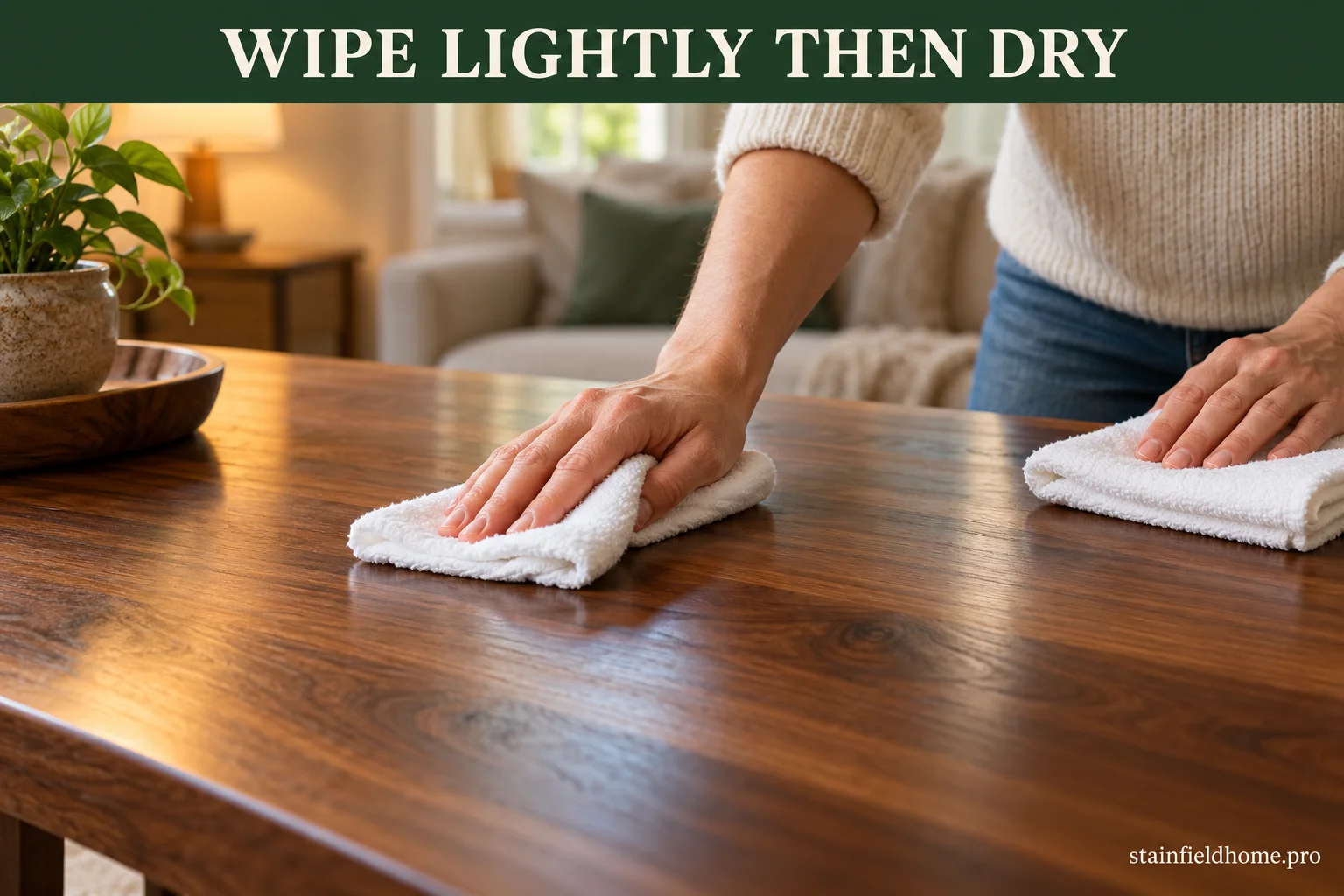
Once the powder step is done, wipe the area with a cloth barely dampened in water with a drop of mild dish soap. Then dry it immediately with a clean cloth. That's often enough to clear a light haze left behind after the oil itself is gone.
Do not make a solvent poultice or use mineral spirits, alcohol, vinegar, or household degreaser on the finish unless the furniture maker specifically directs it. A solvent can dissolve or soften coatings and may travel through a veneer seam. When a gentle, maker-approved wipe does not remove the mark, stop and ask a conservator or furniture refinisher to assess whether the finish needs repair.
Bringing the shine back afterward
A dull or cloudy patch can mean the finish has changed, not that it needs more polish. Wait until the surface is dry, compare it in indirect light, and consult the maker's instructions before adding wax or polish. Products can build up, change the sheen, or complicate a later repair.
If the care guide recommends a specific polish, test it in an inconspicuous area and apply only as directed with a clean soft cloth. Do not try to blend the spot by rubbing harder or applying several products in sequence. Matching an aged finish is a repair task when the difference remains visible.
When to stop and call a refinisher
Stop if the finish has turned white or cloudy, feels soft or sticky a day after cleaning, or the stain is dark and has gone below the finish. More scrubbing usually strips the finish around the spot and makes the patch bigger. A furniture refinisher can spot-repair or re-coat the area. They will ask what the piece is finished with and which oil spilled, so note both before you call.
What to avoid on a finished-wood spill
Do not use a hair dryer, iron, steam cleaner, abrasive pad, or melamine sponge on the spot. Heat and abrasion can change the sheen or damage a coating, and more rubbing does not reliably draw oil out of wood. Avoid household degreasers, alcohol, acetone, bleach, and vinegar unless the furniture maker explicitly names a product for that finish.
Do not add cooking oil, essential oil, polish, or wax to disguise a mark. A new product can darken bare wood, create a slick residue, or make later repair harder. Never mix cleaning products. If you already used a cleaner, share its name with the repairer and do not layer another treatment on top.
- Ammonia-based glass cleaner or acetone-based nail polish remover, both of which can strip or cloud a finish instead of just clean it.
- A hair dryer or other direct heat to speed drying: heat can push oil deeper into the finish instead of helping it evaporate.
- Scrubbing with an abrasive pad or a stiff brush, which can scratch through a thin finish.
- Letting the spill soak rather than blotting it: even a few extra minutes matters more here than on most fabric stains.
Where diffusers and oil bottles are safer to sit
Use a stable, washable tray with a raised edge, and place it only on a surface the furniture maker says is compatible. A coaster that can hold a puddle may still let oil wick underneath, so check the area regularly and wipe the tray itself after handling reeds or refills.
Keep the diffuser away from table edges, children, pets, heat, and direct sun. Store refill oil upright in its original closed bottle. If oil spills, move the diffuser off the furniture, blot the fresh liquid, and follow the care guide for that exact finish instead of experimenting with a household remedy.
- A small tray or coaster under any reed diffuser or oil bottle catches drips before they reach the wood.
- Felt pads under glass diffuser bottles stop condensation and slow leaks from sitting directly on the finish.
- Wipe any visible drip on the outside of a bottle or diffuser reed before setting it back down.
- Keep diffusers and oil bottles off antique, unsealed, or oil-finished wood entirely, since those finishes are the most likely to absorb oil quickly and show a permanent mark.
Common questions
FAQ
Can essential oils permanently damage wood furniture?
Yes. Furniture-care guidance warns that diffuser oil may stain or damage painted, stained, or lacquered surfaces. Blotting promptly can remove excess liquid, but it cannot guarantee that a finish already dulled or softened will recover.
Is it safe to use vinegar on an essential oil stain on wood?
Not as a first move. Vinegar's mild acidity can dull or cloud certain finishes, particularly wax and shellac, in a way that plain absorption doesn't risk. It works well on fabric and carpet stains elsewhere, but wood finish calls for the blot-and-absorb approach instead.
Do all essential oils stain wood the same way?
No. Ingredients and finishes differ, and a diffuser blend can include carrier oils or fragrance ingredients. Treat any spill as a possible finish hazard: blot excess, consult the maker, and avoid assuming one removal method suits every wood surface.
What if the stain has been there for months?
Do not start with a solvent poultice. The mark may be a change to the finish itself, and solvents can make it larger. Blot any remaining residue only as the furniture maker directs, then ask a furniture repair professional to assess the surface.
Sources reviewed
Keep reading
Related guides

Slime on Carpet
How to Remove Slime From Carpet Without Damaging the Fibers
Lift dried or fresh slime out of carpet fibers with an ice-and-scrape method plus a vinegar or rubbing alcohol rinse, without soaking the backing or bleaching the color.

Pumpkin (carving, decorating, or puree) on Carpet
How to Remove Pumpkin Stains From Carpet
Remove pumpkin pulp and treat any remaining orange mark on carpet with a careful, low-moisture sequence that follows the carpet maker's guidance.
Sweat on Baseball cap
How to Remove Sweat Stains and Odor From a Baseball Cap
Lift yellow sweat stains and odor from the sweatband of a baseball cap without warping the brim or shrinking the crown.
Hair dye on Bath towel
How to Remove Hair Dye Stains From a Bath Towel
Treat fresh or set permanent and semi-permanent hair dye stains on a cotton bath towel, and know when a stain is truly permanent.