
The quick answer
Scoop up pumpkin pulp and seeds with a spoon, then blot liquid with a clean white cloth. Follow the carpet maker's spot-care directions and test an approved cleaner in an inconspicuous place. Apply a small amount to a cloth, blot from the outside toward the center, and rinse only as the cleaner label directs. Do not scrub or soak the carpet; call a professional if the mark reaches the backing or remains after careful treatment.
What you’ll need
- A spoon or dull knife
- White cloths or paper towels
- A carpet-safe spot cleaner approved for the carpet fiber
- Clean white cloths or paper towels
- A small amount of clean water for rinsing only if directed
Pumpkin leaves two different messes at once
A pumpkin spill has solid matter and colored residue. Pulp and seeds sit among the fibers and can be pushed deeper if someone starts by rubbing in a liquid. Remove those solids first, then deal with any color that remains as a separate spot using the carpet maker's approved procedure.
Pumpkin puree, carving pulp, and a cooked pie filling are not identical spills: recipe sugar, oil, spices, or dairy can change what is left behind. This is why a universal home mixture is a poor default. Read the label on the food if it is a prepared filling and select a cleaner suited to both the carpet fiber and the residue.
Color can also vary with the pumpkin and with the surface it lands on. A small orange mark on synthetic broadloom is different from a saturated spill on a wool rug, a hand-dyed runner, or carpet with a stain-resistant treatment. Check the carpet documentation before you begin. If it is an heirloom rug, has unstable dye, or you cannot identify the fiber, limit yourself to lifting loose solids and call a rug-care professional.
Lift the solids before any liquid touches the spot
- 01
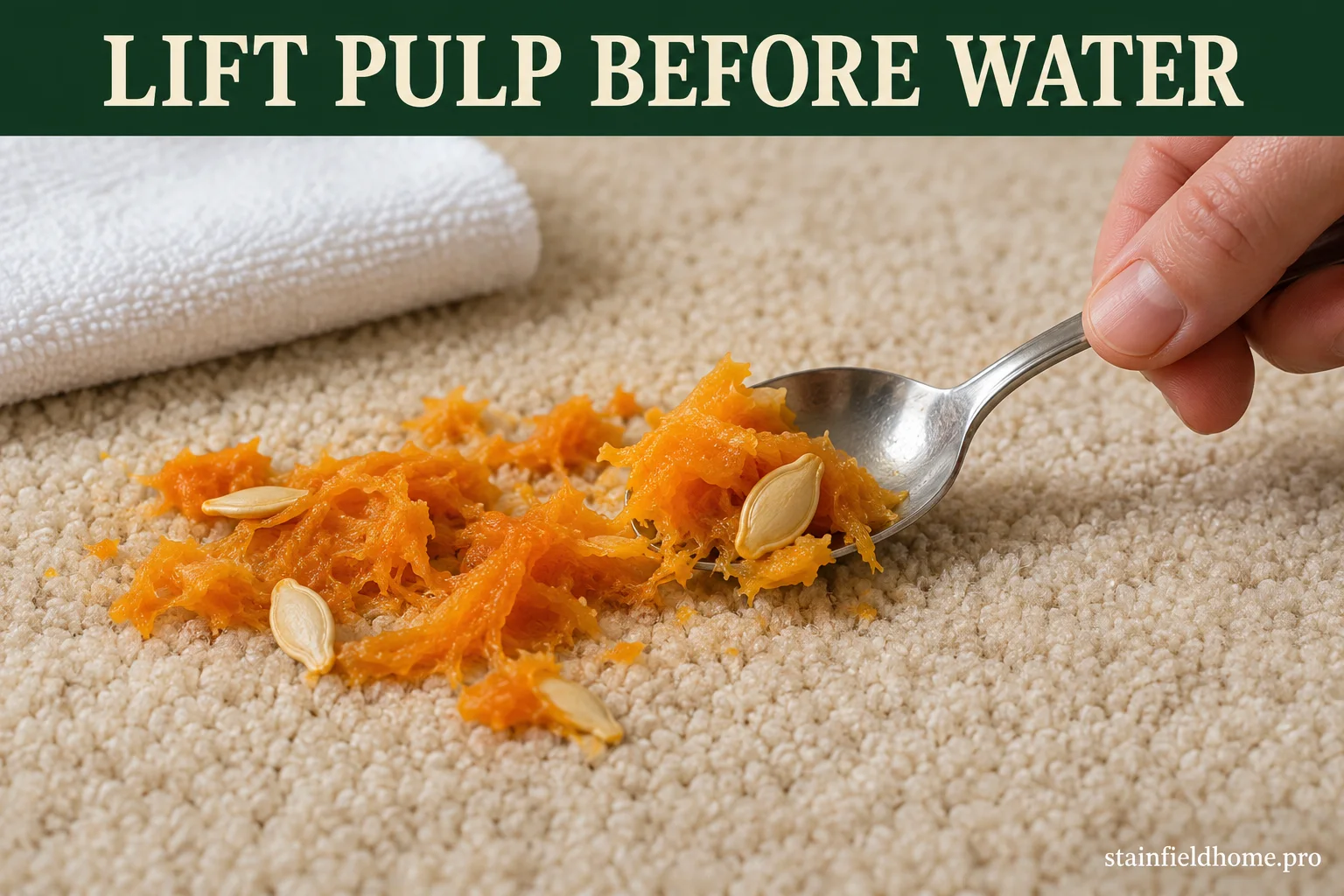
Lift the bulk with a rounded spoon, working carefully from the outside of the spill toward its center. Avoid a sharp knife that could cut or pull the carpet pile.
- 02
Blot remaining liquid with a dry, white absorbent cloth or plain white paper towel. Press and lift; do not wipe across the pile.
- 03
If the mess has already dried, which is common with carving debris tracked in later, let it finish drying. Then vacuum or brush out the crumbled bits before adding any moisture.
- 04
Check the base of the carpet pile for loose pulp. If it has reached the backing or pad, remove only what lifts easily and avoid pushing liquid into the base; a professional extractor may be needed.
Choose a carpet-safe spot treatment
- 01
Check the carpet label and the manufacturer's stain guide first, especially for wool, plant-fiber rugs, or a stain-resistant finish.
- 02
Choose a cleaner labeled for that specific carpet type. Test it in a hidden area and let the test dry fully so you can check for color transfer or texture change.
- 03
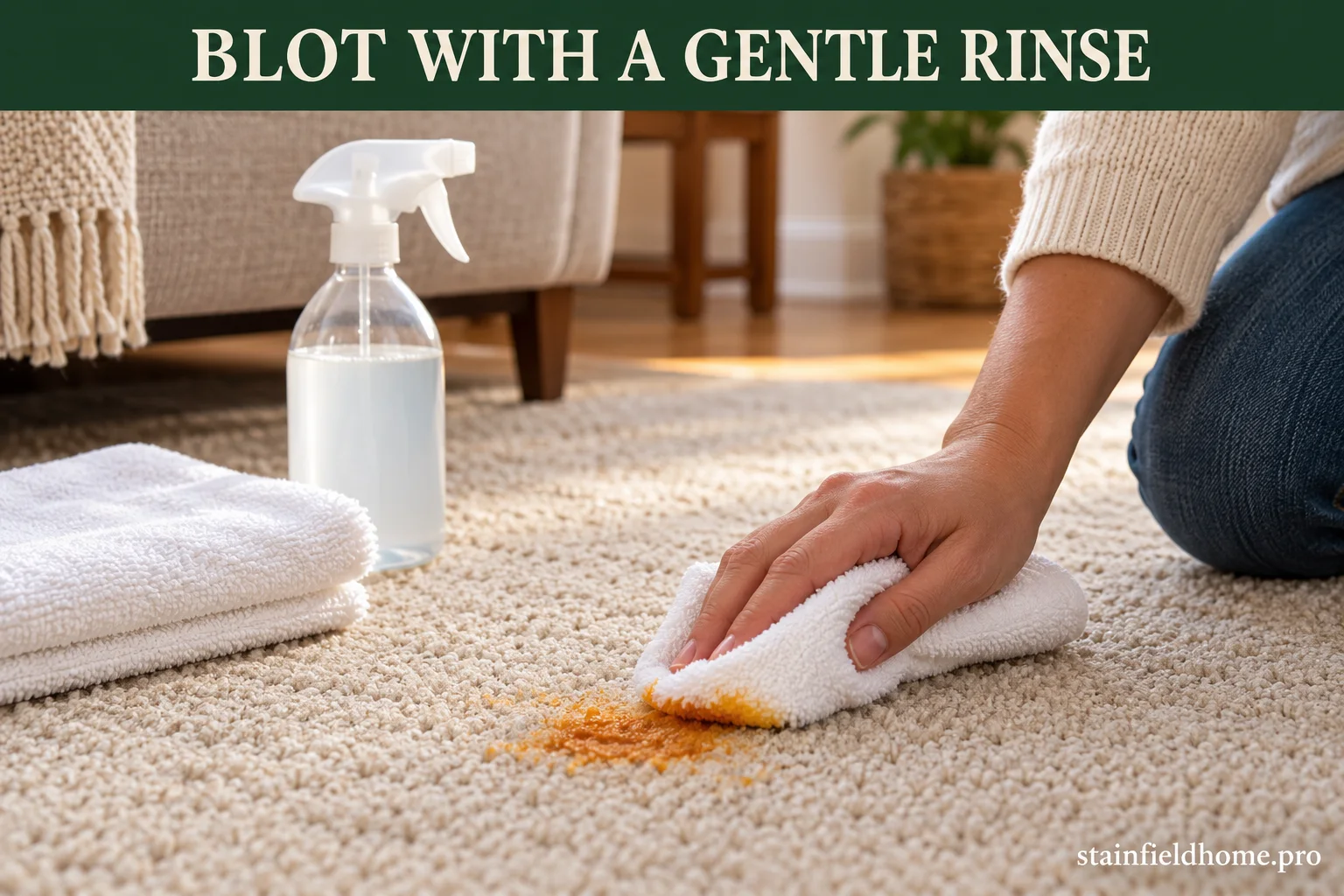
Put a small amount of the approved cleaner on a white cloth rather than pouring it onto the floor. Use the label's dilution and dwell time; stronger solution is not better.
- 04
Blot from the outer edge toward the center, turning to a clean section of cloth as color transfers. Do not scrub, brush hard, or saturate the backing.
- 05
Rinse only if the label or carpet instructions call for it. Blot with the stated amount of clean water, then press dry towels into the pile to remove moisture.
- 06
Pause after a few blots and inspect the cloth. If the carpet color is transferring, the pile feels rough, or the spot grows as moisture spreads, stop using the solution and contact the maker or a professional cleaner.
- 07
Do not pour a rinse over the area or work cleaner down to the carpet pad. Excess water can carry dissolved color into the backing and bring it back to the surface as the spot dries.
If orange color is still visible
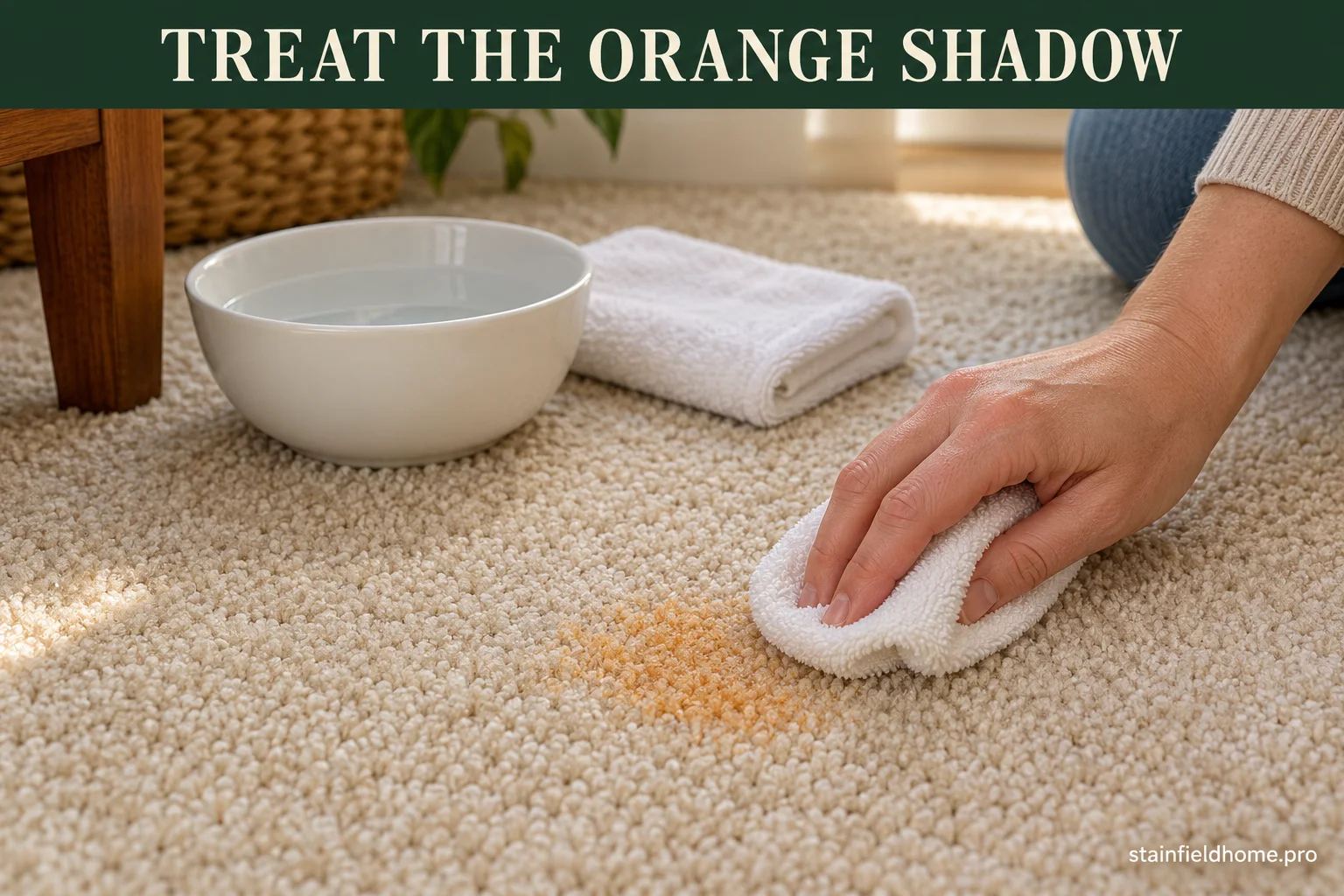
A pale orange shadow can remain after the pulp is gone. Repeat the same approved cleaning step only while residue continues to transfer to the cloth; switching among several remedies can leave chemical residue and cause rapid resoiling.
If the stain remains, consult the carpet maker or use a product specifically labeled for the fiber and stain, following its directions exactly. Oxygen bleach, peroxide, vinegar, and chlorine bleach can affect dyes or fibers, so do not treat them as interchangeable household fixes.
A shadow that appears only after drying may be residue, wicking from deeper in the pile, or a color change. Do not keep escalating chemical strength based on appearance alone. Photograph it in natural room light, note which products you used, and share that information with a qualified cleaner if another pass is needed.
Keep heat away until the stain is fully gone
Do not apply a hot iron, hair dryer, or steam to the stain. Heat can affect some carpet materials and does not substitute for removing the soil. Use the temperature and rinse method specified by the cleaner and carpet manufacturer.
After treatment, blot until the area is only slightly damp and allow it to dry with ordinary airflow. Keep foot traffic and furniture off the spot while it dries, and do not use direct sun as a bleaching treatment; sunlight can fade carpet color unevenly.
Carving and decorating without the carpet damage in the first place
Set a carving station on a washable floor covering with enough margin to catch splashes and seeds. Keep the cutting board, bowl, and compost container within reach so scraps do not travel across the room. A disposable drop cloth may slide; secure its edges and keep it away from children using carving tools.
Move a carved pumpkin onto a tray or waterproof mat rather than placing it directly on carpet. Check the underside and the area around it daily for moisture, soft spots, or mold. When it starts to sag or leak, remove it promptly and clean the supporting surface according to its care label.
If pumpkin pulp is tracked in on shoes, pick up the solids before vacuuming. Vacuuming a wet smear can spread pigment and soil onto the vacuum head. Clean the attachment after use if it contacts sticky pulp.
- Carve over a hard-surface table with newspaper, a plastic tablecloth, or a large tray underneath instead of working on or near carpet or a rug.
- Scoop pulp directly into a bowl or trash bag instead of piling it on a nearby surface where it can slide onto the floor.
- Use a battery-powered candle inside a jack-o'-lantern instead of a real one, which also cuts down on wax drips near carpet.
- Keep the finished pumpkin on a plate, tray, or the porch instead of directly on carpet or a rug once carving is done.
A carved pumpkin indoors starts to soften within days
A real jack-o'-lantern begins to soften, weep, and eventually mold once it's been cut open, and that process moves faster in a warm room than it would outdoors. A softening pumpkin sitting on or near carpet can leak moisture and pulp without any obvious spill. You end up with a musty stain and smell that's harder to trace back to its source.
Once a carved pumpkin visibly sags, wrinkles, or shows fuzzy spots, discard or compost it. Don't leave it sitting on display near flooring. Checking it daily during the week or two it's out is a small habit that avoids a much bigger carpet problem later in the season.
Common questions
FAQ
Does pumpkin stain carpet, or does it just look messy?
Both. The pulp and seeds are a physical mess that lifts out with a spoon. But the beta-carotene pigment in the flesh can leave an orange tint behind if it isn't fully treated, especially if it's had time to sit or dry.
Can I use hydrogen peroxide instead of vinegar?
Only if the carpet manufacturer and product label approve it for your fiber and dye. Peroxide can lighten carpet, so use a labeled carpet product after a hidden-area test, or ask a professional.
My pumpkin stain dried before I could treat it. Is it too late?
No. Let loose residue dry if needed, then gently lift or vacuum the crumbs without grinding them into the pile. Treat the remaining mark with a cleaner approved for your carpet and follow its label; older spots may need a professional.
Is the vinegar-and-dish-soap solution safe for all carpet types?
A homemade vinegar-and-soap mix is not a universal carpet treatment. Fiber, dye, backing, and finish differ. Use the carpet maker's instructions and a compatible labeled product, especially on wool and other natural-fiber rugs.
How do I get the rotten-pumpkin smell out of carpet?
Remove the pulp and clean the spot using a carpet-approved method, then blot and dry it thoroughly. Avoid sprinkling powder into damp pile, where it may cake or remain in the backing. If odor returns, residue may have reached the pad; professional extraction is safer than soaking the area yourself.
Sources reviewed
Keep reading
Related guides

Slime on Carpet
How to Remove Slime From Carpet Without Damaging the Fibers
Lift dried or fresh slime out of carpet fibers with an ice-and-scrape method plus a vinegar or rubbing alcohol rinse, without soaking the backing or bleaching the color.
Dried acrylic paint on Carpet
How to Remove Dried Acrylic Craft Paint From Carpet
Soften a hardened acrylic paint spill in carpet with warm water and a little alcohol or acetone, work it out of the pile in stages, and rinse without spreading it.

Nail polish on Carpet
How to Remove Nail Polish From Carpet
Spilled nail polish is liquid plastic that dries into a colored film gripping the pile. Keep it wet, lift it with the right solvent from the outside in, and never pour remover straight onto the carpet.

Essential oil and reed-diffuser oil on Finished wood furniture
How to Remove Essential Oil and Diffuser Stains From Wood Furniture
Blot a diffuser-oil spill on finished wood, use a cautious absorbent step, and recognize when the finish needs a furniture repair professional.