The quick answer
Scrape off the raised crust, then soften the remaining film with a warm, soapy damp cloth and lift it in small stages. If color remains, use only a carpet-manufacturer-approved spotter or a tiny amount of rubbing alcohol after a hidden test; avoid acetone on household carpet because it can dissolve fibers, dyes, or backing. Rinse-blot with clean water, dry thoroughly, and call a carpet professional for paint bonded to the backing.
What you’ll need
- A dull knife, spoon, or stiff old toothbrush
- Warm water and a clear, dye-free dish soap
- White cloths or paper towels
- Rubbing alcohol (isopropyl), 70 percent or higher
- Carpet-approved spot remover, if permitted by the carpet maker
- A dry towel and something heavy to weight it
Know what you are dealing with before you wet it
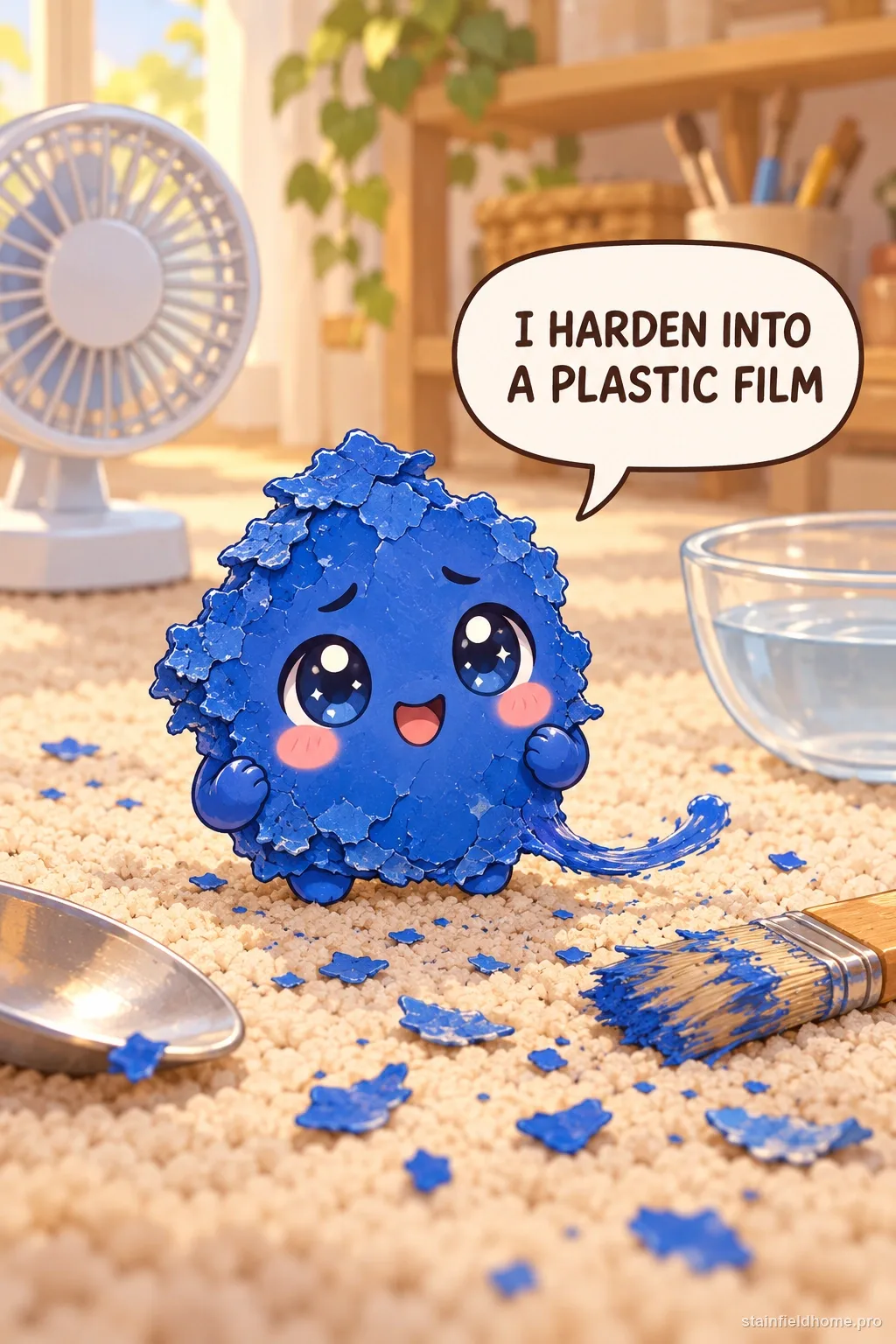
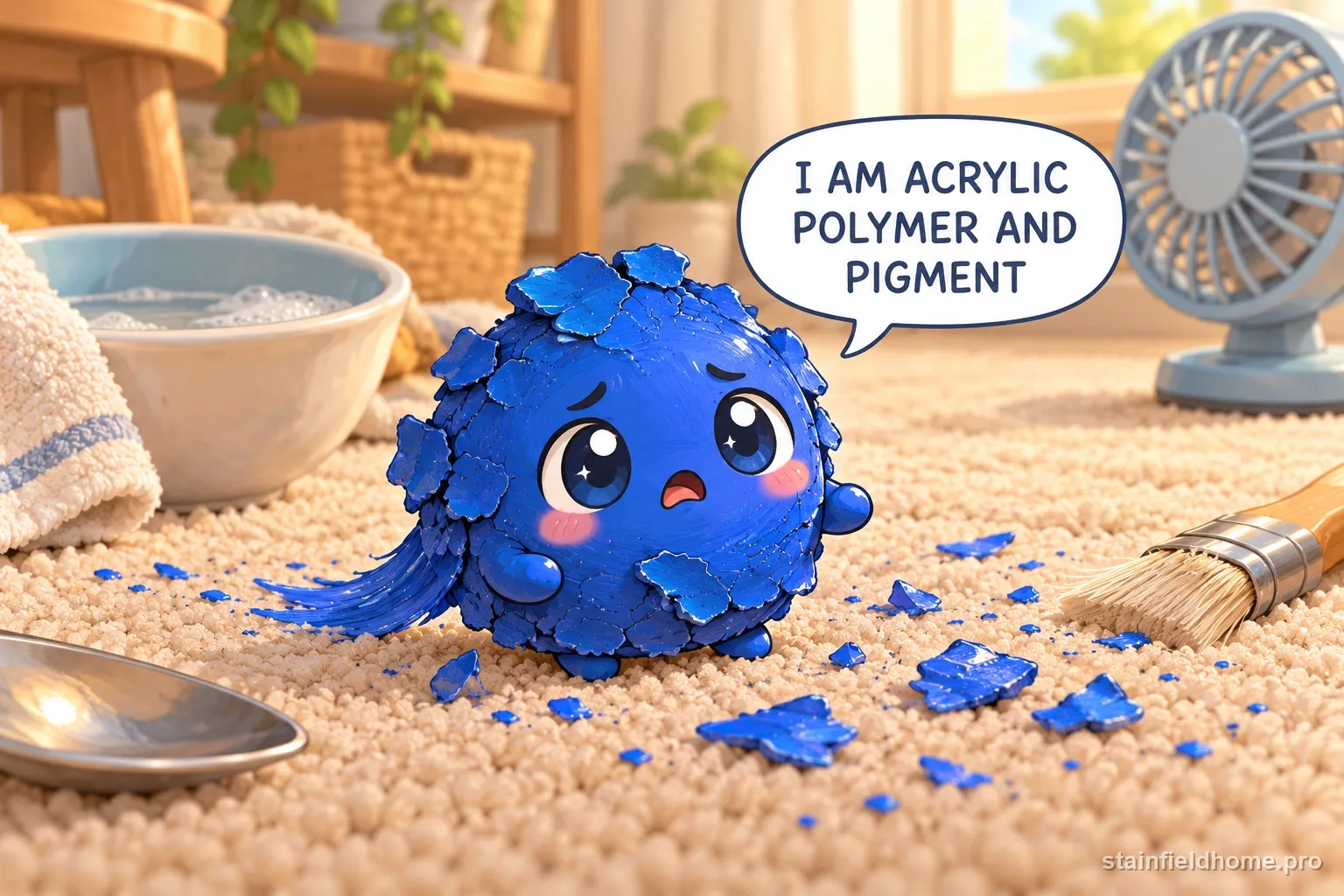
Craft and student acrylics are a plastic (polymer) suspended in water. While the paint is wet it rinses easily; once it dries, that polymer forms a flexible film that grips the carpet fibers and no longer dissolves in plain water. That is why a day-old spill behaves so differently from a fresh one, and why the goal here is to soften and lift the film in pieces rather than to wash it away.
Check two things first. Read any carpet documentation or a hidden closet corner to see whether the carpet is nylon, polyester, olefin, or wool, because wool and some stain-resist nylons react badly to strong solvents. Then look at how deep the paint went: a thin surface skin on the tips of the pile comes out far more completely than paint that soaked to the backing before it set.
Take off everything that will lift dry
Work the raised, brittle crust with a dull knife or the edge of a spoon, angling the tool so it lifts flakes upward instead of grinding them deeper. A stiff old toothbrush helps break the film where it bridges between fibers. Vacuum or pick up the flakes as they come free so you are not massaging them back in.
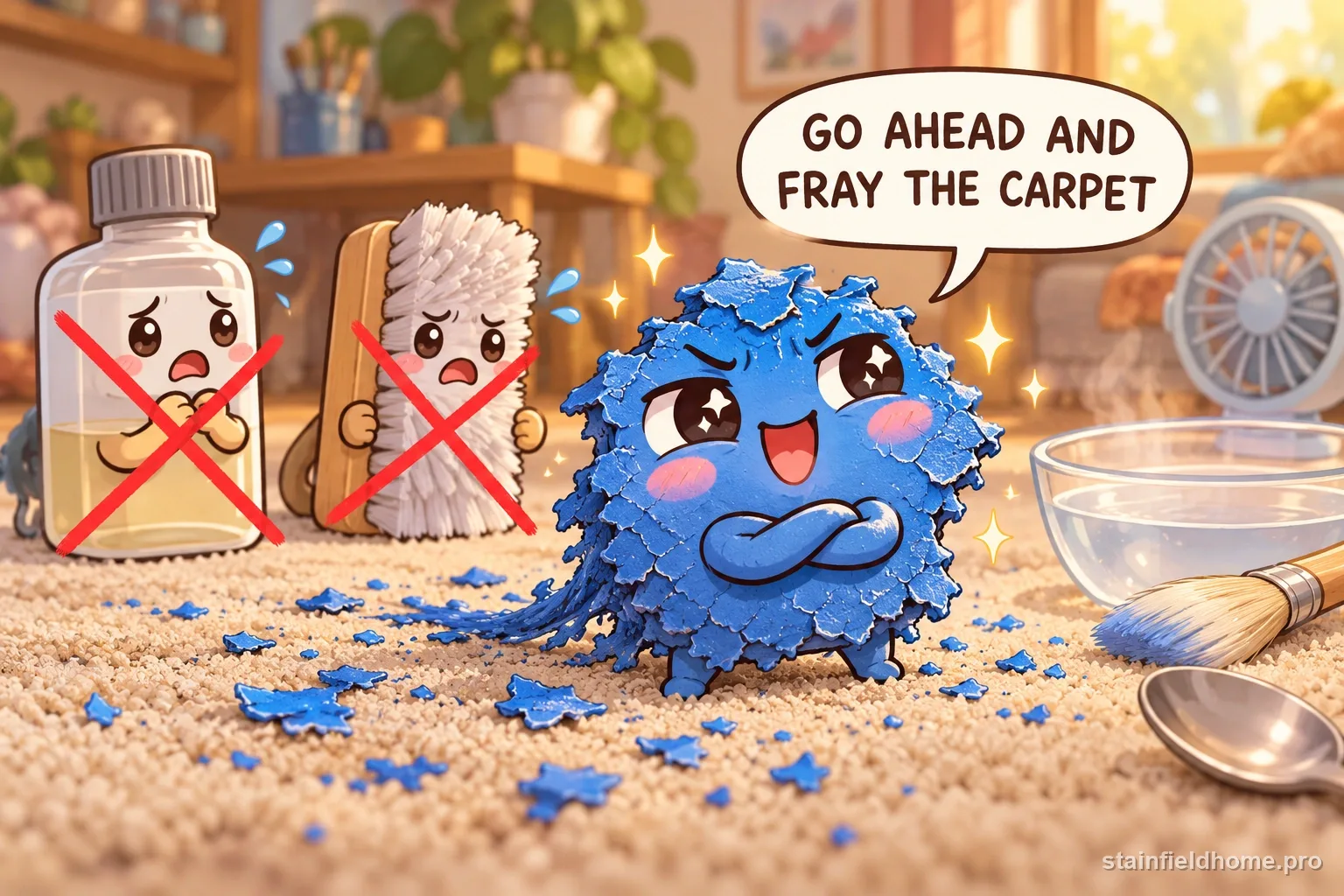
Stop when you are down to paint that is bonded to the fibers and will not flake. Forcing a dull blade past this point tends to fray cut-pile carpet and push pigment toward the backing, which is the failure mode that turns a small spot into a permanent shadow.
Soften the film with warm water and soap
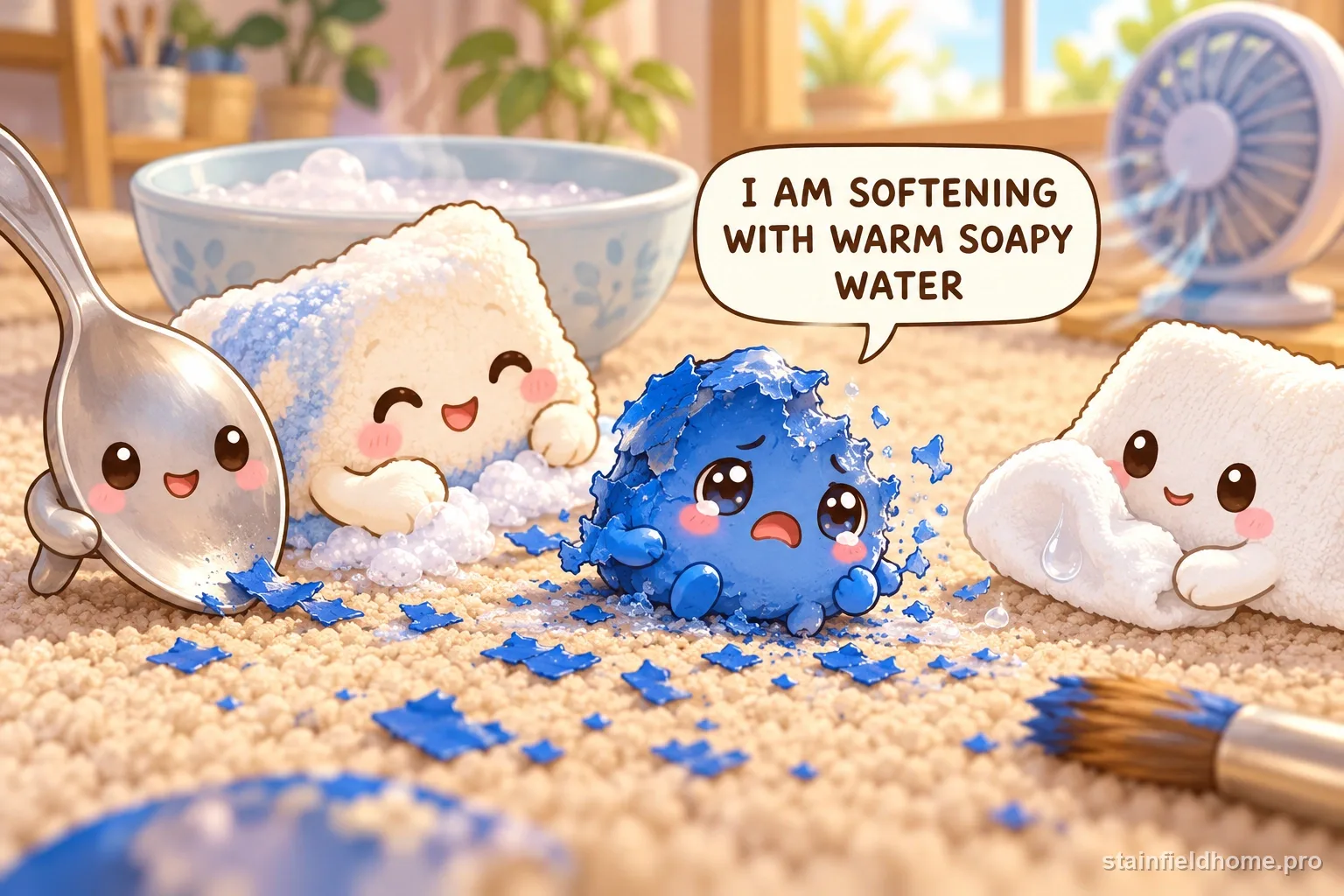
Mix a teaspoon of clear dish soap into a cup of warm water. Wet a white cloth and press it onto the spot so the paint stays damp, re-wetting every few minutes for a total of 10 to 15 minutes. Warmth and moisture make the acrylic film swell and loosen its grip; this soak is doing the real work, and rushing it is the most common reason people give up too early.
After the soak, blot firmly with a dry section of cloth and work a wet toothbrush through the pile in short strokes from the outside of the spot toward the center. Lift what releases, rinse the brush, and repeat. Expect to remove the paint in several rounds rather than all at once.
Use a compatible spotter only if soap stops working
When warm water and soap stop pulling out color, do not automatically step up to a stronger solvent. Check the carpet maker's spot-removal guide and use only a product approved for that fiber and backing. If the guide permits rubbing alcohol, put a few drops on a white cloth, test a hidden edge, then blot the mark with the smallest damp area possible. Do not pour it onto the carpet or let it reach the backing.
Acetone is a poor home default: it can damage olefin, acetate, carpet dyes, latex adhesives, and some backings, and a hidden test cannot guarantee the exposed area will stay unchanged. Avoid nail-polish remover and paint thinner unless a carpet professional identifies a compatible product and method. If a faint mark remains after a cautious soap treatment, stopping is safer than risking a melted or discolored patch.
Rinse, dry, and check in daylight
Solvent and soap residue left in carpet attracts dirt and turns a clean repair into a grey spot within weeks. Sponge the area with plain cool water, blot hard with dry towels, then lay a folded dry towel over the spot and weight it with a stack of books for a few hours to wick moisture out of the base of the pile.
Let the carpet dry fully and look at it in natural light from several angles before deciding you are done. Paint shadows are easiest to see when the light rakes across the pile. If a trace remains, repeat the water soak and alcohol steps; a second full cycle usually clears what one aggressive pass could not.
If the paint reached the backing
A spill that dried all the way to the backing behaves like a small patch of stiff plastic sheet under the pile. You can often soften and thin it with repeated warm-water soaks and a blunt tool worked from the surface, accepting that the very base of the tuft may keep a little color. Do not saturate the backing with solvent trying to reach it, because that can delaminate the carpet or leave a solvent ring wider than the paint.
For a large hardened area in an obvious spot, a professional carpet cleaner has hot-water extraction and stronger paint removers plus the option of cutting and re-tufting a small section. That is a reasonable call for a living-room spill you will look at every day.
Products that will wreck the carpet
- Do not reach for paint thinner or lacquer thinner on carpet; they can dissolve the backing adhesive and the fibers.
- Do not scrub in circles with a stiff brush, which frays cut pile and drives pigment deeper.
- Do not use hot water on wool or on a stain-resist nylon carpet; warm is enough and heat can set some dyes.
- Do not blast the spot with a hair dryer to speed drying before you are sure the paint is gone, since heat can set any remaining polymer.
Choose the next step by carpet fiber and spill depth
Nylon and polyester pile may tolerate a mild water-based spot treatment, while wool, viscose, and unknown specialty fibers can shrink, fuzz, or lose dye when treated with household solvents. Olefin has different solvent sensitivities again. If you do not know the fiber, treat the carpet as delicate: use a minimal amount of cool or warm water and clear soap only after a hidden test, and do not apply alcohol or acetone without maker approval.
A surface crust that breaks into flakes is a very different problem from paint that soaked down to the backing. For a surface spill, work with short strokes and blot between rounds. If the paint forms a hard bridge between tufts or you can feel a stiff patch below the pile, stop scraping; pulling at that bond can tear fibers from the backing. Large spills, loop pile, wool, and paint touching a seam are good reasons to call a carpet-cleaning technician early.
Prevent a sticky or crunchy spot after cleanup
The rinse matters as much as lifting color. Detergent left in the pile acts like a soil magnet, and alcohol residue can leave the fibers stiff. Blot a small amount of clean water through the treated area, working from the outside toward the center, then press with a dry towel. Repeat with fresh sections until no suds or color transfer appear. Keep total moisture low so it does not wick into the pad.
Once nearly dry, gently set the pile back in its natural direction with your fingers. Do not vacuum while the fibers are wet or use a heated spot machine that the carpet label does not permit. If the area dries crunchy, a barely damp cloth can lift surface residue; if it dries with a hard acrylic ridge, do not chip at it with a blade. A professional extraction clean is safer than cutting the carpet pile.
Understand when a faint shadow is permanent
Acrylic paint can leave two kinds of lasting change: pigment lodged at the base of the tufts, and actual fiber or dye damage from an incompatible solvent. A remaining color shadow after careful blotting may be embedded pigment; a lighter, fuzzy, or rough patch suggests the surface itself has changed. More solvent cannot tell those apart and may make a damage patch larger.
Let the area dry fully before judging it. Take a photo in daylight and compare the same pile direction nearby. If the stain does not improve after two gentle treatment rounds, pause and show the photo to a professional cleaner with the paint label and carpet fiber information. A technician can assess whether extraction or spot repair is appropriate without repeatedly wetting the backing.
Common questions
FAQ
Does dried acrylic paint ever come fully out of carpet?
A thin surface spill that only coated the pile tips usually comes out with no visible trace after two soak-and-lift cycles. Paint that soaked deep and dried to the backing often leaves a faint tint at the base of the tufts even after careful work, because the polymer has bonded inside the fiber bundle.
Can I use acetone nail polish remover instead of pure acetone?
Avoid acetone or nail-polish remover as a routine carpet treatment. It can damage carpet fibers, dyes, or latex backing, and an oily or conditioning formula can leave a second stain. Use only a remover explicitly approved by the carpet maker; otherwise stop after the mild treatment and ask a professional.
The paint is water-based. Why won't water take it out now?
Water-based only describes the paint while it is wet. As it dries, the water leaves and the acrylic polymer particles fuse into a continuous plastic film that is no longer water-soluble. Warm water still helps by swelling that film, but it will not simply rinse away like fresh paint.
Should I use a carpet spot machine?
A small extraction machine helps with the rinse and dry steps and with lifting softened paint, but it will not remove a hard dried film on its own. Do the scraping and the warm soak first, then use the machine to pull out loosened paint and rinse water.
Can vinegar or a household paint remover soften the acrylic?
There is no reliable one-size-fits-all carpet recipe for those products. Vinegar may affect dyes or backing, while paint removers may dissolve carpet fibers and adhesives. Check the carpet manufacturer's spot guide and the cleaner label; do not mix chemicals or try a product that is not approved for the fiber.
The stain came back after it dried. What should I do?
A returning spot often means paint or cleaner remained lower in the pile and wicked upward as the carpet dried. Blot with a clean, barely damp cloth, rinse with minimal plain water, and press dry towels into the area. If it returns again or feels stiff at the base, stop and request professional extraction rather than adding more solvent.
Sources reviewed
Keep reading
Related guides

Slime on Carpet
How to Remove Slime From Carpet Without Damaging the Fibers
Lift dried or fresh slime out of carpet fibers with an ice-and-scrape method plus a vinegar or rubbing alcohol rinse, without soaking the backing or bleaching the color.

Pumpkin (carving, decorating, or puree) on Carpet
How to Remove Pumpkin Stains From Carpet
Remove pumpkin pulp and treat any remaining orange mark on carpet with a careful, low-moisture sequence that follows the carpet maker's guidance.

Nail polish on Carpet
How to Remove Nail Polish From Carpet
Spilled nail polish is liquid plastic that dries into a colored film gripping the pile. Keep it wet, lift it with the right solvent from the outside in, and never pour remover straight onto the carpet.

Essential oil and reed-diffuser oil on Finished wood furniture
How to Remove Essential Oil and Diffuser Stains From Wood Furniture
Blot a diffuser-oil spill on finished wood, use a cautious absorbent step, and recognize when the finish needs a furniture repair professional.