
The quick answer
Lift off the bulk with a spoon without rubbing, then let the remaining slime firm up with a bagged ice pack and pick out fragments. For residue, follow the carpet maker's spot-cleaning guide and use a carpet-safe cleaner after a hidden color test. Blot and rinse with minimal water, then press dry towels into the pile. Avoid pouring vinegar or alcohol onto carpet, especially wool or unknown fibers.
What you’ll need
- A bag of ice cubes or a few ice cubes wrapped in a cloth
- A dull knife, spoon, or old credit card
- Carpet-safe spot cleaner selected by carpet type
- Clean white cloths or paper towels
- A mild dish soap for the final rinse
- A vacuum with an upholstery or crevice attachment
Why slime grabs onto carpet fibers so well
Most homemade and store-bought slime is a polymer (usually polyvinyl alcohol from school glue) that's been cross-linked with a borate ion, typically from borax or a saline-solution activator. Those cross-links form a loose, stretchy network that wraps around anything with texture, which is what carpet pile offers in abundance.
That structure is also why friction can make the mess spread through the pile. Slime recipes vary: some use school glue and borate activator, while others contain contact-lens solution, glitter, foam beads, fragrance, or different polymers. A chemical that softens one recipe may not work on another and can affect carpet dyes. Start with bulk removal and use a carpet-compatible cleaner only after testing.
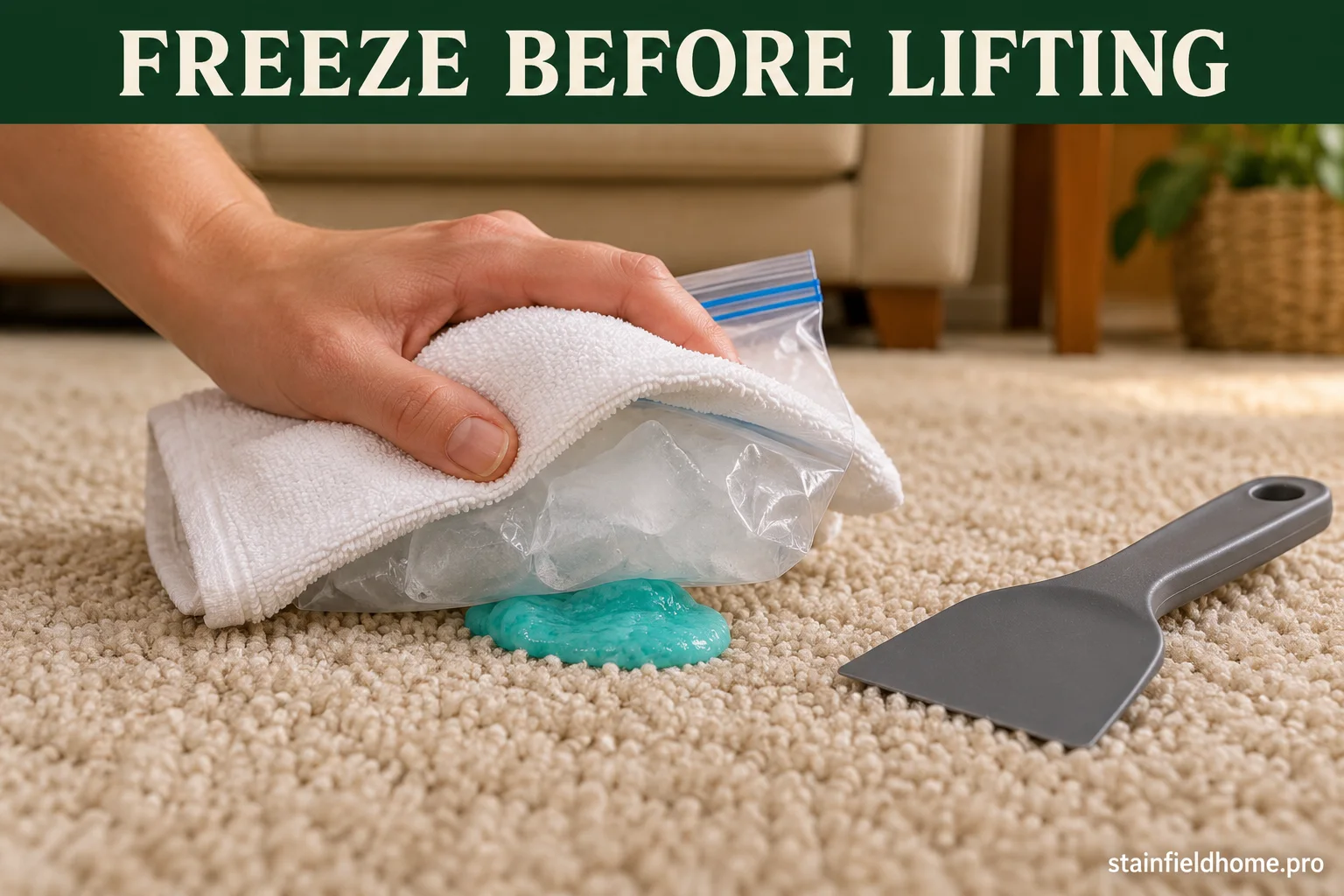
Freeze it before you touch it
- 01
Press a bag of ice, or a few cubes wrapped in a thin towel, directly onto the slime and hold it there for 5 to 10 minutes.
- 02
Check every couple of minutes. Once the surface feels hard and slightly brittle rather than tacky, it's ready.
- 03
Snap or crumble the hardened slime away from the carpet in small pieces, working from the outer edge of the spot inward.
- 04
Use a dull knife or the edge of an old credit card to gently lift pieces that have worked down into the pile, scraping upward instead of pressing down.
- 05
Vacuum the loosened crumbs before moving on to any liquid treatment, so you aren't rubbing solid bits deeper into the fibers.
Treating what's left in the fibers
- 01
Spot-test your vinegar or rubbing alcohol on a hidden corner of carpet first and let it dry to check for any color change.
- 02
Read the carpet manufacturer's spot guide and select a cleaner labeled for the fiber and backing. Test it on a hidden area and let it dry to check for color transfer or texture change.
- 03
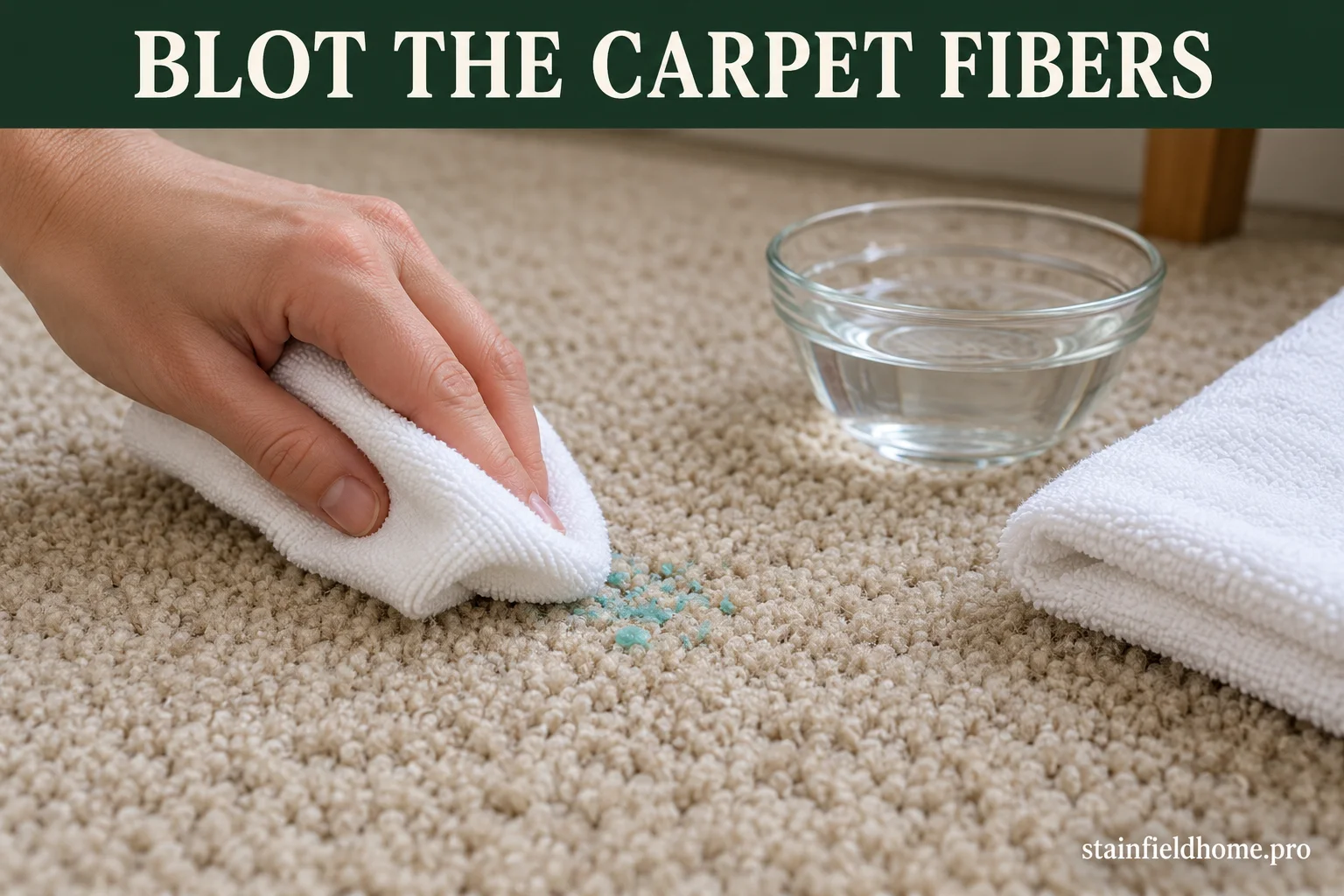
Dampen a white cloth with the approved cleaner and blot the residue; do not pour cleaner onto the carpet or scrub in circles.
- 04
Work from the outside edge toward the center, using clean cloth sections as color or slime transfers. Use a spoon to lift only softened fragments that release without pulling fibers.
- 05
Rinse only if the cleaner label calls for it, using a cloth barely dampened with cool water, then press dry towels into the pile. Keep moisture out of the backing.
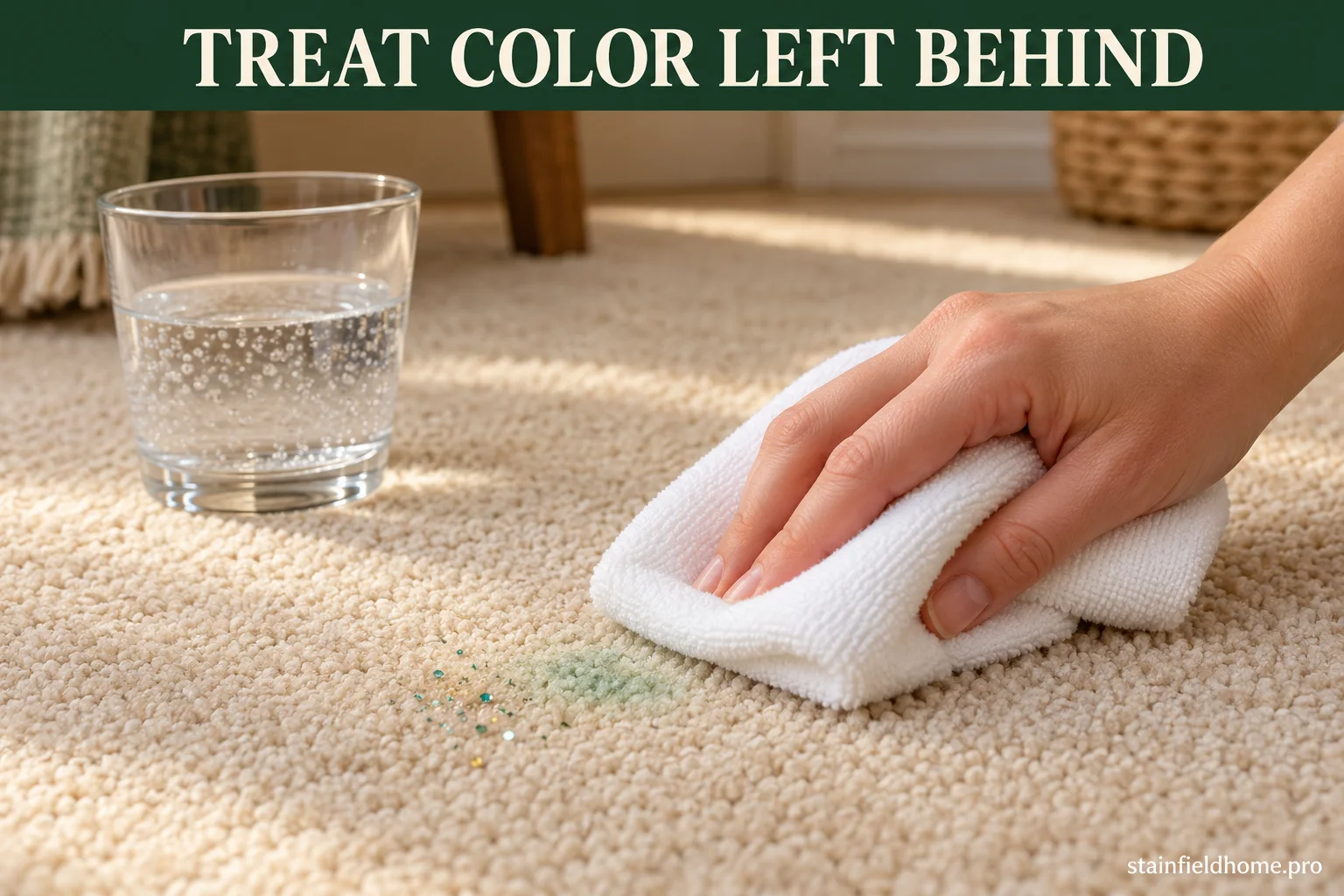
If color or glitter is left behind
Glitter slime and colored 'unicorn' slime can leave a faint tint or sparkle behind even after the polymer itself is gone. Dab club soda onto the spot and blot. It works well on light tinting, because the carbonation helps lift pigment that sits on the fiber's surface instead of bonded to it.
If discoloration remains after the slime residue is gone, treat it as a separate dye stain. Use only a carpet product whose label covers the fiber and color, and follow the pretest and rinse directions. Oxygen bleach can still alter carpet dye or backing, so it is not automatically safe just because the label says color-safe for laundry.
What makes a slime spill harder to fix
- Hot water or a steam cleaner on the first pass: heat can make the polymer more rubbery and press it deeper into the pile.
- Scrubbing in circles, which spreads slime sideways into fibers that were never touched.
- Mixing cleaning products together, such as vinegar and a bleach-based carpet cleaner, which can release harmful fumes.
- Letting a fresh spill sit for hours before the ice step. It's still workable once dry, but far more of it will already be worked into the base of the pile.
Wool and other natural-fiber carpet need a lighter touch
Wool, sisal, and jute need a more cautious method than synthetic nylon or polyester. Water, acidity, and solvent can change color or texture, and liquid can wick into natural-fiber backing. On these carpets, lift solids only and contact the carpet maker or a professional cleaner before applying a household remedy.
If a natural-fiber rug still shows slime after a careful dry lift, stop there. Do not try vinegar, alcohol, a steam cleaner, or laundry stain remover without explicit compatibility guidance.
Keeping slime play from turning into a carpet project
- Set up slime time on a hard-surface floor, a large tray, or a plastic tablecloth instead of directly over carpet or a rug.
- Keep a lidded container nearby so slime goes back into storage the moment play winds down, instead of getting left out to dry into the fibers.
- If borax powder specifically worries you, know that saline-solution slime recipes only swap the powder for the boric acid and sodium borate in the saline. The slime behaves the same way for cleanup either way.
- Treat any spill you do notice the same day; slime that's been ground into carpet for a week takes considerably more work than a same-day catch.
Fresh slime, dried slime, and glitter are different jobs
Fresh, stretchy slime usually lifts in larger pieces after it firms, while dried slime may crumble and leave glue-like residue in the pile. Do not forcefully scrape a dried crust because the tool can cut loops or pull fibers. Pick up loose crumbs, vacuum them with an upholstery tool, and then ask the carpet label what cleaner is allowed before softening what remains.
Glitter and foam beads will not dissolve with the slime. Pick them out by hand or use low-suction vacuuming once the sticky base has been removed. Colored slime may leave a separate dye shadow even after the tacky residue is gone. Do not keep wetting the area to chase glitter or pigment; that can carry dye into the backing and widen the stain.
Keep cleaner and moisture from reaching the backing
Carpet backing and pad can trap liquid and residue below the pile. Use only a barely damp cloth, change it as soon as it becomes dirty, and press a dry towel over the spot between passes. If the carpet feels wet underneath, pause and blot from above rather than adding more solution.
After cleanup, let the area air-dry with room ventilation and keep children and pets away until it is dry. If a sticky feel returns or the spot darkens as it dries, residue may have wicked back up. A professional extractor can remove deeper residue; repeated home soaking may make the ring larger.
Know when to stop and call a carpet professional
Stop if a hidden test transfers carpet color to the cloth, the pile gets fuzzy, or the backing becomes tacky. Large spills, looped wool rugs, a stain near a seam, and slime that has dried for weeks all justify a professional assessment. Give the cleaner the slime brand or recipe and list any vinegar, alcohol, or spotter already used.
A pale patch after cleaning may be dye loss rather than remaining slime. More stain remover cannot restore pigment. Photograph the spot once dry and contact the carpet manufacturer if the affected area is under warranty.
Common questions
FAQ
Does hot water help get slime out of carpet?
No. Heat makes the polymer in slime softer and more rubbery, which tends to press it deeper into the pile instead of releasing it. Cold is the effective first step: hold ice against the slime until it hardens. Save any warm water for the final rinse, after the bulk of the slime is out.
Will rubbing alcohol or vinegar discolor my carpet?
Yes, they can affect carpet dyes, finishes, or backing, and no household liquid is safe on every carpet. Check the carpet maker's instructions and use a product labeled for that fiber. Test it in a hidden area and let it dry before treating the visible spot.
What about glitter slime or foam-bead 'floam'?
Firm the bulk and lift it carefully, then treat remaining residue with a carpet-compatible cleaner after a hidden test. Pick foam beads and glitter out by hand or vacuum after the sticky base is removed. Colored slime may leave a separate dye mark; avoid more liquid or club soda unless the carpet maker approves it.
Is slime residue in carpet harmful to kids or pets once it's dried in?
Slime formulas differ, so check the package ingredients and follow its cleanup guidance. Remove visible residue and let the carpet dry before children or pets use the area. Keep cleaning products out of reach and contact the product maker or a local poison-control service if someone ingests slime or cleaner.
Can I use vinegar on slime if the carpet is synthetic?
Only if the carpet maker allows it and a hidden test dries without color or texture change. Synthetic fibers can still have dye, stain-resistant finishes, and latex backing that react to household acid. Use the smallest amount on a cloth, never pour it into the pile, and rinse only as directed by the carpet maker.
Sources reviewed
Keep reading
Related guides

Pumpkin (carving, decorating, or puree) on Carpet
How to Remove Pumpkin Stains From Carpet
Remove pumpkin pulp and treat any remaining orange mark on carpet with a careful, low-moisture sequence that follows the carpet maker's guidance.
Dried acrylic paint on Carpet
How to Remove Dried Acrylic Craft Paint From Carpet
Soften a hardened acrylic paint spill in carpet with warm water and a little alcohol or acetone, work it out of the pile in stages, and rinse without spreading it.

Nail polish on Carpet
How to Remove Nail Polish From Carpet
Spilled nail polish is liquid plastic that dries into a colored film gripping the pile. Keep it wet, lift it with the right solvent from the outside in, and never pour remover straight onto the carpet.

Essential oil and reed-diffuser oil on Finished wood furniture
How to Remove Essential Oil and Diffuser Stains From Wood Furniture
Blot a diffuser-oil spill on finished wood, use a cautious absorbent step, and recognize when the finish needs a furniture repair professional.