
The quick answer
Blot up all the liquid polish with a white cloth, pressing straight down so you do not spread it, and lift off any rubbery skin with a dull knife. Patch-test nail polish remover on a hidden edge of the carpet, then pour it onto a clean white cloth, never onto the carpet, and dab the stain from the outside in, moving to a fresh part of the cloth as color transfers. Repeat for as many rounds as it takes, then wash the spot with a little dish soap in warm water, rinse by blotting, and let it dry. If a colored shadow stays, treat it with 3% hydrogen peroxide on light carpet or an oxygen-bleach paste. Never pour remover straight onto the carpet, because it can dissolve the backing and the padding underneath.
What you’ll need
- White cloths or paper towels
- A spoon, dull knife, or old plastic card
- Acetone nail polish remover, clear and non-oily (or non-acetone for delicate fibers)
- Grease-cutting liquid dish soap
- Warm water
- 3% hydrogen peroxide or oxygen bleach, for a leftover color shadow
- A dry white towel
- A wet/dry vacuum, if you have one
Hi. I'm the nail polish on your carpet.
I'm the glossy colored puddle that leapt off the arm of the couch while you were doing your nails. For a few more minutes I am liquid and beatable. I'm built from three things: pigment that gives me color, a film-former called nitrocellulose, and a fast solvent, usually ethyl acetate or butyl acetate, that keeps the other two runny.
That solvent is evaporating as you read this. When it finishes, the nitrocellulose sets into a hard, flexible sheet of colored plastic wrapped around every fiber it touched. At that point I don't rinse out, soak out, or wash out. The only thing that moves me is a solvent strong enough to redissolve the film, and your whole job is to reach me with one before I sink toward the backing, where scissors become the only tool left.
Which version of me you have matters. Ordinary salon lacquer redissolves fairly willingly. Quick-dry and gel-effect bottle polishes set faster and harder and need more rounds. True gel polish, cured under a UV or LED lamp, barely responds to household remover at all. And my color changes the difficulty: a clear or pale pink me often disappears completely, while a red, burgundy, or black me can leave a dye shadow in the fibers even after the plastic is gone.

Test the carpet before you start
The remover that dissolves me can also dissolve your carpet. Acetone destroys any carpet or rug made of acetate, triacetate, or modacrylic, and it can soften the latex adhesive that anchors the tufts to the backing. Most fitted carpet is nylon, polyester, olefin (polypropylene), or triexta, and those handle brief acetone contact, but you need to confirm before you commit.
Do the patch test properly. Find carpet you cannot see, inside a closet, under a heavy chair, along the edge behind a door, and press a remover-damp white cloth onto it for sixty seconds. Then check the cloth for color transfer, and check the pile for stiffness, a sticky feel, or fibers matting together. Any of those means stop and phone a carpet cleaner. If the hidden patch comes through clean, you are clear to work on the real stain.
Use the right remover: clear and plain. Colored removers can leave a dye of their own, and strengthening or moisturizing removers carry oils that leave a translucent grease mark where the polish used to be. If your only bottle is oily or tinted, borrow a better one before you start.
While the polish is still wet
- 01
Work fast but gently. Press a folded dry white cloth straight down onto the puddle and let it wick up everything still liquid. Lift, refold to a dry section, and press again. Never wipe sideways; one sideways wipe triples the size of the stain.
- 02
If a skin has already formed on top, slide a dull knife or an old plastic card under one edge and lift the sheet away in pieces. Take whatever comes without tugging the pile.
- 03
Pour a small amount of clear remover onto a fresh white cloth or a cotton ball. The carpet never gets poured on; only the cloth does.
- 04
Press the damp cloth onto the outer edge of the stain and hold it there for five to ten seconds so the solvent has time to bite, then dab inward toward the center.
- 05
Check the cloth. The instant you see color on it, move to a clean section. A color-loaded cloth just re-deposits me somewhere new.
- 06
Repeat the cycle, fresh solvent, clean cloth section, press, dab, check, as many times as it takes. Expect six, eight, ten rounds for a big or dark spill. The color lifts in stages, and stopping early leaves a faint print.
- 07
When the cloth stops picking up color, mix a few drops of grease-cutting dish soap into a cup of warm water and blot it through the area to pull out the last of the dissolved film and any solvent residue.
- 08
Rinse by blotting with a cloth dipped in plain warm water. If you own a wet/dry vacuum, run it over the spot now to pull moisture and loosened residue out of the pile and the pad.
- 09
Press the area dry under a clean towel with your body weight, then leave it to air-dry fully before you vacuum the pile back upright.
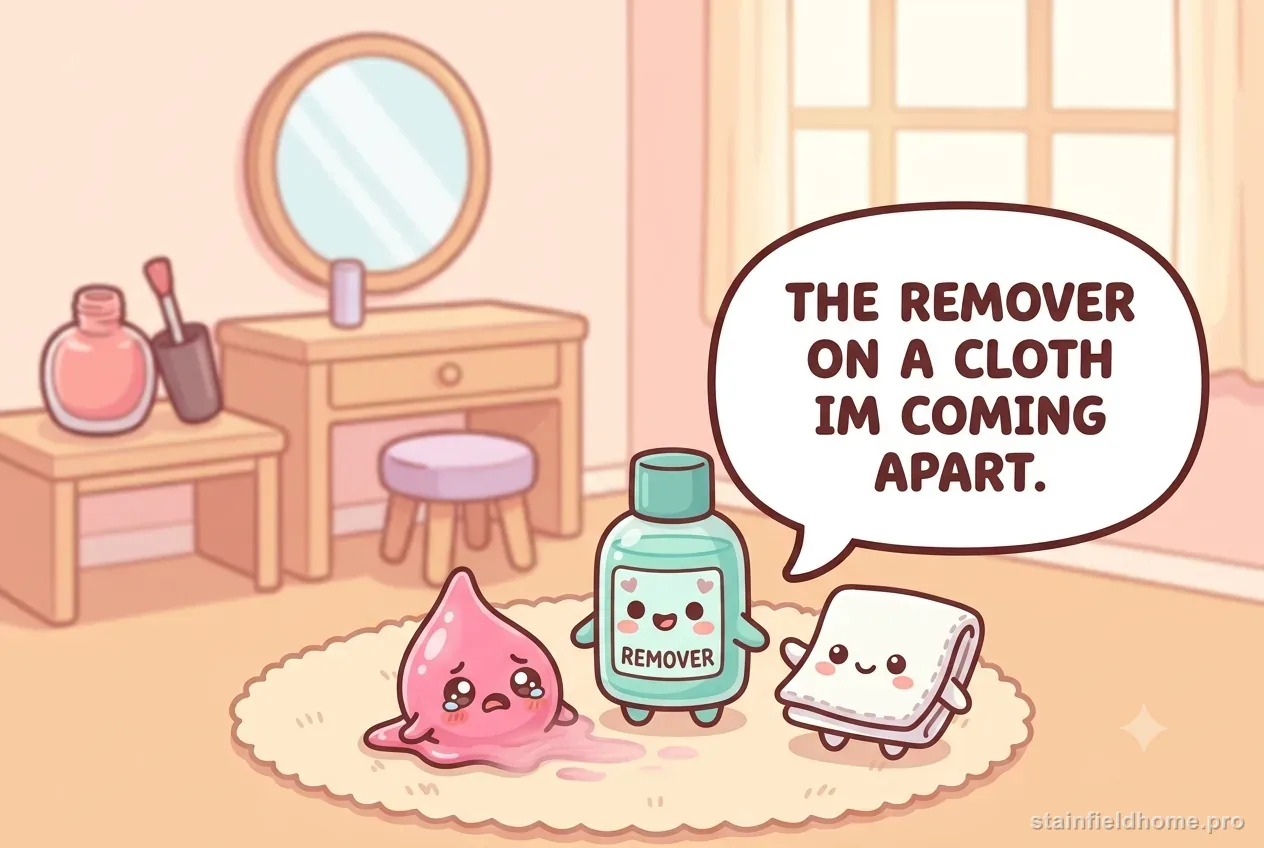
If I've already gone hard
A dried spill is not automatically a lost cause, it just changes the order of work. Start dry: with a dull knife, a spoon edge, or a stiff old card, chip and scrape at the brittle film and lift off every flake you can before any liquid goes near it. A stiff old toothbrush can help break up a thin crust. The less hardened plastic left behind, the less the solvent has to do.
Now switch to the wet method above, but expect it to be slower. Press the remover cloth on for longer, ten to fifteen seconds, to soften the film, then scrape again with the card, then dab. Alternate softening and lifting. A large dried pour can take twenty minutes of patient cycling, and a spot that has been walked into the pile for weeks may only fade rather than vanish.
Hairspray, sugar scrub, and the rest
When there is no acetone in the house, people reach for all sorts of things. Here is what actually happens with each.
Non-acetone remover, which is ethyl acetate based, works, just more slowly, and it is the safer choice on wool or a fiber you could not identify. Plan on extra rounds.
Rubbing alcohol softens fresh polish a little and can carry off a thin smear, but it is weak against a real puddle. It is a reasonable pre-test on delicate carpet and a fine backup, not a first choice.
Hairspray was genuine advice decades ago, when hairspray was mostly alcohol. Modern formulas are full of resins and conditioning oils that leave their own sticky, dust-catching film in the pile. Skip it.
Glass cleaner with ammonia can lift a light, fresh mark on a synthetic carpet and is gentle enough to try early. It will not touch a thick or dried spill.
WD-40 sometimes loosens dried polish because it is a solvent blend, but it is also an oil, so you trade a polish stain for a grease stain and another round of dish soap. Last resort only, and never on wool.
White vinegar on its own does very little to nitrocellulose. A vinegar-soaked cloth left on for ten minutes may slightly soften a fresh film, but you are mostly buying time until you find real remover.
Hydrogen peroxide and oxygen bleach do nothing to the plastic film, but they are the right tools for the colored shadow a dark polish leaves once the film is gone. That comes next.
If I left a colored shadow behind
Sometimes the plastic is completely gone and a pink, red, or grey tint stays in the fibers. That is loose pigment, essentially a dye stain now, and it needs a different tool than the solvent.
On a light-colored synthetic carpet, dab 3% hydrogen peroxide onto the tint, lay a damp white cloth over it, and leave it fifteen to thirty minutes, checking often. Rinse by blotting and repeat if it is still fading. Peroxide can lighten some carpet dyes, so the hidden-spot test applies here too.
An oxygen-bleach paste, the powder mixed with a little warm water, works the same way and is a touch gentler; leave it on for an hour, then blot away and rinse. For a stubborn cast on a colorfast synthetic, a solution of one tablespoon clear ammonia in half a cup of water can help, followed by a white-vinegar-in-water rinse and then plain water. Never combine ammonia with peroxide, bleach, or anything else, and keep all of these off wool.
If a faint tint is still there once the spot has dried completely, it has bonded with the fiber. A careful trim of just the colored tips of a cut-pile carpet, or on a bad patch a professional plug repair, is the honest last step.
What grinds me in for good
- Pouring remover straight onto the carpet, which floods the backing and the foam pad, spreads me into a wide ring, and can delaminate the carpet
- Scrubbing with a brush or a rough sponge, which frays the pile and drives my film down into the base of the tufts where no cloth can reach
- Wiping from the center outward, which enlarges the stain with every stroke
- Skipping the patch test and discovering afterwards that the carpet was acetate or that the dye bled
- Using tinted or oil-added remover, so the polish leaves and a color or grease mark stays
- Attacking a dried spill with water first, which does nothing to hard film and just wets the pad
- Heat of any kind, a hair dryer, a steam cleaner, hot water, on unremoved polish or its colored shadow, which can set the pigment for good
- Giving up after two rounds; this stain genuinely needs many
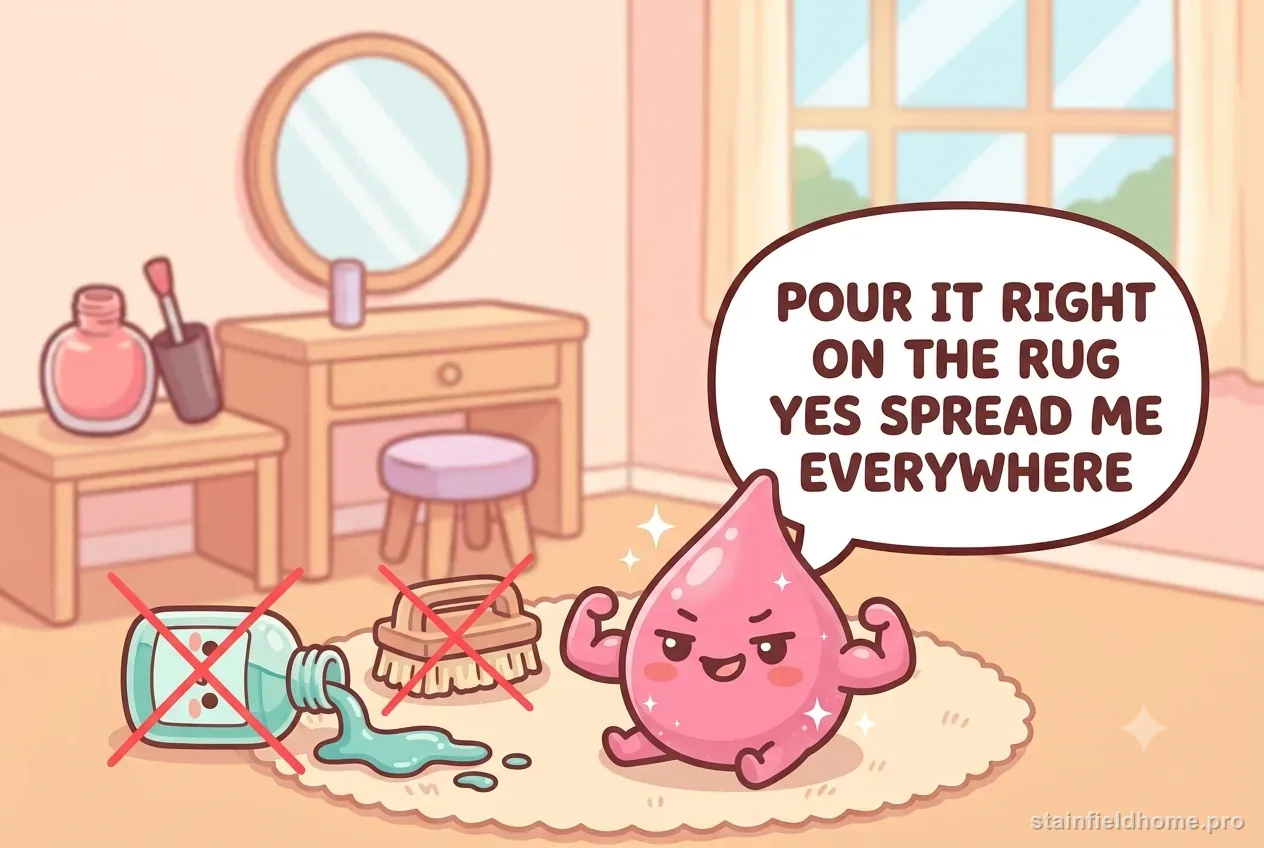
Nylon, polyester, wool, and olefin
Nylon is the most common fiber and the most forgiving. It shrugs off short bursts of acetone, so patient dabbing usually clears me completely when you start within the hour. Triexta, often sold under a brand name, behaves much like nylon here.
Polyester and olefin are also solvent-safe, with one catch each. Polyester can hold on to a dark dye shadow more stubbornly, so budget for the peroxide step. Olefin is oil-loving, so a tinted or moisturizing remover will leave a dull greasy patch that is harder to shift than the polish was; use only plain remover on it.
Wool needs care. Brief acetone contact is survivable but it can dull the fiber and lift some wool dyes, so test on a hidden spot, work quickly with a barely-damp cloth, and rinse thoroughly. On a valuable wool rug, hand-knotted, antique, or a flatweave, do not experiment; take it to a rug specialist.
Acetate, triacetate, rayon, and art-silk rugs are a flat no. Acetone dissolves them outright, and even non-acetone remover can craze and pucker the fibers. These go to a professional, full stop.
Loop-pile carpet, the Berber style, snags easily, so scrape with the flat of a card rather than a knife tip and never pick at a loop. On a cut-pile carpet you have the last-resort trim option that loop pile does not give you. And gel polish, cured hard under a lamp, is the exception to all of this: household remover barely softens it, so a small drip is picked out fiber by fiber and anything larger is a job for a carpet cleaner with professional solvents.
When to call a carpet pro
Bring in a professional if the spill is bigger than your palm, if it is a dark color on light wool or an unidentified fiber, if it has dried and been walked in, or if your patch test showed the backing softening or the dye running. A carpet cleaner has stronger solvents, extraction equipment that pulls residue out of the pad instead of leaving it there, and the option to cut in a matching plug from a closet if the fiber is truly ruined. Trying to save a callout fee by grinding away at a rug you cannot replace is a bad trade.
Painting your nails away from the rug
Do your nails over a hard floor, or spread an old towel and treat everything on it as a spill zone. A knocked-over bottle on tile is a ten-second wipe; the same bottle on carpet is an afternoon and possibly a permanent mark.
Keep a small bottle of clear, plain acetone and a few white rags with your polish kit, so the moment something tips you are treating me while I am still liquid, which is the difference between five minutes and two hours.
Close every bottle fully the instant you are done with it. Almost every carpet spill I cause comes from a bottle tipped over with its cap only resting on top. And if you use gel polish, be especially careful moving bottles and brushes around, because a gel spill is the one version of me you may not be able to undo at home.
Common questions
FAQ
Can I use acetone nail polish remover on any carpet?
No. Acetone dissolves carpet and rugs made of acetate, triacetate, or modacrylic and can weaken the latex backing on any carpet. Always patch-test a hidden area first. If you cannot identify the fiber, use non-acetone remover, still test it, or call a professional.
The polish has already dried hard. Is it too late?
Often not. Scrape and chip away every flake of dry film first, then soften what remains with remover on a cloth, pressing for ten to fifteen seconds before lifting with a plastic card. Repeat. A large dried pour, or one walked into the pile for weeks, may only fade rather than fully clear.
How do I get the red or pink shadow out after the polish is gone?
That leftover tint is pigment, so treat it like a dye stain. On light synthetic carpet, dab 3% hydrogen peroxide or an oxygen-bleach paste on it, cover with a damp cloth for fifteen to sixty minutes, then blot and rinse. Keep peroxide and bleach off wool, and patch-test first.
Does hairspray remove nail polish from carpet?
It did when hairspray was mostly alcohol. Today's formulas add resins and oils that leave a sticky residue in the pile, so a plain non-oily nail polish remover is the better tool.
Can I use a steam cleaner or hot water to speed things up?
No. Heat sets both the nitrocellulose film and any pigment shadow. Keep the whole job at warm-water temperature or cooler until every trace of color is gone, then you can steam-clean normally if you want.
Will nail polish remover bleach my carpet?
Plain acetone does not bleach synthetic carpet dye, but it can dissolve certain fibers entirely and soften the backing, and colored removers can deposit their own tint. Non-acetone remover is milder on fibers. The patch test tells you which risk applies to your carpet.
Sources reviewed
Keep reading
Related guides
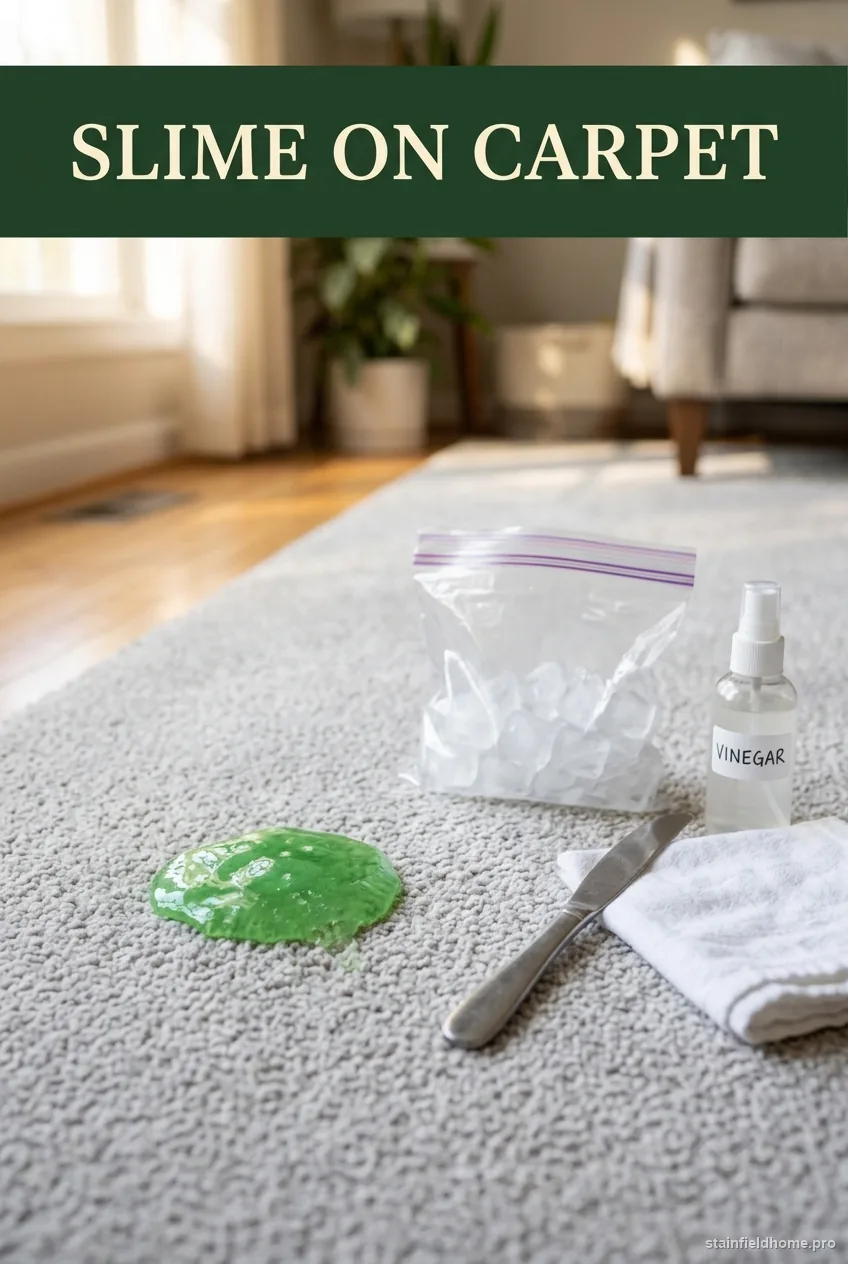
Slime on Carpet
How to Remove Slime From Carpet Without Damaging the Fibers
Lift dried or fresh slime out of carpet fibers with an ice-and-scrape method plus a vinegar or rubbing alcohol rinse, without soaking the backing or bleaching the color.
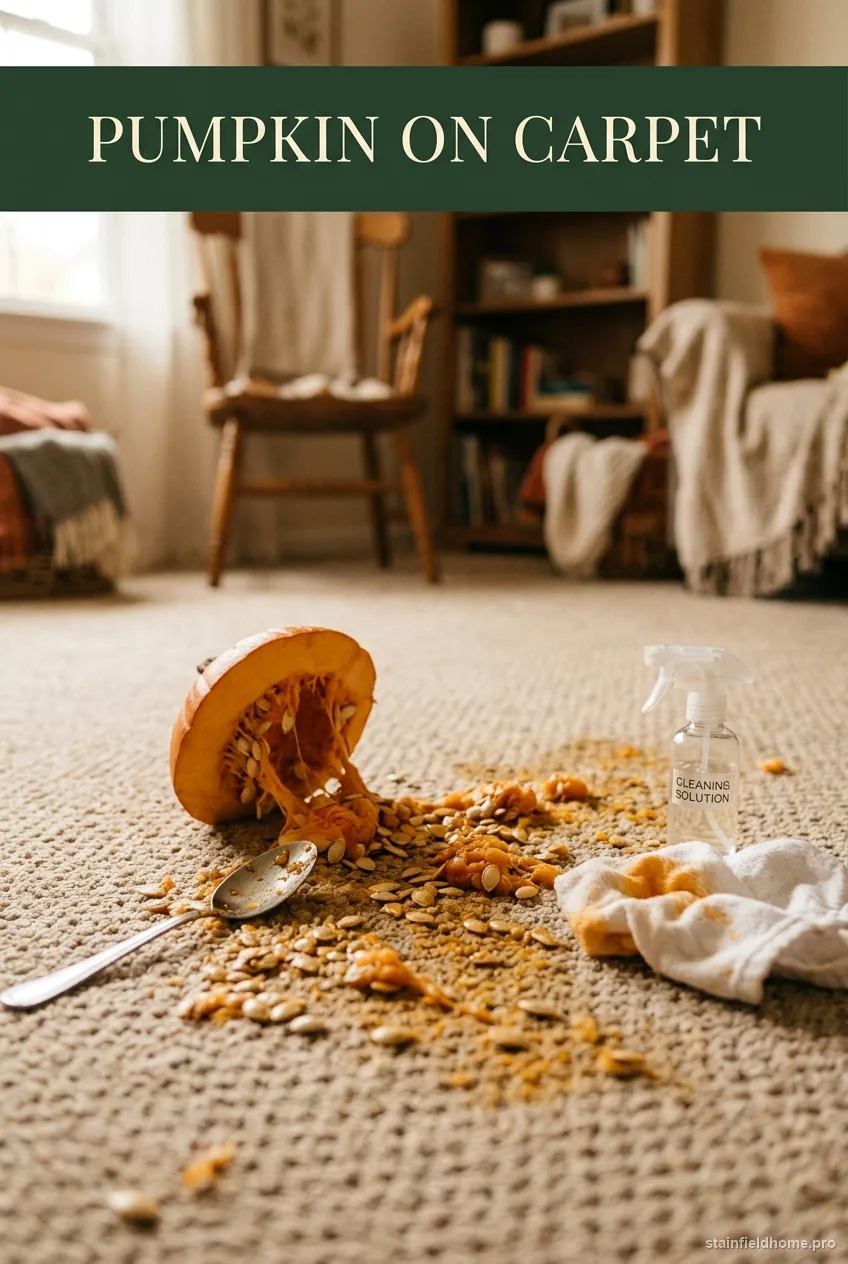
Pumpkin (carving, decorating, or puree) on Carpet
How to Remove Pumpkin Stains From Carpet
Remove pumpkin pulp and treat any remaining orange mark on carpet with a careful, low-moisture sequence that follows the carpet maker's guidance.
Dried acrylic paint on Carpet
How to Remove Dried Acrylic Craft Paint From Carpet
Soften a hardened acrylic paint spill in carpet with warm water and a little alcohol or acetone, work it out of the pile in stages, and rinse without spreading it.
Essential oil and reed-diffuser oil on Finished wood furniture
How to Remove Essential Oil and Diffuser Stains From Wood Furniture
Blot a diffuser-oil spill on finished wood, use a cautious absorbent step, and recognize when the finish needs a furniture repair professional.