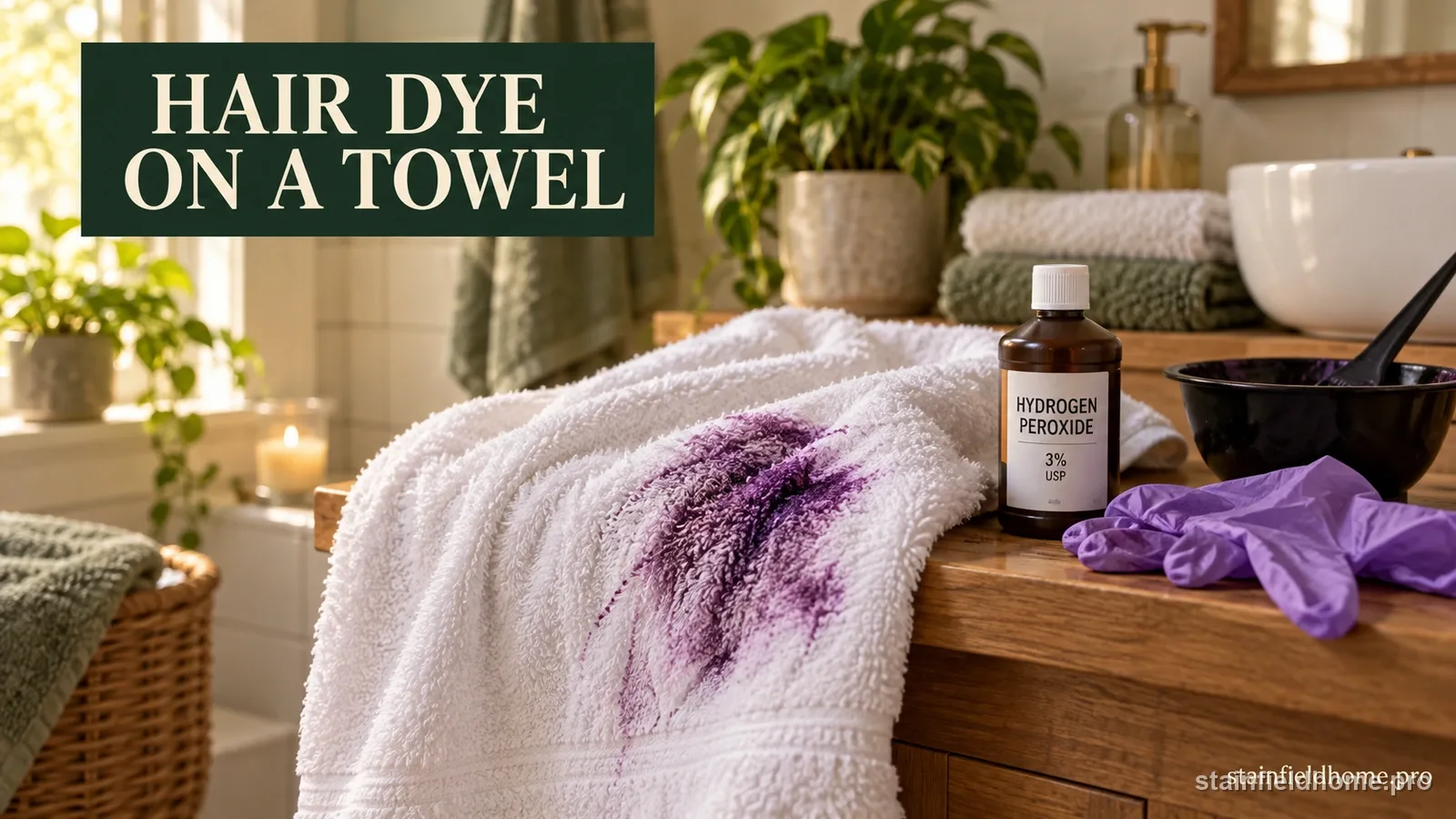
The quick answer
Act immediately: blot (don't rub) fresh dye with a paper towel, then rinse the back of the stain under cool running water to push dye out rather than through the fibers. Treat with a mix of dish soap and hydrogen peroxide or a dedicated hair-dye stain remover, then launder in the warmest water the towel's care label allows. Permanent and semi-permanent oxidative dyes bond chemically to fibers and often cannot be fully removed once set — treat white or light towels as at-risk for hair color from the first use.
What you’ll need
- Paper towels or a clean white cloth
- Dish soap
- Hydrogen peroxide (3% solution) or a commercial hair-dye stain remover
- An old toothbrush
- Laundry detergent
Why hair dye is one of the hardest stains to fully remove
Permanent and most semi-permanent hair dyes work by a chemical reaction: an oxidative dye penetrates and bonds with the protein structure of hair, which means it can bond with the protein and cellulose fibers in a cotton towel in a similar way, not just sit on the surface like a food stain would. Once that chemical bond forms and sets, especially after heat from a dryer, the color may be permanently altered rather than removed.
This is why hair-dye stains on towels have a reputation for being nearly impossible to fully treat once they've dried and been through a hot dryer cycle. The realistic goal with an older, set stain is often fading it as much as possible, not guaranteeing full removal — which makes speed on a fresh stain especially valuable.
Act immediately on a fresh stain
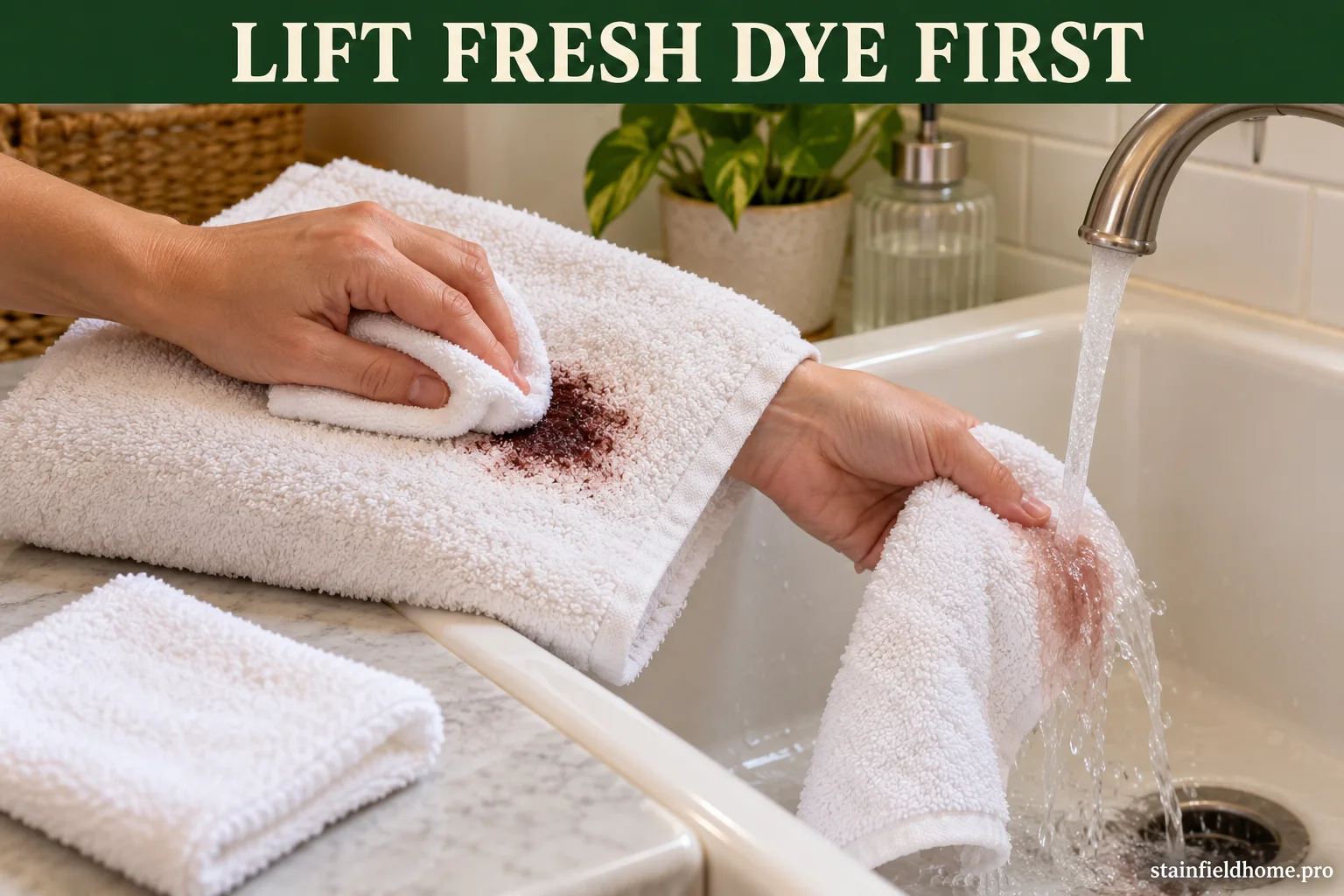
Cool water is important throughout this fresh-stain stage. Hot water can help set some dye pigments prematurely, which works against you before you've had a chance to treat the stain properly.
- 01
Blot, do not rub, the fresh dye with a paper towel or clean white cloth to lift as much wet product as possible without spreading it further into the fibers.
- 02
Turn the towel so the stain faces down and run cool water through the back of the fabric, pushing the dye out the way it came in rather than driving it deeper through to the front.
- 03
Apply a small amount of dish soap directly to the stain and work it in gently with your fingers or a soft toothbrush.
- 04
Rinse again with cool water, then check the stain before doing anything else — if it has visibly lightened, continue treatment; if it has set, move to the peroxide step.
Treating a stain that hasn't fully responded to soap alone
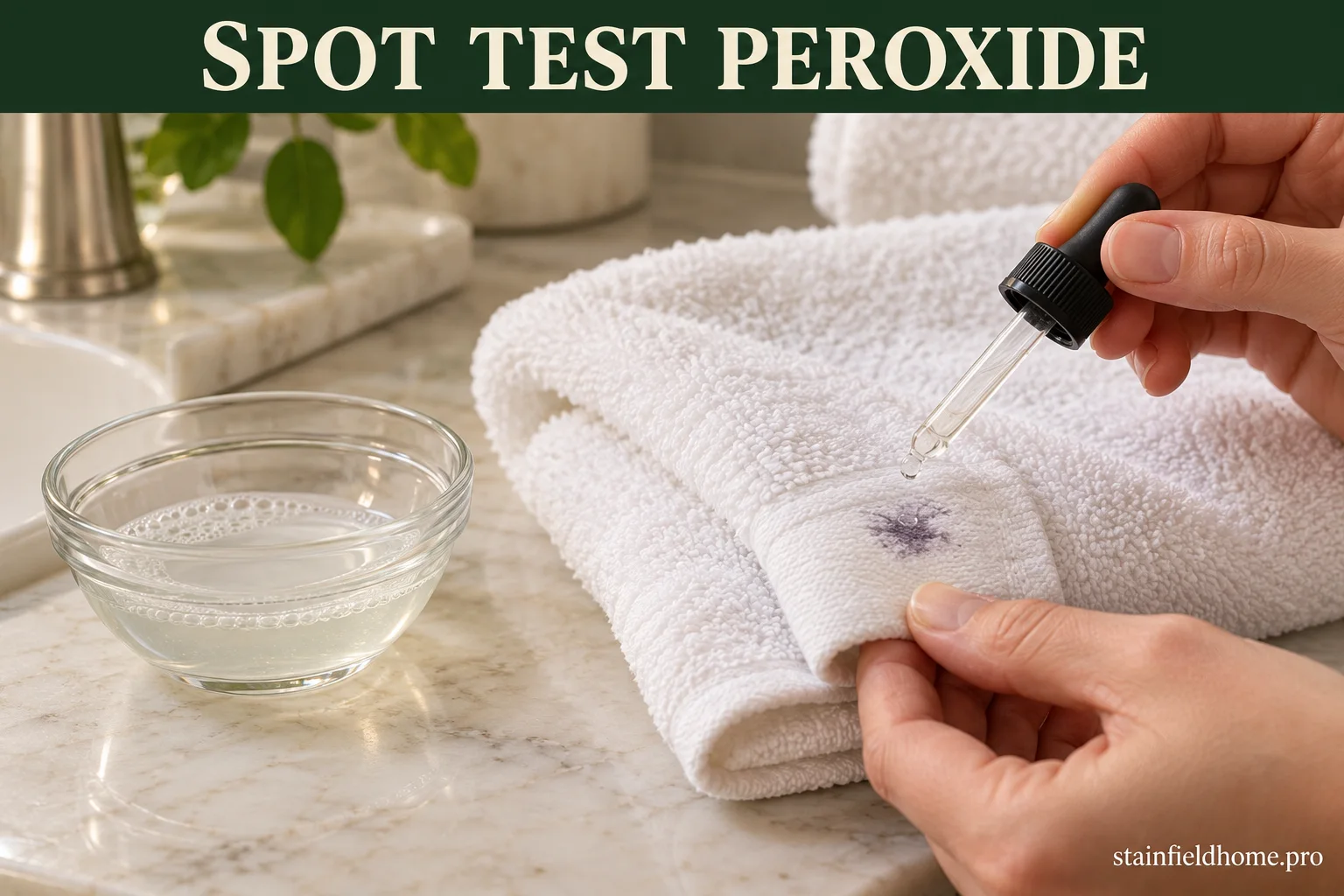
Hydrogen peroxide is a mild bleaching agent and works better on some dye pigments than others; it tends to be more effective on lighter or warmer-toned dyes than on very dark or vivid colors like black, blue, or intense red, which are formulated to be especially color-fast and resist fading by design.
Always test hydrogen peroxide on a hidden part of the towel first, such as an inside hem, since even a mild bleaching agent can lighten colored towels unevenly if the fabric isn't fully colorfast.
- 01
Mix a small amount of dish soap with hydrogen peroxide (roughly equal parts) and apply it directly to the remaining stain.
- 02
Let the mixture sit for 15 to 30 minutes, checking periodically that the fabric isn't showing any adverse reaction.
- 03
Rinse thoroughly with cool water.
- 04
Launder the towel in the warmest water the care label allows, using regular detergent, and check the stain before drying — do not put it in the dryer if any color remains.
The critical rule: never dry a towel with dye still visible
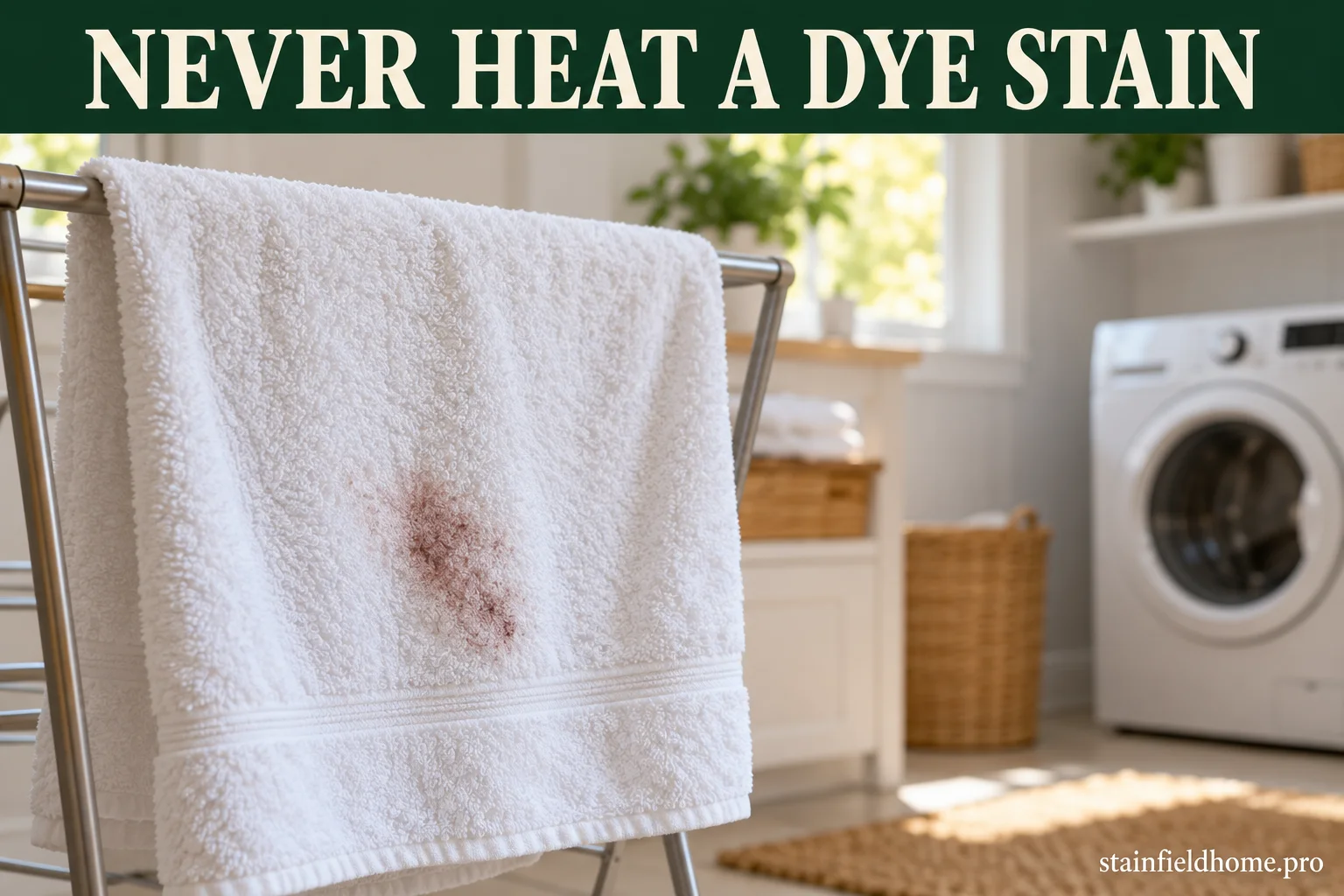
Heat from a clothes dryer can permanently set a hair-dye stain that might otherwise still respond to further treatment. If any trace of color remains after washing, do not dry the towel — repeat the treatment steps, or accept that the stain may be permanent, but avoid the dryer until the stain is either gone or you've decided it's not going to lift further.
This single habit — checking before drying, not after — is the difference between a stain that eventually fades with repeated treatment and one that becomes a permanent mark after one trip through a hot dryer.
When the stain is genuinely permanent
If a dark or vivid permanent dye has fully set and been through a dryer cycle, repeated treatment attempts often produce diminishing returns and can weaken the fabric from repeated chemical exposure without fully removing the mark. At that point, it's reasonable to treat the towel as a dedicated hair-color towel rather than continuing an open-ended removal effort, or to retire it if the stain is prominent on a light-colored towel.
Semi-permanent and temporary dyes, which don't chemically bond to fibers the way oxidative permanent dye does, generally respond better to repeated washing over time and are more likely to fade fully with patience.
Preventing the next stain
- Use a dedicated old or dark-colored towel specifically for hair-coloring sessions rather than risking a good white or light towel.
- Drape a towel around your shoulders during application, not just for drying afterward, since drips during application are a common source of stains.
- Keep a damp cloth nearby during coloring to wipe up drips immediately rather than letting them sit and dry on fabric.
- Rinse gloves and any dye-contaminated tools away from towels to avoid transfer during cleanup.
Common questions
FAQ
Can hair dye stains be removed from towels completely?
Fresh stains treated immediately with cool water, dish soap, and hydrogen peroxide have a good chance of being fully removed. Stains that have dried and been through a hot dryer, especially from dark or vivid permanent dye, are often only partially fadeable rather than fully removable.
Does bleach remove hair dye stains from white towels?
Chlorine bleach can help on some dye stains on white cotton towels, but hydrogen peroxide is a gentler first option that's less likely to damage fabric. Always check the towel's care label before using any bleach product.
Why did my hair dye stain get worse after I put the towel in the dryer?
Heat from a dryer can permanently set a dye stain that was still responding to treatment. Always check that a stain is fully gone before drying, since drying with any color remaining can lock it in.
Is semi-permanent hair dye easier to remove from towels than permanent dye?
Generally yes. Semi-permanent and temporary dyes don't chemically bond to fabric fibers the way permanent oxidative dye does, so they tend to fade more fully with repeated washing over time.
Sources reviewed
Keep reading
Related guides

Slime on Carpet
How to Remove Slime From Carpet Without Damaging the Fibers
Lift dried or fresh slime out of carpet fibers with an ice-and-scrape method plus a vinegar or rubbing alcohol rinse, without soaking the backing or bleaching the color.

Essential oil and reed-diffuser oil on Finished wood furniture
How to Remove Essential Oil and Diffuser Stains From Wood Furniture
Blot a diffuser-oil spill on finished wood, use a cautious absorbent step, and recognize when the finish needs a furniture repair professional.

Pumpkin (carving, decorating, or puree) on Carpet
How to Remove Pumpkin Stains From Carpet
Remove pumpkin pulp and treat any remaining orange mark on carpet with a careful, low-moisture sequence that follows the carpet maker's guidance.
Sweat on Baseball cap
How to Remove Sweat Stains and Odor From a Baseball Cap
Lift yellow sweat stains and odor from the sweatband of a baseball cap without warping the brim or shrinking the crown.