
The quick answer
Rinse a fresh blood stain from the back with cold running water, work in a small amount of liquid laundry detergent, and rinse again. For dried blood, soak the sheet in cool water, then use an enzyme-containing laundry presoak if the care label allows it. Wash only after the mark has lifted, and air-dry so dryer heat cannot set what remains.
What you’ll need
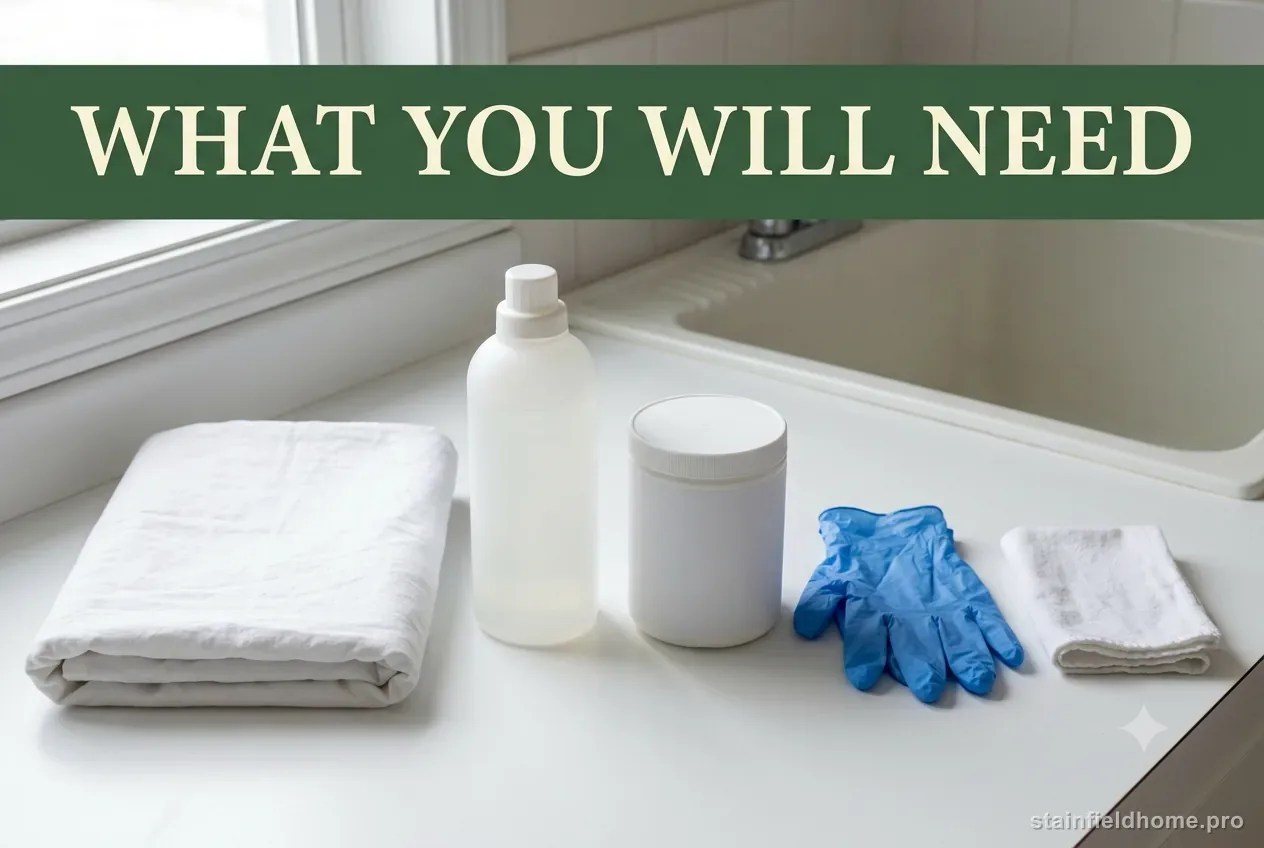
- Disposable gloves if the blood is not yours
- Cold running water or a clean basin
- Liquid laundry detergent
- Enzyme laundry presoak for a dried stain
- Oxygen bleach labeled safe for the sheet, if needed
- White towel for checking transfer
Start with the care label and basic hygiene
This method is for washable cotton sheets, not silk, wool, acetate, dry-clean-only fabric, or a mattress. Read the sheet’s care label before using a presoak or bleach. Printed cotton, dark cotton, cotton sateen, and sheets with decorative trim may have different temperature or bleach limits even though the main fiber is cotton.
If the blood belongs to someone else, wear disposable gloves and avoid splashing. Keep the sheet separate from other laundry while you pretreat it. Wash your hands and clean the sink or basin afterward. Stain removal is not a substitute for any laundering or disinfection directions appropriate to the situation.
For fresh blood: flush it out from the back
Cold water is the important first choice. The University of Georgia Cooperative Extension and the American Cleaning Institute both warn that heat makes blood stains more difficult to remove. The idea is to move residue out before a hot wash or dryer changes the stain.
- 01
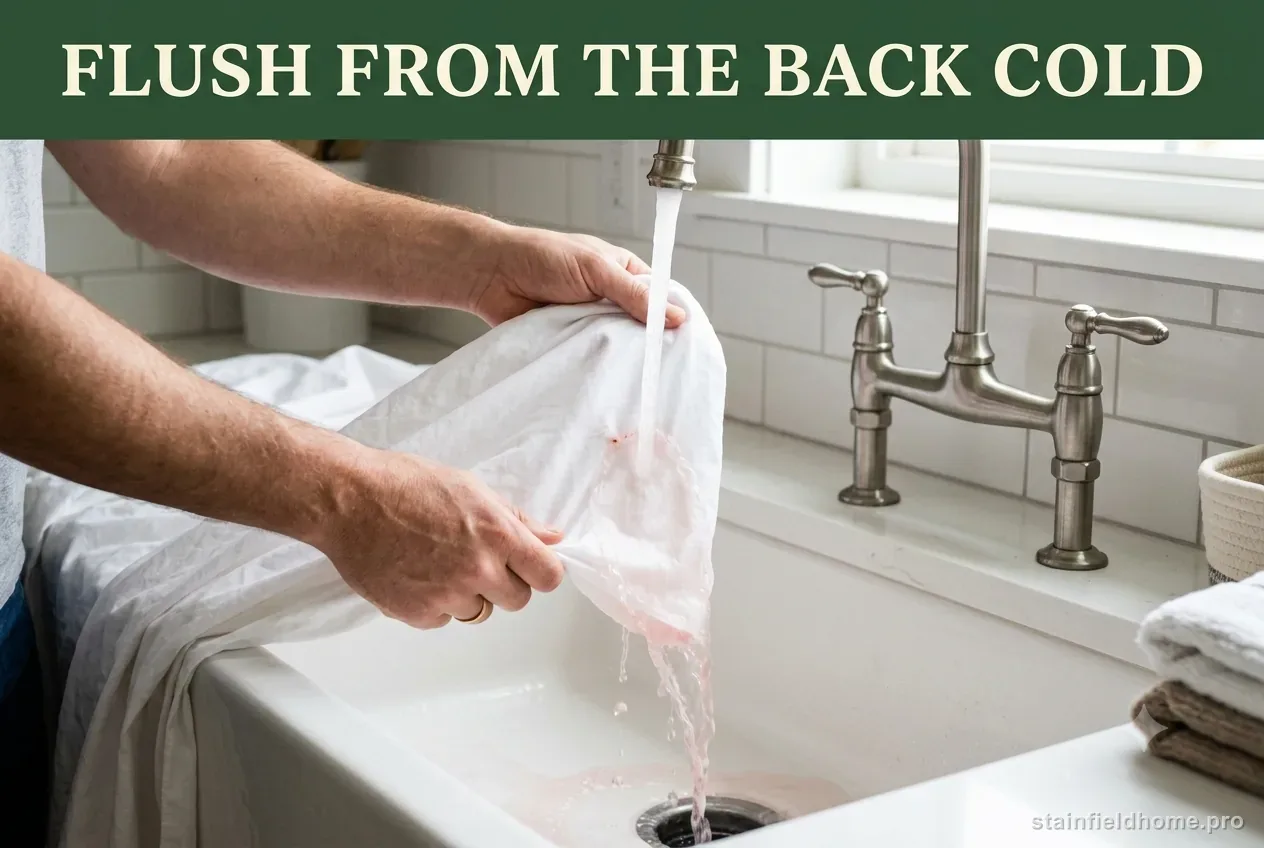
Remove the sheet from the bed and hold the unstained back of the fabric toward the faucet.
- 02
Run cold water through the stain so the flow pushes residue out the way it entered. Avoid hot water.
- 03
Gently squeeze—do not twist—the wet area. Repeat until the runoff is mostly clear.
- 04
Place a small amount of liquid laundry detergent on both sides of the damp mark. Work it in with your fingers by lightly rubbing fabric against itself.
- 05
Let the detergent sit for about 10 minutes unless its label gives different directions, then rinse with cold water.
- 06
Inspect in bright light. Repeat detergent treatment if color is still lifting. Wash only when the stain is gone or very faint.
For dried blood: rehydrate, then use enzymes
A dried stain often needs more than one cycle. That is normal. Stop and rinse between products rather than stacking cleaners on the fabric. Never mix chlorine bleach with ammonia, acids, peroxide, or other household cleaners.
- 01
Gently scrape off any dry surface residue with the edge of a spoon. Do not abrade the weave.
- 02
Soak the stained portion in cool water for at least 30 minutes. A large stain can soak longer; change the water when it becomes heavily discolored.
- 03
Rinse, then apply an enzyme-containing presoak or detergent according to its label. Enzyme products are not appropriate for every fiber, which is why this guide is limited to washable cotton.
- 04
Rinse and rub in liquid detergent if a shadow remains.
- 05
For white or confirmed colorfast cotton, a brief spot test with 3% household hydrogen peroxide may help a stubborn trace. Test at a hidden hem, use only a few drops, wait one to three minutes, and rinse thoroughly. Skip this on dark or uncertain dyes.
- 06
Launder according to the care label. Use oxygen bleach only if the label permits it and the product directions match the fabric.
Check before the sheet goes in the dryer
After washing, inspect the area while the sheet is still wet, then again in daylight. A wet fabric can hide a pale tan outline. If you can still see it, repeat the cool-water and detergent or enzyme step. Hang the sheet or lay it flat to air-dry during stain treatment.
Do not use the dryer as a test. Dryer heat can make a remaining stain harder to lift. Once the sheet is clean, future laundering can return to the temperatures allowed by the care label.
Adapt the process to white, colored, and printed cotton
White cotton is not automatically bleach-safe. Optical brighteners, wrinkle-resistant finishes, colored stitching, elastic, and decorative borders can react differently from the main cloth. Read both the care label and the stain-product label. If the sheet is ivory, printed, garment-dyed, or part of a matched set, test detergent, enzyme presoak, peroxide, and oxygen bleach at an inside hem before treating the visible area. A five-minute hidden check can prevent a permanent pale patch that is larger than the original stain.
For a colored sheet, repeated cold rinsing and a color-safe enzyme detergent are usually the sensible escalation. For a white sheet whose label allows non-chlorine bleach, an oxygen-bleach soak may help after the protein residue has been rinsed and treated. Measure the product and water rather than making a concentrated paste. Chlorine bleach is not a default finishing step: it can weaken fibers with repeated use, react with other cleaners, and damage trim even when the field of the sheet is white.
Cotton sateen deserves a light touch because vigorous spot scrubbing can change its smooth sheen. Percale tolerates handling better, but its yarns can still fuzz under a stiff brush. On printed cotton, blot from the back and keep checking for dye transfer. If the design moves onto a white towel, rinse immediately and stop using the product that caused it.
Handle seams, mattress contact, and larger stains
Blood often reaches a folded hem, fitted-sheet elastic, or the mattress protector below. Unfold the fabric fully and rinse each affected layer separately so residue is not trapped between them. Support a fitted corner in a basin instead of stretching the elastic under a strong faucet. If the mark passed through to a washable protector, pretreat that item according to its own label; waterproof membranes and cotton sheets may not share the same bleach or dryer limits.
For a large stain, do not pour several products into a bucket and hope for a stronger result. Begin with a cool-water rinse, drain the basin, and make a fresh, label-measured enzyme solution. Keep the stained portion submerged and agitate gently at intervals. Replace heavily discolored soak water so dissolved residue is not redeposited. Rinse completely before deciding whether another cycle is needed.
If the sheet has already been dried, improvement may be gradual. Photograph the dry mark in the same light after each attempt; this makes it easier to see whether treatment is working or merely wetting the fabric. Two careful cycles are more useful than continuous rubbing. When there is no visible change, stop before thinning the cloth and consider a professional laundry for valuable or monogrammed bedding.
Mistakes that set blood for good
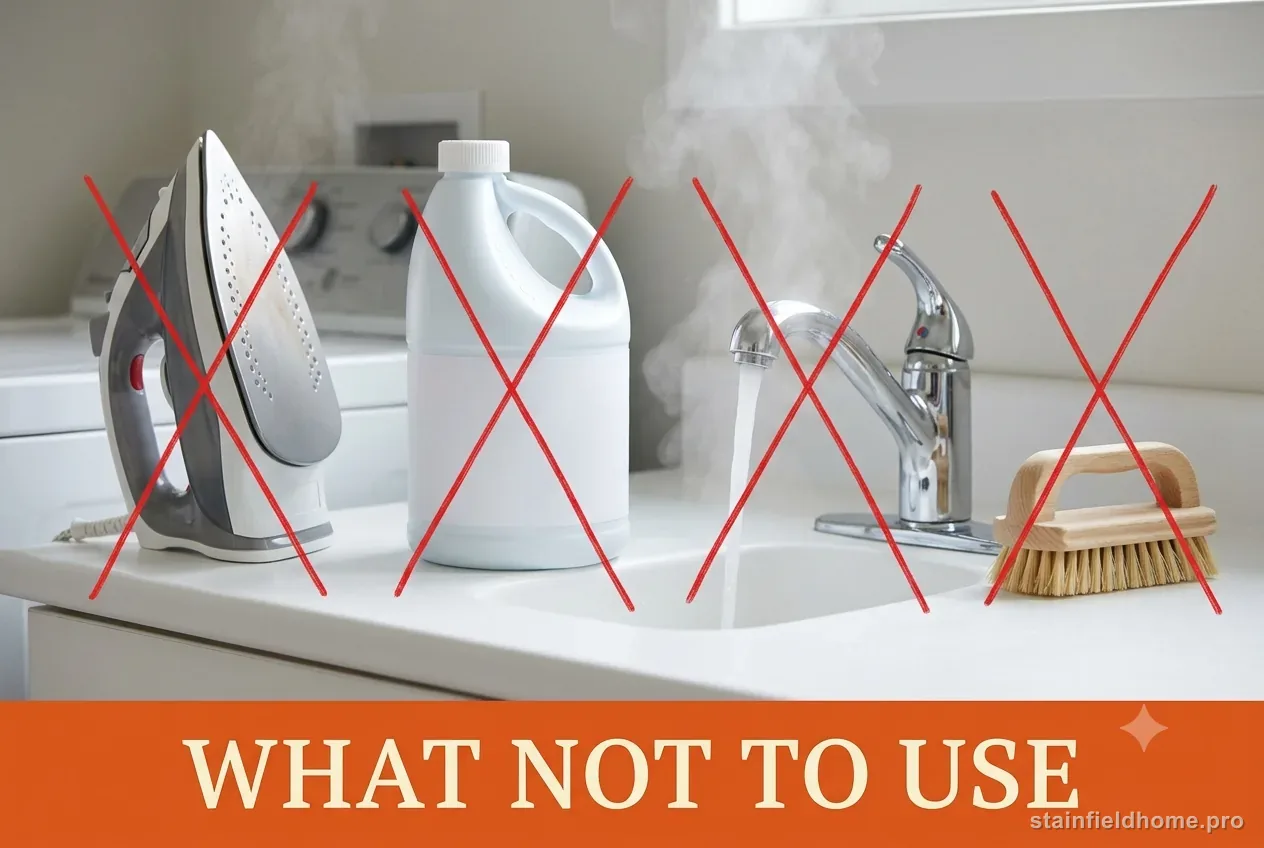
- Hot water at the beginning, a hot iron, or a dryer before the stain is gone
- Chlorine bleach on colored cotton or any sheet whose label prohibits it
- Hydrogen peroxide without a colorfastness test
- Mixing ammonia, bleach, peroxide, vinegar, or other cleaners
- Aggressive brushing that roughens the cotton yarns
- Using this washable-cotton method on silk, wool, upholstery, or a mattress
Make future cleanup faster
Use a washable mattress protector beneath the fitted sheet and keep liquid detergent near the laundry sink. If nosebleeds are common, a folded clean towel on the bedside table makes it easier to protect bedding immediately. The practical rule is simple: cold rinse first, heat only after the mark is gone.
Common questions
FAQ
Can I use hydrogen peroxide on colored cotton sheets?
It may lighten some dyes. Use it only after a hidden colorfastness test, and skip it when the sheet is dark, printed, or its care label limits bleaching agents.
Why did the stain turn brown after washing?
A residual stain can look tan or brown once it dries, especially if it met heat. Re-soak in cool water, use an enzyme product approved for washable cotton, rinse, and air-dry to check again.
Can I put blood-stained sheets straight in the washing machine?
Pretreat first. Flushing and working detergent directly into the mark gives the residue a way out before the full wash, and it lets you confirm that the stain is lifting.
Sources reviewed
Keep reading
Related guides
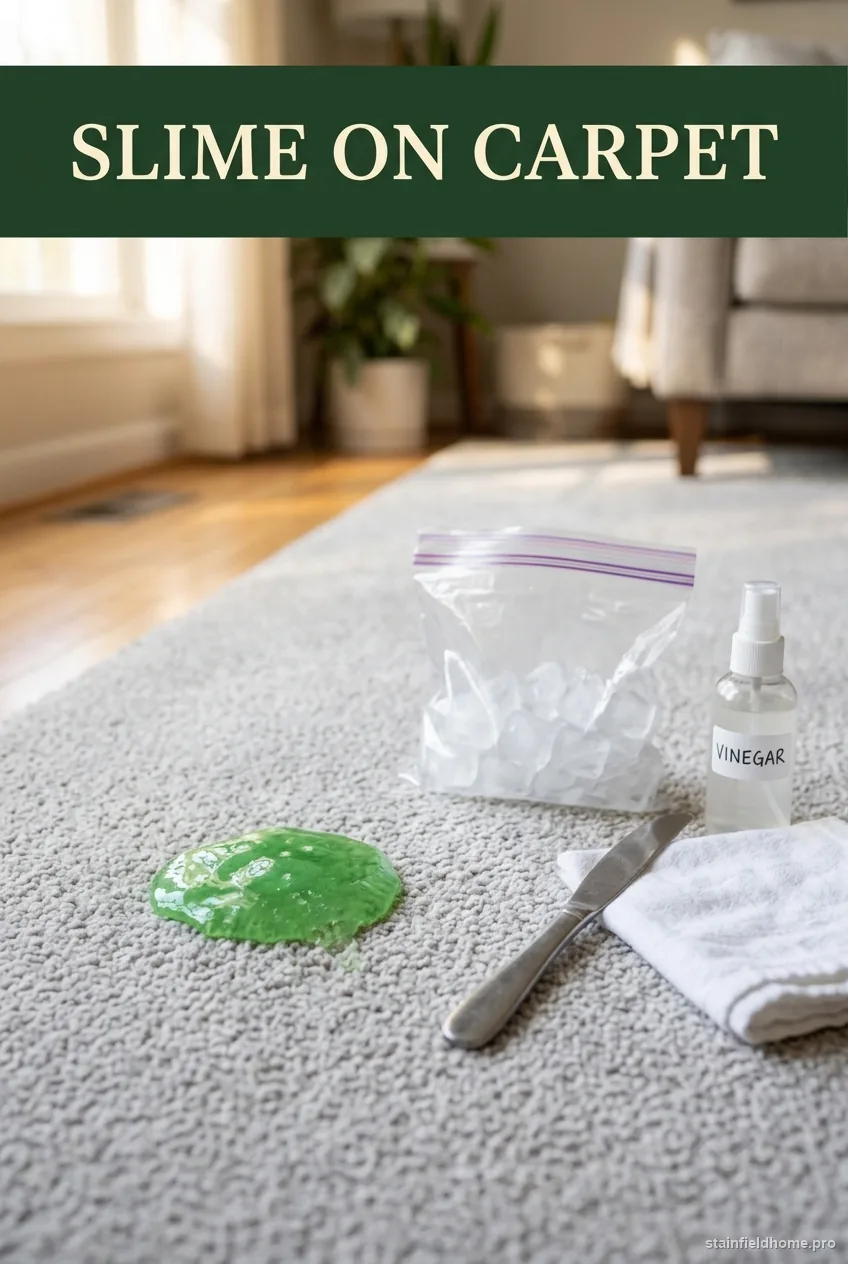
Slime on Carpet
How to Remove Slime From Carpet Without Damaging the Fibers
Lift dried or fresh slime out of carpet fibers with an ice-and-scrape method plus a vinegar or rubbing alcohol rinse, without soaking the backing or bleaching the color.

Essential oil and reed-diffuser oil on Finished wood furniture
How to Remove Essential Oil and Diffuser Stains From Wood Furniture
Blot a diffuser-oil spill on finished wood, use a cautious absorbent step, and recognize when the finish needs a furniture repair professional.
Pumpkin (carving, decorating, or puree) on Carpet
How to Remove Pumpkin Stains From Carpet
Remove pumpkin pulp and treat any remaining orange mark on carpet with a careful, low-moisture sequence that follows the carpet maker's guidance.
Sweat on Baseball cap
How to Remove Sweat Stains and Odor From a Baseball Cap
Lift yellow sweat stains and odor from the sweatband of a baseball cap without warping the brim or shrinking the crown.