
The quick answer
Bouclé's nubby loops trap spills, so blot promptly without rubbing. Find the furniture care tag and follow its cleaning code: W allows water-based upholstery cleaner, S allows water-free solvent, WS allows either, and X is vacuum-only. If the tag is missing or unclear, ask the furniture maker before applying liquid. Test any permitted cleaner in a hidden spot, use very little, and let the fabric air-dry.
What you’ll need
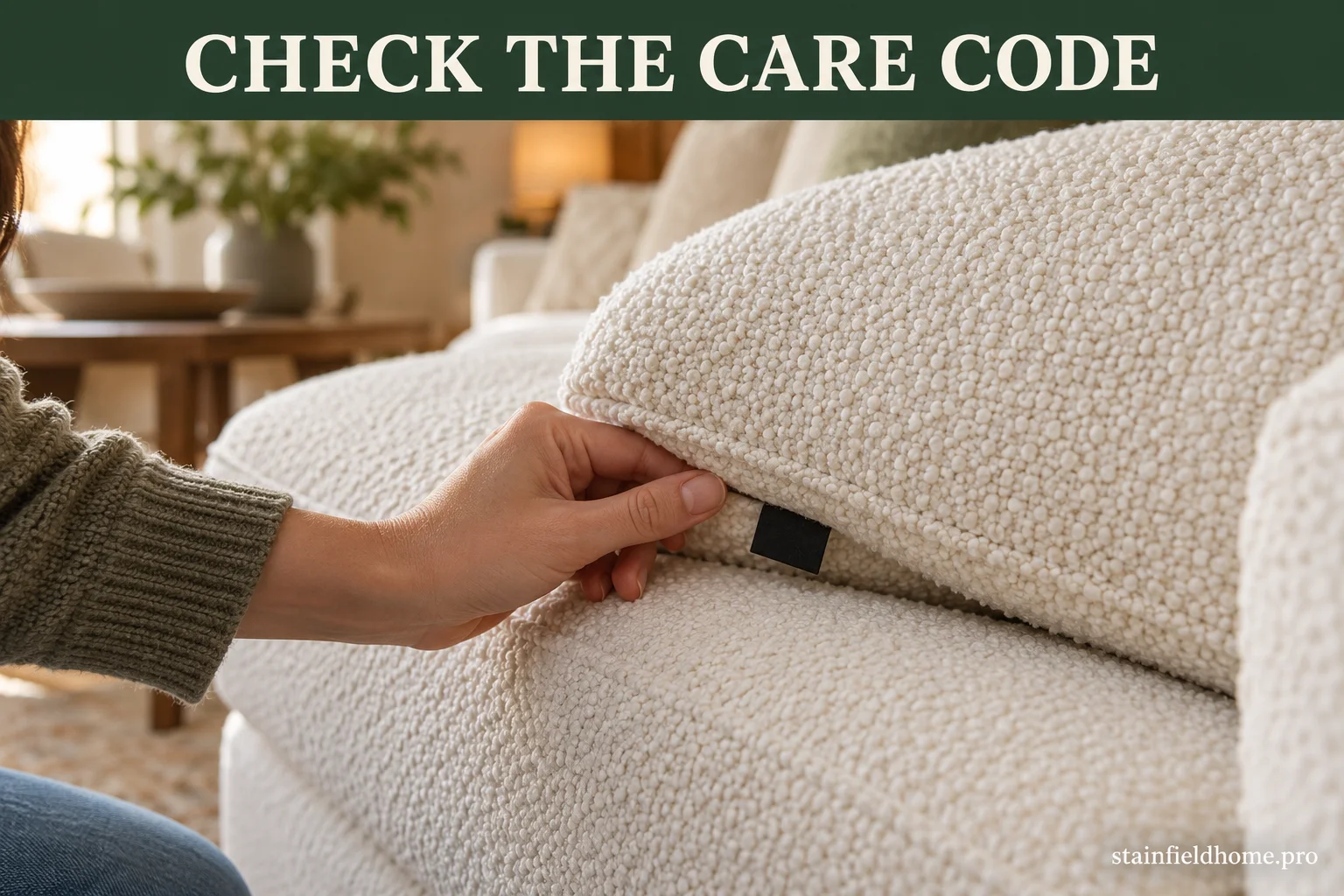
- The furniture's cleaning-code tag (check under a cushion or along the frame)
- A mild, clear, dye-free detergent for W or WS fabric
- A dry-cleaning solvent or upholstery-safe spot solvent for S or WS fabric
- White cotton cloths
- A soft-bristled brush
- Distilled or filtered water
- A vacuum with an upholstery attachment
Find the cleaning code before you touch a stain
Furniture makers sew a small black tag under a cushion or along the underside of the frame. It carries a single letter code: W for water-based cleaners only, S for solvent-based cleaners only, WS for either, and X for vacuum-only fabric that shouldn't be cleaned with liquid at all. Bouclé shows up across all four codes depending on its fiber blend, so this tag matters more here than on a plainer weave.
If you can't find a tag, treat the piece as an S-code fabric until you can confirm otherwise with the manufacturer or retailer. Bouclé is often a wool, wool-blend, or synthetic loop knit. Several of those fibers water-spot or shrink slightly when a water-based cleaner is used on fabric meant for solvent cleaning only.
Blot immediately: the loops make scrubbing risky
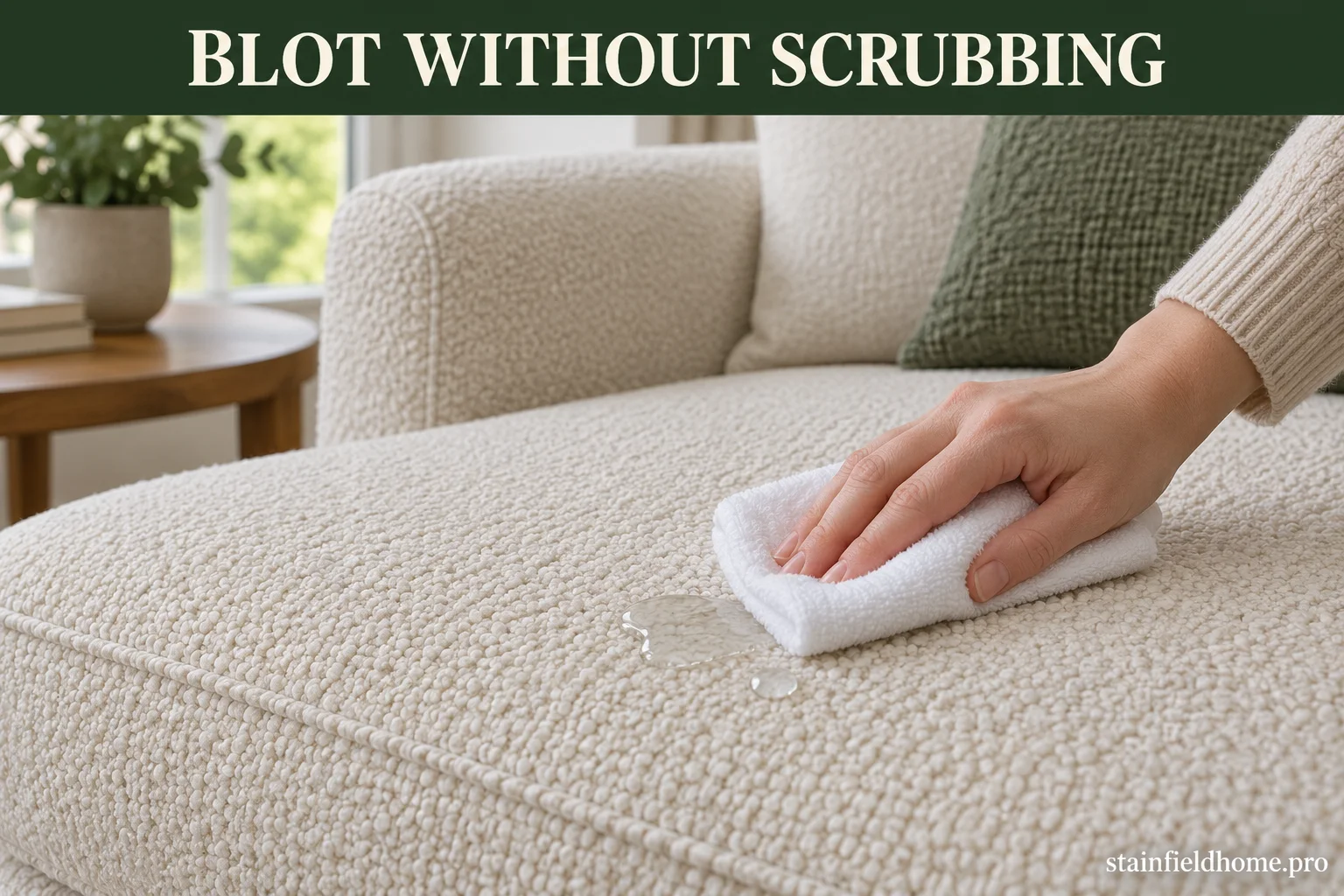
Bouclé's texture comes from small, uneven loops of yarn rather than a flat weave. That's why it looks and feels the way it does, and why rubbing is a problem. Friction catches on those loops, pulling some flat and leaving others standing. You end up with a matted patch that doesn't match the surrounding texture, even after the stain is gone.
Blot from the outer edge of the spill toward the center with a dry cloth first, lifting as much liquid as possible before any cleaner goes on. Press straight down and lift straight up. Switch to a clean section of cloth as soon as one gets damp, so you're always lifting the spill instead of pushing it back in.
Treating a water-based spill
- 01
Confirm the tag allows water (W or WS) before starting.
- 02
Mix a small amount of a mild, clear, dye-free detergent into cool water until it's barely sudsy.
- 03
Dampen a white cloth in the solution (not wet, just damp) and blot the stain from the outside in.
- 04
Follow with a cloth dampened in plain distilled water to rinse out any soap residue, blotting the same way.
- 05
Blot with a dry towel to pull out as much moisture as the fabric will give up, then let it air-dry fully before sitting on it again.
Treating an oil-based spill
- 01
Confirm the tag allows solvent (S or WS) before starting, and check the solvent product's own label for upholstery suitability.
- 02
Blot first with a dry cloth. Then dust the spot with cornstarch or a bit of talc and let it sit for 15 minutes, so it pulls surface oil out before any liquid touches the fabric.
- 03
Sweep the powder off with a soft-bristled brush, working in the direction the loops naturally lie.
- 04
If a mark remains, put a small amount of dry-cleaning solvent on a cloth, never directly on the fabric. Work in a well-ventilated room away from open flames, and blot from the outside in.
- 05
Let the area air-dry completely and check it in good light before deciding whether a second, light pass is needed.
Reviving loops that look flattened afterward
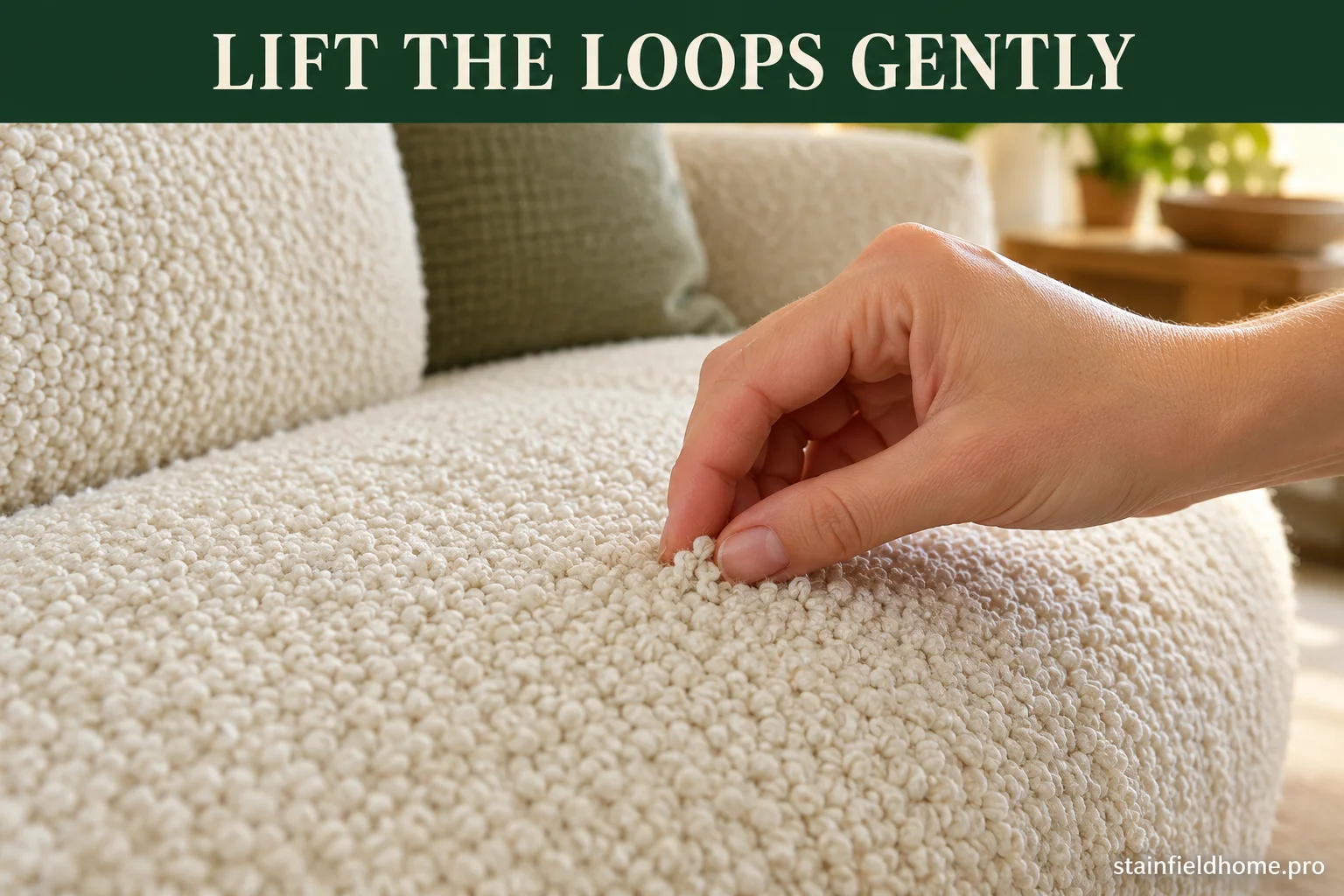
A patch that looks pressed flat after cleaning, or after months of regular sitting, usually isn't ruined: bouclé loops relax back with a little encouragement. Once the fabric is completely dry, brush the area gently with a soft-bristled brush. Follow the direction the loops naturally sit, and work in short strokes instead of one long pass.
For a more stubborn flat spot, first check the furniture maker's care instructions. Steam is still moisture, and it can shrink, felt, or mark some wool blends and finishes. Use a steamer only when the maker permits it, keep it moving at the distance the manual specifies, and stop if the color or texture changes.
What ruins bouclé fastest
The most avoidable damage comes from friction, excess liquid, and a cleaner that conflicts with the care code. A stiff brush can break or pull the loops; a wet sponge can push a spill into the cushion and leave a tide mark. Strong stain removers, bleach, laundry detergent, and untested home mixtures can also change color or leave a sticky residue that attracts soil.
Avoid cutting a raised loop to make it flush. That can turn one snag into a visible gap. Do not use a razor, lint shaver, or abrasive pad on the textured face. If a loop has pulled loose, stop handling it and ask an upholstery repairer how to secure it from the reverse side.
Never mix cleaning products. If you have already applied a product and the fabric looks altered, blot away what you can with a clean dry cloth and contact the maker or a professional cleaner rather than layering on another chemical.
- Direct-contact steam cleaning or a hot iron, which can felt wool-blend loops together permanently.
- Scrubbing in circles instead of blotting, which mats and pulls the loop texture unevenly.
- Bleach or any strong solvent that isn't confirmed against the fabric's own cleaning code.
- Soaking the cushion cover, or letting cleaning solution sit long enough to reach the foam underneath. That can cause mildew that no surface cleaning will fix.
- Sitting on a damp cushion before it's fully dry, which reflattens loops that just started to recover.
Weekly upkeep that heads off most stains
A low-suction upholstery vacuum pass once a week removes dust and crumbs before they settle between the loops. Fit the fabric attachment and move it lightly in the direction of the pile; do not press a narrow nozzle hard against the yarn. Check the attachment for burrs or sharp edges first, since a rough plastic seam can catch a loop.
For lint or pet hair, lift it gently with a clean, soft clothes brush or a lint tool that the maker approves. Try it on the back of a cushion first. Some rubber tools create too much drag on delicate loop yarn, so stop if fibers rise or snag. Rotate reversible cushions and vacuum the seams, where grit tends to collect.
Before a full cleaning, read both the upholstery tag and the furniture care guide. The cover may not be removable or washable even when the fabric itself looks sturdy. Keep the care information with the receipt or photograph the label so you can identify the exact product and fabric blend later.
- Vacuum with a low-suction upholstery nozzle weekly to lift dust and crumbs before they work into the loops.
- Rotate and flip loose cushions regularly so wear and any fading happen evenly.
- Add a washable throw or arm covers over the highest-contact spots (armrests and the front seat edge) if the piece sees daily use.
- Treat any spill the same day instead of letting it dry. A same-day water-based spill is a five-minute blot, while a week-old one is a full cleaning-code project.
Pets, kids, and light-colored bouclé
Cat claws are the biggest threat to the loops. If a loop snags and pulls out, don't tug it and don't snip it flush. Pull it back through to the underside of the fabric with a fine crochet hook or a blunt needle. Pet hair sticks in the loops too. A dry rubber glove dragged lightly over the surface gathers most of it, and a lint roller handles the rest.
Cream and white bouclé shows everything. Dye from new dark jeans, a spilled coffee, or a pen mark is easiest to lift within the first day. Treat it like any other spill: check the tag, blot, and work from the outside in. An upholstery fabric protector can add some resistance, but test it on a hidden spot first, because some sprays leave a stiff patch or a water ring.
When to hand it to a professional
Call an upholstery cleaner if the tag carries an X code or a stain got worse after your first blot. Call one too if the whole seat needs a deep clean instead of a spot fix. Tell them the fabric content and what caused the stain. It also helps to stop treating it yourself at that point. Repeated damp cloths and solvents can spread the mark or leave a ring that's harder to fix than the original spill.
Common questions
FAQ
Can I use a steam cleaner directly on a bouclé sofa?
Only if the furniture maker's care instructions specifically allow steam for that fabric. Steam adds heat and moisture, both of which can distort or felt some looped wool blends. If permission is unclear, skip steam and ask the maker or an upholstery cleaner.
My bouclé looks flat and shiny where I always sit. Is that ruined?
Usually not. That's flattened pile. A soft-bristled brush worked in short strokes, sometimes paired with a few seconds of steam held away from the fabric, relaxes most flattened loops back into shape.
Is bouclé a good choice for a house with kids or pets?
It holds up reasonably well against everyday wear, but the open loops can snag on claws and small fingers, and a sharp scratch can pull a loop loose. A performance-fabric blend labeled pet- or kid-friendly, checked against its own cleaning code, is a more forgiving choice than a delicate wool bouclé for a high-traffic household.
Do synthetic bouclé-look fabrics clean the same way as real bouclé?
The general approach (blot, check the code, avoid scrubbing) still applies. But synthetic polyester or acrylic bouclé-style weaves are usually more water- and stain-resistant than a wool or wool-blend original, so they tolerate a slightly more forgiving cleaning routine. Always confirm with the tag instead of assuming based on how a fabric looks.
Sources reviewed
Keep reading
Related guides

Burnt-on grease and food residue on Air fryer basket
How to Clean Burnt-On Grease From an Air Fryer Basket
Break down baked-on grease in an air fryer basket with a soak and baking-soda paste, without scratching the nonstick coating or getting water near the heating element.
Permanent hair dye on Bathroom countertop
How to Remove Box Hair Dye From a Bathroom Countertop
Get permanent hair color off quartz, laminate, cultured marble, or sealed stone before it sets, using the mildest method the surface allows and never an abrasive pad.
Yellowed tape adhesive on Painted wall
How to Remove Yellowed Tape Residue From a Painted Wall
Take aged, hardened tape adhesive off painted drywall without pulling the paint, using warm heat, an oil to soften the gum, and the gentlest possible scrape.

Formula and spit-up on Baby car-seat harness straps
How to Clean Spit-Up From Car-Seat Harness Straps
Safely remove formula and spit-up from car-seat harness straps without soaking, bleaching, or weakening crash-safety webbing.