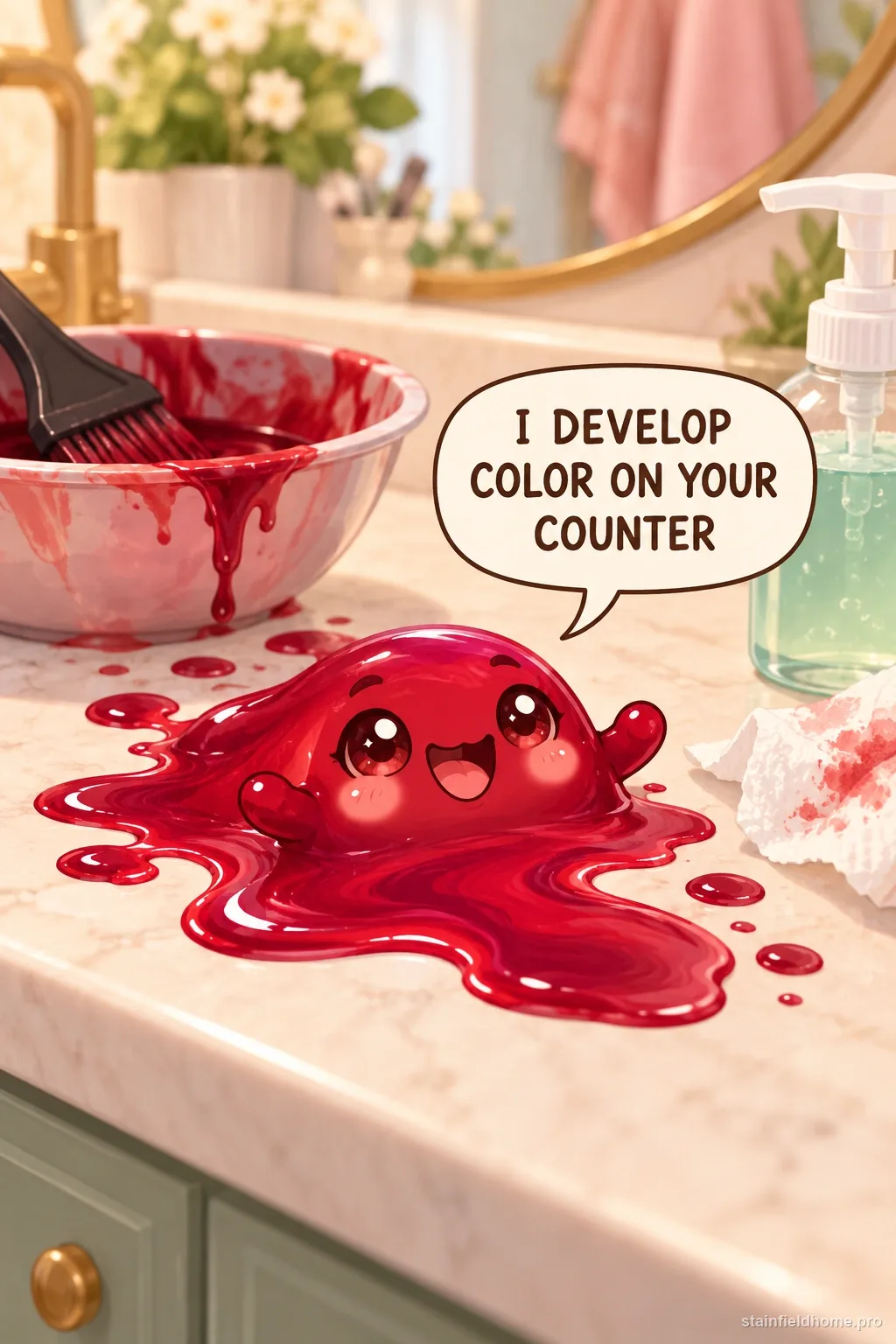
The quick answer
Blot wet dye immediately, then identify the exact counter material and follow its care guide. Start with a soft cloth and mild dish soap; use a stronger spot treatment only if the countertop maker approves it for that surface. Avoid abrasives and solvents on unknown, porous, or coated counters, and stop if the finish changes.
What you’ll need
- Soft microfiber cloths
- Baking soda and water, or a plain whitening toothpaste (not gel)
- Rubbing alcohol (isopropyl)
- A magic-eraser-style melamine sponge, used with caution
- Dish soap and warm water for rinsing
- A countertop-safe sealer, if the surface is natural stone
Identify your countertop first
The safe method depends on the exact material and brand. Engineered quartz, laminate, acrylic solid surface, cultured marble, and natural stone have different resin, coating, and seam systems. Some manufacturers approve particular household cleaners; others warn against alcohol, abrasives, or high-pH products. A generic countertop recipe cannot safely cover all of them.
If you are not sure, treat the counter as the most delicate option: soft cloths only, mild soap and water, and a hidden spot test before anything stronger. Identify the material from an invoice, edge profile, label under the sink, or installer. Keep the dye away from sink seams and backsplashes, where it can wick beneath a surface and become harder to reach.
Deal with wet dye in seconds, not minutes
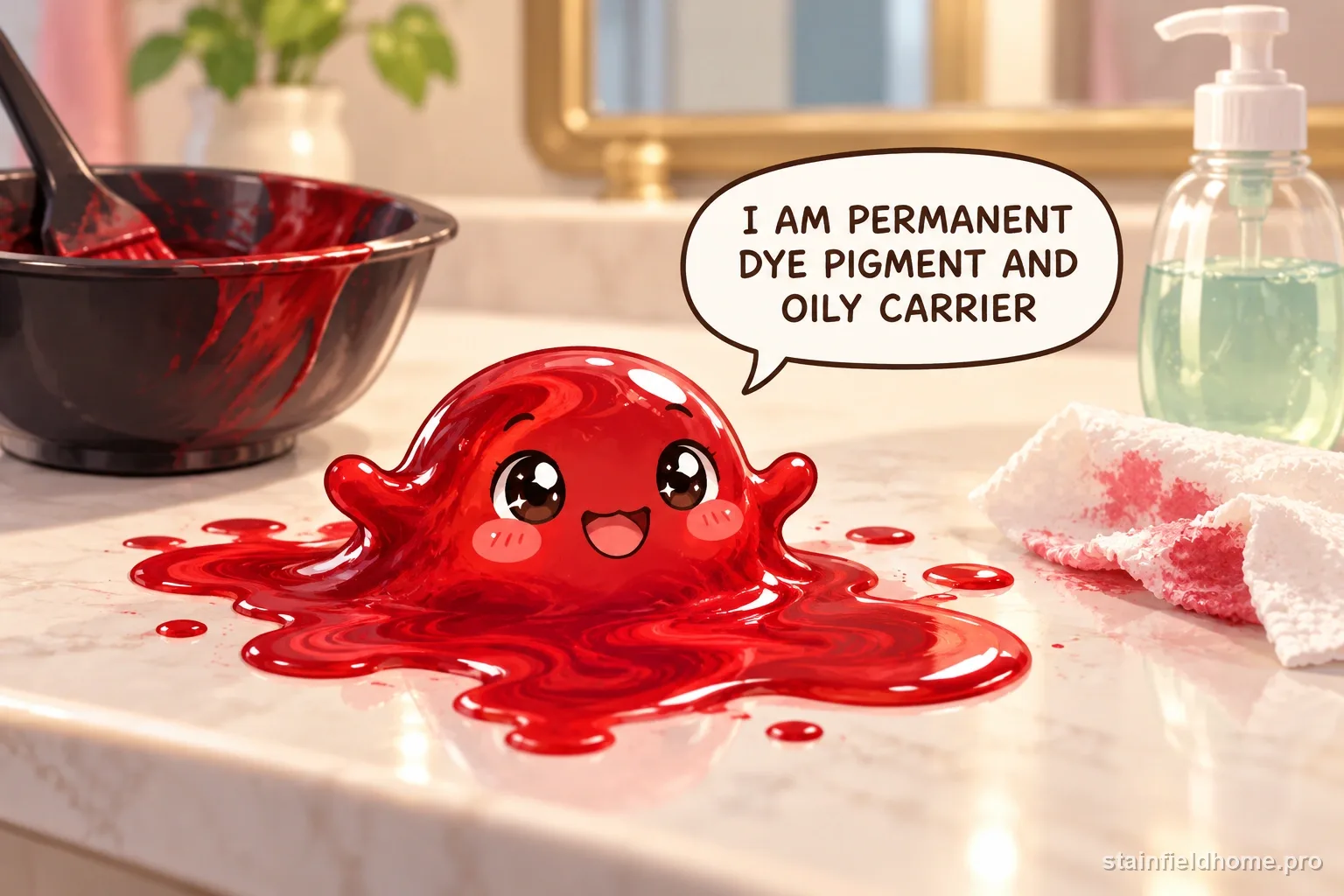
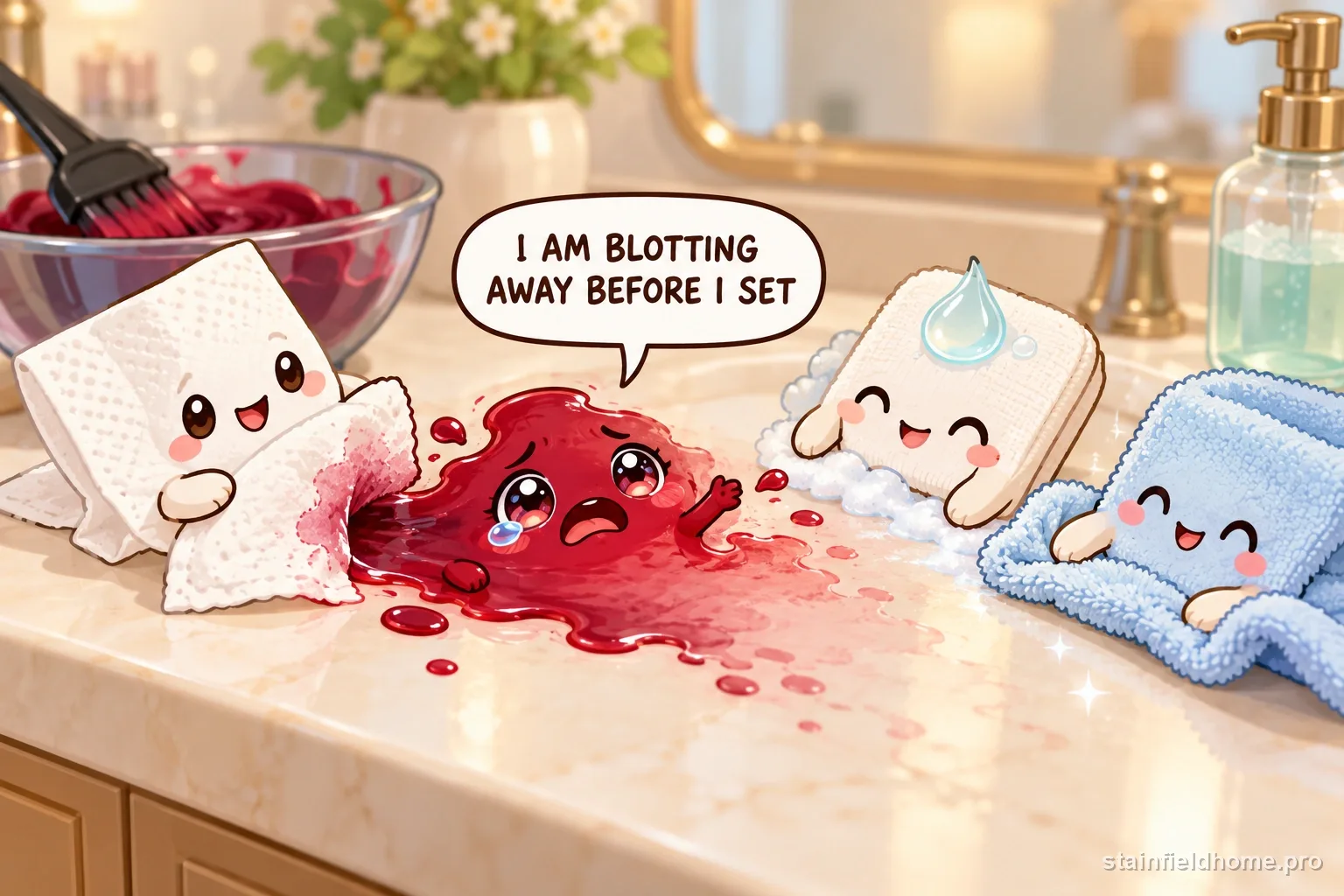
Permanent color develops fast, and on a light or porous surface the difference between wiping it at 30 seconds and at five minutes is often the difference between no mark and a lasting one. Blot, do not smear, with a damp paper towel, then wipe with a clean damp cloth working from the edge of the spill inward so you are not enlarging it.
Follow with a drop of dish soap on a damp cloth to pick up the oily carrier in the dye, then rinse. On quartz or laminate this alone usually leaves nothing behind if you caught it quickly.
Start mild on a dried spot
For a stain that has set, start with the surface maker's ordinary cleaner or a soft cloth with mild dish soap. Wipe rather than scour, then rinse and dry so you can see the true mark. Do not assume baking soda or whitening toothpaste is harmless: both can be abrasive, and toothpaste formulas vary. Use them only if the maker permits them and a hidden test shows no change in sheen.
A hair dye can include oxidative dye intermediates, alkalizers, and oily carriers, so the mark may be more than a surface smear. Repeating a cleaner that does not change the stain can wear the finish without removing the color. Follow the countertop maker's stain-removal directions for that specific product, or use a professional stone or surface-restoration service if the color has entered a pore or seam.
Step up carefully
Only step up to a solvent or poultice when the material manufacturer specifies one for hair dye. Cambria's quartz care guidance, for example, recommends mild soap and water for routine cleaning; it does not make every solvent or abrasive safe on every quartz brand. If an approved cleaner is used, put it on a cloth, keep contact time short, rinse fully, and never let it run into a seam.
For natural marble or travertine, avoid acids and abrasive powders because they can etch the stone or change the polish. A stone-safe poultice may help with a true absorbed stain, but use a product intended for that stone and follow its instructions. If the dye has entered a seam, cultured surface, or porous stone, a restoration professional can test the finish before treatment.
Rinse, dry, and re-seal if needed
Whatever method worked, finish by washing the area with dish soap and warm water and drying it with a clean cloth, so no cleaner or abrasive residue is left to interact with skincare products later.
Do not apply sealer automatically after stain removal. Sealer does not repair etching, scratches, or a changed resin finish, and not every counter takes sealer. Follow the stone fabricator's maintenance instructions; if a water drop darkens an unsealed stone, ask the installer whether the surface needs resealing.
Tools and cleaners that ruin the finish
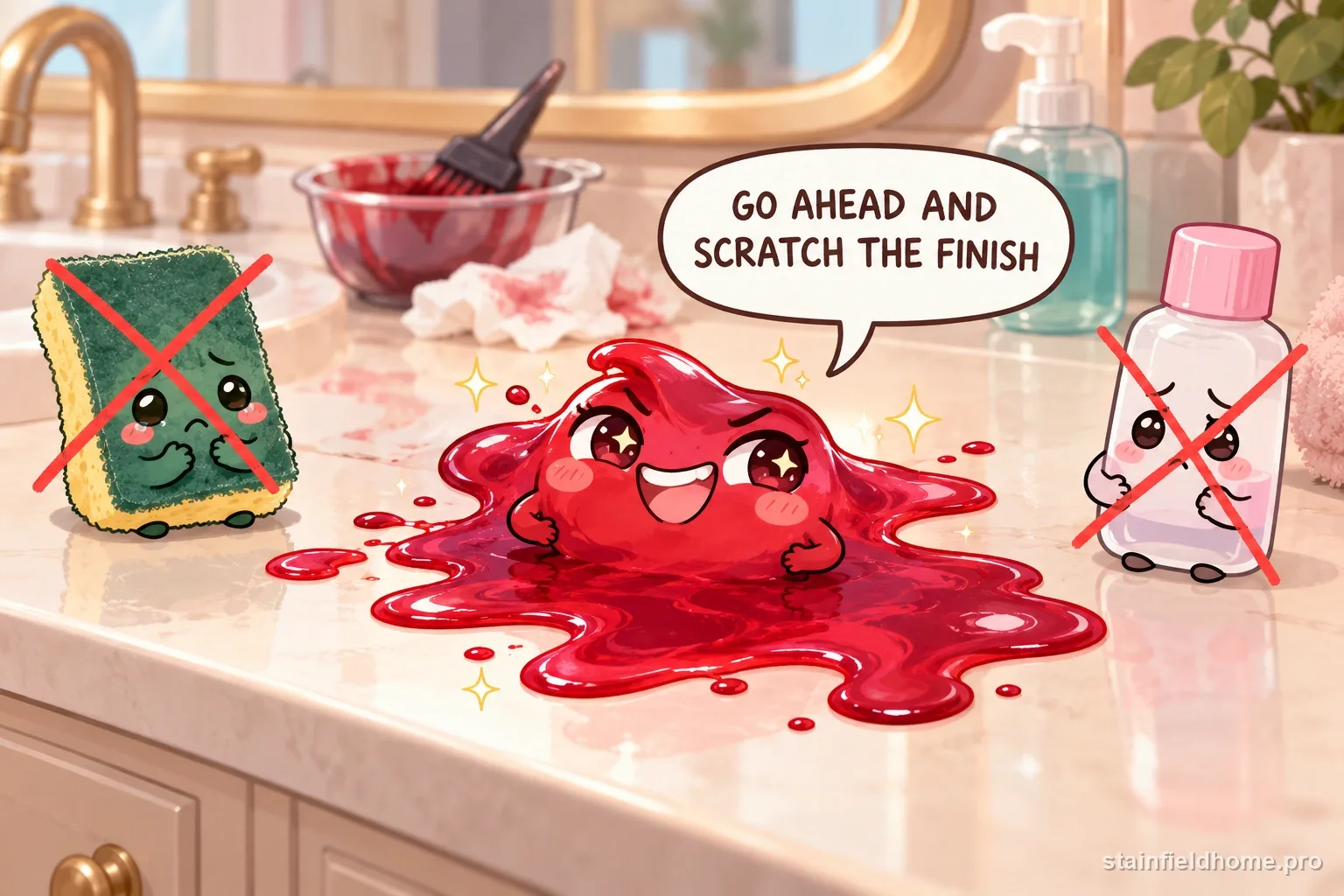
- Do not use a green scrub pad, steel wool, or scouring powder on any countertop; the scratches are permanent and trap future stains.
- Do not use acetone or nail polish remover on cultured marble, solid surface, or laminate seams; it can craze the finish or lift the laminate edge.
- Do not leave a poultice or paste to dry hard on natural stone for days; follow the product timing.
- Do not mix bleach with any other cleaner while trying to lighten a spot.
Know when the counter needs a different repair
After cleaning, look at the surface from the side under a bright light. A colored mark with the same gloss and texture may be remaining dye. A pale dull patch can be etching or abrasion, while a rough or swollen edge may be a damaged laminate seam. Cleaning cannot reverse those changes. Stop if the surface gets dull, tacky, lighter, rough, or transfers color to your cloth.
A small dye shadow in engineered material may sometimes be reduced with an approved product, but a stain below the surface or beneath caulk needs a different plan. Do not remove silicone caulk or pry at a backsplash to reach dye unless you are prepared to reseal it. For a rental, expensive vanity, or large spill, photograph the stain and ask the fabricator or installer before using a specialty remover.
Make hair-color work less likely to mark the counter
Before mixing box color, cover the counter with a washable barrier and keep a damp cloth within reach. Place the applicator and gloves in a disposable tray rather than directly on stone or laminate. Wipe splashes as soon as they happen, then clean the cloth and rinse it so it does not transfer dye back onto the surface.
If color has already dried on the faucet, sink, backsplash, or grout, treat each material separately. A metal faucet, acrylic sink, and stone counter may need different cleaners. Do not carry the countertop method over to a painted cabinet or plated fixture; the finish can be more delicate than the hard worktop.
Common questions
FAQ
Will hair dye permanently stain quartz?
Rarely, if you act reasonably quickly. Engineered quartz is nonporous, so dye sits on the surface and comes off with alcohol or a gentle whitening-toothpaste rub. A spill left for hours on a light quartz can leave a faint shadow, but a genuine permanent stain in quartz is uncommon.
What about hair dye on a cultured marble or acrylic vanity top?
These surfaces are the hardest case because they scratch and can absorb color, and you cannot use abrasives or acetone. Repeated gentle contact with a baking soda paste is the safest approach. A deep stain may need professional refinishing of that section.
Does toothpaste really remove hair dye?
It may lighten a surface mark on some materials, but toothpaste formulas vary and the mild abrasive can dull a polished finish. Use it only if the countertop maker approves it and a hidden test shows no change. Mild soap and the surface maker's own stain instructions are a safer starting point.
Should I use bleach or a hair-dye color remover?
Not without approval for the exact countertop material. Bleach can discolor resin, laminate, grout, or nearby finishes, and hair-color removers may contain solvents or strong oxidizers. Read the product label and surface care guide together; if compatibility is unclear, use mild soap and ask a countertop professional.
Can I use the same cleaner on the sink and counter?
Not necessarily. A vanity can pair quartz with an acrylic sink, plated faucet, caulk, and grout, each with different chemical limits. Keep the treatment on the stained material, apply it to a cloth instead of spraying broadly, and rinse any adjacent surface promptly. If dye reached the caulk or seam, avoid soaking it and ask the installer how to replace or clean that joint.
What if the dye mark looks lighter but the counter now feels rough?
Stop cleaning. A rough or dull patch suggests abrasion or etching rather than leftover dye, and more rubbing will enlarge it. Rinse any cleaner away if the surface instructions allow, dry it, and contact the countertop fabricator or stone restorer with the material name and a photo taken in side lighting.
Does sealing a countertop prevent hair-dye stains?
A sealer may reduce absorption on some natural stones, but it does not make every surface stain-proof and it will not repair an etch or protect a resin countertop from an incompatible cleaner. Follow the stone fabricator's maintenance schedule and wipe spills promptly. Do not apply a new sealer to quartz, laminate, or solid surface unless that product's maker specifically calls for one.
Sources reviewed
Keep reading
Related guides

Spills and body oils on Bouclé sofas and chairs
How to Clean a Bouclé Sofa or Chair Without Flattening the Texture
Spot-clean a bouclé sofa or chair by its cleaning code, protect the looped pile from matting, and know which spills need a dry solvent instead of water.

Burnt-on grease and food residue on Air fryer basket
How to Clean Burnt-On Grease From an Air Fryer Basket
Break down baked-on grease in an air fryer basket with a soak and baking-soda paste, without scratching the nonstick coating or getting water near the heating element.
Yellowed tape adhesive on Painted wall
How to Remove Yellowed Tape Residue From a Painted Wall
Take aged, hardened tape adhesive off painted drywall without pulling the paint, using warm heat, an oil to soften the gum, and the gentlest possible scrape.

Formula and spit-up on Baby car-seat harness straps
How to Clean Spit-Up From Car-Seat Harness Straps
Safely remove formula and spit-up from car-seat harness straps without soaking, bleaching, or weakening crash-safety webbing.