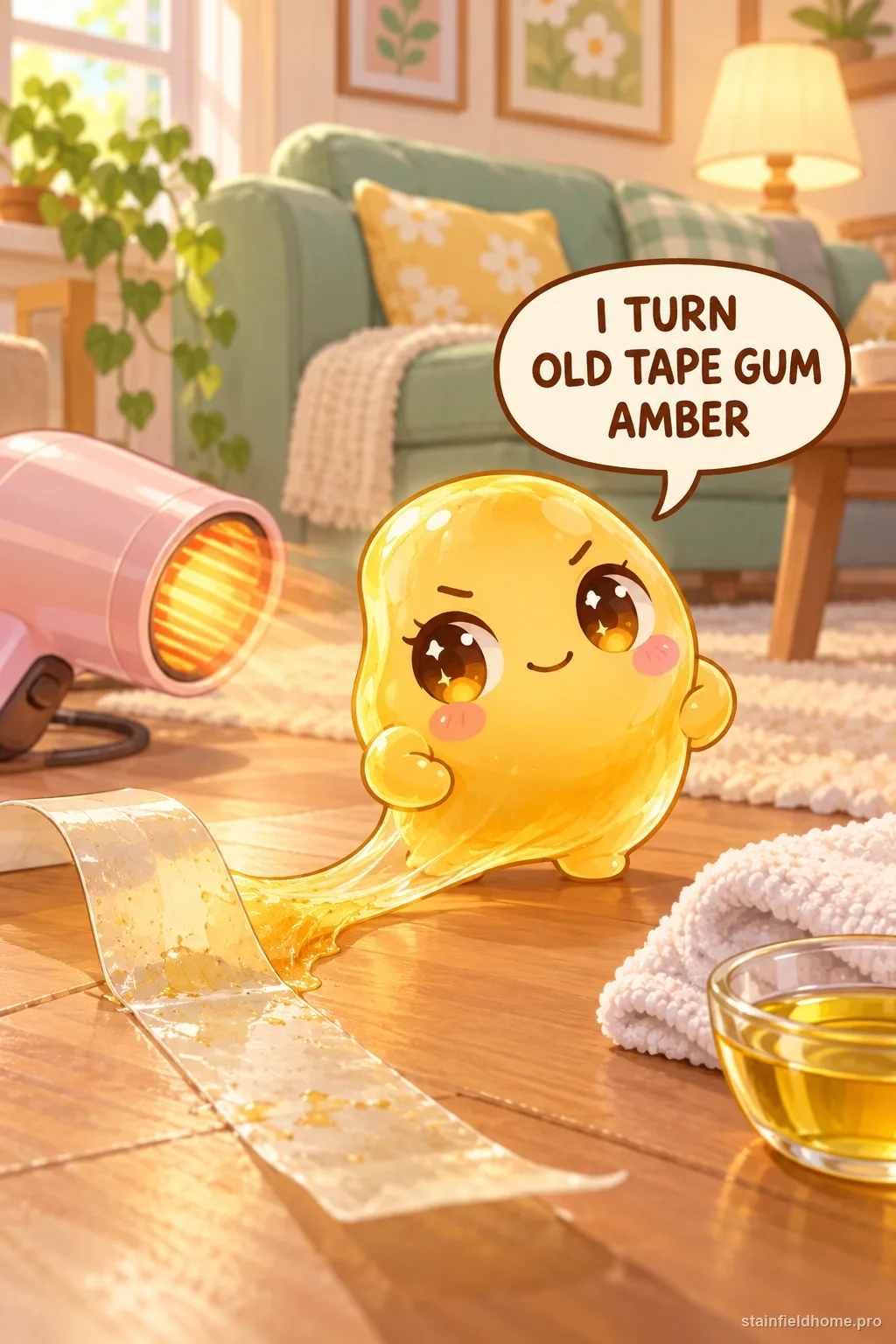
The quick answer
Start by identifying the paint sheen and testing a hidden spot. If the paint is sound, gently warm a small area with a moving hair dryer on low and roll residue off with a fingertip or plastic card. Try only a wall-paint-compatible adhesive remover if the paint maker allows it; oil and citrus solvents can stain or soften some finishes. Stop if paint transfers, then plan a touch-up.
What you’ll need
- A hair dryer
- A plastic scraper, an old gift card, or your fingertip
- Cooking oil, or a citrus (d-limonene) adhesive remover
- Soft cloths
- Dish soap and warm water
- A clean pencil eraser, for tiny spots
Why old tape residue turns yellow and hard
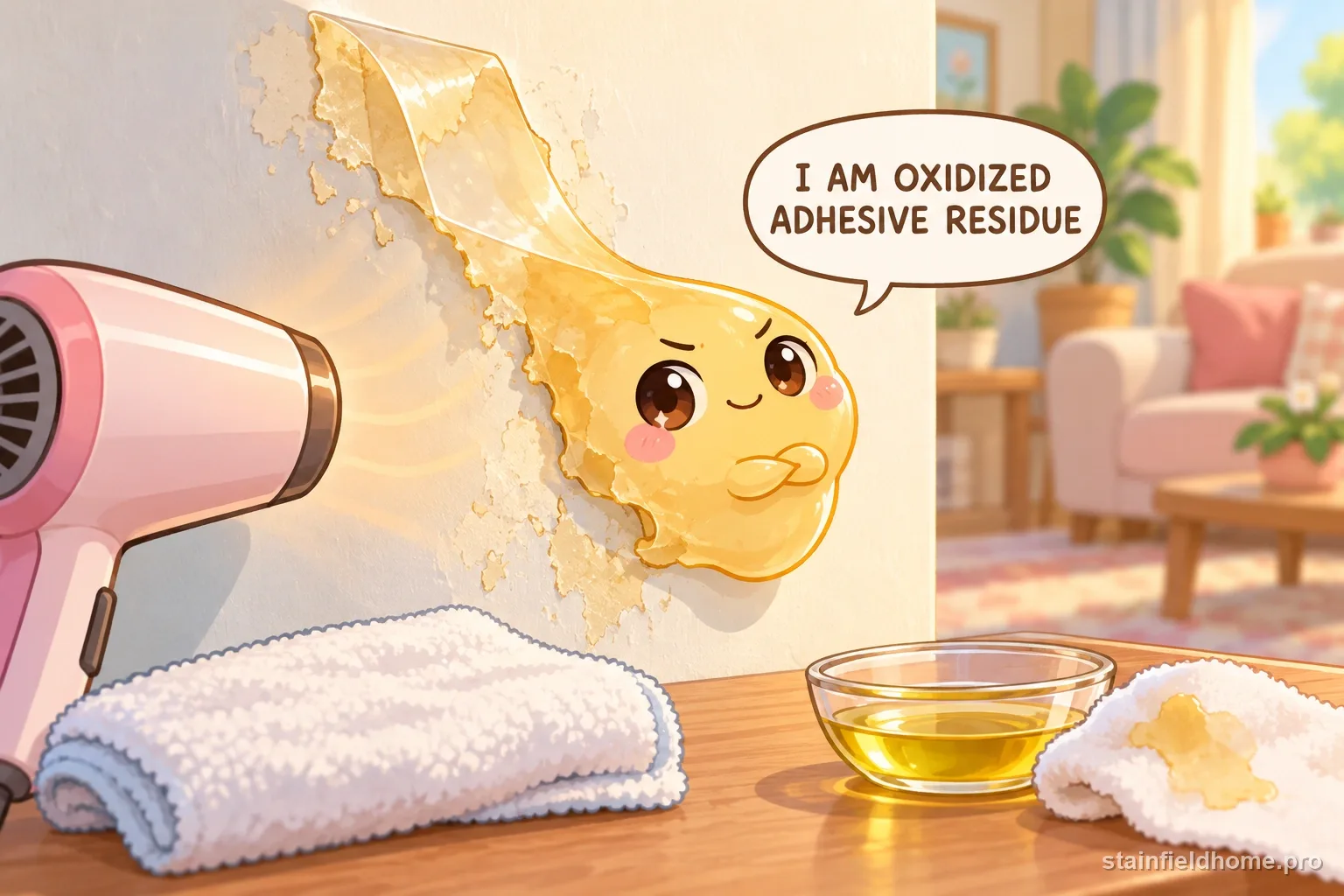
The rubber and resin adhesive on masking tape, cellophane tape, and mounting strips oxidizes over months and years. It loses its stretch, darkens to a yellow or amber color, and hardens into a brittle film that is bonded to the paint. Fresh adhesive rubs off in a ball; aged adhesive cracks and flakes and takes some determination.
The paint underneath matters just as much. Flat and matte wall paints have a porous, delicate surface that burnishes shiny or lifts if you rub hard. Eggshell and satin are more forgiving. Knowing which you have tells you how gentle to be.
Soften with heat and remove what you can dry
Hold a hair dryer on a low or medium setting a few inches from the residue and warm it for 20 to 30 seconds, keeping the nozzle moving so you do not blister the paint. Warm adhesive becomes tacky and pliable again.
While it is warm, push at an edge with your fingertip, an old gift card, or a plastic scraper held almost flat to the wall. A lot of the residue rolls or peels off at this stage. Re-warm and repeat across the whole patch before reaching for any liquid.
Use an oil to break the last of the gum
For residue that will not roll off warm, pause before applying oil or citrus remover. Those products can darken porous flat paint, soften some coatings, or leave an oily film that blocks repainting. Check the wall-paint or adhesive-remover label and test a pinhead amount in an inconspicuous area; wait until it dries before judging whether the sheen or color changed.
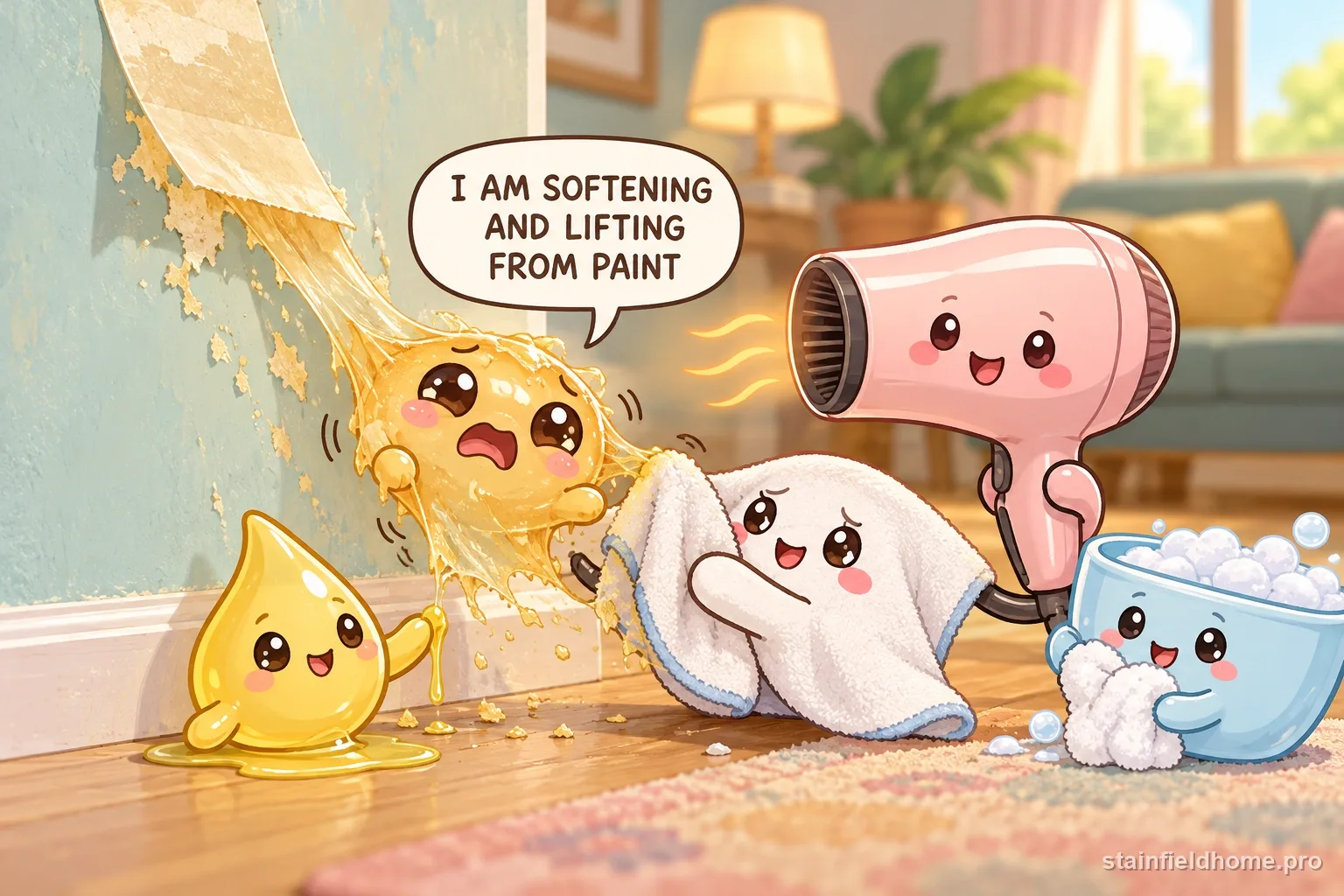
If the test is clean and the product permits painted walls, put the smallest amount on a soft cloth, dab the residue, and wipe without scrubbing. Work in a tiny section and stop if paint color transfers, the patch becomes glossy, or the adhesive smears wider. Blot off the product, then clean only as directed by the remover maker.
Clean the oil off the paint
Any oil or citrus remover left on the wall can hold dust and prevent touch-up paint from sticking. If the product label allows water cleanup, wipe the area with a barely damp cloth and a drop of mild dish soap, then use a separate clean damp cloth and blot dry. If the paint is flat or chalky, minimize water and stop if the finish starts to transfer.
On flat paint, blot rather than rub during this cleanup, and use the least water you can. Over-wetting flat paint can leave a faint clean halo that is more noticeable than the original mark.
Tiny spots and stubborn flecks
For a few small hardened dots left after the main patch is clean, a clean white pencil eraser often rubs them away with almost no risk to the paint. Use gentle strokes and check often.
A plastic razor scraper (the kind sold for glass cooktops and windows) can shave a raised fleck off a satin or semi-gloss wall if held flat, but it is too aggressive for flat paint and will leave shiny scratch marks.
When touch-up paint is the honest answer
If the residue took paint with it, or the wall now has a burnished or cleaned-looking patch against aged paint, the cleanest fix is a small touch-up. Feather a thin coat of the wall color over the area with a small brush or a mini roller, keeping the edges light so it blends.
This is common where tape sat for years in a sunny spot; the surrounding paint has also aged and no amount of cleaning will make the treated square match it exactly.
Cleaners that lift the paint
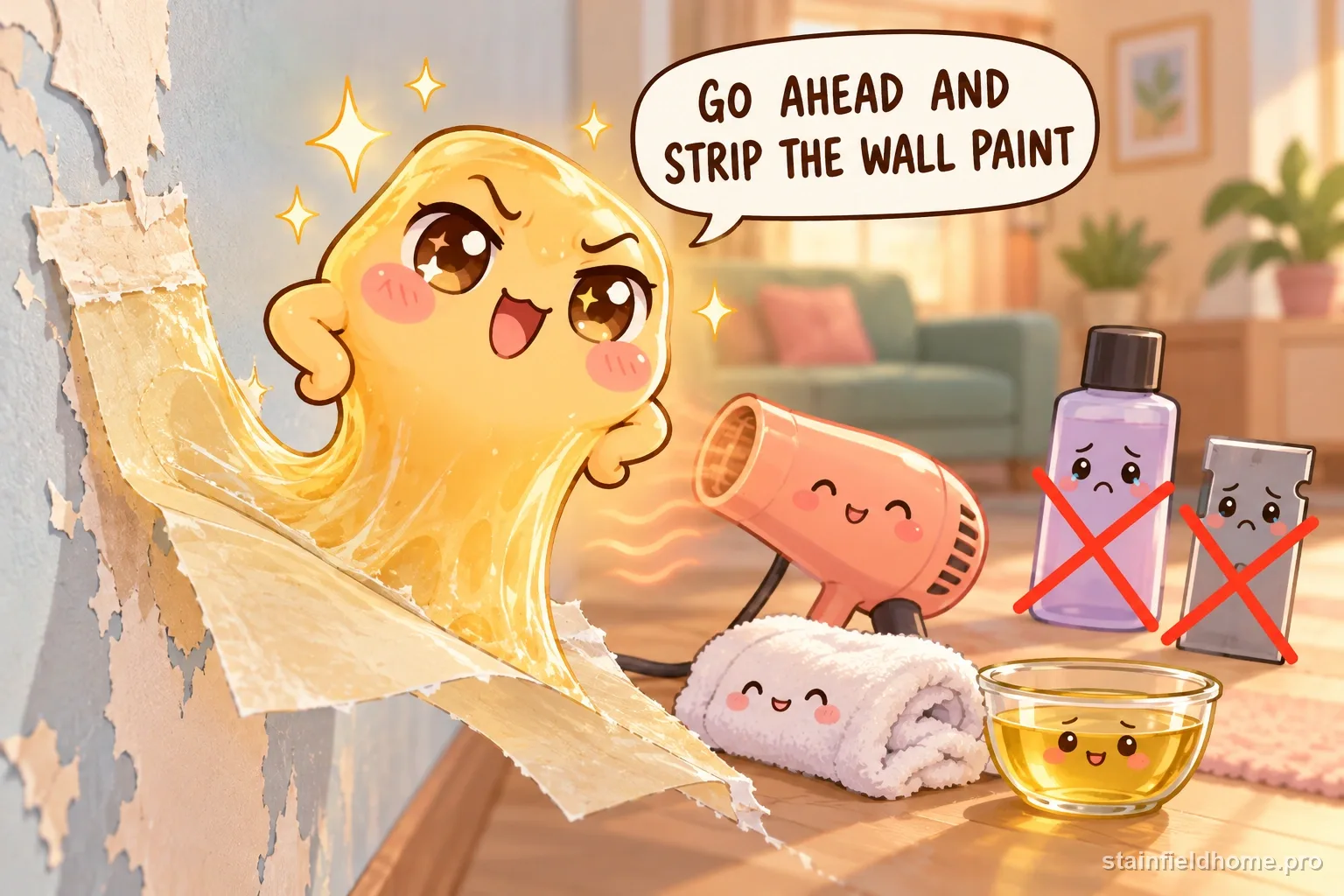
- Do not use acetone, nail polish remover, or lacquer thinner on a painted wall; they lift latex paint.
- Do not use a metal putty knife or razor blade on flat paint.
- Do not soak the wall; water is the enemy of a clean-looking flat finish.
- Do not rub hard with a melamine sponge on flat or matte paint; it burnishes a shiny spot.
Match the treatment to the paint sheen and age
Flat and matte paints have little surface gloss and can burnish when rubbed, leaving a shiny patch even if the paint remains. Eggshell, satin, and semi-gloss are usually easier to wipe, but age, wall texture, and paint quality still matter. Fresh paint is especially vulnerable; if the wall was painted recently, avoid solvents and scraping and consult the paint manufacturer's curing guidance before cleaning.
Test a low-visibility area behind furniture using the same cloth, moisture, pressure, and cleaner you plan to use. Let the test dry fully because water can temporarily darken paint and make a patch look worse or better than it is. If the test removes color or changes the sheen, do not treat the visible residue with that method.
Remove the tape backing separately from the adhesive
If paper or plastic tape is still attached, warm it gently and peel it back over itself at a low angle instead of pulling straight out from the wall. Support the paint near the edge with a fingertip. Stop if the paint lifts or the drywall paper begins to show. Use a plastic card only to raise a loose edge; a scraper can cut the paint film or damage textured drywall.
If only adhesive remains, roll it with a clean fingertip or gently dab with the sticky side of the removed tape when that does not pull paint. Avoid a rubber eraser on matte walls unless a hidden test passes; friction can polish the paint. The goal is to soften the gum and lift it with minimal pressure, not to sand the surface clean.
Decide whether cleanup or repainting is the real fix
Old yellowing may be discoloration within the adhesive, a stain that migrated into the paint, or simply a sun-faded rectangle around where the tape protected the wall. Once the sticky layer is gone, compare the area in daylight from several angles. If the surface is no longer tacky but the color remains, more solvent is unlikely to help and may enlarge the difference.
For an owner-occupied wall, a small touch-up may be enough; for a rental or a large patch, photograph the area and ask the landlord or painter before sanding or priming. If bare drywall paper is exposed, seal it with the correct primer before repainting. Adhesive residue under new paint can cause poor adhesion, but aggressive removal that strips the wall can create a larger repair than the original mark.
Common questions
FAQ
Will Goo Gone damage wall paint?
It depends on the exact product and paint. Check the remover label for painted-wall compatibility and test a hidden area, allowing it to dry before checking sheen and color. Citrus solvents and oils can stain or soften some finishes, especially flat paint. Do not use it if paint transfers or the test patch changes.
Can I paint over tape residue instead of removing it?
Not directly. New paint will not bond well over greasy or hardened adhesive and may stay tacky or peel. Remove the bulk of the residue and clean off any oil first, then touch up the paint over a sound surface.
The residue pulled a chunk of paint off. Now what?
Lightly sand the edge of the missing paint smooth with fine sandpaper, spot-prime bare drywall paper if it is exposed, and feather in the wall color with a small brush. A years-old wall will not match perfectly, so keep the patch small and the edges soft.
Can I use a hair dryer on every wall?
Use only gentle low heat on a small area, keep the dryer moving, and stop if the paint softens or bubbles. Do not heat wallpaper, vinyl wallcovering, fresh paint, or a wall near heat-sensitive trim. A hidden test is still needed because old paint can be poorly bonded to the wall.
Sources reviewed
Keep reading
Related guides
Crayon on Painted wall
How to Remove Crayon From a Painted Wall
Lift waxy crayon from a painted wall with a finish test, mild soap, and controlled pressure—without polishing a shiny patch into flat paint.
Permanent marker on Painted wall
How to Remove Permanent Marker From a Painted Wall
Lift fresh or set permanent marker from cured wall paint with controlled dabbing, a finish test, and a planned switch to stain-blocking primer when cleaning would damage the coating.

Spills and body oils on Bouclé sofas and chairs
How to Clean a Bouclé Sofa or Chair Without Flattening the Texture
Spot-clean a bouclé sofa or chair by its cleaning code, protect the looped pile from matting, and know which spills need a dry solvent instead of water.

Burnt-on grease and food residue on Air fryer basket
How to Clean Burnt-On Grease From an Air Fryer Basket
Break down baked-on grease in an air fryer basket with a soak and baking-soda paste, without scratching the nonstick coating or getting water near the heating element.