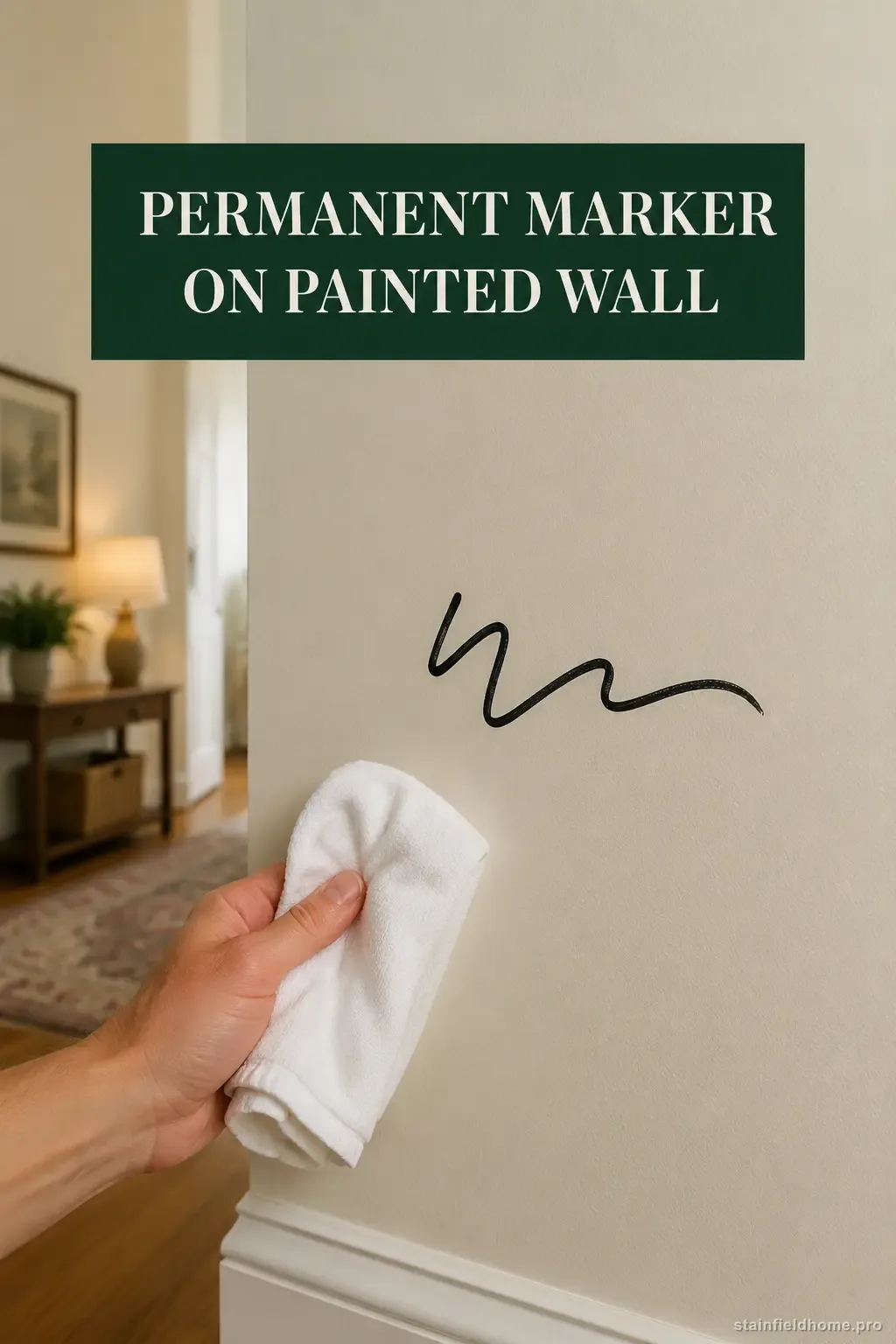
The quick answer
First confirm that the paint is fully cured and washable. Blot a fresh marker line with a dry white cloth, then use a separate cloth wrung nearly dry in water with a few drops of mild dish detergent. Dab from the outer edge inward, rinse with a barely damp cloth, and dry. If set ink remains, test the paint maker’s approved cleaning method in a hidden spot and work with a cotton swab. Stop if paint color or sheen changes. Permanent marker can penetrate flat or porous paint; when cleaning no longer transfers ink, seal the clean, dry mark with a compatible stain-blocking primer and touch up or repaint instead of scrubbing harder.
What you’ll need
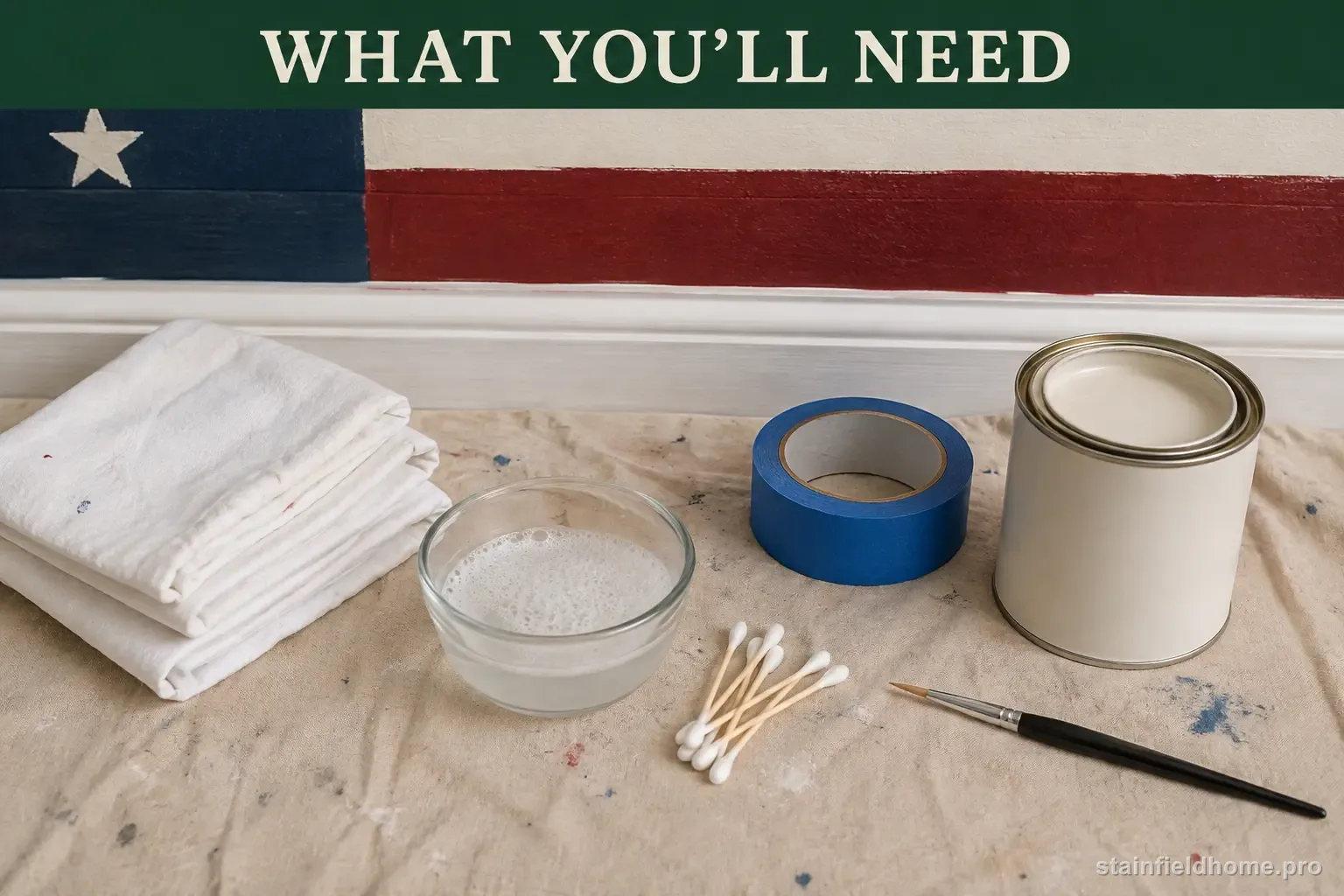
- Soft plain white cotton or microfiber cloths
- Cotton swabs for controlled spot testing
- Warm water in a small bowl
- A few drops of mild clear dish detergent
- Painter’s tape and a drop cloth
- The original wall paint, applicator, and a compatible stain-blocking primer if repainting becomes necessary
Identify the paint finish, age, and existing damage
Permanent marker is a solvent-soluble color system, while wall paint is a thin decorative coating over drywall or plaster. A product that loosens marker may also soften the binder, pull out pigment, or polish the surface. Find the paint can, builder record, or product page and note the sheen. Flat and matte walls are usually less scrub-resistant than eggshell, satin, or semigloss, although product formulation matters more than the sheen name alone.
New paint needs to cure, not merely feel dry. Recoat time and full cure time are different, and cleaning too soon can leave a permanent shiny, soft, or pale patch. Check the manufacturer’s technical data. If the wall was painted recently, protect the area and wait for the maker’s stated cure period unless the marker is still wet enough to blot without friction.
Inspect the wall in side light. Chalkiness, peeling, bubbling, previous touch-ups, water damage, and powder on a dry cloth are reasons to stop. Also confirm that the mark is on paint rather than wallpaper, limewash, unpainted plaster, or a specialty coating. Switch off power before working close to an outlet and never wet the opening. Test plain water, then the weak soap solution, in an inconspicuous area and let the test dry before treating the visible line.
For a fresh marker line: contain the ink before it spreads
A fresh line may be partly on top of a cured washable coating, so prompt dabbing can reduce it before the carrier and colorant move into microscopic texture. Mild detergent is the first test because it removes hand oil and surface soil without immediately introducing a strong solvent. Success is measured by ink on the cloth and an unchanged wall—not by how hard you can scrub.
If the wall color appears on the cloth, the patch becomes tacky, or the sheen shifts, stop immediately. Rinse once with minimal plain water and dry. Paint damage will usually look larger after full drying, which is why repeated wet passes without a pause are risky.
- 01
Remove the marker without dragging its tip. Place a drop cloth below the line so transferred ink cannot stain trim or flooring.
- 02
Touch a dry white cloth to any visibly wet ink and lift straight away. Rotate after every contact; do not sweep along the line.
- 03
Add a few drops of mild clear dish detergent to warm water. Dampen a second cloth and wring it until no drops can run down the wall.
- 04
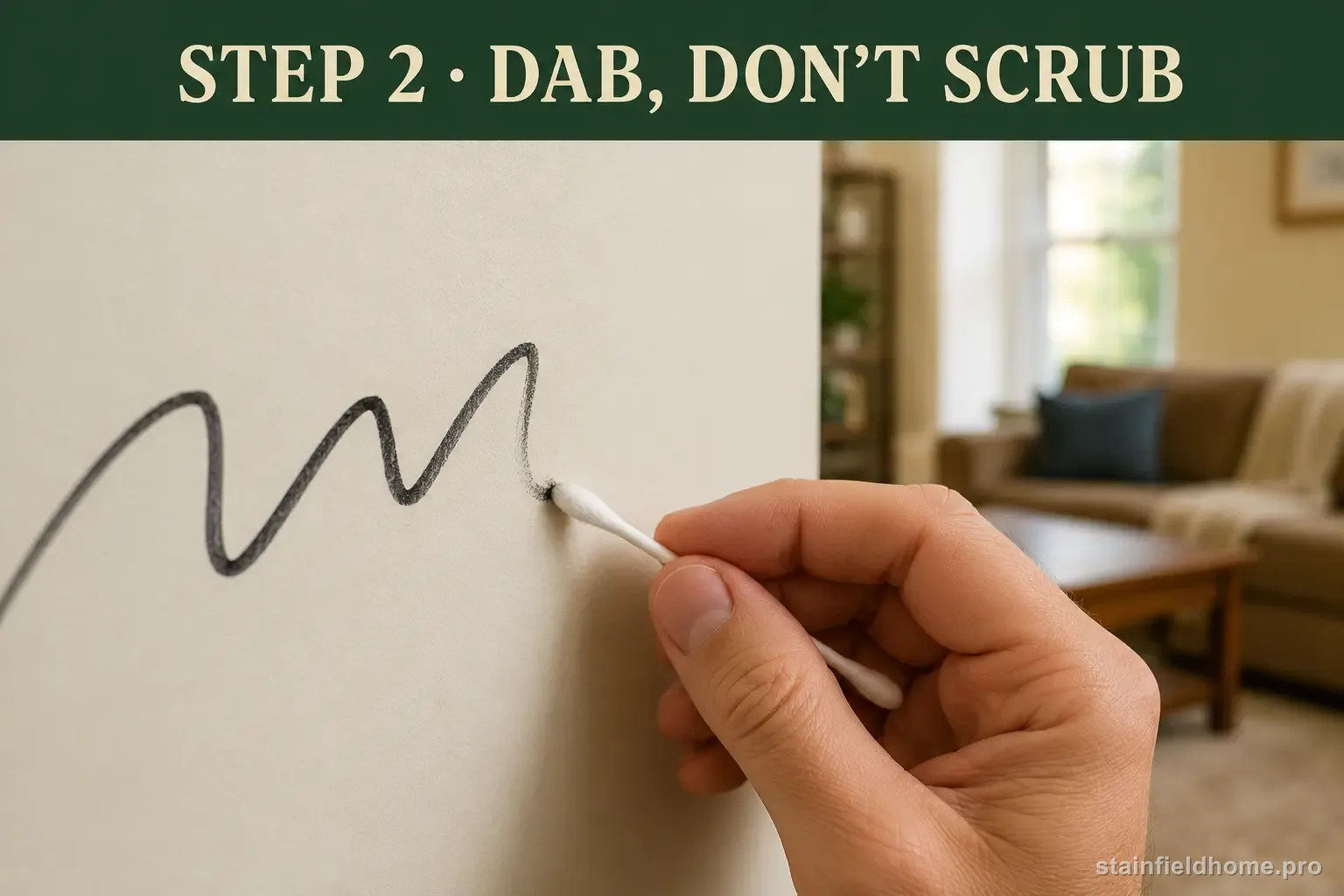
Dab the outside edge of the mark, then work inward in sections no larger than a coin. Keep a dry cloth below the work to catch moisture.
- 05
As soon as ink transfers, move to a clean cloth area. Do not rub the loosened black color over clean paint.
- 06
Wipe once with a separate cloth barely dampened in plain water, then blot dry. Let the patch dry completely before deciding whether another pass is safe.
For set permanent marker: make one controlled escalation
After the gentle wash dries, touch the mark with a clean cotton swab. If no ink transfers, the color may have entered the paint film. Sherwin-Williams classifies solvent-based marker as a solvent-soluble stain and directs users toward a solvent-based cleaning solution, but that is not permission to pour household solvent on every wall. Ask the paint manufacturer which cleaner is compatible with the exact cured coating and follow its label, ventilation, protective-equipment, and rinse instructions.
Test the approved product at a hidden area and wait for the test to dry. If unchanged, put a tiny amount on a cotton swab—not directly on the wall—and dab one end of the marker line. Follow with the paint maker’s specified rinse or neutralization step. Stop after one short trial if the swab lifts wall color, the coating softens, or the cleaned dot reflects light differently.
Do not broaden the test simply because the marker fades. A narrow dark line is easier to seal and touch up than a wide solvent halo. If two cautious attempts produce no further ink transfer, treat that as the stopping point. Allow the wall to dry thoroughly and move to a paint repair plan.
Handle texture, trim, and long scribbles in small zones
Orange-peel and knockdown textures hold ink in low points. Do not chase those recesses with a stiff brush or the tip of a blade. Fold a damp cloth over a fingertip or use a cotton swab, touch only the colored recess, and dry. Aggressive spot cleaning can flatten the raised texture even when the paint color survives.
At painted baseboards or doors, first identify whether the coating is wall paint, trim enamel, lacquer, or factory finish. Mask adjacent carpet and unfinished wood with a dry barrier, not a wet towel. If the marker crosses from wall to trim, treat each coating as a separate surface and test each one. Do not drag black solution across the joint.
For a long child’s scribble, divide the line with small pieces of painter’s tape and complete one section at a time. Use a new swab or cloth surface for each zone. Step back after the wall dries: a series of tiny, controlled repairs is easier to blend than one large, overcleaned cloud.
Know when to seal and repaint instead of cleaning
Once the surface is clean of soap, loose ink, and oily home remedies, let it dry for the paint maker’s recommended period. If the remaining line is stable and the surrounding finish is sound, lightly prepare the area as the primer instructions require. Marker can bleed through ordinary wall paint, so use a compatible stain-blocking primer rated for solvent-sensitive or graffiti-like stains rather than stacking finish coats over the mark.
Sherwin-Williams advises sealing stained areas with primer, and its primer guidance distinguishes general drywall primer from products designed to block stains. Match the primer to the existing coating and the finish paint. Ventilate, protect the room, and observe dry and recoat times. A water-based primer may not block every marker, while a stronger primer may require precautions that make professional painting the better choice.
Touch-up success depends on the original color, product, sheen, batch, aging, and applicator texture. Stir stored paint, use the same roller nap or brush type, and feather only according to the paint maker’s directions. If the patch flashes under side light or the wall color has aged, painting from corner to corner gives a more even result. Do not keep cleaning a dry, nontransferring stain just to avoid a small paint repair.
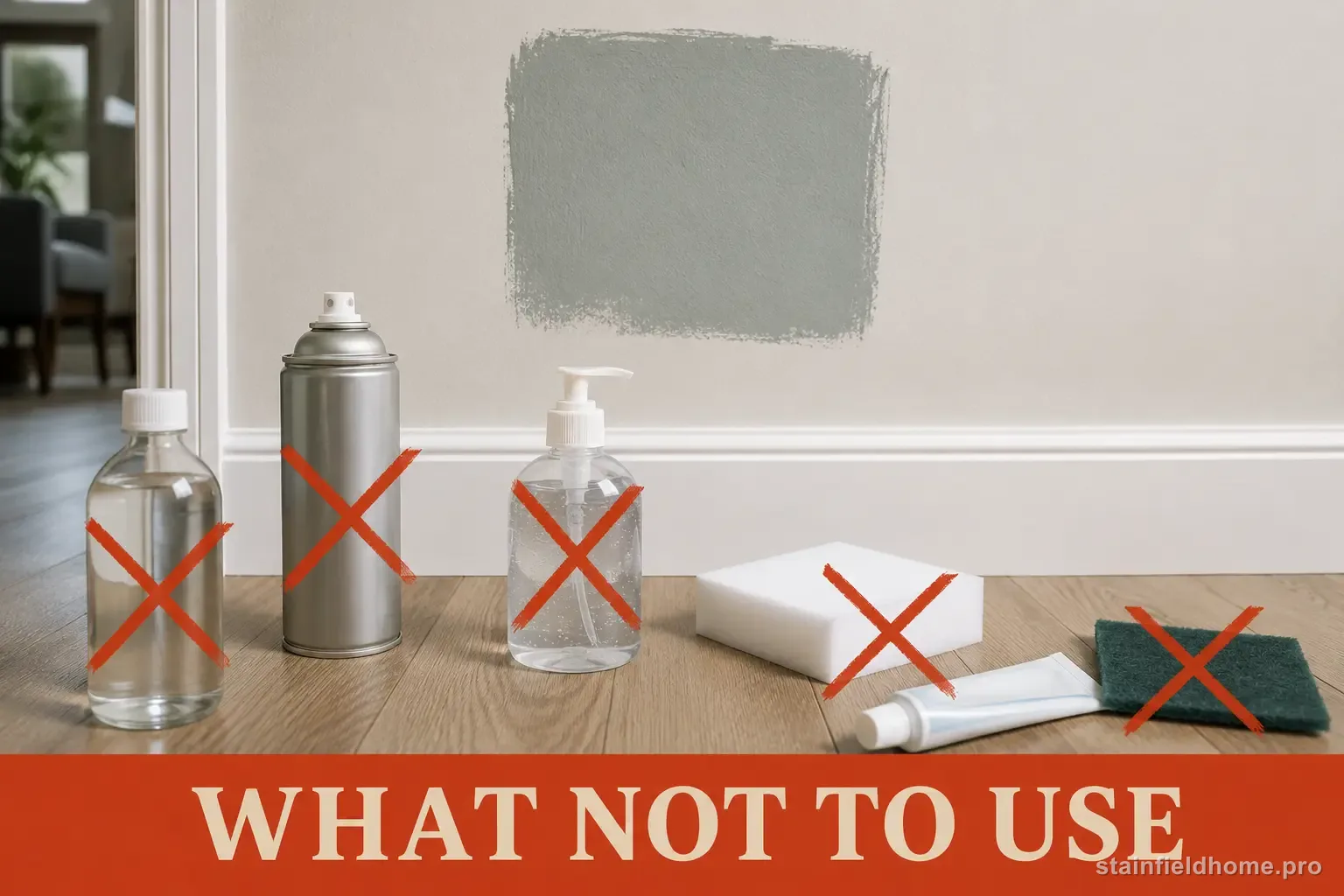
What not to use on painted walls
Many popular demonstrations are performed on whiteboards, glass, or glossy test panels. Those results do not transfer to a porous flat wall. The safest escalation is a smaller test, not a more forceful whole-mark treatment.
- Do not spray hairspray, sanitizer, rubbing alcohol, acetone, nail-polish remover, adhesive remover, or aerosol lubricant directly on the wall.
- Do not use a melamine foam eraser, baking-soda paste, toothpaste, scouring powder, or a rough pad unless the exact paint maker authorizes the abrasive method.
- Do not draw over the line with a dry-erase marker; the added solvent and pigment can enlarge the repair on porous paint.
- Do not scrub flat or matte paint until it becomes shiny, and do not keep rubbing when wall color appears on the cloth.
- Do not saturate drywall, allow drips into outlets, or leave a wet compress on the wall.
- Do not paint over active moisture, oily cleaner residue, soft paint, or uncured primer.
- Do not mix cleaners or use bleach to chase marker color.
Prevent marker damage and make future touch-ups easier
Store permanent markers separately from washable art supplies and use them only over a protected table. Create a paper or dry-erase art area designed for repeated cleaning rather than relying on wall paint to behave like a marker board. In playrooms, a durable washable paint may improve future cleanability, but its cure and care instructions still apply.
Label leftover paint with room, wall, color, product, sheen, date, and applicator. Keep a small piece of the original roller cover or record its nap. Save the primer and paint technical sheets. Those details turn a set marker line from an emergency into a controlled repair and avoid inventing a solvent experiment on the wall.
Common questions
FAQ
Will rubbing alcohol remove permanent marker from a painted wall?
It may dissolve marker, but it can also dull, soften, or remove wall paint. Use it only if the exact paint manufacturer approves it, after a hidden dry-down test, and apply a tiny amount to a swab rather than the wall.
Can I use a magic eraser on permanent marker?
Melamine foam is abrasive and can burnish flat paint or dull a glossy finish. It may replace a black line with a larger sheen change. Start with mild soap and controlled dabbing, then stop and repair the paint if the ink remains.
Why does permanent marker show through new paint?
Some marker components can migrate through ordinary finish coats. Clean away transferable residue, let the wall dry, and use a compatible stain-blocking primer before touching up or repainting.
Sources reviewed
Keep reading
Related guides
Permanent marker on Vinyl backpack
How to Remove Permanent Marker From a Vinyl Backpack
Lift permanent marker from vinyl with controlled rubbing alcohol instead of abrasive scrubbing that can dull or strip the surface.
Crayon on Painted wall
How to Remove Crayon From a Painted Wall
Lift waxy crayon from a painted wall with a finish test, mild soap, and controlled pressure—without polishing a shiny patch into flat paint.
Yellowed tape adhesive on Painted wall
How to Remove Yellowed Tape Residue From a Painted Wall
Take aged, hardened tape adhesive off painted drywall without pulling the paint, using warm heat, an oil to soften the gum, and the gentlest possible scrape.
Slime on Carpet
How to Remove Slime From Carpet Without Damaging the Fibers
Lift dried or fresh slime out of carpet fibers with an ice-and-scrape method plus a vinegar or rubbing alcohol rinse, without soaking the backing or bleaching the color.