The quick answer
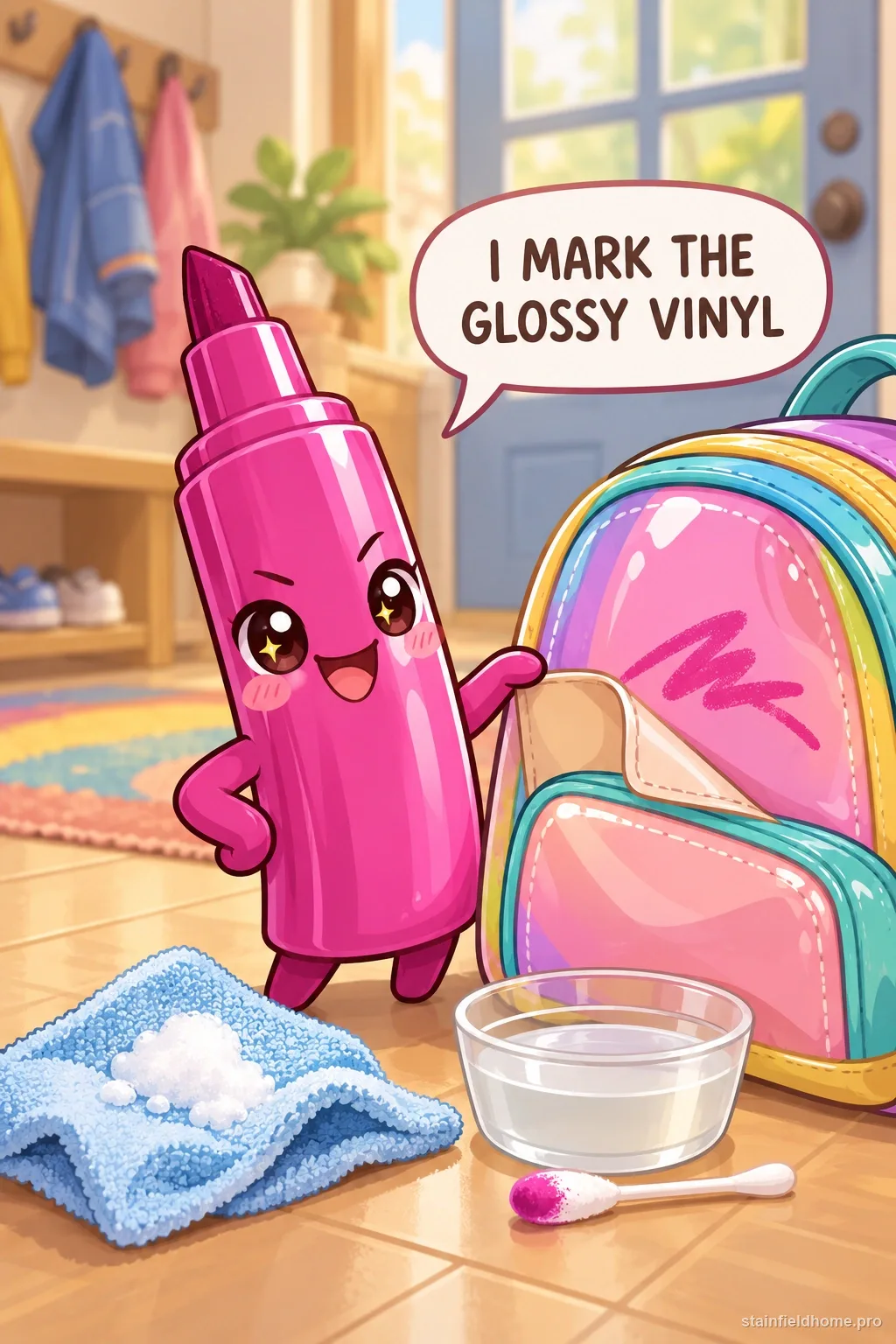
Start with mild soap and water, then test a 1:1 mixture of water and rubbing alcohol on a hidden vinyl area. HON recommends that mixture for permanent ink on vinyl: apply it to a lint-free cloth, gently rub the mark, repeat if needed, then clean the area normally with mild soap and water. Keep alcohol away from printed graphics, adhesives, and materials the backpack maker says are not alcohol-safe.
What you’ll need
- mild soap
- water
- 70% isopropyl rubbing alcohol
- lint-free white cloths
- cotton swabs
- dry towel
Why vinyl is both easy and risky
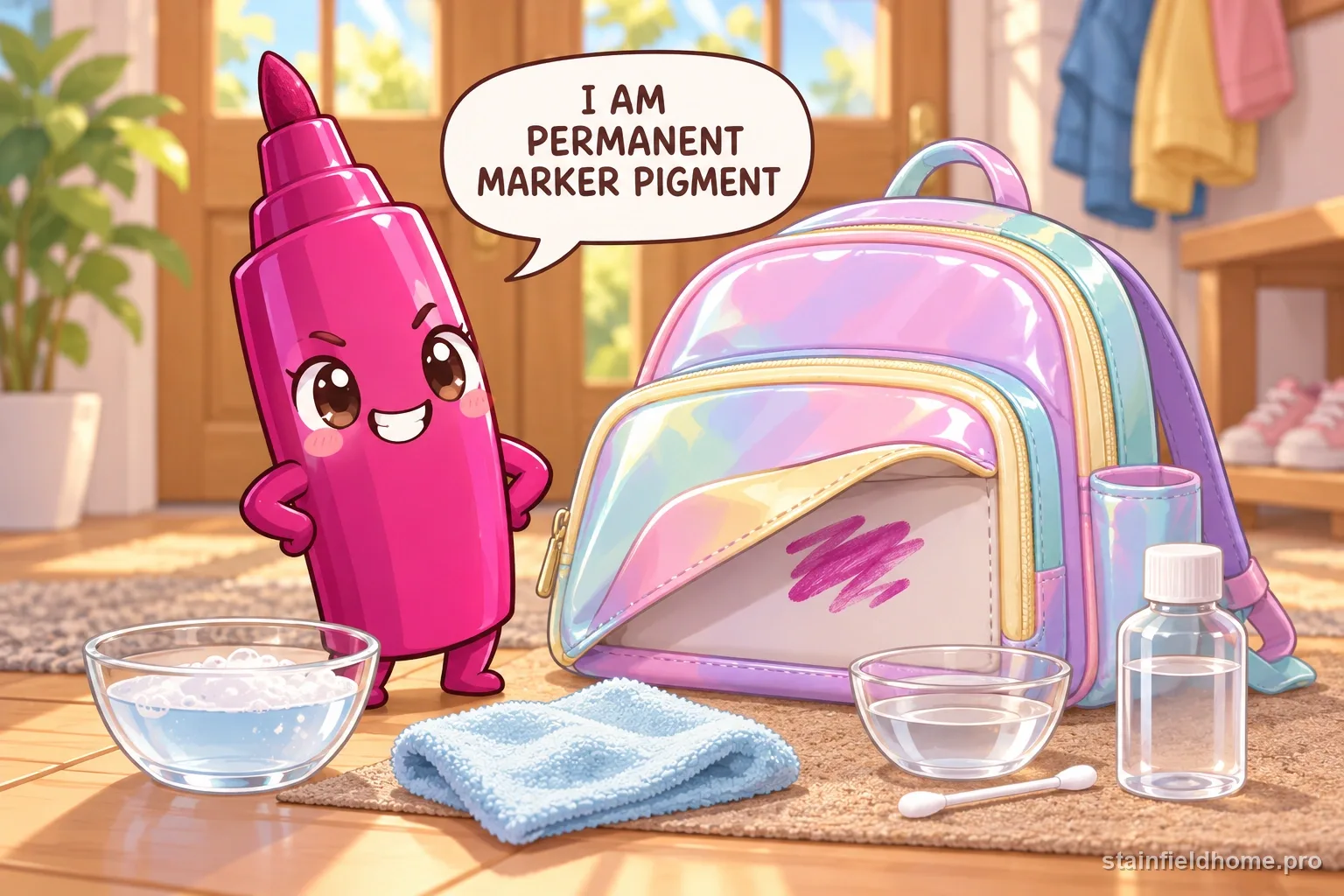
Permanent marker sits on top of a vinyl surface rather than soaking in, so it is one of the more removable marker situations — the dye has nowhere to hide. The risk is not the ink; it is the solvent. Too much alcohol, or a stronger solvent like acetone, can dissolve the vinyl's plasticizers and top print, leaving a dull, sticky, or discolored patch that is worse than the original mark.
So the approach is the gentlest solvent that works (diluted rubbing alcohol), the smallest amount, and a colorfastness test first.
Try soap and water first
It sounds too simple, but a fresh marker mark on a smooth, glossy vinyl finish sometimes lifts with just mild dish soap, warm water, and a cloth, especially if you catch it within a few hours. Always start here — if it works, you have risked nothing.
Give it a real effort: a few minutes of gentle rubbing with a well-soaped cloth before you decide it needs a solvent.
The diluted-alcohol method
- 01
Mix equal parts 70% isopropyl rubbing alcohol and water.
- 02
Test it on a hidden area — inside a flap, the bottom, under a strap — and wait a minute. If the vinyl gets tacky, cloudy, or gives up color, stop and do not use alcohol on this bag.
- 03
If the test is clean, dampen a lint-free white cloth (or a cotton swab for a small mark) with the mixture.
- 04
Rub the marker gently from the outside of the mark toward the center; the ink should start transferring to the cloth.
- 05
Move to a clean part of the cloth as it picks up ink, and re-dampen as needed. Repeat a few passes rather than pressing harder.
- 06
Finish by washing the area with mild soap and water to remove the alcohol, then dry.

Stay away from the graphics
Most vinyl backpacks have printed logos, screen-printed panels, or heat-pressed designs, and the same alcohol that lifts marker will also lift those. Work carefully around them, use a swab for control near a print, and never wipe alcohol across a printed area to reach a mark on the other side.
Vinyl trim on an otherwise fabric backpack is fair game for this method; a fabric panel next to it is not — alcohol spreads marker on fabric into a bigger grey stain.
If alcohol is not allowed or does not fully work
For a bag where the alcohol test failed, try a non-abrasive dry-erase marker trick: color over the permanent mark with a dry-erase marker and wipe immediately — the dry-erase solvent can lift some permanent ink with less risk to the vinyl. Results are partial.
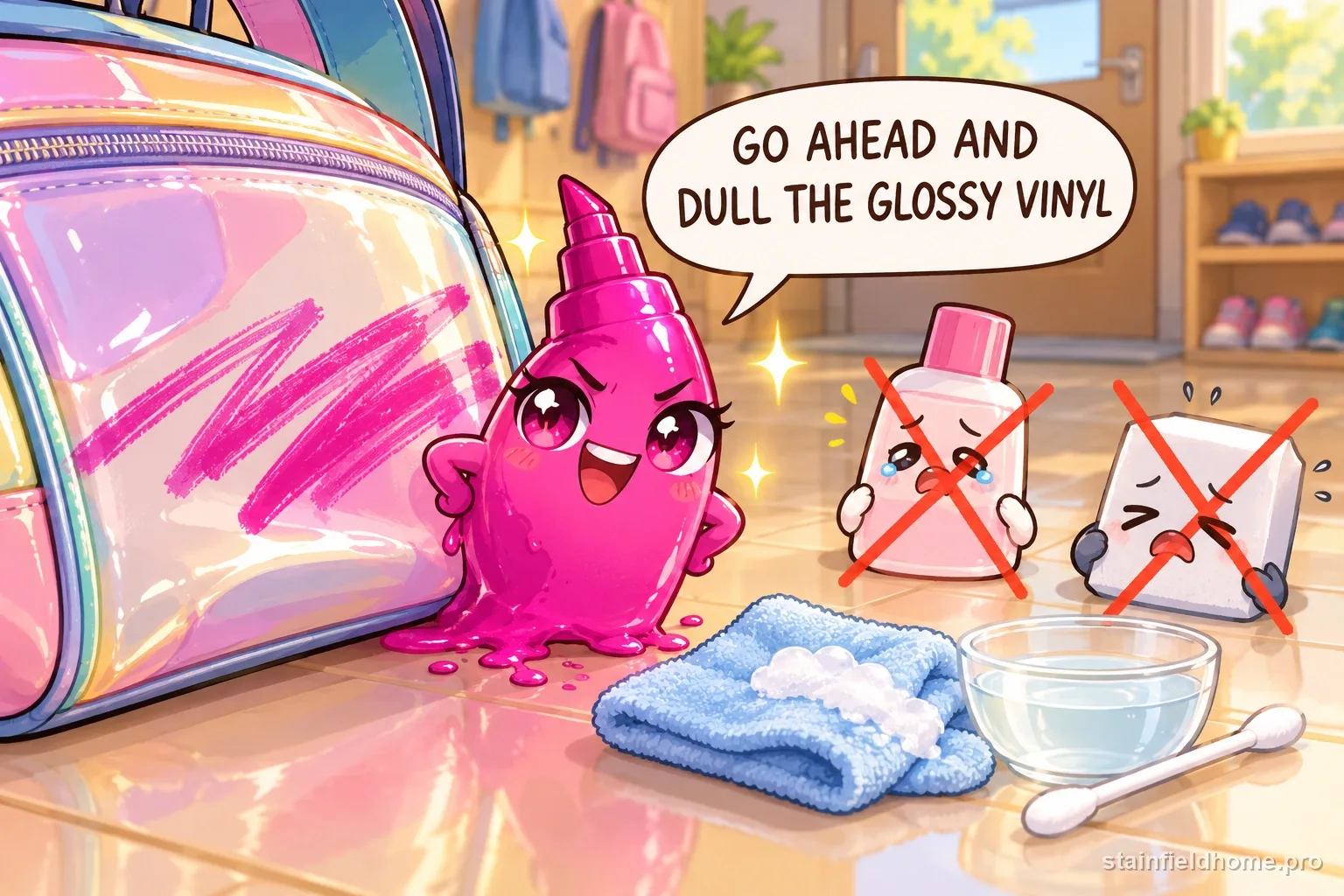
A magic-eraser (melamine) pad works on some vinyl but is abrasive and will dull a glossy finish, so only use it on a matte, textured, or already-worn area and test first. A faint ghost of the marker that survives all of this is usually permanent.
Preventing marks on a school or work bag
- Label the bag with a woven tag or a laundry marker on the fabric care label, not marker on the vinyl.
- Keep loose markers capped and in a pencil case inside the bag.
- Wipe the bag down weekly — fresh marks come off far more easily than set ones.
- A clear vinyl protectant or a light wipe of furniture polish leaves a slick surface that resists ink and cleans up faster.
A vinyl backpack is usually a mixed-material item
Before treating the ink, empty the bag and identify the exact panel. Vinyl trim may be sewn beside polyester fabric, faux leather, a coated lining, foam, and a printed logo. Test only the smooth vinyl panel with alcohol; a damp swab can wick into stitching and carry dissolved ink into a porous fabric seam. Place a clean white towel inside the bag behind the mark so any transfer is caught instead of reaching the lining.
If you cannot tell whether the surface is vinyl, PVC-coated fabric, polyurethane, or a soft-touch synthetic, do not assume they share the same solvent tolerance. The maker's care label and hidden test decide. For a removable accessory or backpack with a warranty, ask the brand before using solvent. A mark on the fabric body needs a fabric-specific method and should be treated separately from the vinyl trim.
Keep the removed ink from redepositing
Permanent marker contains dye carried in a fast-evaporating solvent. As alcohol re-wets the mark, ink can travel with the liquid across the glossy surface. Work in tiny sections, dab toward the center, and keep changing to a clean white cloth face. If the ink stops transferring after several light passes, pause; adding more alcohol or pressing harder can spread the color or soften the vinyl finish.
After each pass, blot with a separate cloth dampened in clean water and dry immediately. Check the towel inside the backpack too. If ink appears there, stop and replace it with a clean towel before continuing. Do not use hairspray, hand sanitizer, toothpaste, or a household degreaser as an improvised marker remover: fragrances, gels, abrasives, and surfactants can leave haze or attack a print without removing the pigment cleanly.
When a pale ghost is safer than a damaged finish
A faint outline can remain after the bulk of the marker transfers because pigment has settled into texture or a porous coating. If the surface is glossy and smooth, a couple of gentle repeats may improve it. If it is pebbled, embossed, matte, printed, or already cracked, stop sooner. Do not scrub with a melamine sponge unless the finish is matte and a hidden test confirms it does not change; melamine acts like a very fine abrasive and can permanently flatten gloss.
For a valuable or school-issued bag, photograph the area and contact the manufacturer or a leather-and-vinyl repair shop before using stronger solvent. Heat guns, acetone, paint thinner, and chlorine bleach are not reasonable next steps. A small remaining mark is usually less costly than a softened panel, stripped graphic, or failed seam adhesive.
Common questions
FAQ
Can I use acetone or nail polish remover on marker on vinyl?
No. Acetone dissolves the plasticizers in vinyl and its printed finish, leaving a dull, sticky, or discolored patch. Use a 1:1 mix of 70% rubbing alcohol and water instead, tested on a hidden area first — that is what vinyl manufacturers like HON recommend for permanent ink.
The alcohol test made a hidden spot go cloudy. What are my options?
Do not use alcohol on that bag. Try coloring over the mark with a dry-erase marker and wiping immediately, which lifts some permanent ink more gently. A melamine sponge works on matte or textured vinyl but dulls a gloss finish. A faint remaining ghost is likely permanent.
Will this work on a marker mark on the fabric part of my backpack?
No — this method is for vinyl only. On fabric, rubbing alcohol spreads permanent marker into a larger grey stain. For fabric, put a towel underneath, dab (do not rub) with alcohol on a cloth, change the towel as ink transfers, then wash. Expect only partial removal on fabric.
Can the alcohol touch a printed logo or zipper seam?
Avoid both. Alcohol can lift screen printing and can wick through thread into fabric or adhesive. Use a cotton swab for control, keep a dry towel behind the vinyl, and stop if the cloth picks up the logo's color or the seam begins to wet through.
Why did the vinyl become cloudy or sticky after cleaning?
The solvent may have affected the surface coating or plasticizer, or an abrasive may have dulled the gloss. Stop using chemicals, wipe once with mild soap and water, and let it air-dry. The finish change may not be reversible; contact the manufacturer or a repair shop rather than trying to polish it with another solvent. Keep the softened area away from other surfaces while it dries, and do not apply conditioner, oil, or furniture polish unless the bag maker specifically lists it for that vinyl; those products can leave a permanent oily film or interfere with adhesive-backed patches.
Sources reviewed
Keep reading
Related guides
Permanent marker on Painted wall
How to Remove Permanent Marker From a Painted Wall
Lift fresh or set permanent marker from cured wall paint with controlled dabbing, a finish test, and a planned switch to stain-blocking primer when cleaning would damage the coating.

Slime on Carpet
How to Remove Slime From Carpet Without Damaging the Fibers
Lift dried or fresh slime out of carpet fibers with an ice-and-scrape method plus a vinegar or rubbing alcohol rinse, without soaking the backing or bleaching the color.

Essential oil and reed-diffuser oil on Finished wood furniture
How to Remove Essential Oil and Diffuser Stains From Wood Furniture
Blot a diffuser-oil spill on finished wood, use a cautious absorbent step, and recognize when the finish needs a furniture repair professional.

Pumpkin (carving, decorating, or puree) on Carpet
How to Remove Pumpkin Stains From Carpet
Remove pumpkin pulp and treat any remaining orange mark on carpet with a careful, low-moisture sequence that follows the carpet maker's guidance.