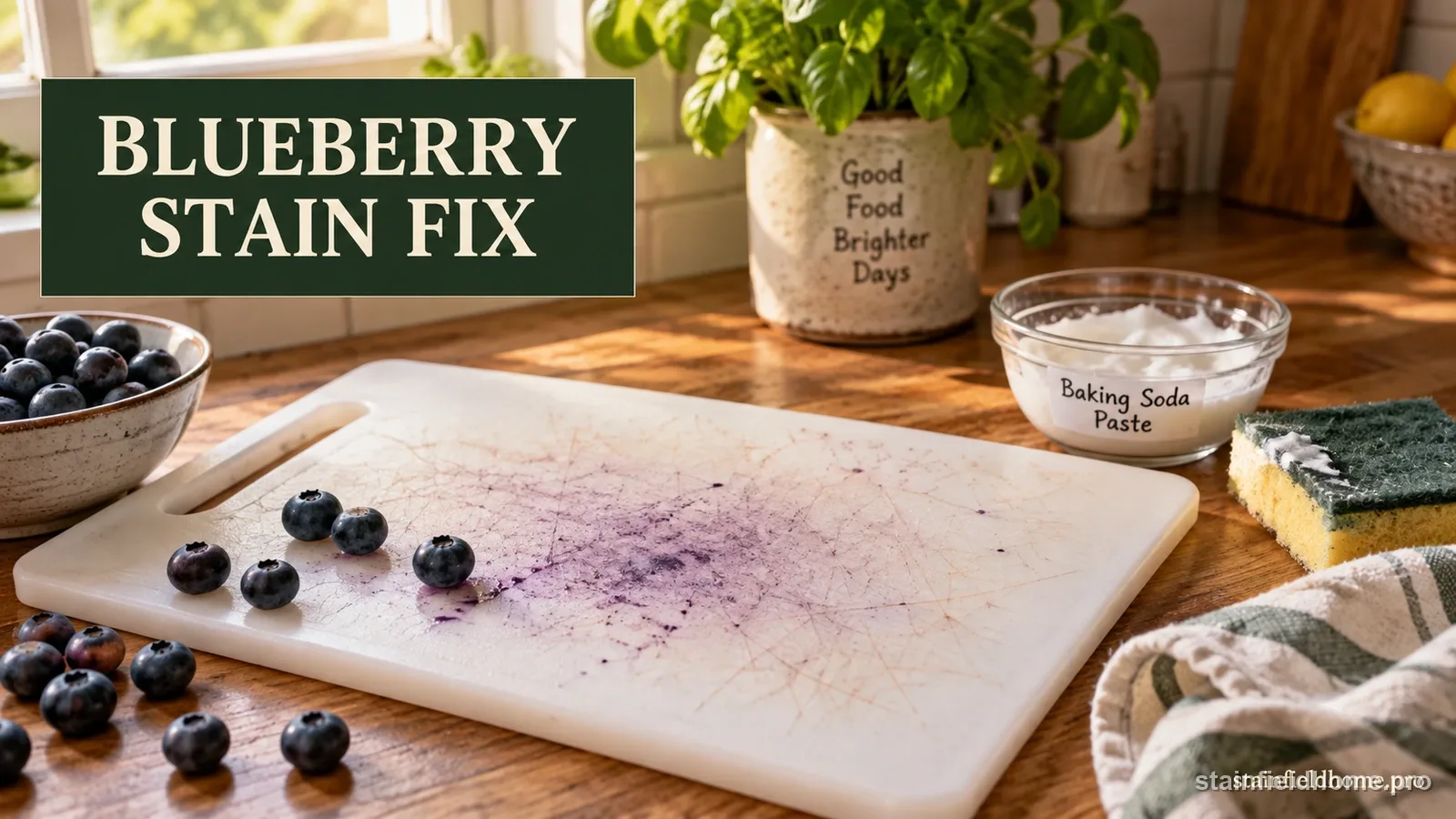
The quick answer
Wash the board immediately with dish soap and warm water, then treat any remaining purple stain with a baking-soda paste scrubbed in with a nonabrasive sponge. For a stubborn or set-in stain, a diluted bleach solution (about 1 tablespoon bleach per gallon of water) or letting the wet board sit in direct sunlight for a few hours can lift the rest. Always rinse thoroughly and let the board fully dry before its next use.
What you’ll need
- Dish soap
- Baking soda
- A nonabrasive sponge or soft scrub brush
- Household chlorine bleach (for a diluted soak, if needed)
- Direct sunlight access, for the sun-bleaching method
Why blueberries stain plastic so easily
Blueberries contain anthocyanins, the same pigments responsible for their deep purple-blue color, and these pigments are notably good at binding to porous and semi-porous surfaces. Plastic cutting boards develop microscopic knife grooves and scratches over time from normal use, and those grooves give pigment somewhere to settle into rather than simply wiping off a smooth, unmarked surface.
This is why an older, more heavily knife-scored cutting board tends to stain more readily and more permanently than a newer one with a smoother surface — the pigment has more microscopic texture to grip onto.
Immediate cleanup after cutting or crushing blueberries
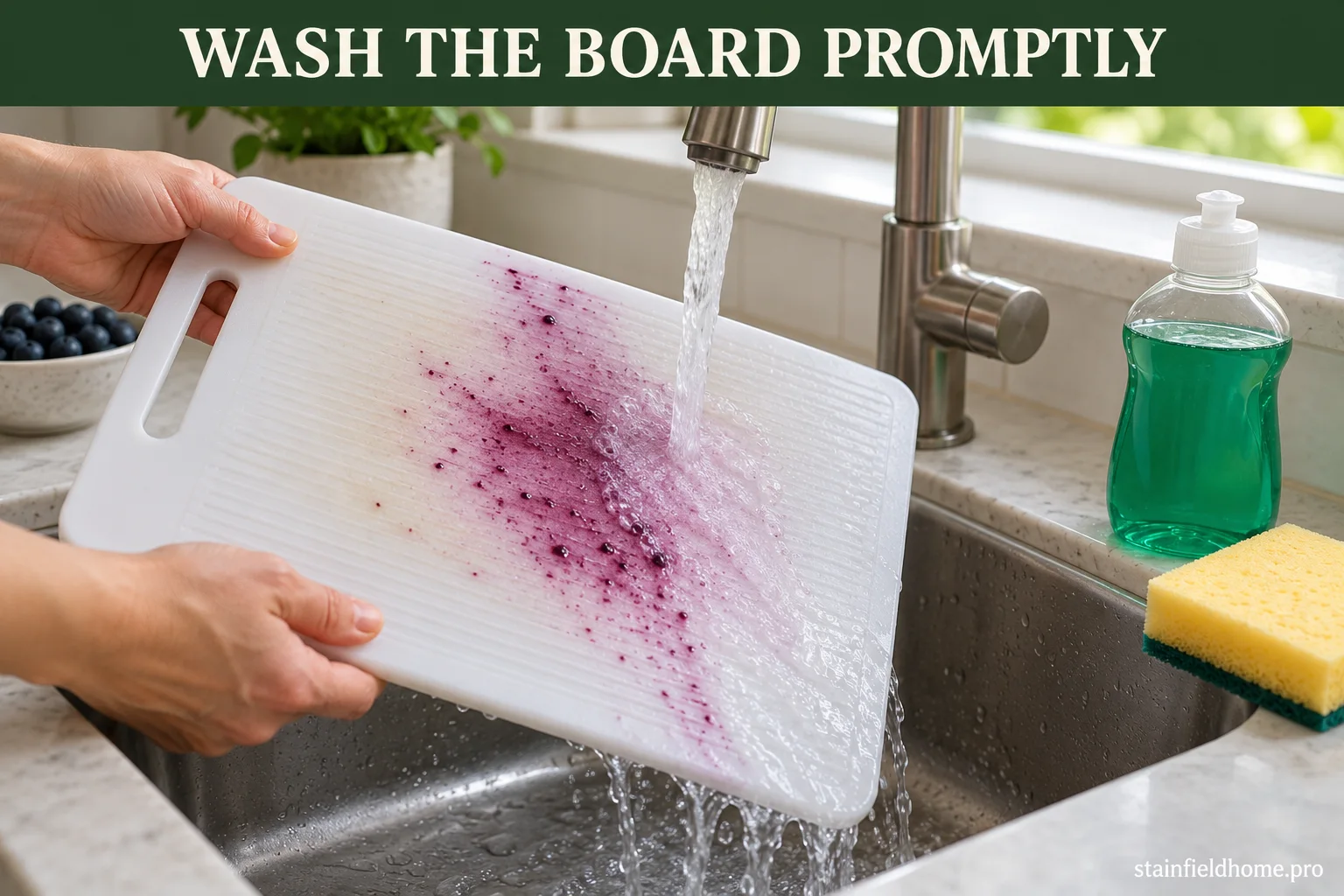
Immediate washing prevents the majority of blueberry staining from ever setting in the first place. The methods below are for a stain that's already visible after this first wash, not a replacement for washing right away.
- 01
Rinse the board under warm running water as soon as you're done, before any juice has a chance to dry on the surface.
- 02
Wash with dish soap and a sponge, working into any visible knife grooves where juice tends to pool.
- 03
Rinse thoroughly and check the board while it's still wet — staining is often easier to judge and treat before the surface fully dries.
Baking soda paste for a mild to moderate stain
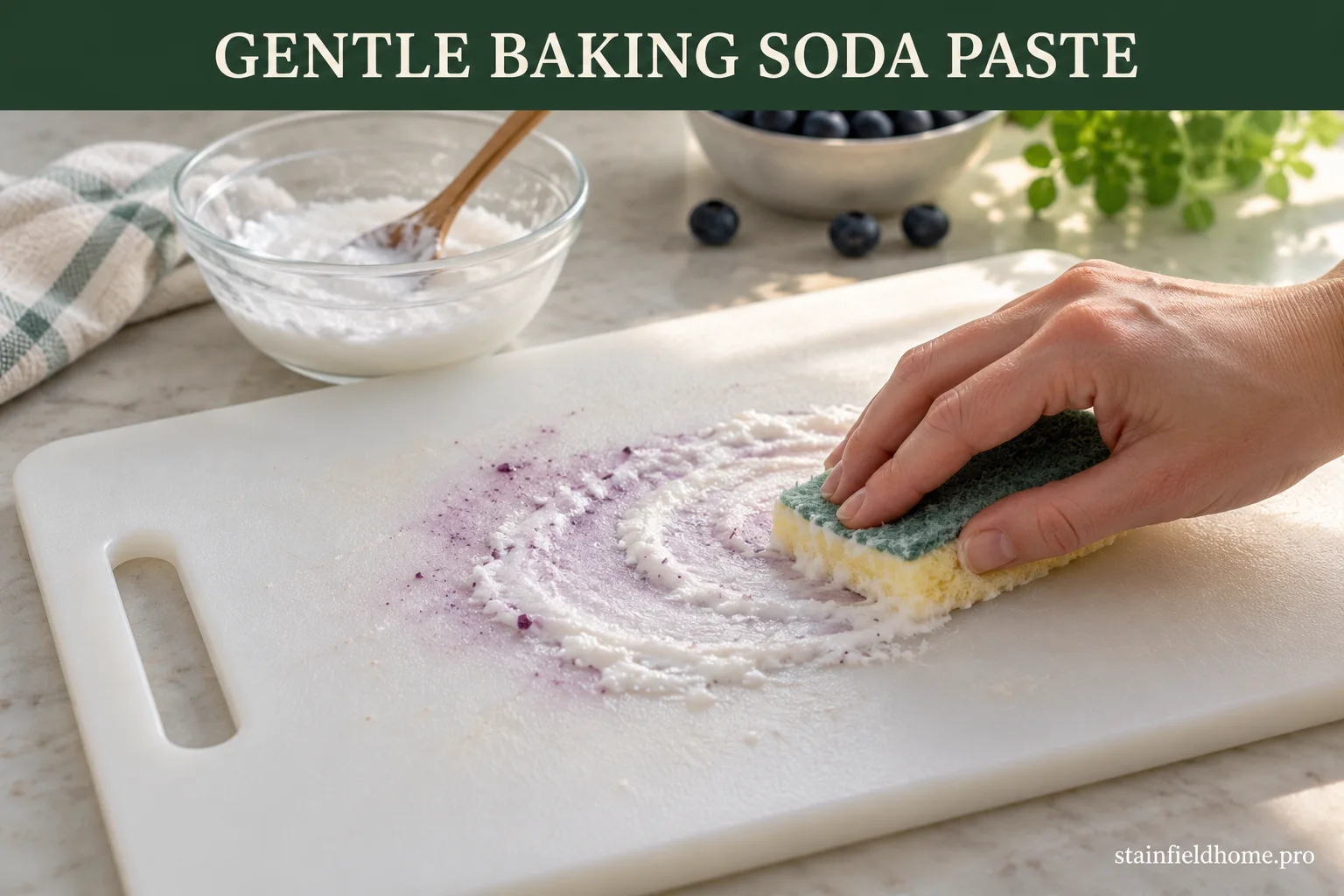
Baking soda's mild abrasiveness combined with its alkaline properties makes it effective on many fruit-pigment stains without being harsh enough to damage the plastic surface the way an abrasive scouring pad might.
- 01
Make a thick paste of baking soda and a small amount of water.
- 02
Spread the paste over the stained area and let it sit for about 10 to 15 minutes.
- 03
Scrub gently with a nonabrasive sponge, working in circular motions over the stain.
- 04
Rinse thoroughly with warm water and check the result before deciding whether further treatment is needed.
Sun bleaching for a stubborn stain
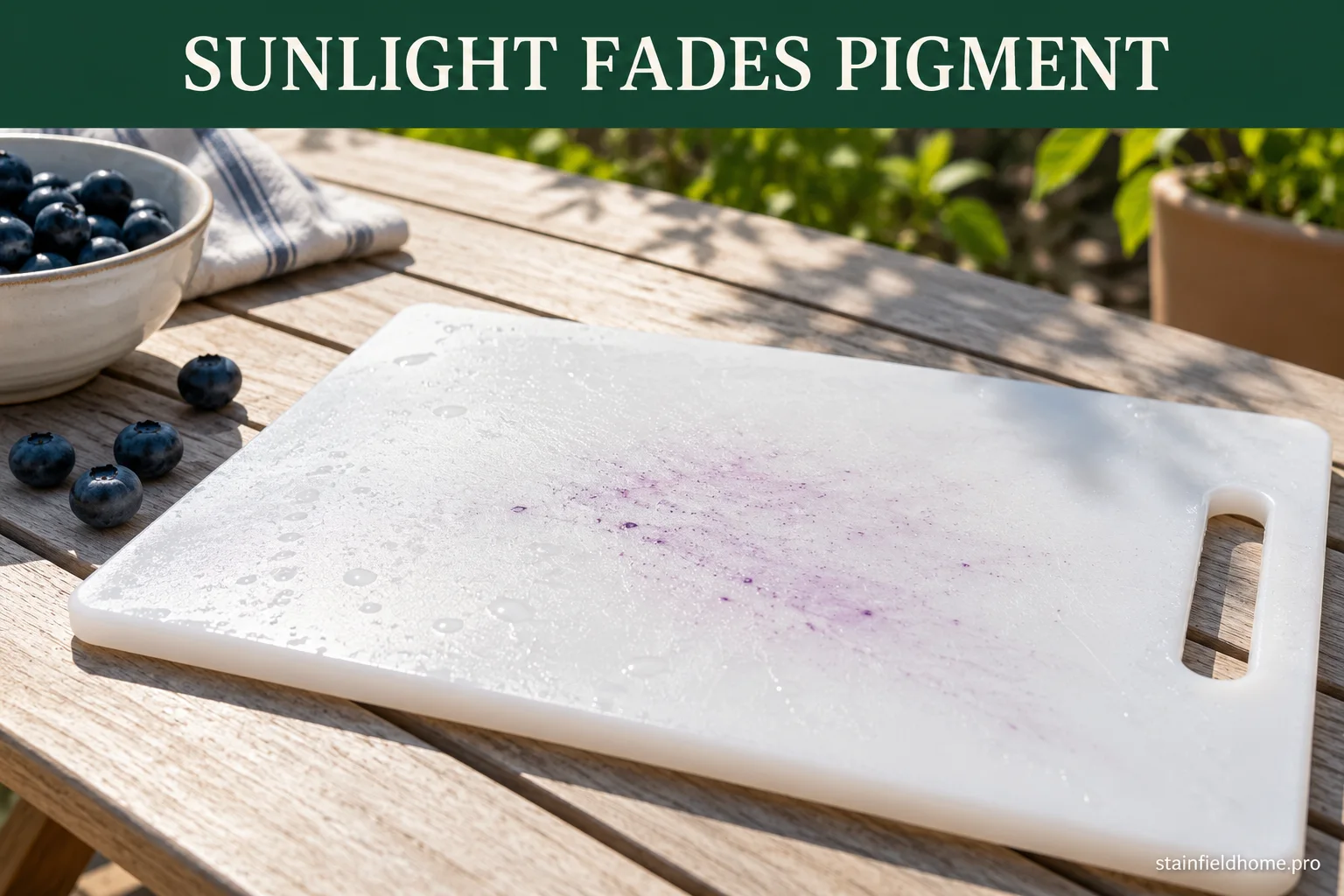
Wet the stained board and set it outside in direct sunlight for a few hours. Ultraviolet light breaks down many fruit and vegetable pigments over time, which is why this method — sometimes called sun bleaching — works well on plastic surfaces that can't tolerate harsher chemical treatment as often.
This method takes patience rather than effort, and it's particularly useful for boards you want to avoid treating with bleach repeatedly, since UV exposure doesn't carry the same material-degradation concerns as frequent chlorine bleach use.
A diluted bleach soak for a set-in or widespread stain
This diluted strength is meant for occasional stain treatment, not routine cleaning. Repeated, frequent bleach soaks can make some plastics more brittle over years of use, so reserve this method for stains that baking soda and sun exposure haven't fully resolved.
- 01
Mix about 1 tablespoon of household chlorine bleach per gallon of water in a basin large enough to submerge the board, or in the sink.
- 02
Submerge the board, or the stained side, in the solution for 5 to 10 minutes — do not extend this significantly longer, since prolonged bleach contact can degrade some plastics over time.
- 03
Remove the board and rinse it extremely thoroughly with warm water, checking that no bleach smell remains before using the board with food again.
- 04
Let the board air-dry completely, ideally standing upright so both sides get airflow.
When to replace the board instead of treating it again
A cutting board with deep, extensive knife grooves that repeatedly trap stains, odors, and potentially bacteria is a food-safety consideration, not just a cosmetic one. If a board's surface has become heavily scored and staining has become a recurring problem no matter what treatment you use, that's a reasonable signal to replace it rather than keep treating the same underlying wear.
The FDA's general food-safety guidance for cutting boards recommends replacing boards once they develop hard-to-clean grooves, independent of whether a specific stain can technically still be lifted.
Preventing future blueberry stains
- Use a dedicated board for high-pigment fruits and vegetables if you have more than one board in rotation.
- Wash and rinse the board immediately after use rather than letting juice sit, even briefly, on the surface.
- Store the board standing upright to dry fully between uses, which also slows how quickly knife grooves trap residue.
- Consider a lighter-colored board specifically for berries and beets if staining bothers you cosmetically, since some stains are simply more visible on very light plastic.
Common questions
FAQ
Does dishwasher washing remove blueberry stains from a plastic cutting board?
A dishwasher cycle can help with fresh, mild staining, but it generally isn't as targeted as a baking-soda paste or a diluted bleach soak for a stain that has already set into the board's surface grooves.
Is it safe to use bleach on a plastic cutting board?
Yes, in a properly diluted solution (about 1 tablespoon bleach per gallon of water) for a short soak, followed by thorough rinsing. Frequent, undiluted, or prolonged bleach exposure can degrade some plastics over time, so use it occasionally rather than as routine cleaning.
Why do old cutting boards stain more than new ones?
Repeated knife use creates microscopic grooves and scratches that give fruit pigment somewhere to settle into. A newer, smoother board resists staining better than one with years of visible knife wear.
Does sun bleaching actually work on plastic cutting boards?
Yes — ultraviolet light breaks down many fruit and vegetable pigments over time. Wetting the board and leaving it in direct sunlight for a few hours is a gentle, chemical-free option for a stubborn stain.
Sources reviewed
Keep reading
Related guides

Slime on Carpet
How to Remove Slime From Carpet Without Damaging the Fibers
Lift dried or fresh slime out of carpet fibers with an ice-and-scrape method plus a vinegar or rubbing alcohol rinse, without soaking the backing or bleaching the color.

Essential oil and reed-diffuser oil on Finished wood furniture
How to Remove Essential Oil and Diffuser Stains From Wood Furniture
Blot a diffuser-oil spill on finished wood, use a cautious absorbent step, and recognize when the finish needs a furniture repair professional.

Pumpkin (carving, decorating, or puree) on Carpet
How to Remove Pumpkin Stains From Carpet
Remove pumpkin pulp and treat any remaining orange mark on carpet with a careful, low-moisture sequence that follows the carpet maker's guidance.
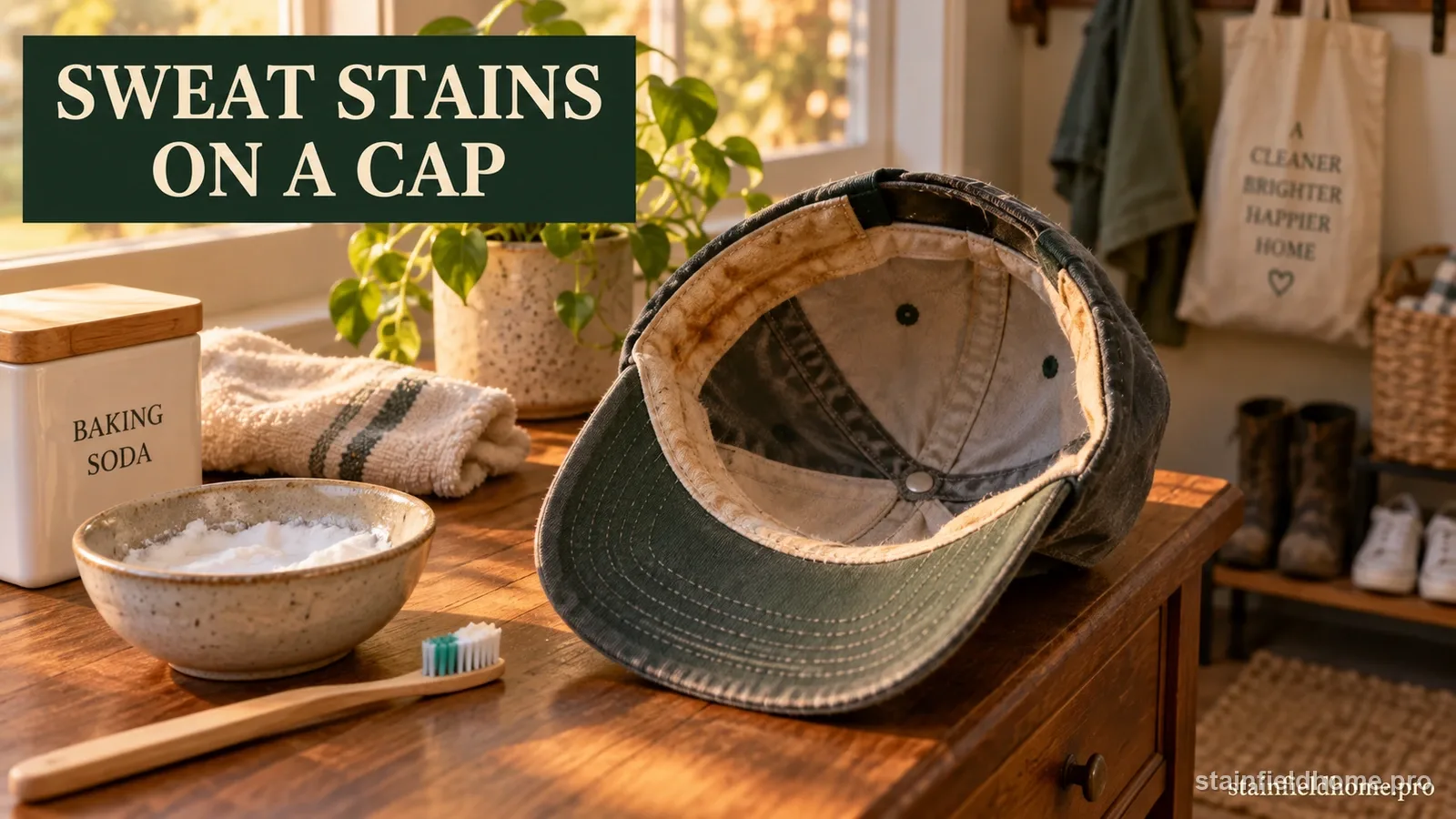
Sweat on Baseball cap
How to Remove Sweat Stains and Odor From a Baseball Cap
Lift yellow sweat stains and odor from the sweatband of a baseball cap without warping the brim or shrinking the crown.