
The quick answer
Cover burnt caramel with water and gently heat the pot so the sugar residue re-dissolves and softens, then lift it with a wooden or silicone utensil. Repeat the hot-water soak before reaching for abrasives. Once the sugar film is gone, wash normally and address any separate brown heat tint with a stainless-safe cleaner if needed.
What you’ll need
- water
- wooden spoon or silicone spatula
- dish soap
- nonabrasive sponge
- stainless-safe cleaner if needed
- dry towel
Sugar dissolves — use that instead of muscle
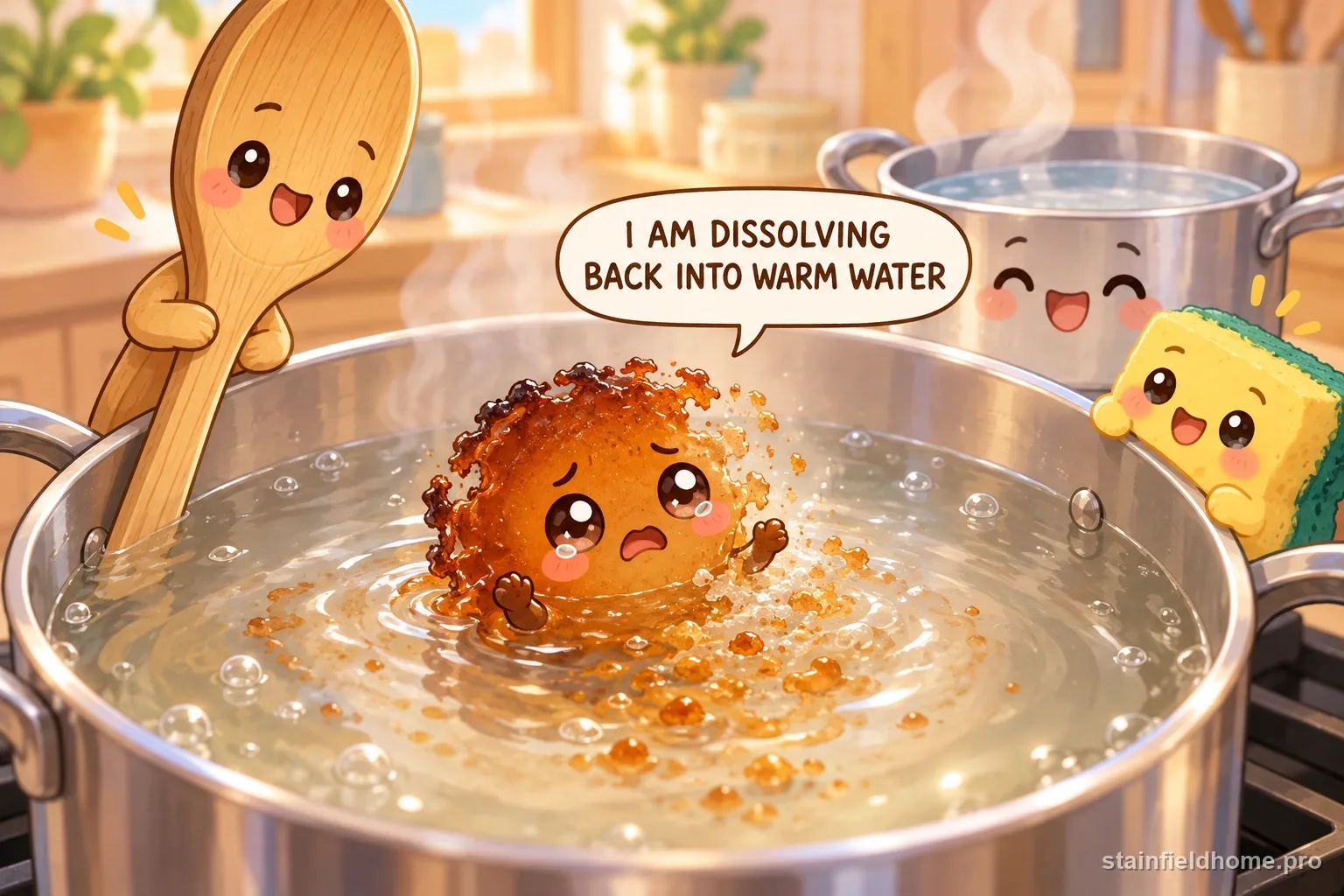
Burnt caramel looks like it has bonded to the steel, but sugar, even scorched sugar, is still water-soluble. The black glassy layer will dissolve if you give it enough hot water and time. Scraping and scouring a cold pot just polishes scratches into the finish while the sugar barely moves.
This is the same principle as deglazing a pan after searing: add liquid, apply heat, and the stuck residue releases. On a stainless pot there is no coating to protect, so you have more freedom than with nonstick, but abrasives still leave permanent swirl marks.

The hot-water method
- 01
Put enough water in the pot to cover the burnt area by an inch.
- 02
Set it on medium heat and bring it to a gentle simmer.
- 03
As it heats, use a wooden spoon or silicone spatula to nudge the edges of the caramel — you will feel it start to lift.
- 04
Simmer 5-15 minutes; the water will turn amber as the sugar dissolves back into it.
- 05
Pour off the syrupy water, and most of the caramel goes with it. Wipe the softened remainder with a nonabrasive sponge.
- 06
Repeat once more for any stubborn spots before considering anything harsher.
If a thin film or ring remains
After the bulk is gone, a light hot-water simmer with a squirt of dish soap clears most residual film. For a stubborn ring at the old liquid line, a paste of baking soda and a little water, left on for 15-20 minutes, then rubbed with a damp sponge, is gentle enough for stainless and usually finishes the job.
Bar Keepers Friend (oxalic acid plus a fine polish) is stainless-safe used occasionally with a soft cloth and plenty of water, rubbed with the grain. It is the strongest step that still will not ruin the finish — steel wool and scouring powder will.
The brown or blue tint is a different problem
Once the black sugar is off, you may see a rainbow, brown, or bluish discoloration on the steel where it overheated. That is heat tint — a thin oxide layer, harmless and not dirt. Sugar residue and heat tint are separate issues and need separate treatment.
Heat tint responds to a mild acid: wipe it with a cloth dampened in white vinegar or a stainless cleaner, let it sit briefly, then rinse and dry. It often takes a couple of passes. It does not affect how the pot cooks.
A scorched aluminum-core or nonstick pan is different
This method is for bare stainless. If your 'stainless' pot is actually anodized aluminum or has a nonstick interior, do not use baking-soda paste (it can dull anodized aluminum) or Bar Keepers Friend, and never scrape nonstick with anything hard.
For those, stick to the hot-water simmer and a soft sponge, repeated as many times as it takes, and check the pan maker's care page for their approved deep-clean method.
Avoiding the next scorched batch
- Make caramel in a heavy-bottomed pan on medium, not high — thin pans develop hot spots that burn sugar in seconds.
- Do not walk away; caramel goes from amber to acrid black in under a minute.
- Soak the pot right after cooking while it is still warm — same-day caramel wipes out in one simmer.
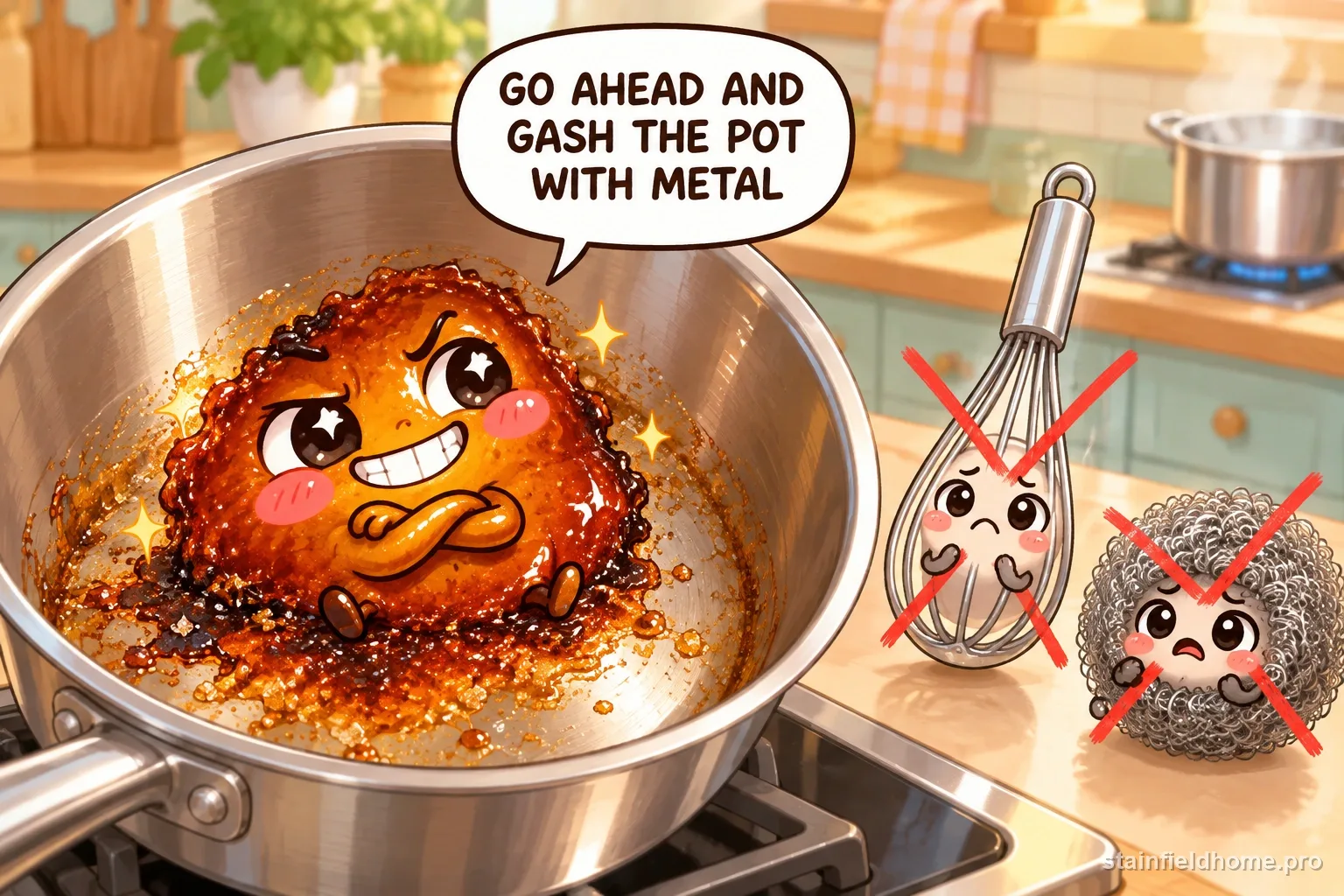
- Keep a wooden spoon for sugar work; a metal whisk drags scratched grooves that then hold residue.
Common questions
FAQ
Can I just scrub the burnt caramel off with steel wool?
You can, but it leaves permanent swirl scratches in the stainless finish, and it is slower than dissolving the sugar. Simmer water in the pot for 5-15 minutes first — scorched sugar is still water-soluble and mostly pours away with the water. Save any abrasive for a light final pass.
There is a brown rainbow stain after the caramel came off. What is that?
Heat tint — a harmless thin oxide layer from overheating the steel, not residue. Wipe it with white vinegar or a stainless-steel cleaner, rub with the grain, rinse and dry; repeat once or twice. It has no effect on cooking performance.
The pot has an aluminum or nonstick interior. Same method?
Use only the hot-water simmer and a soft sponge, repeated as needed. Skip baking-soda paste on anodized aluminum (it dulls the finish) and skip Bar Keepers Friend and any scraping on nonstick. Check the manufacturer's care page for a burnt-food method specific to that pan.
Sources reviewed
Keep reading
Related guides

Slime on Carpet
How to Remove Slime From Carpet Without Damaging the Fibers
Lift dried or fresh slime out of carpet fibers with an ice-and-scrape method plus a vinegar or rubbing alcohol rinse, without soaking the backing or bleaching the color.

Essential oil and reed-diffuser oil on Finished wood furniture
How to Remove Essential Oil and Diffuser Stains From Wood Furniture
Blot a diffuser-oil spill on finished wood, use a cautious absorbent step, and recognize when the finish needs a furniture repair professional.

Pumpkin (carving, decorating, or puree) on Carpet
How to Remove Pumpkin Stains From Carpet
Remove pumpkin pulp and treat any remaining orange mark on carpet with a careful, low-moisture sequence that follows the carpet maker's guidance.
Sweat on Baseball cap
How to Remove Sweat Stains and Odor From a Baseball Cap
Lift yellow sweat stains and odor from the sweatband of a baseball cap without warping the brim or shrinking the crown.