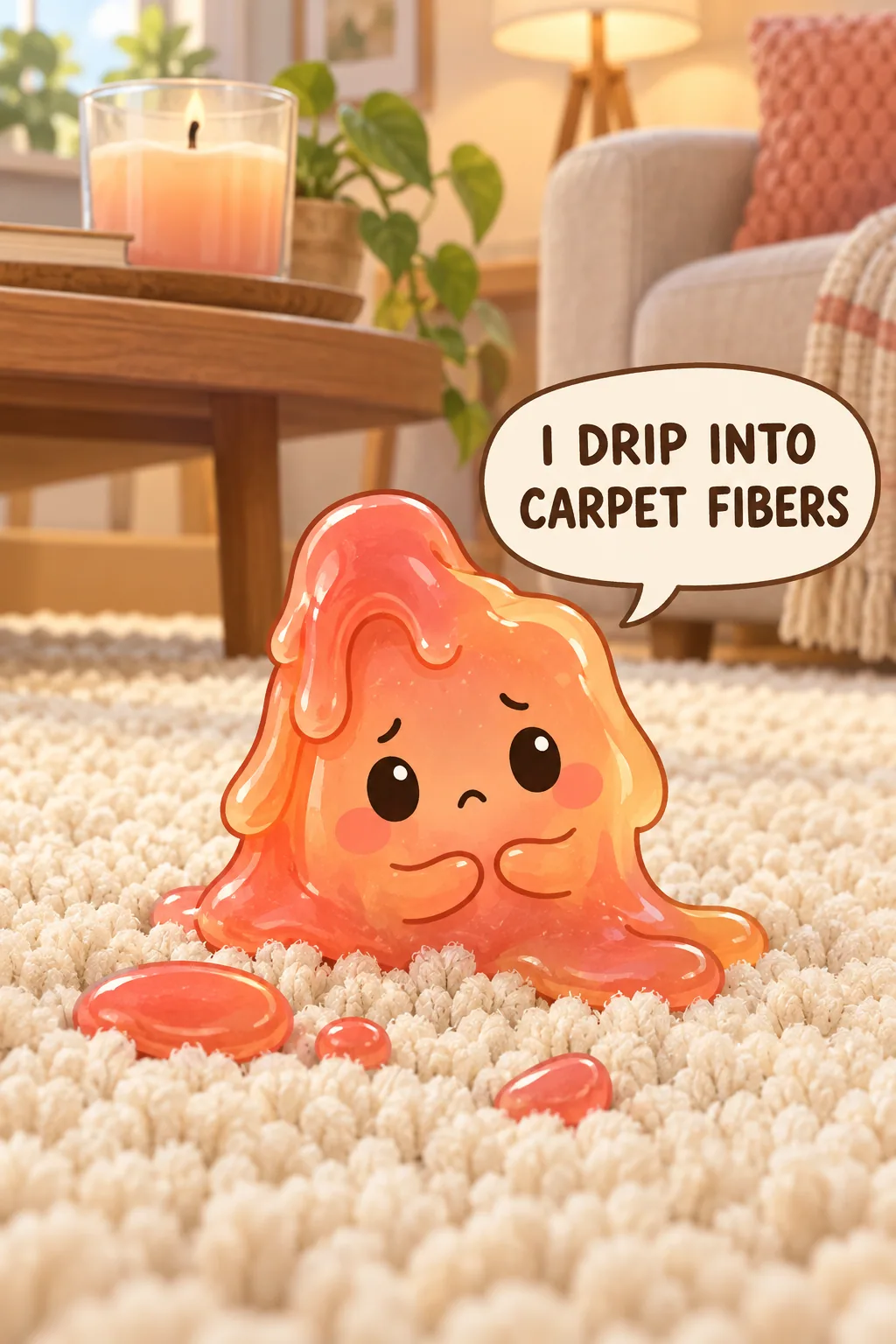
The quick answer
Let the wax cool and harden, then lift the brittle pieces with a dull spoon and vacuum them up. For wax still caught in the pile, place plain white absorbent paper over the spot and use only brief, low heat if the carpet maker permits it; never let an iron touch the carpet. Treat any remaining colored or oily shadow with a carpet-approved spot cleaner, blot from the edge inward, rinse lightly, and dry. If the carpet is wool, a specialty fiber, or has a delicate backing, skip the iron and call a carpet professional.
What you’ll need
- Dull spoon or plastic scraper
- Vacuum with an upholstery or floor attachment
- Plain white absorbent paper or an unprinted white cloth
- Carpet-approved spot cleaner, if a shadow remains
- Clean white towels and cool water
Identify the wax and carpet before treating the spot
Candle wax is a mixture of wax and, sometimes, fragrance oils and colored dye. The wax itself cools into a solid that can be lifted, while a colored candle can leave pigment and fragrance can leave an oily-looking shadow. That is why removing the visible lump does not always finish the job. Start by checking the carpet care label, maker’s maintenance instructions, and fiber type. Nylon and polyester carpet may tolerate a different spot treatment than wool, silk, or a plant fiber, and no home method is safe for every dye and backing.
If the candle was scented or brightly colored, plan to inspect for a second stain after the wax is gone. Do not start by rubbing, pouring hot water, or spraying several cleaners at once. Friction can push wax down between tufts, and excess liquid can carry residue into the backing where it is harder to remove and slower to dry. Ventilate the room if fragrance is strong, and keep children and pets away from the treatment area.
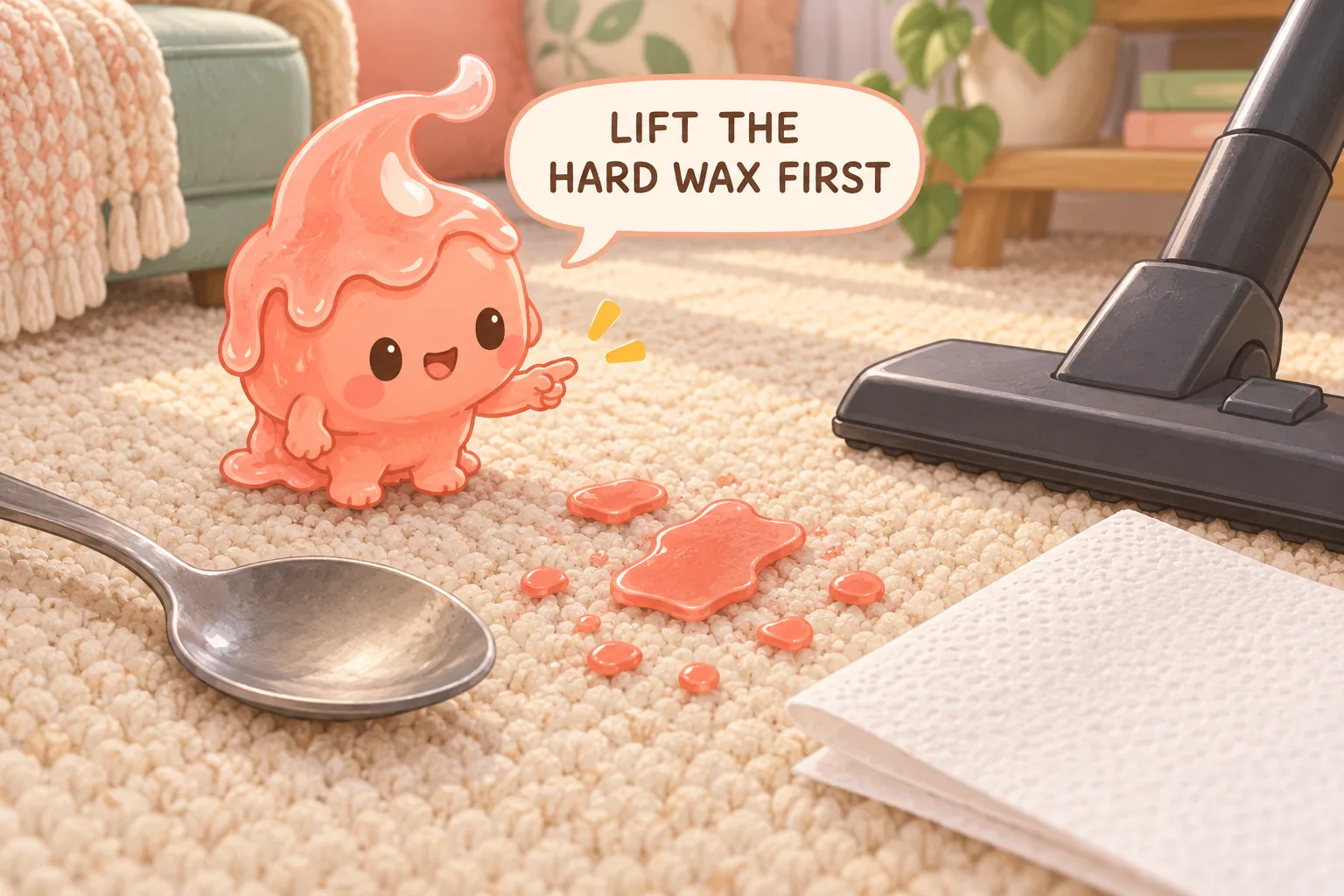
Let the wax harden, then lift what is sitting on top
The goal at this stage is mechanical removal, not melting. Scraping a still-soft spill tends to smear it over a larger area, so patience is useful. If the wax has dried into a thick cap, gentle flexing of the carpet pile around the edge can help release it. Stop if tufts begin to pull or the surface changes texture.
- 01
If the wax is still warm or liquid, leave it alone until it becomes firm. If it is already hard, continue without adding ice or water.
- 02
Hold a dull spoon nearly flat and gently lift or chip the wax from the carpet tips. Work in small pieces and keep the tool away from the backing.
- 03
Vacuum the loosened flakes using a floor or upholstery attachment. Check from several angles and repeat the gentle lift-and-vacuum process until no loose pieces remain.
- 04
Do not use a knife, scissors, or sharp scraper. Those can cut yarns or pull loops, turning a removable spill into permanent physical damage.
Use low, controlled heat only if the carpet maker allows it
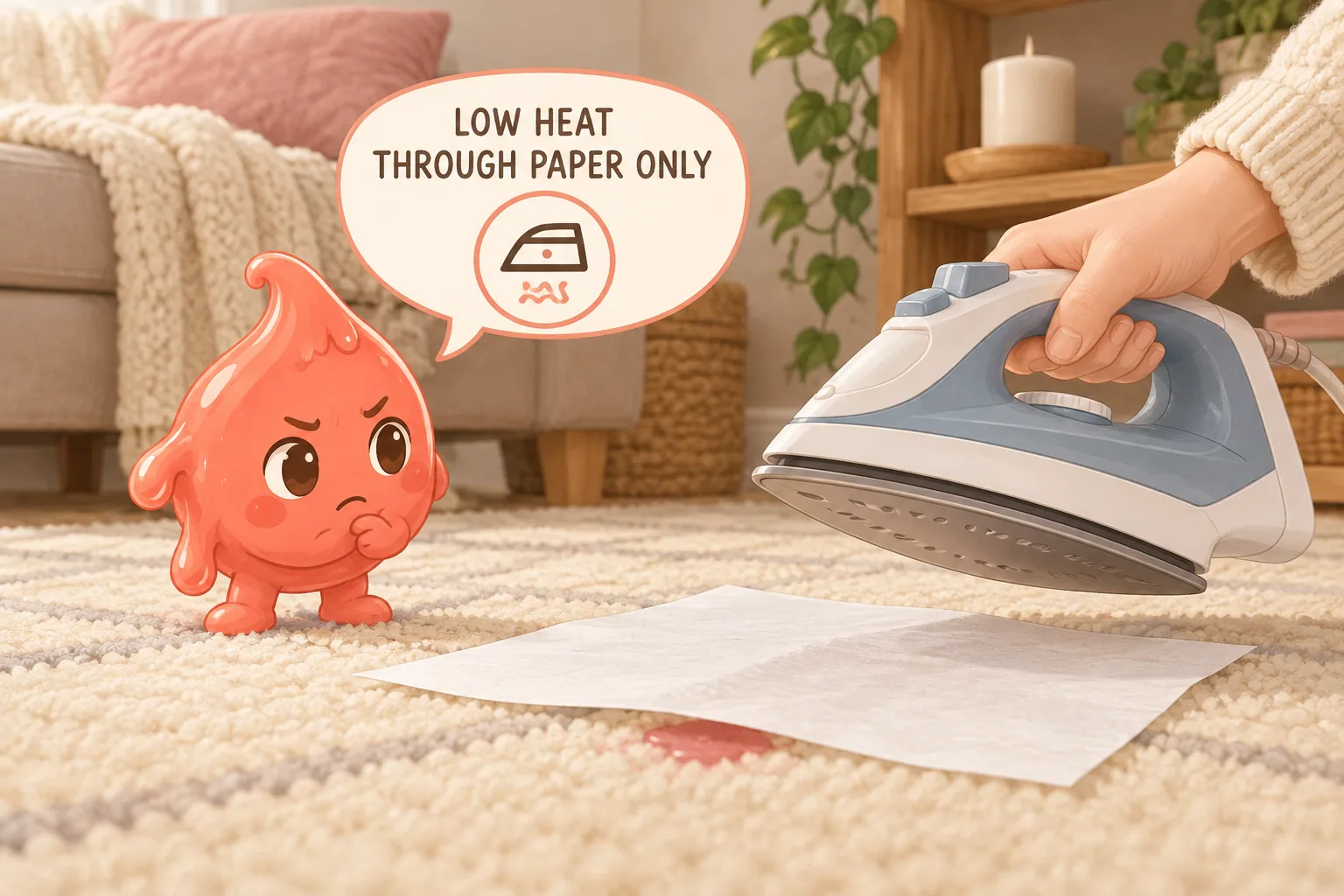
The Carpet and Rug Institute describes using brown paper and low iron heat to transfer candle wax from carpet. Treat that as a conditional method, not a universal instruction: carpet fibers and backing vary, and a hot iron can flatten pile, melt synthetic yarn, scorch natural fiber, or soften adhesive. If your manufacturer prohibits heat, the carpet is wool or specialty fiber, or you cannot identify the construction, skip this step and ask a professional cleaner.
If heat is allowed, use plain unprinted white absorbent paper rather than a printed bag, and place it over the remaining wax. Set an iron to its lowest setting with steam off, keep it moving, and touch the iron to the paper only for a moment. Lift the paper and check whether wax transferred. Replace it with a clean section each time; never press the iron directly onto carpet, and never leave it in place unattended. Stop as soon as no more wax transfers or if the pile looks shiny, flattened, discolored, or feels hot.
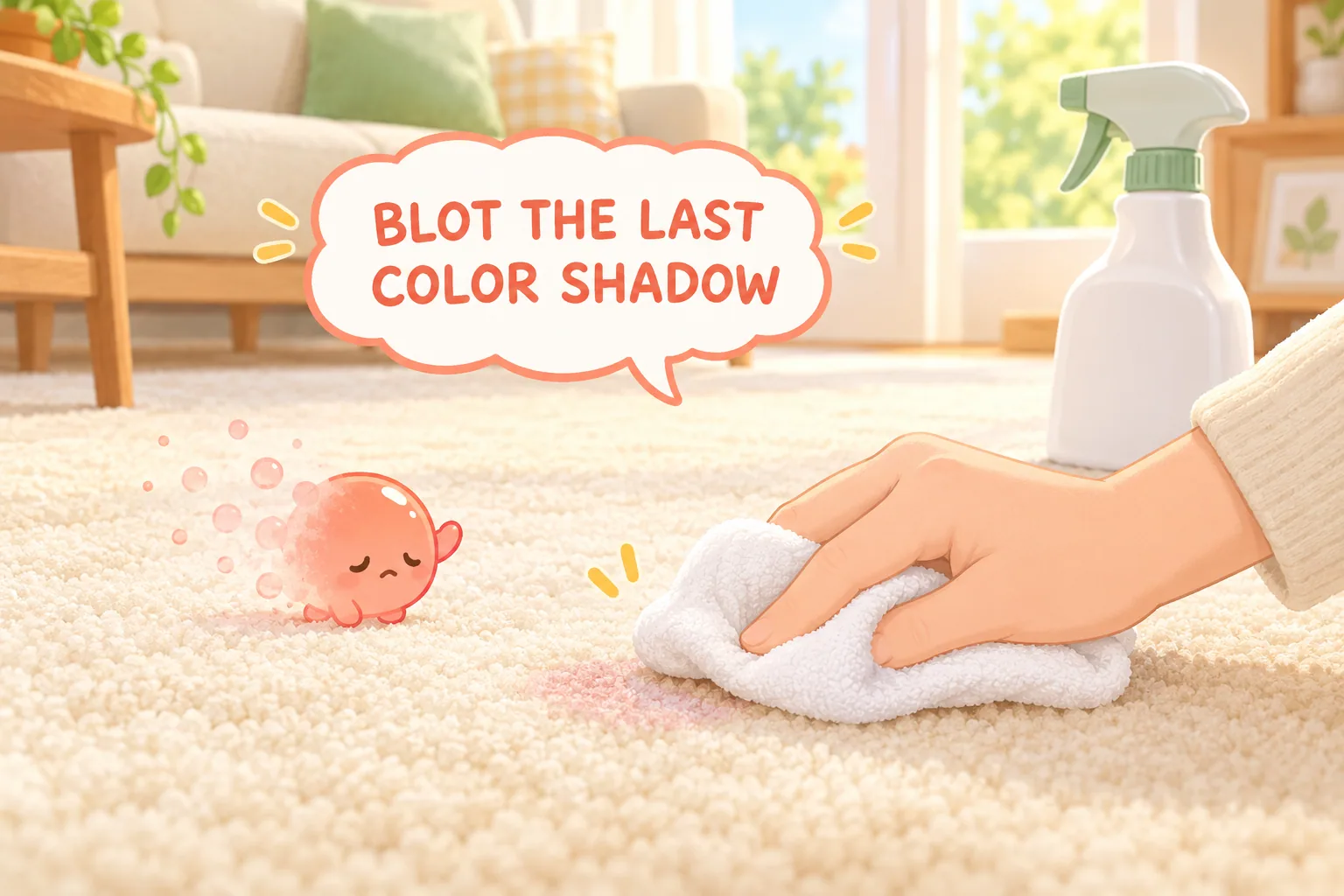
Treat a colored or greasy shadow as a separate spot
CRI advises pretesting cleaners, blotting rather than rubbing, and rinsing product residue from treated carpet. Residue left behind can attract soil, so do not skip the rinse when the chosen product requires one. Avoid laundry detergent, bleach, nail-polish remover, and untested solvents. A solvent can reach and damage the latex joining carpet layers, while bleach or strong chemicals can alter color permanently.
- 01
Pretest a carpet-approved cleaner on an inconspicuous area and let the test dry. Check both the carpet and a white cloth for color transfer or texture change.
- 02
Apply a small amount of the approved product to a clean white cloth, not directly onto the carpet. Blot the outer edge of the shadow first, then work toward the center.
- 03
Use a fresh area of cloth as residue transfers. Follow the cleaner’s dwell time and label exactly; more product is not better.
- 04
When the mark is gone, lightly rinse with cool water if the label calls for it, blot dry, and leave the pile exposed to airflow.
Know when to stop and call a carpet cleaner
Call a professional if the spill covers a broad area, reaches the carpet backing, remains after a careful product-label treatment, or sits on wool, silk, antique, or otherwise valuable carpet. Professional cleaners have controlled tools and products that can address wax and residue without flooding the pad. Tell them whether the candle was dyed or scented and what, if anything, you have already applied.
A wax shadow that changes color after heating may be dye or heat damage rather than removable wax. Repeating heat or adding a stronger solvent can make that change worse. When there is no transfer to the cloth after a few careful passes, pause instead of scrubbing harder. A small, lighter remnant is preferable to a widened spot or melted pile.
What to avoid and how to prevent another spill
Once the cleaned area is fully dry, vacuum gently to lift the pile back into shape. If an odor or greasy feel returns, residue may remain deeper in the carpet; avoid soaking the area and arrange a professional extraction.
- Do not scrub, use a sharp blade, or pull at carpet loops.
- Do not pour hot water onto wax or use a hot iron directly on carpet.
- Do not use a cleaner without a hidden-area test or the carpet maker’s approval.
- Do not flood the pile, backing, or pad, and do not leave detergent residue behind.
- Place candles on a stable heat-resistant tray, away from traffic, curtains, children, and pets; extinguish them before moving the holder.
Troubleshoot the spot after the first cleaning pass
Inspect the carpet only after the treated area has dried completely. Damp pile can look darker than the surrounding fibers, and that temporary change can be mistaken for a remaining wax stain. Compare the spot with a nearby unaffected area in daylight, then gently separate the pile with your fingers to see whether a hard fragment is still trapped between yarns. If you find a fragment, lift it with a dull tool rather than pulling on the fibers. If there is no solid wax but a faint halo remains, treat it as dye or fragrance residue and follow the carpet maker’s approved spot-cleaning instructions.
A useful test is to press a clean white cloth on the dry spot for a few seconds. If color or oily residue transfers, stop before adding another product and identify what is transferring. Wax can feel slightly tacky when warm; dye may color the cloth; fragrance oil may leave a translucent mark. A white cloth also makes it easier to notice whether a cleaner is removing residue or transferring carpet dye. Never use a colored towel, because its dye can complicate the result.
Keep any product within a small area and use just enough moisture to treat the pile. Work from the outside edge toward the middle so a halo does not expand, then blot with a dry towel and allow airflow. If the carpet smells strongly of cleaner after it dries, or the fibers feel stiff, residue may remain. Follow the label’s rinse step with a lightly damp cloth and blot dry instead of pouring water onto the carpet. When a second careful pass produces no improvement, further home treatment has diminishing value; a cleaner can assess the fiber and backing before damage occurs.
Common questions
FAQ
Can I use an iron to get candle wax out of carpet?
Only if the carpet manufacturer permits heat for that fiber and backing. Use low heat through plain absorbent paper, keep it moving, and never let the iron touch the carpet. Skip heat on wool or specialty carpet unless a professional advises otherwise.
Should I freeze candle wax on carpet?
Usually you can simply let it cool and harden. Once brittle, gently lift the pieces with a dull spoon and vacuum them. Avoid scraping while the wax is soft, because that can smear it deeper into the pile.
Why is a colored candle still visible after the wax is gone?
Candle dye or fragrance oil can leave a separate color or oily shadow. Treat that residue with a carpet-approved product after testing it in a hidden area; do not assume more heat will remove it.
Can I use rubbing alcohol or nail-polish remover on carpet wax?
Do not use either without approval from the carpet maker or a professional. Solvents may affect carpet dye, fibers, or the latex adhesive in the backing.
Sources reviewed
Keep reading
Related guides
Candle wax on Linen tablecloth
How to Remove Candle Wax From a Linen Tablecloth
Remove candle wax from a linen tablecloth by hardening and lifting it first, then address oily or colored residue without scorching the fibers.

Dried acrylic paint on Carpet
How to Remove Dried Acrylic Craft Paint From Carpet
Soften dried acrylic craft paint in carpet and lift it in stages; test cleaners first and avoid spreading pigment through the pile.
Eggnog on Carpet
How to Remove Eggnog Stains From Carpet
Blot eggnog from carpet with a careful, low-moisture method. Learn how to lift solids, use a mild detergent mix, rinse, dry, and stop safely.
Craft glitter on Carpet
How to Remove Glitter From Carpet
Lift glitter from carpet with a dry-first plan for loop, plush, and shag pile, plus vacuum, tape, rug-specific stop points, and safer cleanup.