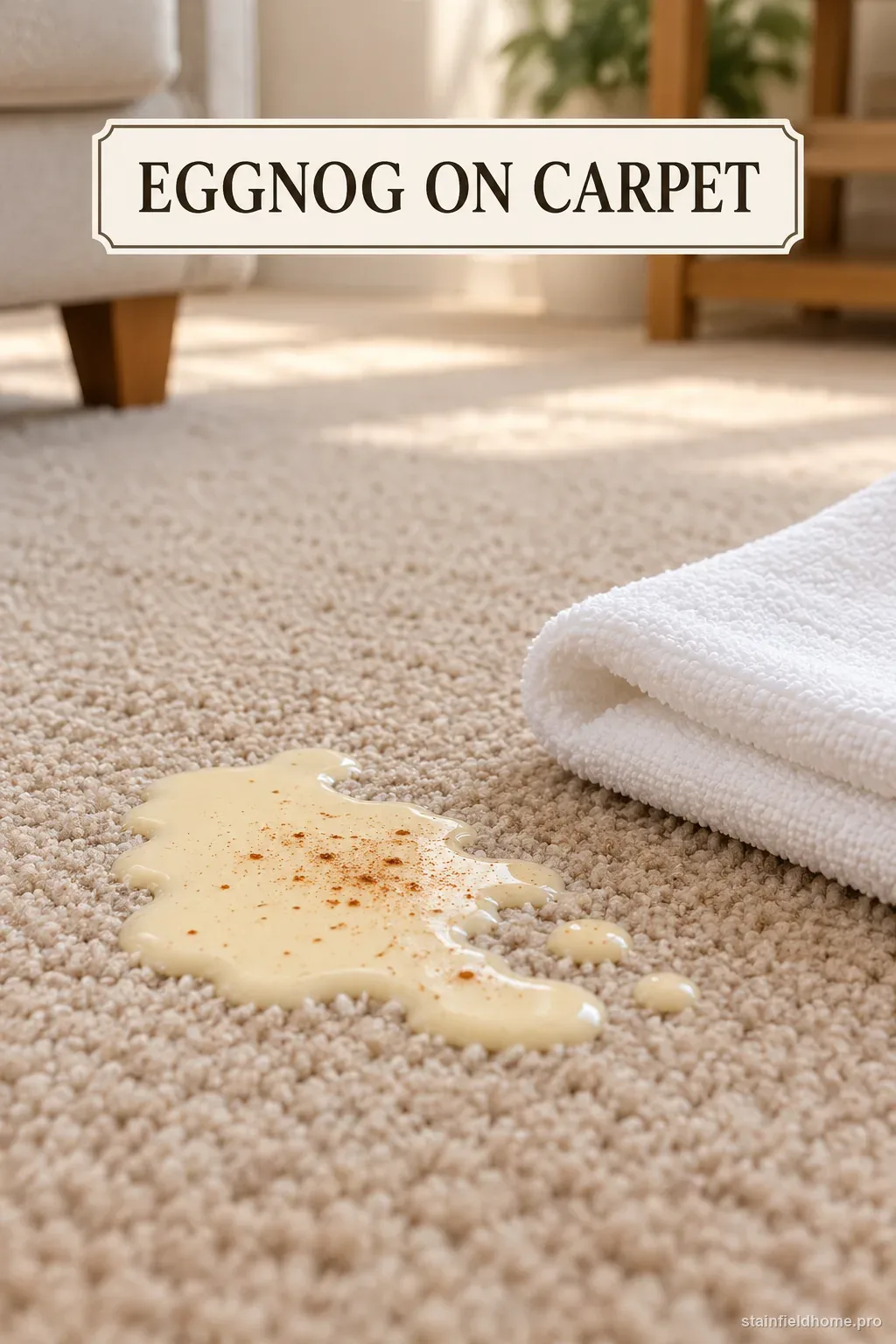
The quick answer
Lift thick eggnog with a rounded spoon, then blot with a white cloth. Test a hidden area. On compatible carpet, dab with ¼ teaspoon clear dishwashing liquid in 1 cup lukewarm water; rinse lightly and blot dry. Avoid rubbing, soaking, and heat. Let it dry before judging. Call a cleaner for wool, valuable carpet, sour odor, or a stain that remains.
What you’ll need
- Rounded spoon
- White absorbent cloths
- Small spray bottle or cup
- Clear dishwashing liquid
- Lukewarm water
- Dry white towel
- Fan for airflow
Identify the spill and check the carpet first
Eggnog combines several kinds of residue in one spill. Milk and cream leave proteins, fat, and sugars; egg adds protein; spices or flavorings may add color. A fresh splash may look pale, but a greasy ring or a sour smell can appear later if residue stays in the pile or backing. Treat the liquid, any thicker clumps, and the remaining film as separate parts of the cleanup.
Before adding cleaner, identify the carpet if you can. Check the manufacturer's care instructions, especially for wool, silk, viscose, handmade rugs, antique pieces, or carpets with unstable dyes. The Carpet and Rug Institute (CRI) eggnog spot solver gives a diluted detergent method for carpet, but that does not override a carpet maker's restrictions. If the fibre is unknown, the carpet is valuable, or a rug has a special finish, pause and ask a qualified cleaner before wet treatment.
For an ordinary synthetic carpet whose care guidance permits spot cleaning, gather clean white absorbent cloths, a rounded spoon, cool or lukewarm water, clear dishwashing liquid, and a dry towel. Keep the work area small. Do not start with a carpet machine, steam, hot water, bleach, ammonia, a scented spray, or a strong stain remover. Heat and aggressive chemistry may set or spread the mark, and excess liquid can carry eggnog into the backing or pad.
Lift thick eggnog and blot the fresh spill
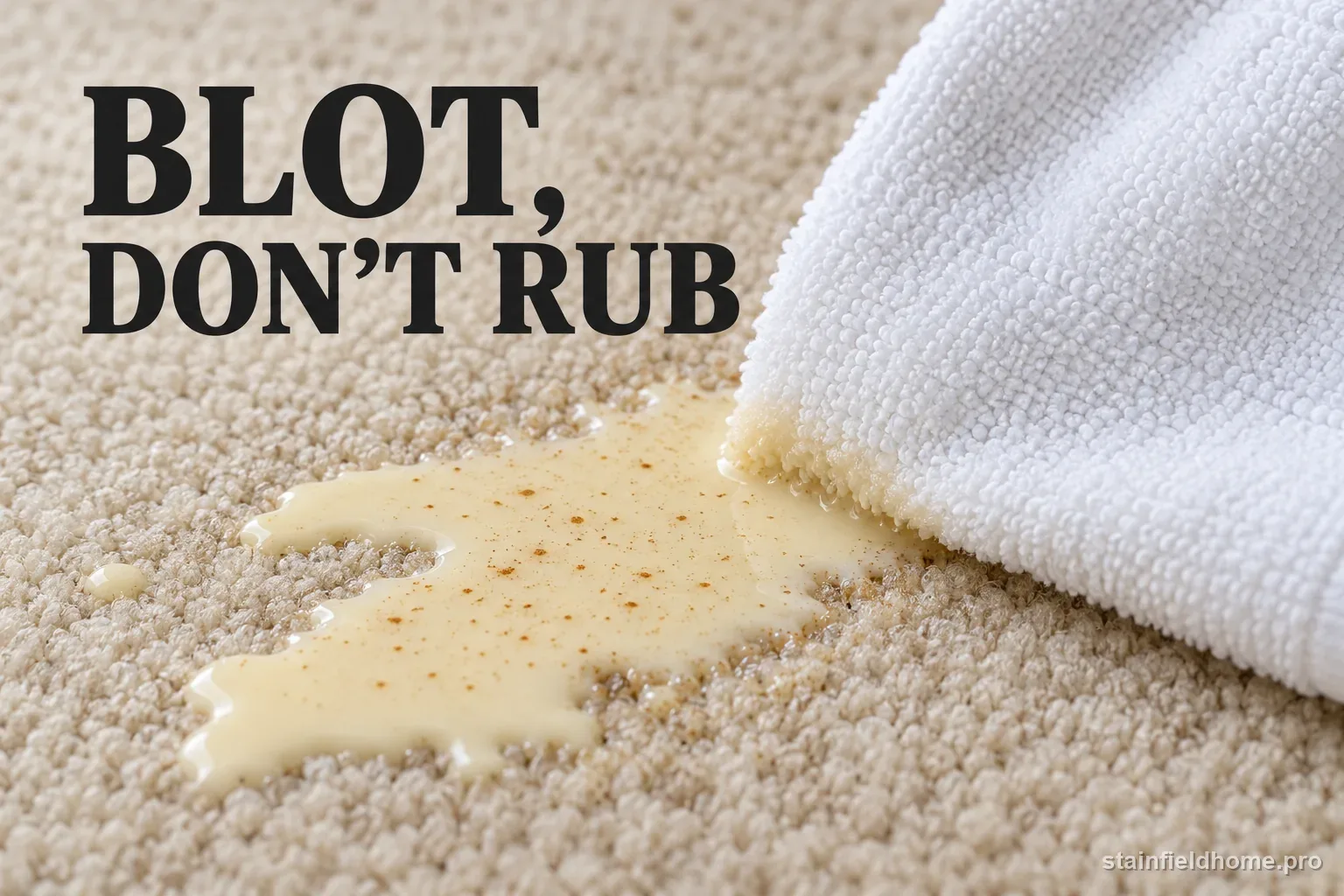
CRI's eggnog guidance starts with prompt blotting of liquids and careful lifting of semi-solids. A plain white towel makes color transfer visible. Printed paper towels, colored cloths, and napkins can leave their own dye or lint, so avoid them on a pale or delicate carpet.
- 01
If the spill is still wet, set a clean white cloth over it and press straight down. Lift the cloth rather than dragging it. Move to a dry section as soon as the cloth picks up moisture.
- 02
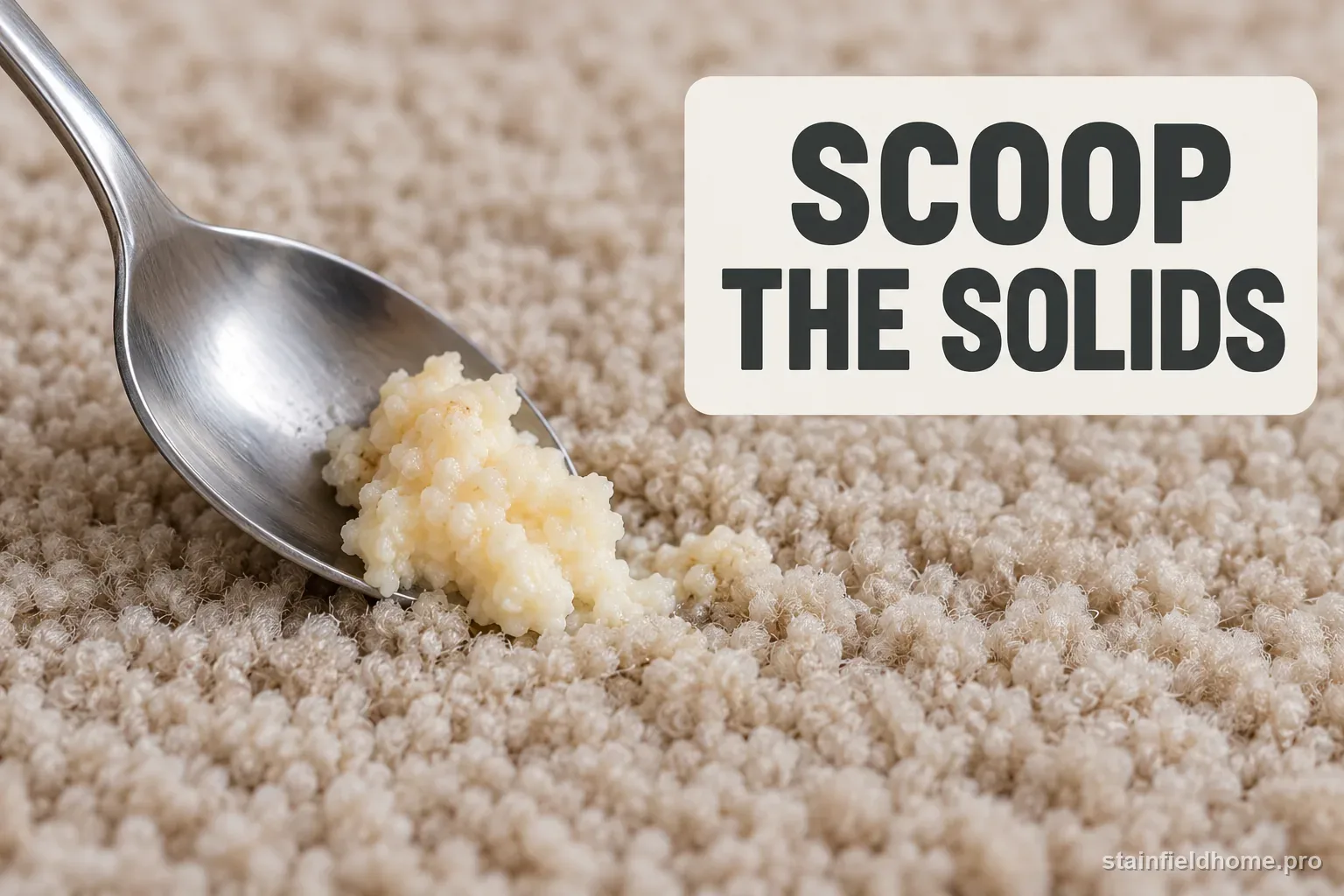
For a thick puddle or soft clump, use the rounded edge of a spoon to lift it from the carpet tips. Work from the outside toward the center, and wipe the spoon between passes so you do not spread the spill.
- 03
Continue blotting with fresh white cloths until little liquid transfers. If a cloth becomes saturated, replace it; pressing a wet cloth back into the carpet can return the eggnog to the pile.
- 04
Do not scrub in circles, brush the fibers, or push down hard enough to flatten the pile. These actions can enlarge the spot and drive protein and fat residue closer to the backing.
Test the carpet before adding a cleaning solution
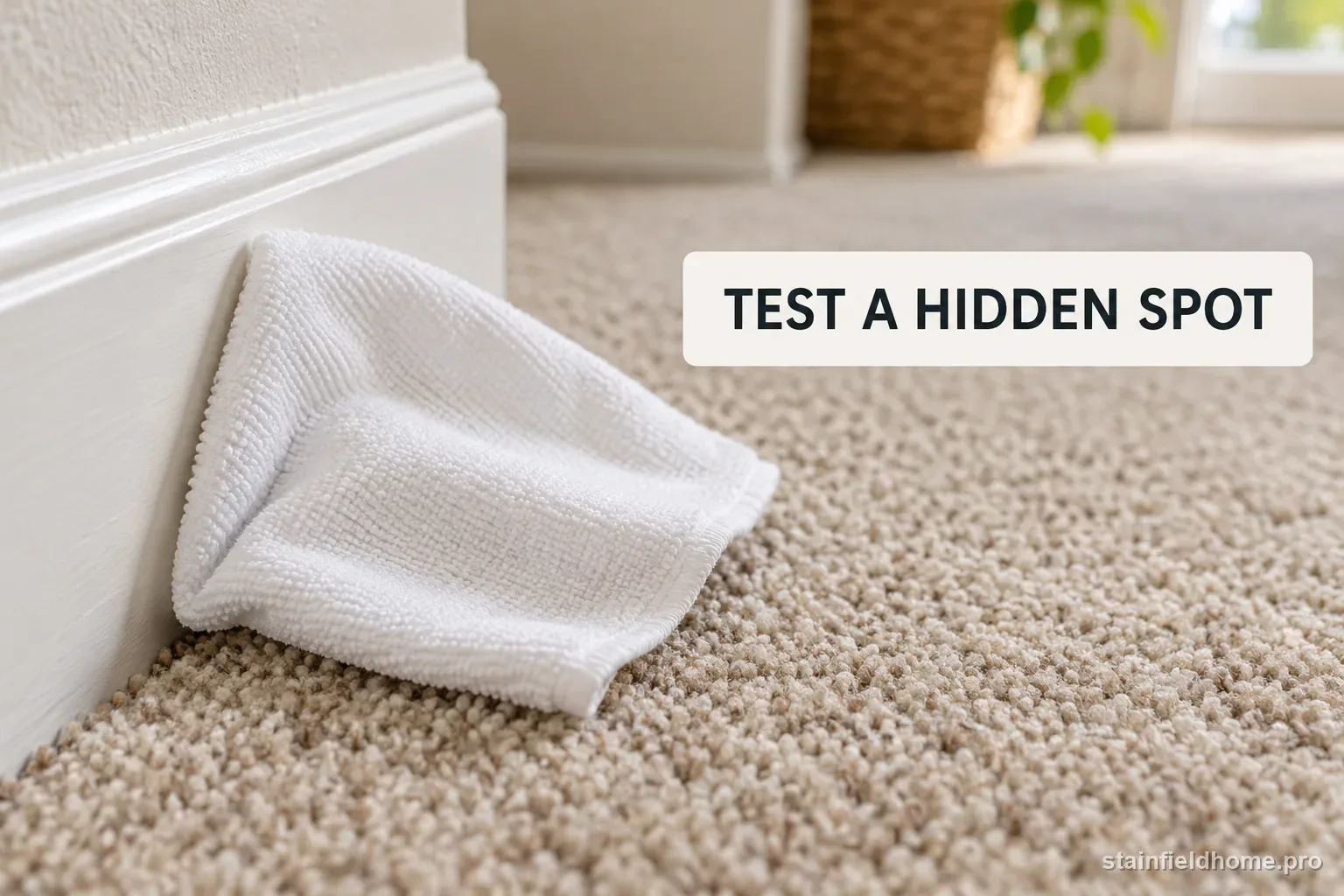
Use the carpet maker's preferred spot cleaner when one is specified. If the instructions allow a mild detergent solution, test it first in a hidden place such as a closet edge or beneath movable furniture. Dampen a white cloth with the solution and press it against the test area; do not pour liquid onto the carpet. Check the cloth for carpet dye and the fibres for texture change, fuzzing, or a new ring.
Let the test patch dry enough to reveal a change before treating the visible spill. If color transfers, the pile changes, or the carpet becomes sticky or distorted, stop and contact the manufacturer or a professional. A spot that looks fine while wet may dry with a lighter patch or a tide mark, so visual inspection while wet is not a complete test.
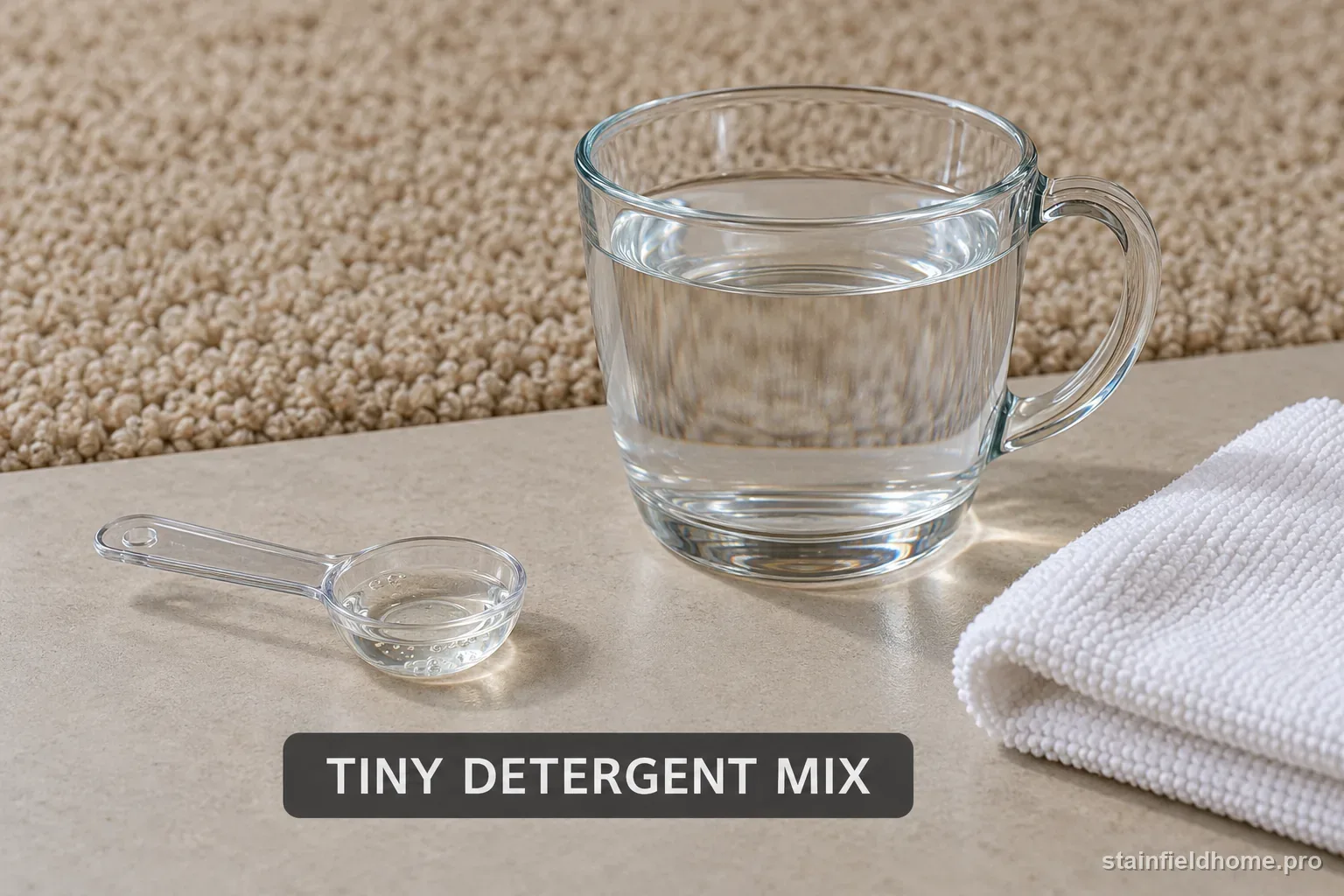
CRI's recommended detergent mixture for eggnog is ¼ teaspoon of clear liquid dishwashing detergent in 1 cup of lukewarm water. Use a measuring spoon; do not estimate a stronger dose. The guidance specifies a clear, non-bleach detergent and warns against laundry detergent and automatic dishwasher detergent. A stronger mix is not more effective on carpet: it is harder to rinse and can leave a residue that attracts soil.
Dab with a very mild detergent mix
When the test passes and the carpet instructions permit it, dampen a clean white cloth with a small amount of the measured solution. The cloth should be damp, not dripping. Begin just outside the stain and press inward toward the center. Rotate to a clean area of the cloth as it picks up residue, and avoid rubbing back and forth.
Treat a section only until the cloth stops picking up visible residue, then pause. If the stain is larger than a hand, work in small sections so moisture does not spread across the pile. You are lifting residue into the cloth, not trying to flush the carpet with a cup of water. Avoid spraying the solution directly onto the spot, which makes it harder to control how much reaches the backing.
CRI advises applying a small amount of the solution to a cloth, working from the outer edge toward the center, and allowing a few minutes before blotting. Follow the current spot solver directions and your carpet's own care rules. Do not leave a wet cloth sitting on the pile for a long dwell time. If the eggnog contains a strong colorant or the stain is already old, repeated wetting may spread the stain rather than help it.
If the cloth stops picking up residue and the visible mark is fading, proceed to the rinse. If the carpet reacts badly or the patch grows, stop immediately and blot up what remains. Never combine this mixture with vinegar, peroxide, bleach, ammonia, enzyme cleaner, or another product. Rinse and dry before considering any different cleaner, and only use it if the carpet maker approves it.
| What you see | First response | Avoid |
|---|---|---|
| Fresh liquid | Blot with dry white cloths | Rubbing or pouring cleaner |
| Thick clump | Lift gently with a rounded spoon | Scraping down into the pile |
| Routine synthetic carpet | Test, then use CRI's weak detergent mix if allowed | A stronger detergent dose |
| Wool, silk, antique, or unknown fibre | Check maker guidance; call a professional | Home experiments with water or solvents |
| Sour odor or large spill | Stop repeated wetting; seek an assessment | Masking odor with fragrance |
Rinse out detergent and blot away moisture
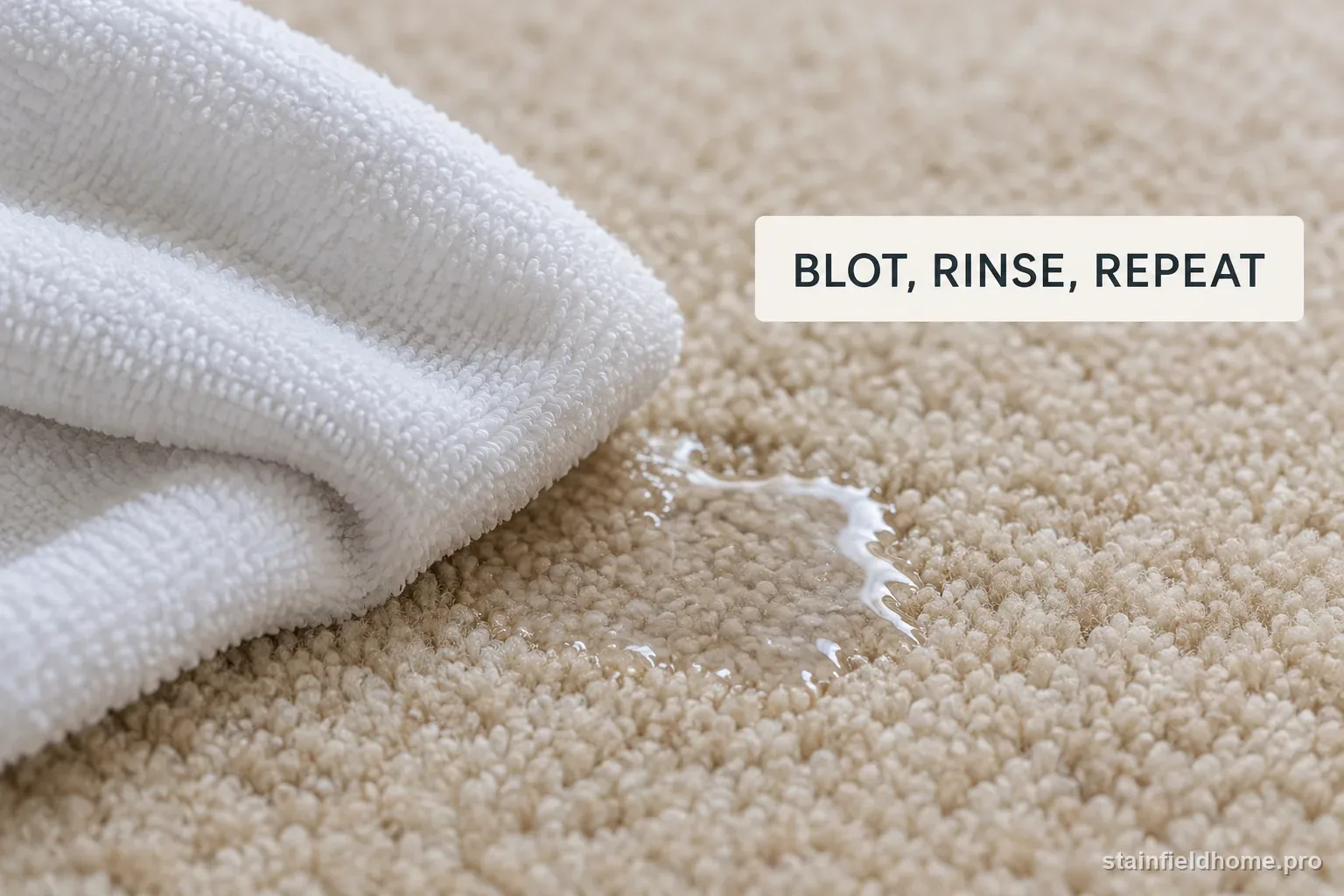
Rinsing matters because detergent left in the carpet can attract fresh soil and make the area look dingy again. CRI notes that multiple rinses may be needed to remove solution residue and suggests using a mist sprayer to avoid over-wetting. Use the minimum clean water needed, then extract it with repeated dry-cloth pressure.
Do not use a household vacuum on wet carpet unless the machine is specifically designed for wet extraction and its instructions allow it. Do not add baking soda over a damp stain; it can cake into the pile and does not remove eggnog residue. Fragrance only covers odor temporarily and does not clean the source.
- 01
Dampen a fresh white cloth with clean lukewarm water. Press it into the treated area to pick up detergent; do not soak or flood the carpet.
- 02
Blot with a dry cloth, then repeat the light rinse and blot as needed. CRI recommends rinsing the spot with cold water after removal and blotting excess moisture.
- 03
Keep rinsing until the area no longer feels slick and the cloth does not pick up soap. A fine mist can help control the amount of water, but avoid saturating the carpet or underlay.
- 04
Place a dry white towel over the spot and press to absorb more moisture. Replace the towel when damp rather than leaving the wet towel in place.
Check after the first pass and treat old stains differently
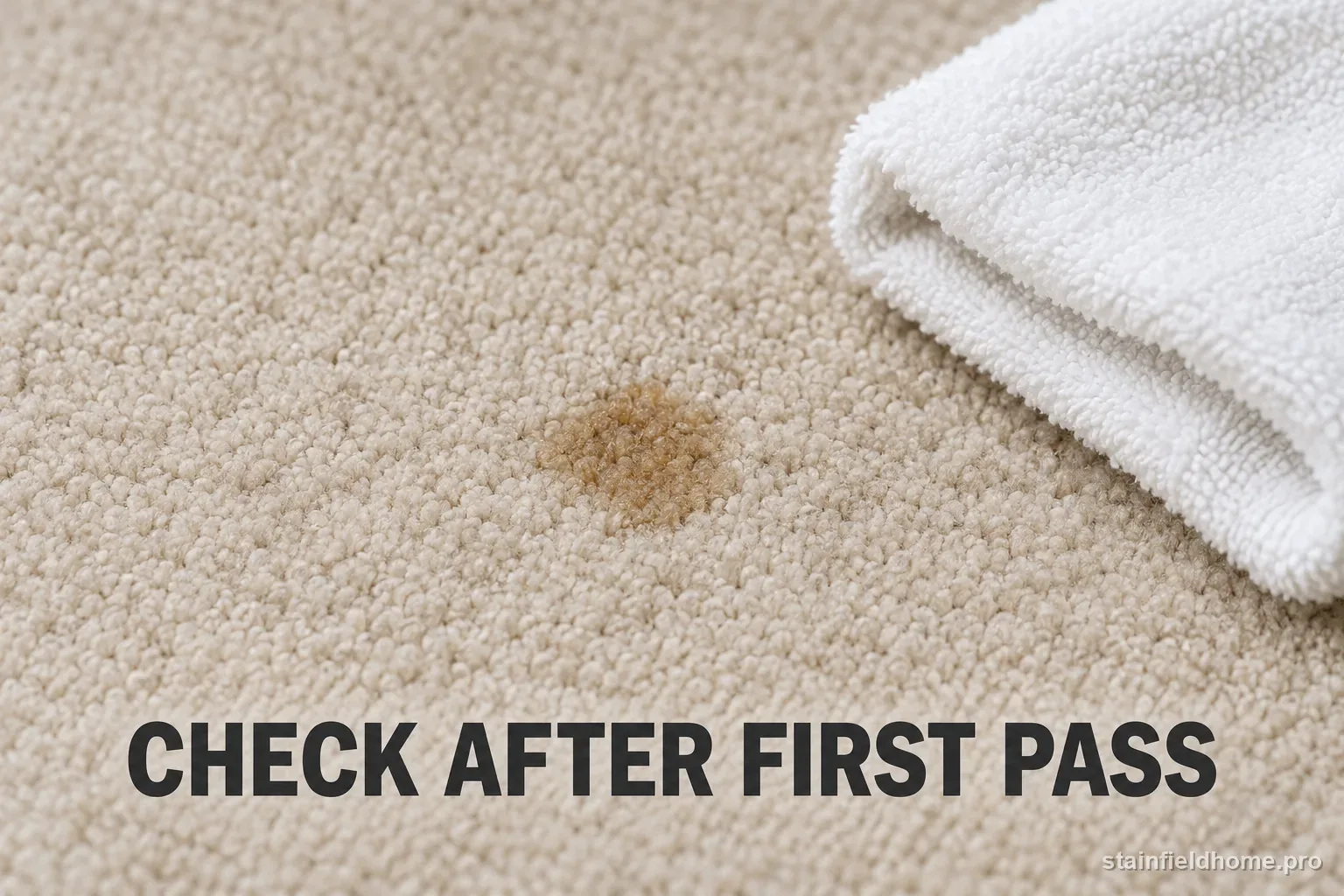
After blotting, inspect the spot in even light. Look for a greasy halo, pale shadow, sticky feel, or residue on a clean cloth. Do not decide the stain is gone while the pile is wet; moisture changes how carpet color reflects light. Let it dry before deciding whether to repeat the same mild pass.
For a small fresh stain that is clearly improving, one repeat of the same tested detergent-and-rinse sequence may help. Use fresh solution at the same measured dilution and rinse it away fully. Avoid switching products mid-cleaning or making the detergent stronger. If the stain spreads, fibers mat, dye transfers, or the spot becomes tacky, stop and get professional advice.
A dried eggnog stain needs careful softening, not scraping. If the carpet is compatible and its maker permits water-based spot care, barely dampen a white cloth with clean water and press it onto the residue to loosen the surface. Lift softened material with a spoon and repeat the tested mild cleaning sequence. Keep the area small and blot between steps. Do not rehydrate a large or deeply set stain repeatedly; each wetting can move residue down into the backing.
Hobbs Cleaning Ltd's milk-spill guidance notes that dairy residue can remain below the visible pile and that odor may return when moisture or warmth reveals it. That is a useful sign to stop escalating: if a sour smell returns after the carpet dries, the spill may have reached the backing or pad. Surface blotting cannot reliably extract contamination from deep layers, so a professional assessment is more appropriate than adding more water or perfume.
Dry fully and know when to stop
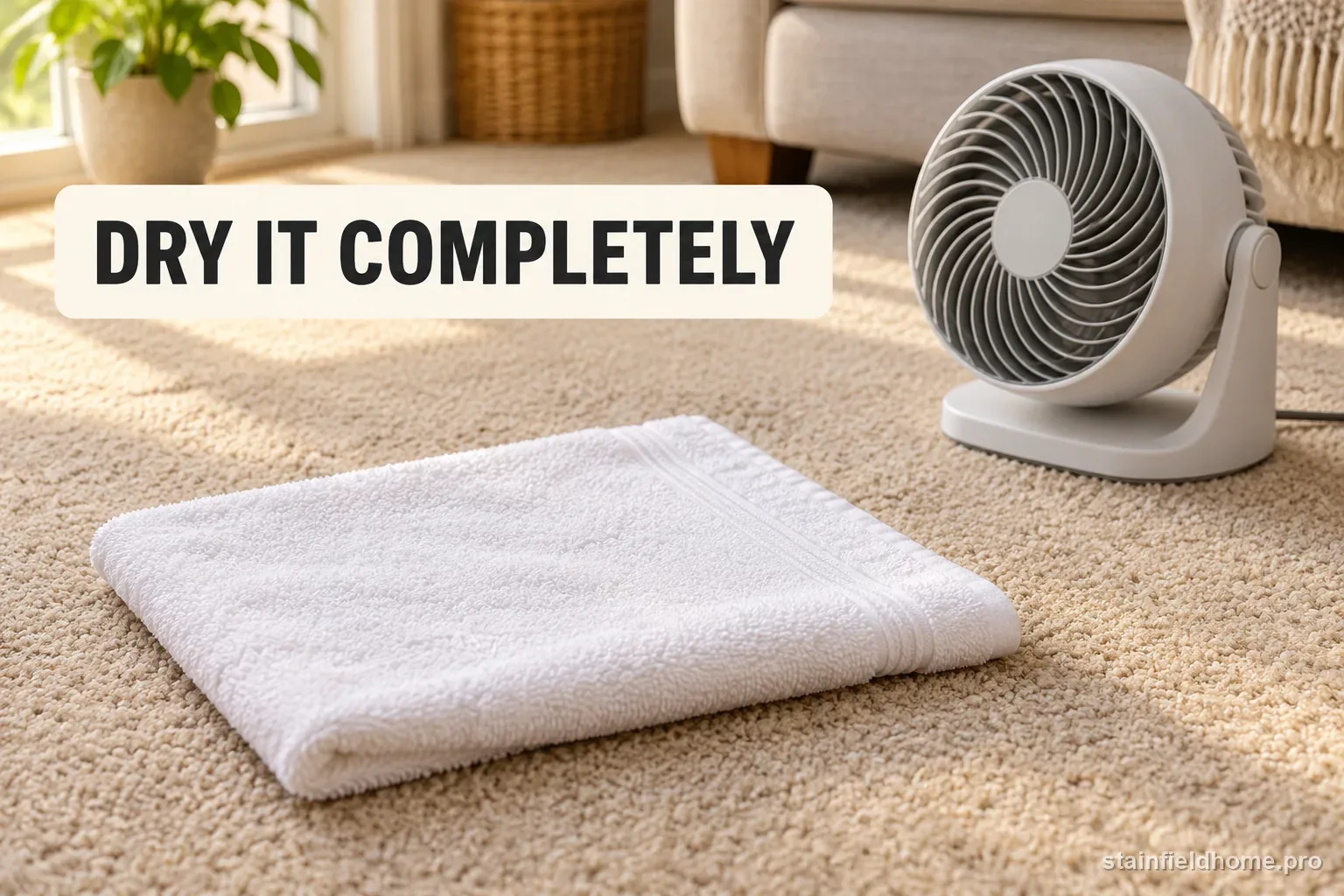
Once the area is rinsed and blotted, improve air movement with a fan and keep foot traffic off the damp patch. Do not apply a hair dryer, iron, radiator, or steam; direct heat can affect carpet fibers, backing, or dye and may make a remaining mark harder to remove. Drying time varies with pile, humidity, ventilation, and how much moisture was used.
Check the carpet only when it is fully dry. If it looks clean, feels normal, and has no sour odor, leave it alone. If a faint shadow remains but the carpet surface is sound, resist the urge to scrub harder. The remaining color may be dye or a change to the fiber rather than removable food residue.
Stop and call a qualified carpet cleaner if the eggnog spill was large, the odor persists or returns, the stain remains after one careful pass and rinse, or the carpet is wool, silk, handmade, valuable, or of unknown construction. Also stop if color transfers, the pile changes, or earlier products have already been applied. Tell the cleaner what was spilled and every product used; that helps them choose a compatible next step.
Shaw Floors advises prompt blotting, avoiding rubbing, and following its carpet care guidance; it recommends professional help when deep stains do not respond to spot cleaning. Follow the care instructions for your own carpet brand and warranty. CRI likewise says professional cleaners can use stronger solutions and suggests consulting one when needed.
Prevent the next holiday spill from setting
Serve eggnog on a tray or washable table covering and keep a stack of plain white towels nearby. If a splash happens, lift clumps and blot immediately before anyone walks through the spot. A quick response limits how far the liquid travels and gives you a clearer view of how much spilled.
Before the gathering, check the carpet maker's spot-cleaning instructions and keep the approved cleaner in its original labeled container. Do not pre-treat the room with an untested stain blocker or improvise a stronger mix. For valuable rugs, arrange professional care ahead of time and know whom to call if a spill reaches the backing.
Common questions
FAQ
Does eggnog stain carpet?
It can. Eggnog contains dairy fat, proteins, and sugars, and colored spices or flavorings may leave a mark. Blot promptly, then use only a carpet-compatible method.
What is the safest detergent mix for eggnog on carpet?
CRI's eggnog spot solver specifies ¼ teaspoon of clear liquid dishwashing detergent in 1 cup of lukewarm water. Test first and follow the carpet maker's instructions.
Can I use hot water or steam on an eggnog stain?
Avoid heat as a first treatment. Use the carpet-approved cool or lukewarm method, blot, rinse, and dry with airflow. A professional can choose equipment for the carpet.
How do I remove dried eggnog from carpet?
For a compatible carpet, gently soften the residue with a barely damp white cloth, lift it with a rounded spoon, then use a tested mild solution and rinse. Do not scrape or soak.
Why does my carpet still smell sour after cleaning eggnog?
Residue may remain below the visible pile or in the backing, or the carpet may still be damp. Stop repeated wetting and ask a professional to assess it once dry.
Sources reviewed
Keep reading
Related guides

Nail polish on Carpet
How to Remove Nail Polish From Carpet
Remove nail polish from carpet without pouring remover onto the pile; test the fiber and work carefully from the stain’s edge inward.
Pumpkin (carving, decorating, or puree) on Carpet
How to Remove Pumpkin Stains From Carpet
Remove pumpkin pulp and orange residue from carpet with a low-moisture method that follows carpet-care guidance and limits soak-through.
Red wine on Wool carpet
How to Get Red Wine Out of Wool Carpet Safely
Blot fresh red wine from wool carpet, treat leftover color without damaging the pile, and learn when a set stain needs a wool-care professional.
Slime on Carpet
How to Get Slime Out of Carpet Without Soaking It
Lift fresh or dried slime from carpet without soaking the backing; includes a method to remove residue while protecting carpet color.