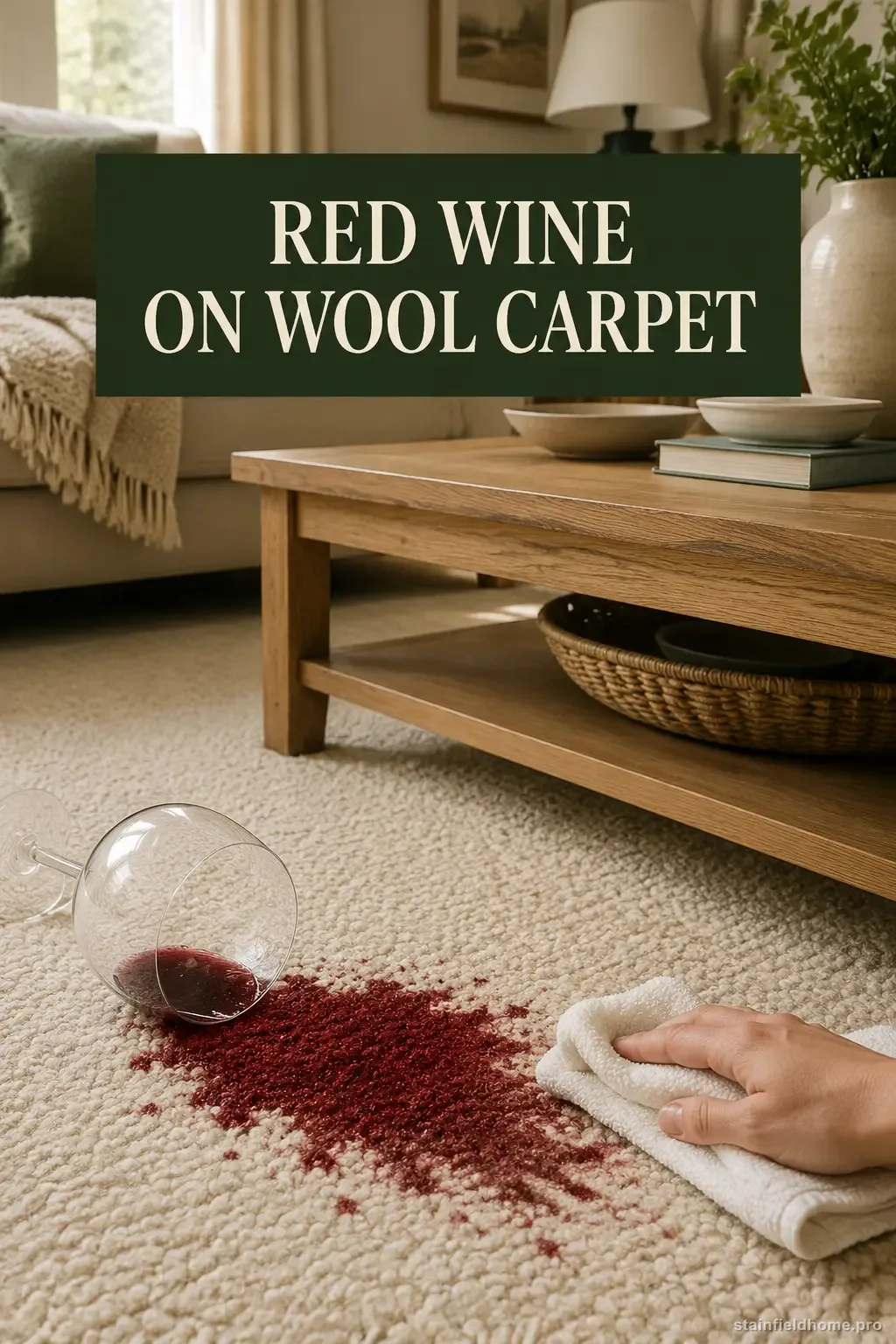
The quick answer
Blot immediately with a dry white towel, then add a small amount of cool water and blot again. Do not scrub. If color remains, use a WoolSafe-approved spot remover that is suitable for your carpet, following the label exactly. Keep bleach, ammonia, hot water, white wine, and strong homemade cleaners away from wool.
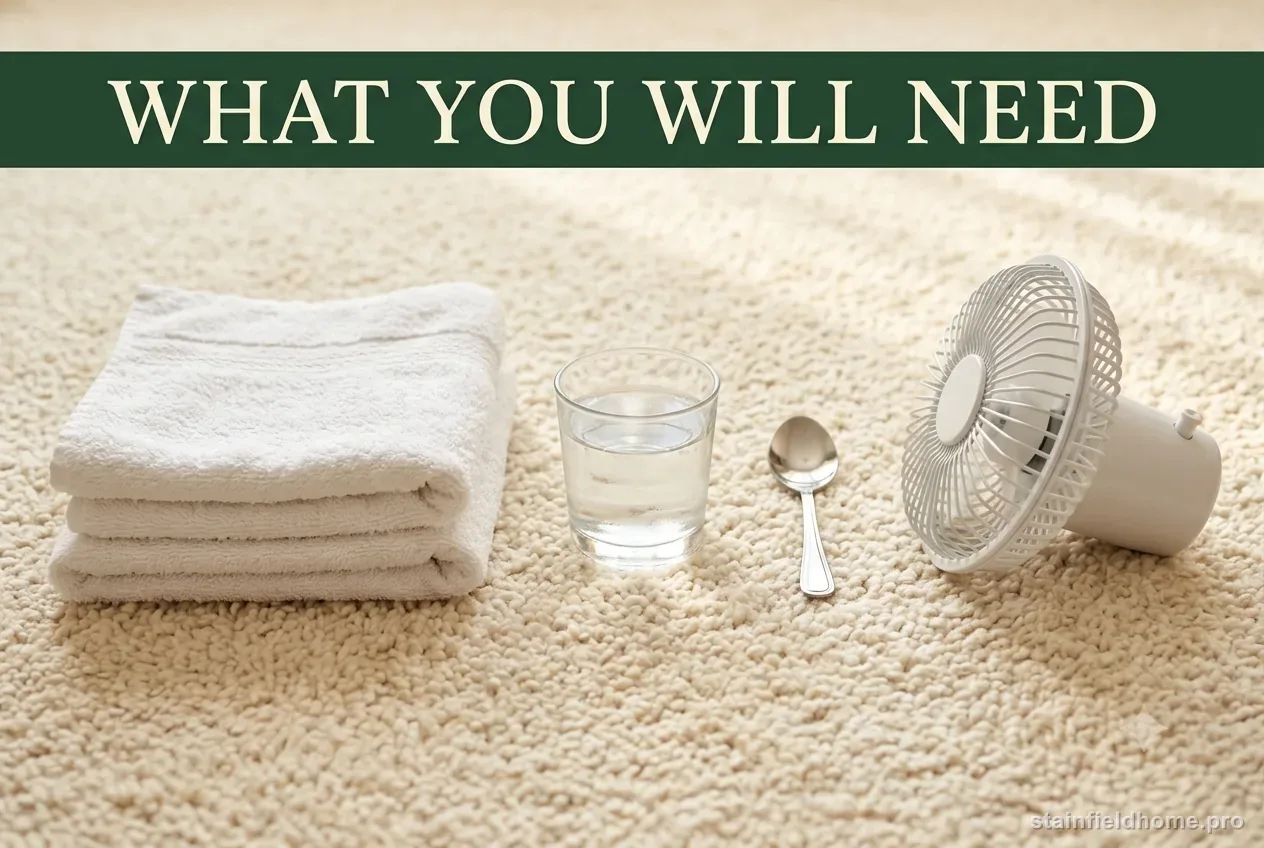
What you’ll need
- Several plain white cotton towels or unprinted white paper towels
- Cool water in a small cup or spray bottle
- A WoolSafe-approved spot remover, if plain water is not enough
- A spoon for lifting any solids from a mixed spill
- A fan for gentle room-temperature drying
First, confirm that the carpet is wool
Wool is resilient underfoot but less tolerant of improvised stain chemistry than many synthetic carpets. Check the purchase paperwork, a label on a removable rug, or the manufacturer’s care instructions before applying anything beyond water. An 80/20 wool blend should still be treated as wool unless its maker says otherwise.
Also look at the construction. Hand-knotted rugs, valuable Oriental or Persian rugs, loose rugs with unstable dyes, and carpets with a jute backing deserve extra caution. If a barely damp white towel picks up carpet color during a hidden-area test, stop. That is a dye-transfer warning, not part of the wine stain.
For a fresh spill: absorb before you clean
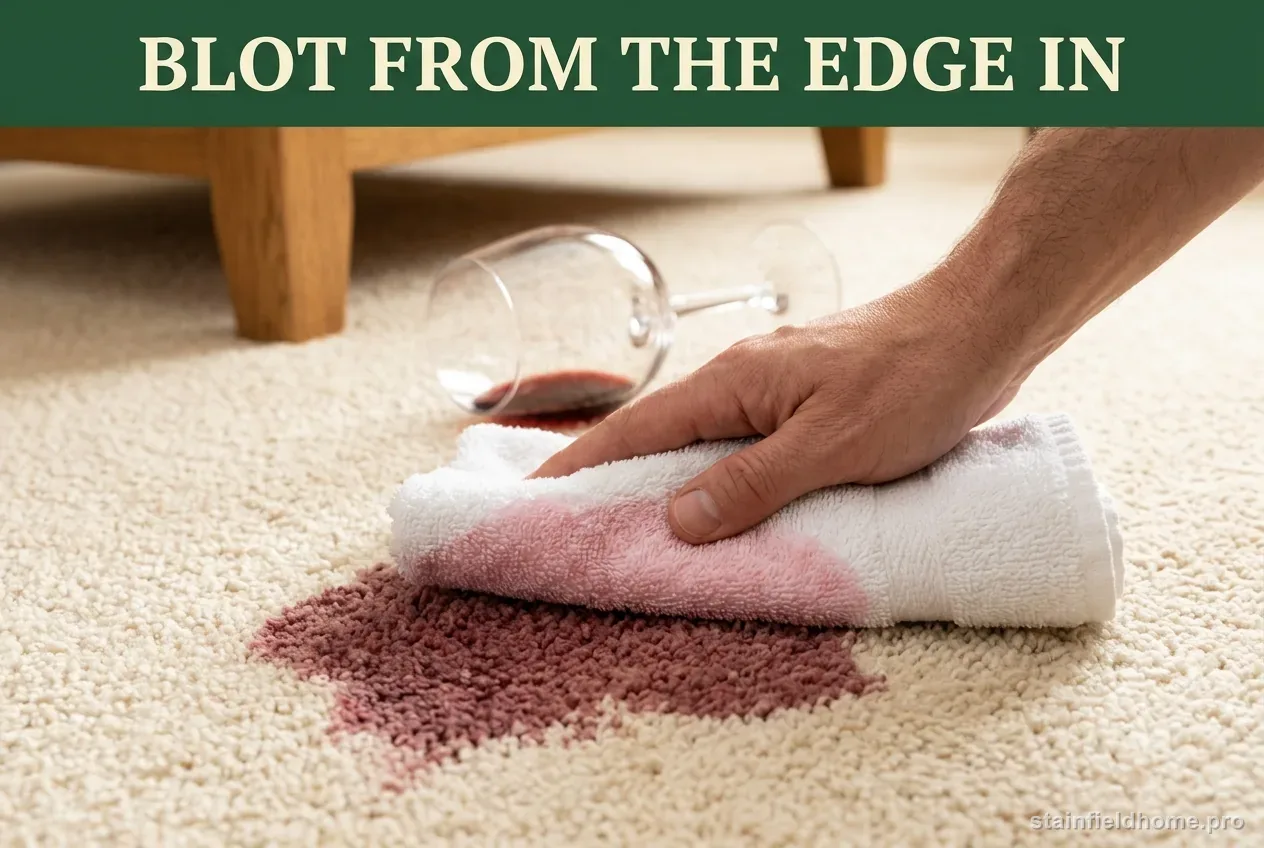
Blotting matters because scrubbing can distort the pile and push liquid outward. The Carpet and Rug Institute recommends white absorbent material, an edge-to-center approach, and rinsing away cleaner residue. WoolSafe specifically advises using a little water rather than pouring white wine onto red wine.
- 01
Lift the glass and any solid debris straight up. Do not drag them across the pile.
- 02
Lay a folded white towel on the wet area and press firmly. Replace it as it becomes pink. Work from the outside edge toward the center so the spot does not grow.
- 03
When the towel is no longer pulling up much wine, add only a teaspoon or two of cool water to the remaining mark. The goal is to dilute the spill, not soak the carpet or backing.
- 04
Blot again with a fresh dry section of towel. Repeat the small-water, fresh-towel cycle while color continues to transfer.
- 05
If a shadow remains, test a WoolSafe-approved spot remover in a hidden place. Put the product on a white cloth rather than pouring it onto the carpet, then blot according to the label.
- 06
After treatment, use a barely damp towel to remove cleaner residue, then press with a dry towel. Let the area air-dry with normal ventilation or a fan across the room.
For dried or next-day red wine
A dry stain needs patience, not more force. Vacuum loose dry debris first. Dampen a white towel with cool water and hold it against the mark for several minutes to rehydrate the residue gradually. Then blot. Avoid flooding the area; excess moisture can reach the backing, spread the stain, or create a visible ring as it dries.
Continue only if the carpet stays colorfast. Apply a tested wool-safe spotter to the cloth and make several short blotting passes. A set red or pink shadow that no longer transfers is the point to stop. Repeated home treatments increase the chance of dye loss, browning, or texture change. A wool-care professional can identify the fiber, dye stability, and backing before using stronger methods.
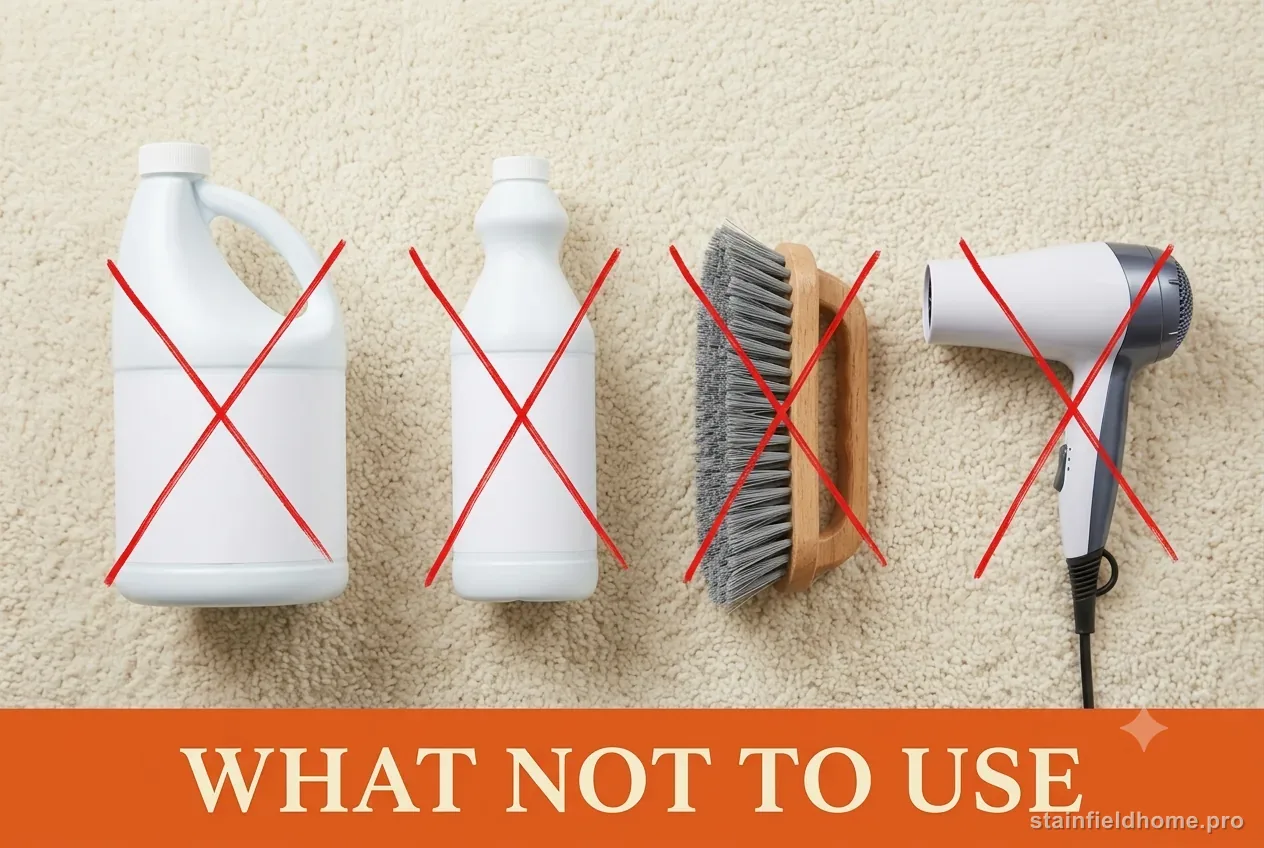
What not to use on wool carpet
- Do not use chlorine bleach, oxygen-bleach powder, or high-strength peroxide unless the carpet manufacturer specifically authorizes it.
- Do not use ammonia or strongly alkaline cleaners. Wool is a protein fiber and can be damaged by harsh alkalinity.
- Do not scrub with a brush, rub with a colored towel, or grind salt into the pile.
- Do not pour white wine, club soda, dish soap, or any cleaner over the whole spot. Too much liquid makes extraction and rinsing harder.
- Do not use a hair dryer, steam, or hot water. Heat can affect stains, dyes, and backing materials.
Dry the area without leaving a ring
Once the towel stops picking up wine, make one final light rinse with cool water and blot as dry as possible. Place a clean folded towel over the damp area and press with your hands or a flat, colorfast weight for a few minutes. Remove the towel afterward; do not leave a damp weight in place overnight.
Aim a fan across the surface, not hot air directly into it. Keep family members and pets off the spot until it is fully dry. When dry, lift the pile gently with your fingertips. If the border looks darker than the center, or the spot returns as moisture evaporates, the spill may have wicked upward from below and may need professional extraction.
Adjust the method for pile, padding, and spill size
A low, dense loop pile behaves differently from a long cut pile. On looped wool, press straight down and lift so a towel does not catch a loop. On a deeper pile, separate the tufts gently with your fingertips and blot between them; never rake the wet yarns with a brush. If wine ran under a piece of furniture, move the furniture only when it can be lifted without dragging, and protect metal feet from damp carpet to prevent a second rust or furniture-dye mark.
The visible spot may also be smaller than the wet area underneath. For a splash that soaked through, use several folded towels and change them often instead of adding more rinse water. A saturated pad cannot be dried reliably from the surface with a household fan. If the carpet feels wet beyond the colored edge, smells musty, or squishes when pressed, arrange professional extraction promptly. This is especially important over wood flooring, where trapped moisture can affect both the carpet backing and the floor below.
For red wine mixed with food, lift soft solids with a spoon before blotting. Cream, syrup, or oily appetizer residue may require a different wool-approved product after the red color stops transferring. Treat one residue at a time, rinse between products, and write down what you used. That record is useful if a professional needs to continue the work without guessing at the chemistry already in the pile.
Use a simple transfer test at every stage
A hidden colorfastness test answers only whether the product appears safe in that test area. During the actual cleanup, keep looking at the towel. Pink or burgundy transfer that becomes lighter with each blot usually means wine is leaving the carpet. Beige, gray, blue, or another color that matches the carpet may mean the carpet dye or soil is moving. Stop if the pile color changes, feels harsh, becomes fuzzy, or loses its normal sheen.
Check again after full drying from two directions and in daylight. Wool pile reflects light differently when it lies in another direction, so a spot that looks dark from one side may be a temporary texture change rather than remaining wine. Gently reset dry tufts with clean fingers. If the mark is still colored but no longer transfers, do not keep wetting it day after day. That is the practical stopping point for a set stain, unstable dye, or contamination below the surface.
Prevent the next spill from becoming a stain
Keep two white towels and the carpet maker’s approved spot product in one easy-to-reach place. Fast absorption does more than a complicated recipe used an hour later. At gatherings, place drinks on stable side tables rather than on the floor, and save your carpet’s fiber and warranty information so no one has to guess during a spill.
Common questions
FAQ
Should I put salt on red wine spilled on wool carpet?
Skip the salt. It can be difficult to remove completely and may encourage rubbing. Blot with a dry white towel, use a small amount of cool water, and blot again.
Does white wine remove red wine from wool carpet?
WoolSafe calls this a cleaning myth. White wine adds more liquid and alcohol. A little plain water followed by repeated blotting is the safer first response.
When should I call a professional carpet cleaner?
Call when the rug is valuable or hand-knotted, carpet dye transfers to your towel, the stain has reached the backing, a dried stain stops improving, or a ring keeps returning after drying.
Sources reviewed
Keep reading
Related guides
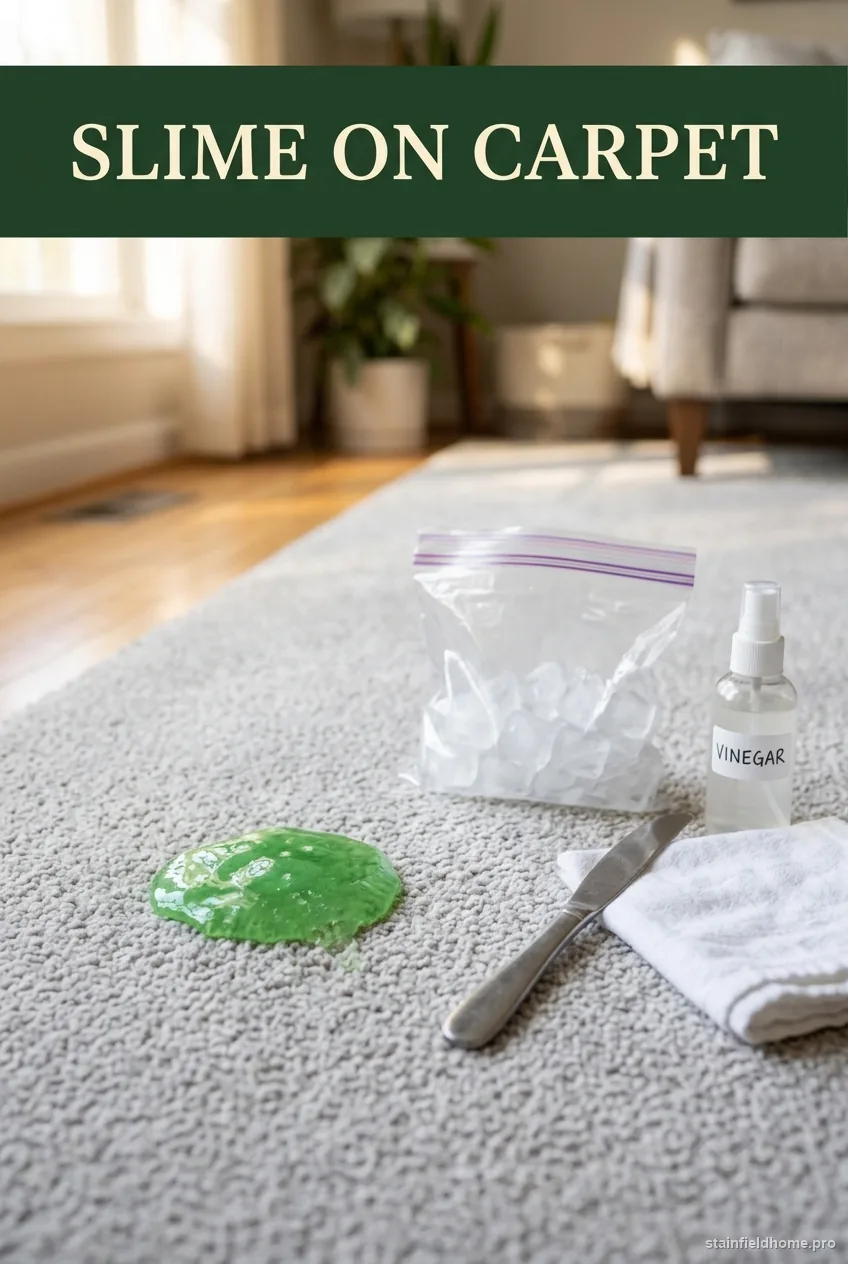
Slime on Carpet
How to Remove Slime From Carpet Without Damaging the Fibers
Lift dried or fresh slime out of carpet fibers with an ice-and-scrape method plus a vinegar or rubbing alcohol rinse, without soaking the backing or bleaching the color.
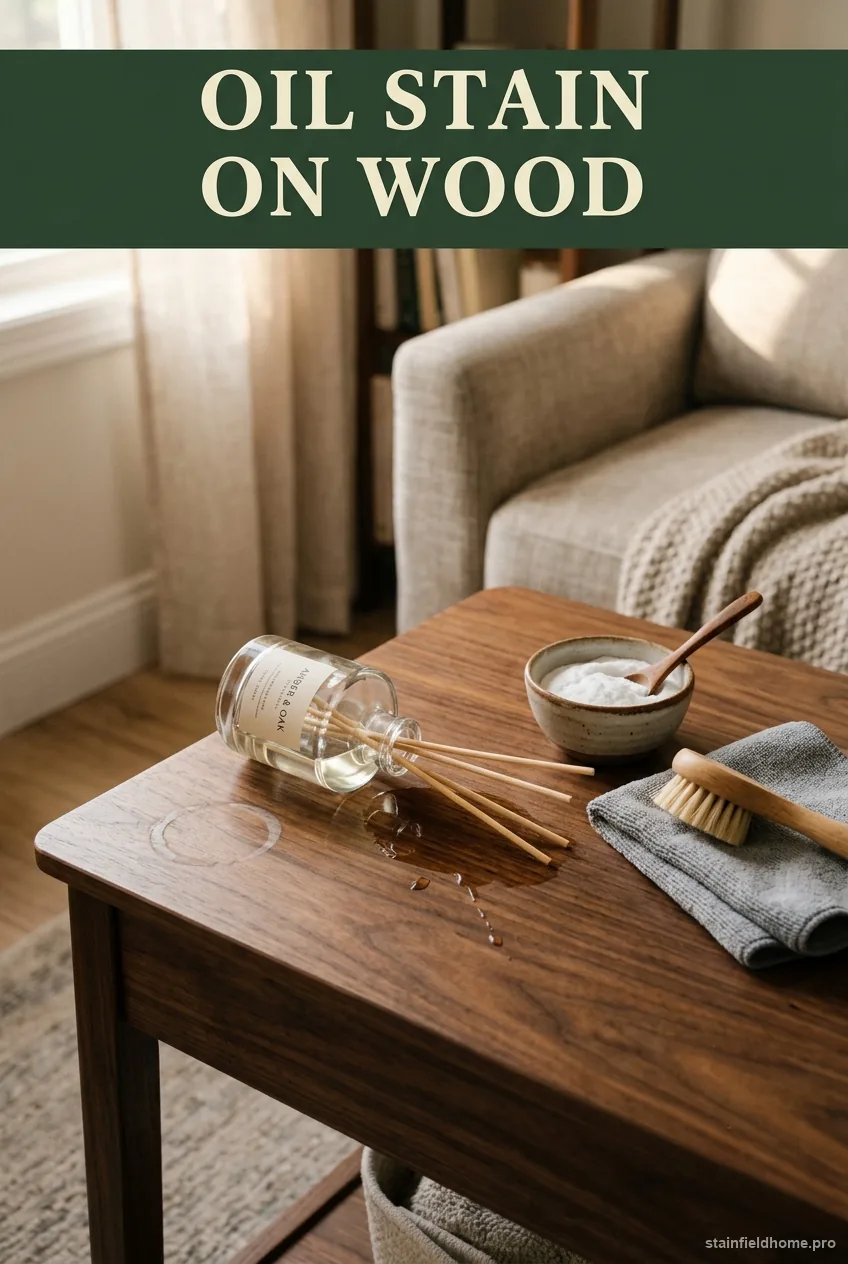
Essential oil and reed-diffuser oil on Finished wood furniture
How to Remove Essential Oil and Diffuser Stains From Wood Furniture
Blot a diffuser-oil spill on finished wood, use a cautious absorbent step, and recognize when the finish needs a furniture repair professional.
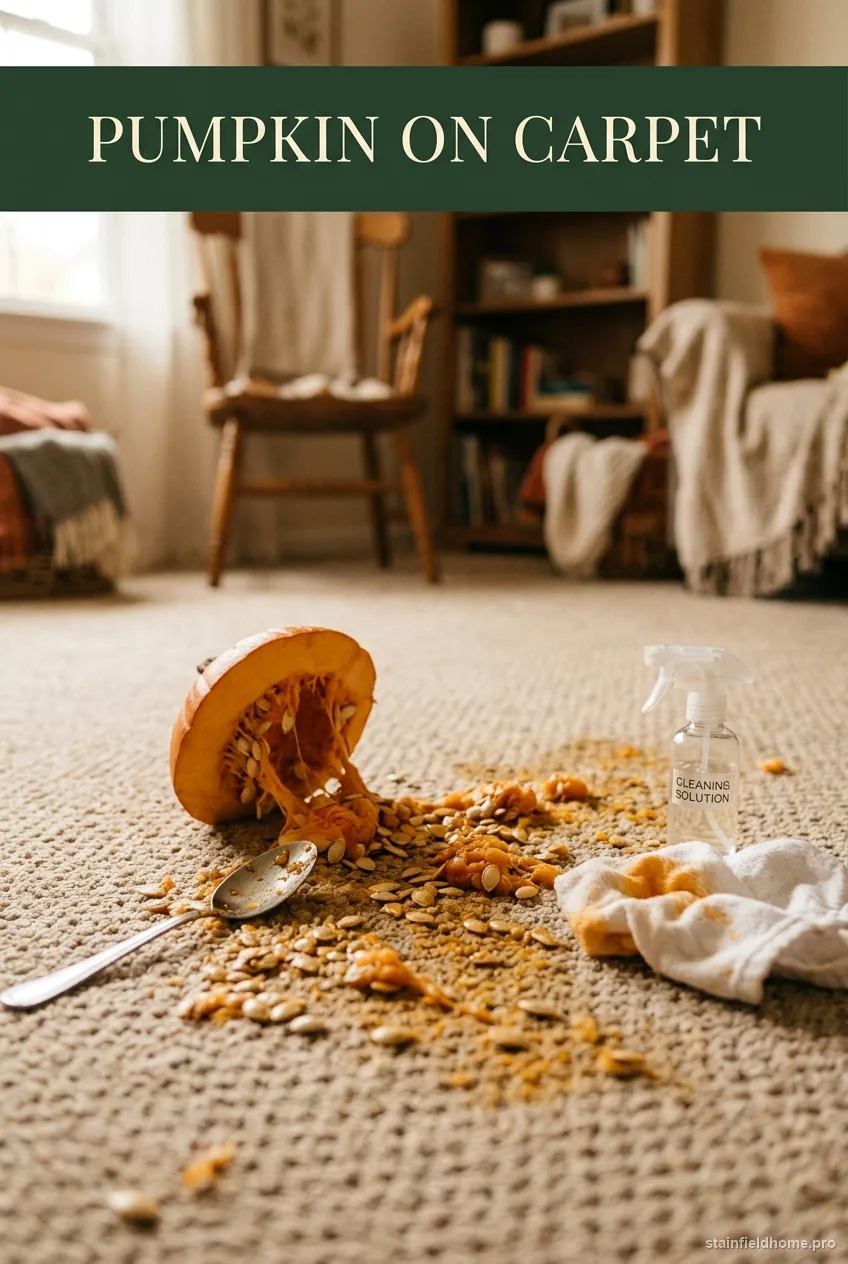
Pumpkin (carving, decorating, or puree) on Carpet
How to Remove Pumpkin Stains From Carpet
Remove pumpkin pulp and treat any remaining orange mark on carpet with a careful, low-moisture sequence that follows the carpet maker's guidance.
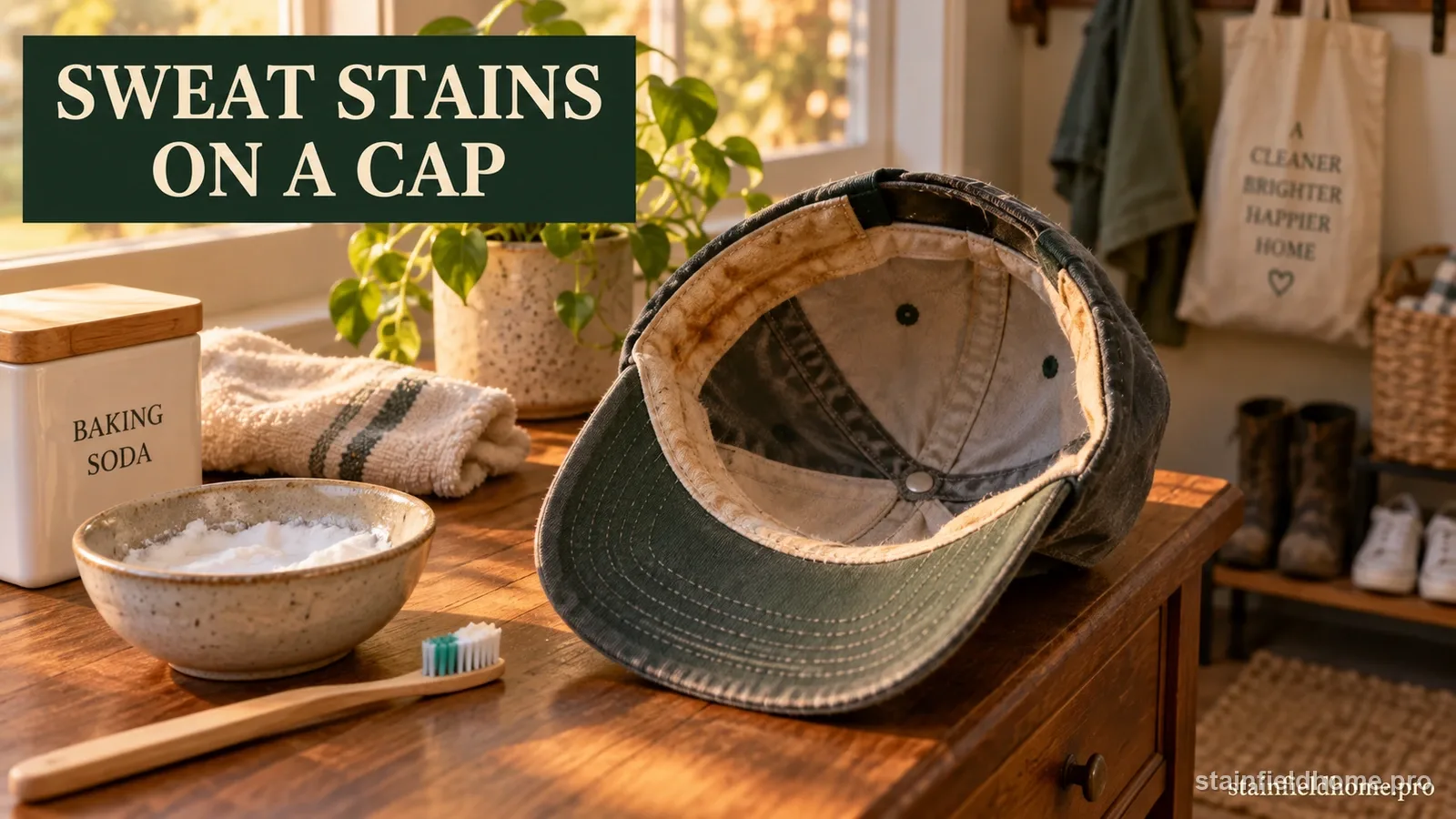
Sweat on Baseball cap
How to Remove Sweat Stains and Odor From a Baseball Cap
Lift yellow sweat stains and odor from the sweatband of a baseball cap without warping the brim or shrinking the crown.