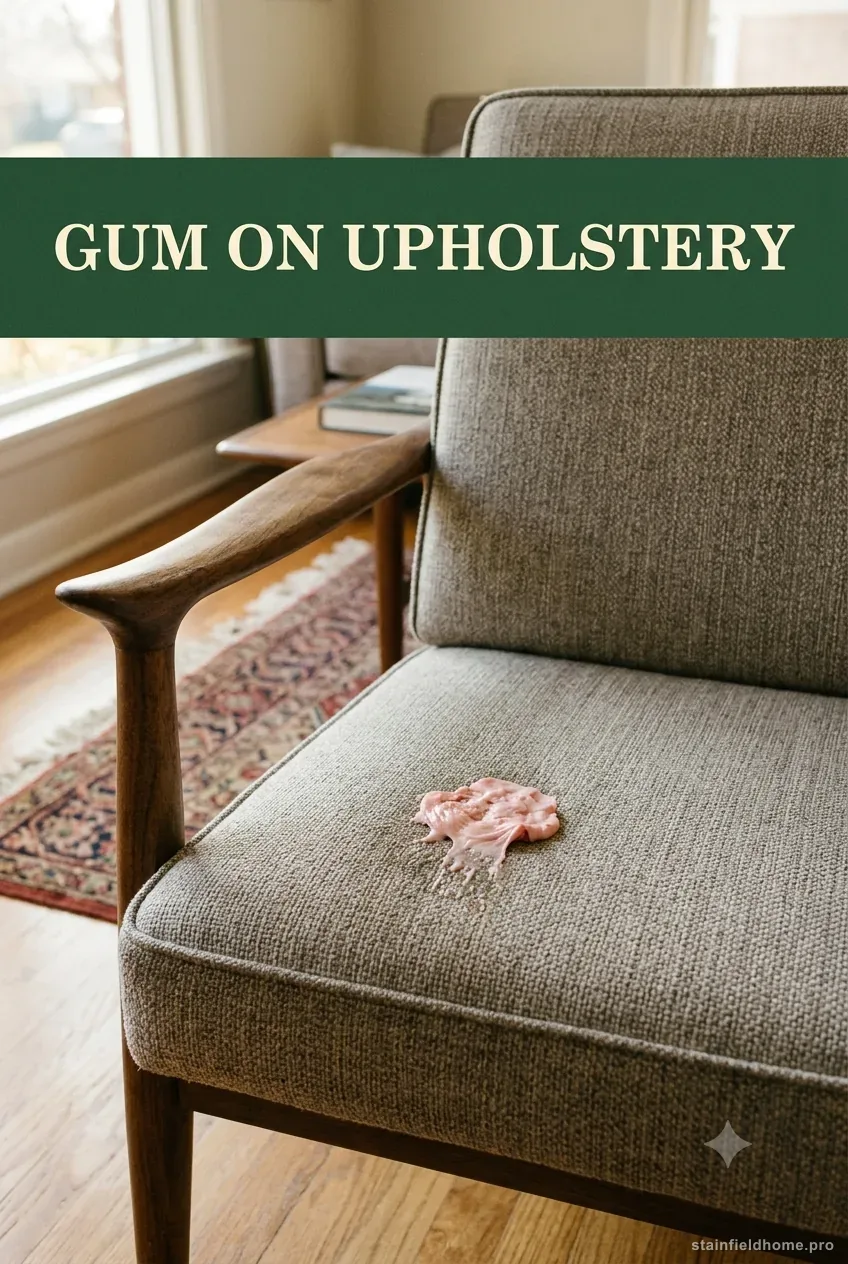
The quick answer
Harden the gum with ice sealed in a leakproof bag, then lift the brittle mass with a dull plastic edge while supporting the fabric. Do not heat, smear, or pull hard on loops. After the bulk is gone, stop and find the upholstery cleaning code: W, S, WS/SW, or X. Use only a residue cleaner permitted by that code and the furniture maker, applied sparingly to a white cloth. X-coded fabric should not receive liquid or solvent spot cleaning at home. Air-dry completely before judging the result.
What you’ll need
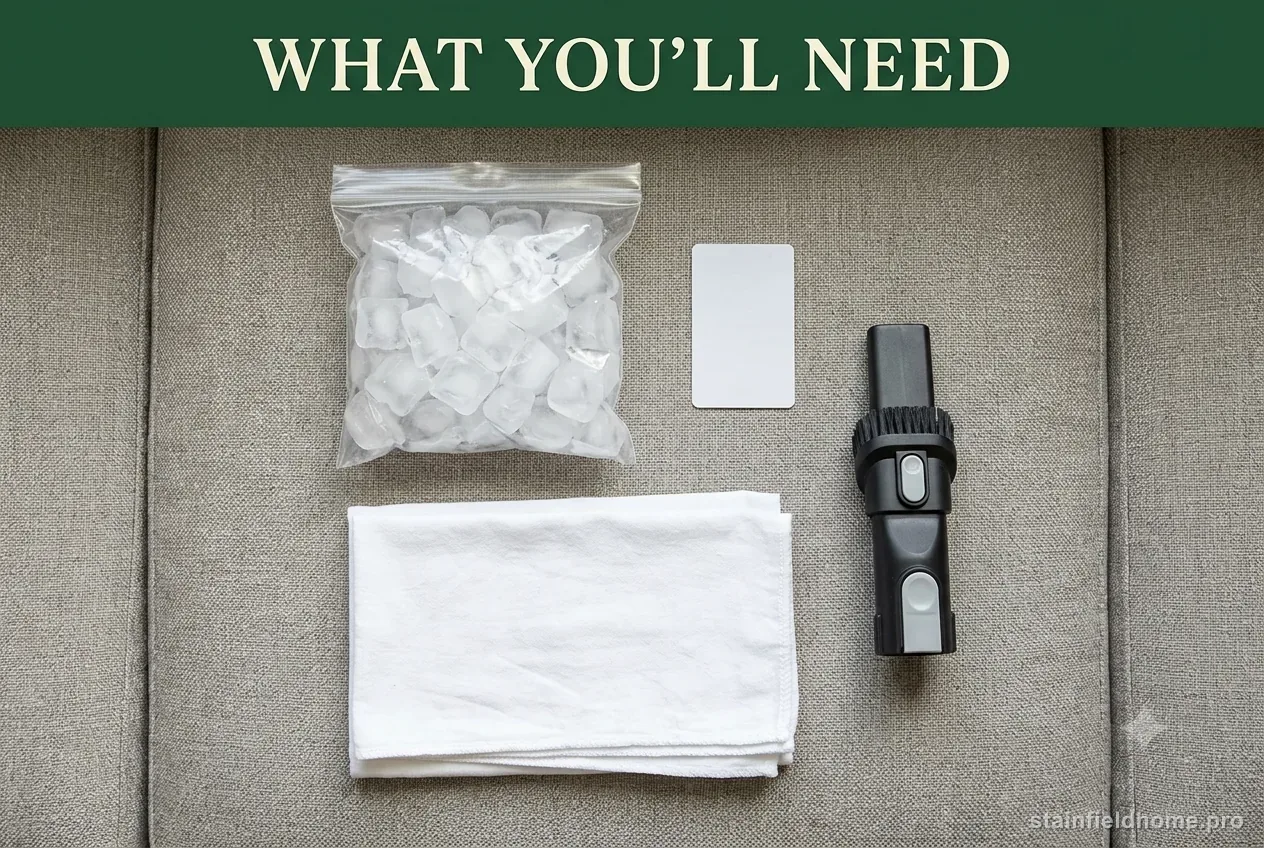
- Ice in a thick leakproof freezer bag or a reusable cold pack
- Plastic spoon, card, or dull plastic scraper
- Plain white absorbent cloths
- Vacuum with upholstery attachment
- Furniture care tag or cleaning-code information
- Code-compatible upholstery cleaner only if residue remains
- Fan for gentle room-temperature drying
Find the upholstery cleaning code before you treat residue
Chewing gum is unusual because the safest first action is mechanical rather than chemical: harden the gum and lift it. The second stage is where upholstery chemistry matters. Look under the seat cushion, on the deck, beneath the chair, or in the furniture documentation for a cleaning code. Steelcase's upholstery guidance summarizes the common meanings: W allows water-based upholstery cleaners, S calls for dry-cleaning solvent and no water, WS allows either category within the product directions, and X means vacuuming or light brushing only—not home liquid or solvent spot cleaning.
The cleaning code applies to the finished upholstery assembly, not just the visible fiber content. Backing, adhesive, flame-retardant treatment, protective finish, dye, and cushion fill can change what the furniture maker permits. A sofa labeled 100% polyester may still be S or X coded. Do not infer a cleaning method from the yarn alone.
University of Georgia textile guidance specifically recommends placing ice in a plastic bag over gum on upholstered furniture until it hardens, carefully scraping away the gum, and then using limited solvent treatment for remaining residue. That older guidance is useful for the freeze-and-lift principle, but current furniture code and manufacturer instructions should control the residue step. Modern upholstery finishes vary too much for one solvent recipe to be universal.
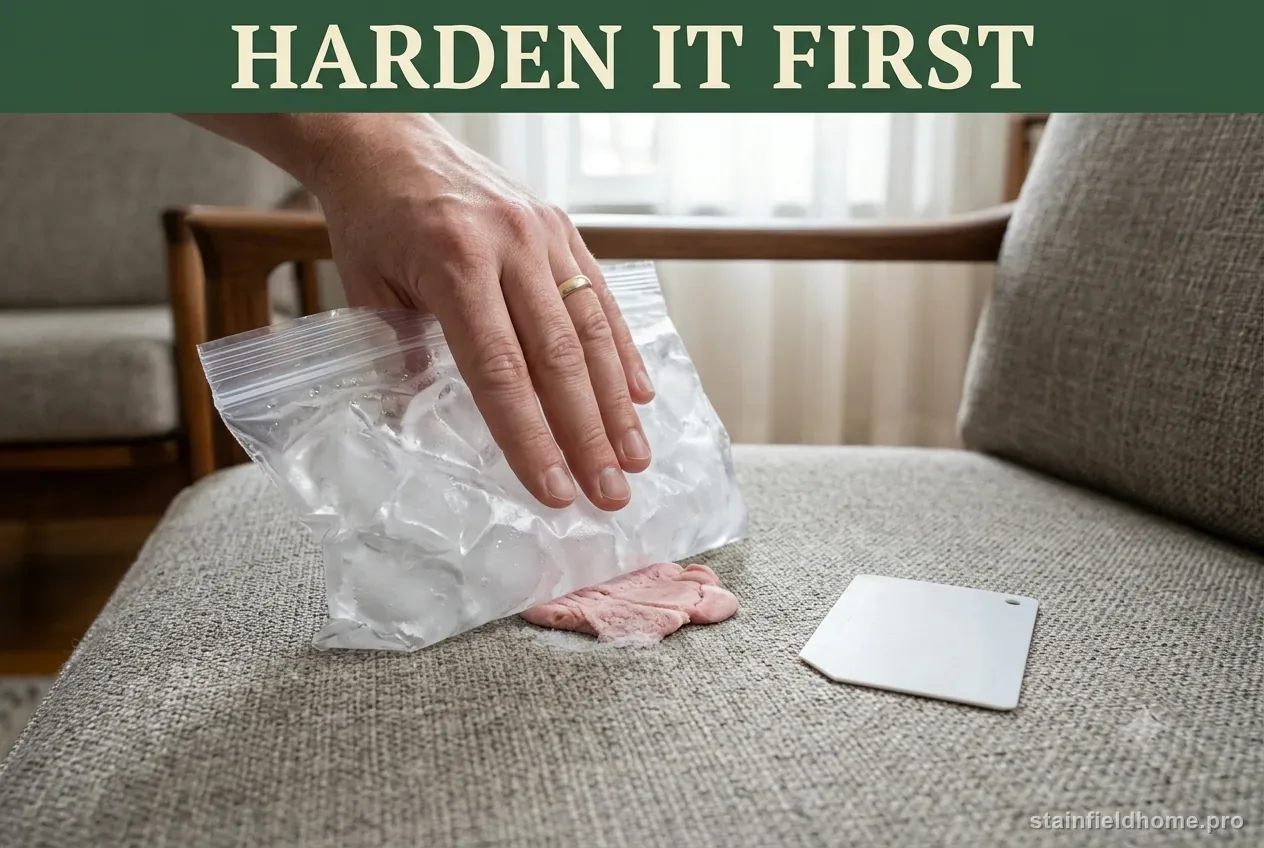
For fresh soft gum: harden it before it spreads
Cold changes the gum's physical behavior. At room temperature it stretches and smears; when chilled it becomes easier to fracture and lift. This is why freezing is a better first move than rubbing with soap, oil, peanut butter, or a warm vinegar solution. Those methods can turn one sticky problem into both gum residue and a new oily or water ring.
Keep the ice enclosed. Direct meltwater may be harmless on some W fabrics but inappropriate on S or X upholstery, and repeated wetting can reach foam beneath the cover. The bag should cool the gum, not wash the seat.
- 01
Keep people off the seat. Sitting on soft gum presses it deeper into the weave and can transfer it to clothing or another cushion.
- 02
Put ice in a thick sealed bag so meltwater cannot soak the fabric. Hold it directly on the gum until the gum becomes firm and brittle rather than stretchy.
- 03
Support the fabric with your free hand where possible. Use a plastic spoon, card, or dull scraper to lift from the outside edge of the gum toward the center.
- 04
Remove small brittle pieces as they release. Do not pry upward so hard that loops, chenille yarns, or pile fibers pull with the gum.
- 05
Reapply the cold pack when the gum starts to soften. Several freeze-and-lift rounds are safer than trying to remove the whole mass in one pull.
- 06
Vacuum loose crumbs with an upholstery attachment once the bulk is gone, keeping the nozzle just above delicate pile if the maker recommends that approach.
- 07
Only then evaluate the thin residue. Find the cleaning code and use the furniture maker's approved product for that code, testing in an inconspicuous place first.
Fresh gum versus old gum that has been pressed into the weave
Fresh gum usually sits on top of the upholstery and releases in larger pieces after chilling. Old gum may have been warmed by body heat and pressed through surface yarns. Dust, hair, and clothing fibers can become embedded in it. Expect several short freezing rounds and smaller fragments. Do not increase scraping force just because the gum is old.
On flat woven fabric, slide the plastic edge almost parallel to the surface. On a loop or bouclé, work around individual yarns and stop if the tool begins to snag. On velvet, microfiber, or directional pile, support the fabric and avoid grinding across the nap. A gum shadow may look worse when pile is compressed; wait until the seat is fully dry and gently reset the pile according to the furniture maker before deciding more cleaning is required.
If the gum has entered a seam, tuft, button channel, zipper, or piping, access matters more than chemistry. Do not cut stitching or remove an upholstery cover unless the manufacturer says the cover is removable and washable. A professional upholstery cleaner can work from multiple angles and may use controlled solvent extraction without saturating the cushion.
Treat the residue according to W, S, WS, or X—not by internet recipe
For W-coded fabric, use a water-based upholstery shampoo or foam specifically permitted by the furniture maker. Apply a small amount to a white cloth and blot the residue; do not pour cleaner on the cushion. For S-coded fabric, use only the dry-cleaning solvent category authorized by the manufacturer and provide the ventilation and fire-safety precautions on the label. For WS/SW fabric, either category may be allowed, but the furniture maker's own product guidance still wins.
For X-coded upholstery, stop after dry mechanical removal and vacuuming. Steelcase describes X as vacuuming or light brushing only, with no water- or solvent-based cleaner. A faint residue on X fabric is a professional-cleaning problem, not a reason to secretly test alcohol in a hidden spot and then repeat it on the seat.
Whatever the code, pretest. Apply the product to the cloth rather than saturating the upholstery, blot from the outside edge inward, and use fresh cloth faces as residue transfers. Avoid soaking the cushion foam. When the allowed procedure includes rinsing, use the minimum moisture needed and blot thoroughly. Let the upholstery air-dry completely with ventilation before anyone sits on it.
What not to use on chewing gum in upholstery
The most common avoidable damage is not leftover gum; it is a larger solvent ring, flattened pile, frayed yarn, or oil mark created during removal. Once the solid gum is mostly gone, restraint is more valuable than a more dramatic household ingredient.
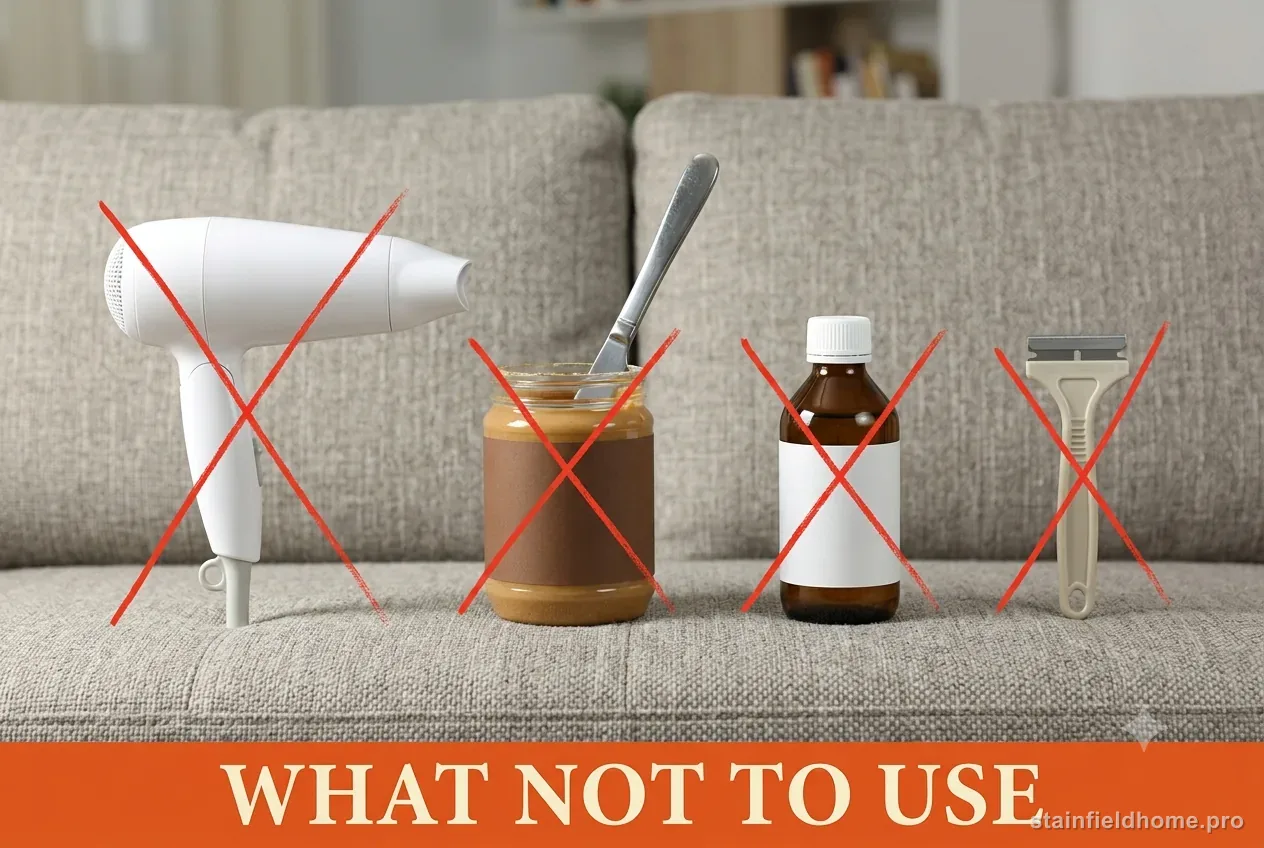
- Do not use a hair dryer, iron, steam cleaner, or hot water to soften gum; heat encourages smearing and may damage upholstery finishes or foam.
- Do not use peanut butter, cooking oil, mayonnaise, or another oily food to dissolve gum; the oil can create a second stain that is harder to remove.
- Do not use rubbing alcohol, acetone, citrus solvent, or adhesive remover unless the furniture maker explicitly permits that chemistry for the cleaning code and finish.
- Do not scrape with a razor blade, sharp knife, metal pick, or stiff wire brush.
- Do not pull loops, chenille yarns, or velvet pile upward with the gum.
- Do not wet-clean S- or X-coded fabric or assume a removable-looking cushion cover is machine washable.
- Do not mix cleaners or follow one solvent immediately with another without the manufacturer-approved neutralization or drying step.
Dry the area evenly and inspect for a ring or pile change
After any permitted wet or solvent treatment, blot with a clean dry cloth and allow room-temperature air movement. Do not point a high-heat dryer at the spot. Upholstery often changes tone while damp, and pile fabrics can look darker when the fibers lie in a different direction. Wait for full drying before judging color.
If the center looks clean but a dark ring appears around the treated area, the cleaner or dissolved soil may have migrated outward. Do not chase the ring with more spotter. Some fabrics, including water-cleanable performance upholstery, are best cleaned seam to seam to avoid boundaries; Sunbrella explicitly describes seam-to-seam cleaning for its own upholstery products. That advice applies only to fabrics whose manufacturer allows that method, not as permission to wet an unknown sofa.
If the pile is slightly matted but the color is stable, follow the maker's instructions for grooming with a soft brush or vacuum after drying. If fibers are pulled, color has changed, the coating has become sticky, or a ring is expanding, stop and call a professional.
When professional upholstery cleaning is the safer choice
Call a professional when the code is X, the fabric is valuable or delicate, the gum has penetrated a tuft or seam, the piece has a latex or special protective backing, or a prior cleaner has already created a ring. Also stop when the tag is missing and you cannot verify the fabric's cleaning category. Guessing with solvents on a sofa can affect dye, backing, cushion foam, and fire-retardant treatments in ways that are not visible during a small wet test.
Give the cleaner the furniture brand, fabric name if available, cleaning code, what the gum contained if known, and every product already used. Photograph the dry area before additional work. Good stain removal is controlled problem solving: change the gum's texture, remove the solid mass, identify the material limit, then use only the compatible residue treatment.
Common questions
FAQ
Can I use ice on any upholstery cleaning code?
Use ice only inside a sealed bag or cold pack so the fabric is chilled without being wetted. The cold mechanical step is broadly useful, but liquid from melting ice would still violate S or X restrictions on some upholstery.
Is rubbing alcohol safe for gum residue on a sofa?
Not universally. Alcohol can affect dyes, finishes, backing, and some cleaning-code systems. Use only a residue product explicitly allowed by the furniture maker for that upholstery code and test it first.
What if the sofa tag says X?
Limit home care to dry mechanical removal, vacuuming, or light brushing as the manufacturer permits. Do not add water or solvent. If a visible residue remains, use a professional upholstery cleaner.
Sources reviewed
Keep reading
Related guides
Slime on Carpet
How to Remove Slime From Carpet Without Damaging the Fibers
Lift dried or fresh slime out of carpet fibers with an ice-and-scrape method plus a vinegar or rubbing alcohol rinse, without soaking the backing or bleaching the color.
Essential oil and reed-diffuser oil on Finished wood furniture
How to Remove Essential Oil and Diffuser Stains From Wood Furniture
Blot a diffuser-oil spill on finished wood, use a cautious absorbent step, and recognize when the finish needs a furniture repair professional.
Pumpkin (carving, decorating, or puree) on Carpet
How to Remove Pumpkin Stains From Carpet
Remove pumpkin pulp and treat any remaining orange mark on carpet with a careful, low-moisture sequence that follows the carpet maker's guidance.
Sweat on Baseball cap
How to Remove Sweat Stains and Odor From a Baseball Cap
Lift yellow sweat stains and odor from the sweatband of a baseball cap without warping the brim or shrinking the crown.