
The quick answer
Let the chocolate harden, chilling it with an ice pack if it is still soft, then scrape off the solids with a spoon. Blot from the outside in with a little dish soap in cool water to lift the cocoa butter, then work an enzyme upholstery cleaner into the brown that remains. Blot with clear water, press dry with a towel, and let the cushion air-dry. Keep the whole job barely damp; soaking upholstery invites mildew and water rings.
What you’ll need
- An ice pack, or ice in a plastic bag
- A spoon or dull knife
- Grease-cutting dish soap
- Cool water
- White cloths or paper towels
- An enzyme cleaner labeled for upholstery
- A dry white towel
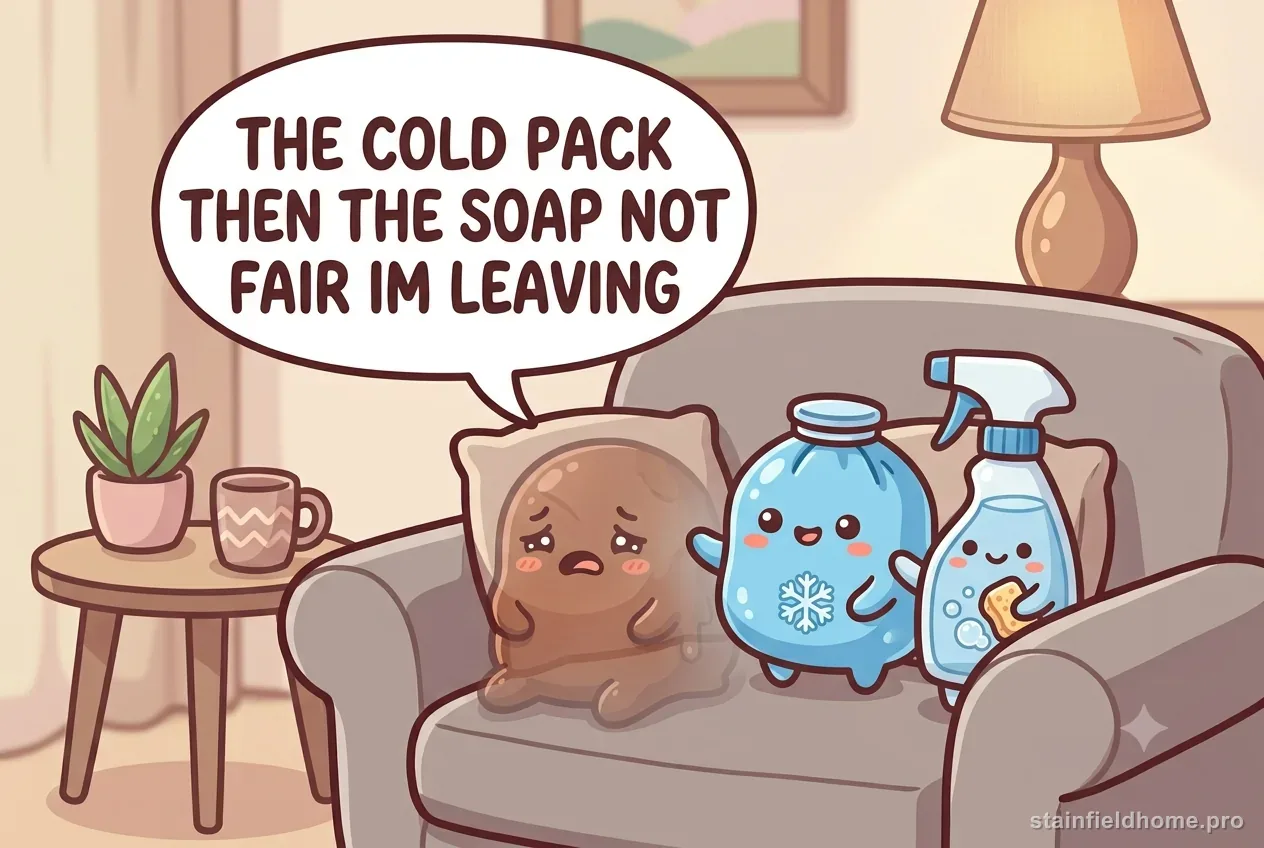
Hi. I'm the chocolate on your couch.
I look like one brown smear, but I'm three problems at once. There's cocoa butter (that's fat), plus tannins from the cocoa solids, and if I came from milk chocolate, a bit of milk protein too.
Each part needs a different move, and they have to happen in order: chill and lift my solids, cut my fat, then deal with my brown. Rush it and you smear me wider; soak me and you trade a chocolate stain for a water ring.

Check the cleaning code first
Find the furniture's cleaning code on the tag under a cushion. “W” means water-based cleaning is fine. “S” means solvent only, no water, so stop here and use a dry-cleaning solvent or call a professional. “S/W” allows both; “X” means vacuum only.
Whatever the code, test every product on a hidden spot first, because dyes and backing glues on upholstery move more easily than you would think. Work in from the edges so you do not spread me, and keep your cloths white so you can see what is transferring.
Chill me, then lift me
- 01
Do not wipe soft chocolate; you will smear it. Press an ice pack or a bagged ice cube against me until I am hard, about five to ten minutes.
- 02
Snap and scrape the hardened chocolate off with the edge of a spoon. Get every crumb before anything gets wet.
- 03
Mix a few drops of dish soap into a cup of cool water. Dip a white cloth, wring it nearly dry, and blot me from the outside edge toward the center.
- 04
Turn to a clean part of the cloth often. Keep blotting, not rubbing, until the cloth stops picking up brown.
- 05
Work an enzyme upholstery cleaner into whatever brown tint stays, following its label for dwell time. Enzymes break down the tannin and any milk protein.
- 06
Blot with a cloth dipped in plain cool water to rinse, then press hard with a dry towel to pull out as much moisture as you can.
- 07
Let the cushion air-dry away from direct heat. A fan nearby speeds it and prevents a musty smell.
If I left a shadow behind
A faint brown or greasy halo usually means either fat still in the fibers or tannin that needs another pass. Re-treat the greasy feel with the dish-soap solution; re-treat the brown with the enzyme cleaner, giving it longer this time.
Between rounds, blot with clear water and dry. Do not layer products on a wet cushion. If a ring forms at the edge of the damp area, you used too much liquid; next time wring the cloth drier and work a smaller section.
The mistakes that lock me in
- Wiping soft chocolate instead of chilling and scraping it first
- Hot water, which sets the milk protein and can darken the tannin
- Soaking the cushion; it drives me into the foam, invites mildew, and leaves water rings
- A stiff brush, which frays upholstery fibers and pushes me deeper
- Skipping the hidden-spot test, especially on S-coded or richly dyed fabric
- Chlorine bleach or a strong all-purpose spray, which can strip upholstery dye

Microfiber, cotton, leather, and wool
On flat woven fabric like a cotton or poly blend, the steps above work as written. Microfiber shows water marks easily, so use the least liquid you can and finish by brushing the nap in one direction with a dry soft brush once it is dry.
Velvet and chenille crush under pressure, so blot straight down, never scrub, and lift the pile afterward with a soft brush. Leather is different entirely: chill and lift my solids, wipe with a barely-damp cloth and a drop of gentle soap, then condition the spot; never soak leather or use enzymes on it. On any S-coded fabric, water can leave a permanent ring, so a solvent-based method is the only safe route.
Car seats deserve their own note, because that is where a lot of us land. Cloth automotive upholstery is usually a tight polyester that responds well to the dish-soap-then-enzyme routine, but the foam beneath it soaks and dries slowly in a closed car, so use very little liquid and leave the doors open with a fan running. Leather and vinyl seats wipe clean with a barely-damp cloth once the solids are chilled and lifted; follow with a conditioner or vinyl protectant. Never use a household carpet-and-upholstery machine on perforated ventilated seats, where water reaches wiring and speakers underneath.
So the couch stays clean
A throw blanket over the spot where people eat is the simplest guard. If chocolate is a regular visitor, keep an ice pack in the freezer and a small bottle of dish soap nearby so you can chill and lift me within minutes.
A fabric protector spray rated for your upholstery code buys you time by letting me sit on the surface instead of soaking in.
Common questions
FAQ
Do I really need to freeze the chocolate first?
For soft or melted chocolate, yes. Wiping it spreads the fat and pigment across a much larger area. A few minutes with an ice pack hardens it so it snaps off cleanly, and then you are only treating a small mark.
The grease is gone but there is still a brown tint. What now?
That is the cocoa tannin. Give an enzyme upholstery cleaner a longer dwell time on that spot, blot with clear water, and dry. Two patient enzyme passes usually clear it; heavy scrubbing will not.
Can I use an upholstery machine or steam cleaner on chocolate?
Only after you have chilled, scraped, and treated the fat by hand. Sending heat and water at an untreated chocolate stain can set the milk protein and push the fat deeper. If you do extract afterward, keep passes light and dry the cushion fully.
Sources reviewed
Keep reading
Related guides
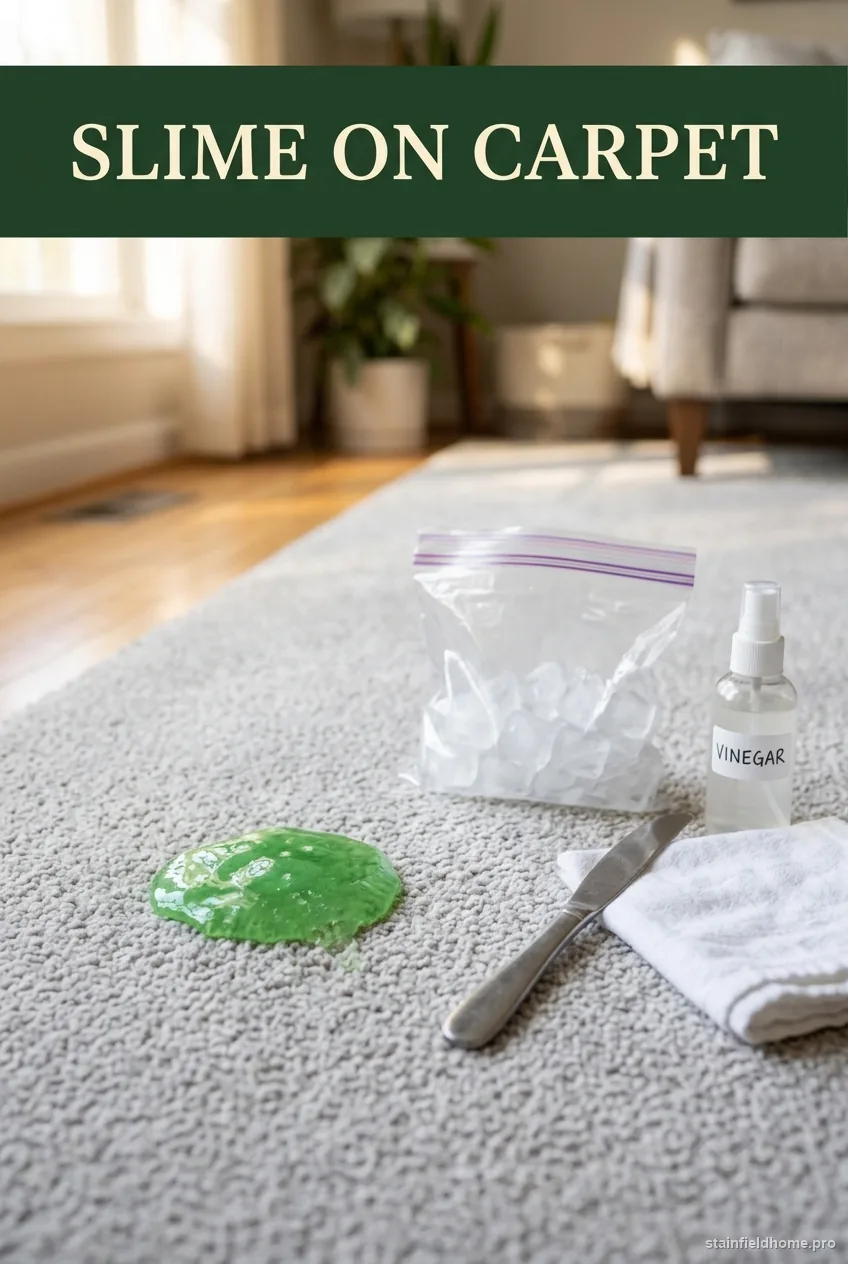
Slime on Carpet
How to Remove Slime From Carpet Without Damaging the Fibers
Lift dried or fresh slime out of carpet fibers with an ice-and-scrape method plus a vinegar or rubbing alcohol rinse, without soaking the backing or bleaching the color.
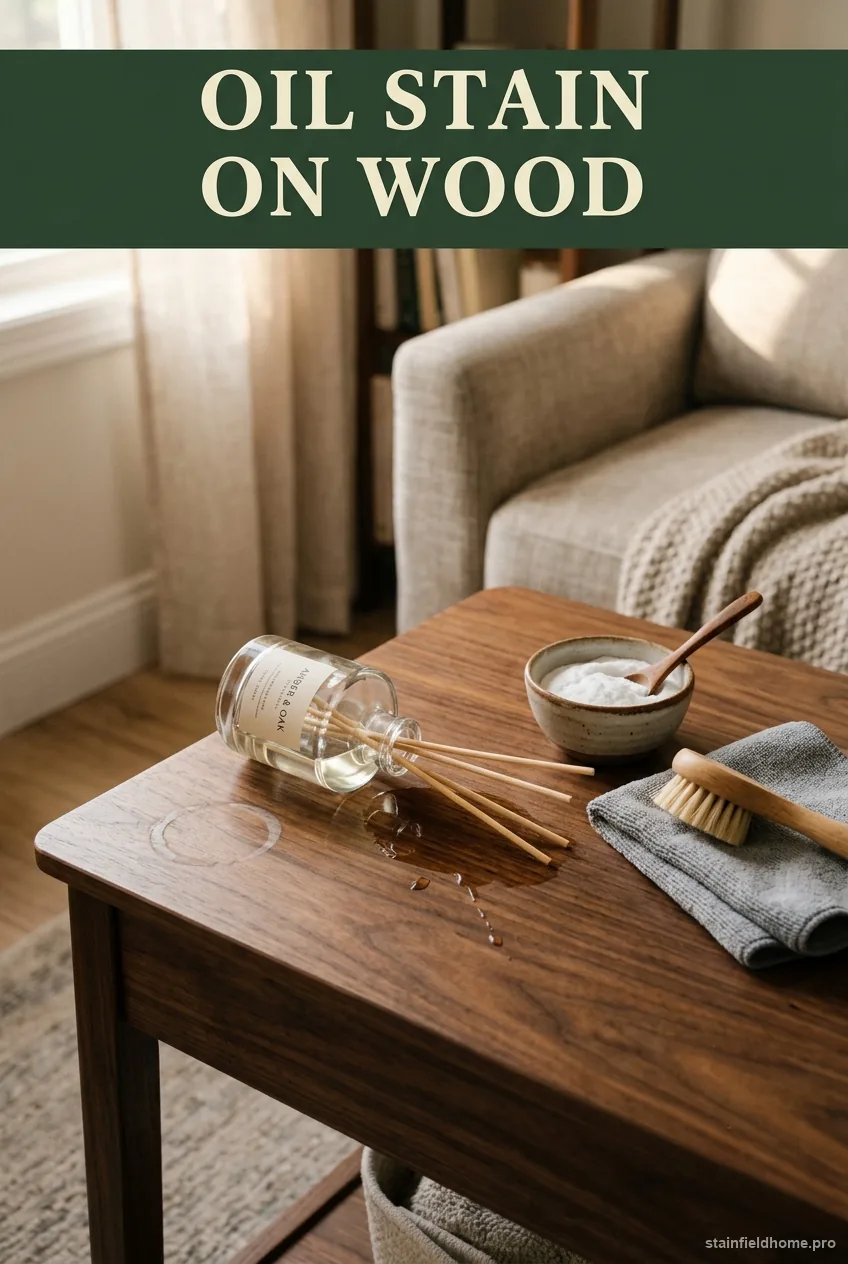
Essential oil and reed-diffuser oil on Finished wood furniture
How to Remove Essential Oil and Diffuser Stains From Wood Furniture
Blot a diffuser-oil spill on finished wood, use a cautious absorbent step, and recognize when the finish needs a furniture repair professional.
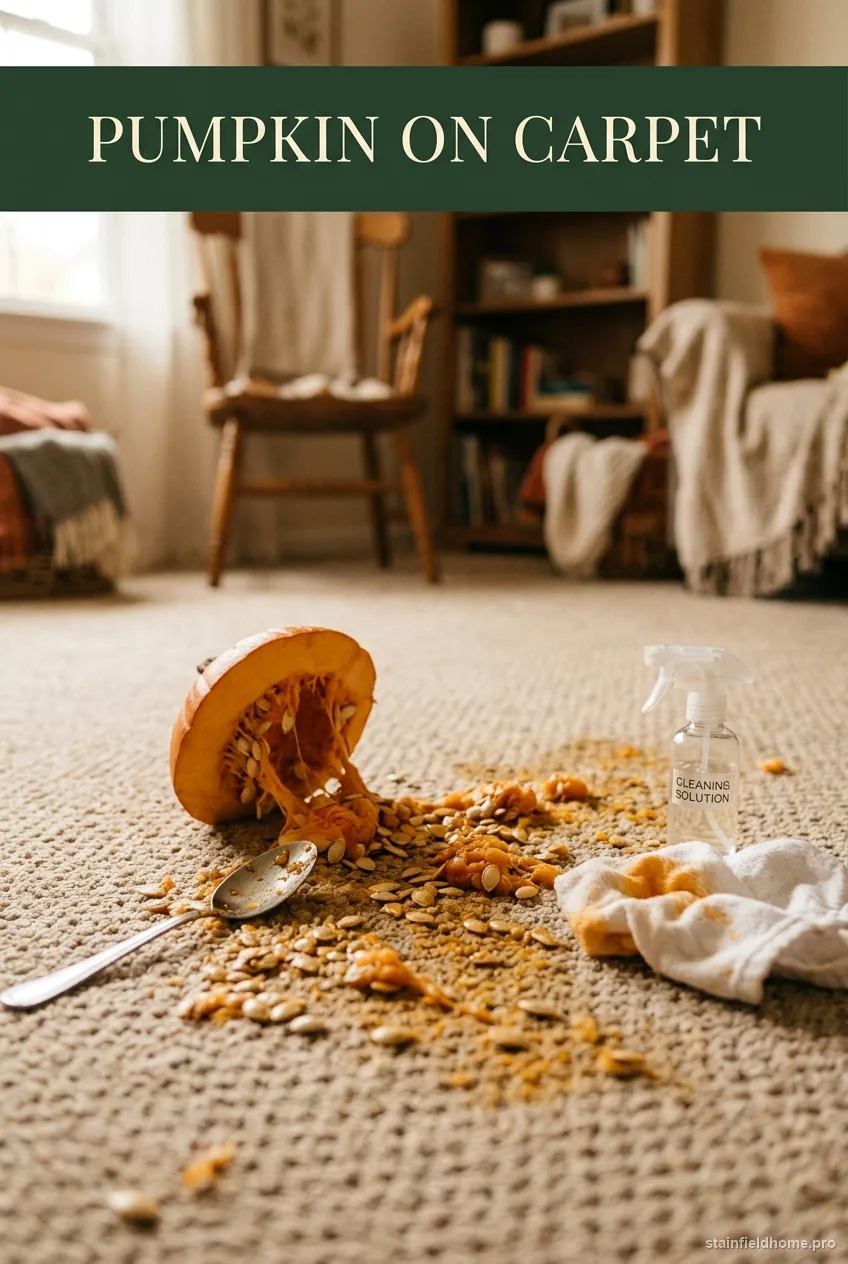
Pumpkin (carving, decorating, or puree) on Carpet
How to Remove Pumpkin Stains From Carpet
Remove pumpkin pulp and treat any remaining orange mark on carpet with a careful, low-moisture sequence that follows the carpet maker's guidance.
Sweat on Baseball cap
How to Remove Sweat Stains and Odor From a Baseball Cap
Lift yellow sweat stains and odor from the sweatband of a baseball cap without warping the brim or shrinking the crown.