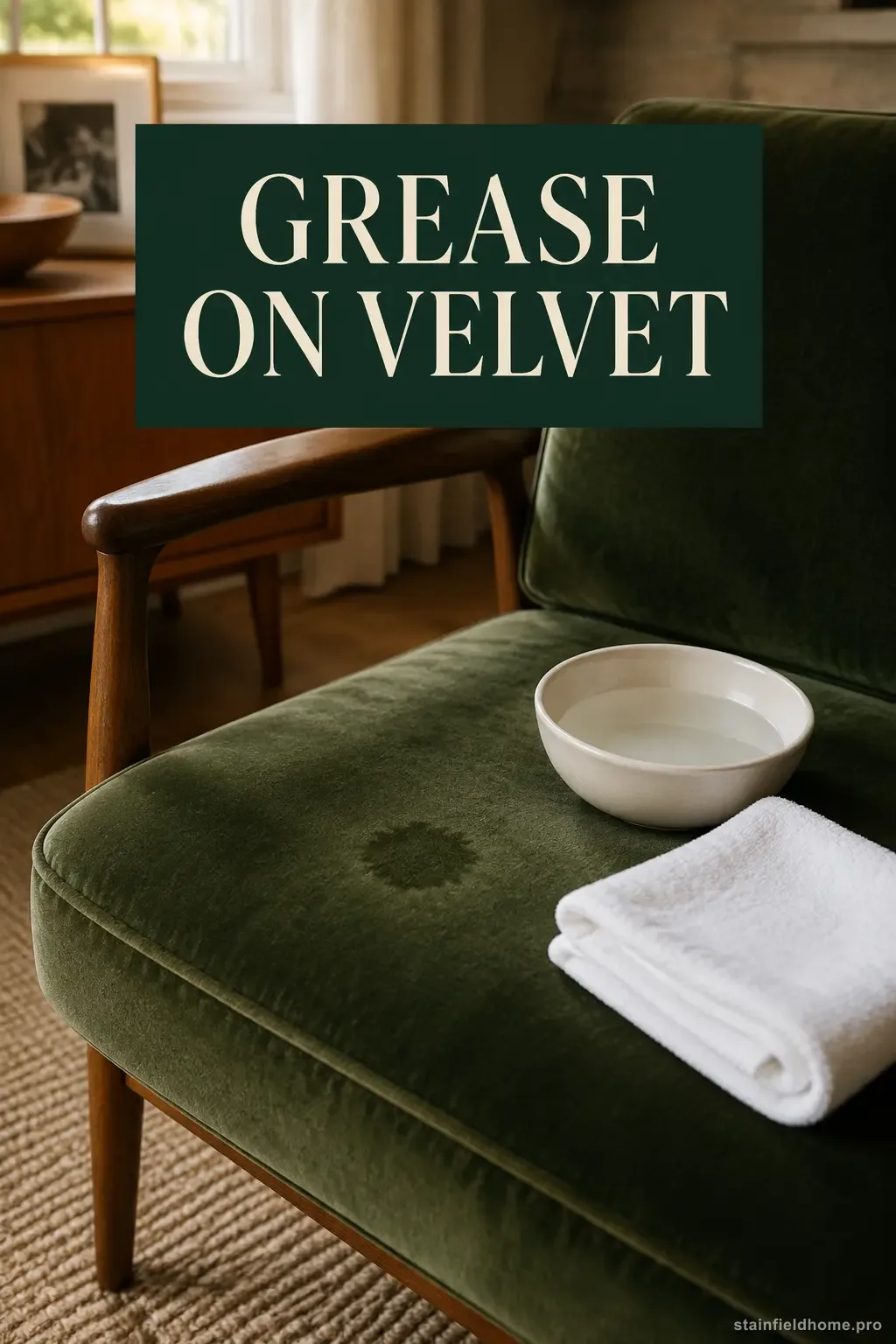
The quick answer
Lift food solids with a spoon and blot fresh grease with a clean white towel—never rub across the velvet nap. Find the upholstery care tag and the manufacturer’s instructions before adding cleaner. Use only the method allowed for that exact fabric: a label-approved upholstery solvent for an S or WS code, a tightly controlled water-based method for W or WS, and vacuuming or professional cleaning for X. If the fiber is silk, cotton, rayon or viscose velvet, the code is missing, or the grease has reached the cushion, call an upholstery professional.
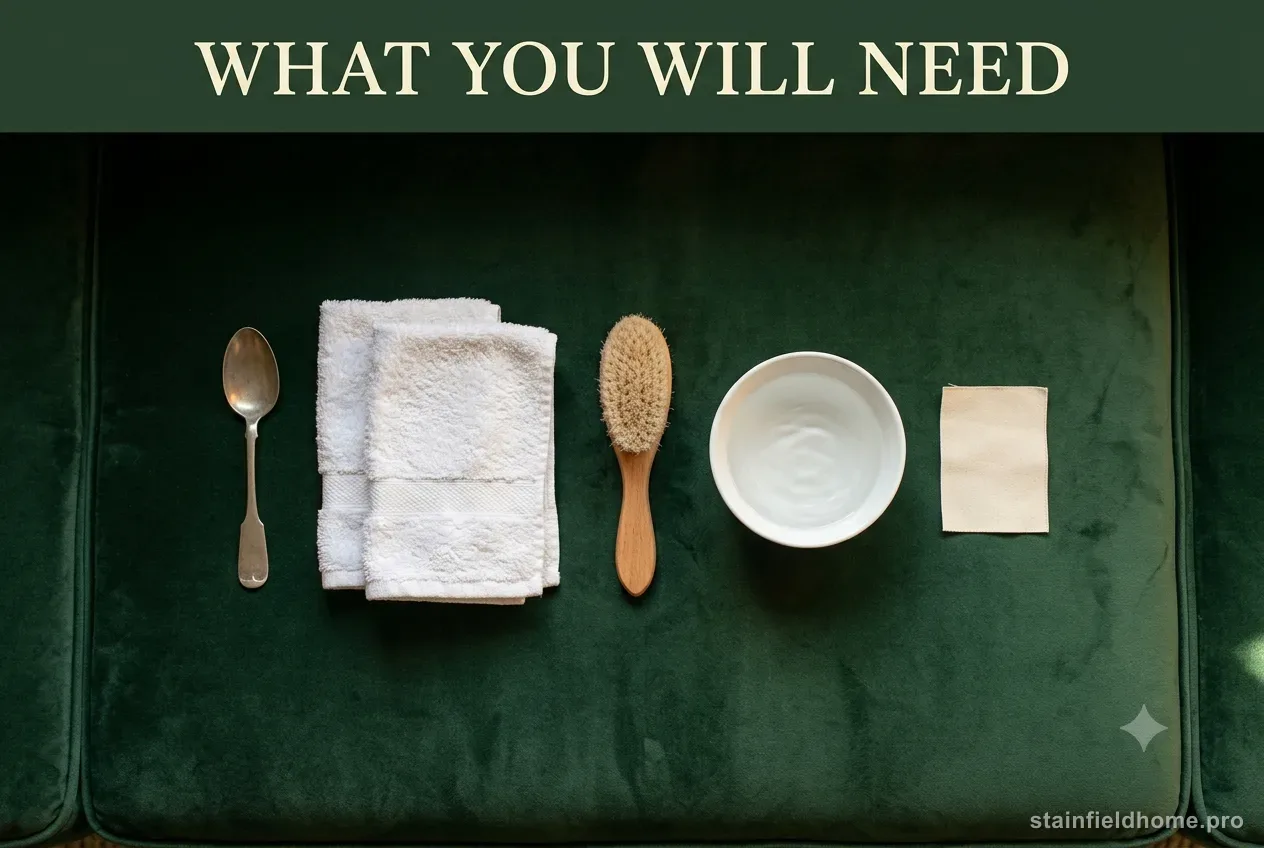
What you’ll need
- A dull spoon or plastic card
- Several clean, colorfast white towels
- A vacuum with a clean upholstery attachment
- The furniture care tag and maker’s instructions
- A label-approved upholstery cleaner compatible with the care code
- A soft velvet or clothing brush, used only after the fabric is dry
- Good ventilation and any protective equipment required by the cleaner label
Identify the velvet and its care code before cleaning
Velvet describes a pile construction, not a single fiber. The raised surface may be polyester, cotton, silk, rayon or viscose, or a blend, and the backing and cushion add more variables. Water can leave rings or distort some pile; solvent can affect dyes, latex backing, adhesives, foam, or stain-resistant treatments. Find the tag under the seat, beneath the frame, or on the manufacturer’s product page before you spot-clean.
Common codes are W for a water-based upholstery cleaner, S for a water-free solvent cleaner, WS or SW for either category as directed, and X for vacuuming or brushing only. The code is a limit, not a recipe: use a product actually labeled for upholstery, follow its ventilation and application directions, and test a hidden area. If two tags conflict, the maker’s current instructions should decide the method.
Stop and arrange professional cleaning when the label is missing, the upholstery is vintage, the pile is silk or viscose, the dye transfers to a white towel, or the spot sits over a feather, down, or unknown cushion fill. A professional can control solvent, moisture, extraction, and pile grooming across the entire panel instead of creating a clean ring around one spot.
For fresh cooking grease: lift and blot
The University of Georgia Extension advises scraping excess oily food without forcing it into the material and warns that upholstery should not be overwet because cleaner can reach and damage padding. West Elm’s general upholstery care similarly emphasizes immediate blotting, removal of excess moisture, air-drying, and professional help for persistent stains.
Do not sprinkle a household powder onto an unknown velvet as an automatic first step. Fine material can lodge in dense pile, change the appearance, or be difficult to remove from a greasy tuft. Controlled blotting and the care-code method give you a clearer result and a cleaner stopping point.
- 01
Remove the plate or utensil without dragging it. Use a spoon to lift sauce, crumbs, or soft food straight off the pile.
- 02
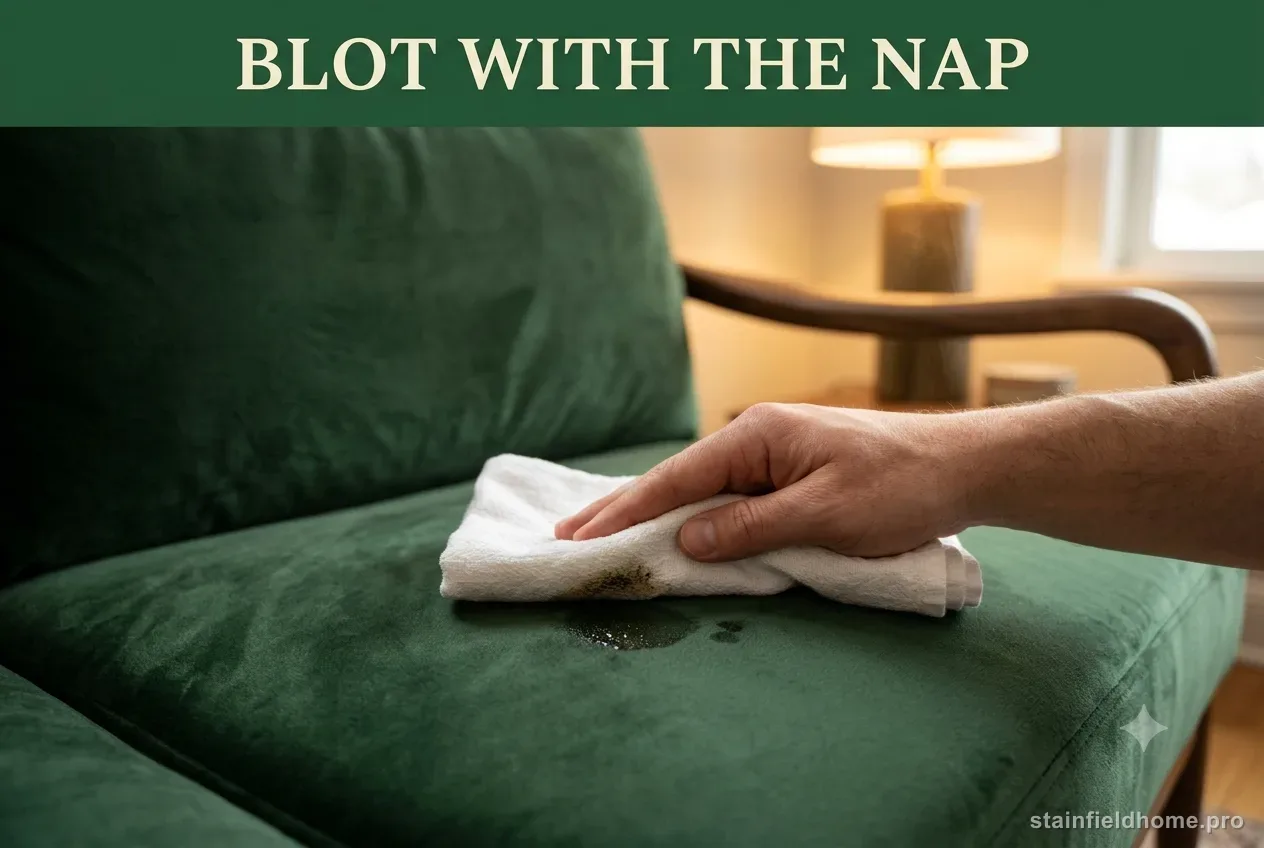
Lay a folded white towel on the spot and press lightly. Lift, rotate to a clean section, and repeat while oil transfers.
- 03
Blot from the outside edge toward the center. Do not scrub, twist, or brush wet velvet.
- 04
Check the care code and hidden-test the approved cleaner, including a full dry-time check for color and texture change.
- 05
Apply cleaner to a white cloth according to its label rather than pouring it onto the seat. Treat a small zone with the nap.
- 06
Use a dry towel to blot remaining moisture or solvent, then ventilate the room and let the upholstery dry naturally.
- 07
When fully dry, assess from several angles. Groom the nap very lightly with a clean soft brush only if the maker allows it.
Choose the branch allowed by the tag
For an S-coded velvet, use only a water-free upholstery solvent named or permitted by the manufacturer. Open windows, keep away from flames, wear any protection on the product label, and put a small amount on a cloth—not on the cushion. Blot with the nap and feather the final pass lightly across the affected tuft line. Do not use water to rinse an S-only fabric unless the maker explicitly says to do so.
For W-coded velvet, use the maker’s approved water-based upholstery product. Often the useful part is a small amount of foam rather than a wet solution. Work with a wrung-out cloth, keep the treated area shallow, and blot away residue. A WS code gives options, but it does not mean that water and solvent should be mixed or layered. Pick one compatible route after the hidden test.
For X-coded upholstery, limit home care to dry vacuuming with a clean attachment and contact a professional for the grease. Do not reinterpret X as permission to try a tiny amount of water, alcohol, or dish soap. The absence of immediate damage in a hidden corner does not show what a liquid will do to the cushion, backing, or visible nap after full drying.
For a dried or set grease shadow
Vacuum loose crumbs using low suction before adding any cleaner. Do not press the attachment hard enough to flatten the pile. Inspect the spot in side light: a dark area that changes as you brush the dry nap may be texture, while a stable translucent shadow is more consistent with oil. Photograph it before treatment so you can compare the fully dry result rather than judging wet velvet.
Hidden-test the code-compatible product and allow the test to dry for the full time on its label. Make one short treatment pass, blot, and dry completely. A second controlled pass is reasonable only when the shadow becomes lighter and the nap remains stable. An old grease mark that does not transfer may have oxidized, bonded with soil, or traveled into the backing; repeated home wetting can enlarge the ring without extracting what is below.
Call an upholstery cleaner when the mark covers more than a small spot, crosses a seam, returns after drying, smells rancid, or sits over removable cushion fill. Tell the cleaner whether the food included dairy, tomato, spice color, or sauce because those leave more than oil. Also list every product used; mixing unknown residues later can complicate professional spotting.
Protect the nap while the area dries
Keep people and pets off the seat until it is completely dry. Pressure on damp velvet can set the pile in a different direction and create a mark that looks like a stain. Do not replace a cushion cover over damp fill, place a throw over the area, or aim a hair dryer at it. Normal room ventilation and time are gentler than direct heat.
Once dry, view the panel from the front, side, and opposite direction. Velvet naturally shifts from light to dark as the pile turns. If the cleaned tufts simply lie differently, use clean fingertips or a very soft brush to lift them in the maker’s recommended direction. Stop if fibers shed, snag, or feel stiff. Steam is not a universal velvet-grooming tool and can water-mark, shrink, or distort sensitive fibers.
A pale halo can indicate cleaner residue or dye loss; a dark ring can indicate overwetting or grease that migrated outward. Do not chase either ring with a larger wet circle. Photograph the dry panel and ask the manufacturer or professional cleaner for the next step. Whole-panel cleaning may be needed to restore an even appearance.
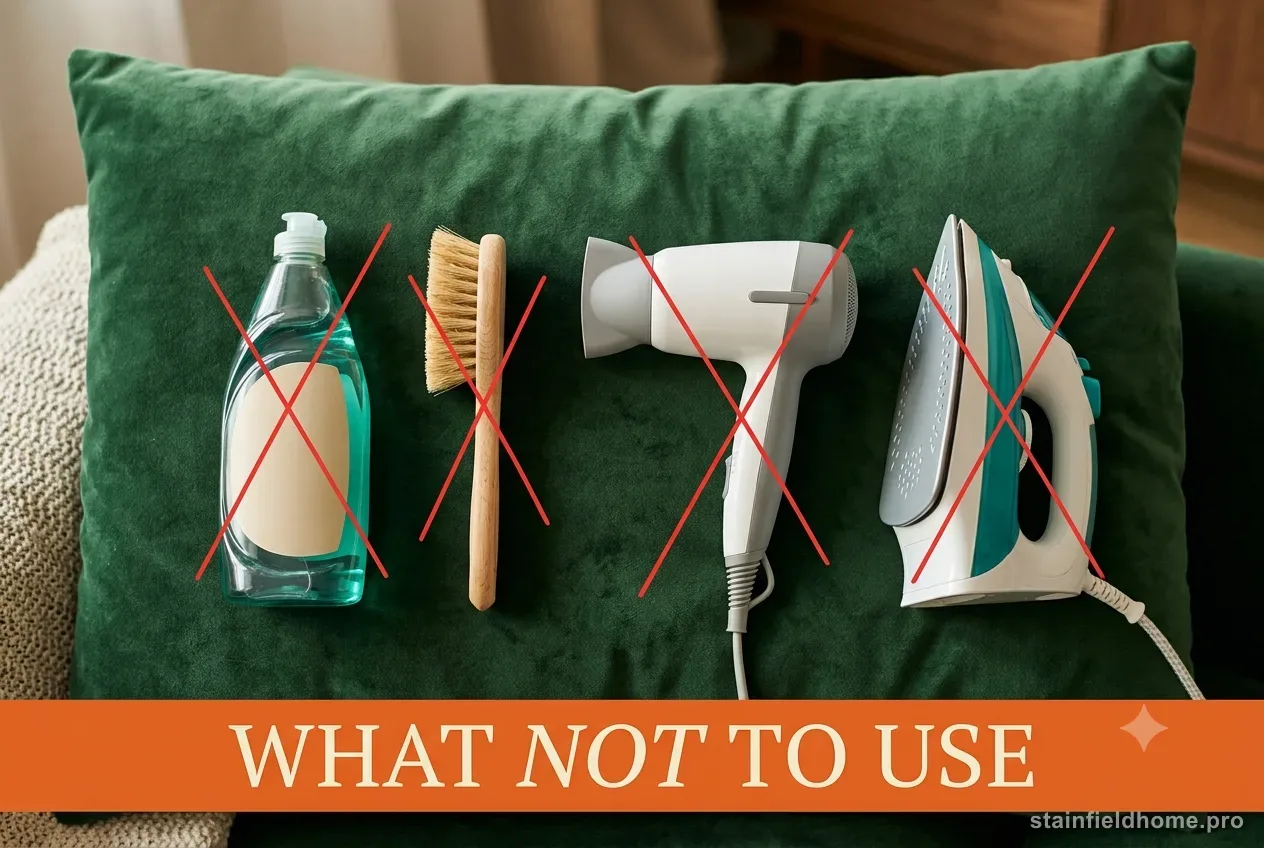
What not to use on velvet upholstery
Avoid treating only the visible top if grease has run into a seam or through to the fill. Upholstery is an assembly, and extracting one layer while leaving oil below can cause the stain to wick back. That is a practical point to hand the job to a professional rather than escalating the cleaner strength.
- Do not rub across the nap, scrub with a brush, or grind food into the pile.
- Do not pour dish soap, laundry detergent, water, or solvent directly onto the cushion.
- Do not use a water-based product on S or X fabric, or solvent on W fabric, without manufacturer approval.
- Do not mix cleaners or follow a solvent treatment immediately with water unless the instructions require it.
- Do not use colored towels, baby wipes, alcohol wipes, steam, a hair dryer, or a clothes iron.
- Do not unzip and machine-wash a cover merely because it is removable; the tag must specifically permit washing.
Prevent food grease from reaching velvet
Serve oily snacks on a stable tray and keep washable throws available for informal meals, but remove a throw promptly if a spill passes through it. Vacuum crumbs from velvet regularly with the approved attachment so they do not combine with body oils in the pile. Rotate reversible cushions according to the furniture instructions so wear and shading stay even.
Keep a photo of the care tag and the manufacturer’s cleaning page with the purchase receipt. Have the name of a local upholstery cleaner before a holiday or gathering. The best response to a grease spill is fast lifting, patient blotting, and a code-compatible method—not a strong household degreaser designed for a kitchen counter.
Common questions
FAQ
Can I use dish soap on grease on a velvet sofa?
Only if the upholstery is W or WS, the manufacturer permits a mild water-based method, and a hidden test dries without change. Use very little foam on a cloth and avoid soaking. Never use it on S or X fabric by default.
Can a removable velvet cushion cover go in the washing machine?
A zipper does not mean machine-washable. Wash only when the care label explicitly allows it; otherwise the cover can shrink, distort, lose dye, or no longer fit the cushion evenly.
Why does the cleaned spot look darker from one direction?
Velvet changes shade when its pile lies differently. Let it dry fully, then view it from several angles and gently groom only if the maker allows. A stable dark ring or stiff texture needs professional assessment.
Sources reviewed
Keep reading
Related guides
Slime on Carpet
How to Remove Slime From Carpet Without Damaging the Fibers
Lift dried or fresh slime out of carpet fibers with an ice-and-scrape method plus a vinegar or rubbing alcohol rinse, without soaking the backing or bleaching the color.
Essential oil and reed-diffuser oil on Finished wood furniture
How to Remove Essential Oil and Diffuser Stains From Wood Furniture
Blot a diffuser-oil spill on finished wood, use a cautious absorbent step, and recognize when the finish needs a furniture repair professional.
Pumpkin (carving, decorating, or puree) on Carpet
How to Remove Pumpkin Stains From Carpet
Remove pumpkin pulp and treat any remaining orange mark on carpet with a careful, low-moisture sequence that follows the carpet maker's guidance.
Sweat on Baseball cap
How to Remove Sweat Stains and Odor From a Baseball Cap
Lift yellow sweat stains and odor from the sweatband of a baseball cap without warping the brim or shrinking the crown.