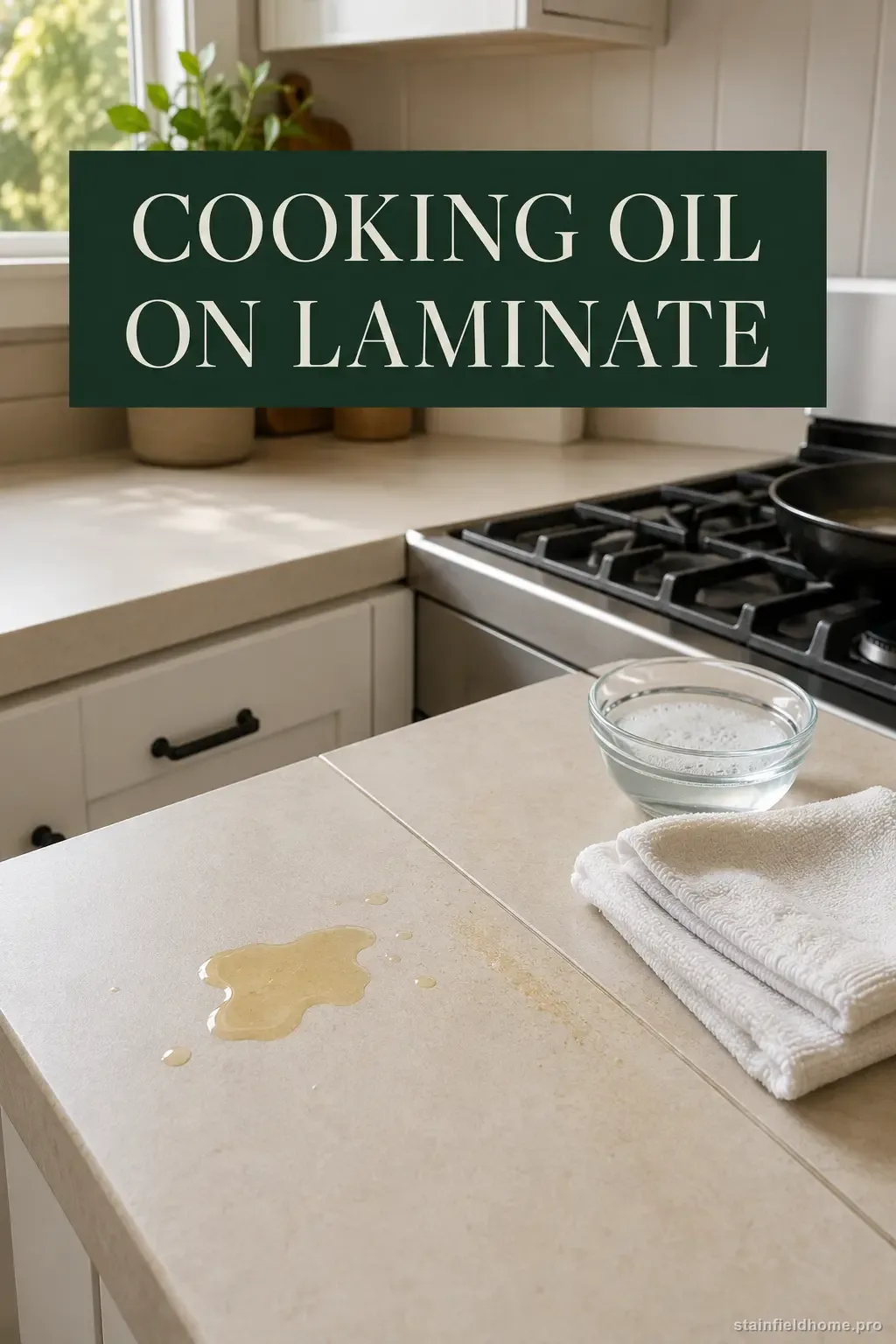
The quick answer
Blot or lift excess oil, then wipe with a soft white cloth dampened in warm water with a few drops of mild dish detergent. Work from the clean edge toward the center and use a fresh cloth section as grease transfers. Wipe again with a separate cloth dampened in plain water and dry at once. For a sticky set film, repeat short detergent passes rather than scrubbing. Keep liquid out of seams and exposed edges, and stop if the sheen changes. Do not use steel wool, scouring powder, a blade, acetone, or a melamine eraser.
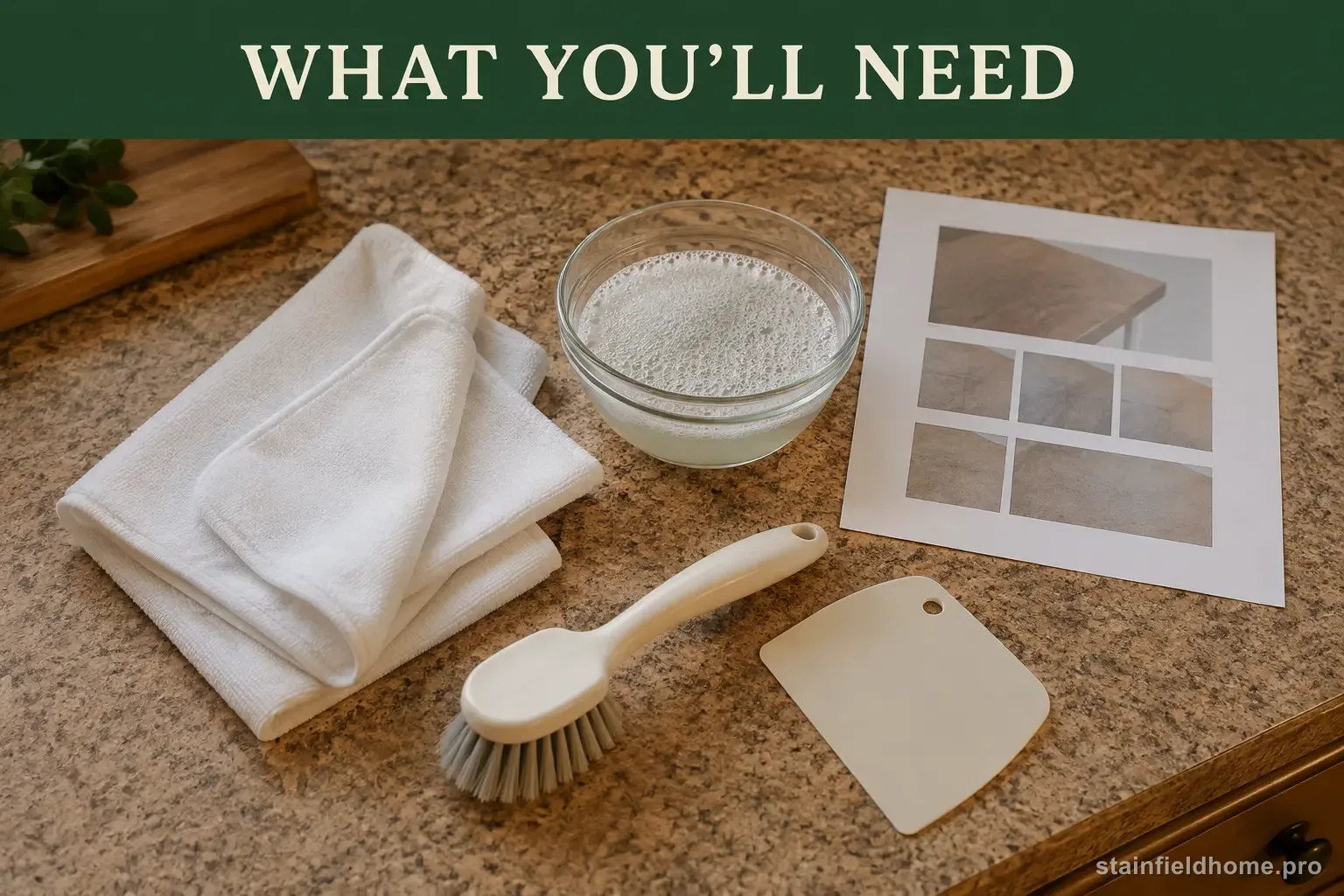
What you’ll need
- Several soft white microfiber or cotton cloths
- Warm water in a small bowl
- Mild clear dish detergent without bleach or abrasive particles
- A flexible plastic scraper or spoon for pooled oil
- A soft nylon brush for an approved textured finish
- The laminate manufacturer’s care instructions, if available
Confirm that the counter is laminate—and inspect the seams
Decorative laminate is a thin, hard surface bonded to a wood-based core. The face resists an ordinary cooking-oil spill, but the assembly is not waterproof at every cutout, joint, backsplash seam, sink rim, or damaged edge. Before cleaning, look for a dark swollen line, lifted strip, open seam, chip, or soft area. Those signs point to moisture or adhesive damage rather than grease sitting only on the face.
Identify the finish as closely as you can. Matte, gloss, honed, and deeply textured laminates reflect light differently and do not tolerate the same amount of friction. Formica advises water and mild detergent for normal care, followed by a clean-water rinse and soft-cloth drying. Wilsonart likewise lists routine household cleaners but warns against strong acids, caustics, and pumice. The product sheet for your exact counter takes priority over any general recipe.
Check the spill in side light before wetting it. Fresh oil looks shiny and may move when touched with a dry cloth. An older oxidized film often feels tacky and collects dust. A patch that stays dull, pale, bubbled, or rough after a mild wash may be worn laminate, heat damage, or abrasion from an earlier cleaner. Cleaning cannot rebuild the resin surface, so document the starting condition with a photo and test the soap solution near the least visible edge first.
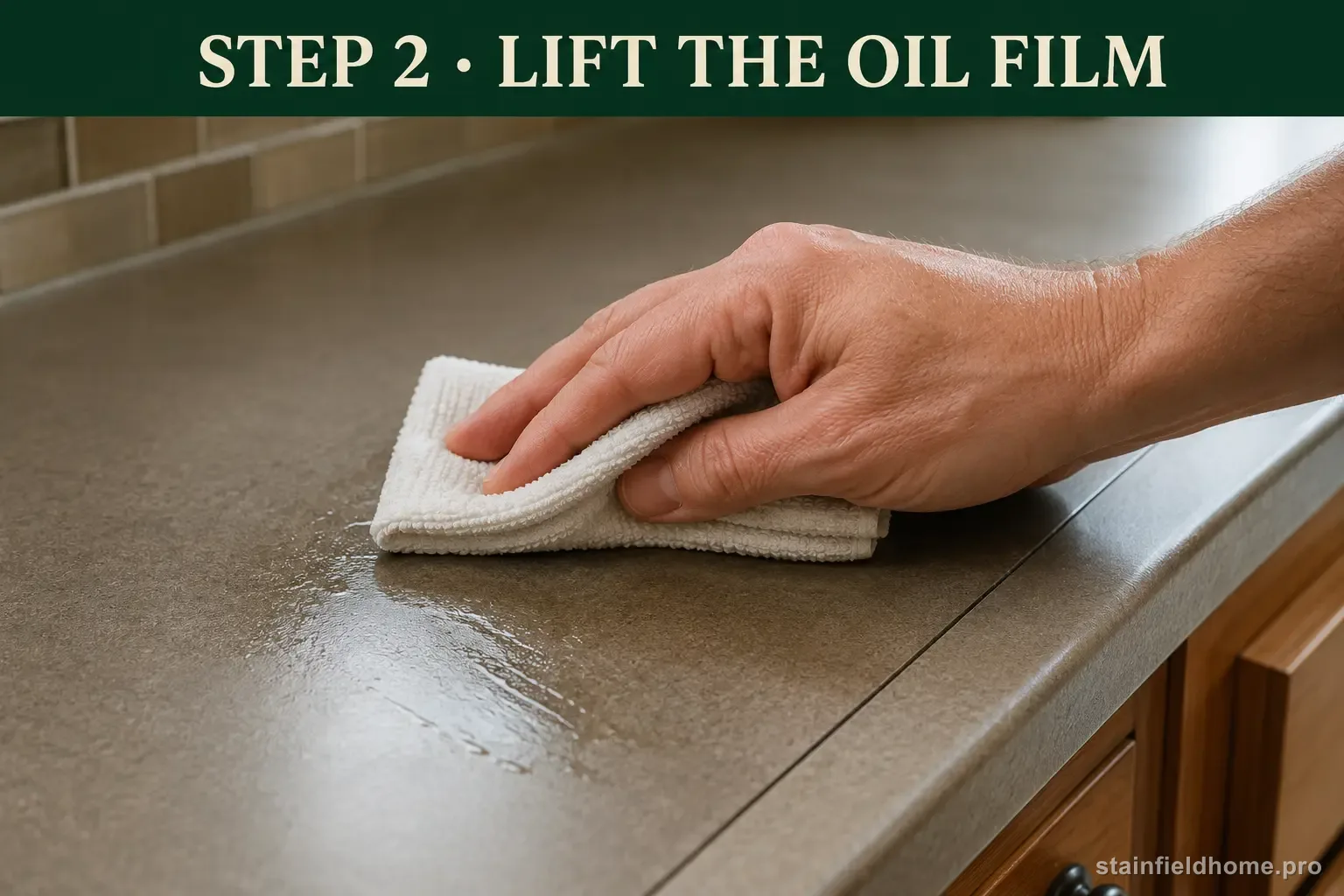
For fresh cooking oil: absorb, wash, rinse, and dry
Dish detergent helps water surround and carry away oil, but concentration is not a shortcut. Too much detergent leaves a film that looks like continuing grease and attracts fingerprints. If a dry finger still slides differently over the spot, make one more weak-soap pass, rinse again, and dry. A large spill should be divided into small zones so dirty solution is not dragged across the entire counter.
- 01
Move hot cookware away safely and let the counter return to room temperature. Do not clean around an active burner or electrical appliance with a wet cloth.
- 02
Lift pooled oil with the edge of a plastic scraper or spoon and transfer it to a disposable towel. Keep the tool nearly flat so it cannot gouge the surface.
- 03
Press a dry white cloth onto the remaining film. Turn to a clean section until it stops picking up obvious oil. Do not sweep the spill toward a seam or countertop edge.
- 04
Mix warm water with only a few drops of mild dish detergent. Dampen a clean cloth and wring it well; the cloth should not drip.
- 05
Wipe from the outside of the mark inward using light, overlapping strokes. Rotate the cloth often so dissolved grease is lifted rather than redistributed.
- 06
Wipe the area with a second cloth dampened in plain water. Formica specifically calls for rinsing cleaner from the surface, which also matters on a food-preparation counter.
- 07
Dry immediately with a third cloth, including the sink rim, backsplash joint, and front edge. Inspect only after the laminate is fully dry.
For a set, sticky, or dust-loaded oil film
Old cooking oil changes as it is exposed to oxygen, heat, and airborne soil. It can become a thin varnish-like layer that does not release in one wipe. Start with the same mild solution, but place the damp cloth on a palm-sized area for twenty to thirty seconds—away from seams—to soften the film. Wipe gently, rinse, and dry before treating the next area. Do not leave a wet compress on laminate or allow the solution to dry in place.
If the maker permits a nonabrasive household cleaner, apply it to the cloth rather than directly to the counter and follow its contact-time and rinse directions. Formica allows non-scratch liquids or creams for persistent soil, but product families and regional guidance differ. A cleaner described as safe for one brand or finish is not automatic permission for every laminate. Test, use the smallest amount, rinse with potable water on food-contact areas, and compare the dry sheen from several angles.
A textured surface may hold softened grease in low points. Use a soft nylon brush only when the manufacturer allows it, move with the printed or embossed texture, and use almost no pressure. Blot the loosened residue with a cloth instead of spreading it. If a sticky patch survives two controlled cycles without any transfer, stop for the day. Repeated friction is more likely to burnish a matte finish than to solve residue that has penetrated a scratch or damaged seam.
Treat sink rims, front edges, and backsplash seams differently
At a joint, use the edge of a barely damp cloth and wipe away from the opening. Follow immediately with a dry towel. Never flood a sink cutout or push cleaning solution under a metal rim. If the edge banding has lifted or the core looks dark and swollen, stop adding moisture and contact a countertop fabricator. Adhesive failure is a repair problem, not a stain-removal problem.
Grease can also run down the vertical front edge and collect beneath the overhang. Support a folded cloth under the drip before cleaning the top. Wipe the vertical face from bottom to top so solution does not create long runs, then rinse and dry the underside. Around a cooktop, switch off and cool the appliance according to its manual; do not let liquid enter the frame or controls.
Caulked backsplash lines collect both grease and kitchen dust. Clean the laminate and intact caulk separately with methods approved for each. A dark or sticky caulk line that stays changed after cleaning may need removal and replacement once the joint is clean and dry. Do not scrape caulk with a metal blade against the decorative face.
Decide whether the remaining patch is residue or damage
After the area dries, view it in daylight and under the usual task light. Grease normally feels slick or tacky and may still transfer to a fresh white cloth. Detergent residue can feel grabby and often disappears with a plain-water rinse. Abrasion or chemical damage does not transfer; it changes how the surface reflects light. A shiny patch on matte laminate is often burnishing, while a milky or faded patch can follow harsh cleaner or heat exposure.
The distinction prevents the common mistake of escalating on a surface that is already clean. Bar Keepers Friend, baking-soda paste, melamine foam, and rough scrubbers can appear successful because they remove a microscopic surface layer. On laminate, that may leave a larger polished or pale halo visible from across the room. If the appearance changes but no soil moves to the cloth, photograph it and ask the manufacturer or a fabricator about repair options.
Deep scratches, blisters, lifted seams, and heat rings are not stains. A marker, polish, oil, or furniture wax may hide the contrast briefly but can complicate a later repair and create food-contact concerns. Keep the area dry, protect it from further heat, and have the damaged section assessed if it is near water or continues to spread.
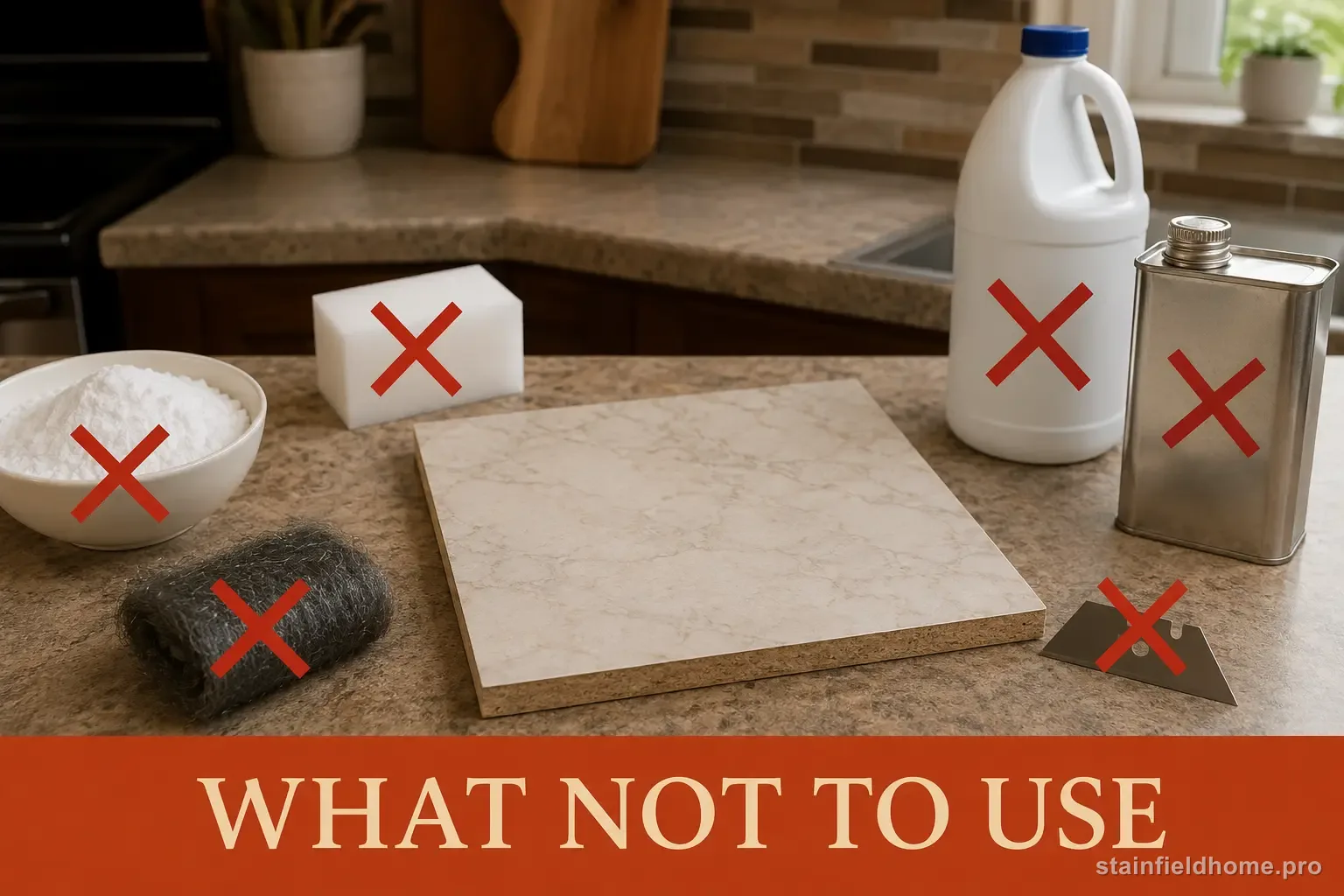
What not to use on laminate
Internet success stories often omit the finish and the after-drying result. A cleaner can remove grease and still damage sheen. Use the countertop maker’s document as the boundary, keep the test area small, and stop at the first color, texture, or gloss change.
- Do not use steel wool, scouring pads, pumice, scouring powder, or a melamine foam eraser; they can scratch or burnish the finish.
- Do not scrape with a razor blade or metal putty knife.
- Do not use oven cleaner, drain cleaner, toilet-bowl cleaner, limescale remover, or another strong acid or caustic product.
- Do not use bleach, acetone, paint thinner, or another solvent unless the exact laminate maker explicitly permits it for the exact soil and finish.
- Do not combine vinegar with baking soda or layer multiple cleaners; rinse one product away before any label-approved next step.
- Do not flood seams, sink cutouts, backsplash joints, appliance frames, or exposed substrate.
- Do not set a hot pan on laminate or try to loosen grease with a heat gun, steam cleaner, or boiling water.
Prevent the next grease film
Blot oil when it lands and make a quick mild-soap rinse part of cleanup after frying. Run the range hood during greasy cooking and clean its filters on the appliance maker’s schedule; less airborne oil means less sticky dust on counters and cabinet fronts. Use a trivet for hot cookware and a cutting board for knives so the laminate face stays intact.
Keep the sink rim and backsplash joint dry, repair failed caulk promptly, and never store a wet sponge over a seam. Save the laminate brand, pattern, finish, purchase record, and care sheet with home documents. That information is far more useful during a spill than a universal cleaning hack.
Common questions
FAQ
Can I use baking soda on a greasy laminate countertop?
Avoid using it as a scrub. Baking soda is abrasive enough to change some matte or glossy finishes. Start with mild dish detergent, plain-water rinsing, and a soft cloth; use only a nonabrasive cleaner approved by the laminate maker if residue remains.
Why is the spot still shiny after the grease is gone?
A dry shiny patch that does not transfer to a clean cloth may be burnishing, heat change, or chemical damage rather than oil. Stop rubbing and ask the laminate maker or a fabricator whether repair is possible.
What if oil ran into a countertop seam?
Blot the opening, wipe away from it with a barely damp cloth, and dry immediately. If the seam lifts, darkens, swells, or feels soft, keep it dry and contact a countertop fabricator instead of adding more cleaner.
Sources reviewed
Keep reading
Related guides
Slime on Carpet
How to Remove Slime From Carpet Without Damaging the Fibers
Lift dried or fresh slime out of carpet fibers with an ice-and-scrape method plus a vinegar or rubbing alcohol rinse, without soaking the backing or bleaching the color.
Essential oil and reed-diffuser oil on Finished wood furniture
How to Remove Essential Oil and Diffuser Stains From Wood Furniture
Blot a diffuser-oil spill on finished wood, use a cautious absorbent step, and recognize when the finish needs a furniture repair professional.
Pumpkin (carving, decorating, or puree) on Carpet
How to Remove Pumpkin Stains From Carpet
Remove pumpkin pulp and treat any remaining orange mark on carpet with a careful, low-moisture sequence that follows the carpet maker's guidance.
Sweat on Baseball cap
How to Remove Sweat Stains and Odor From a Baseball Cap
Lift yellow sweat stains and odor from the sweatband of a baseball cap without warping the brim or shrinking the crown.