
The quick answer
For a fresh white streak, do not wet it. Rub the mark firmly with a piece of nylon (pantyhose or a clean nylon sock), a dryer sheet, or a clean patch of the garment itself until the residue lifts. For a hardened, lighter build-up patch under the arm, soak the area in equal parts white vinegar and water for thirty to sixty minutes, work an old toothbrush over it, then wash in the coolest water that will still clean it, turned inside out. Do not tumble-dry until the mark is gone, and skip liquid fabric softener, which locks the residue in.
What you’ll need
- A piece of nylon (pantyhose or a clean nylon sock)
- A dryer sheet or a clean makeup sponge
- White vinegar
- An old soft toothbrush
- Liquid dish soap
- Enzyme laundry detergent or oxygen bleach
- Rubbing alcohol (for a set streak)
Hi. I'm the deodorant mark on your dark shirt.
I show up two different ways on dark clothes, and they need opposite treatments. The first is the white chalky streak you notice in the mirror on your way out the door. That is surface residue: the waxes, silicones, and mineral powders in your antiperspirant or deodorant, sitting on top of the fibers where they rubbed off as you pulled the shirt on. Nothing has soaked in. It brushes off dry.
The second is the stiff, faintly lighter, slightly crusty patch under the arm that built up over months. That is aluminum and zirconium salts from antiperspirant, bonded together with body oil, detergent residue, and fabric-softener film, layer on layer, through wash after wash. On dark fabric it reads as a dull, pale, cardboard-stiff area, and sometimes the fabric there has gone a little shiny. This one has to be dissolved, not rubbed.
Which berry of the two you have decides everything below. If you can flick a white powder off with your fingernail, you have the easy one. If the fabric feels stiff, thick, or waxy and the color looks faded there, you have the build-up.

White streak or waxy buildup?
Check the care label first for the washing temperature and whether the item is dry-clean-only. Dark wool, cashmere, silk, and structured tailoring skip the soak entirely; go to the fabric section below.
Test any liquid, vinegar, alcohol, dish soap, on a hidden seam or the inside hem first, especially on deep black cotton and richly dyed colors. Rub a damp white cloth on the test spot afterward and look for dye transfer. Vinegar is safe on the large majority of dark fabrics, but a cheaply dyed fast-fashion tee is worth thirty seconds of caution.
Work in good light. On dark fabric a faint residue is hard to see when wet, so check your progress after the area has dried, not while it is still damp.
The white streak: no water needed
- 01
Lay the shirt flat and find every streak. Fresh residue is easiest to see by tilting the fabric against the light.
- 02
Take a piece of nylon, a leg cut from old pantyhose or a clean nylon sock works best, wad it up, and rub the streak briskly. The synthetic surface grabs the waxy powder and lifts it off the weave. Most fresh marks vanish in a few seconds.
- 03
No nylon on hand? A dryer sheet, a clean dry makeup sponge, a rolled-up ball of the same fabric from the shirt's inside hem, or even a clean sock all work the same way. So does gently rubbing the stained area against itself, fabric on fabric.
- 04
For a streak that has stiffened slightly but has not truly built up, dampen it with a little rubbing alcohol on a cloth, let it sit a minute to soften the wax and silicone, then rub again with the nylon.
- 05
Shake the fabric out, check in the light, and repeat on any shadow that remains. When the streak is gone the shirt is ready to wear; you do not have to wash it just for this.

The waxy build-up: this one needs a soak
- 01
Turn the shirt inside out so you are working directly on the underarm build-up.
- 02
Mix equal parts white vinegar and warm water in a bowl, enough to submerge both underarm areas, and lay the shirt in it so the stiff patches are covered. Leave it thirty minutes to an hour. The acid dissolves the mineral salts and softens the waxy film that has locked everything together.
- 03
Lift the shirt out and scrub each patch with an old soft toothbrush, working in small circles. You should feel the fabric start to go soft and flexible again as the crust breaks up.
- 04
Put a few drops of dish soap directly on any spot that still feels greasy, and work that in too; dish soap handles the body-oil part that vinegar does not.
- 05
For a patch that has yellowed as well as stiffened, follow with a soak in enzyme detergent or, on colorfast darks you have tested, oxygen bleach dissolved in warm water, for a few hours. Never use chlorine bleach on dark fabric.
- 06
Wash the shirt inside out on the coolest cycle that still gets it clean, with your normal detergent but no fabric softener. Air-dry it and check the underarm area once it is fully dry.
- 07
Deep build-up rarely clears in one pass. Repeat the vinegar soak and scrub once or twice more on separate wash days before deciding the patch is as good as it will get.
Nylon, vinegar, and the tights trick
Every laundry brand has its own deodorant-stain trick. Here is how they actually perform on dark clothes.
A baking soda paste, spread on and left twenty minutes to overnight before washing, genuinely helps on build-up; it is a mild abrasive and a mild alkali. Just do not use it in the same session as vinegar, because the two cancel each other out; pick one.
Rubbing alcohol or plain vodka on a cloth cuts the silicone and wax in a set white streak that dry-rubbing will not budge. Test for colorfastness first, dab rather than soak, and wash afterward.
Dish soap on its own is good for the oily side of build-up and a fine pre-wash rub, but it does little for the mineral crust; pair it with the vinegar soak.
Lemon juice and sun is a real method for yellowed white shirts and a bad idea on dark clothes, because the same bleaching action lightens the dye. Leave it for the whites.
Meat tenderizer and crushed aspirin are aimed at the protein and sweat-salt yellowing on white cotton. On dark fabric they do nothing useful and the aspirin can leave its own pale mark.
A commercial deodorant-and-sweat stain spray, or a dedicated foam deodorant-removing sponge, both work as advertised. The sponge is essentially a reusable version of the nylon trick.
If it's already been washed and dried
A white streak that went through the wash and the dryer and is still there has had its wax melted into the weave by the dryer's heat. Treat it now like build-up: rubbing alcohol to soften it, then a vinegar soak, then a scrub and a cool wash. It usually comes back with two or three rounds.
Build-up that has been tumble-dried many times is the hard case. The heat has fused the salts and oils into the fibers and, on polyester especially, partly melted and flattened the fiber surface, which is what causes the permanent sheen and the lighter look. You can get the stiffness out with repeated vinegar soaks and get it flexible and wearable again, but the faint shine and slight color loss in that patch may not fully reverse. At that point the shirt is fine for the gym even if it is retired from going out.
How the buildup turns permanent
- Tumble-drying a shirt with build-up still in it, which bakes the salts and oils in and glazes the fiber surface
- Washing underarm marks in hot water, which sets the sweat-salt yellowing that rides along with the residue
- Using liquid fabric softener, which leaves a film that traps deodorant residue and makes the next build-up worse
- Scrubbing a dark fabric hard with a stiff brush, which abrades the dye and leaves a genuinely faded patch
- Soaking in vinegar and baking soda at the same time, so the acid and the base neutralize each other and nothing happens
- Chlorine bleach on any dark or colored fabric, which turns the residue and the dye orange or pink
- Ignoring build-up for a year, so it stiffens into the weave and only ever partly comes out

Cotton, synthetics, and dark dyes
Dark cotton and cotton blends take the full method: dry-rub for streaks, vinegar soak and scrub for build-up, a cool inside-out wash to finish. This is the easiest fabric to rescue.
Polyester, nylon, and spandex activewear is the fabric I cling to hardest. The synthetic fibers hold on to my silicones and my smell, and they are the most likely to end up with a permanent stiff, shiny underarm patch. Catch build-up early here, use the vinegar soak plus an enzyme soak for the odor, always air-dry, and never iron the underarm.
Dark wool and cashmere knits get dry-rubbing with nylon only, plus at most a light dab of half-strength vinegar on a cloth, blotted not rubbed, then laid flat to dry. Do not soak or scrub wool; the fibers felt and the knit distorts. A real build-up patch on a wool sweater is a dry-cleaner's job.
Silk, rayon, viscose, and anything labeled dry-clean-only should go to the cleaner with the marks pointed out. Water rings and vinegar both leave their own marks on silk, and the dye moves easily.
Letting deodorant dry before you dress
Let your antiperspirant dry completely before you put a shirt on. Most white streaks are simply wet product transferring. Two minutes of arm-up drying time prevents almost all of them.
Use less. A single thin swipe protects you as well as three heavy ones and leaves a fraction of the residue. A clear gel or an aluminum-free stick transfers and builds up far less than a thick white cream, if the switch works for you.
Wash dark underarm-heavy tops inside out in cool water, skip the liquid fabric softener, and once a month give your gym shirts a plain white-vinegar rinse in place of softener. That single habit stops build-up from ever forming.
And check the underarms before anything dark goes in the dryer. Heat is what turns a residue you could have rubbed off into a patch you are stuck with.
Common questions
FAQ
How do I get white deodorant marks off a black shirt without washing it?
Rub the mark firmly with a piece of nylon, pantyhose or a clean nylon sock, or with a dryer sheet, a dry makeup sponge, or a balled-up piece of the shirt's own hem. The synthetic surface lifts the waxy residue off the fibers in seconds. No water needed for a fresh streak.
What causes the stiff, faded patch under the arms of my dark shirts?
Months of antiperspirant aluminum salts bonding with body oil, detergent residue, and fabric-softener film, built up layer by layer and then set harder every time the shirt goes through the dryer. Soak it in equal parts white vinegar and water, scrub with an old toothbrush, and wash cool without softener; repeat over a few wash days.
Will vinegar bleach or damage my dark clothes?
Diluted white vinegar is safe on the large majority of dark cotton, linen, and synthetics, and the smell washes out. Test a hidden seam first on deep black or cheaply dyed fabric, and do not use it on wool, silk, or anything dry-clean-only.
Can I use baking soda and vinegar together on deodorant build-up?
No. An acid and a base used at the same time neutralize each other and you lose the cleaning power of both. Use a vinegar soak on one wash day or a baking soda paste on another, not both at once.
The shine and light patch under the arm will not go away. Is it ruined?
If it has been tumble-dried many times, the fiber surface, especially on polyester, has partly melted and flattened, which causes the permanent sheen and slight color loss. Repeated vinegar soaks will get the stiffness out and make it comfortable to wear again, but the shine may not fully reverse.
Sources reviewed
Keep reading
Related guides

Fabric softener on Dark clothes
How to Remove Fabric Softener Stains From Dark Clothes
Identify and remove the blue-grey or greasy blotches liquid fabric softener leaves on dark laundry, and change how you dose it so it stops happening.
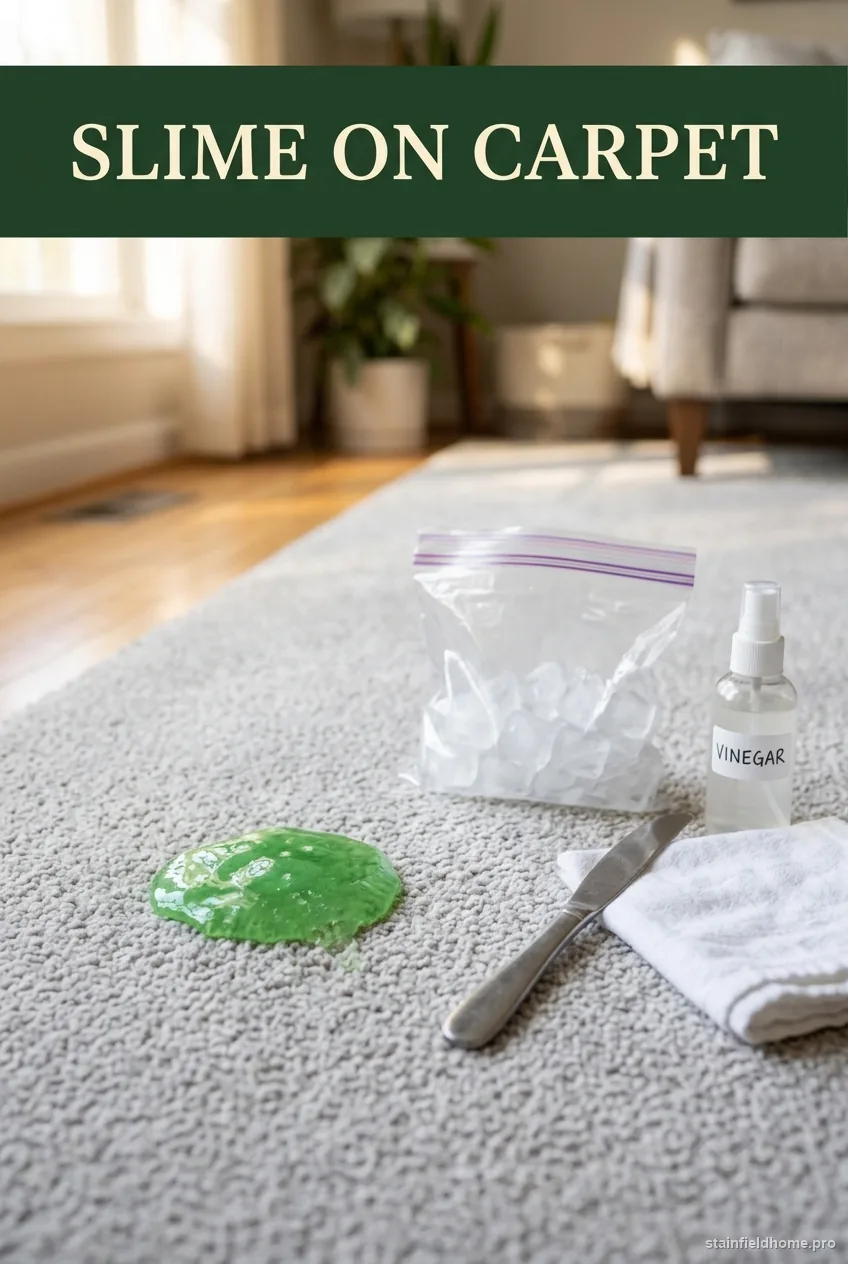
Slime on Carpet
How to Remove Slime From Carpet Without Damaging the Fibers
Lift dried or fresh slime out of carpet fibers with an ice-and-scrape method plus a vinegar or rubbing alcohol rinse, without soaking the backing or bleaching the color.

Essential oil and reed-diffuser oil on Finished wood furniture
How to Remove Essential Oil and Diffuser Stains From Wood Furniture
Blot a diffuser-oil spill on finished wood, use a cautious absorbent step, and recognize when the finish needs a furniture repair professional.

Pumpkin (carving, decorating, or puree) on Carpet
How to Remove Pumpkin Stains From Carpet
Remove pumpkin pulp and treat any remaining orange mark on carpet with a careful, low-moisture sequence that follows the carpet maker's guidance.