The quick answer
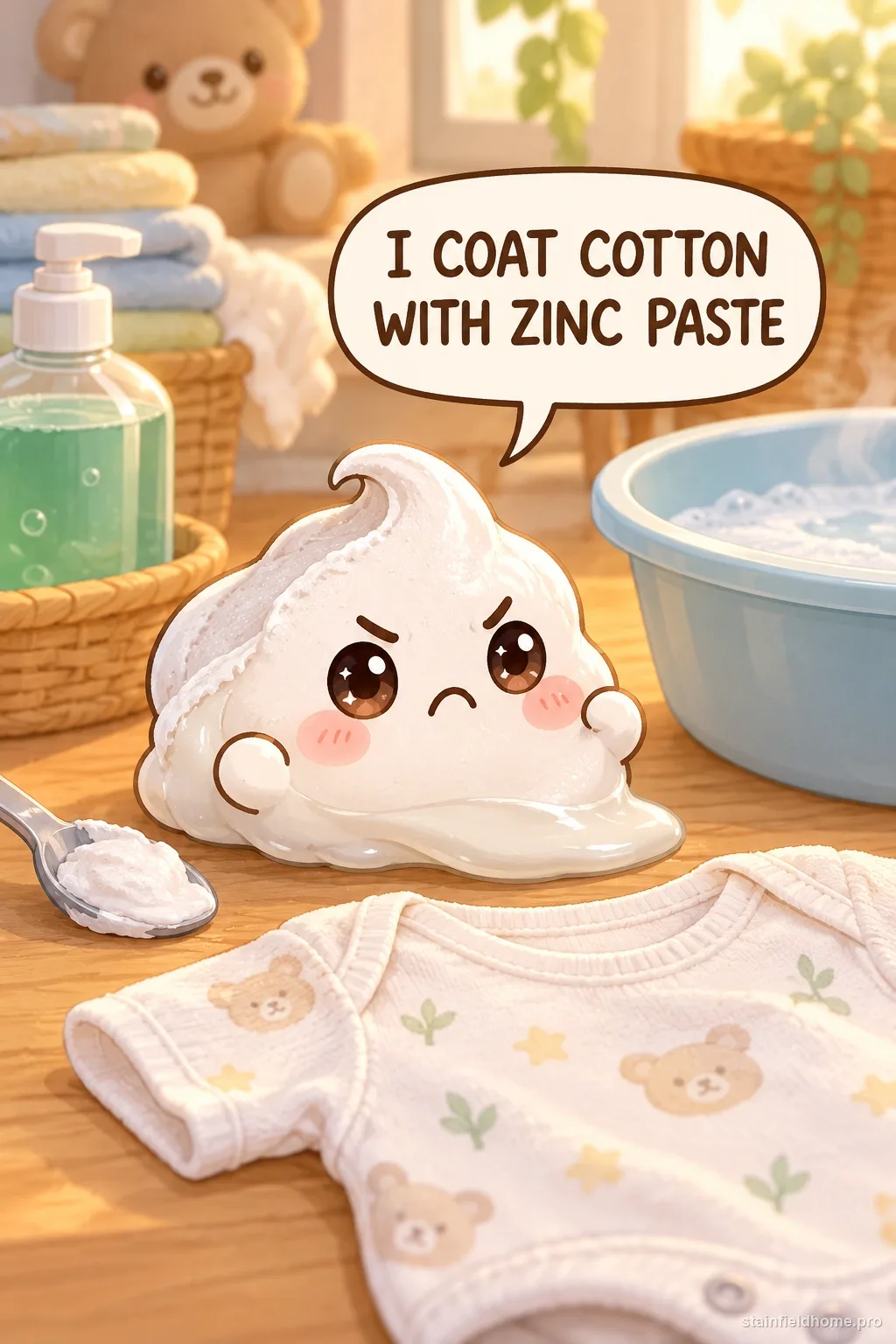
Scrape off the thick cream with a spoon, then work clear dish soap or a grease-cutting stain remover into the mark and let it sit 10 to 15 minutes. Rub gently, rinse with warm water from the back of the fabric, and wash on the warmest cycle the garment allows with detergent. Air-dry and check; the greasy white zinc oxide often needs two rounds.
What you’ll need
- A spoon or dull knife
- Clear, dye-free dish soap or a grease-focused laundry stain remover
- An old soft toothbrush
- Warm water
- Regular baby-safe laundry detergent
- Oxygen bleach safe for the fabric color, if a mark remains
Why diaper cream is such a stubborn stain
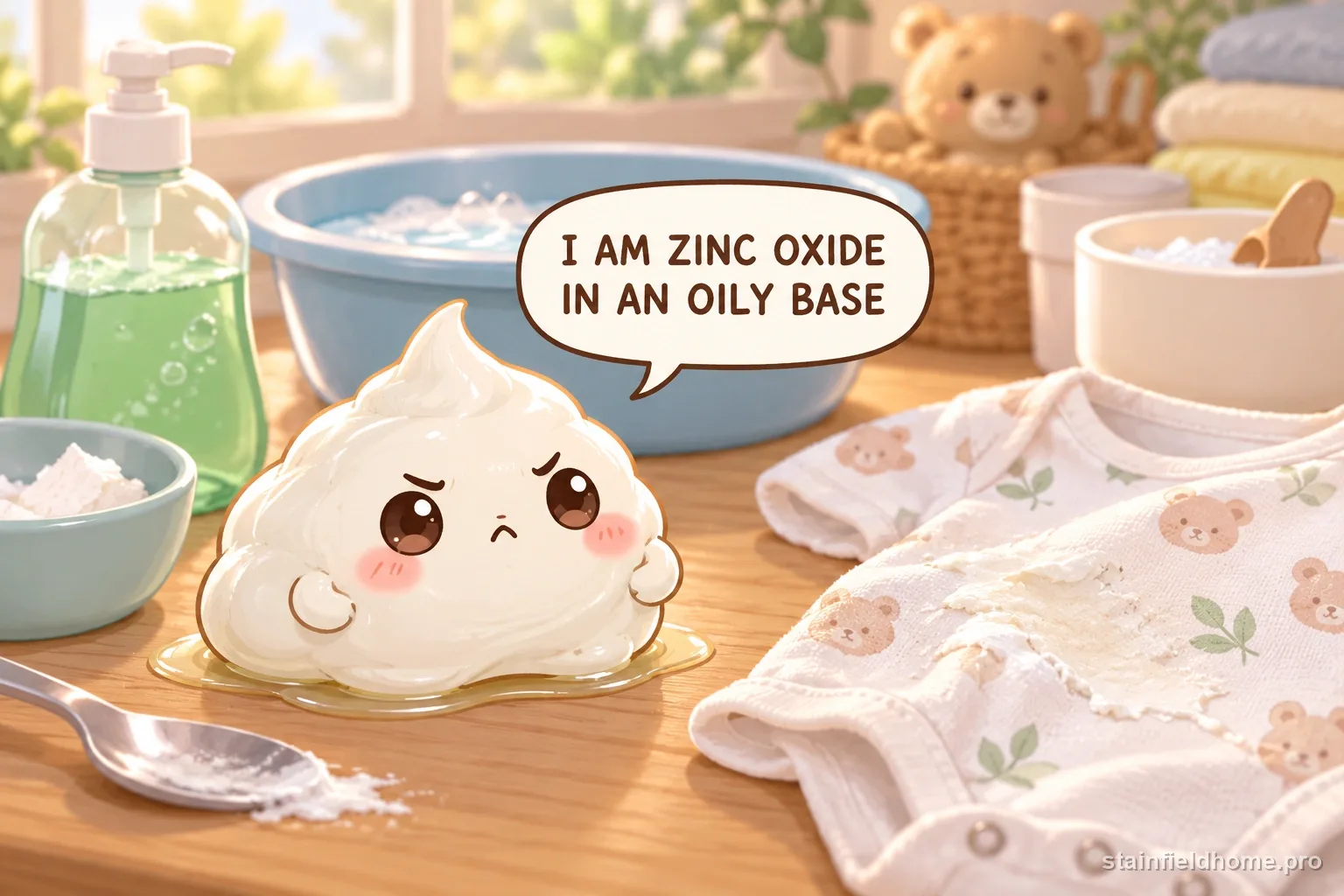
Barrier creams like Desitin, Boudreaux's, and Triple Paste are built to repel water. They combine zinc oxide, a fine white mineral powder that is opaque and clings to fibers, with heavy oils, petrolatum, or lanolin that soak into fabric and hold the zinc in place. Plain detergent and a normal wash slide right over that water-repellent film, which is why a onesie can come out of the machine still marked.
The stain has two parts to remove: the oil, which responds to a degreaser, and the white zinc oxide, which needs to be physically worked loose and then oxidized if a shadow remains. Treating only one part leaves the other behind.
Take off the paste first
Do not rub the fresh smear; that grinds the zinc into the weave. Hold the fabric taut and lift the raised cream with the edge of a spoon or a dull knife, scraping toward the center of the mark so you are not widening it. Get off as much of the thick layer as you can.
Turn the garment inside out for the next steps. You want to push the stain back out the way it came in, not drive it further through to the other side.
Cut the oil with dish soap
Work a generous amount of clear dish soap, or a grease-targeted laundry stain remover, directly into the stain from the back of the fabric. Use an old toothbrush to move it into the fibers with light strokes. Let it sit for 10 to 15 minutes so the surfactants have time to surround the oil.
Then rinse under warm running water from the back. As the oil lifts, you will often see the white zinc oxide loosen with it. Repeat the soap-and-sit step if the fabric still feels greasy; the oil has to be gone before the wash can finish the zinc.

Wash warm and check before drying
Wash the garment on the warmest cycle its care label allows with a full dose of detergent. Warm water keeps the oils fluid so they rinse away instead of re-depositing on the fabric. Do not overload the machine; the clothes need room to flex.
Air-dry the garment and look at it in good light. A dryer will bake any remaining oil and set the white cast, and a set diaper-cream stain is much harder to shift. If a greasy feel or a white shadow remains, go back to the dish soap step.
Clear a lingering white shadow
Once the oil is truly gone and only a faint white or grey haze is left, soak the garment in warm water with oxygen bleach at the package's soak rate for an hour or more, if the fabric and color allow it. Oxygen bleach helps break down the last of the zinc-and-residue haze and brightens the fabric around it.
For white cotton onesies, a longer soak and a hot wash usually clear it entirely. On colored or printed baby clothes, spot-test the oxygen bleach on a hidden seam first and keep the soak time moderate.
If it already went through the dryer
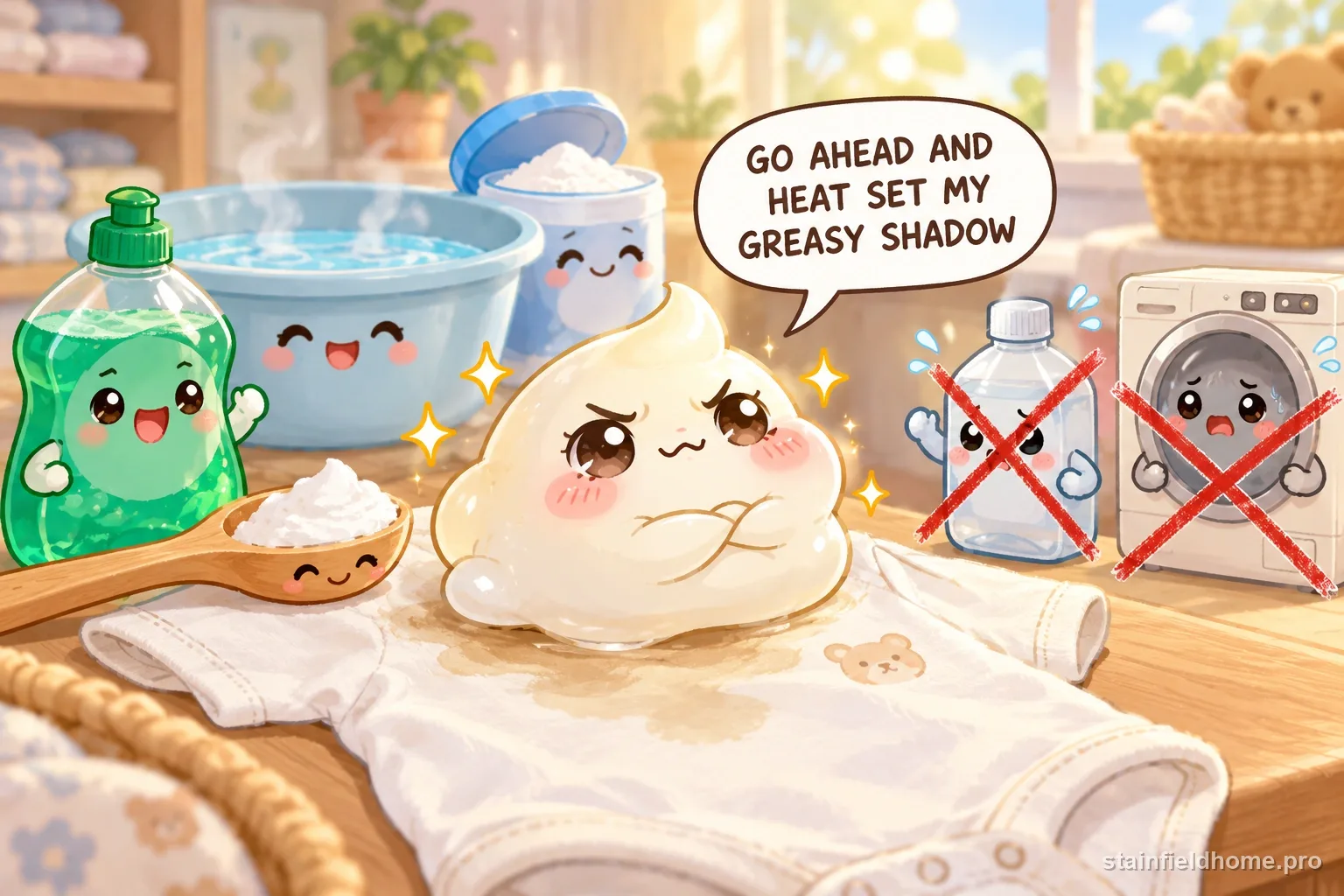
A dried, heat-set diaper-cream stain still responds to the same sequence; it just needs more repetitions. Pre-treat heavily with dish soap or a solvent-based stain stick, let it sit longer, wash warm, and repeat two or three times, air-drying between each round.
Very old set stains on light fabric sometimes keep the faintest oily-looking shadow. If a favorite sleeper is close but not perfect after several honest attempts, that is usually as far as home laundering will take it.
Different creams leave different laundry marks
Check the ingredient panel when possible. Zinc oxide is a white mineral that creates the opaque cast; petrolatum, mineral oil, beeswax, or lanolin may create the water-repellent greasy halo. Some lighter lotions use a different base and may respond more readily to ordinary detergent. A zinc-heavy paste can also leave a greyish mineral shadow after the oil has lifted, so do not keep adding degreaser once the fabric no longer feels slick.
For washable cotton or polyester, begin with physical removal and a grease-cutting pretreatment. For wool, silk, elasticized garments, waterproof diaper covers, or flame-resistant sleepwear, do not use dish soap, hot water, or oxygen bleach without checking the garment label. A wipeable cover or cloth diaper with a special coating may need a different routine from an ordinary onesie.
Protect the washer and the next load
Scrape away as much ointment as possible before placing the garment in the machine. A large smear can transfer to other laundry or leave greasy residue in the drum. Wash the treated item with a small compatible load, use the proper detergent dose for the water and load size, and inspect the drum and door seal after the cycle. Wipe away visible cream before washing another load.
Do not pour ammonia, solvent, or degreaser into the washer to chase an old mark. Never mix household cleaners, and do not use a stronger product simply because the stain is on a baby's garment. If a cream spill affected many items, pretreat them individually and follow the washer manual's cleaning cycle if the machine itself became oily.
Keep the care label in charge
The garment's fiber and finish determine the wash temperature and bleach option. Use the warmest cycle permitted, not the hottest you can select. An extra rinse can help remove detergent and ointment residue, particularly on baby clothes, but too much detergent can itself leave a film. Avoid fabric softener until the garment is fully clean because it can coat fibers and make a remaining greasy patch harder to judge.
If a garment is labeled dry-clean-only, has a waterproof barrier, or contains wool or silk, blot and lift surface cream only, then ask a professional cleaner. Tell them whether the ointment contains zinc oxide and petrolatum. A stain remover designed for food proteins may not address the oil component, and an aggressive solvent may damage the textile or its finish.
Common questions
FAQ
Why is there a greasy stain even after I washed the onesie?
Diaper creams are water-repellent by design, so a normal detergent wash cannot penetrate the oil film that is holding the zinc oxide in the fabric. You have to break the oil with a degreaser (dish soap or a grease-focused stain remover) before washing, or the mark survives the cycle.
Can I use a stain remover spray instead of dish soap?
Yes, as long as it targets grease and oil. Enzyme-only stain removers aimed at food and protein stains do less for the oily part of diaper cream. A solvent or degreaser-based stain stick works, and dish soap is a reliable, cheap alternative.
Is it safe to use oxygen bleach on baby clothes?
Use oxygen bleach only when the garment label and product directions allow it. It may help a washable colorfast fabric after the grease is removed, but it is not a first step for a waxy ointment and it can affect prints, elastic, or specialty finishes. Measure the product as directed and rinse thoroughly.
Will enzyme detergent remove zinc oxide?
Enzymes target certain protein or starch soils, while zinc oxide is a mineral and petrolatum is oily. Enzyme detergent alone may not lift the greasy base. First remove the paste, pretreat the oil with a compatible detergent or stain product, and then wash according to the care label.
Does oxygen bleach dissolve the white zinc powder?
No. Zinc oxide is a mineral, so oxygen bleach should not be treated as a solvent for the powder. Remove the greasy base first, then rinse and gently work out remaining particles. A compatible oxygen-bleach soak may help with surrounding organic discoloration on washable fabric, but the garment label and product directions determine whether to use it.
The clothes feel oily but the white mark is gone. Should I use more bleach?
No. An oily feel points to petrolatum or another cream base, which bleach will not remove. Pretreat again with a grease-targeted cleaner that is safe for the fabric, rinse and wash according to the care label, then air-dry and inspect. Keep the garment away from a hot dryer until the oily feel is gone.
Sources reviewed
Keep reading
Related guides

Slime on Carpet
How to Remove Slime From Carpet Without Damaging the Fibers
Lift dried or fresh slime out of carpet fibers with an ice-and-scrape method plus a vinegar or rubbing alcohol rinse, without soaking the backing or bleaching the color.

Essential oil and reed-diffuser oil on Finished wood furniture
How to Remove Essential Oil and Diffuser Stains From Wood Furniture
Blot a diffuser-oil spill on finished wood, use a cautious absorbent step, and recognize when the finish needs a furniture repair professional.

Pumpkin (carving, decorating, or puree) on Carpet
How to Remove Pumpkin Stains From Carpet
Remove pumpkin pulp and treat any remaining orange mark on carpet with a careful, low-moisture sequence that follows the carpet maker's guidance.
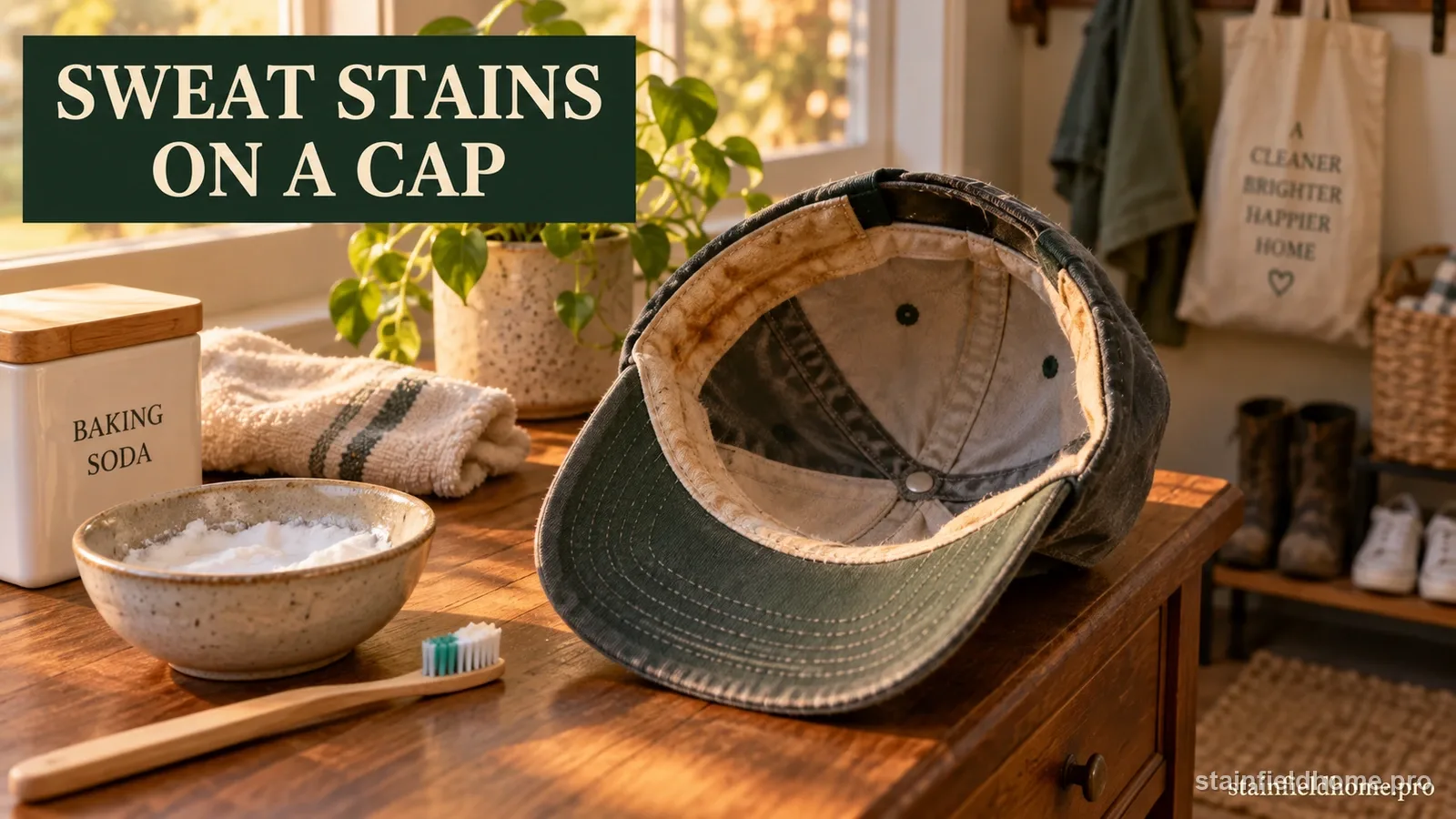
Sweat on Baseball cap
How to Remove Sweat Stains and Odor From a Baseball Cap
Lift yellow sweat stains and odor from the sweatband of a baseball cap without warping the brim or shrinking the crown.