The quick answer
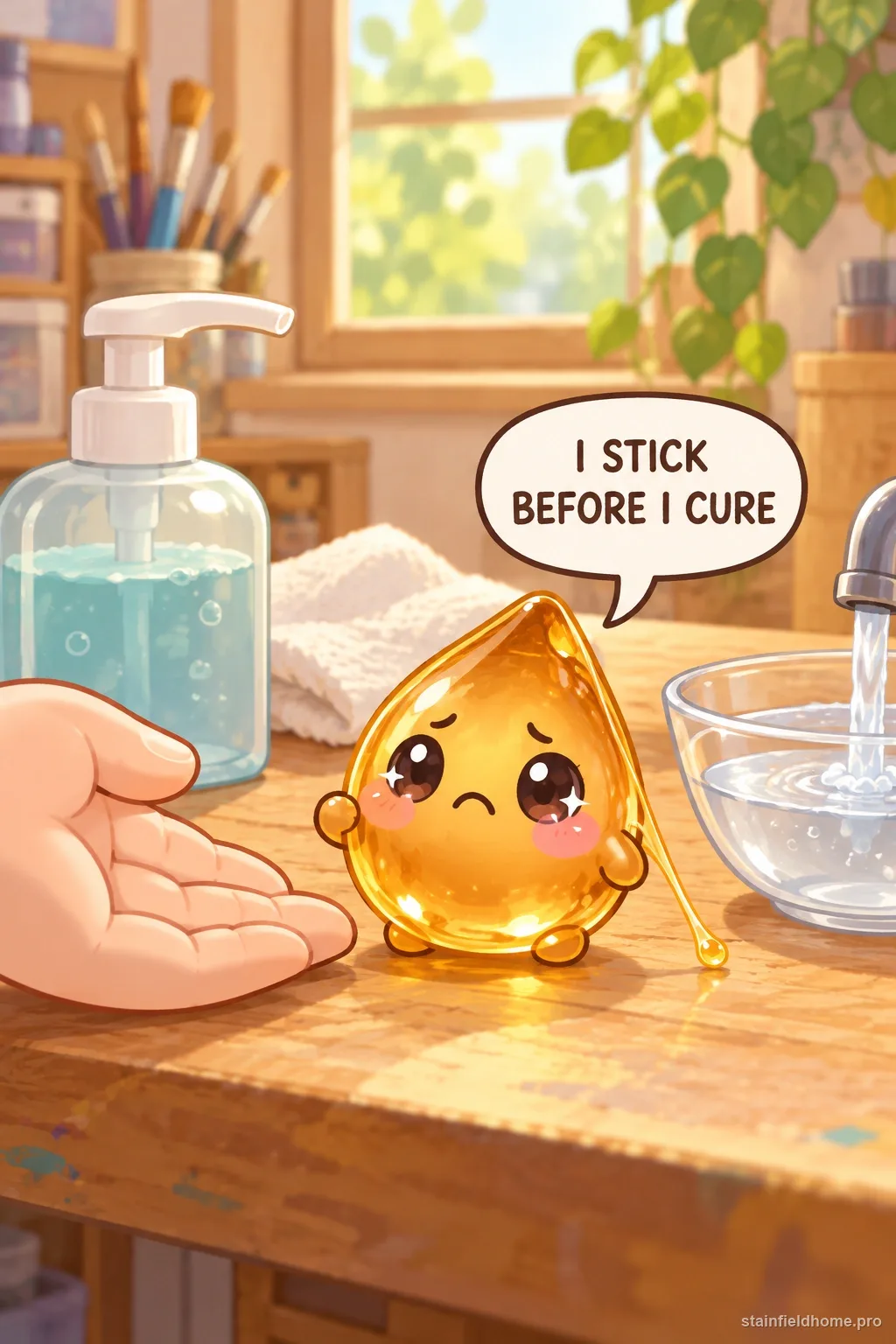
Remove uncured epoxy from skin as soon as possible, then wash thoroughly with soap and water. Do not use acetone, alcohol, mineral spirits, or other solvents on skin because they can increase irritation and chemical penetration. Change contaminated clothing and seek medical advice for persistent rash, burns, breathing symptoms, eye exposure, or a significant hardener spill.
What you’ll need
- epoxy label and SDS
- paper towels or disposable scraper for excess
- mild soap
- running water
- clean clothing
- nitrile gloves for future work
Why speed matters more than technique
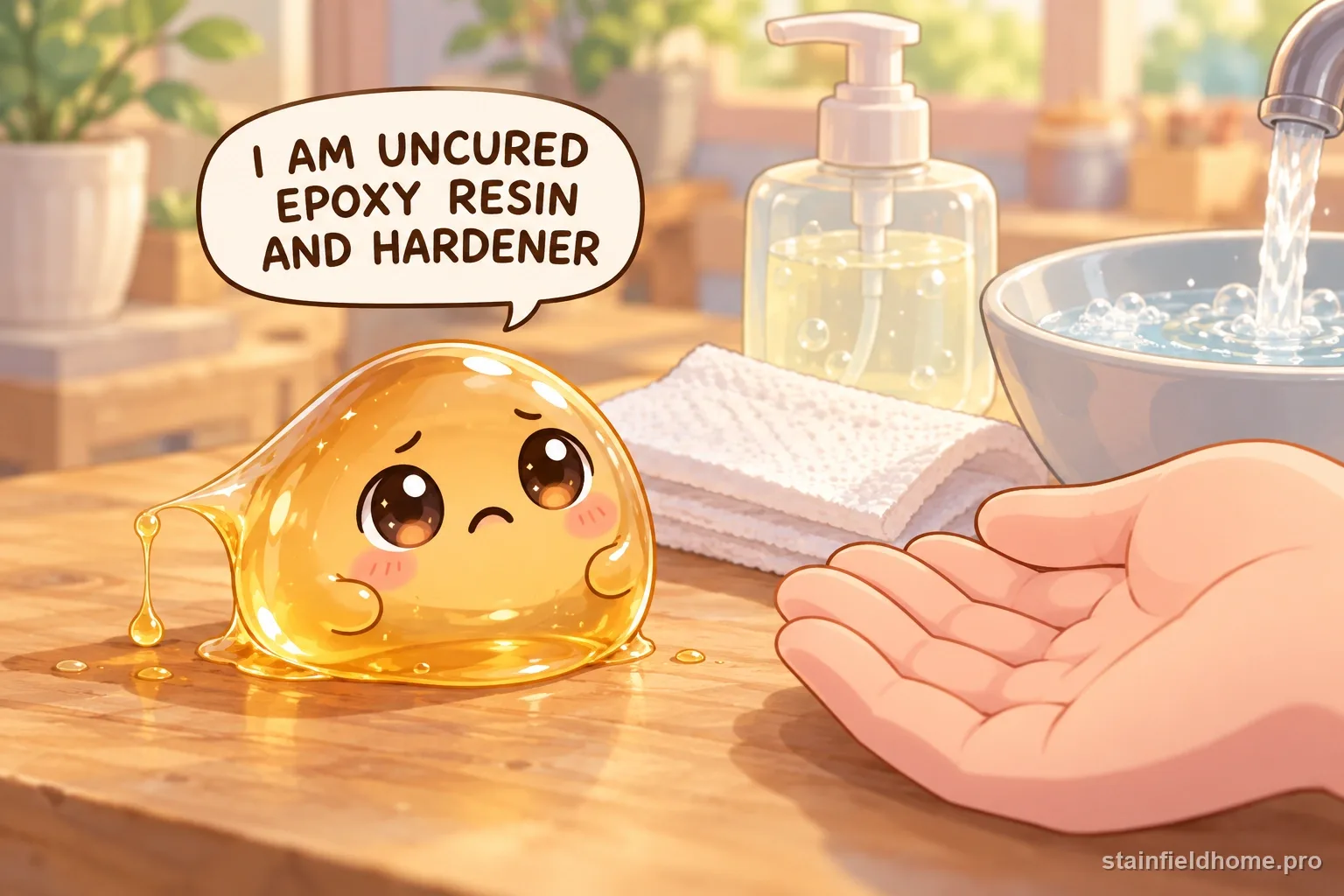
Uncured epoxy is two parts: the resin (often a bisphenol-A epoxy) and the hardener (usually an amine). Both are skin sensitizers, and the amine hardeners are also corrosive — they can cause real chemical burns on prolonged contact. Every minute epoxy sits on skin increases irritation and the chance of developing an allergy that makes all future epoxy work impossible.
So the priority is getting it off now, gently, with what is at the sink — not finding the perfect remover. While it is still liquid or tacky, epoxy comes off with soap and water. Once it cures on skin, you wait for it to flake off.
Get uncured epoxy off
- 01
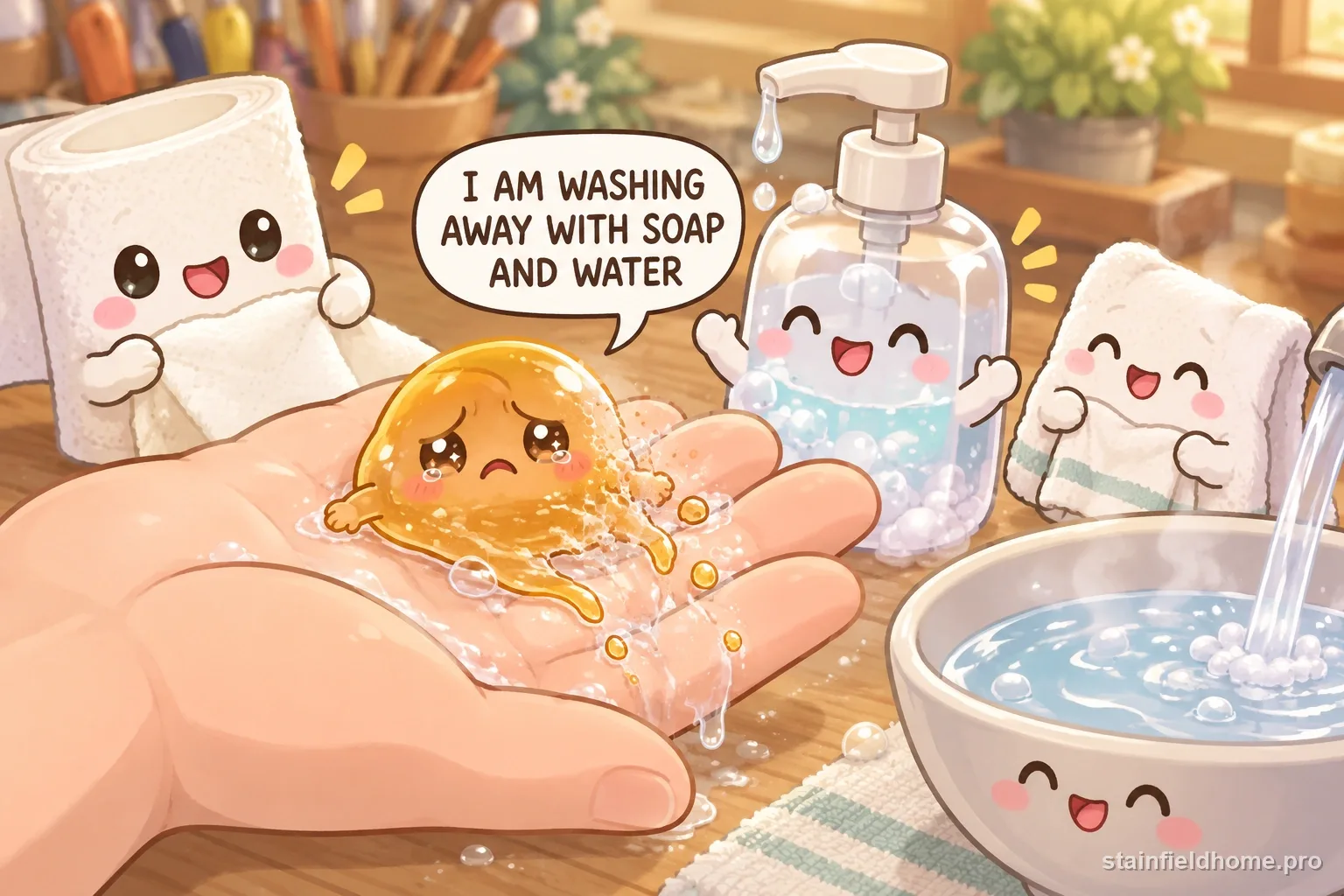
Wipe or scrape the bulk off with a dry paper towel or a plastic scraper — do not smear it wider.
- 02
Wash with mild soap and plenty of warm running water, rubbing for a full minute or two.
- 03
A waterless citrus-and-pumice hand cleaner (the mechanic's kind) or plain white vinegar on a paper towel can help lift tacky residue — vinegar is a mild acid that works on amine hardener and is far safer on skin than acetone.
- 04
Follow any vinegar step with another full soap-and-water wash.
- 05
Dry and apply a fragrance-free moisturizer; epoxy and washing both dry the skin.
Why not acetone or alcohol
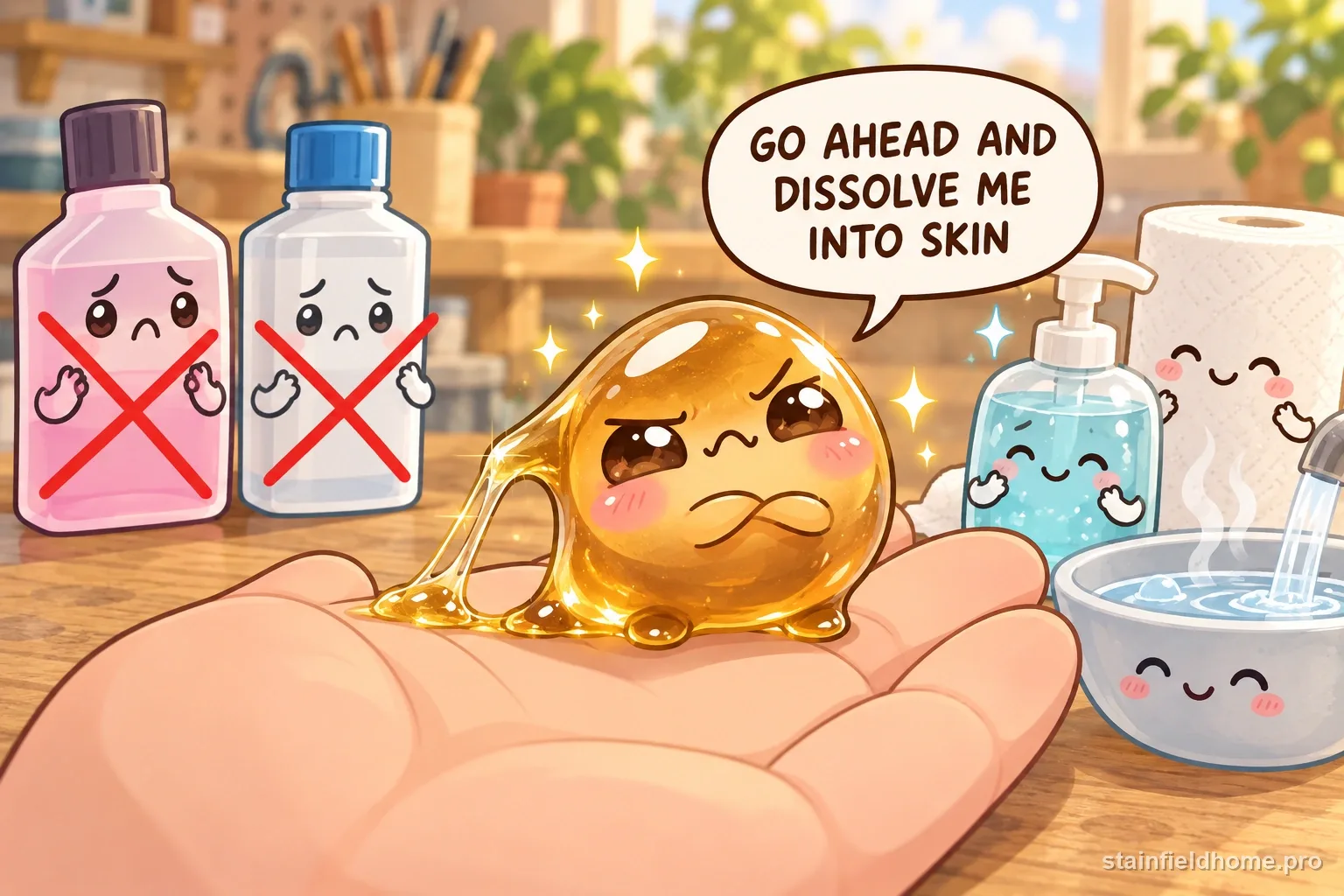
Solvents feel effective because they dissolve the resin, but they also dissolve skin oils and carry the epoxy chemicals through the skin barrier faster, which is exactly what sensitizes you. Epoxy manufacturers and health agencies specifically advise against solvent skin cleanup.
The West System and Loctite guidance both point to soap and water or a proper hand cleaner, and to vinegar as a milder option, never acetone on skin.
Epoxy that has already cured on skin
If it hardened before you noticed, do not pick or sand it off. Soak the area in warm soapy water, work in a lot of moisturizer or oil, and gently roll the edge of the epoxy — it will lift as the outer skin naturally sheds over a day or two.
Cured epoxy is inert, so it is not doing chemical harm at that point; the risk is damaging skin trying to force it. A pumice stone used lightly on a callused palm is okay; the same on thin skin is not.
When to get medical help
- Burning, whitening, or blistering skin, especially from hardener — rinse 15+ minutes and seek care.
- Any epoxy or hardener in the eyes — flush 15-20 minutes and go to urgent care or the ER.
- A spreading itchy rash, hives, or swelling hours later — that is a sensitization reaction; see a doctor.
- Tight chest, wheezing, or a runny nose during use — amine hardeners can trigger respiratory reactions; get fresh air and advice.
- A large hardener spill soaking clothing against skin — remove clothing immediately, wash, and call Poison Control (1-800-222-1222 in the US).
Preventing the next contact
- Wear nitrile gloves and change them often — resin degrades glove material, and many people react to epoxy that soaked through a worn glove.
- Wear long sleeves; forearm contact from drips is common.
- Keep vinegar, a citrus hand cleaner, and paper towels within reach of the work area.
- Never wipe your hands on your clothes — contaminated fabric holds epoxy against skin for hours.
Common questions
FAQ
Can I use acetone to get epoxy off my skin?
No. Acetone dissolves the resin but also strips skin oils and speeds absorption of the epoxy chemicals, which is what causes sensitization. Manufacturers and health agencies advise soap and water, a citrus-pumice hand cleaner, or white vinegar for tacky residue — never acetone or other solvents on skin.
Epoxy cured on my hand before I noticed. How do I remove it?
Do not sand or pick it. Soak in warm soapy water, work in oil or heavy moisturizer, and gently roll the edges — cured epoxy is inert and lifts on its own as the outer skin sheds over a day or two. Forcing it risks damaging the skin underneath.
I got a rash a day after using epoxy. Is that normal?
A delayed itchy rash or hives is an allergic sensitization reaction, and it tends to get worse with each future exposure. See a doctor, and take glove and skin protection much more seriously going forward — some people become unable to work with epoxy at all.
Sources reviewed
Keep reading
Related guides

Slime on Carpet
How to Remove Slime From Carpet Without Damaging the Fibers
Lift dried or fresh slime out of carpet fibers with an ice-and-scrape method plus a vinegar or rubbing alcohol rinse, without soaking the backing or bleaching the color.

Essential oil and reed-diffuser oil on Finished wood furniture
How to Remove Essential Oil and Diffuser Stains From Wood Furniture
Blot a diffuser-oil spill on finished wood, use a cautious absorbent step, and recognize when the finish needs a furniture repair professional.

Pumpkin (carving, decorating, or puree) on Carpet
How to Remove Pumpkin Stains From Carpet
Remove pumpkin pulp and treat any remaining orange mark on carpet with a careful, low-moisture sequence that follows the carpet maker's guidance.
Sweat on Baseball cap
How to Remove Sweat Stains and Odor From a Baseball Cap
Lift yellow sweat stains and odor from the sweatband of a baseball cap without warping the brim or shrinking the crown.