
The quick answer
Rinse the towel under cool running water to flush the surface bronzer, then soak it for one to two hours in warm water with an oxygen bleach made for whites. Rub the streaks gently every so often. Wash on the warmest cycle the towel allows with detergent and a second dose of oxygen bleach, and air-dry so you can check the result before heat locks anything in.
What you’ll need
- Cool running water
- Oxygen bleach powder (sodium percarbonate) safe for whites
- Liquid laundry detergent
- A large basin or the sink
- A soft nail brush or old toothbrush
- Distilled white vinegar, optional, for a hard-water rinse
Why self-tanner marks towels the way it does
A self-tanner mark can combine the product's temporary guide color or bronzer with residue from the active tanning formula. The visible orange-brown color is not always the DHA itself: product formulas differ, and the guide tint may account for much of the immediate transfer. Read the product label if you still have it, because a lotion, mousse, and spray can leave different mixtures of pigment, oils, and humectants.
Speed still helps. Blot excess product before it dries, then check the towel's fiber and care label. A white cotton bath towel can usually tolerate more than a colored, microfiber, or decorative towel. Keep the item out of the dryer until you have checked the result, since heat can make many cosmetic residues harder to shift.
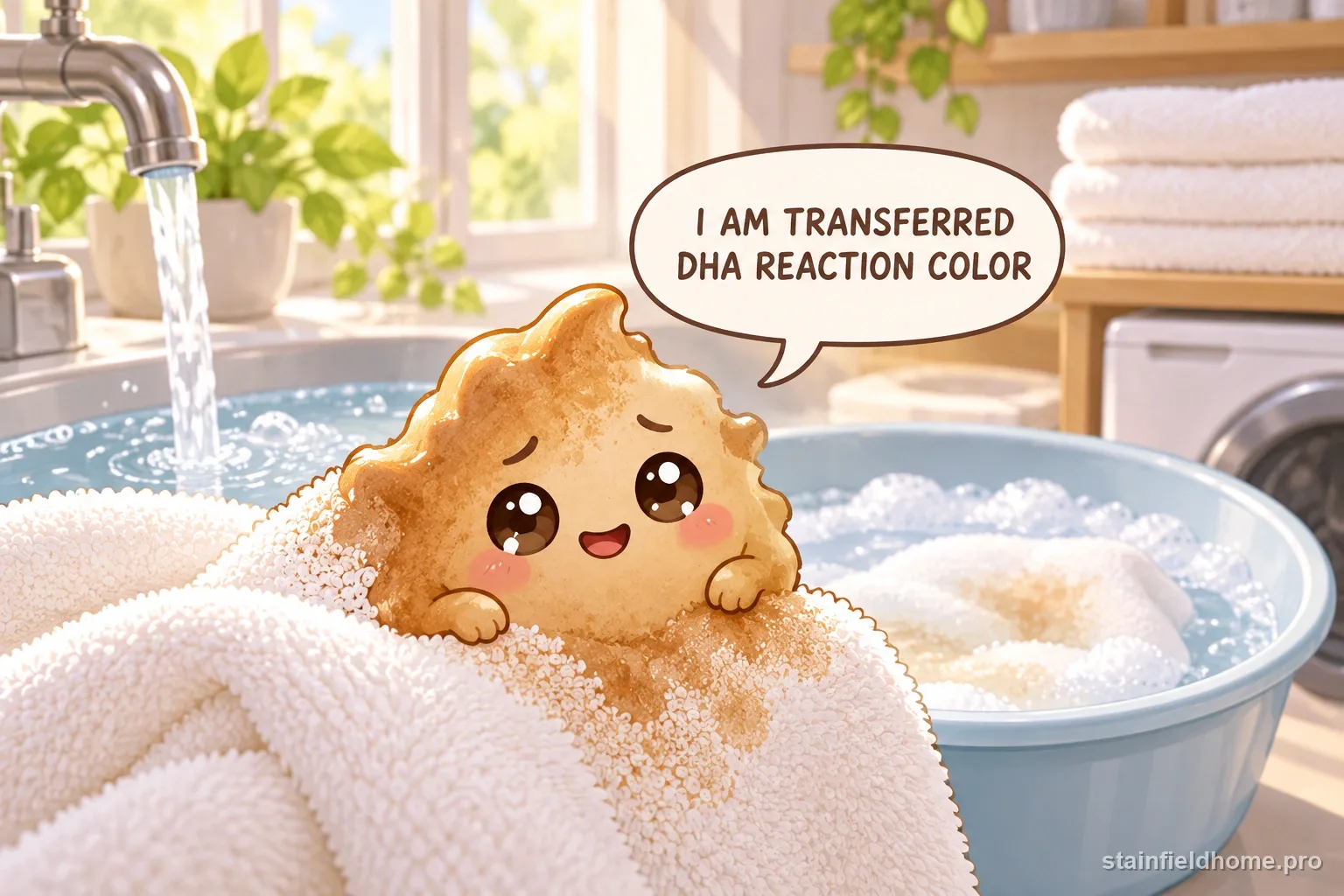
Flush the surface color first
Hold the stained section under cool running water and let it run through the pile for a minute or two, working the water from the back of the fabric so it pushes color out rather than deeper in. A lot of the visible bronzer leaves at this stage, which tells you how much of the mark was surface color and how much is the developed DHA tint.
Skip hot water here. Heat speeds the DHA reaction and can darken the part of the stain you most want to remove, so keep everything cool until the soak.
Soak in warm oxygen bleach
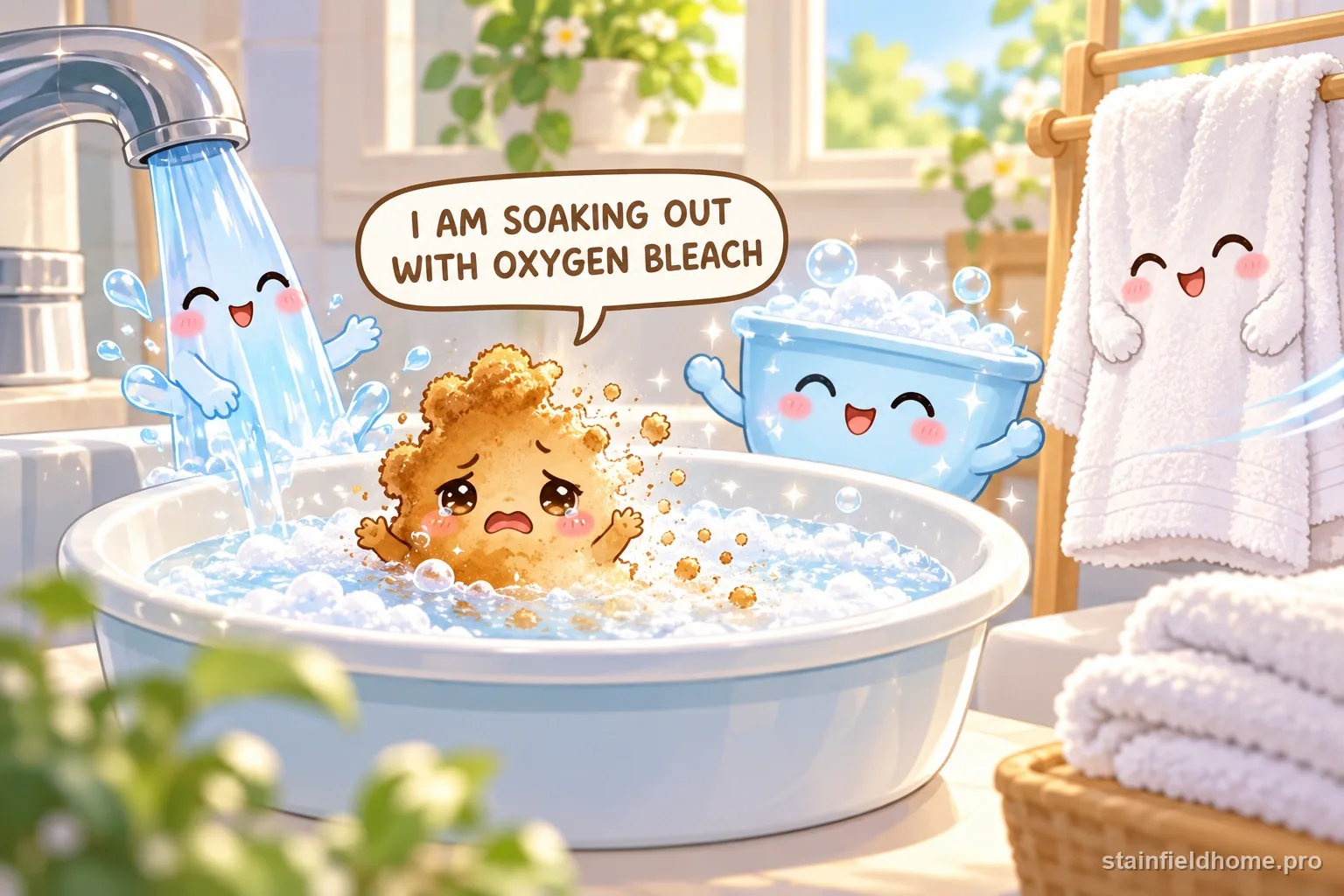
Fill a basin with warm water, dissolve oxygen bleach at the strong-soak rate on the package, and submerge the whole towel so there is no waterline mark. Oxygen bleach breaks down colored compounds through slow oxidation and is safe on white cotton, unlike chlorine bleach, which can react with tanner residue and turn a stain yellow.
Leave the towel to soak for the time and concentration stated on the oxygen-bleach package, and gently rub the streaks with a soft brush once or twice if the care label allows. Do not assume that a longer soak is always better; check the product's maximum soak time and keep the towel fully submerged. Oxygen bleach may help lift compatible color residue, but it does not dissolve every ingredient in self-tanner.
Wash warm with a second dose
Wash the towel by itself or with other whites on the warmest cycle its care label allows, adding both regular detergent and another scoop of oxygen bleach to the drum. Warm-to-hot water is appropriate now that the surface color and much of the tint are gone; it helps the detergent and oxygen bleach finish the job.
Use the detergent and optional bleach only as directed on their labels. Do not combine vinegar and oxygen bleach in the same step, or improvise a bleach mixture; rinse between separate treatments and follow the product instructions.
Air-dry and repeat before you tumble dry
Hang or lay the towel flat to dry and look at it in good light. A dryer's heat will set any remaining DHA tint into the cotton and make a second treatment much less effective, so this check is not optional.
If a shadow remains, run the soak and wash cycle again. Self-tanner stains that are only a day or two old almost always clear in two rounds. A stain that sat for a week may need a third pass and may keep the faintest warm tint permanently.

Prevention that actually works
Keep one or two dark towels reserved for the hours right after a self-tan and wash them together, on their own, so the developed color has nothing light to compare against. Pat rather than rub when you dry, and wait until the tanner has fully developed and you have showered off the guide color before going back to your regular towels.
For sheets and pillowcases, the same logic applies: sleep on a dark set the first night after applying, then switch back. It is far easier than trying to lift DHA from a white fitted sheet later.
If the towel is colored, patterned, or not cotton
The instructions above are for a white, washable cotton bath towel. On a colored or patterned towel, test detergent and oxygen bleach on a hidden hem first and follow the product's color-safe directions. Do not use chlorine bleach just because the background looks white; a border, embroidery, or printed motif may not be bleach-safe. For microfiber, bamboo blends, or towels with a special finish, the care tag takes priority over the usual cotton routine.
Use a clean white cloth to blot the transfer so you can see whether color is coming out of the towel itself. If the towel dye moves, stop the soak and rinse with cool water. A stain on a dark towel may be less visible, but aggressive whitening can leave a larger pale patch than the original mark. Avoid scrubbing terry loops hard, which can roughen or pull them.
Treat a set-in shadow without over-bleaching
If the mark remains after washing, inspect the label and try one more oxygen-bleach soak at the package concentration, then wash with detergent. Give the powder time to dissolve before the towel goes in, and use enough water for the fabric to move freely. Adding extra powder or extending a soak indefinitely does not guarantee better removal and can weaken cotton loops or irritate skin if residue remains.
Rinse thoroughly and air-dry so you can see the true result. A pale orange cast that remains after two careful cycles may be permanent cosmetic color or fiber discoloration. Do not combine chlorine bleach, oxygen bleach, vinegar, or ammonia in one treatment. If the towel is valuable or has a special finish, take it to a cleaner and tell them which tanning product was used.
Common questions
FAQ
Will chlorine bleach remove self-tanner from a white towel?
It is risky. Chlorine bleach can react with the tanner and bronzer residue and drive the stain toward a set yellow-orange that is harder to remove than the original brown. Oxygen bleach is the safer choice for tanner stains on white cotton and works well given enough soak time.
The towel already went through the dryer. Is the stain permanent?
Not necessarily, but it is harder. Try a long overnight soak in warm oxygen bleach followed by a hot wash with detergent and more oxygen bleach. A dried-in tanner stain often lightens substantially over two or three of these cycles even if a faint cast stays.
Why did my towel get worse a day after I used it?
Some self-tanner formulas contain a temporary guide color or bronzer that transfers immediately, and residues can also change as they dry. The active DHA develops color on skin, but it is not safe to assume that every laundry mark is DHA reacting with cotton. Blot and rinse promptly, and check the product ingredients if available.
Is the orange mark always DHA?
No. Consumer Reports notes that the immediate transfer can come from the product's guide color or bronzer, while DHA is the active ingredient that develops color on skin. The formula varies by brand, so blot first and treat the towel according to its care label rather than assuming every mark has the same chemistry.
Can I use chlorine bleach on a white towel?
Check the towel label and the bleach directions first. Do not pour chlorine bleach directly on the mark or use it at a stronger concentration than directed. Start with detergent and a labeled oxygen bleach if permitted, rinse well, and avoid mixing bleach with vinegar, ammonia, or another cleaner.
What if the stain is on a bath mat or towel with a colored border?
Treat the border and the main towel as different color zones. A bleach-safe white center does not mean the trim or backing is colorfast. Test detergent and any oxygen bleach on a hidden edge, wash separately, and stop if color moves to the white cloth. For a rubber-backed bath mat, avoid prolonged soaking unless its care label allows it because the backing can crack or separate.
Sources reviewed
Keep reading
Related guides

Slime on Carpet
How to Remove Slime From Carpet Without Damaging the Fibers
Lift dried or fresh slime out of carpet fibers with an ice-and-scrape method plus a vinegar or rubbing alcohol rinse, without soaking the backing or bleaching the color.

Essential oil and reed-diffuser oil on Finished wood furniture
How to Remove Essential Oil and Diffuser Stains From Wood Furniture
Blot a diffuser-oil spill on finished wood, use a cautious absorbent step, and recognize when the finish needs a furniture repair professional.

Pumpkin (carving, decorating, or puree) on Carpet
How to Remove Pumpkin Stains From Carpet
Remove pumpkin pulp and treat any remaining orange mark on carpet with a careful, low-moisture sequence that follows the carpet maker's guidance.
Sweat on Baseball cap
How to Remove Sweat Stains and Odor From a Baseball Cap
Lift yellow sweat stains and odor from the sweatband of a baseball cap without warping the brim or shrinking the crown.