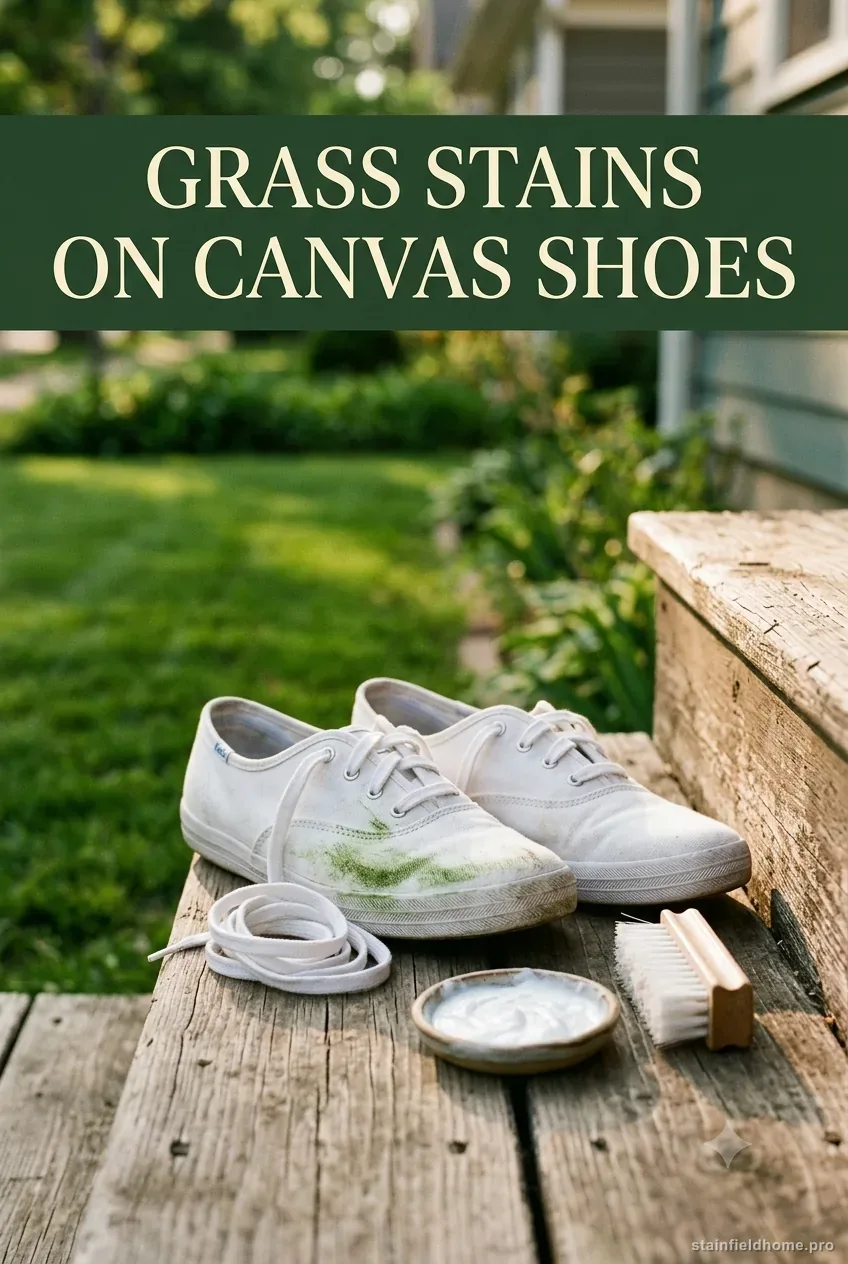
The quick answer
Knock off dried debris, then soak the canvas uppers in cool water with an enzyme laundry product for at least 30 minutes. Scrub the green with a soft brush and a paste of baking soda and 3% hydrogen peroxide, rinse, and repeat if needed. Wash the laces separately, stuff the shoes with white paper towels, and air-dry indoors away from sun and heat. Avoid hot water, chlorine bleach, and the dryer—all three set grass stains or yellow the canvas.
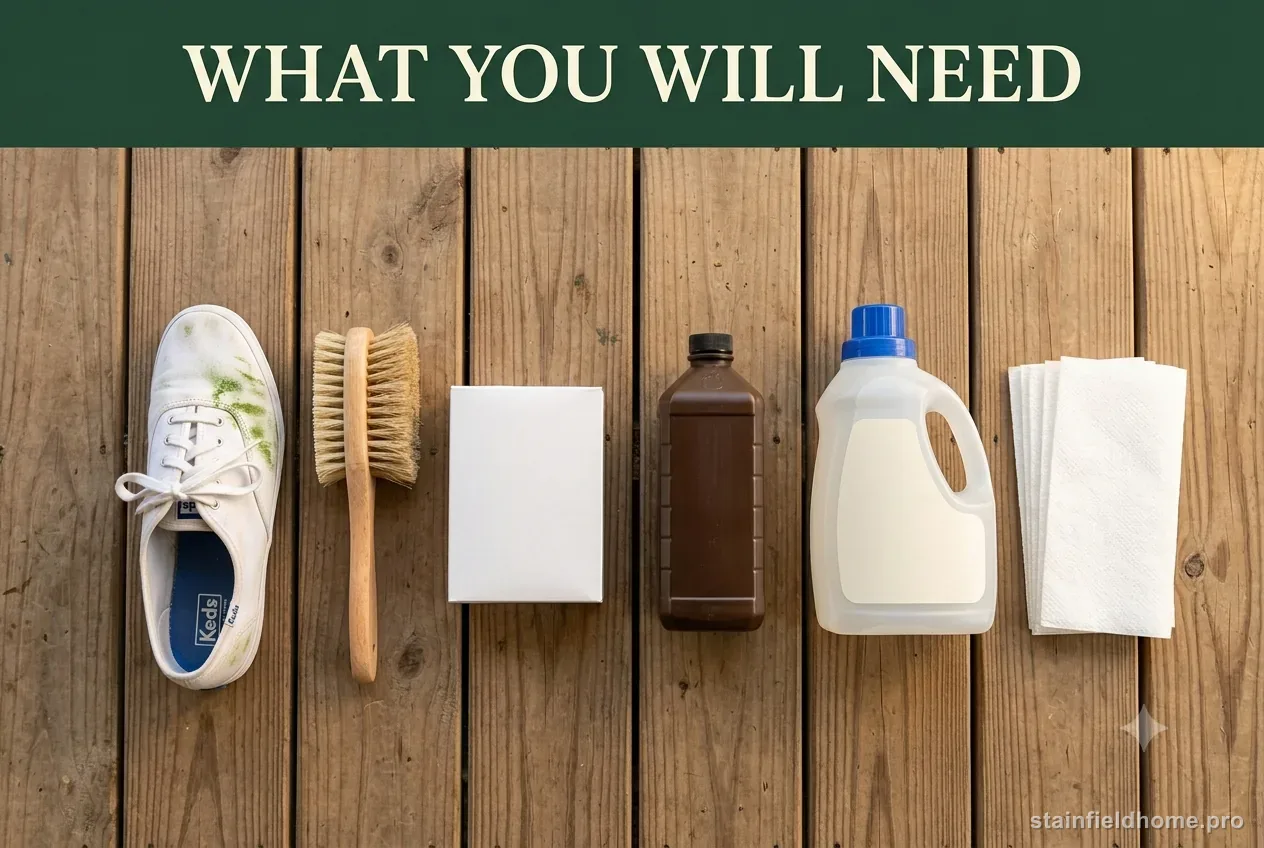
What you’ll need
- Soft brush or old toothbrush
- Enzyme-containing laundry detergent or presoak
- Baking soda
- 3% hydrogen peroxide
- Cool water
- White paper towels or a white cloth
- Melamine (magic-eraser) sponge for the rubber only (optional)
Why grass stains cling to canvas
A grass stain is really two stains at once. Chlorophyll gives the green color and behaves like a dye. Alongside it are proteins and other compounds from the crushed blades, plus tannins that act like a weak natural dye of their own. Canvas is woven cotton, so it absorbs all of this readily, and the tight weave holds pigment down in the low points between threads.
Heat and alkaline cleaners are the two things that lock a grass stain in. The University of Illinois Extension's stain guide warns to avoid heat and alkali products such as ammonia and some degreasers because they can set the tannin and vegetable dye in grass stains. That rules out hot water, a hot dryer, and letting the shoes bake in the sun—and it is why enzymes plus a mild peroxide, not a strong all-purpose cleaner, are the right tools.
This is for washable canvas, not leather or suede
White canvas sneakers—the classic cotton-duck styles—take water and gentle scrubbing well. Leather, suede, knit mesh, and shoes with foam or cork footbeds do not; water and peroxide can stiffen, discolor, or delaminate them, and they need a leather- or suede-specific process instead.
Check for a care card from the maker if the shoes are recent. Remove the insoles if they lift out, and take the laces off completely so you can reach the tongue and the stitching line where grass usually lands.
Step 1 — dry debris, then an enzyme soak
Timing changes how much work this takes. A grass mark caught the same day is still sitting near the surface of the weave, and one enzyme soak plus a light scrub usually clears it. A stain that has been on the shoe for weeks—or worse, has already been through a warm wash or a hot dryer—has had its tannin dye driven into the cotton, so plan on the peroxide step below and two or three full rounds. If the shoes were dried with heat since the stain happened, treat that as an old stain no matter how recent the walk on the lawn was.
- 01
Take the shoes outside, clap the soles together, and brush the canvas with a dry soft brush to remove loose grass and soil. Wet cleaning traps whatever you leave behind.
- 02
Mix a cool-water bath with an enzyme laundry detergent or presoak, enough to submerge the canvas uppers. Keep the water cool; hot water sets the stain.
- 03
Soak the shoes at least 30 minutes. For an old or heavy stain, a longer soak, even overnight, is better. Soak the laces in the same solution in a separate cup.
- 04
Lift the shoes out and scrub the stained canvas with a soft brush in small circles. Rinse with cool water and look at the result in daylight.
Step 2 — a peroxide paste for the green that's left
- 01
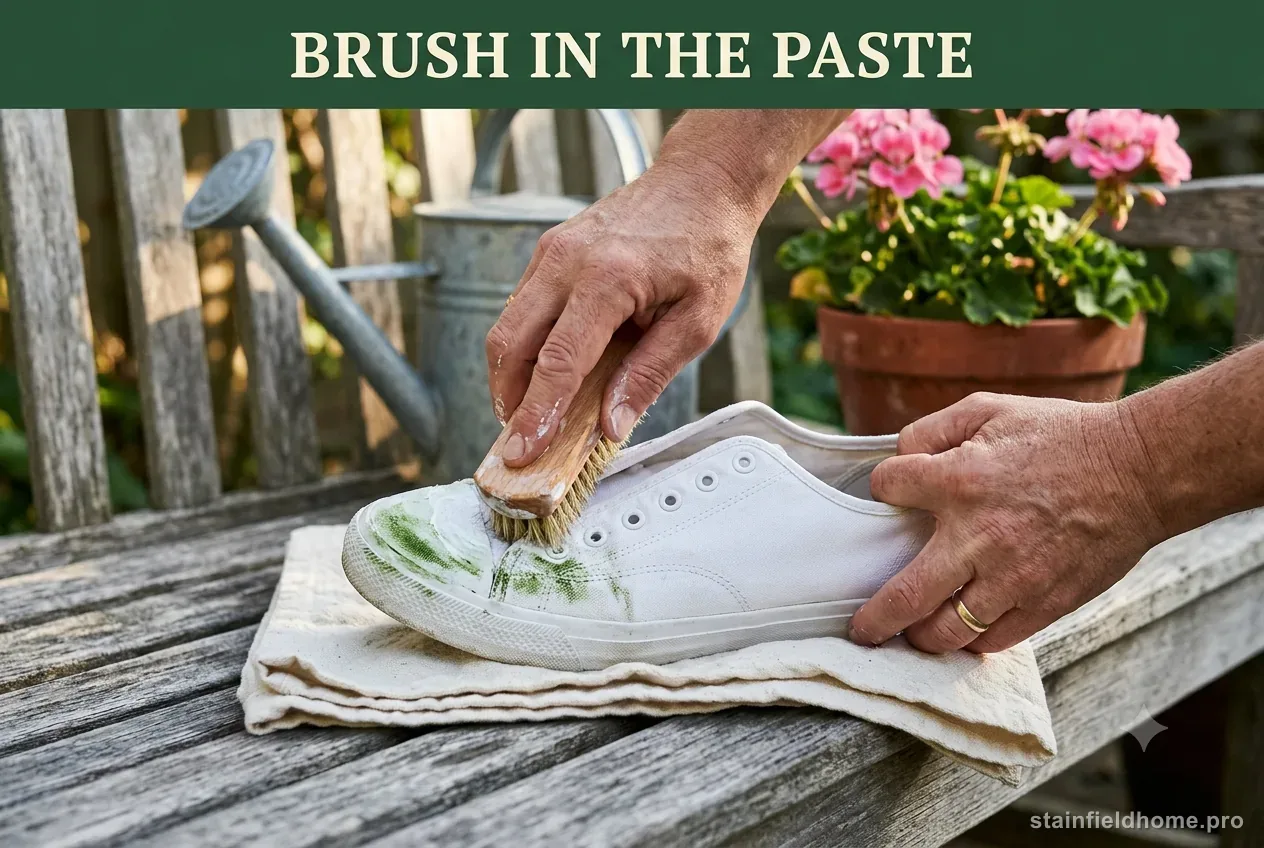
Mix about two tablespoons of baking soda with one tablespoon of 3% hydrogen peroxide into a spreadable paste. Peroxide is a mild oxygen bleach that brightens white cotton without the yellowing risk of chlorine bleach.
- 02
Work the paste into the stain with a soft brush and let it sit 15 to 30 minutes. Do not let it dry hard.
- 03
Rinse thoroughly with cool water. Repeat the paste once if the stain has lightened but not cleared.
- 04
Hand-wash the whole upper with a little of the enzyme detergent so the treated patch does not end up brighter than the rest of the shoe, then rinse well.
- 05
Blot with a white towel, stuff the shoes firmly with white paper towels to hold their shape and pull moisture out, and set them to air-dry indoors, away from radiators, direct sun, and the dryer.
The rubber, the laces, and stubborn cases
For scuffs and green on the rubber toe cap and midsole, a damp melamine sponge lifts most marks quickly. Use it only on the rubber—it is a fine abrasive and will dull or thin printed canvas.
White laces rarely come fully clean in place. Soak them separately in the enzyme solution, then in a little peroxide, rinse, and air-dry. Old, greyed laces are cheap to replace and make the whole shoe look renewed.
A deep or old grass stain on canvas may need two or three full rounds of soak, scrub, and paste. Improvement should be visible after each round; if two careful rounds produce no change at all, the tannin dye has likely set permanently and further scrubbing will only wear through the canvas. Stop there rather than damaging the weave.
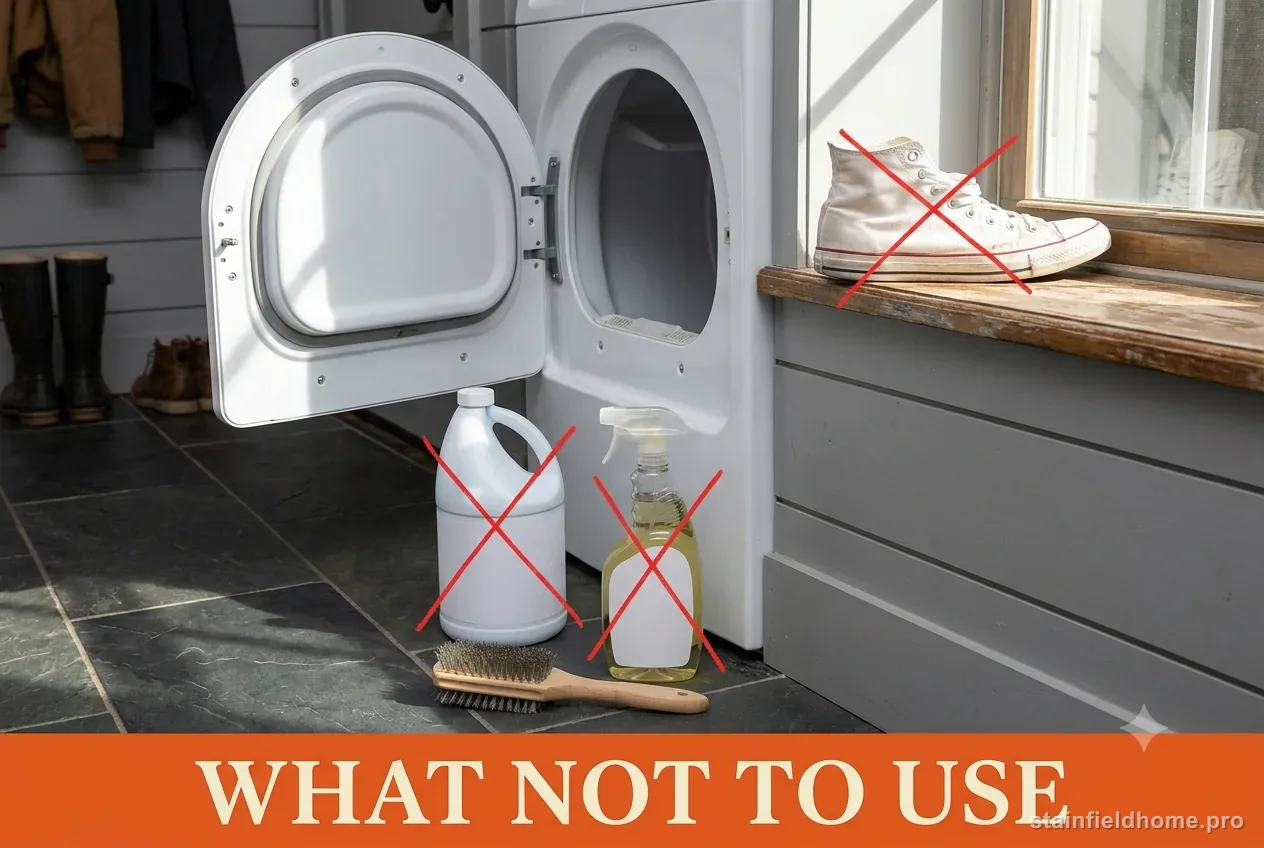
What ruins white canvas
- Hot water, the clothes dryer, a hair dryer, or drying in direct sun—heat sets grass stains and yellows white canvas
- Chlorine bleach, which reacts with cotton and organic residue and often turns canvas yellow
- Ammonia and strong alkaline all-purpose or degreaser sprays, which set the tannin and plant dye
- A stiff wire or hard-bristle brush on the canvas, which frays the weave and pushes pigment deeper
- The melamine sponge on printed or dyed canvas—keep it to the rubber
- Machine-washing shoes the maker labels hand-wash-only, or washing glued shoes in hot water
Keep white canvas cleaner
A quick brush-off and a wipe with a damp cloth after wearing shoes on a lawn stops grass pigment from settling into the weave in the first place. Treating a fresh green mark the same day, while it is still on the surface, takes far less work than a set one.
A light spray-on fabric protector made for footwear helps liquids and pigment bead up instead of soaking in; reapply it after each deep clean. Storing canvas shoes somewhere cool and dark keeps the white from going ivory between wears.
Common questions
FAQ
Will hydrogen peroxide bleach or damage white canvas?
3% household hydrogen peroxide is a mild oxygen bleach and is generally safe on white cotton canvas. It can lighten colored canvas or trim, so keep it to all-white shoes or test a hidden spot first. It is much gentler on the fibers than chlorine bleach.
Why do my canvas sneakers turn yellow after I clean them?
Usually from drying in sun or heat, from chlorine bleach reacting with the cotton, or from cleaner residue left in the fabric. Rinse thoroughly, then air-dry indoors out of direct sunlight with the shoes stuffed with white paper towels.
Can I put canvas sneakers in the washing machine?
Only if the maker allows it. If you do, remove the laces and insoles, use a cool or warm gentle cycle in a mesh bag, and never tumble-dry them. Glued or leather-trimmed shoes should be cleaned by hand.
Sources reviewed
Keep reading
Related guides
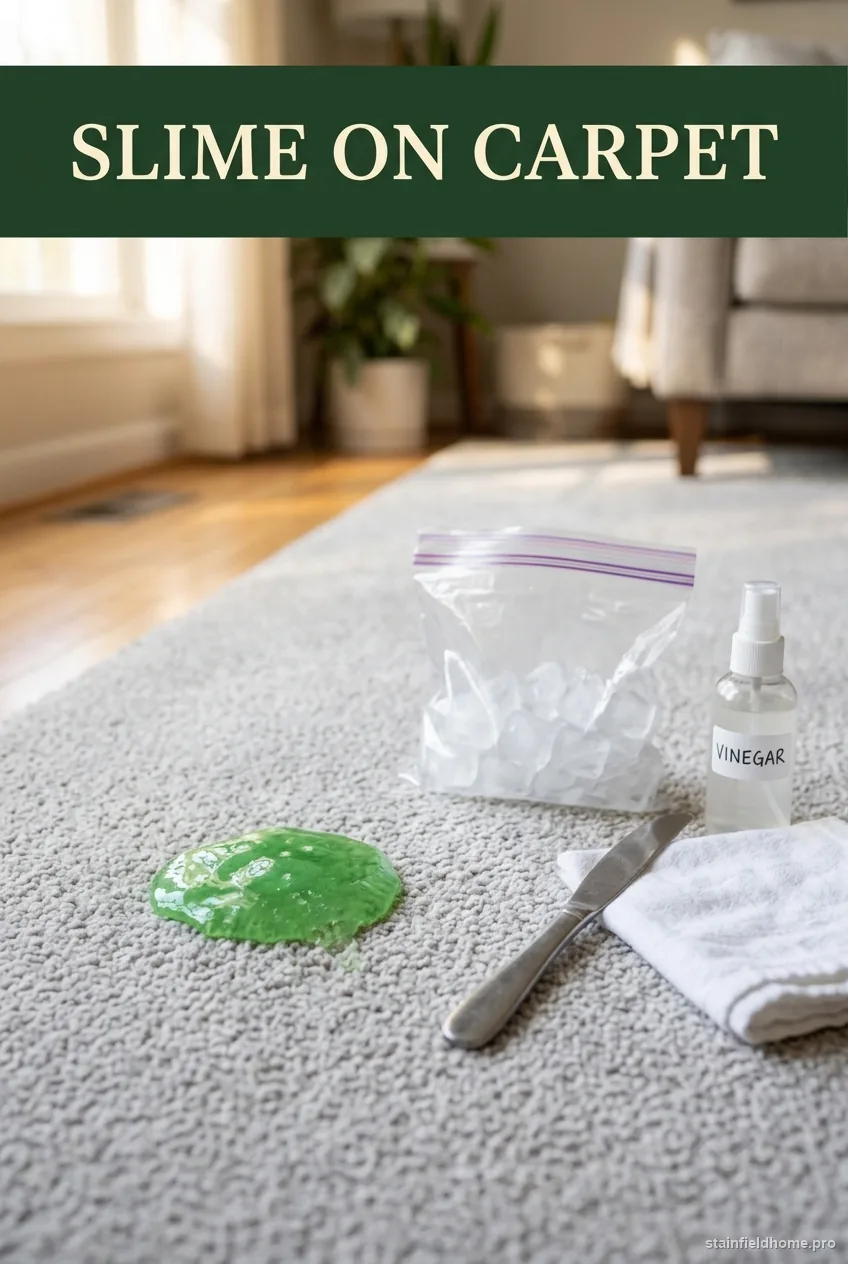
Slime on Carpet
How to Remove Slime From Carpet Without Damaging the Fibers
Lift dried or fresh slime out of carpet fibers with an ice-and-scrape method plus a vinegar or rubbing alcohol rinse, without soaking the backing or bleaching the color.
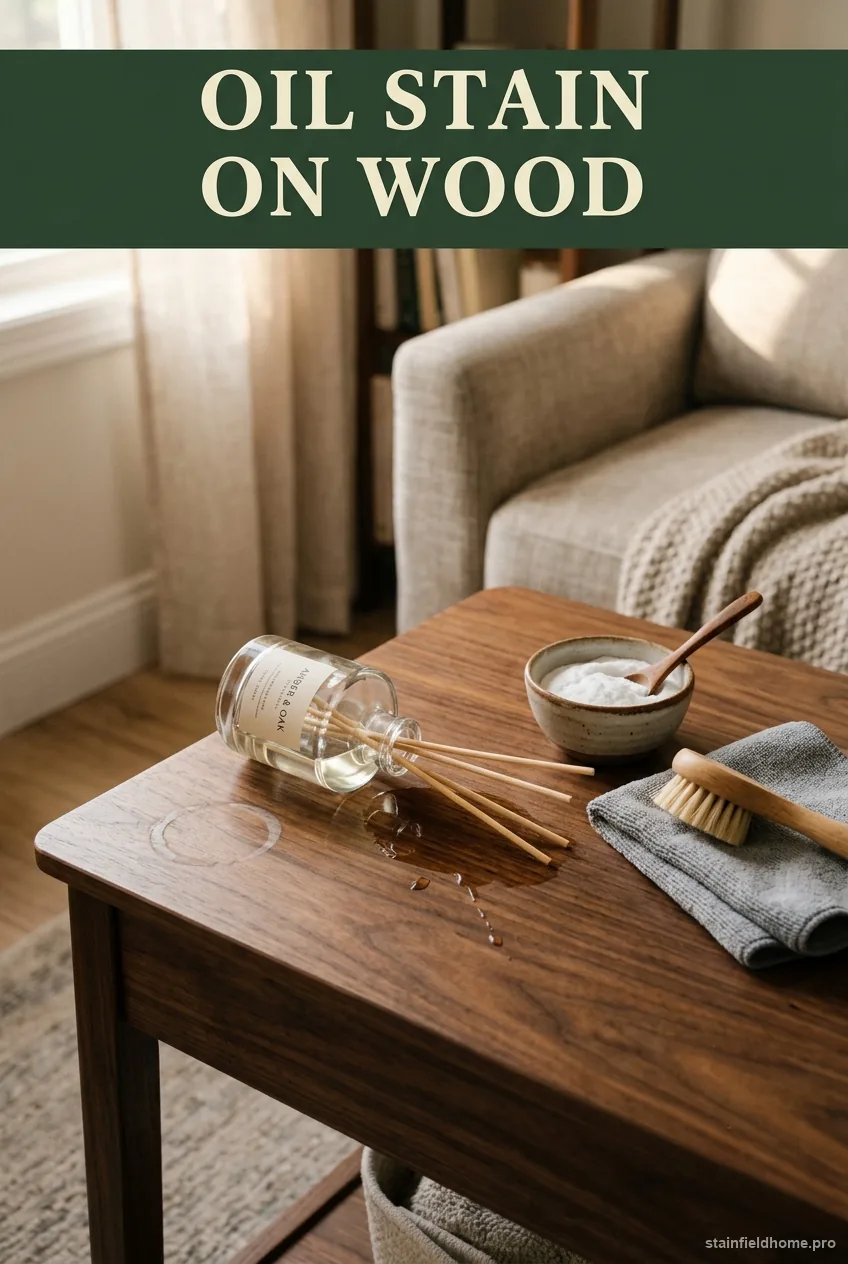
Essential oil and reed-diffuser oil on Finished wood furniture
How to Remove Essential Oil and Diffuser Stains From Wood Furniture
Blot a diffuser-oil spill on finished wood, use a cautious absorbent step, and recognize when the finish needs a furniture repair professional.
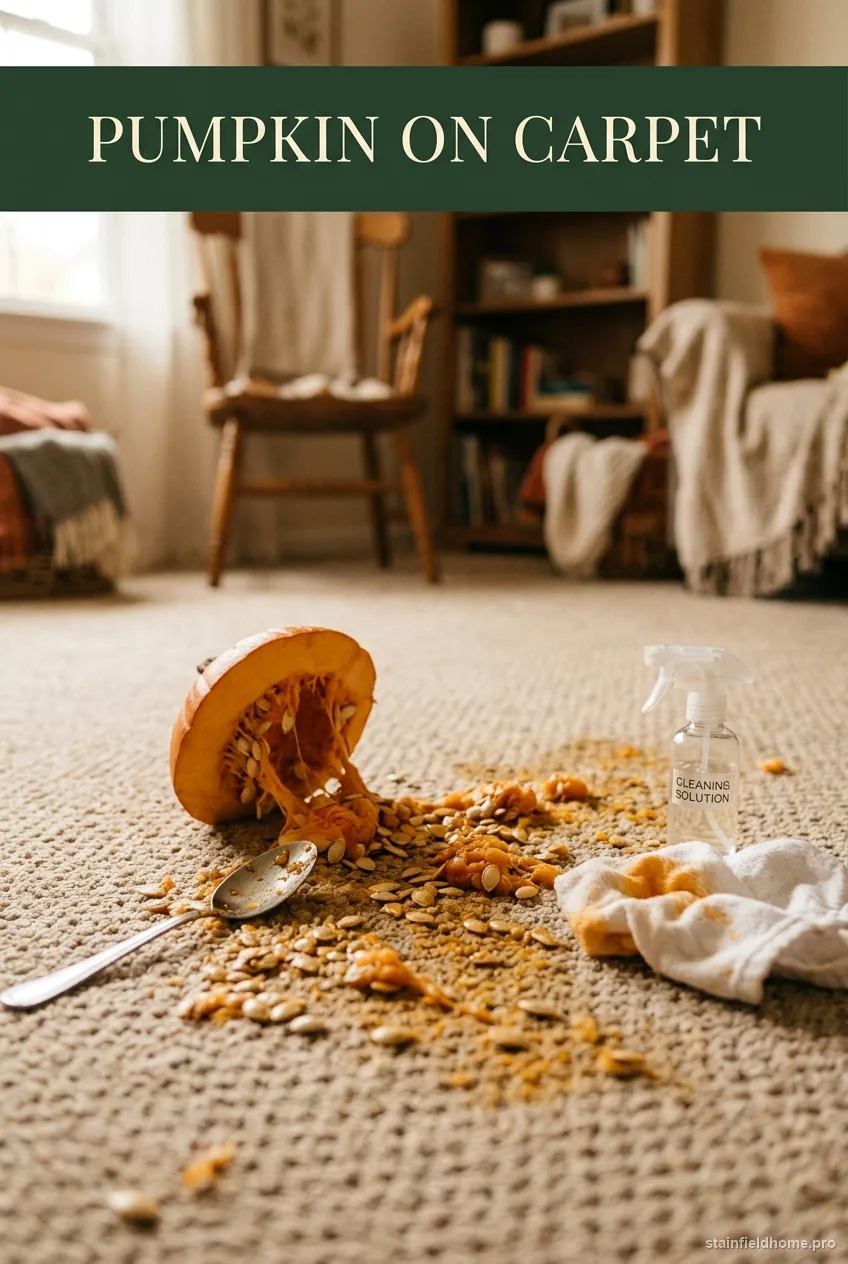
Pumpkin (carving, decorating, or puree) on Carpet
How to Remove Pumpkin Stains From Carpet
Remove pumpkin pulp and treat any remaining orange mark on carpet with a careful, low-moisture sequence that follows the carpet maker's guidance.
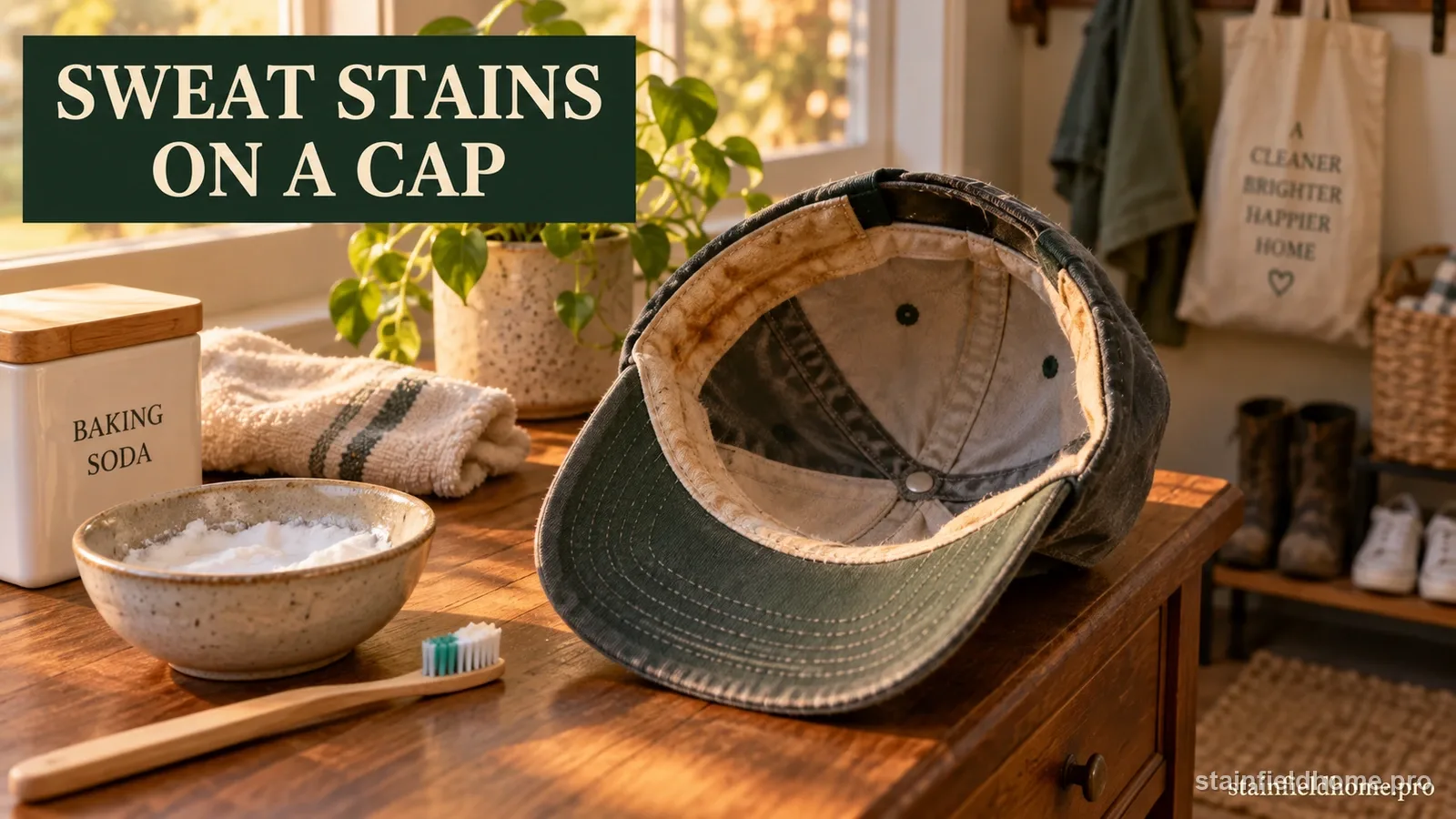
Sweat on Baseball cap
How to Remove Sweat Stains and Odor From a Baseball Cap
Lift yellow sweat stains and odor from the sweatband of a baseball cap without warping the brim or shrinking the crown.