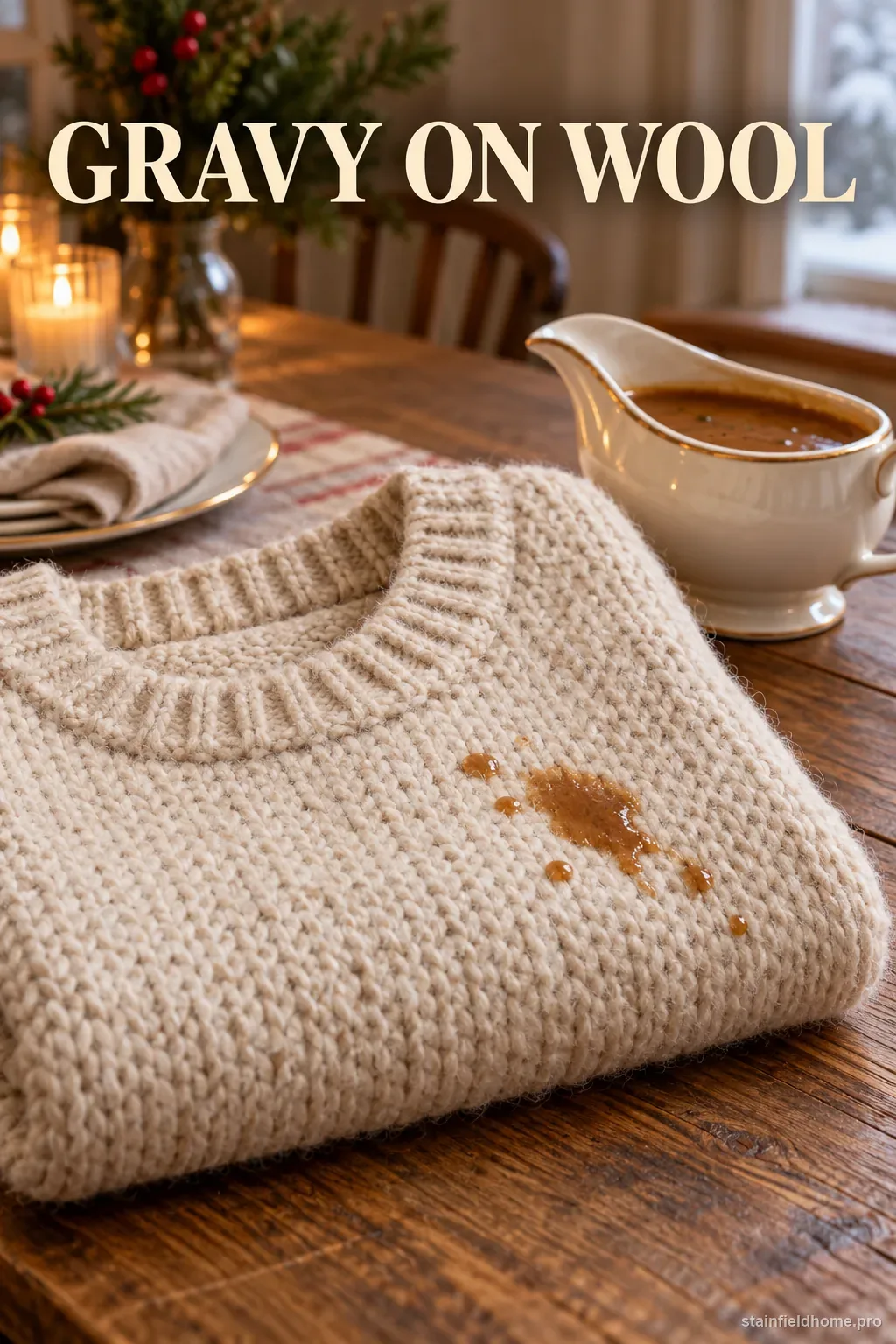
The quick answer
Check the care label first. Lift gravy solids and blot; do not rub. If water treatment is allowed, test a hidden area, then dab with diluted wool-safe detergent and cool water. Blot away residue, reshape, and dry flat. Stop for dye transfer, distortion, a dry-clean-only label, or a mark that remains after one pass; call a cleaner.
What you’ll need
- Dull spoon
- White absorbent cloths
- Cool water
- Wool-safe detergent if care label permits
- Clean towel
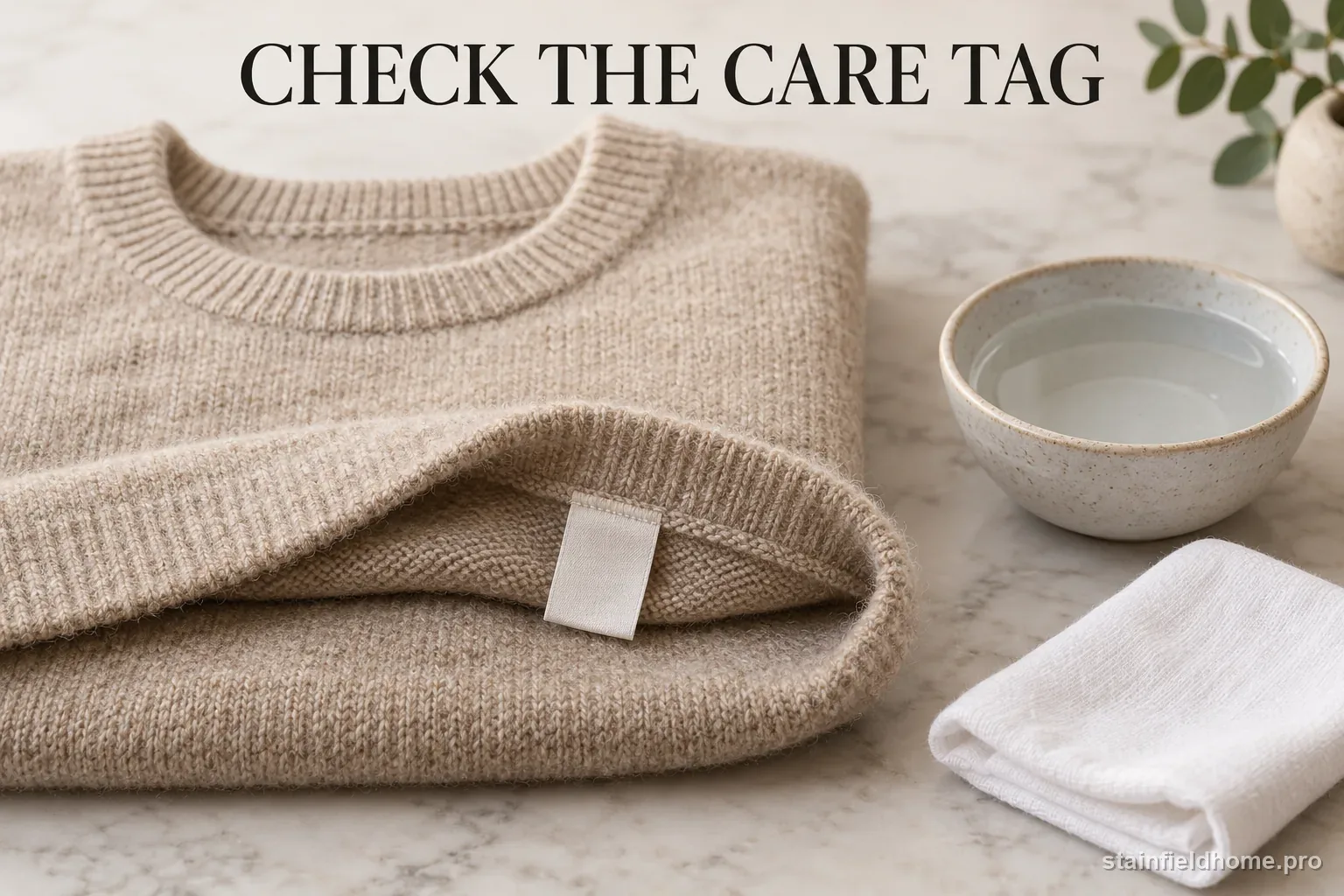
Read the care label before wetting wool
Gravy is a mixed stain. It can contain rendered fat, flour or starch, broth, and seasoning, so the mark may leave both a brown food shadow and a greasy feel. Wool adds a second concern: the yarn can shrink, felt, distort, or lose dye when it is rubbed, heated, soaked, or agitated. A stain recipe that works on a cotton napkin can damage a wool knit.
Start with the garment care label, not a generic internet recipe. The Federal Trade Commission explains that care instructions identify how to clean a garment safely; a dry-clean-only item should not be assumed washable at home. If the label says dry clean only, the sweater is hand-knit, valuable, lined, embellished, or made of cashmere or another delicate specialty fiber, lift solids and blot liquid, then take it to a professional. Do not test a home treatment on the visible stain.
If the label permits hand washing or spot cleaning, follow its exact limits. Check for color, trim, leather patches, glued details, and any manufacturer's care instructions. Woolmark advises testing a hidden area, using small amounts of liquid, blotting rather than rubbing, and following the care label. Keep the sweater supported on a flat surface while you work so wet knit does not stretch under its own weight.
Lift gravy solids and absorb fresh liquid
Removing the bulk before using water reduces how much food soil is driven into the yarn. Fresh gravy may transfer quickly to a white cloth; a dried mark may barely move at first. Both are cues to work in small, controlled steps rather than press harder. If the knit begins to fuzz, stretch, or shed color, stop immediately.
- 01
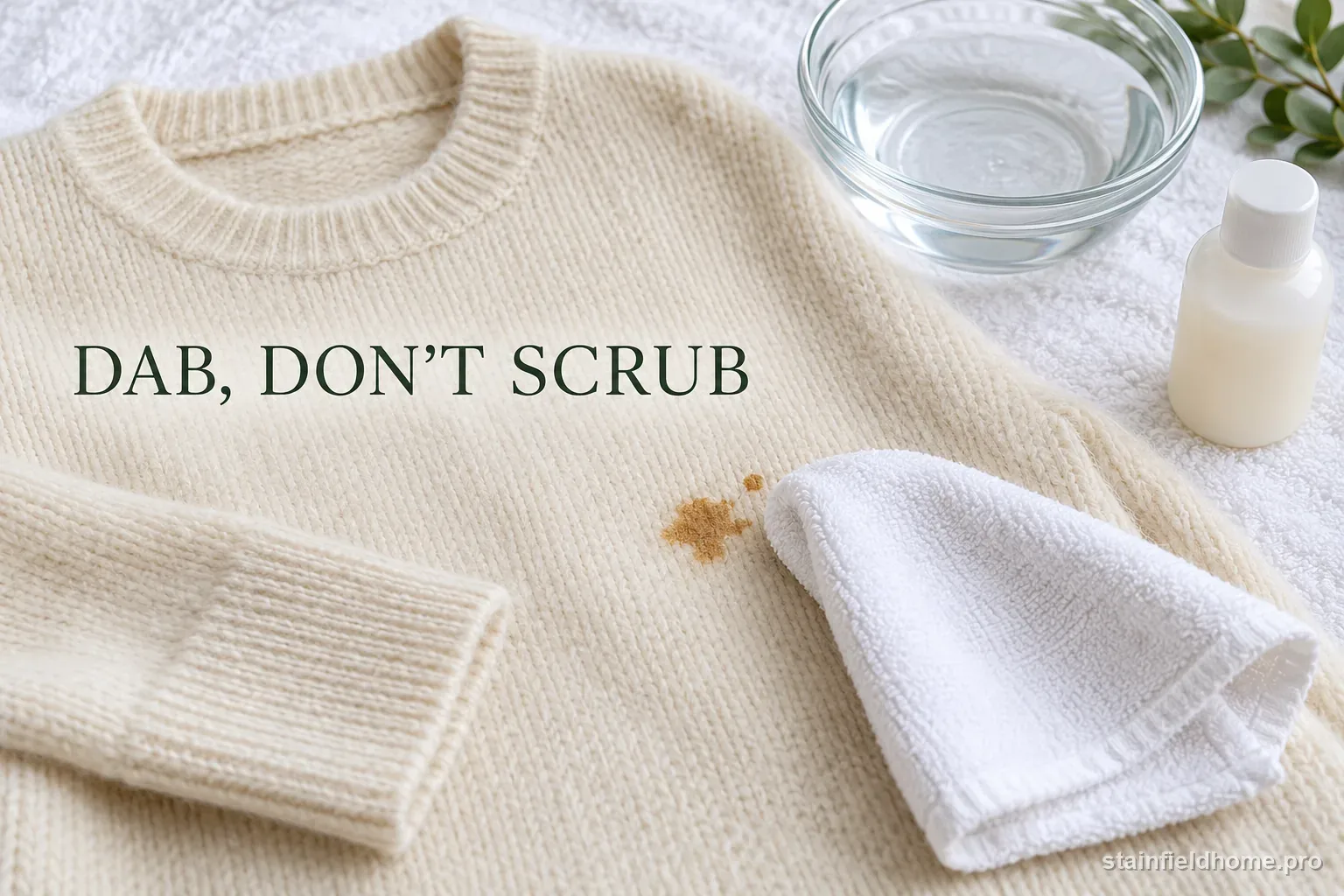
Lay the sweater flat on a clean white towel with the stain facing up. Slide another absorbent cloth beneath the stained area to catch transferred gravy.
- 02
Use the edge of a dull spoon to lift raised gravy from the knit. Move toward the center and avoid dragging the spoon across loops.
- 03
Press a clean white cloth straight down onto the wet spot, then lift. Turn to a clean section each time; do not wipe side to side or scrub the yarn.
- 04
If the gravy has cooled into a greasy film, keep blotting lightly. Do not add heat to melt it, and do not sprinkle powder into a wet knit where it may lodge between fibers.

Test a hidden area and choose a label-safe method
If the label allows water, dampen a hidden inside seam with cool water and press it with a white cloth. Check for dye transfer, texture change, or a ring after the area dries. If the sweater has multiple colors, test each color area near the mark. A test that shows color on the cloth means the garment may bleed, so professional cleaning is the safer choice.
Use a wool-specific detergent only when the care instructions permit it. Woolmark's stain guidance recommends small amounts of liquid and blotting; it also cautions that garment care labels govern the cleaning method. Avoid ordinary enzyme stain sticks, chlorine bleach, oxygen bleach, strong alkalis, hot water, and untested solvents unless both the garment maker and cleaner explicitly approve them. Wool is a protein fiber and an aggressive formula can harm it even if a product is marketed for general laundry.
A sweater labeled for machine washing still needs the label's exact cycle, water temperature, and drying instructions; that label does not mean every spot remover is safe. If the care tag is missing or unreadable, treat the garment as delicate. When in doubt, photograph the tag and ask a cleaner what the symbol or wording permits before wetting the stain.
| Garment or stain clue | What to do | Do not |
|---|---|---|
| Dry-clean-only label | Lift and blot, then take it to a cleaner | Wet, soak, or spot-clean at home |
| Washable label, fresh stain | Test, then dab with wool-safe detergent if allowed | Rub, brush, or use hot water |
| Dried gravy mark | Soften gently with cool water if permitted | Scrape or apply heat |
| Dye transfer or knit distortion | Stop and seek professional care | Repeat treatment or use bleach |
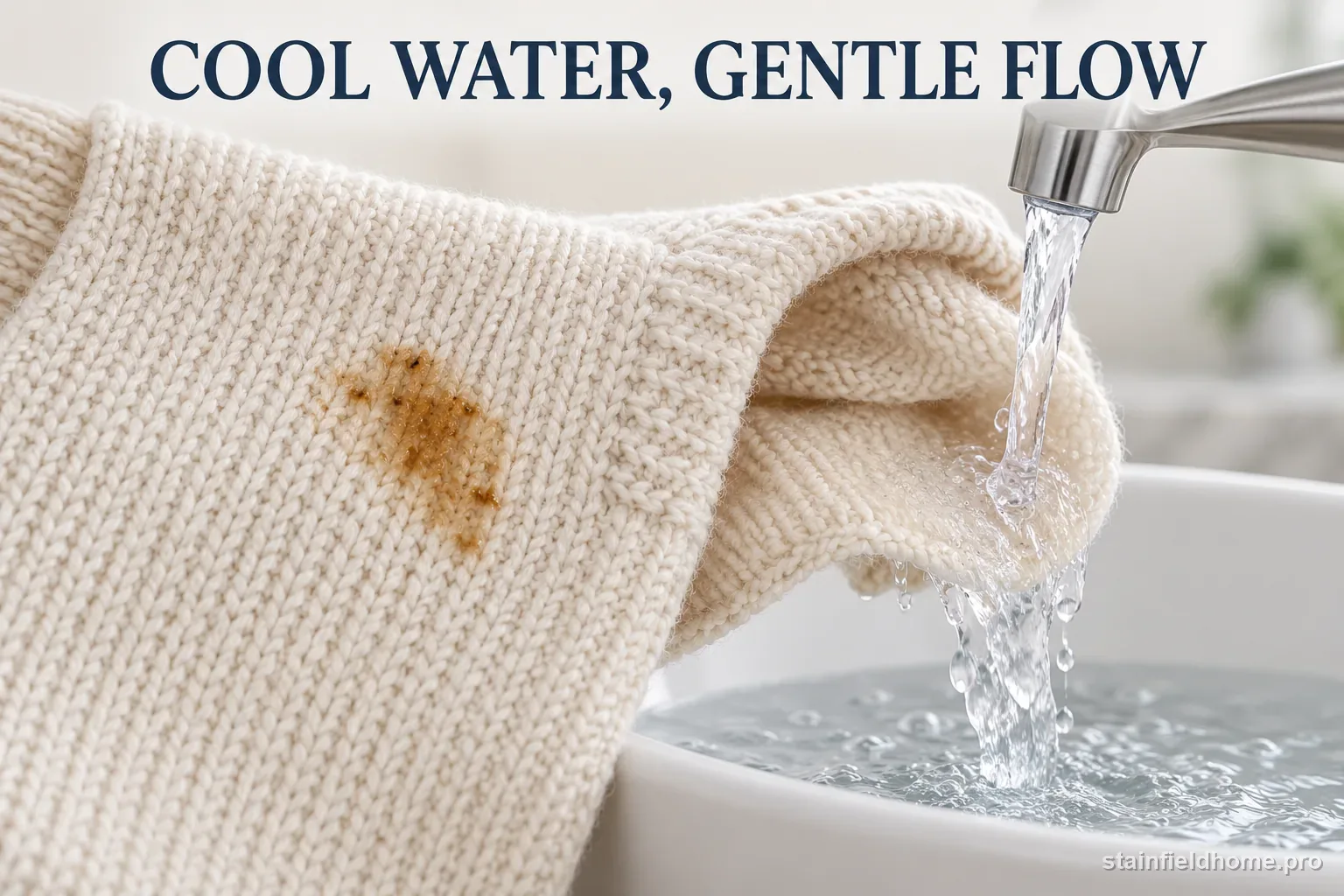
Dab a washable sweater with cool water and wool-safe detergent
For a sweater whose label permits hand washing or spot cleaning and that passes the hidden test, mix a small amount of wool-safe detergent into cool water according to the product directions. Do not use a bowl of concentrated soap or pour detergent directly onto the sweater. Keep the rest of the garment dry if the label allows spot cleaning only.
Dampen a white cloth with the solution and dab the outer edge of the stain, moving inward. Use light pressure and a clean part of the cloth for each pass. Put a dry towel beneath the knit and replace it when it becomes damp or soiled. The stain should transfer gradually. Pause after a few dabs to inspect the knit and the white cloth; stop if the sweater's color comes off or the fibers begin to mat.
Once the mark lightens, use a second cloth dampened with plain cool water to blot away detergent. Do not flush a large volume through the sweater unless its care label permits full hand washing. Soap left in a knit can attract soil and feel stiff, but over-rinsing can stretch or distort the garment. Alternate a damp blot and a dry towel press until the residue is removed and the area is only slightly damp.
If a greasy halo remains, do not escalate to dish soap or solvent automatically. Woolmark's guidance discusses grease and sauce stains, but the garment's care claim still determines whether a home liquid treatment is appropriate. On a washable plain knit, a second brief pass with the same wool-safe solution may help. If the halo persists after that, let a cleaner handle the remaining oil rather than trying several products in succession.
- 01
Keep the sweater flat and supported throughout treatment.
- 02
Dab from the edge toward the center with the diluted product, then check what transfers.
- 03
Blot with plain cool water to remove detergent if the care instructions allow.
- 04
Press with a dry towel and stop after one careful treatment if the mark remains.
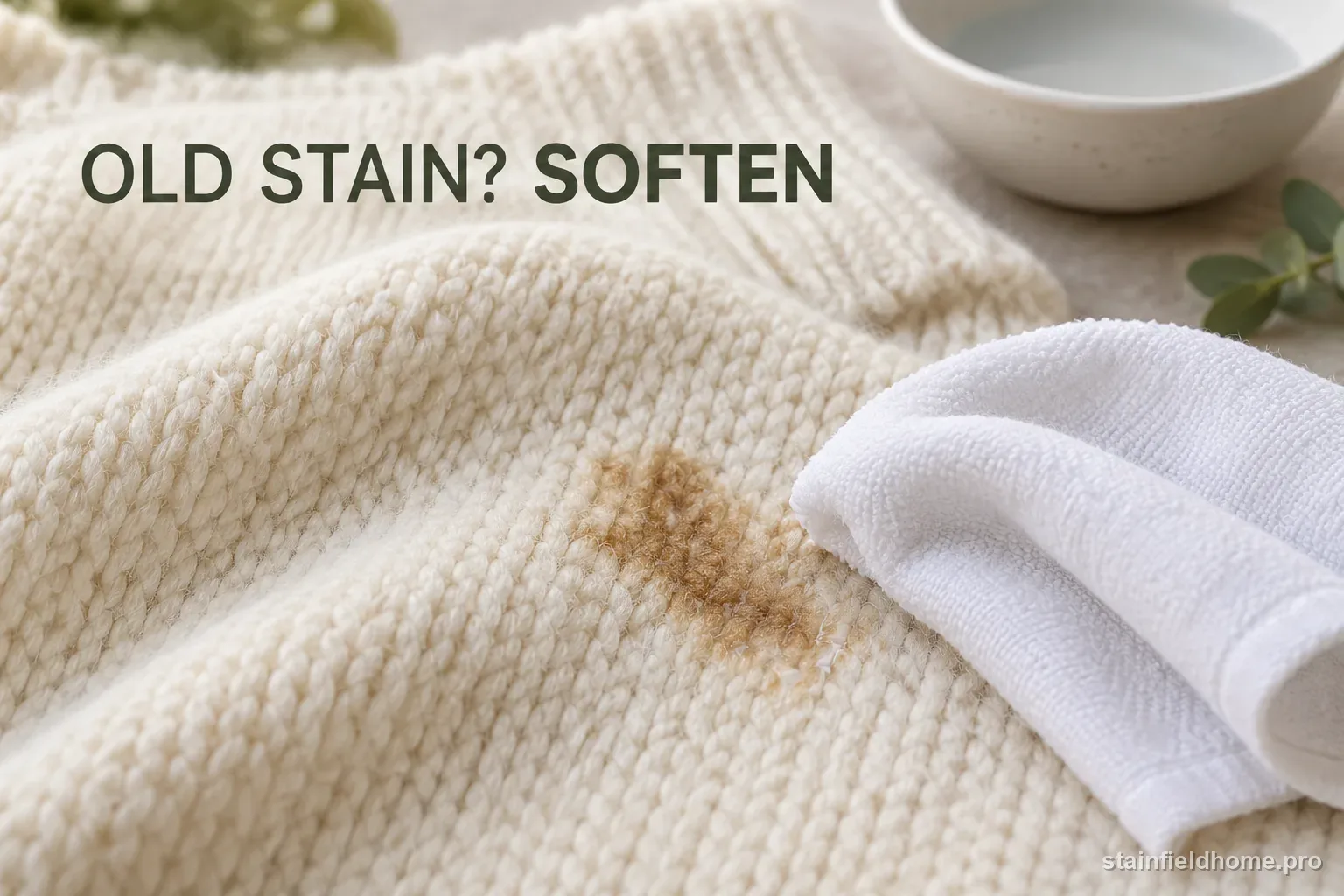
Soften a dried gravy mark without scraping the knit
A dried gravy stain can bind to the wool surface as its water evaporates, while fat remains in or around the yarn. First lift only loose crumbs with a spoon edge. Do not pick at dried residue with a fingernail, comb, or stiff brush. Those tools can snag loops and make a small mark look like a pulled thread.
If the label permits spot treatment, place a cool damp cloth over the mark briefly to soften the residue, then lift it and blot. Do not leave the sweater soaking or let a wet patch dry with detergent in it. Follow with the same wool-safe detergent method used for a fresh stain, using only a little solution. If the mark is old, has been through a dryer, or includes a broad greasy patch, a professional cleaner has a better chance of choosing a compatible solvent and controlled process.
Avoid using an iron, hair dryer, radiator, or hot water to soften the gravy. Woolmark recommends drying knitwear flat and away from direct heat. Heat can set remaining food residue and can shrink or distort wool. A slow, cool treatment is preferable to trying to force the stain out quickly.
Inspect after the first pass and dry the sweater flat
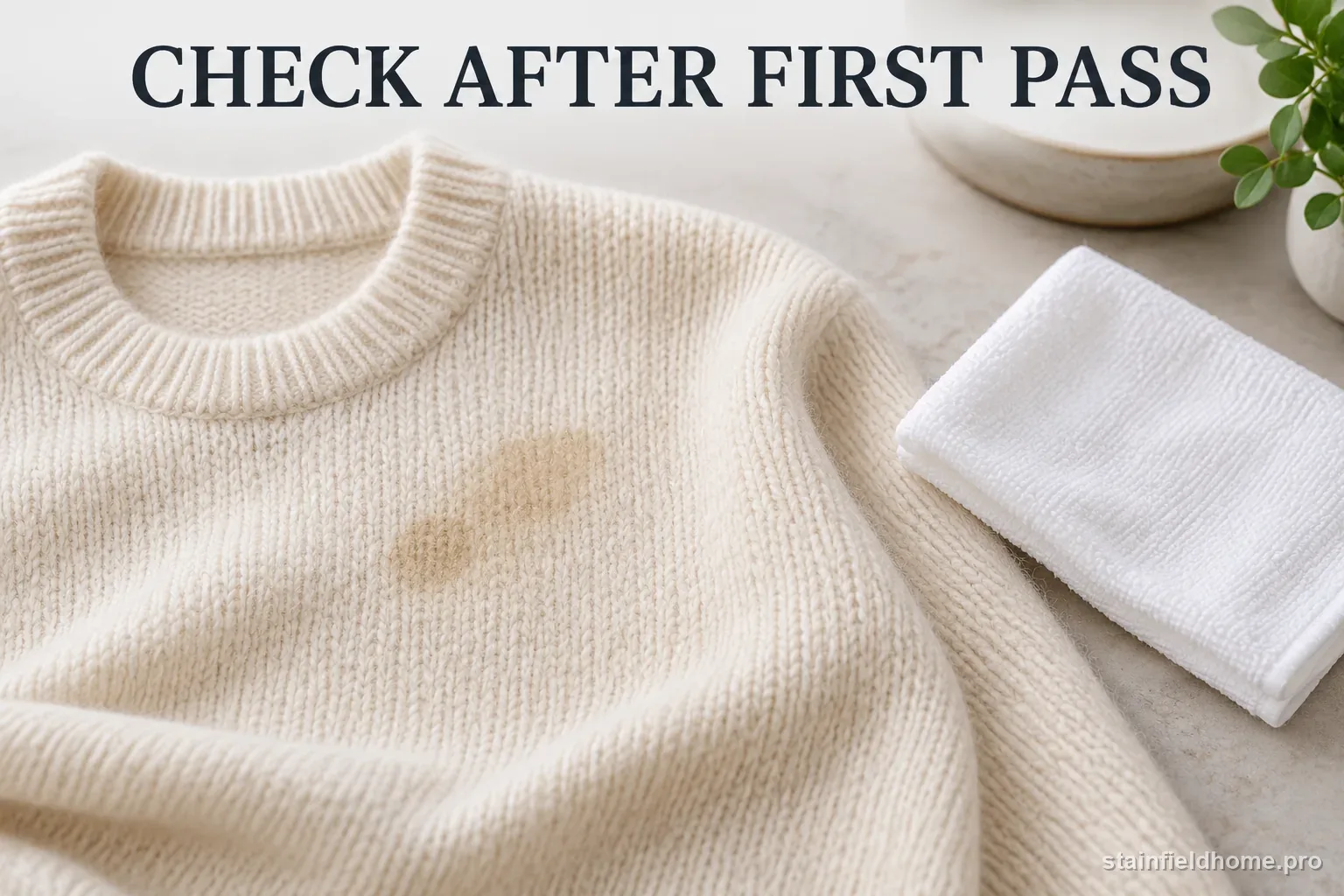
After blotting, inspect the stain in good light before repeating anything. Compare the front and reverse and feel gently around the treated area for oiliness or detergent residue. A shadow that remains after the first pass is a reason to pause, not scrub. If the mark has not lightened, or the sweater looks different in color or texture, let it dry flat and contact a cleaner.
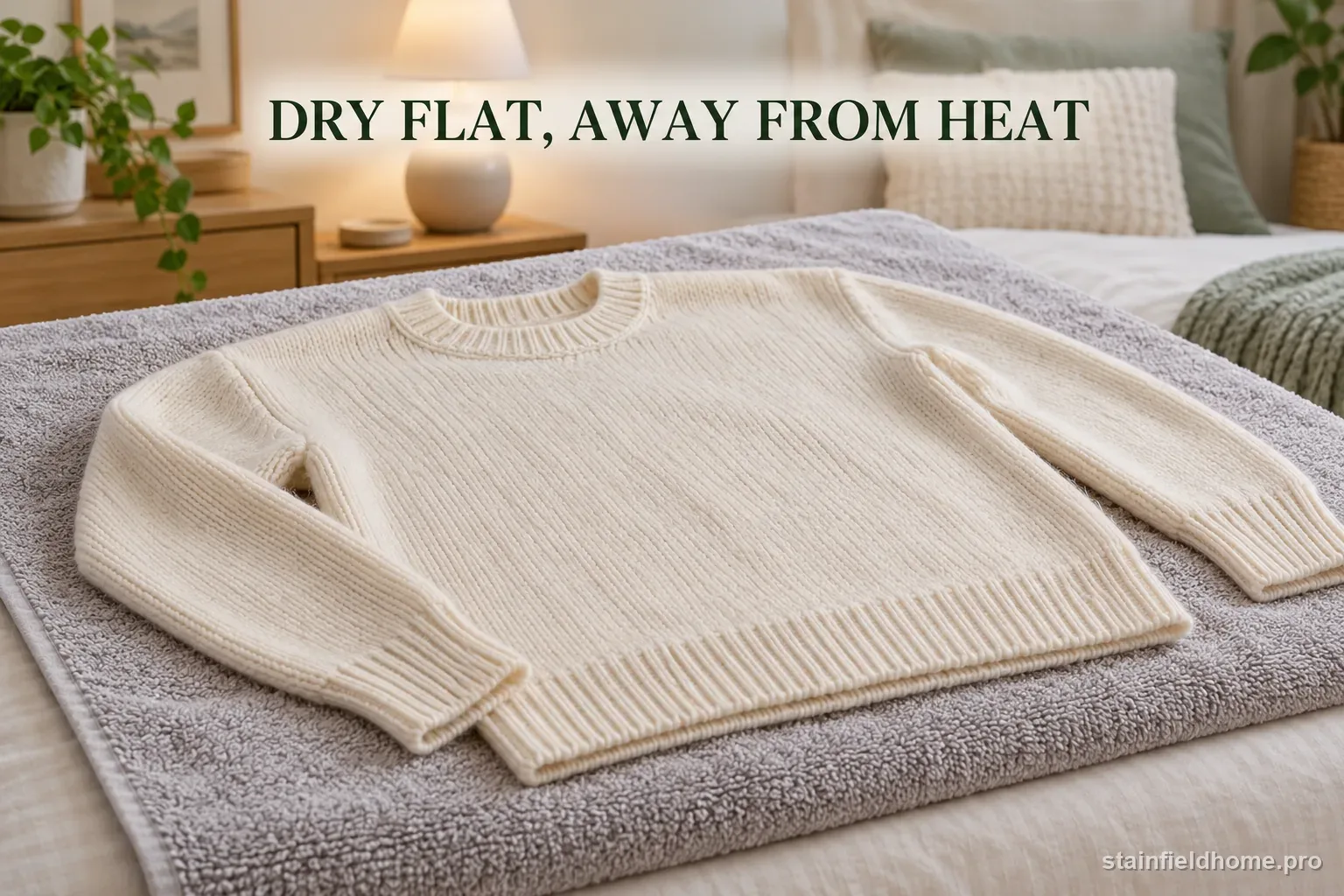
If the stain is gone and the care label allows hand washing, follow the garment's full washing instructions. Support the sweater with both hands when lifting it; wet wool can stretch. Press out water in a clean towel rather than wringing. Reshape the shoulders, body, cuffs, and hem, then lay the garment flat on a dry towel in a ventilated place away from direct sun, radiators, and hot air. Woolmark's drying guidance recommends drying knitwear flat and avoiding direct heat or sunlight.
Do not hang a damp sweater from its shoulders, which can pull the knit out of shape. Change the towel if it becomes saturated and allow the garment to dry fully before storing it. Check again when dry: a greasy mark can become more visible as moisture leaves the fibers. Keep the sweater away from a dryer and iron until the stain is fully resolved and the label permits that care.
Know when to stop and call a professional cleaner
Take the sweater to a professional if its label says dry clean only, if it is cashmere or hand-knit, or if it has a lining, beadwork, leather detail, bright unstable dye, or sentimental value. Also stop if your test cloth picks up color, the fabric develops a ring, the knit becomes fuzzy or misshapen, or the stain spreads. Share the label, the gravy ingredients if known, and each product already used.
A cleaner is also the better choice when the gravy stain has dried for days, has passed through a heated dryer, covers a large area, or remains after one careful label-approved treatment. Tell them whether the gravy contained butter, meat drippings, flour, wine, or spices. That can help them distinguish a grease residue from a food-color shadow and avoid redundant treatment.
Do not keep escalating from detergent to vinegar, baking soda, alcohol, bleach, and solvent. Home mixtures can alter color, leave residues, or damage wool; they can also make professional treatment harder. If the first controlled pass does not improve the stain, stop and preserve the garment rather than pursuing complete removal at any cost.
Before handing it over, point out the stain without applying a pin, tape, or marker that could snag or leave residue on the knit. Mention if the sweater has already been dampened or washed, and whether the mark changed during that attempt. A clear account of what happened helps the cleaner plan a test and set a realistic expectation for the remaining shadow.
Prevent gravy stains on wool next time
At meals, keep a washable napkin over the sweater front or change into a garment that can be laundered easily. If gravy splashes, lift the solids and blot promptly with a clean cloth; do not wait until the end of the meal to rub at a dried mark. Keep a clean white cloth nearby for first aid, but wait to apply a cleaner until you have checked the care instructions.
Before winter gatherings, locate the sweater's care label and note whether it is washable or dry-clean-only. Store delicate knitwear away from serving areas when practical. Prompt blotting, a clear label check, and a flat drying surface make it easier to respond without turning a small spill into a stretched or felted garment.
Common questions
FAQ
Can old gravy stains come out of wool?
Sometimes, but age and prior heat make removal less predictable. If the label permits spot treatment, soften the mark with cool water and make one gentle pass with wool-safe detergent. For an old or dried-in stain, use a professional cleaner.
Do gravy stains come out of a wool sweater?
Fresh gravy may lift when solids are removed and the remaining mark is blotted with a label-approved wool treatment. Grease and brown food color can need different treatment, so stop if one careful pass does not improve it.
Can I use Dawn dish soap on wool?
Do not assume dish soap is safe for a wool garment. Follow the care label and use only a detergent intended for wool if spot cleaning is allowed; ask a cleaner if the label is unclear.
Is vinegar and baking soda safe for wool?
This combination is not a recommended default for wool. It can leave residue and does not replace a care-label-approved stain method. Avoid improvised mixtures and use a professional for delicate garments.
Can I put a wool sweater in the dryer after cleaning?
Only if its care label explicitly permits tumble drying. Most knitwear should be reshaped and dried flat away from heat and direct sun; never use a dryer while a stain remains.
Sources reviewed
Keep reading
Related guides

Turkey gravy on Cotton apron
How to Remove Turkey Gravy From a Cotton Apron
Lift holiday gravy and grease from a washable cotton apron with label-first steps, careful pretreatment, and a dryer check to avoid setting the mark.

Red wine on Wool carpet
How to Get Red Wine Out of Wool Carpet Safely
Blot fresh red wine from wool carpet, treat leftover color without damaging the pile, and learn when a set stain needs a wool-care professional.
Pomegranate juice on Wool carpet
How to Remove Pomegranate Juice From Wool Carpet
Blot pomegranate juice from wool carpet without spreading red dye, overwetting the backing, or risking a color change during cleanup at home.

Lily pollen on Clothing
How to Remove Lily Pollen Stains From Clothing
Lift lily pollen from clothes while it is dry, pretreat the remaining mark, then wash by the garment label without rubbing or heat-setting the pigment.