
The quick answer
Keep the garment dry while lifting loose pollen outdoors with tape, a lint roller, or gentle shaking; do not rub it into the weave. Then apply a fabric-safe laundry pretreater, rinse from the back with cool water, and wash by the care label. Check before using a dryer. Sunlight may help some washable white fabrics, but can fade dyed clothing.
What you’ll need
- Clear sticky tape or a lint roller
- A soft dry brush
- Direct sunlight
- Clear dish soap or an enzyme stain remover
- Laundry detergent
- A vacuum with an upholstery nozzle, for heavy deposits
Why the usual instincts make it worse
Lily pollen arrives as loose colored grains, so the first job is to lift the dry powder without smearing it. Rubbing can press pigment into yarn and spread it to a larger area. Avoid wetting it before the loose grains are gone; once the powder has been removed, a care-label-approved wash treatment is appropriate.
Work outside or over a trash bin so pollen does not transfer to another garment or surface. Florists often remove pollen-bearing anthers from opened lilies to prevent transfer, but the flower's care and handling instructions should be followed.
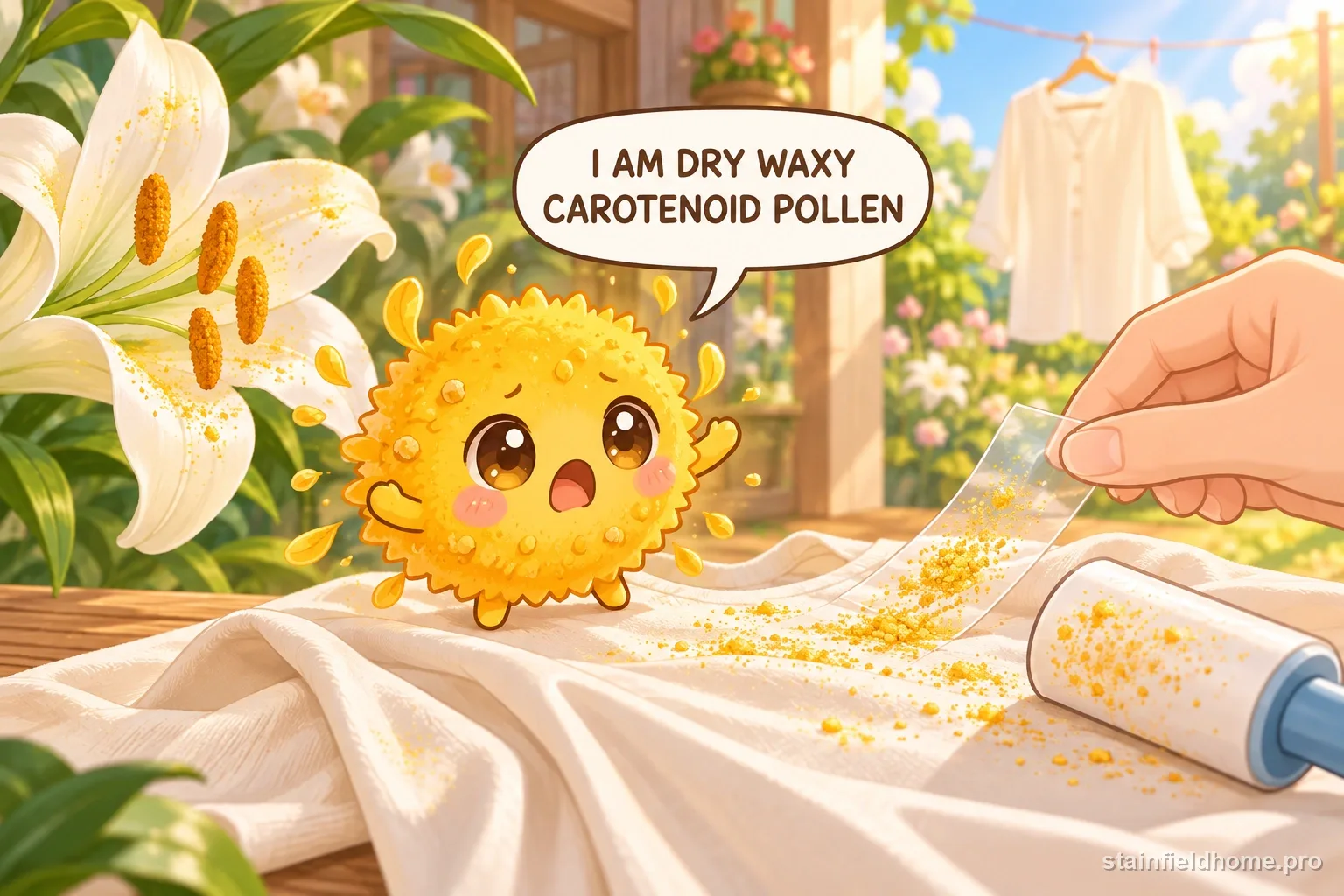
Lift the dry pollen
Take the garment outside and gently shake off loose grains. Use fresh clear tape or a lint roller with light dabs, lifting straight up rather than pressing hard or dragging. Stop when no loose powder transfers; repeated sticky passes can pull delicate fibers or lift a surface finish.
For a heavy deposit, a handheld vacuum with a clean upholstery attachment can collect loose powder while held just above the fabric. Do not brush a dry stain vigorously. For silk, velvet, suede, or a dry-clean-only item, remove only loose pollen and take it to a professional cleaner.
Put it in the sun
After lifting loose pollen, sunlight is an optional way to fade a residual mark on a washable white cotton garment if its care label permits line-drying. Keep the item under observation and check the whole garment; strong UV can yellow or weaken some textiles and will fade colored garments as well as pollen.
Do not postpone pretreatment for an all-day sun exposure. For colored or delicate garments, skip this step and go directly to a compatible laundry pretreatment.

Only now, treat what is left
If a mark remains after dry lifting, follow the garment label and use a liquid laundry detergent or stain remover intended for that fiber. Let it dwell only as directed, then rinse from the back with cool water and wash at the label's recommended temperature. Do not use dish soap on wool or silk unless the cleaner says it is safe.
Air-dry and check before using a heated dryer. If a faint mark persists, repeat the compatible pretreatment and wash once. Do not escalate to chlorine bleach or a solvent without confirming that the item is bleach-safe or solvent-safe.
White cotton and colored fabrics differ
On white cotton or linen, oxygen bleach may be an option if the care tag and product label permit it; measure and rinse as directed. On dyed garments, prints, elastic, wool, and silk, test any product first and use only a compatible cleaner. A dry-clean-only item should go to a cleaner with the stain pointed out and without home wet treatment.
After washing, sunlight is not necessary for every item. Shade-dry colored clothing and garments with elastane or trim. If the remaining mark does not change after one or two label-safe treatments, stop before the fabric becomes faded or weakened.
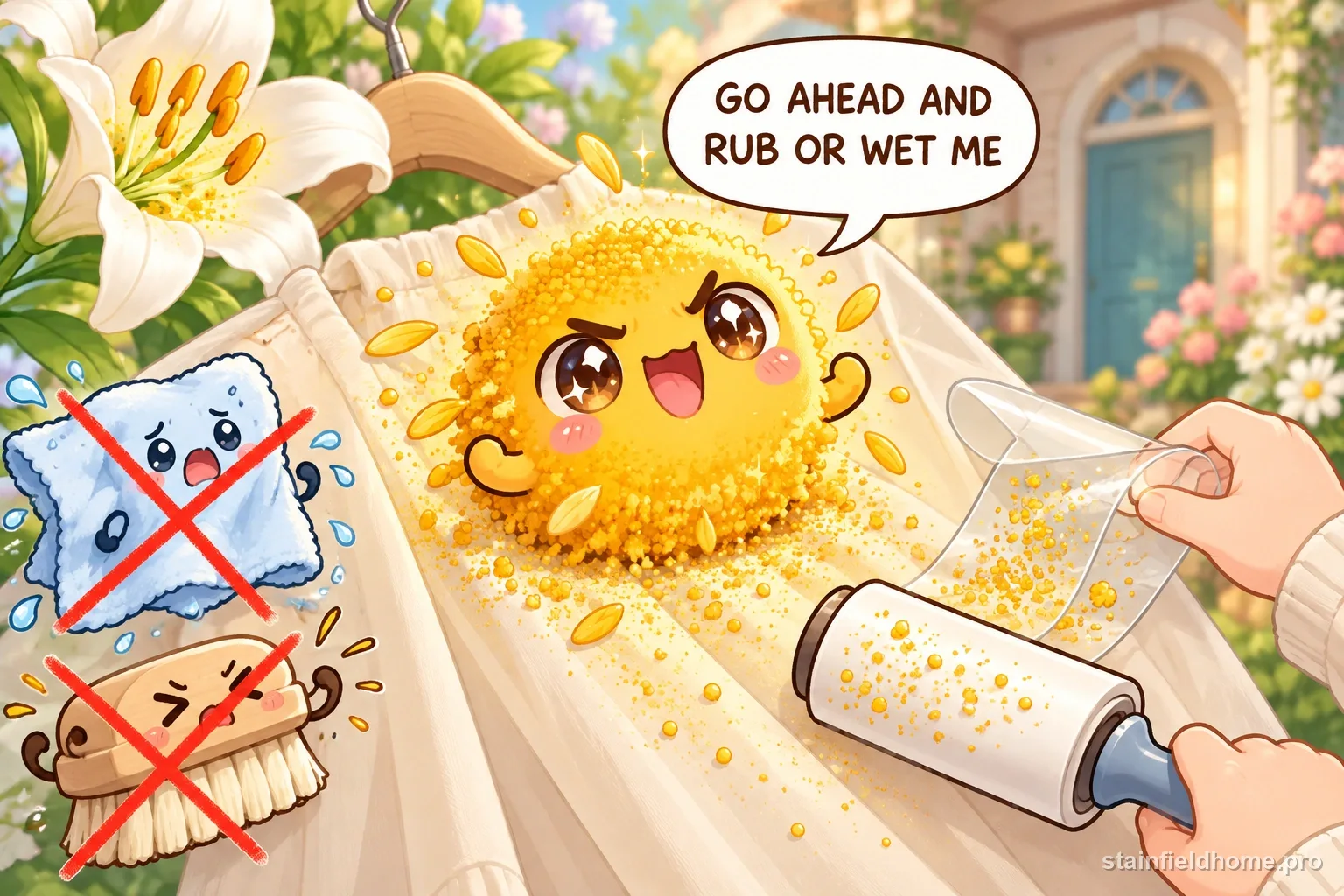
The instincts to override
- Do not rub the pollen with your hand, a cloth, or a brush while it is on the fabric; lift it, do not smear it.
- Do not wet the powder before lifting loose grains, but do rinse the remaining pretreated stain as the cleaner directions require.
- Do not use a dryer until you have checked the stain after washing.
- Do not use chlorine bleach on colored clothing to chase a pollen stain.
Before cleaning, check whether the pollen is still loose
Hold the garment over a bin or take it outdoors and inspect the mark in bright light. Loose grains sit on top of the yarn and should transfer to tape or a vacuum; a yellow-orange smear means the pollen has already been pressed or wetted. Do not keep dabbing at a smear with adhesive tape because it can lift fibers without removing the color.
If pollen landed on several layers, place clean paper between them so it does not transfer to the back of the shirt. Remove a jacket or scarf before brushing, and check the cuff and pocket where grains may have fallen. Clean the work surface afterward so the same powder does not land on another garment.
Use a wash method that matches the care label
After dry lifting, apply prewash detergent only if the garment is washable and the label allows it. Persil's pollen guidance recommends a liquid pretreatment, a backside rinse, and washing at the highest temperature the clothing label permits. That does not mean every blouse should be washed hot; wool, silk, dark dyes, and elastane need their own limits.
Fasten zippers and close delicate hooks before washing, and use a mesh bag for fragile items. If a stain remover has a maximum dwell time, do not leave it overnight. Rinse and wash as directed, then check the pollen mark before putting the garment in a dryer or ironing it.
What if pollen already touched water or got ironed?
Do not panic or scrub harder. First remove any dry grains that remain. Pretreat the colored mark with a fabric-safe liquid detergent, rinse from the back with cool water, and wash according to the garment label. Heat from ironing or a dryer can make a dye mark harder to remove, so air-dry while you assess the result.
If the color remains after two label-safe cycles, a cleaner may be able to treat the dye without damaging the garment. Tell them the flower type, whether the mark was rubbed or wetted, and any cleaner already used. Do not add alcohol, hairspray, lemon juice, or bleach as a last-minute experiment on delicate fabric.
Prevent pollen from reaching clothing again
When arranging lilies, keep the flower head away from sleeves and use scissors or tweezers to remove pollen-bearing anthers over a waste bin if the arrangement instructions allow it. Do not shake flowers over a table or blow pollen away; that spreads grains through the room and onto other fabrics.
Store a garment that has brushed against lilies separately until you have checked it. A quick outdoor shake and tape lift while the powder is dry can prevent a small dusting from becoming a visible stain after it is worn or washed.
Common questions
FAQ
I already rubbed the lily pollen. Is it ruined?
Not necessarily, but it may be harder. Remove any loose grains, pretreat with a product safe for the garment, rinse and wash by the label, then inspect before drying. Sunlight may fade a residual mark on white cotton, but repeated direct sun can fade the garment too.
Does hairspray remove lily pollen?
The old hairspray trick is unreliable and can add another residue. Lift the loose pollen dry, then use a detergent or stain remover approved for the fabric. Avoid rubbing alcohol unless the garment maker specifically allows it; it can affect dyes, prints, and delicate fibers.
How do florists keep pollen off clothes?
They snip the anthers (the pollen-bearing tips of the stamens) out of the flower with scissors as soon as the buds open, before the pollen matures. Doing this to lilies in a home arrangement prevents the stain entirely and also makes the blooms last a little longer.
Can I put tape directly on silk or a delicate blouse?
Avoid adhesive tape on delicate, loosely woven, or embellished fabric because it can pull yarns, fibers, or decoration. Shake off what you can outdoors and take the item to a cleaner. For sturdy washable cotton, use light dabs and stop if the fabric surface begins to lift.
Should I use the hottest wash setting for pollen?
Use only the temperature permitted by the garment label. Some detergent guides recommend the highest allowed setting, but wool, silk, elastane, and dark dyes may be damaged by heat. Dry-lift the pollen, pretreat, rinse from the back, and wash at the item's own limit.
Can pollen be removed from upholstery or a dry-clean-only jacket?
Remove loose grains with gentle dry lifting or a vacuum attachment held above the surface. Do not wet a dry-clean-only item or rub upholstery. Take the item to a professional and point out the pollen mark, especially if it is velvet, silk, suede, or a delicate weave.
Sources reviewed
Keep reading
Related guides

Slime on Carpet
How to Remove Slime From Carpet Without Damaging the Fibers
Lift dried or fresh slime out of carpet fibers with an ice-and-scrape method plus a vinegar or rubbing alcohol rinse, without soaking the backing or bleaching the color.

Essential oil and reed-diffuser oil on Finished wood furniture
How to Remove Essential Oil and Diffuser Stains From Wood Furniture
Blot a diffuser-oil spill on finished wood, use a cautious absorbent step, and recognize when the finish needs a furniture repair professional.

Pumpkin (carving, decorating, or puree) on Carpet
How to Remove Pumpkin Stains From Carpet
Remove pumpkin pulp and treat any remaining orange mark on carpet with a careful, low-moisture sequence that follows the carpet maker's guidance.
Sweat on Baseball cap
How to Remove Sweat Stains and Odor From a Baseball Cap
Lift yellow sweat stains and odor from the sweatband of a baseball cap without warping the brim or shrinking the crown.