The quick answer
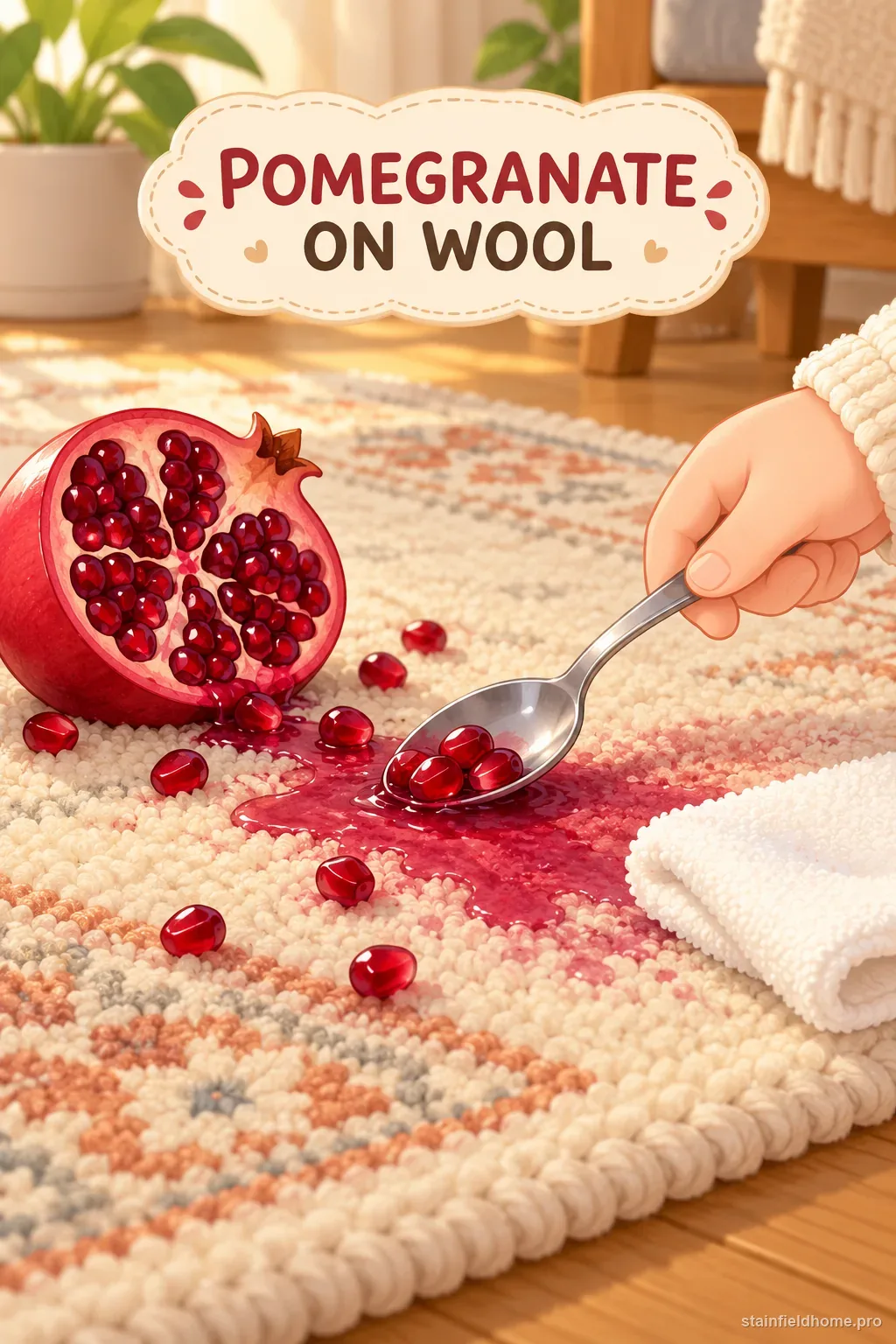
Scoop seeds and pulp, then blot juice with a white cloth. Check the rug label and test an approved cleaner in a hidden spot. If dye stays put, blot with a barely damp cloth and wool-safe product, then air-dry. Avoid rubbing, soaking, heat, vinegar, and bleach. Call a rug cleaner if color transfers, the backing gets wet, or the rug is valuable.
What you’ll need
- White absorbent cloths
- Blunt spoon
- Small bowl of cool water
- Wool-safe rug spotter only if approved
- Dry towels
- Fan for gentle room airflow
Identify the rug and spill before cleaning
Pomegranate juice leaves a strong red-purple pigment in a sugary liquid. Seeds and pulp add solids that can be pushed deeper if you scrub. First determine whether the affected item is wall-to-wall wool carpet, a wool area rug, a wool blend, or a synthetic rug that only looks wool. Read the maker's care label or find the warranty and cleaning instructions. A natural wool pile, a dyed rug, and a rug with a cotton or jute backing can react differently to the same product.
Look at the spill in good light without rubbing it. Note the size, whether it is still wet, and whether juice has reached a seam, fringe, edge, or pad. If the rug is hand-knotted, antique, hand-dyed, silk-blend, or valuable, treat it as a professional-cleaning job. Loose fibers, color migration, a damp backing, or a large spill are also reasons to stop early. A small surface spot on a stable, labeled rug is the only situation for cautious home blotting.
The University of Georgia's textile guidance recommends checking care labels and testing cleaning agents. The Carpet and Rug Institute also advises removing excess material and choosing a treatment suited to the carpet. Use those as general principles; the rug maker's instructions take priority for a specific wool rug.
Check whether the rug is wall-to-wall carpet or an area rug with a separate pad. A rug pad can hold juice below the pile, so a surface that looks clean may still leave a ring or odor as it dries. Do not lift a wet fitted carpet or pull up tack strips; note the affected area and ask a carpet professional to inspect it.
If the care tag is missing, look for the rug maker's model or fiber information on a receipt or product page before choosing a cleaner. A wool blend may contain silk, viscose, or a dye-sensitive yarn that changes the care method. If you cannot identify it, stop after lifting the pulp and blotting the liquid.
Lift pulp, then contain the wet area
Put a dry white towel beside the spill so you have a place to set the tool. Use the rounded edge of a spoon to lift seeds and pulp from the outside toward the center. Keep the spoon nearly parallel to the pile and lift each portion away; do not scrape across the fibers. If a seed is caught between tufts, leave it for a cleaner rather than pulling at the yarn.
Fold a clean white cloth into a thick pad and press straight down on the liquid. Lift, move to a dry section, and press again. Work from the outer edge inward so you do not enlarge the wet ring. Do not rub in circles, brush the pile, or stand on the cloth. When the pad becomes red, replace it. A colored towel can transfer dye of its own and make it harder to judge whether the rug is bleeding.
If the spill is still releasing liquid, place a fresh dry towel over it and press with your hand for several seconds. Do not pour water onto the rug to make the juice run out. That can carry pigment into the backing and pad, where surface blotting cannot reach it. Keep the cleaned footprint as small as possible.
| Condition | Safer response | Avoid |
|---|---|---|
| Fresh surface spill | Lift solids, blot, test first | Scrubbing or flooding |
| Dye transfers on test | Stop and call a rug cleaner | More water or bleach |
| Old stain or damp backing | Professional assessment | Repeated spot treatments |
| Unknown fiber or care code | Check maker instructions | Assuming it is washable |

Test the rug before adding moisture
Find a hidden area such as the back edge or an inconspicuous corner. Dampen a white cloth with cool water and press it briefly against the pile. Check the cloth for red, yellow, or brown transfer and look for a change in texture or sheen. If the color moves, the pile feels rough, or the backing softens, stop. Do not use a stronger cleaner to counteract a dye reaction.
If the plain-water test passes, test the exact wool-safe spotter the rug maker permits. Use the product at its labeled dilution, on the cloth rather than pouring it onto the rug. Wait the stated test interval, blot with a clean cloth, and let the patch dry before judging it. A wet rug can temporarily look darker; compare the dry test patch with the surrounding pile.
Do not substitute vinegar, dish soap, peroxide, oxygen bleach, ammonia, or an all-purpose carpet spray simply because it is available. Wool finishes and dyes vary. Never mix cleaning products, and do not combine bleach with vinegar or ammonia. A label that says a product is wool-safe does not override a rug maker's restriction or a failed hidden test.

Blot a passing spot with minimal solution
For a small fresh spill on a stable rug that passed testing, dampen a white cloth with cool water or the approved product. Press from the edge toward the center, then lift. Use a clean portion of cloth for each pass. The aim is to transfer juice into the cloth, not to wash the whole rug. Stop when a fresh cloth no longer picks up visible red and the area is only slightly damp.
If the stain lightens but remains, do not increase the amount or strength of cleaner. Repeat one careful blotting pass only if the label allows it, then reassess after drying. Pigment can remain even after the sugary residue is removed. Several products applied one after another can leave a sticky residue or react with each other, so rinse only as the product instructions say and use a barely damp cloth.
Keep solution away from fringe, seams, and the rug edge. If liquid reaches the backing, stop rather than trying to flush it from above. A deep wet area can distort a rug, affect its dyes, or hold moisture in the pad. Photograph the spot and note exactly what you used before contacting a professional.

Dry the pile and check for a returning ring
Press a dry towel over the treated spot to remove surface moisture. Change towels until they come away nearly dry. Restore the pile with a gentle touch only if the rug maker permits it; do not brush a wet wool pile aggressively. Keep foot traffic, furniture, and pets away while it dries.
Use ordinary room airflow or a fan set to move air across the rug. Do not aim a hair dryer, heater, iron, or steam cleaner at the spot. Heat can affect wool and dye, and concentrated air may distort fibers. Do not put an area rug in direct sun as a quick-dry method unless the maker specifically allows it; dyes can fade unevenly.
After the pile is fully dry, inspect from several angles. A pale outline may be residue or a ring from moisture moving outward. If it appears, do not wet the entire circle. A trained cleaner can identify whether the remaining mark is pigment, detergent residue, or color change.
Handle a dried or previously treated stain carefully
For a stain found after it has dried, first vacuum only if the rug is dry and the maker permits it. Use a gentle suction attachment and do not use a rotating beater on a delicate pile. Dried pulp may loosen, but embedded red pigment usually needs more controlled work than a fresh spill. Do not scrape with a knife or brush hard enough to fuzz the yarn.
If someone already used soap, club soda, vinegar, or a stain spray, record the product and how much was applied. Do not layer a new chemical on top. Blot a small area with a clean, barely damp cloth only if the care instructions allow it, then dry promptly. A sticky or stiff feel suggests residue; additional detergent can worsen it.
Repeated home attempts can spread the spot and make professional correction more difficult. If two careful blotting passes do not improve a fresh stain, or an old mark remains after one permitted treatment, stop. Share the rug fiber, age, backing, spill date, and prior products with the cleaner.
A fresh spill and a dried mark need different expectations. Blot fresh juice before the pigment settles; on an old stain, repeated wetting may only spread color or leave a ring. If the rug has already had a cleaner applied, tell the rug professional its name and dilution before they choose another treatment.
When arranging professional cleaning, ask whether the technician works with wool rugs and whether the pad or backing needs inspection. Share the care label, rug construction, spill size, and photos of any color transfer. A carpet cleaner who treats wall-to-wall synthetic carpet may use a different process from a rug specialist, so identify the item clearly.
After professional treatment, keep furniture and foot traffic off the rug until both pile and backing are dry. Check the area in daylight before putting a pad or table back in place. If an odor, dark edge, or stiff patch returns, contact the same cleaner with the original work notes rather than applying another household product.
Know when to stop and prevent the next spill
Stop immediately if red dye moves onto the test cloth, the pile changes texture, the backing becomes wet, the spot grows, or the rug is handmade or valuable. A cleaner should also handle a stain near a fringe, bound edge, seam, or previously repaired area. For a large spill, lift the rug only if it can be moved without bending or dragging it; otherwise keep people off the area and arrange help.
Do not use salt, baking soda, club soda, steam, or a home extraction machine as a universal fix. Powders can lodge in pile, carbonation does not make a cleaner safer, and heat or excess water can set or spread a stain. Keep children and pets away from cleaning products and follow each label. Never mix bleach with ammonia, vinegar, or another cleaner.
If the first blot leaves a shadow
Judge the stain only after the wool is fully dry; damp pile can look darker and make the mark appear larger. If a red or pale patch remains, do not bleach or wet the surrounding area to even it out. A rug cleaner can tell pigment from dye loss or a moisture ring.
If juice reached the pad, fringe, or a bound edge, mention that when arranging help. Do not lift a wet, heavy rug by one corner or pull back wall-to-wall carpet. Note the rug fiber, backing, and products already used so a cleaner can avoid repeating a treatment.
For a future spill, keep a white cloth nearby and move the serving bowl onto a washable mat. A photo of the rug's care label and backing can also save time when you need advice.

Common questions
FAQ
Sources reviewed
Keep reading
Related guides

Red wine on Wool carpet
How to Get Red Wine Out of Wool Carpet Safely
Blot fresh red wine from wool carpet, treat leftover color without damaging the pile, and learn when a set stain needs a wool-care professional.
Fruit juice on Nylon carpet
How to Remove Juice Stains From Nylon Carpet
Blot juice from nylon carpet and treat colored residue without spreading it or soaking the backing; includes steps for dried spills.
Gravy on Wool sweater
How to Remove Gravy From a Wool Sweater
Remove gravy from a wool sweater without felting it. Check the care label, blot safely, and know when to stop and call a professional cleaner.

Food and juice on Stroller seat fabric
How to Remove Food Stains From Stroller Fabric
Clean food and juice from stroller-seat fabric while protecting coatings, foam and harness parts; use the maker’s care instructions.