The quick answer
Blot fresh food or juice from stroller fabric, then follow the stroller maker's fabric-care instructions before adding cleaner. Spot-clean fixed fabric with cool water and mild detergent, or remove and machine-wash only the pieces the manual identifies as washable. Dry every part completely and out of direct sun before reassembly.
What you’ll need
- stroller manual
- spoon or dull scraper
- white absorbent cloths
- cool water
- mild detergent
- soft brush
- vacuum with upholstery tool
- fan
Find out which parts actually come off
Strollers split into two groups. UPPAbaby, Bugaboo, Nuna, and most Thule seats have a removable seat pad or fabric set that unclips, unzips, or unbuttons and goes in the machine on a cold gentle cycle. Many umbrella strollers and older frames have fabric that is sewn or riveted in place and is spot-clean only.
Your manual will say which yours is, and it matters: machine-washing a pad that was meant to be spot-cleaned can shrink it off its clips or delaminate a waterproof backing. Check before you start, and photograph how the fabric attaches so reassembly is easy.
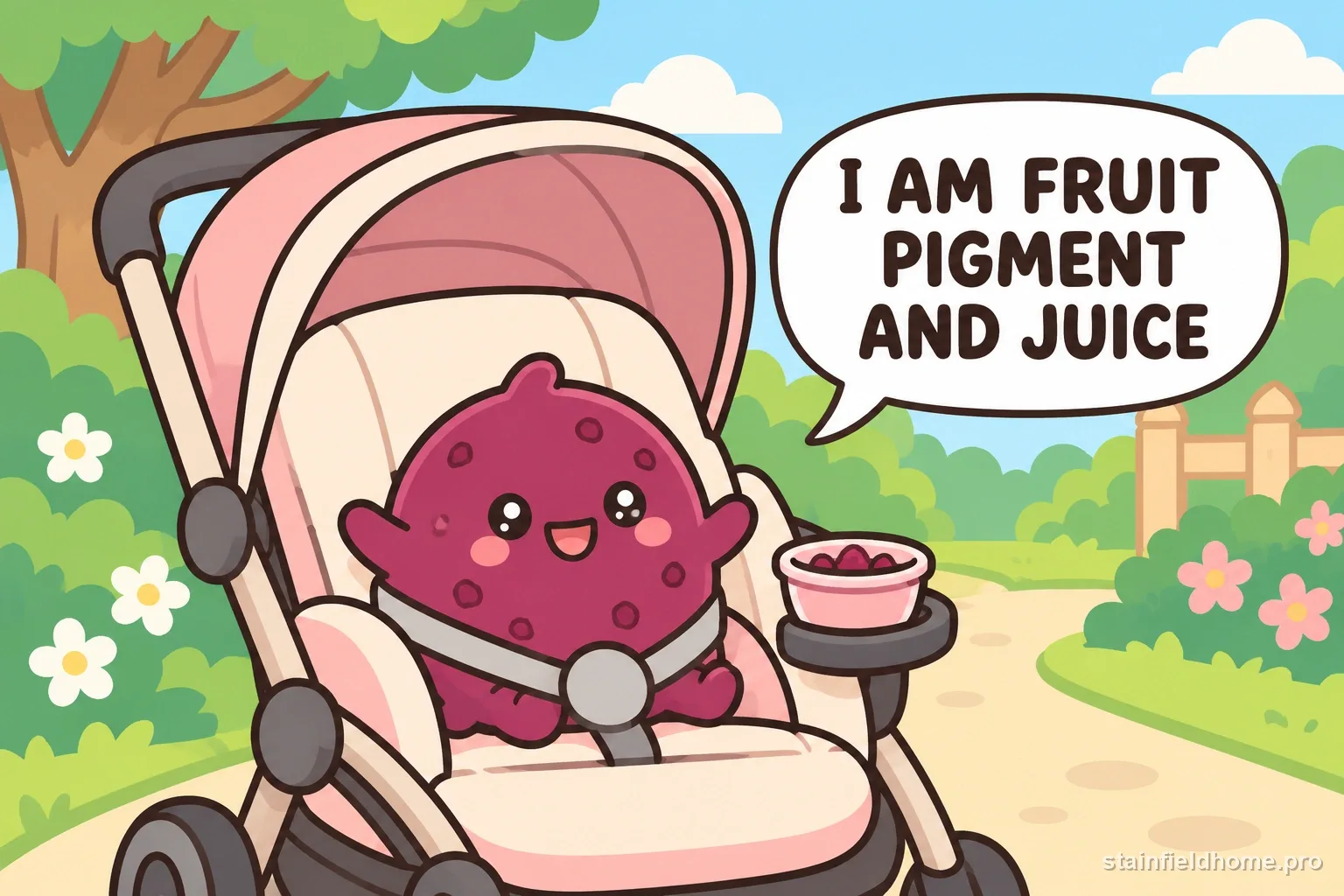
Blot the spill before it wicks into the foam
- 01
Lift solids with a spoon, scooping toward the center so you do not spread the mess.
- 02
Press a dry white cloth straight down to pull liquid up out of the padding before it soaks in.
- 03
Switch to a cloth barely dampened with cool water and keep blotting; do not pour water onto the seat.
- 04
If detergent is needed, put a drop on the damp cloth, not on the fabric, and work from the outside of the mark inward.
- 05
Finish by blotting with a clean damp cloth to lift soap, then dry with a fan.
Machine-washable seat pads: cold, gentle, air-dry
Unclip the pad, remove any foam inserts or stiffener boards the instructions call out, and close all zippers and hook-and-loop tabs so they do not snag. Wash cold on gentle with a mild detergent and no fabric softener, which can leave a slippery film on a child's seat.
Air-dry flat or on a line, not in the dryer — dryer heat is the most common way people shrink a stroller pad or damage its coating. Reinsert the foam only once the fabric is bone dry, because trapped damp between the pad and a foam board turns musty fast.
Fixed fabric you cannot remove
For sewn-in fabric, work in light passes with a well-wrung cloth and mild detergent solution, blotting the loosened soil onto a dry towel held behind or beside the area so it does not just move deeper into the seat.
Vacuum the seat first to pull out crumbs and dried crust, and do the whole seat rather than one patch so you do not leave a clean halo. Keep the frame tipped so the wet area faces down and can drain and dry rather than sitting in the seat well.
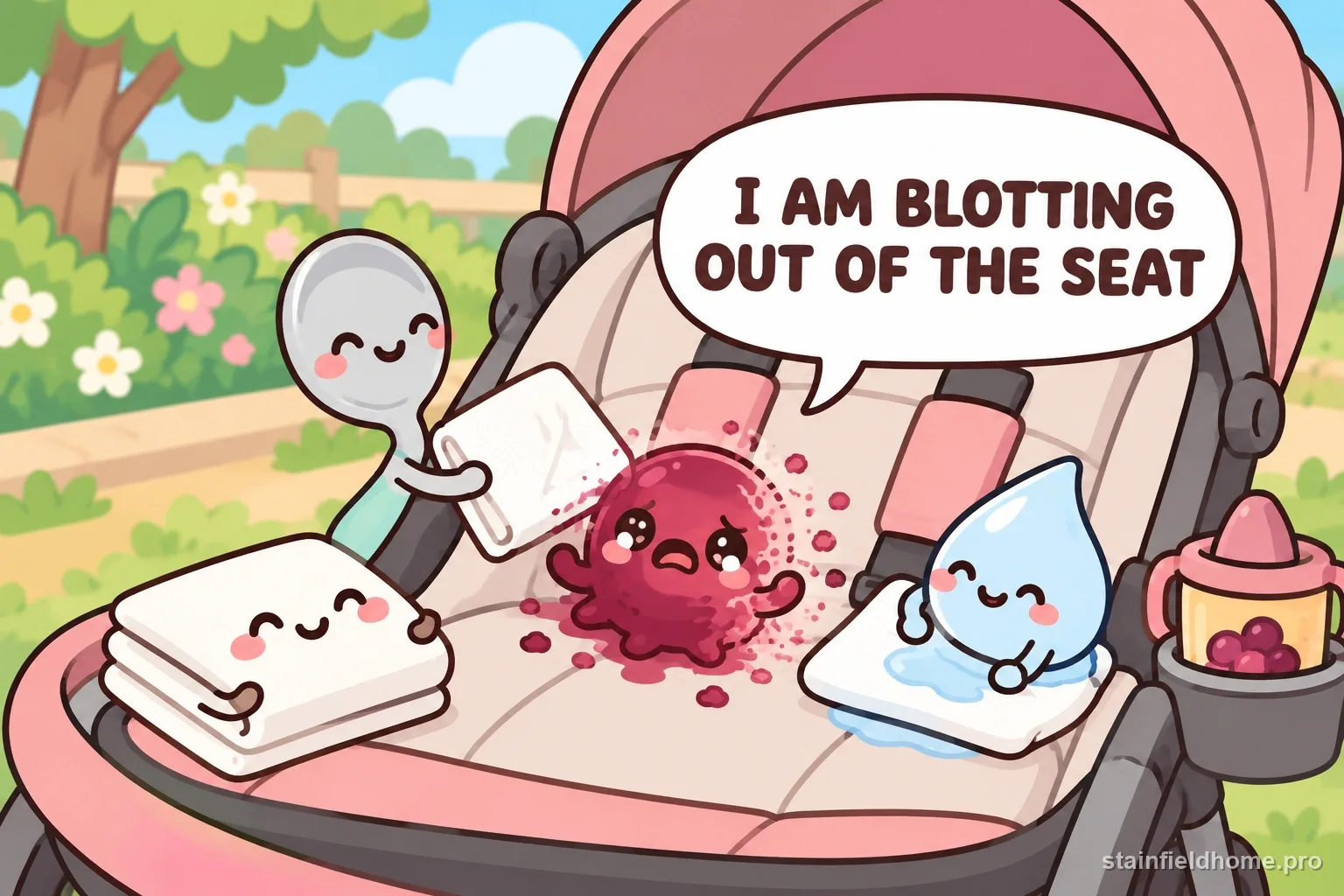
Juice and fruit stains that dry pink or purple
Berry, grape, and cherry juice carry anthocyanin pigment that sets into a stubborn pink-grey shadow once it dries. Treat these quickly with cool water and detergent; hot water sets them.
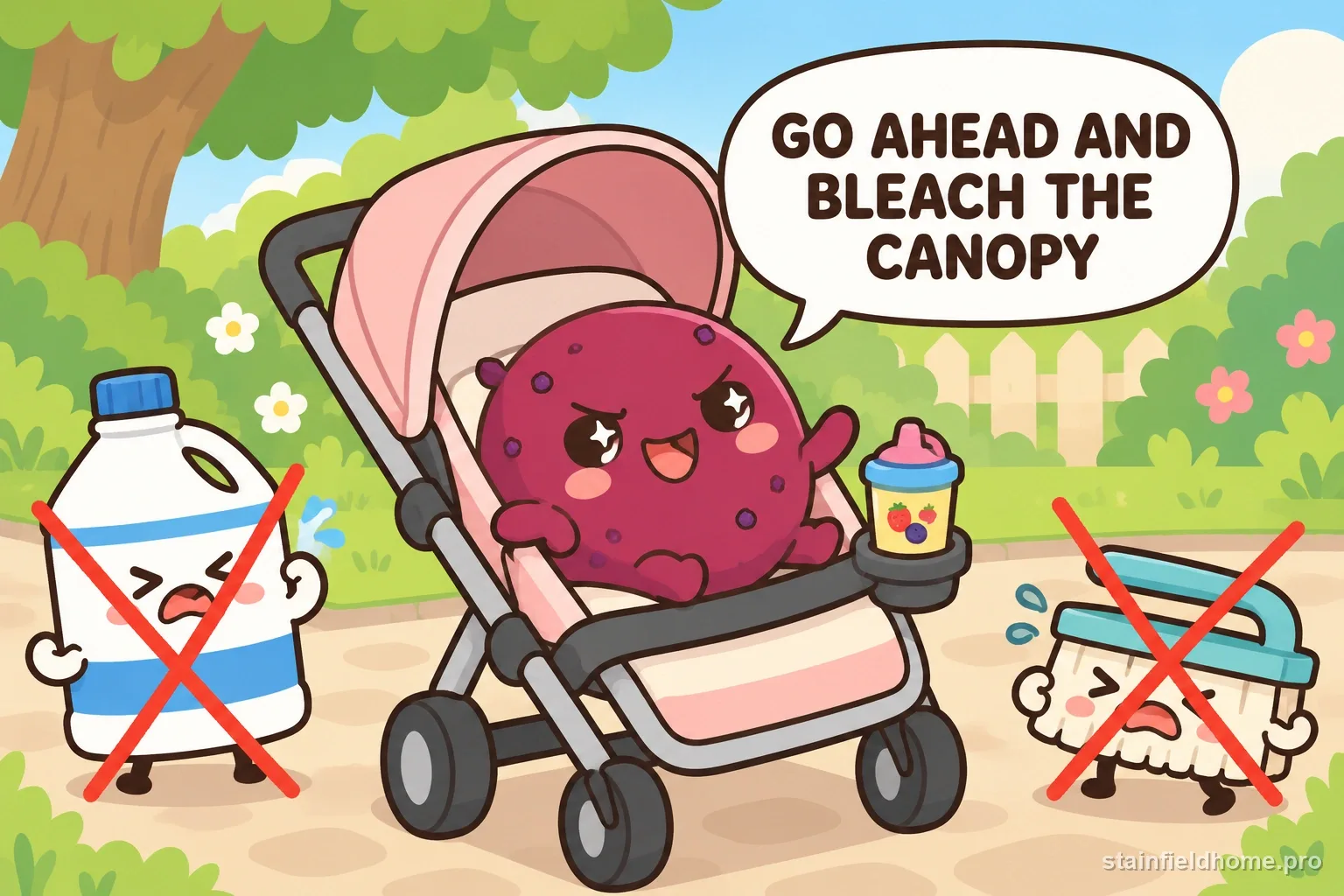
On a washable pad in white or light fabric, an oxygen-bleach soak before washing helps, if the maker allows it. On fixed or dark fabric, accept that a faint shadow may remain and stop before you over-wet the seat chasing it — a light mark is better than a mildew smell.
Sun is why stroller fabric fades in patches
Stroller fabric spends its life outdoors, and UV steadily weakens and lightens it, especially on the canopy and the top of the seat back. That older fabric is more fragile and more prone to fading further where you scrub or bleach.
Dry cleaned fabric in the shade, not on a sunny railing, and keep any bleaching treatment brief and diluted so you do not leave a bright patch on a sun-dulled seat.
Keeping snack time off the seat
- Use a washable seat liner or a folded muslin under the child on snack outings; it takes the hit instead of the seat.
- Wipe spills the same day — dried-in food is what forces a full wash.
- Keep lidded snack cups and spill-resistant bottles for stroller rides.
- Store the stroller somewhere dry; a damp garage undoes a good cleaning with mildew.
Common questions
FAQ
The stroller fabric does not unclip. Can I still wash it?
Yes, but spot-clean it in place rather than soaking it. Vacuum first, then work a wrung-out cloth with mild detergent solution over the whole panel in light passes, blotting onto a dry towel. Tip the frame so the damp area faces down and dry it with a fan.
Can I put stroller seat pads in the dryer?
Almost never. Dryer heat shrinks stroller pads and can delaminate waterproof backing or warp foam inserts. Air-dry flat or on a line, reinsert any foam boards only when the fabric is completely dry, and check your manual for the specific drying instruction.
A juice stain dried before I got to it. Is it too late?
Not necessarily. Re-wet it with cool water and mild detergent, give it 10-15 minutes, then blot and repeat. On washable white or light pads, an oxygen-bleach pre-soak helps. On fixed or dark fabric a faint shadow may stay — stop before you over-wet the seat, since a light mark beats a musty seat.
Sources reviewed
Keep reading
Related guides

Spills and body oils on Bouclé sofas and chairs
How to Clean a Bouclé Sofa or Chair Without Flattening the Texture
Spot-clean a bouclé sofa or chair by its cleaning code, protect the looped pile from matting, and know which spills need a dry solvent instead of water.

Burnt-on grease and food residue on Air fryer basket
How to Clean Burnt-On Grease From an Air Fryer Basket
Break down baked-on grease in an air fryer basket with a soak and baking-soda paste, without scratching the nonstick coating or getting water near the heating element.
Permanent hair dye on Bathroom countertop
How to Remove Box Hair Dye From a Bathroom Countertop
Get permanent hair color off quartz, laminate, cultured marble, or sealed stone before it sets, using the mildest method the surface allows and never an abrasive pad.
Yellowed tape adhesive on Painted wall
How to Remove Yellowed Tape Residue From a Painted Wall
Take aged, hardened tape adhesive off painted drywall without pulling the paint, using warm heat, an oil to soften the gum, and the gentlest possible scrape.