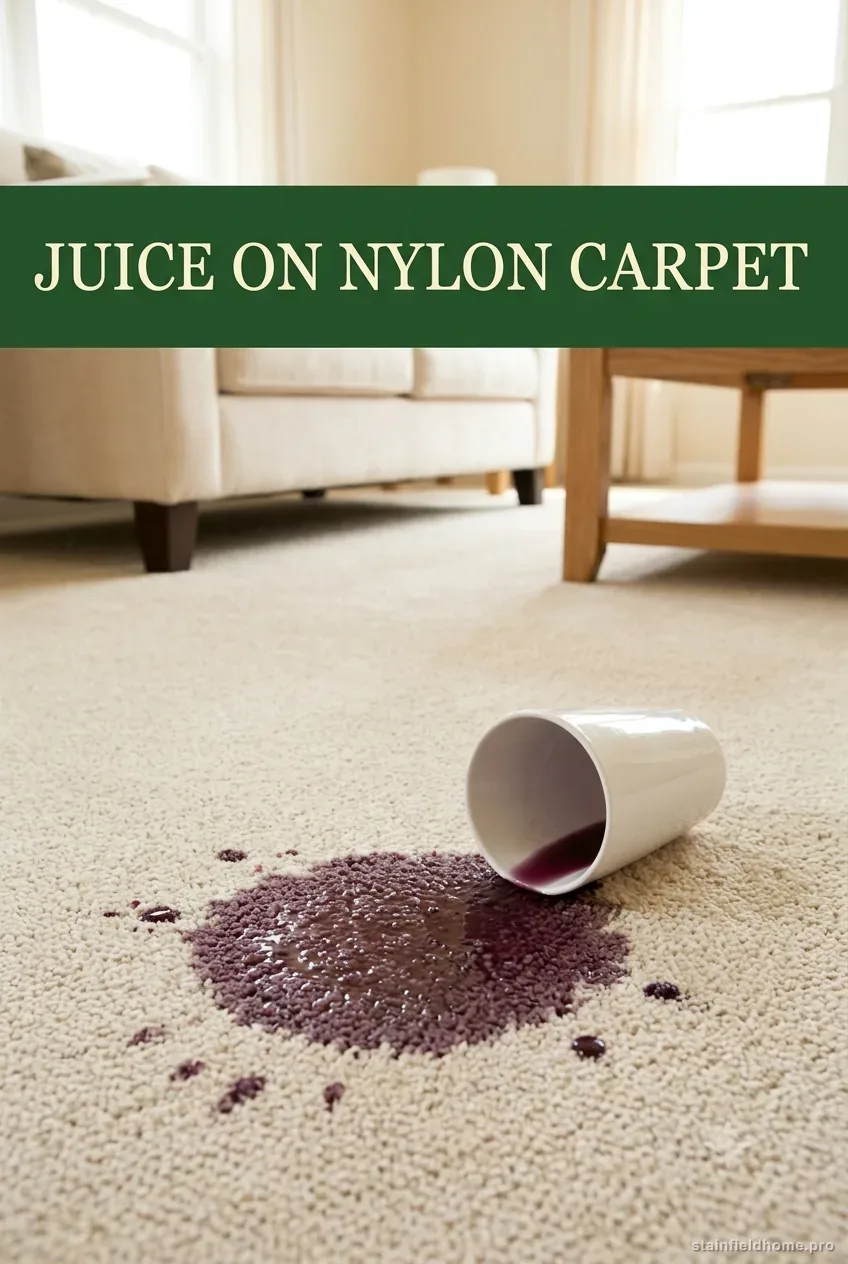
The quick answer
Blot a fresh juice spill immediately with plain white absorbent towels. Do not scrub. Add only enough cool or lukewarm water to dilute the remaining spill, blot again, then use a carpet spot cleaner approved for your carpet or a very dilute neutral-detergent solution when the carpet maker allows it. Work from the edge toward the center, rinse the treated fibers with a small amount of clean water, and blot as dry as possible. A dried red or purple juice stain may need repeated controlled cycles or professional treatment; do not keep stacking stronger cleaners on top of one another.
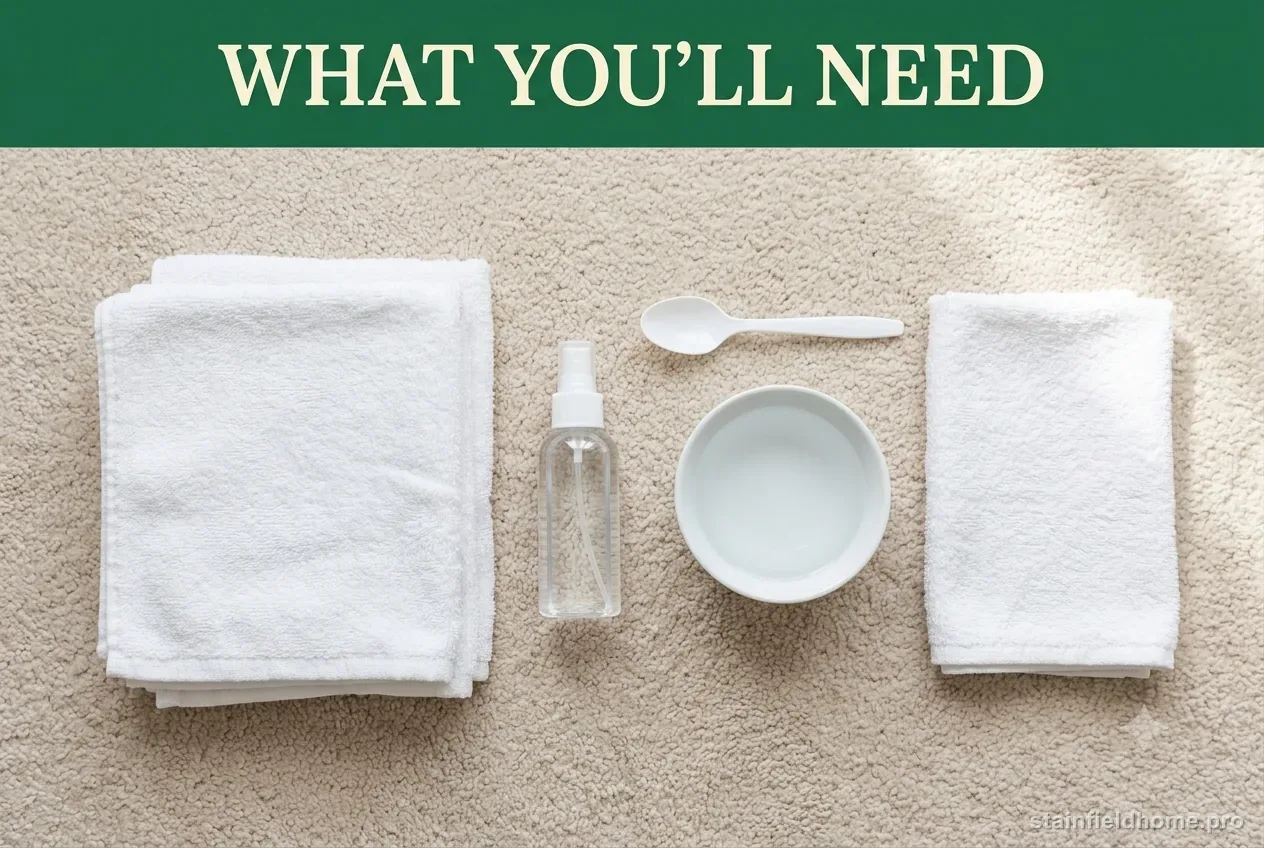
What you’ll need
- Plain white absorbent towels or unprinted white paper towels
- Cool to lukewarm clean water
- A CRI Seal of Approval spot cleaner or carpet-manufacturer-approved product
- Small cup, dropper, or mist sprayer for controlled application
- Rounded spoon for any fruit solids
- Dry white towels for weighted blotting
- Fan for room-temperature air movement
Confirm the carpet is nylon and check the warranty before adding chemistry
Nylon is a common synthetic carpet fiber and is generally durable, but the finished carpet is more than nylon yarn. Dye system, stain treatment, backing, cushion, adhesive, and warranty requirements all affect what is safe. Check the carpet invoice, sample label, or manufacturer care guide if you have it. A product advertised for 'synthetic carpet' is not automatically approved for every stain-resistant nylon construction.
The Carpet and Rug Institute's residential standard gives a useful baseline for most carpet spotting: absorb the spill, do not scrub, pretest the cleaner, apply a small amount to a white cloth, work from the edge toward the center, rinse product residue with clear water, and call a professional when the basic process fails. CRI also warns that layering multiple stain removers without rinsing between them can set a stain or complicate removal. That principle matters with juice because bright food dyes and natural fruit pigments can tempt people to escalate too fast.
Before treatment, inspect the size of the wet area. The visible colored patch may be smaller than the liquid that reached the backing. If the carpet squishes under pressure, the spill reached a seam, or a full cup soaked through, surface blotting may not remove moisture from the cushion. In that case, controlled extraction by a carpet professional can be safer than repeatedly pouring water from above.
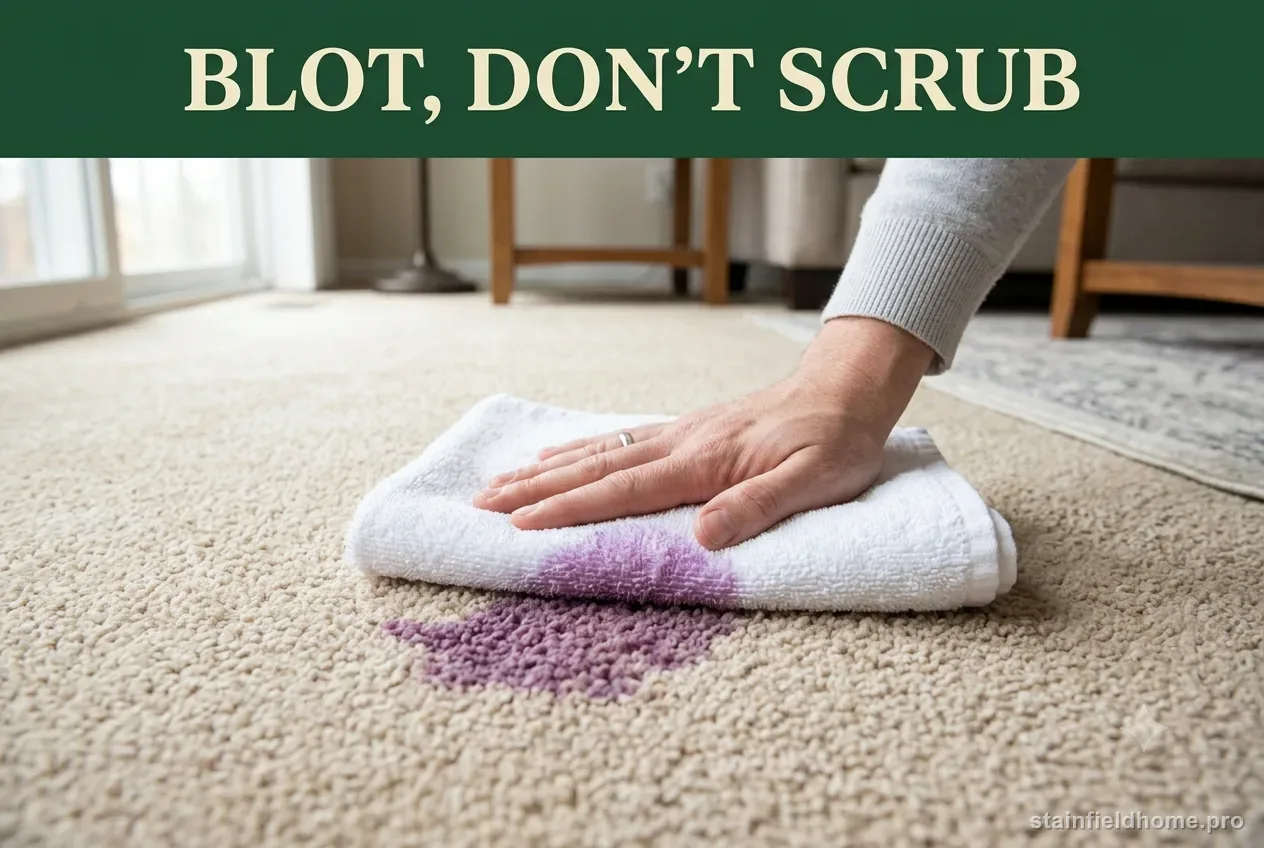
For a fresh juice spill: absorb first and keep the spot small
A fresh spill is easiest when most of the liquid leaves through the towel instead of being diluted into a larger wet zone. CRI's guidance repeatedly emphasizes blotting and small applications. Resist the urge to pour a cup of water over a cup of juice. The goal is controlled transfer: spill to towel, then cleaning residue to towel, then rinse water to towel.
University of Georgia textile guidance for fruit stains also starts with prompt action, controlled detergent treatment, clear-water sponging, and blotting. Some older extension procedures include stronger follow-up chemistry. For a modern household nylon carpet, the carpet maker's current warranty and a CRI-approved spot product are the safer escalation point because they account for stain-resistant finishes and backing systems that an old general recipe may not.
- 01
Lift any fruit pulp with a rounded spoon without pressing it into the pile.
- 02
Place a folded white towel over the liquid and press straight down. Replace the towel as it becomes colored. Do not scrub, twist the pile, or use a colored cloth.
- 03
When transfer slows, apply a small amount of cool or lukewarm clean water to the stained fibers. Do not soak the carpet backing.
- 04
Blot from the outer edge toward the center using a fresh towel face each time. Continue while juice color is transferring.
- 05
If a colored shadow remains, use a CRI-approved or carpet-manufacturer-approved spot cleaner according to its label. Pretest it in an inconspicuous area first.
- 06
Rinse the treated fibers with a small amount of clean water and blot thoroughly. Cleaner residue can attract soil and make the spot reappear as a dull patch.
- 07
Cover the damp area with a clean dry towel and press or lightly weight it for a short period, then remove the towel and allow the carpet to air-dry with gentle room ventilation.
Fresh juice versus a dried or set-in red or purple stain
Fresh juice still has mobile liquid that can be absorbed. A dried stain has left sugars, acids, natural pigments, and sometimes added food color inside the pile. Start a dried mark by vacuuming any dry sugar crust or debris, then use a small amount of cool or lukewarm water to rehydrate only the stained fibers. Blot, wait, and repeat. Do not saturate the pad in an attempt to reverse hours of drying in one step.
If water alone stops producing color transfer, move to the approved spotter. Apply it to a white cloth or in the small amount specified on the label, allow the stated dwell time, then blot. Repeat the same product while improvement continues. CRI notes that complete removal can require repeated use of one agent; that is different from rapidly stacking several incompatible products. Rinse before changing chemistry.
A red or purple shadow that remains after two or three careful cycles may be dye rather than removable sugar residue. Stop if the towel no longer picks up color, the carpet dye transfers, the pile feels rough, or the stain begins to spread. A professional can use controlled extraction and fiber-compatible spotting agents without soaking the backing. If the juice contained milk, protein powder, alcohol, oily ingredients, or artificial dye, tell the cleaner exactly what was spilled because the residue is not simply 'fruit juice.'
Avoid rings, wicking, and rapid resoiling
A spot can look gone while damp and return as it dries. That is wicking: liquid and dissolved soil move upward from deeper in the pile or backing as moisture evaporates. It is more likely after a large spill or over-wetting. Blot as dry as possible, use a fan across the room, and check the area after it is completely dry. If the color returns from the center or the carpet feels damp underneath, repeated surface spraying may make the cycle worse.
Cleaner residue creates a different problem. Detergent left in the pile can become sticky and collect soil, producing a gray or darker patch days later. CRI specifically recommends thorough rinsing of spot-removal solutions and warns against stronger-than-recommended concentrations. If a previously cleaned area feels stiff or foams when touched with a damp cloth, rinse with small amounts of clean water and blot rather than adding more cleaner.
After drying, gently reset the pile with clean fingers or a soft vacuum pass according to the carpet maker's guidance. Judge color from more than one direction; nylon pile can reflect light differently when the tufts are lying flat. A change that reverses when the pile direction changes is not the same as a remaining juice stain.
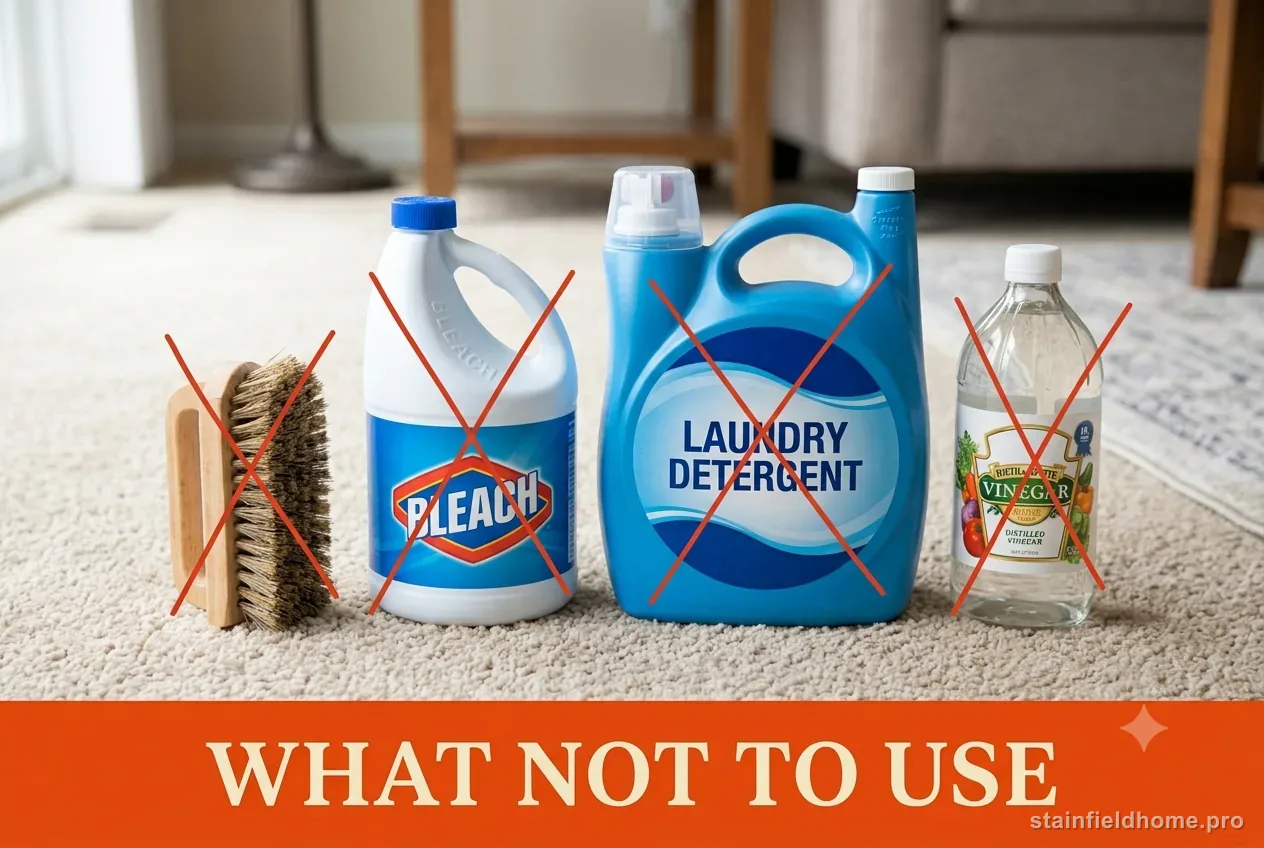
What not to use on nylon carpet
Nylon fiber itself is not the only limit. A method can leave the yarn intact and still strip a stain-resistant treatment, loosen backing latex, bleach dye, or create a permanent texture change. Use the least amount of compatible chemistry that achieves transfer to the towel.
- Do not scrub with a brush or rub aggressively; CRI warns that scrubbing can distort and fray carpet pile.
- Do not use chlorine bleach unless the exact carpet manufacturer expressly approves it for that product and stain-treatment system.
- Do not use laundry detergent, automatic dishwasher detergent, or an extra-concentrated soap mix as a substitute for carpet spotter.
- Do not stack vinegar, ammonia, peroxide, oxygen bleach, enzyme products, and commercial spotters on top of one another without rinsing and checking compatibility.
- Do not pour solvent directly onto the carpet; solvents can damage backing and adhesive systems.
- Do not steam or add high heat to a colored stain before you know the carpet maker permits that process.
- Do not leave a wet towel or heavy weight on the carpet overnight where moisture can remain trapped in the cushion.
How to decide whether the stain is gone
Stop judging while the carpet is wet. Moist fibers look darker, and flattened pile can create a shadow. Let the spot dry fully, vacuum lightly if appropriate, then compare it with the surrounding carpet in daylight. If a white towel pressed on the dry spot stays clean and the color difference disappears when the pile is brushed in the same direction, further wet treatment is unnecessary.
If a pink, red, orange, or purple cast remains but no color transfers, the pigment may be bonded to the fiber or a stain-treatment layer. More rubbing is unlikely to help. If the mark returns only after drying, suspect wicking from below. If the area becomes gray over several days, suspect cleaner residue attracting soil. Each symptom has a different fix, which is why 'keep spraying until it disappears' is poor carpet advice.
For a valuable carpet, a large spill, a stain near a seam, or a recurring wick-back mark, document what you used and contact a CRI Seal of Approval service provider or the carpet manufacturer. A concise product history prevents a professional from unknowingly combining incompatible spotters.
Prevent the next juice spill from becoming a permanent dye mark
Keep plain white towels and the carpet maker's approved spot product together instead of searching for ingredients after a spill. Address liquid immediately, especially dark berry, grape, cherry, or artificially colored drinks. Use stable trays or washable rugs under children's drink areas when practical, and keep cups off the floor in rooms with light carpet.
Maintain the carpet according to its warranty, including regular vacuuming and periodic professional cleaning where required. A pile loaded with soil makes any wet spot harder to judge and can create a dark ring during cleaning. Fast absorption, modest moisture, complete rinsing, and thorough drying remain the most useful habits for ordinary juice spills on nylon carpet.
Common questions
FAQ
Can I use vinegar on a juice stain in nylon carpet?
Only when the carpet manufacturer or the specific spot-removal procedure allows it. Do not default to vinegar because the stain is fruit-based. Start with blotting, controlled water, and an approved carpet spotter; rinse before changing chemistry.
Why did the juice stain come back after the carpet dried?
The spill may have wicked upward from deeper in the pile, backing, or cushion. Blot and dry aggressively with air movement rather than adding more solution. Repeated wick-back after a large spill is a good reason for professional extraction.
Can I scrub nylon carpet because nylon is durable?
No. Nylon may be durable, but scrubbing can distort the pile and spread the stain. CRI recommends blotting, gentle edge-to-center work, and small amounts of tested cleaning solution.
Sources reviewed
Keep reading
Related guides
Slime on Carpet
How to Remove Slime From Carpet Without Damaging the Fibers
Lift dried or fresh slime out of carpet fibers with an ice-and-scrape method plus a vinegar or rubbing alcohol rinse, without soaking the backing or bleaching the color.
Essential oil and reed-diffuser oil on Finished wood furniture
How to Remove Essential Oil and Diffuser Stains From Wood Furniture
Blot a diffuser-oil spill on finished wood, use a cautious absorbent step, and recognize when the finish needs a furniture repair professional.
Pumpkin (carving, decorating, or puree) on Carpet
How to Remove Pumpkin Stains From Carpet
Remove pumpkin pulp and treat any remaining orange mark on carpet with a careful, low-moisture sequence that follows the carpet maker's guidance.
Sweat on Baseball cap
How to Remove Sweat Stains and Odor From a Baseball Cap
Lift yellow sweat stains and odor from the sweatband of a baseball cap without warping the brim or shrinking the crown.