The quick answer
Pretreat hair-gel residue before washing, then launder in the hottest water that is safe for the pillowcase fabric and confirm the mark is gone before machine drying. Cotton and washable polyester satin tolerate more conventional detergent treatment; silk or delicate satin should follow the care label and usually needs much gentler handling.
What you’ll need
- care label
- prewash stain remover
- liquid laundry detergent
- soft toothbrush for sturdy cotton only
- cool or warm water as label allows
- white towel
What a hair-gel stain actually is
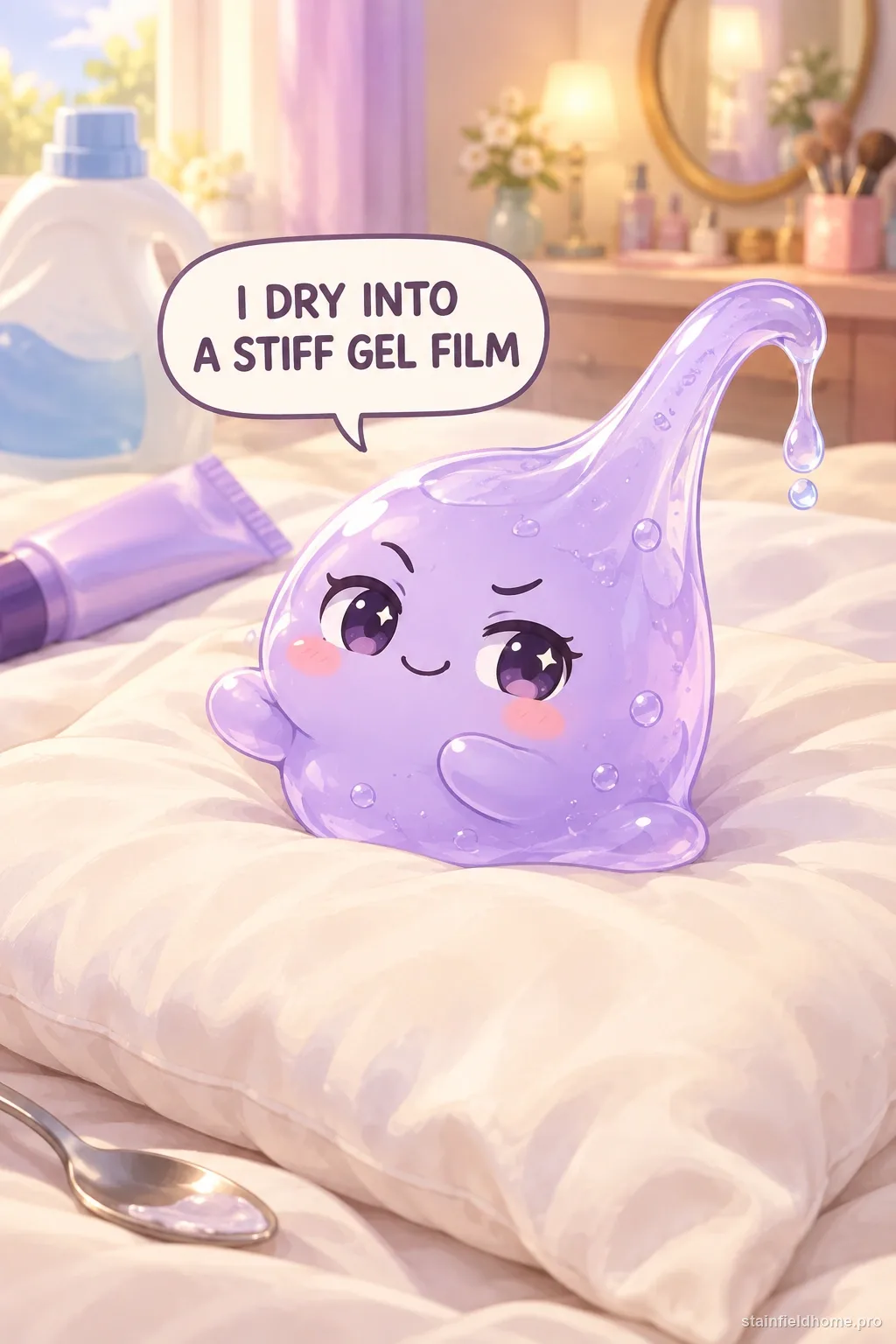
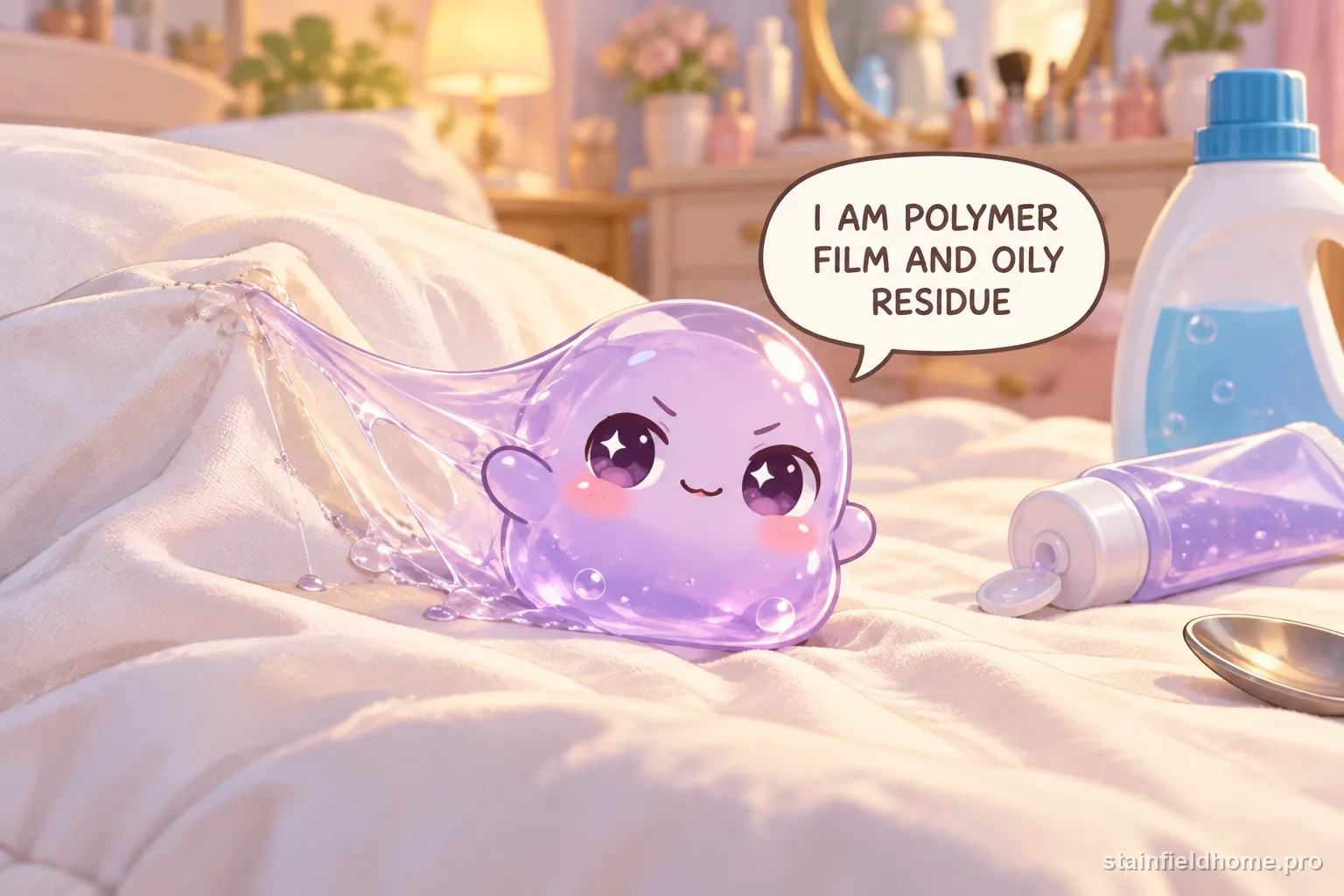
Hair gel is a film-forming polymer — usually PVP or a similar copolymer — carried in water, often with added oils and fragrance. On a pillowcase it dries into a stiff, slightly crusty patch that also traps sebum from your skin and scalp. So you are removing two things at once: a water-softenable polymer film and an oily residue.
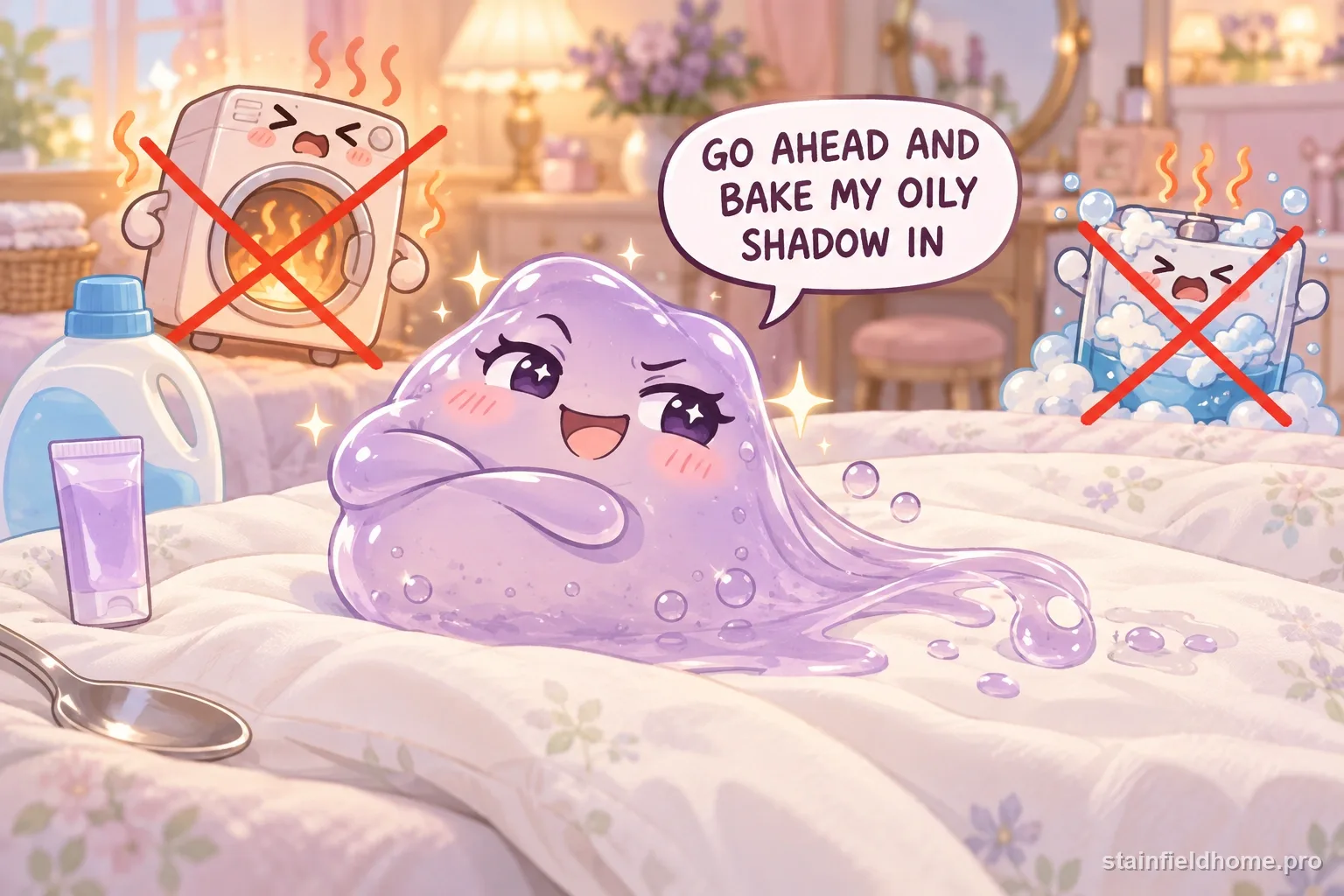
That combination is why plain water does not finish the job and why the dryer is dangerous here — heat bakes the oily fraction in and turns a faint patch into a permanent yellow shadow.
Identify the fabric first
'Satin' is a weave, not a fiber. Polyester satin is fairly washable. Silk satin is protein fiber that loses luster under enzymes, high heat, alkaline cleaners, and rough rubbing. Cotton percale and sateen take the most aggressive treatment.
Check the care label. For silk or 'delicate' satin, skip the toothbrush and the prewash spray, and use only a silk-safe detergent with cool water and your hands. For cotton and poly, you have the full toolkit below.
Pretreat and wash (cotton and poly satin)
- 01
Scrape off any dried crust with the edge of a spoon.
- 02
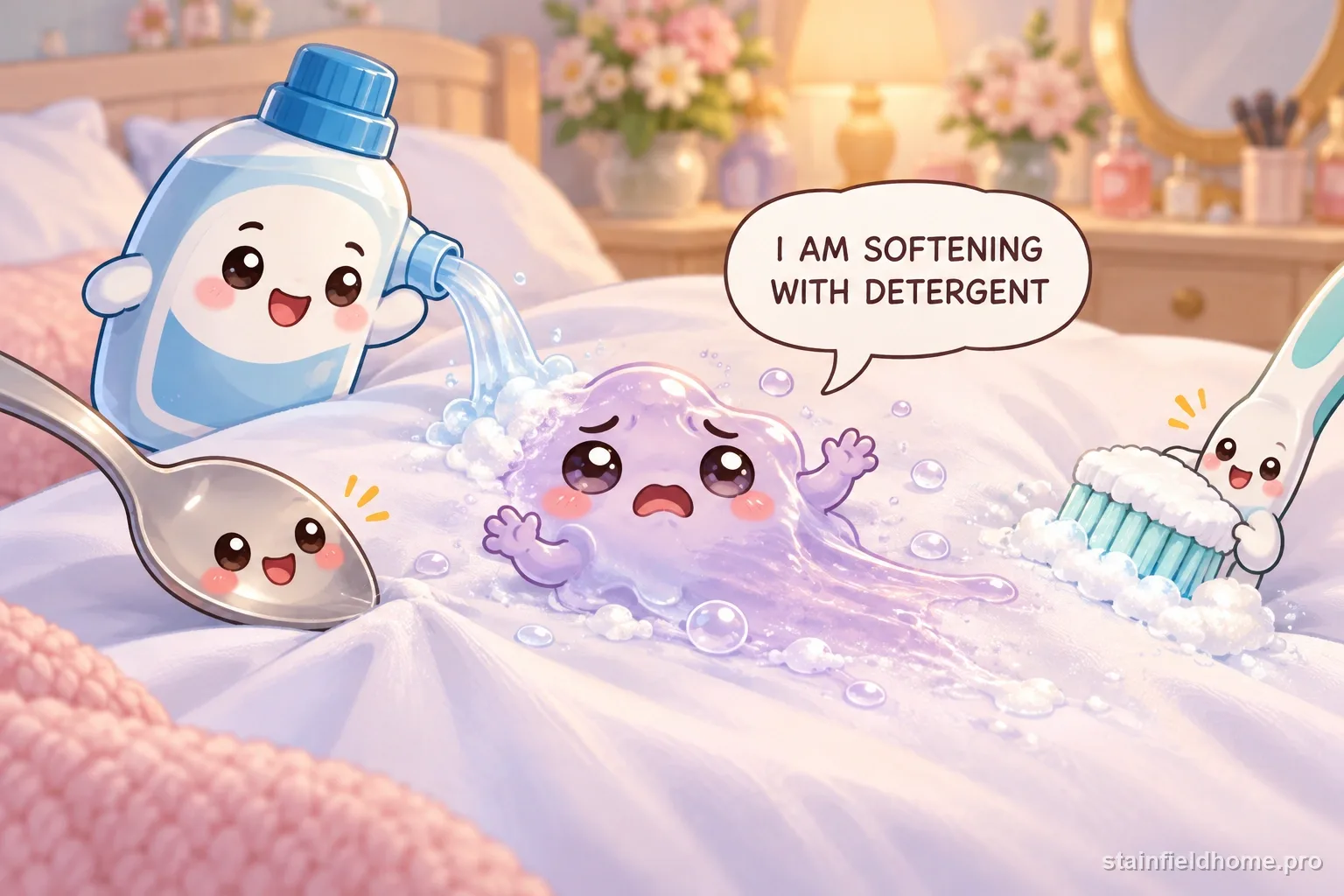
Work a prewash stain remover or a little liquid detergent into the mark from the back of the fabric.
- 03
For sturdy cotton, gently work it in with a soft toothbrush; for poly satin, use your fingers.
- 04
Let it dwell 10-15 minutes — do not let it dry out.
- 05
Wash in the warmest water the label allows with your normal detergent.
- 06
Check the spot while it is still wet. If a tacky or dark patch remains, repeat before it goes near the dryer.
Silk and delicate satin
Rinse the area under cool running water from the back, then work a small amount of silk-safe detergent (or a drop of clear, dye-free shampoo — silk is protein, like hair) into the mark with your fingertips. Let it sit five minutes, then hand-wash the whole pillowcase in cool water.
Roll it in a towel to blot, do not wring, and lay it flat or hang it to dry. If a mark survives one gentle wash, repeat rather than escalating — a silk pillowcase with a slight residual shadow is recoverable; a bleached or abraded one is not.
The oily yellow shadow that stays after washing
If the polymer is gone but a yellowish oil mark remains, treat it as a grease stain: apply a grease-cutting dish soap to the dry fabric, let it sit 30 minutes, then wash warm again. On white cotton, an oxygen-bleach soak before washing clears most of it.
This is also the stain that a dryer makes permanent, so keep line-drying until the fabric is genuinely clean under good light.
Pomade, wax, and 'wet look' gels act like grease
Not all hair product is the same stain. A basic alcohol-and-water styling gel is mostly a polymer film that softens with water. Pomade, hair wax, styling clay, and heavy 'wet look' or 'gel oil' products are oil- and wax-based, and on a pillowcase they behave like a grease stain — a dark, spreading, greasy mark rather than a stiff crust.
For those, skip straight to the grease routine: rub a grease-cutting dish soap into the dry fabric, wait 30 minutes, and wash in the warmest water the fabric allows. Silicone-heavy serums are the same. If you use these products daily, a dedicated dark pillowcase saves the good ones.
Keeping gel off the pillow
- Let styling product dry fully before bed, or rinse it out on heavy-gel days.
- Use a dedicated older pillowcase on nights you sleep in product.
- Wash pillowcases every 3-4 days if you use gel, pomade, or leave-in oil — buildup yellows the fabric over time.
- Wash oily styling-product marks promptly; an old set stain is much harder than a fresh one.
Common questions
FAQ
What if the hair gel is already dry and crusty?
Scrape off the crust with a spoon edge, then rehydrate the polymer film with the warmest water the fabric allows and pretreat with detergent or a prewash remover for 10-15 minutes before washing. Dried gel usually needs one or two repeat pretreat-and-wash cycles — just keep it out of the dryer until it is clean.
Can I use a stain-remover spray and a brush on a satin pillowcase?
On polyester satin, a gentle version is fine — use your fingers rather than a stiff brush. On silk satin, no: skip the spray and brush entirely and use a silk-safe detergent (or dye-free clear shampoo) with cool water and light hand motion, because enzymes, heat, and rubbing dull silk permanently.
There is a yellow mark left after washing. How do I get it out?
That is the oily part of the gel plus trapped skin oil. Treat it as a grease stain: rub in a grease-cutting dish soap, wait 30 minutes, and wash warm again. On white cotton, add an oxygen-bleach pre-soak. Do not tumble-dry until it is gone — heat sets that yellow permanently.
Sources reviewed
Keep reading
Related guides

Slime on Carpet
How to Remove Slime From Carpet Without Damaging the Fibers
Lift dried or fresh slime out of carpet fibers with an ice-and-scrape method plus a vinegar or rubbing alcohol rinse, without soaking the backing or bleaching the color.

Essential oil and reed-diffuser oil on Finished wood furniture
How to Remove Essential Oil and Diffuser Stains From Wood Furniture
Blot a diffuser-oil spill on finished wood, use a cautious absorbent step, and recognize when the finish needs a furniture repair professional.

Pumpkin (carving, decorating, or puree) on Carpet
How to Remove Pumpkin Stains From Carpet
Remove pumpkin pulp and treat any remaining orange mark on carpet with a careful, low-moisture sequence that follows the carpet maker's guidance.
Sweat on Baseball cap
How to Remove Sweat Stains and Odor From a Baseball Cap
Lift yellow sweat stains and odor from the sweatband of a baseball cap without warping the brim or shrinking the crown.