The quick answer
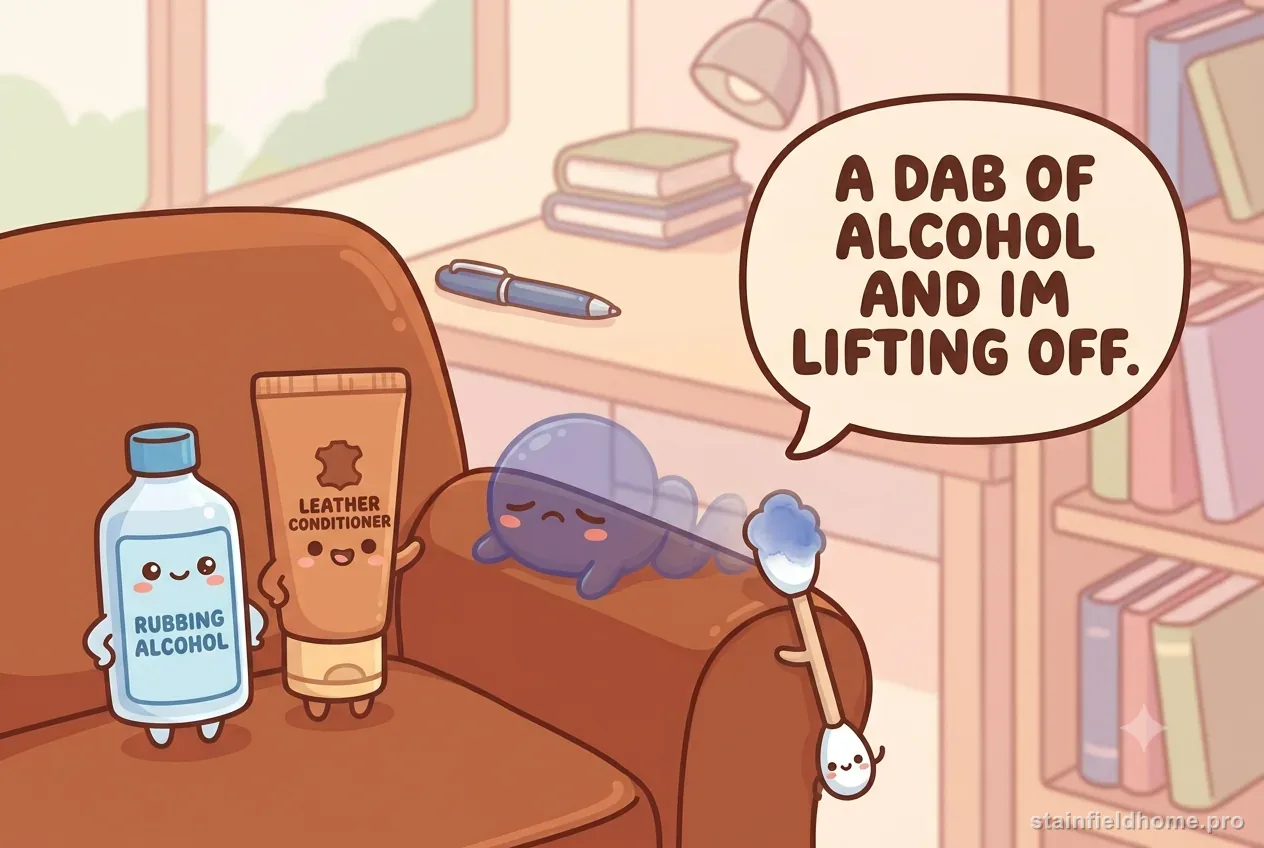
Blot fresh ink straight down with a dry cloth, never wiping. Try mild dish soap on a damp cloth first. If that does not lift it, patch-test 70 percent isopropyl alcohol on a hidden spot, then dab the mark with an alcohol-damp cotton swab from the outside in, rolling the swab so lifted ink comes up rather than spreading, and change swabs often. Stop the moment the ink is gone, wipe with a clean damp cloth, let it dry, and work in a leather conditioner. Do not use acetone, nail polish remover, a melamine sponge, hairspray, or heat, and send suede, nubuck, or aniline leather to a professional.
What you’ll need
- Dry white lint-free cloths
- Cotton swabs and cotton balls
- 70 percent isopropyl (rubbing) alcohol
- A mild leather cleaner or a drop of gentle dish soap
- Leather conditioner or cream
- A commercial leather ink remover, for a stubborn mark
- A soft dry towel
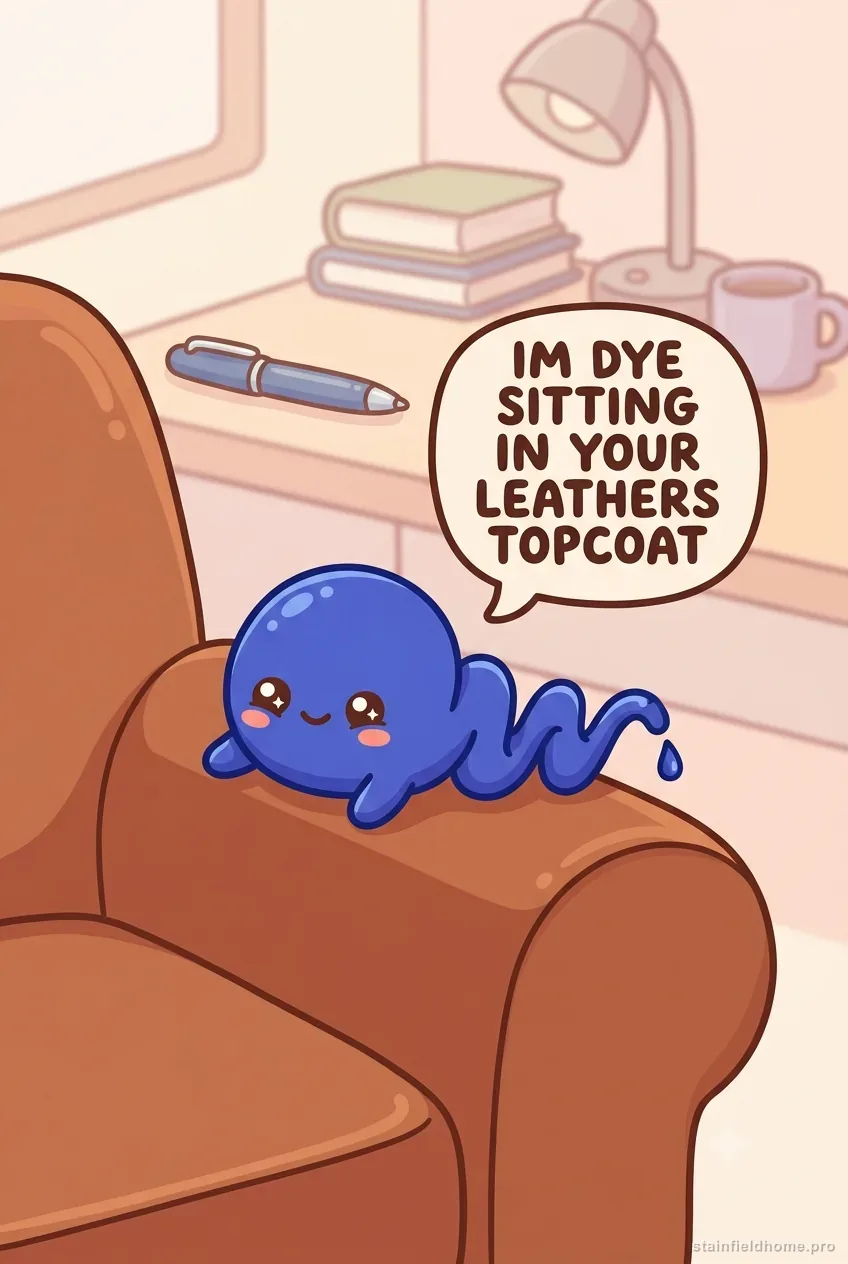
Hi. I'm the ink on your leather.
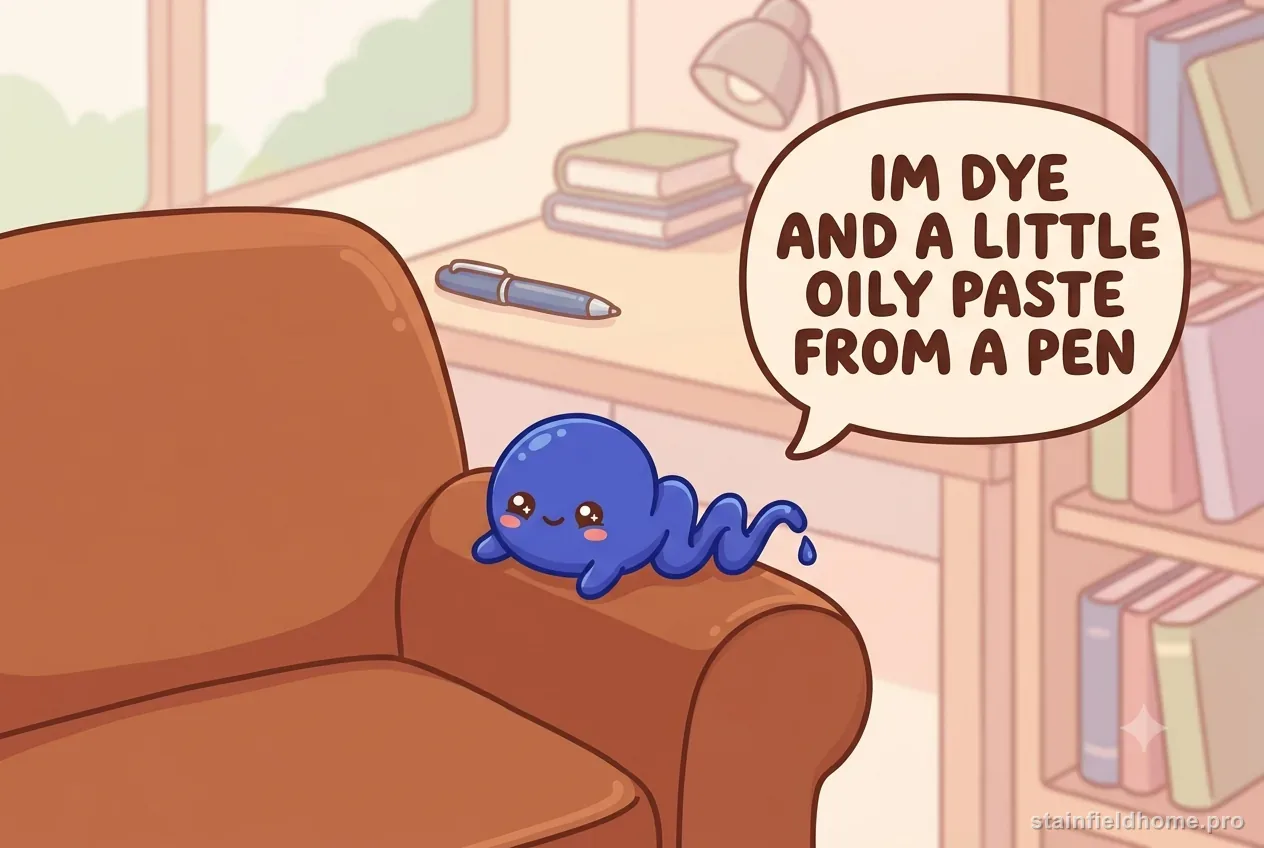
I'm the blue or black line a capless pen left across your armrest. Whatever pen I came from, my color is dye, but the carrier around that dye changes how I behave. From a ballpoint I brought a thick, slightly oily paste, so I sit up on the surface and cling. From a rollerball or a gel pen I am a thin water-based liquid that has already sunk in. From a felt-tip or a permanent marker I carry my own strong solvent and a resin, so I bond fast and hard. A fountain pen leaves a wetter, more spreading mark, and some fountain inks are iron-based and can etch.
Where I am living depends on your leather. On finished, pigmented leather, the kind on most sofas and car seats, I am trapped in the clear topcoat and the pigment layer just under it. That is reachable. On unfinished leather, full aniline, nubuck, or suede, I have soaked straight into the hide like ink into blotting paper, and no home method pulls me back out without leaving a halo.
One quick check before you panic: make sure I am actually ink. A blue-grey smudge on a pale leather bag or seat is often dye transfer, color rubbed off dark denim or a printed page, not pen at all. Dye transfer is a surface film that a leather cleaner and a little alcohol lift easily. If your mark wipes and lightens on the first gentle pass, it was probably transfer, and you are almost done already.
Know your leather first
Identify the leather first. Put a single drop of water on a hidden area. If it beads and sits, you have finished or protected leather and the steps below apply. If it soaks in within a few seconds and darkens the spot, you have aniline, nubuck, or suede: stop here and read the professional section, because water and alcohol will both wick outward and set a permanent ring.
Patch-test every product. Rub an alcohol-damp swab on leather you cannot see, the back of the base, under a cushion, the hidden side of a strap, and look at the swab. Some finishes and factory dyes lift with alcohol too. If the swab picks up your leather's own color, or the spot goes dull or tacky, do not use alcohol on the stain; move to a commercial leather ink remover or a professional.
Have your conditioner ready before you start, not after. Every solvent that lifts ink also pulls the natural oils and plasticizers out of the finish, and leather that is left stripped and dry will crack along that line within weeks. The job is not finished until the moisture is back.
Start with the gentlest thing
Before any solvent, try plain soap and water. Dampen a white cloth with warm water, add one drop of mild dish soap or a leather cleaner, wring it nearly dry, and blot the mark from the outside in. Turn to a clean part of the cloth each time.
A surprising number of fresh ballpoint marks, and almost all dye transfer, come up with this alone, and it costs the finish nothing. Give it three or four gentle passes. If the ink is clearly lightening, keep going with soap and water until it stops improving, then only reach for alcohol to finish the last of it.
A fresh ink mark, step by step
- 01
Blot any still-wet ink straight down with a dry cloth. Do not wipe; one wipe turns a dot into a six-inch streak.
- 02
Do the soap-and-water pass above and dry the area.
- 03
Dampen, do not soak, a cotton swab with 70 percent isopropyl alcohol. Seventy percent is better here than 90 or 99 percent, because it evaporates a little slower and is gentler on the finish. Touch it first to the outer edge of the mark.
- 04
Dab lightly and roll the swab as you lift, so the ink transfers onto the cotton instead of smearing sideways. Always work from the edge toward the center.
- 05
Change to a fresh swab the instant you see blue or black on the tip. A loaded swab just paints the ink back down.
- 06
Go slowly and give each spot a few seconds. Expect several swabs and a few minutes for a real pen line. The ink lifts in stages.
- 07
Stop the moment the ink is gone. Every extra pass on clean leather is now removing finish, not stain.
- 08
Wipe once with a clean damp cloth to remove any alcohol residue, let the spot dry fully, then massage a leather conditioner into it and a little way past its edges. Buff with a soft towel.
Hairspray, alcohol, and the hand-cream trick
The internet is full of ink tricks. Here is the honest verdict on the common ones.
Commercial leather ink removers, sold by leather-care brands, are formulated to lift dye without stripping finish and are the best next step if alcohol stalls. They are worth buying before you escalate to anything harsher.
Non-acetone nail polish remover can work on finished leather because it is mostly ethyl acetate, but it is stronger than rubbing alcohol and more likely to take the topcoat with the ink. Use it only as a brief, tested, last-swab effort, never as a first move. Acetone remover is off the table entirely; it dissolves the finish.
The vinegar-and-olive-oil mix that gets passed around does very little to ink and leaves an oily film that then attracts dirt. Skip it.
Hand sanitizer is essentially alcohol gel, so in a pinch it behaves like a weaker, thicker version of the swab method, but its added fragrances and gelling agents can leave a residue. Plain 70 percent alcohol is cleaner.
Hairspray was real advice when hairspray was mostly alcohol; modern formulas add resins and oils that leave a tacky, cloudy film on leather. Don't.
A melamine (magic eraser) sponge does lift ink, and it also sands off the clear coat and the pigment underneath, leaving a shiny, lighter dead patch that is harder to fix than the ink. Leather-care specialists specifically warn against it.
If I left a shadow behind
A faint grey or blue ghost after the main line is gone is dye that settled into the pigment coat. Try two or three more light alcohol passes spread across a day, conditioning the leather in between so it does not dry out and craze. Ink that has been sitting for weeks or months has partly oxidized and bonded, and alcohol will only ever fade it, not clear it.
When the shadow stops responding, you have reached the limit of cleaning. The remaining options are cosmetic: a color-matched leather repair kit that re-pigments the spot, or a professional who will re-dye the whole panel so there is no visible edge. Chasing the last ten percent with harder rubbing almost always ends in a pale worn scar that reads worse than the shadow ever did.
How ink becomes a permanent tint
- Acetone or acetone nail polish remover, which dissolves the topcoat and pigment and leaves a bleached crater
- A melamine sponge or any abrasive pad, which burnishes a shiny, discolored dead spot into the grain
- Hairspray, hand sanitizer with additives, or any product with oils and resins, which leave a film that dulls the finish and grabs dirt
- A hair dryer, heater, or sunny windowsill to speed drying, which bakes the leather and opens cracks along the cleaned line
- Soaking the area or letting alcohol pool, which drives the ink deeper and can stiffen the hide
- Scrubbing hard or working from the center outward, which spreads the dissolved ink into a bigger stain
- Any chlorine bleach or all-purpose degreaser, which discolors leather instantly and cannot be reversed
- Skipping the conditioner at the end, so the cleaned strip dries out and splits

Finished, aniline, suede, and nubuck
Finished or pigmented leather, most furniture and almost all car seats, is where the alcohol-and-condition routine works as written; a fresh ballpoint mark often lifts in a handful of passes. Semi-aniline leather has only a thin finish, so use less alcohol, expect the color to be more fragile, and stop early. Pull-up and waxy leathers lighten wherever you rub because the color moves with the wax; work very gently and re-blend the area with a matching cream afterward.
Full aniline, nubuck, and suede have no protective coat at all, so alcohol and water wick sideways and set a halo bigger than the original mark. A suede eraser or a light pass with a suede brush can take the top off a shallow scuff, but a true ink stain on any of these belongs with a leather specialist.
Bonded leather, which is leather fiber and polyurethane on a backing, tends to flake and peel where you rub, so keep any contact feather-light. Faux leather and vinyl have no dyed finish to strip, so an alcohol swab usually lifts surface ink cleanly, but marker and permanent ink can migrate into the plastic itself, where nothing brings them back.
Car seats deserve their own note because that is where a lot of pen marks land. Automotive leather is almost always heavily finished, so it takes the alcohol swab well; just condition afterward, because the sun and heat in a car already dry seats out faster than furniture. On perforated or ventilated seats, keep the swab barely damp so nothing runs down into the holes.
When to hand me to a pro
Call a leather technician if the leather is aniline, nubuck, or suede; if the ink is old and has oxidized; if your patch test showed the finish or dye lifting; if the mark is large or across a seam; or if a color shadow is left after cleaning and you want it invisible. Mobile leather-repair services can clean, re-pigment, and re-seal a panel for far less than reupholstering, and they can match the sheen so the repair does not show. It is a better outcome than a home-made pale patch.
Keeping pens away from the couch
Pens are the whole problem. Keep them off the couch and out of the door pockets and seat creases where they roll around, uncap themselves, and write on everything during a drive.
Refresh a leather protector cream a couple of times a year. It keeps a fresh mark sitting on the surface longer, which is the difference between a same-day wipe and a refinishing job. Same-day ink is a topcoat problem; week-old ink is a re-dye problem.
If you do catch a pen mark, treat it that day. Every day it sits, more of the dye oxidizes and bonds into the finish, and the odds of a clean removal drop.
Common questions
FAQ
Will rubbing alcohol damage my leather?
It can if you overdo it. Brief, light contact on finished leather usually only lifts the ink, but repeated or heavy rubbing also removes the finish and pigment. Patch-test a hidden spot first, use 70 percent rather than stronger, keep the swab barely damp, stop as soon as the ink lifts, and always follow with conditioner.
What is the safest first thing to try on ink?
Plain warm water with one drop of mild dish soap or leather cleaner on a wrung-out cloth, blotting from the outside in. It lifts most fresh ballpoint marks and nearly all dye transfer, and it does not touch the finish. Only move to alcohol for what soap and water leave behind.
Can I get ballpoint ink out of a suede sofa myself?
Not reliably. Suede has no finish, so alcohol and water spread the ink into a ring and leave a mark bigger than the original. A suede eraser may help a very light surface scuff, but an actual ink stain should go to a leather cleaning specialist.
Does hairspray still work on ink like people say?
It used to, when hairspray was mostly alcohol. Today's formulas add resins and oils that leave a tacky residue on leather and cloud the finish, so plain 70 percent isopropyl alcohol on a swab is the safer version of the same idea.
The ink is old and dried in. Can it still come out?
Only partly, in most cases. Aged ink has oxidized and bonded into the finish, so alcohol will fade it but rarely clear it. Do a few gentle passes with conditioning in between, then accept the result or have the panel professionally re-dyed. Hard rubbing to chase the last of it usually makes a worse mark.
Is a magic eraser safe on a leather couch?
No. It lifts ink by abrading the surface, which also removes the clear coat and pigment and leaves a shiny, lighter dead spot. Leather-care specialists advise against it. Use an alcohol swab or a commercial leather ink remover instead.
Sources reviewed
Keep reading
Related guides
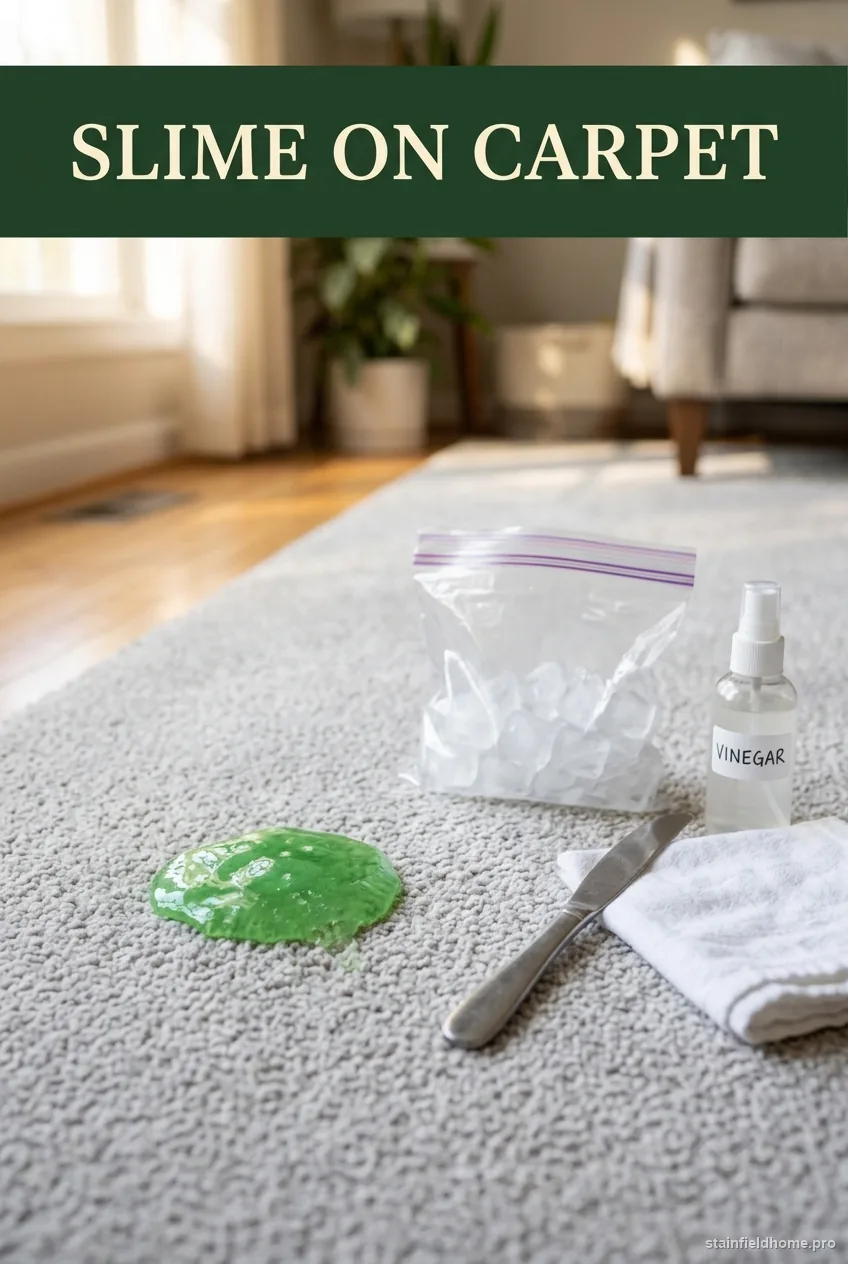
Slime on Carpet
How to Remove Slime From Carpet Without Damaging the Fibers
Lift dried or fresh slime out of carpet fibers with an ice-and-scrape method plus a vinegar or rubbing alcohol rinse, without soaking the backing or bleaching the color.
Essential oil and reed-diffuser oil on Finished wood furniture
How to Remove Essential Oil and Diffuser Stains From Wood Furniture
Blot a diffuser-oil spill on finished wood, use a cautious absorbent step, and recognize when the finish needs a furniture repair professional.
Pumpkin (carving, decorating, or puree) on Carpet
How to Remove Pumpkin Stains From Carpet
Remove pumpkin pulp and treat any remaining orange mark on carpet with a careful, low-moisture sequence that follows the carpet maker's guidance.
Sweat on Baseball cap
How to Remove Sweat Stains and Odor From a Baseball Cap
Lift yellow sweat stains and odor from the sweatband of a baseball cap without warping the brim or shrinking the crown.