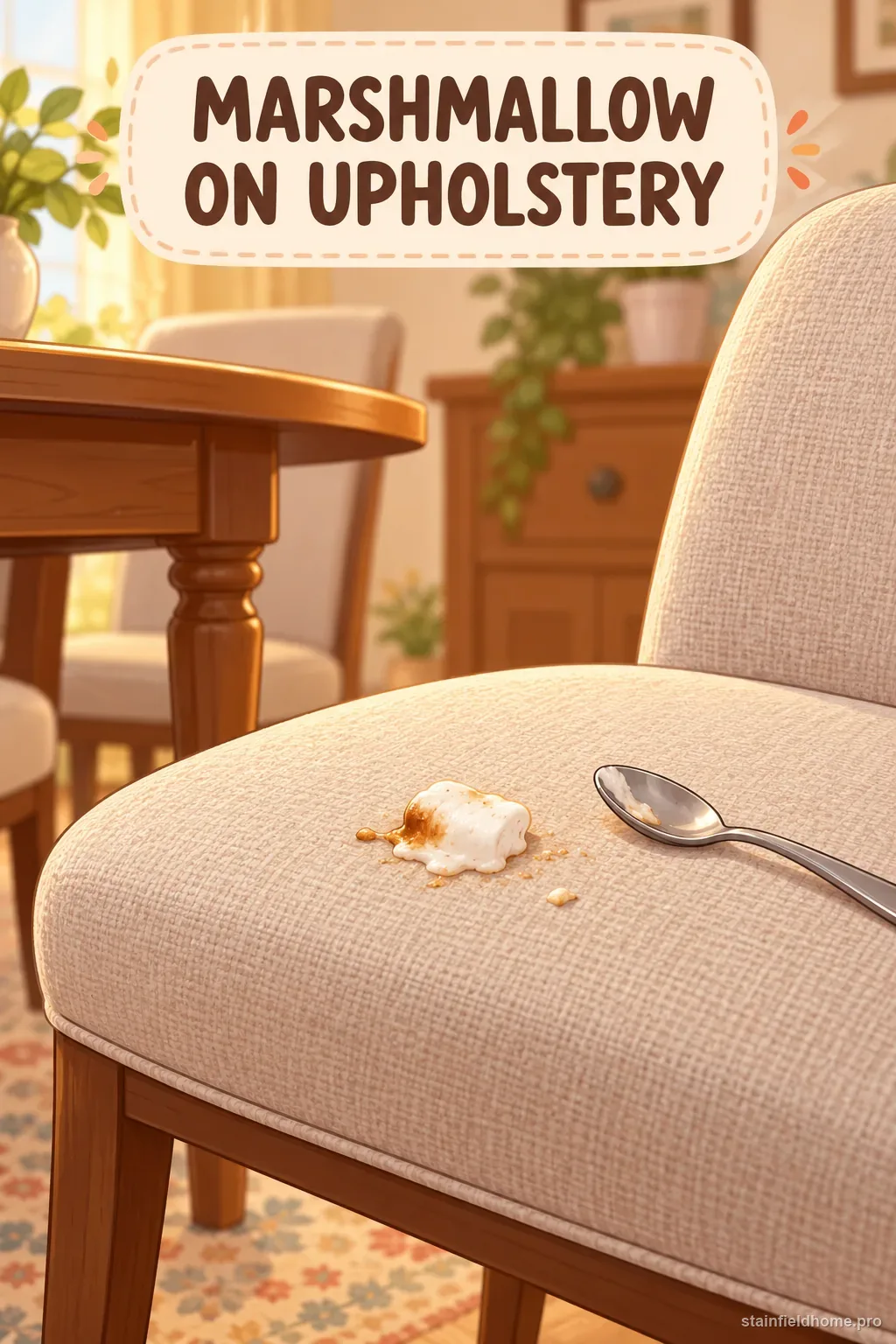
The quick answer
Let warm marshmallow cool, then lift loose pieces with a spoon. Check the chair's W, S, WS, or X code and follow the maker's instructions. If the code permits water, test an approved cleaner in a hidden spot, then blot with a barely damp white cloth. Do not soak, steam, scrape with a knife, or guess at a solvent. Call a professional for X-coded, antique, silk, or color-bleeding upholstery.
What you’ll need
- Blunt spoon
- Dry white cloths
- Care tag or manufacturer instructions
- Upholstery cleaner approved for the code
- Fan for room airflow
Check what is on the chair and how it is covered
Marshmallow is mostly sugar and gelatin, but a toasted piece may also contain browned sugar, chocolate, syrup, or butter. On a dining chair, the upholstery may be a blend, a performance fabric, velvet, or a removable cover with separate wash instructions. A sticky mark is not automatically safe to wet. Liquid can leave a ring, loosen adhesive, or carry sugar into cushion foam.
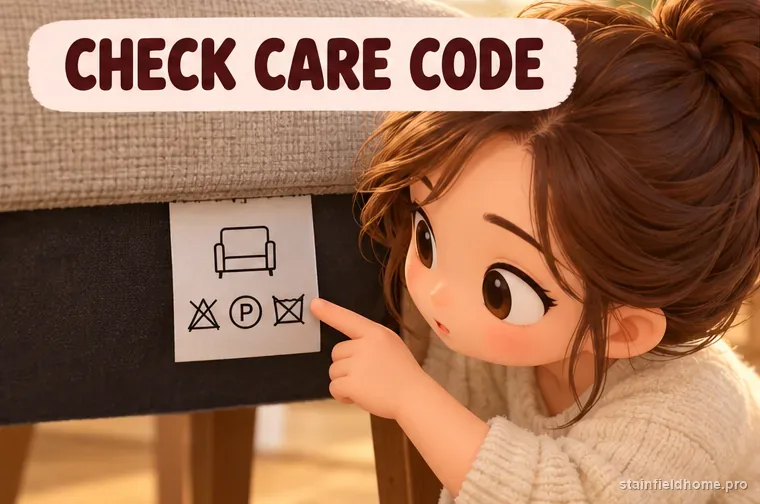
Look underneath the seat or along the deck for the maker's tag. Upholstery codes commonly use W, S, WS or SW, and X, but the chair manufacturer's full instructions matter more than a single letter. A removable cover is not necessarily washable unless its tag says so. Check for a second tag on the cushion or cover before treating it.
If the chair is antique, heirloom, silk, rayon, velvet, leather-trimmed, or unlabeled, limit home care to lifting loose material and contact a professional. Photograph the label and spot. Do not turn a small sticky patch into a larger ring by guessing at water or solvent.
If there is no visible care code, check the furniture paperwork or contact the maker with the chair model. Do not guess from the fabric's appearance: similar woven covers can have different backing, adhesive, or foam underneath. Until you identify the approved method, lift loose marshmallow and keep the area dry.
Let the marshmallow cool and lift what releases
If the marshmallow is still warm, leave it alone until it is cool. Blotting it while soft can stretch the sticky material through the weave. Do not use ice directly on fabric or force the spot into a hard, brittle state; condensation and scraping can create a second problem. Keep crumbs and utensils away from the cushion seam.
Use the edge of a blunt spoon to lift loose material straight up. Work from the outside toward the center and wipe the spoon between passes. Do not pull at threads or scrape with a knife. If a strand is embedded in a loop or textured weave, leave it for professional treatment rather than snagging the fabric.
Vacuum only dry crumbs that are fully detached, using a clean upholstery attachment on low suction. Do not brush or use a beater head over the spot. If the vacuum catches a thread, stop immediately and free it without tugging.

Use the upholstery code to decide whether water is allowed
For a W code, the maker generally permits water-based upholstery cleaner, but product and process limits still apply. For an S code, do not introduce water; use only the specific solvent method the manufacturer allows, or call a cleaner. For WS or SW, either category may be allowed, but a water ring or color transfer can still occur. X usually means vacuum or light brushing only, so professional cleaning is the safer route.
Find the code on the chair, then read the detailed manual if available. A tag with a W does not mean you may soak the cushion, use steam, or apply laundry detergent. Likewise, a removable cover's laundry tag does not authorize cleaning the attached upholstered frame. Treat each fabric component according to its own instructions.
Test the approved cleaner in a hidden area using a white cloth and the product's directions. Let the test patch dry fully and compare color and texture. If dye transfers, the pile changes, or the fabric develops a ring, stop. A successful test is a limited check, not proof that every area will respond identically.
Some manufacturers use codes differently or provide extra limits for a particular finish, so read the tag together with the full manual. If the tag is missing, illegible, or conflicts with the manual, ask the maker before using water or solvent. A generic upholstery spray is not a safe way to resolve that uncertainty.
| Code or condition | General direction | Avoid |
|---|---|---|
| W | Only maker-approved water-based cleaner | Flooding or steam by default |
| S | Only maker-approved solvent process | Water and homemade sprays |
| WS or SW | Test one permitted method first | Mixing methods |
| X or no label | Vacuum dry debris, ask a cleaner | Home spot chemicals |
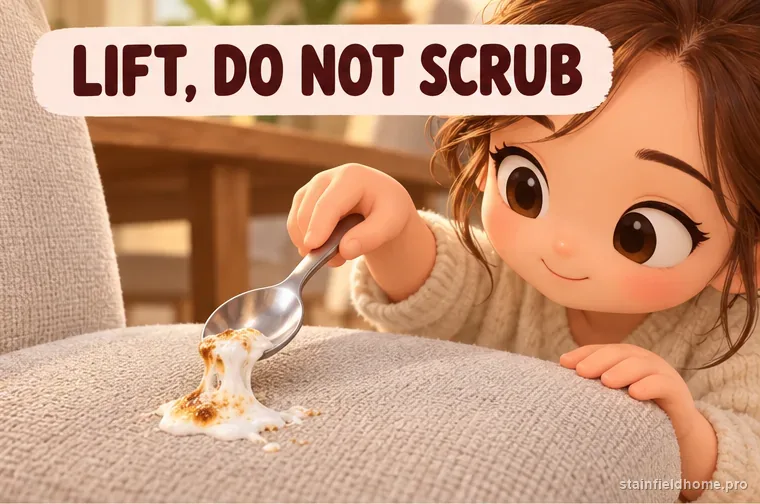
Blot sticky residue with a small tested treatment
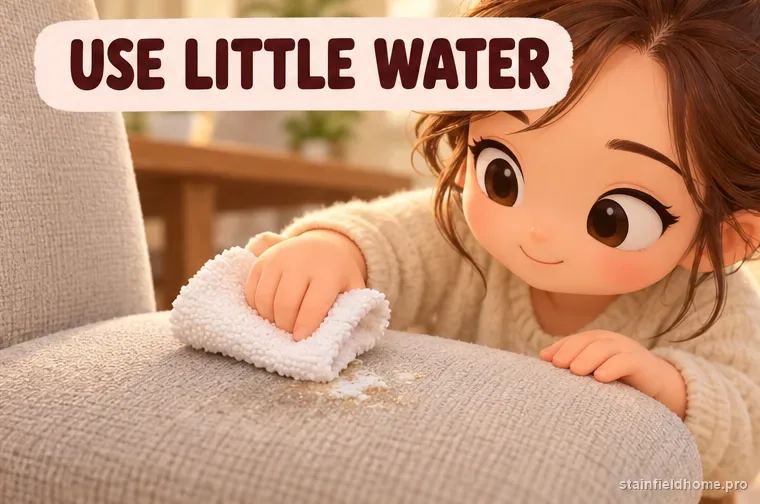
On a code and test that permit water, dampen a clean white cloth so it is barely moist. Apply the approved cleaner to the cloth if its label says to, rather than pouring it onto the seat. Press the residue and lift. Rotate to a clean section of cloth and repeat only while material transfers.
Work in short passes and keep the damp area no larger than the original spot. Do not scrub in circles or press hard enough to push sugar into the cushion. If the cloth becomes sticky, change it; otherwise it can redeposit residue. Use a second cloth, barely damp with plain water, only if the cleaner label calls for rinsing.
If the chair is S-coded, do not try this water method. A consumer should not improvise a solvent treatment: the wrong solvent can dissolve dyes, affect foam, or create a fire hazard. Follow only the manufacturer procedure or arrange professional cleaning. Never combine upholstery products with bleach, ammonia, vinegar, or another cleaner.
Sugar can dissolve into a thin film that is hard to see on a patterned seat. After each pass, check the white cloth for sticky residue and use a fresh area rather than spreading it back over the weave. Stop when no more transfers; repeated rubbing can push the remaining syrup below the fabric surface.
Remove residue and dry without heat
If the label-approved cleaner requires a rinse, blot with a second clean white cloth that is only lightly damp. Keep water from reaching seams, zippers, and the cushion core. Then press a dry towel over the treated area to absorb moisture. Do not use a wet extraction machine unless the furniture maker specifically approves it.
Let the chair dry with normal room airflow. A fan may move air across the surface; do not aim a hair dryer, heater, iron, or steam nozzle at it. Keep people from sitting on the area until it is dry so moisture and residue are not pressed deeper into the cushion.
Once dry, inspect the spot from two directions. A stiff or tacky feel can signal remaining sugar or cleaning product. Do not add fabric softener, perfume, or a second product to cover it. If a ring, color change, or texture difference remains, stop and contact the maker or a trained upholstery cleaner.
A cushion can stay damp inside after the surface feels dry. Do not cover it with a throw or put the chair back against a wall until the treated area has dried fully. If the cushion still feels cool or damp later, or an odor develops, contact an upholstery cleaner instead of adding more water.
Handle dried marshmallow and previous attempts
For dried residue, first remove only what lifts without force. Do not warm it with an iron, steam, or hot water. If the care code permits a cleaner, test it again and follow the label. A residue that has been rubbed into pile or foam may be beyond simple surface blotting.
If someone already used dish soap, vinegar, alcohol, or a carpet machine, write down what was applied and how much moisture was used. Avoid adding another chemical. On upholstery, residue can remain below the face fabric even after the visible patch looks clear, and aggressive extraction can spread it or wet the cushion core.
If the first cautious attempt does not make the spot visibly better, stop rather than repeating with a stronger mix. Share the chair make, fabric code, stain age, and product history with a cleaner. These details help them select an appropriate method and protect the finish.
Prevent sticky spots and know when to call a pro
Call a professional for X-coded, antique, silk, velvet, or untagged upholstery; dye transfer; a large area; a sticky patch at a seam; or residue that reached the cushion core. Stop if the fabric puckers, becomes rough, changes shade, or develops a spreading ring. Do not remove staples or open a cushion cover unless the furniture maker instructs you to.
Avoid household degreasers, bleach, alcohol, and unlabelled solvent mixes. Do not combine cleaning chemicals, particularly bleach with ammonia or vinegar. Keep products away from the chair's wood finish, nearby food, children, and pets, and follow label ventilation instructions.
At dessert, use a washable napkin or tray beneath serving dishes and clean loose crumbs before they are pressed into the chair. Save the care tag information with the furniture receipt. A quick label check is more useful than a generic stain recipe when each chair uses a different fabric.
If the mark is on a dining chair used near food, keep the chair out of service until cleaner residue is removed and the upholstery is dry. Follow the product label for ventilation and contact precautions. Wipe nearby wood or metal only with a method approved for that surface; upholstery cleaner can damage furniture finishes.
For a dried spot, do not try to soften it with steam or a wet cloth before checking the code. Lift crumbs that come away easily and photograph the area. A cleaner can decide whether the sugar is still on the fabric face or has reached the cushion, where a surface-only method may leave residue behind.
If the marshmallow was toasted, check whether the fabric itself has a brown mark or a change in texture. Scorching and melted synthetic fibers are not food residue, and stain treatment will not reverse heat damage. Do not pick at a fused spot; ask the furniture maker or an upholstery professional to assess the fabric and cushion. If there is no sticky transfer on a clean cloth but the area remains discolored, treat it as possible heat damage rather than applying more cleaner. Photograph the texture before anyone sits on the chair again. Include a photo of the care tag when contacting the maker, and note whether the fabric feels rough or fused.
If the seat cover can be removed
A zipper does not mean a chair cover is meant to come off. Remove it only if the furniture maker says it is washable or removable, and follow the cover's own care label. Let both cover and cushion dry fully before putting them back together.
If marshmallow is mixed with chocolate, fruit, or butter, tell the upholstery cleaner; those ingredients can leave oil or pigment as well as sugar. Keep the cleaner matched to the chair's code and fabric, and do not transfer a method that worked on another seat.
Once dry, check for tackiness, a ring, or a changed nap. Do not keep brushing a patterned or pile fabric to make it look even. A sticky spot at a seam or a mark that reached the cushion core needs an upholstery professional.
Common questions
FAQ
Sources reviewed
Keep reading
Related guides
Fabric softener on Dark clothes
How to Remove Fabric Softener Stains From Dark Clothes
Identify and remove the blue-grey or greasy blotches liquid fabric softener leaves on dark laundry, and change how you dose it so it stops happening.
Iron rust on White cotton fabric
How to Remove Rust From White Cotton Fabric
Treat rust on washable white cotton with a fabric-safe rust remover; avoid chlorine bleach, which can worsen iron staining.
Hot chocolate on Fabric couch
How to Remove Hot Chocolate From a Fabric Couch
Blot hot chocolate from a fabric couch without spreading it. Check the upholstery code, lift solids, clean only compatible fabric, rinse, and dry.
Spills and body oils on Bouclé sofas and chairs
How to Clean a Bouclé Sofa or Chair Without Flattening the Texture
Spot-clean a bouclé sofa or chair by its cleaning code, protect the looped pile from matting, and know which spills need a dry solvent instead of water.