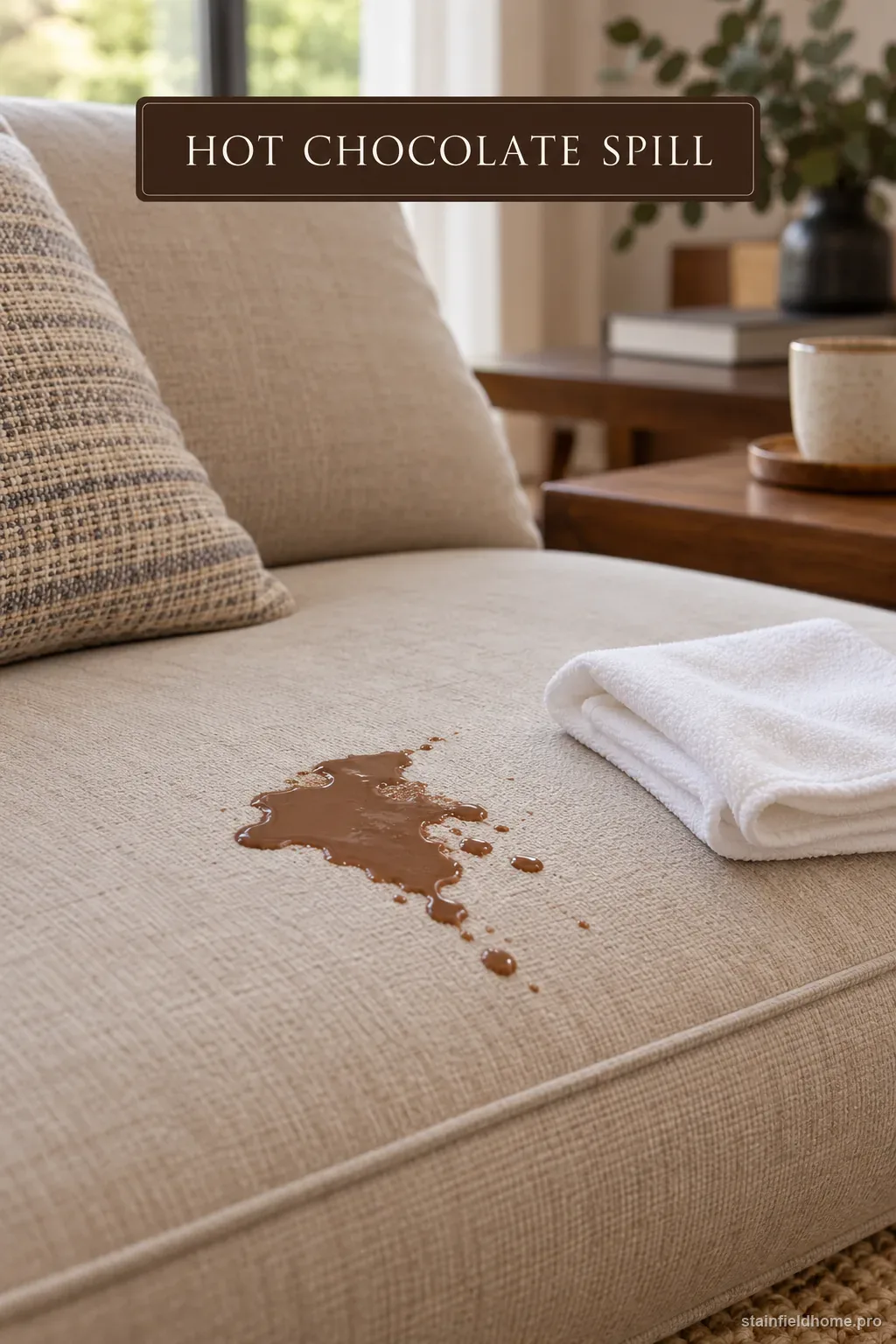
The quick answer
Check the couch tag: water methods are for W or WS fabric only. Lift chocolate with a spoon, then blot with a white cloth. On tested water-safe upholstery, dab with a barely damp cloth and mild soap in cool water. Rinse with a separate damp cloth and air-dry. Never scrub or soak the cushion. For S, X, unknown, delicate, or valuable fabric, call a professional.
What you’ll need
- Dull spoon
- White absorbent cloths
- Small cup
- Mild clear dish soap
- Cool water
- Dry towel
- Fan for airflow
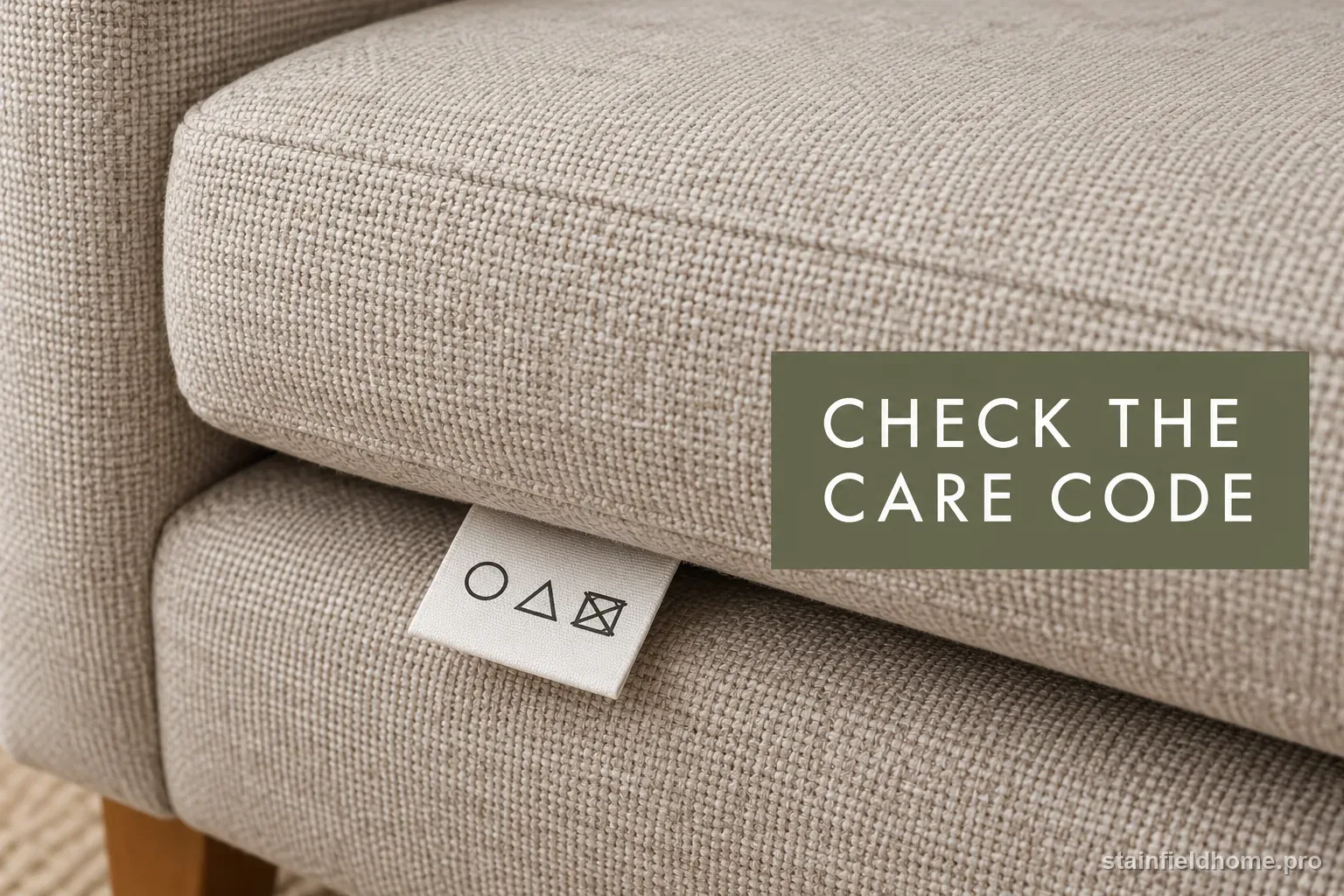
Check the couch tag before treating the spill
Hot chocolate can leave more than a brown mark. Cocoa contributes dark color and fine solids; chocolate and milk add fat and proteins; sugar can dry tacky. A spill may look like a small surface spot while liquid has already moved between the woven threads or into the cushion seam. Start by containing the spill and checking the care code, not by mixing a household remedy.
Look under removable cushions, along the platform deck, or on the sofa's manufacturer's care label. A W code allows water-based cleaning; WS or SW permits either water-based or solvent-based cleaning. S means use only a water-free solvent formulated for upholstery. X means vacuum or brush only, with no liquid cleaner. These codes are general guidance: the exact sofa label and manufacturer instructions take priority. If the tag is missing, faded, or unclear, do not assume the fabric can tolerate water.
This guide's damp-cloth method applies only to a couch labeled W or WS whose maker permits spot cleaning. For S, X, unknown, silk, rayon, linen velvet, antique upholstery, or a valuable piece, leave the chemistry to a professional. A water ring, color bleed, shrinkage, or damaged backing can be harder to repair than the original chocolate. Keep the spill from spreading while you identify the fabric.
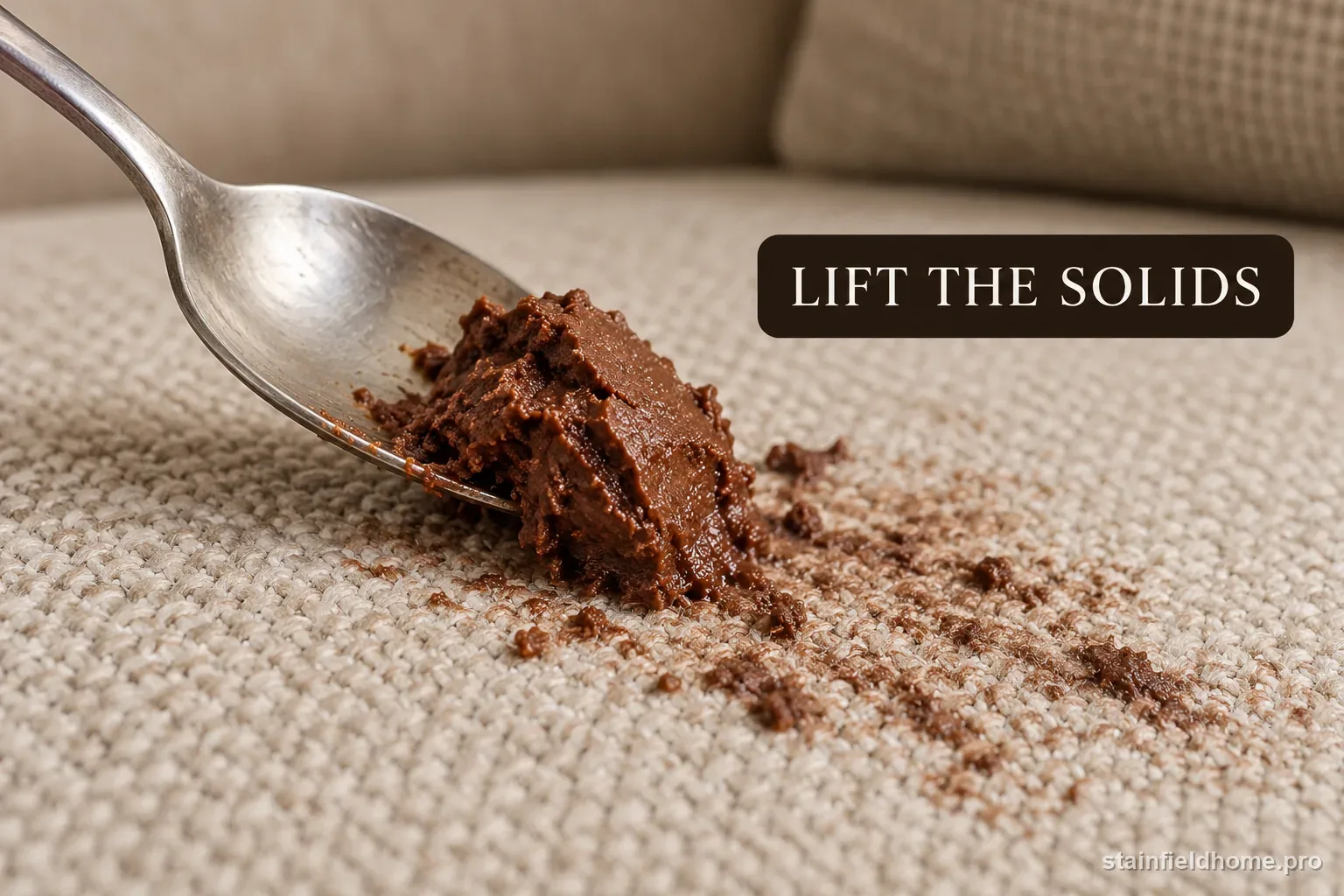
Lift soft chocolate without pushing it into the weave
COIT's upholstery guide also starts by lifting remaining chocolate with a spoon and warns against scrubbing. Its broader article then offers several different recipes, including hot water and solvent steps. Those are not interchangeable for every fabric code; use the sofa maker's care instructions to decide which cleaning chemistry is allowed.
- 01
If the drink is pooled, place a dry white cloth over it and press lightly to absorb the liquid. Lift straight up; do not drag the cloth sideways.
- 02
Use the edge of a dull spoon to lift any soft clumps or melted chocolate from the surface. Work from the outer edge toward the center and wipe the spoon between passes.
- 03
Rotate to a clean section of cloth each time it picks up cocoa. Stop pressing when the cloth no longer comes away visibly damp.
- 04
Do not scrape hard, pick at the threads, or brush the spot. A tool can snag upholstery yarns or push grit and chocolate further into the fabric.
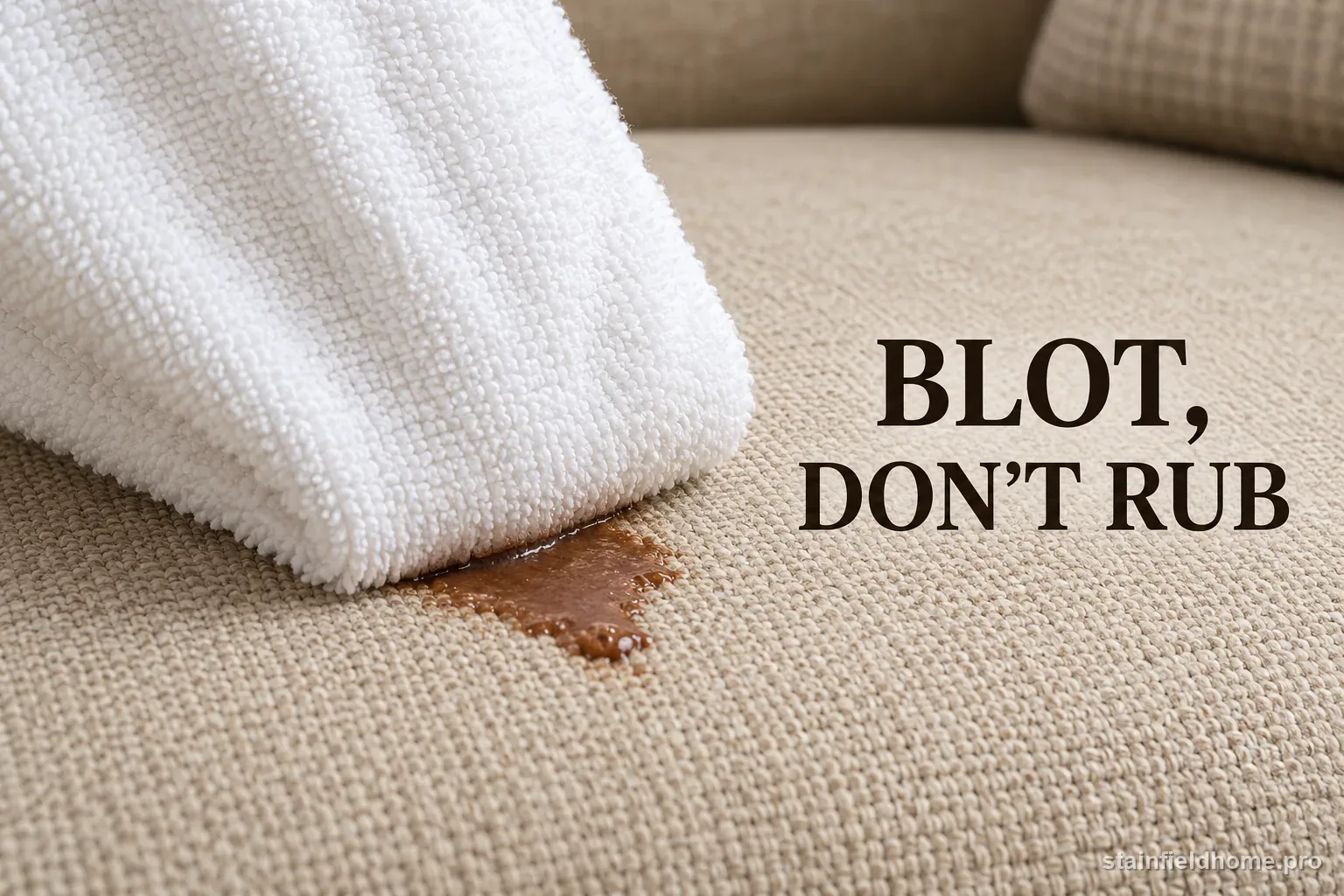
Blot the drink and separate fresh from dried residue
Use a plain white absorbent cloth or towel so you can see whether cocoa color transfers. Press and lift rather than wiping back and forth. Move from the outside of the damp area toward its middle, and change cloth sections before they become saturated. This contains the mark and limits how much liquid reaches the cushion filling.
For fresh, thin hot chocolate, continue blotting until little moisture transfers. A dark shadow may remain because cocoa color and fat do not always lift at the same rate. Do not press harder to chase the color; stronger pressure can push the drink through the upholstery and into foam, where it becomes difficult to extract.
For a dried splash, first lift loose or brittle surface flakes with a spoon held nearly parallel to the fabric. Do not grind dry chocolate into the weave or use a stiff brush. If a set film remains, let the W/WS water-based cleaning step below soften it gradually after a hidden test. Avoid scraping with a knife, scissors, or a metal edge, especially on velvet, chenille, boucle, or a loose weave.
If the spill soaked through a cushion cover, reached a seam, or left the seat foam wet, stop at surface blotting. A home spot treatment cannot reliably remove liquid from deep inside a cushion. Professional extraction may be needed to remove the dairy and chocolate residue without leaving a damp core.
Test a hidden spot and choose only a code-safe cleaner
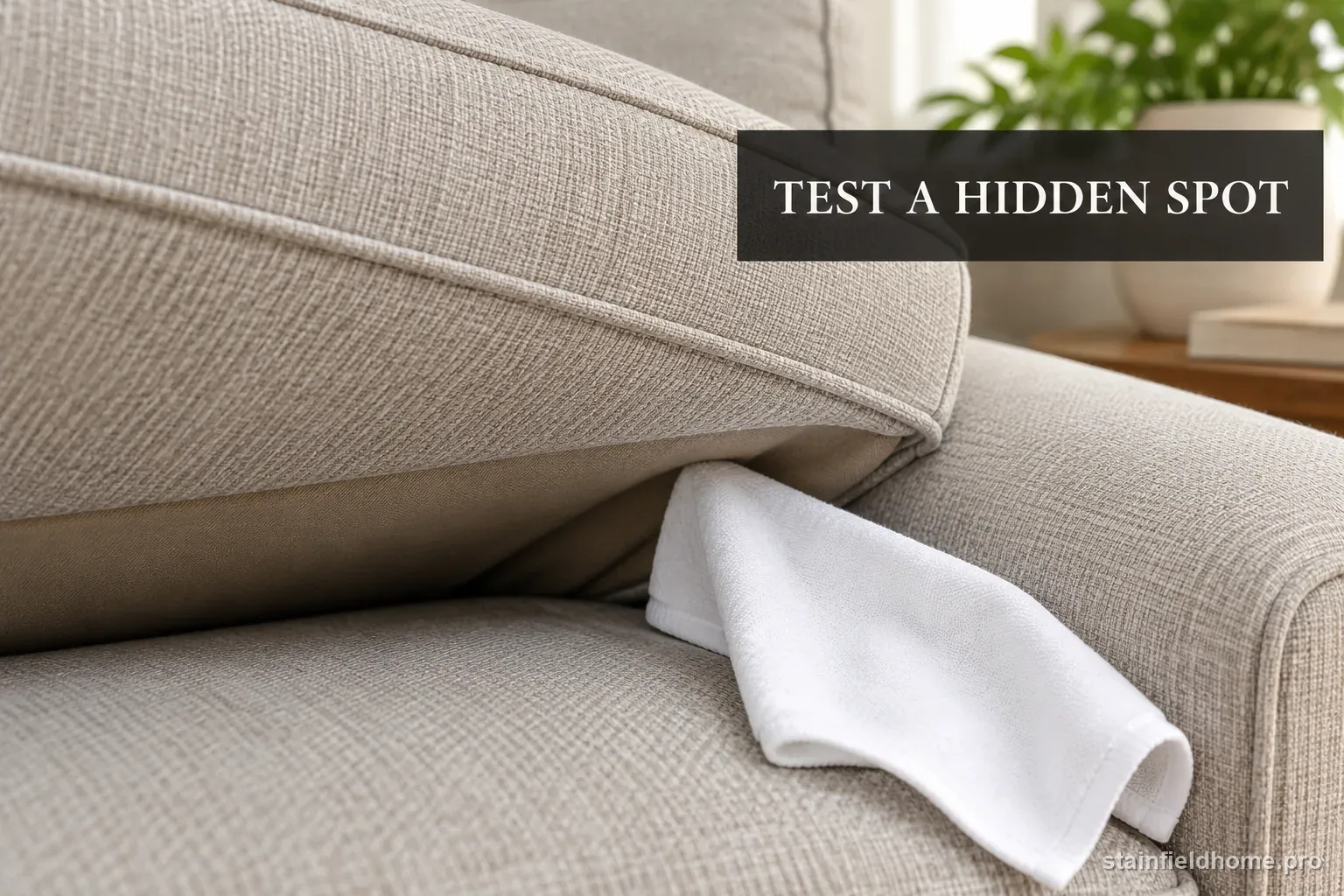
For W or WS fabric, begin with the simplest water-based option the manufacturer permits. Before treating the visible mark, dampen a clean white cloth with cool water and press it against a hidden area, such as the back of the skirt or underside of a cushion. Check for dye transfer, texture change, a pale patch, or a growing water ring. Let it dry completely before deciding the test passed.
If the hidden test changes the fabric, stop. Do not keep testing stronger products on the visible spot. If the tag says S, water can leave a ring or alter the fabric; use only a dry upholstery solvent when the maker allows it and the product label expressly identifies that use. If it says X, do not apply liquid or foam. If there is no readable code, contact the furniture maker or a cleaning professional.
Furniture Fair's upholstery guide recommends finding the code on the manufacturer's tag and testing a hidden location, then treating the actual sofa label as authoritative. It warns that over-wetting may affect the cushion core. Avoid generic recipes based on vinegar, alcohol, peroxide, ammonia, bleach, baking soda paste, or a laundry product. A method that works on a washable shirt can leave a permanent ring or strip finish from a sofa fabric.
Dab with a small amount of mild soap on W or WS fabric
Only after a successful dry hidden test, make a very mild solution if the sofa's instructions permit mild dish soap. Add a few drops of clear, mild dish soap to a cup of cool water and mix gently. Do not make a thick or sudsy mixture. Upholstery is not a sink of washable fabric; excess soap is hard to rinse from the weave and can leave a sticky patch that attracts dirt.
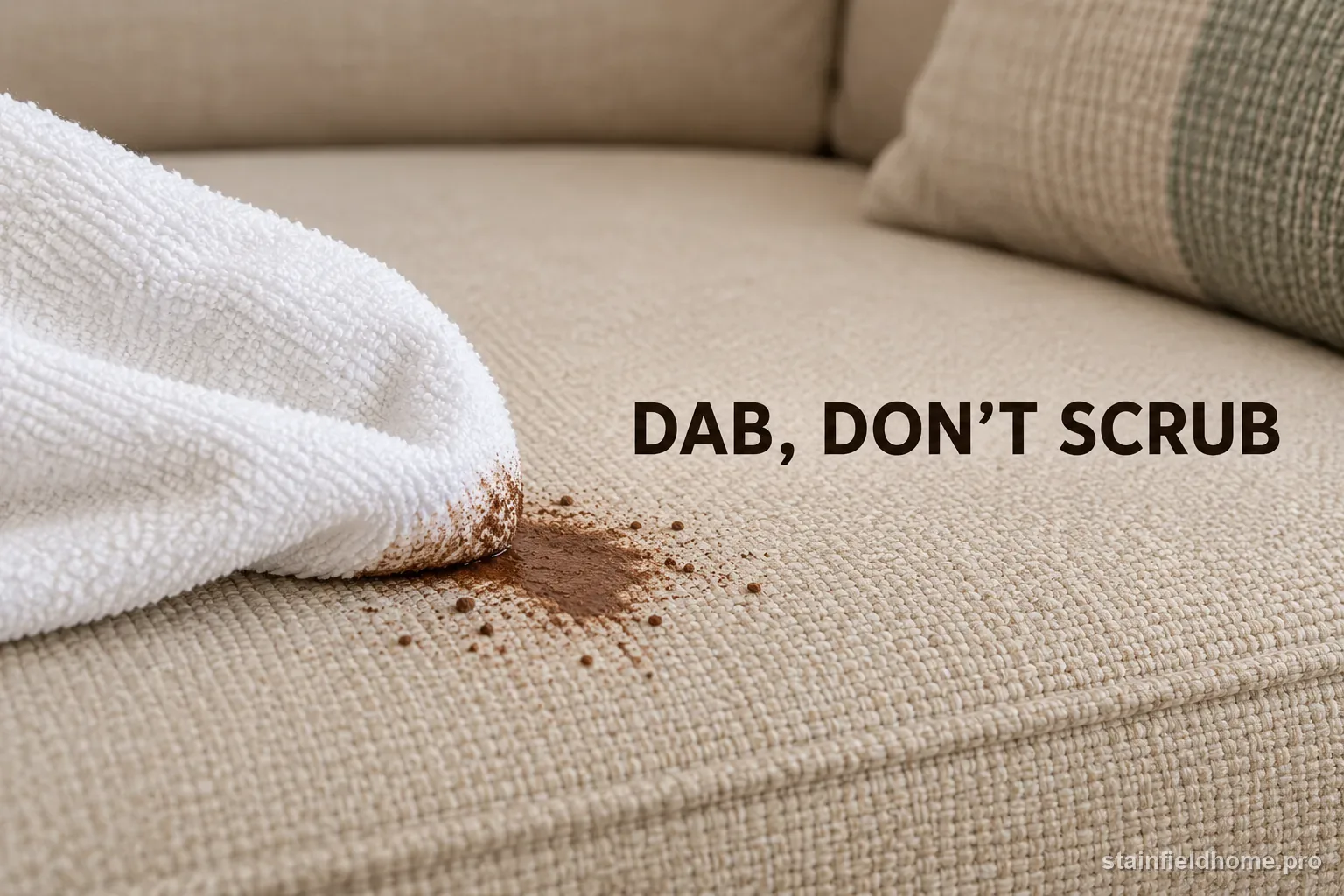
Dip a clean white cloth into the solution and wring it until barely damp. Dab the spot with light pressure, beginning at the outer edge and moving toward the center. Use a fresh part of the cloth as cocoa transfers. Keep the solution on the cloth rather than pouring or spraying it directly onto the sofa. Do one small pass, then pause to see whether color has lifted.
If the first pass improves the mark, do not escalate to a brush or stronger concentration. Repeat the same mild action once only if the fabric remains normal and the label permits it. Avoid scrubbing in small circles, even with a soft toothbrush: motion can roughen a textured pile, distort nap direction, or spread wet cocoa toward clean fabric. A dark remnant may be dye or a change in the upholstery rather than residue that needs more force.
Never use a water method on S- or X-coded material. Do not apply heat, steam, or hot water to the spot. Never mix stain products, and keep solvent cleaner away from open flame and follow its safety label if a manufacturer specifically approves it.
| Tag or condition | What to do | Do not do |
|---|---|---|
| W | Test, then use a barely damp water-based cloth if allowed | Use solvent cleaner or over-wet the cushion |
| WS or SW | Test first; choose one approved water- or solvent-based option | Combine products or assume every fabric behaves alike |
| S | Use only maker-approved water-free upholstery solvent | Apply water, steam, or soapy solution |
| X | Vacuum or gently brush dry soil only | Use water, foam, or spot remover |
| No readable tag or delicate fabric | Ask the furniture maker or upholstery cleaner | Guess the code or test on the visible stain |
Rinse away soap and blot up moisture
Rinsing is easy to skip when a stain looks lighter, but detergent left in the fabric can dry stiff or tacky and attract dirt. Furniture Fair recommends removing soap film with a water-dampened towel and allowing the upholstery to dry. Keep the rinse cloth damp enough to pick up residue but not so wet that water travels through the cushion cover.
Do not use a carpet extractor, steam cleaner, or wet vacuum on a sofa unless its manufacturer specifically approves that equipment for the upholstery and cushion construction. A machine can saturate foam faster than it extracts moisture. If a larger quantity of hot chocolate spilled, professional upholstery cleaning is safer than repeated wet DIY passes.
- 01
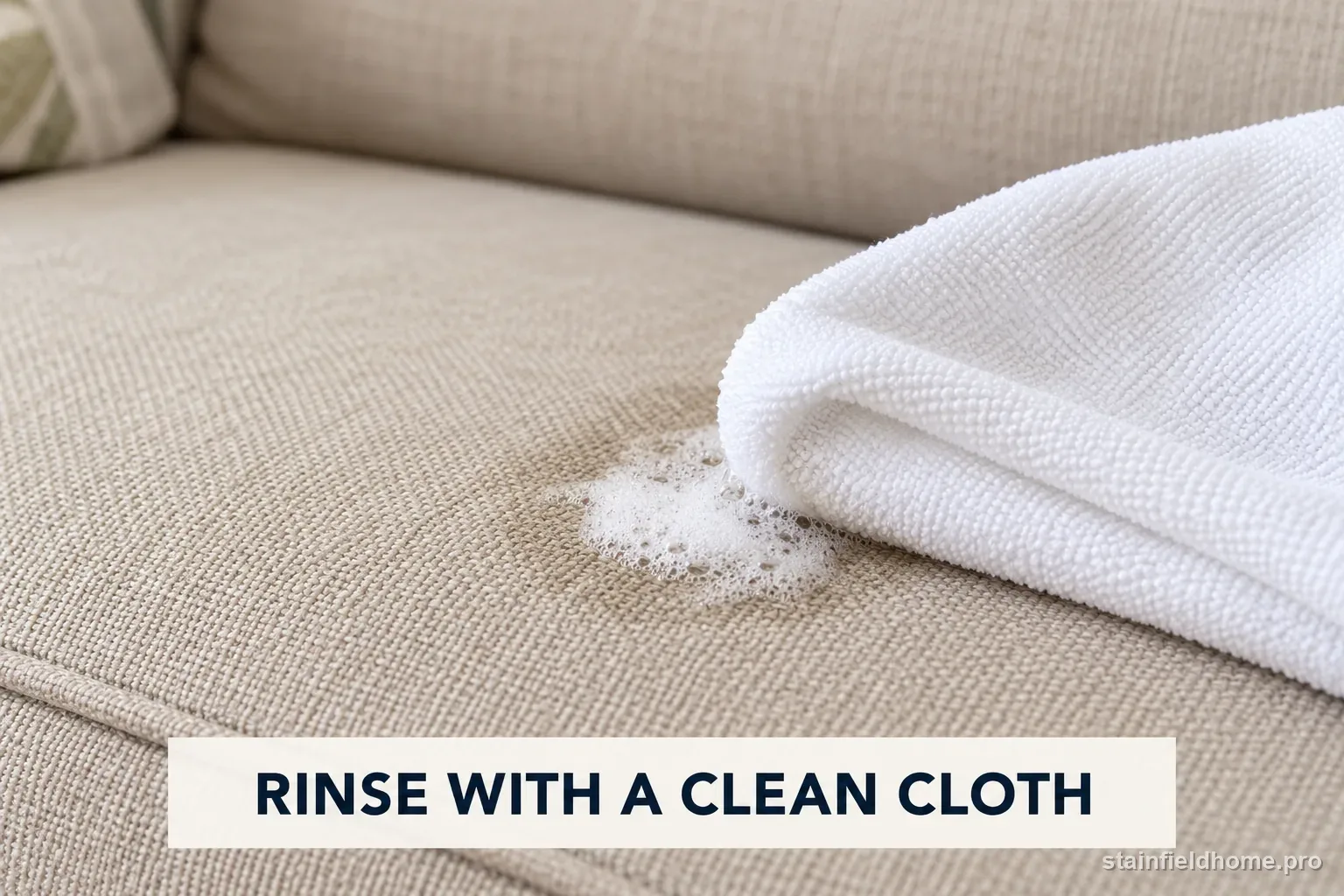
Take a separate clean white cloth and dampen it with plain cool water. Wring it well so it is barely damp, not wet.
- 02
Blot the treated area lightly to lift soap residue. Use a clean section of cloth for each pass and keep the wet area small.
- 03
Press a dry towel over the spot to absorb moisture. Do not rub or leave a saturated towel on the cushion.
- 04
If the patch still feels soapy, repeat one light rinse and blot. Stop when the fabric no longer feels slick.
Check after the first pass, then handle old stains gently
Once you have rinsed and blotted, let the cushion dry in a ventilated room. Inspect the area only after it is dry, because wet fabric often appears darker and can hide a developing water ring. Check the color, texture, and nap from more than one angle. If the cloth picked up the sofa's dye or the fabric feels rough, stop and contact the maker.
For a small mark that is improving and belongs to W/WS fabric, one repeat of the same tested, mild pass may remove a remaining film. Do not switch to vinegar, rubbing alcohol, baking soda, or a solvent just because the first treatment left a shadow. If the stain is no longer transferring but a tint remains, more product may damage the surface without removing the color.
A dried chocolate stain may need careful softening, but do not soak it. On a tested W/WS sofa, use a barely damp cloth to loosen the surface, lift flakes with a spoon, then dab with the mild solution and rinse. If cocoa has dried into textured fabric or the mark has been there for days, stop after a gentle attempt. Repeated moisture can cause rings, shrinkage, dye migration, or a musty cushion core.
Povison's chocolate-stain article recommends soap and cool water for fabric sofas, but also suggests brushing and other treatments across different materials. This guide limits the water-based approach to code-compatible upholstery and leaves brushing out because fabric weave and pile vary. If the odor returns after drying, the spill may have reached the cushion filling; repeated surface cleaning will not solve a deep residue problem.
Air-dry the cushion and know when to stop
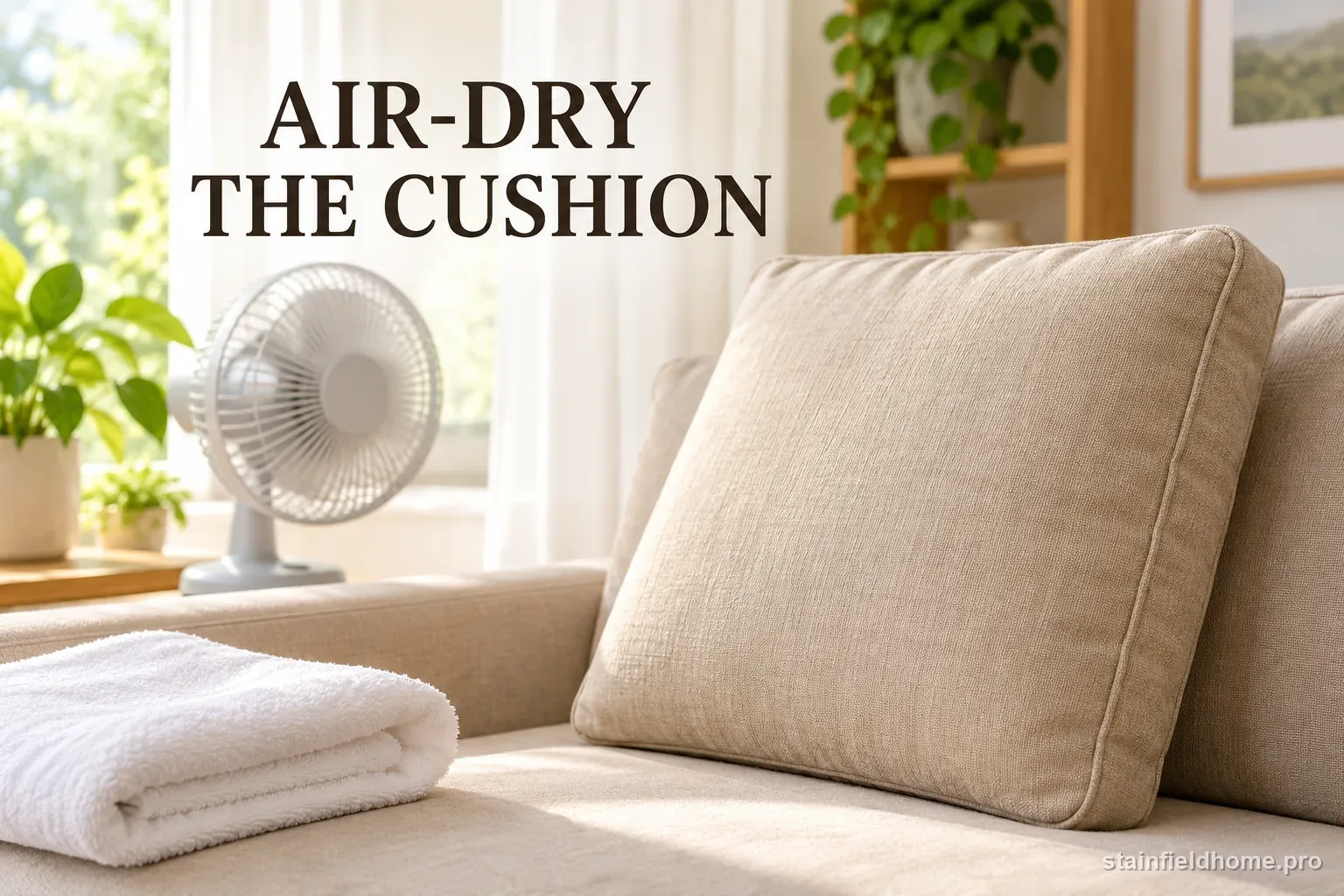
Blot with a dry white towel until it no longer picks up visible moisture. Leave the cushion uncovered and improve room airflow with a fan positioned nearby. Keep people from sitting on the damp area until it is completely dry. Do not use a hair dryer, iron, radiator, or direct sun to speed the process; heat can affect color, adhesives, backing, or synthetic fibers.
When the upholstery is fully dry, check for a cocoa shadow, sticky feel, altered nap, pale halo, or sour dairy smell. If the fabric looks and feels normal, stop cleaning. Protect the rest of the couch from further moisture and avoid adding a fragrance to mask any odor.
Call a professional upholstery cleaner if the sofa is S, X, unknown, valuable, velvet, silk, rayon, antique, or not colorfast; if the spill soaked into foam; if a ring appears; or if a sour smell persists after drying. Tell the cleaner the care code, what spilled, how long ago, and every product you used. This helps them avoid repeating a treatment that might react with residue already on the fabric.
Prevent another hot chocolate spill from setting
Serve mugs on a stable tray and keep drinks away from the front edge of the sofa. Before a movie night, locate the upholstery tag and save the manufacturer's care instructions. Keep plain white cloths nearby so the first response is blotting rather than a hurried search for a cleaner.
If the sofa has removable covers, do not assume that a zipper means the cover is machine-washable. Check its separate care label and the furniture maker's instructions before removing or washing it. A well-chosen quick response, a clean cloth, and the right care code are more useful than keeping a shelf of untested stain remedies.
Common questions
FAQ
Can hot chocolate stain a fabric couch?
Yes. Cocoa color, chocolate fat, milk proteins, and sugar can leave a dark or sticky mark. Blot quickly and check the upholstery cleaning code before using any liquid.
Can I use dish soap on a sofa stain?
Only if the tag permits water-based cleaning, usually W or WS, and a hidden test dries without color or texture change. Use a very mild solution and rinse residue.
What does an S code mean on a couch?
S means use only a water-free solvent formulated for upholstery, if the manufacturer permits it. Do not use water or a soapy mix; consult a professional if unsure.
How do I remove dried hot chocolate from upholstery?
On tested W/WS fabric, lift loose flakes with a spoon, soften the surface with a barely damp cloth, then dab mildly and rinse. Do not scrape hard or soak the cushion.
When should I call an upholstery cleaner?
Call for S, X, unknown, delicate, or valuable fabric; a spill that reached the foam; a ring or dye transfer; or a stain or sour smell that remains after careful drying.
Sources reviewed
Keep reading
Related guides
Chewing gum on Upholstery fabric
How to Get Gum Out of a Couch Without Damaging the Fabric
Get chewing gum out of a couch or chair without pushing it into the fabric; treat residue according to the upholstery cleaning code.

Chocolate on Upholstery
How to Remove Chocolate From Upholstery
Remove chocolate from upholstery by lifting hardened solids first, then treating grease and brown residue without soaking the cushion.

Food and juice on Stroller seat fabric
How to Remove Food Stains From Stroller Fabric
Clean food and juice from stroller-seat fabric while protecting coatings, foam and harness parts; use the maker’s care instructions.
Marshmallow on Fabric dining chair
How to Remove Marshmallow From a Fabric Dining Chair
Remove sticky marshmallow from a fabric dining chair by checking the upholstery code, lifting residue, and limiting moisture to a tested spot.