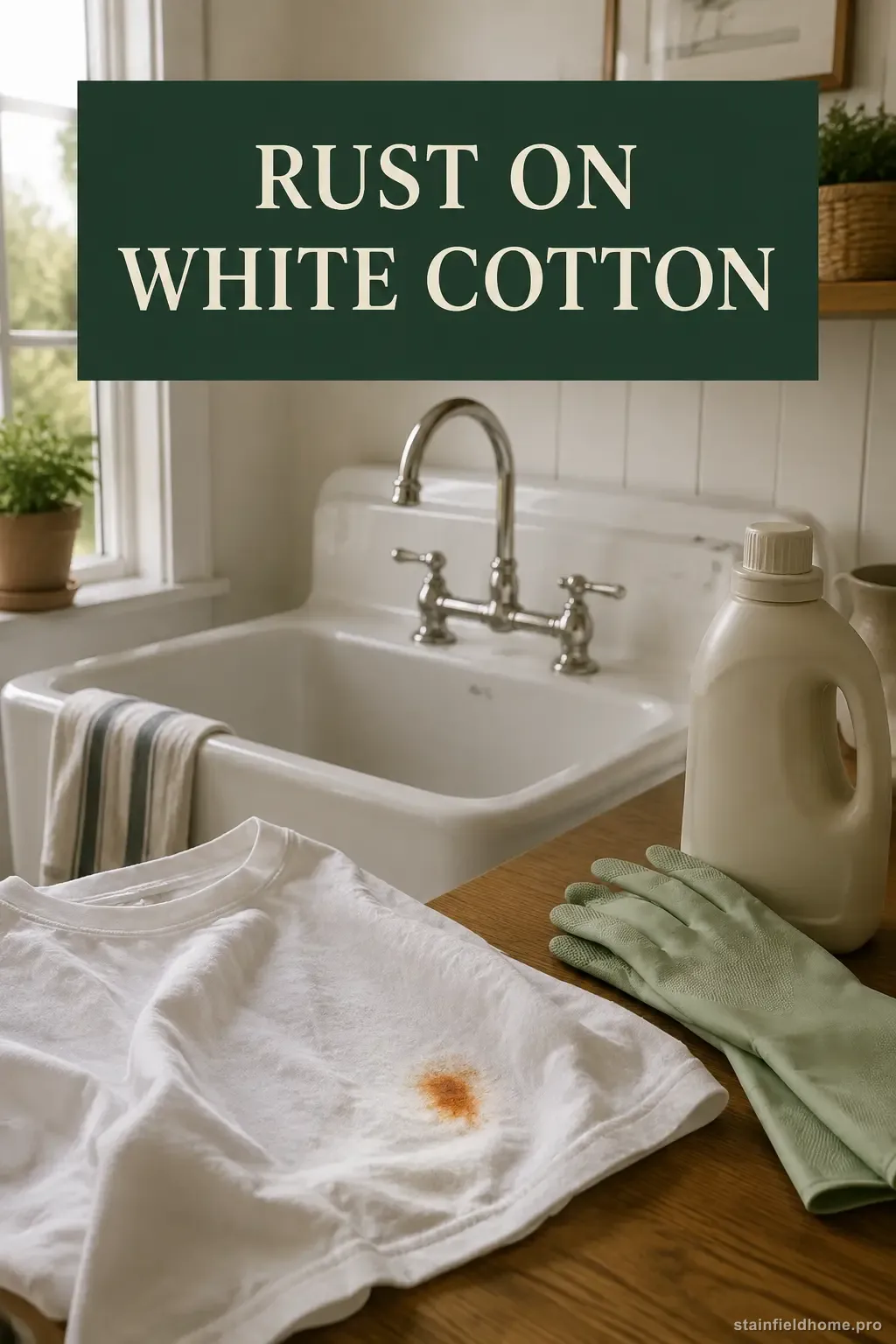
The quick answer
Keep rust-stained white cotton out of the dryer and do not use chlorine bleach—it can intensify the discoloration. Check the care label, rinse loose residue, and use a commercial rust remover specifically labeled for washable fabric and permitted for cotton, following its dose, contact time, ventilation, protective-equipment, and rinse directions exactly. Rinse thoroughly, launder by the care label, and air-dry to inspect. If the mark came from rusty water or the washer, correct that source before washing the item again.
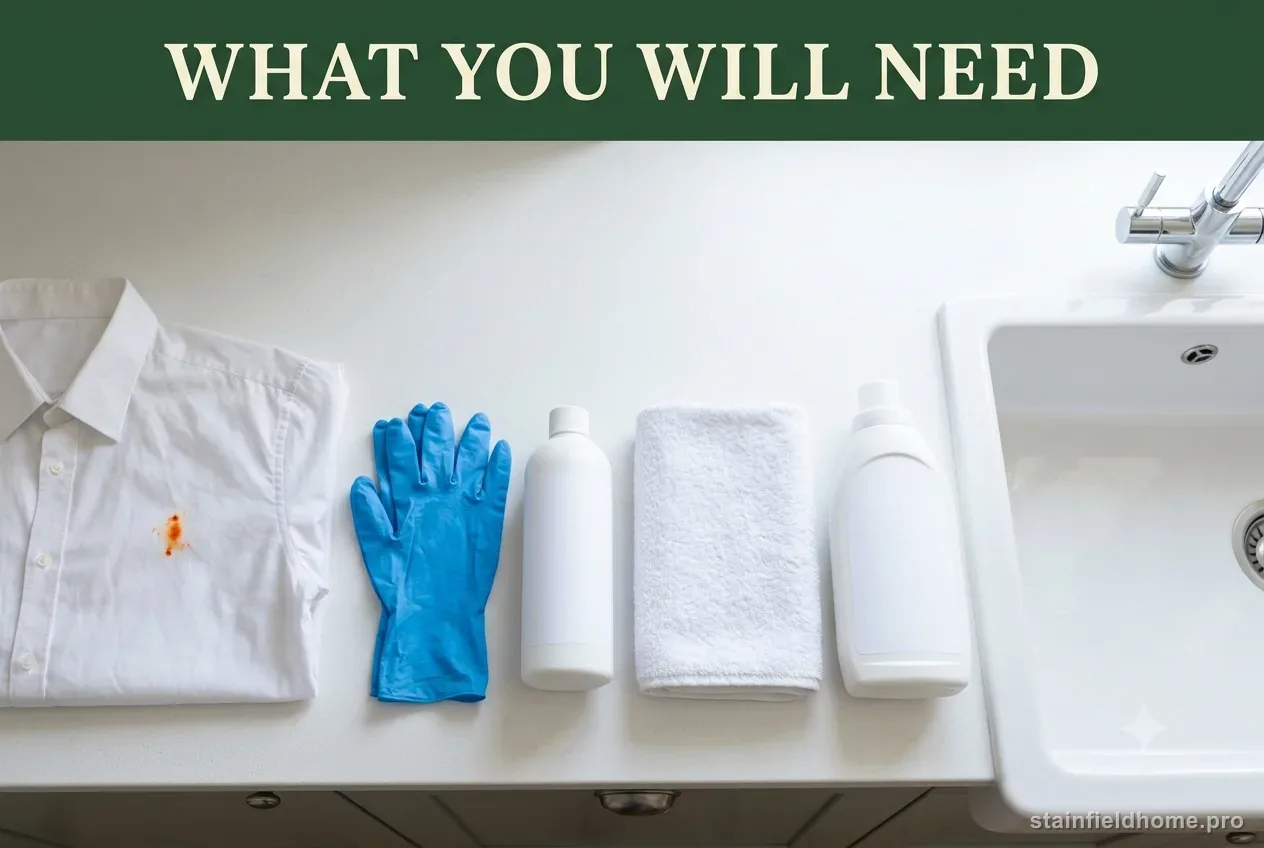
What you’ll need
- The cotton item’s care label
- Disposable or chemical-resistant gloves specified by the product
- A commercial rust remover labeled for washable fabric
- Cold or lukewarm running water
- A white towel or stain-treatment tray
- Laundry detergent
- Oxygen bleach labeled safe for the item, only for non-rust residue after thorough rinsing
Confirm that the mark and fabric fit this method
Rust is usually orange, red-brown, or yellow-brown and often appears where damp fabric touched iron: a metal shelf, washer drum chip, zipper, tool, pipe, or rusty water. A brown mark can also be food, makeup, dye transfer, mildew staining, or scorching. If the source is unknown, test the ordinary laundry steps on a hidden area and avoid strong chemistry until the stain is identified.
This guide is for washable white cotton without a care-label prohibition. White fabric may still contain colored thread, elastic, screen printing, optical brighteners, wrinkle-resistant finishes, or blended fibers. Read the full label. Dry-clean-only cotton, antique textiles, quilts with unknown batting, embroidery, and items containing wool, silk, spandex, or metal trim should go to an appropriate cleaner or textile specialist.
A commercial fabric rust remover is acidic and is not the same as a bathroom rust cleaner, toilet-bowl cleaner, or industrial metal product. Choose one that explicitly names washable fabric and cotton, and read the entire label before opening it. Work with ventilation and the gloves and eye protection the label requires. Keep children and pets away, and never decant the product into an unlabeled container.
For a fresh rust transfer
The University of Georgia Extension recommends a commercial rust remover used according to directions for washable fabrics. The American Cleaning Institute warns not to use chlorine bleach on rust because it can intensify the discoloration. That warning matters even on white cotton, where bleach may seem like the obvious first choice.
Treat a small spot rather than soaking the entire item unless the rust-remover label gives a whole-garment method. Acids can weaken fabric when overused or left too long. Accurate measurement, short controlled contact, and complete rinsing are more effective and safer than making a stronger mixture.
- 01
Move the fabric away from the rusty object without rubbing. Shake or brush off loose dry particles outdoors if this can be done without creating dust.
- 02
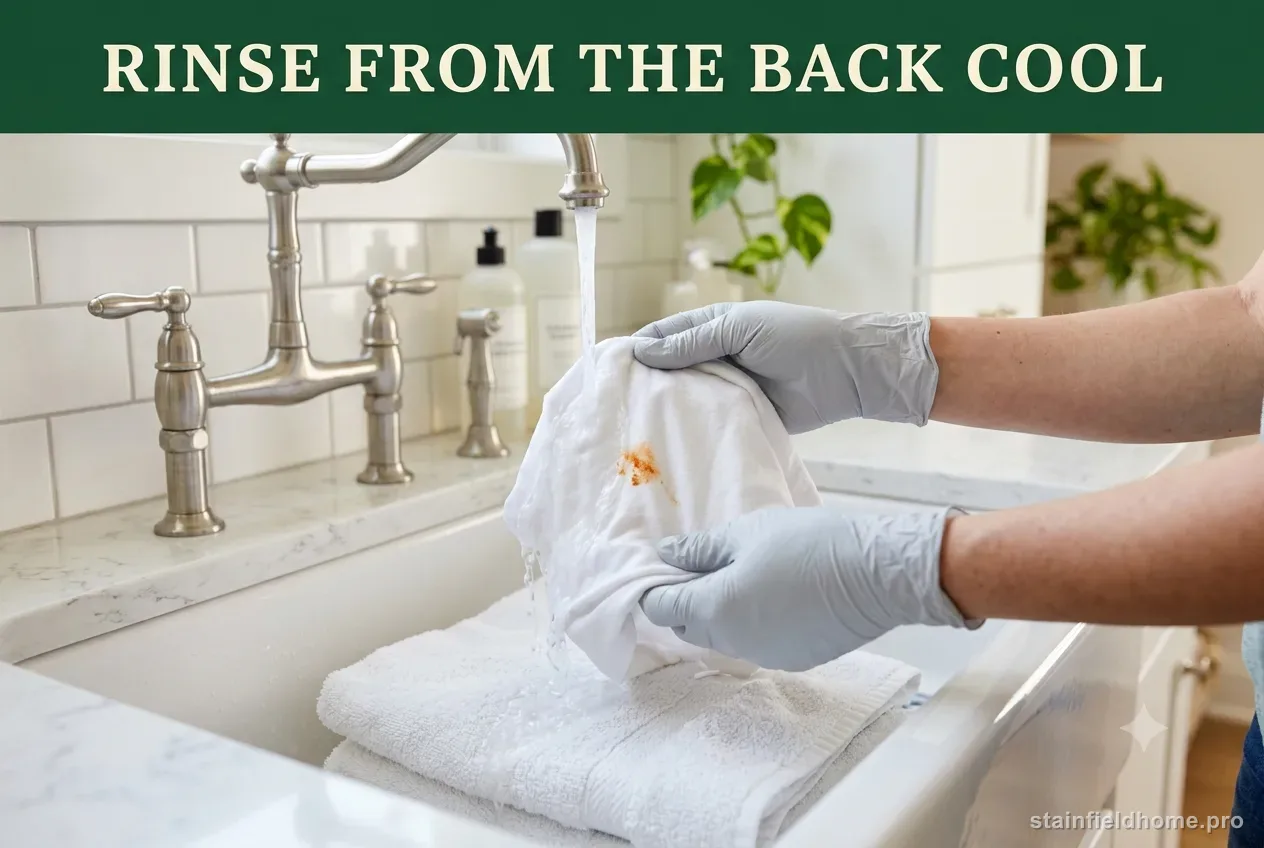
Rinse the stain from the back with cool or lukewarm water so residue leaves the way it entered. Do not begin with hot water.
- 03
Place the fabric on a clean white towel or nonreactive treatment tray. Keep the stain away from metal sinks, clips, and counters.
- 04
Hidden-test the fabric rust remover at an inside hem, including any nearby colored stitching, for the time stated on the label.
- 05
Apply the measured amount to the rust mark exactly as directed. Do not extend the dwell time or let the product dry on the cloth unless the label says to.
- 06
Rinse immediately and thoroughly. Repeat only when the label permits and the fabric remains unchanged.
- 07
Launder with detergent at the temperature allowed by the care label, then air-dry and inspect in daylight.
For a dried or set rust mark
Do not scrape a set mark with a blade or scrub it with a stiff brush; rust particles can cut or roughen wet cotton fibers. Rinse from the back, apply the fabric rust remover for its stated contact time, and rinse completely. Air-dry enough to compare the stain before repeating. Improvement may happen in stages, but the label’s maximum number of treatments and dwell time still apply.
If the item already went through a hot wash or dryer, the mark may be harder to reduce, but chlorine bleach is still the wrong escalation. Make one careful label-directed rust-remover cycle. If the fabric thins, yellows beyond the stain, or shows no improvement, stop. A professional cleaner can assess a valuable item without subjecting the whole textile to repeated acid treatment.
An old orange mark around a metal snap, grommet, zipper, or embroidery component may return because the hardware itself is corroding. Spot treatment cannot remove the source. A tailor may need to replace the hardware, or the item may no longer be safely washable. Do not leave acidic rust remover in contact with metal trim beyond the product instructions.
Separate rust from the residue left around it
Rust often appears with another stain. A bicycle chain can leave iron oxide plus dark lubricant; a patio chair can leave rust plus outdoor soil; rusty water can distribute yellow mineral residue across an entire load. Treat the rust first with the dedicated product, rinse completely, then reassess. Detergent addresses ordinary soil and oil; it does not replace a rust remover.
After the rust product is fully rinsed, a remaining gray or oily shadow can be pretreated with laundry detergent according to its label. A general yellow cast on otherwise bleach-safe white cotton may respond to oxygen bleach, but use it in a separate step only after thorough rinsing and only when both labels permit it. Never layer products on the cloth or combine them in the same basin.
Take a daylight photo before treatment and after the item air-dries. Wet cotton appears more translucent, and an orange spot can seem gone while saturated. The dry comparison shows whether rust remains, a non-rust residue is present, or the fibers themselves have changed color. That diagnosis prevents unnecessary second rounds of acidic treatment.
Find the source before doing another load
If several items in one load develop orange dots or yellow-brown streaks, inspect the washer drum, dispenser, and accessible metal parts according to the appliance manual. Do not reach into machinery, dismantle panels, or mix cleaners in the machine. A chipped drum, corroding part, or water-supply problem requires appliance or plumbing service, not more laundry additive.
Rust-colored water from a faucet may be temporary after utility work or may point to household plumbing or water-heater corrosion. Run water only as advised by the utility or plumber and keep white laundry out of the machine until the water is clear and the source is understood. The American Cleaning Institute notes that a nonprecipitating water softener may be useful for certain rust-in-water laundry problems, but the product must match the water condition and washer instructions.
Outdoor sources include metal drying racks, patio furniture, basket frames, and shelf edges. Covering rust with tape is a temporary barrier, not a repair. Replace or refinish the object appropriately and make sure its coating is cured before white fabric touches it again. Store damp cotton away from exposed metal.
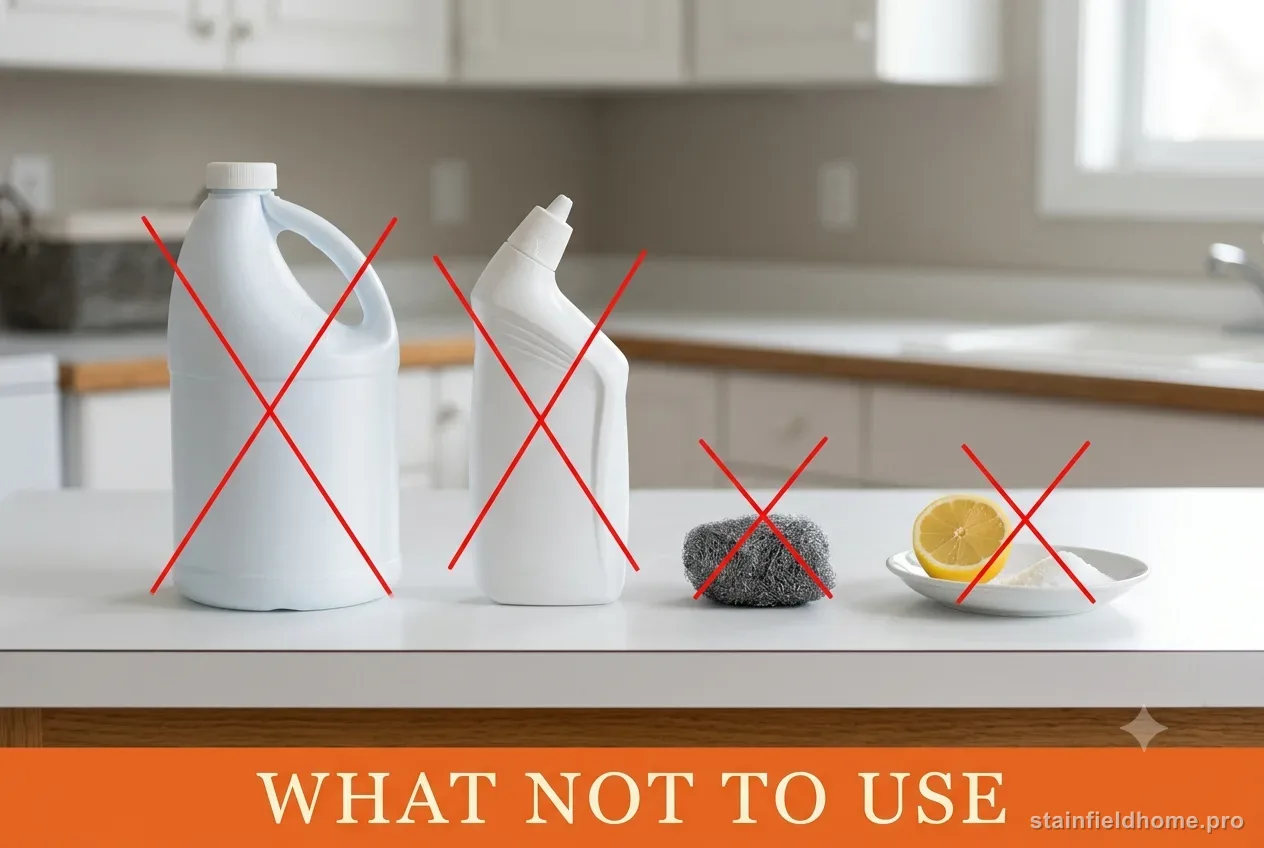
What not to use on rust-stained cotton
Salt and lemon juice appear in traditional stain advice, but acidity, sunlight, and uneven application are hard to control on finished textiles. A measured product labeled for fabric gives clearer safety and rinse instructions. For an heirloom, professional textile care is preferable to any improvised acid recipe.
- Do not use chlorine bleach; it can intensify rust discoloration.
- Do not use toilet-bowl cleaner, bathroom descaler, metal rust dissolver, or another product not labeled for washable fabric.
- Do not mix rust remover with bleach, ammonia, peroxide, vinegar, detergent, or any other cleaner.
- Do not scrub with steel wool, a metal brush, or a blade.
- Do not extend contact time, increase concentration, or let an acidic product dry on fabric against its label.
- Do not machine-dry or iron the item until the mark is gone and every product has been thoroughly rinsed away.
Prevent future rust marks on white cotton
Dry damp laundry promptly and keep hampers, shelves, clothespins, drying racks, and ironing surfaces free of exposed rust. Check metal buttons, hooks, and zippers before soaking an item. Remove white linens from a damp metal shelf, and use a washable, nonmetal barrier in storage only after the shelf and fabric are completely dry.
If your water supply has a recurring iron problem, have the water and plumbing assessed rather than relying on repeated stain treatment. Keep the washer’s model number and service history, and save the rust-remover label with laundry records. Correcting the metal or water source protects the fabric and avoids repeated acid exposure that can shorten cotton’s life.
Common questions
FAQ
Can I use chlorine bleach on rust because the cotton is white?
No. The American Cleaning Institute warns that chlorine bleach can intensify rust discoloration. Use a commercial rust remover specifically labeled for washable cotton, then rinse thoroughly.
Can I put rust-stained cotton in the dryer?
Wait until the stain is gone. Air-dry after treatment so you can inspect the mark without adding heat, and make sure every rust-remover residue has been rinsed out before normal laundering and drying.
Why did several white items get orange spots in one wash?
The source may be rusty water, a corroding washer part, or contact with metal in the laundry path. Stop new loads, inspect only as the appliance manual allows, and contact the utility, plumber, or appliance service as appropriate.
Sources reviewed
Keep reading
Related guides
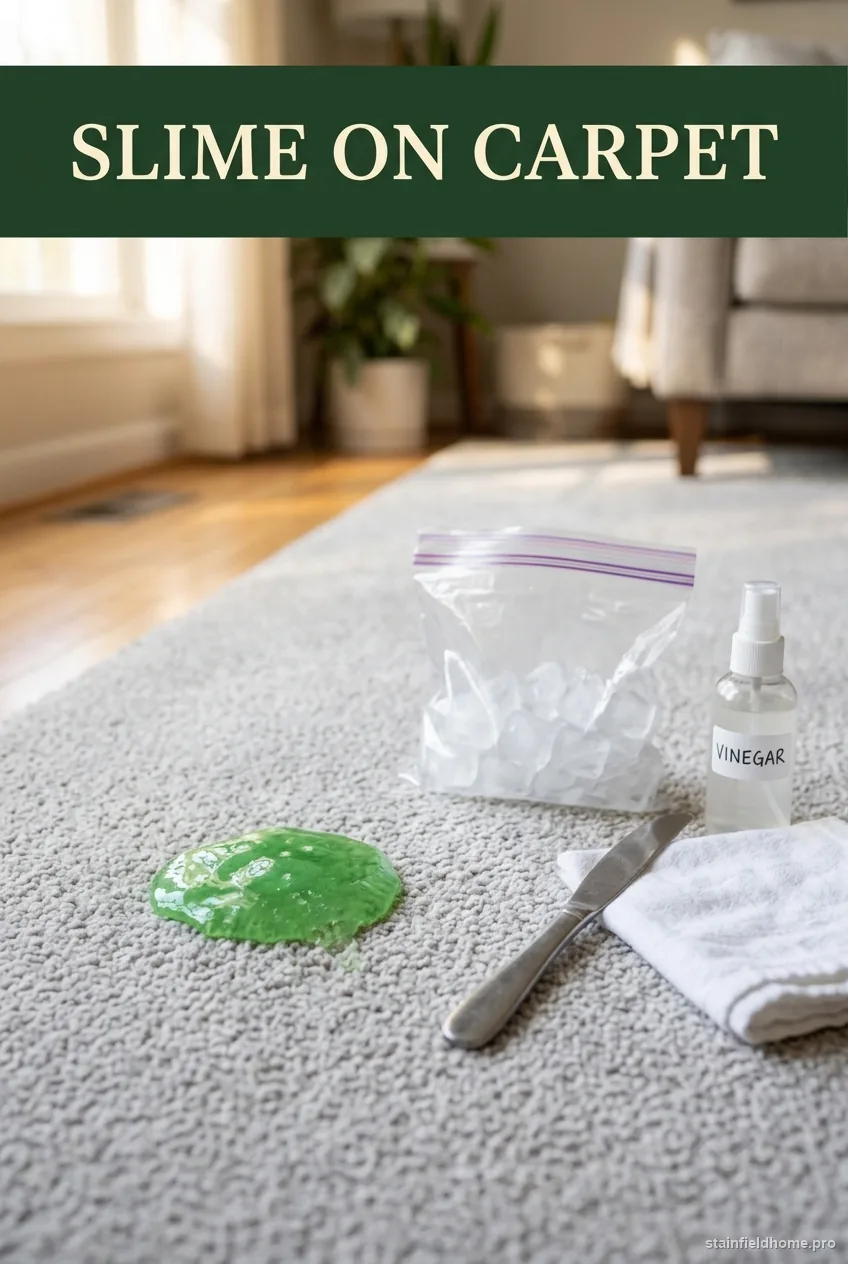
Slime on Carpet
How to Remove Slime From Carpet Without Damaging the Fibers
Lift dried or fresh slime out of carpet fibers with an ice-and-scrape method plus a vinegar or rubbing alcohol rinse, without soaking the backing or bleaching the color.
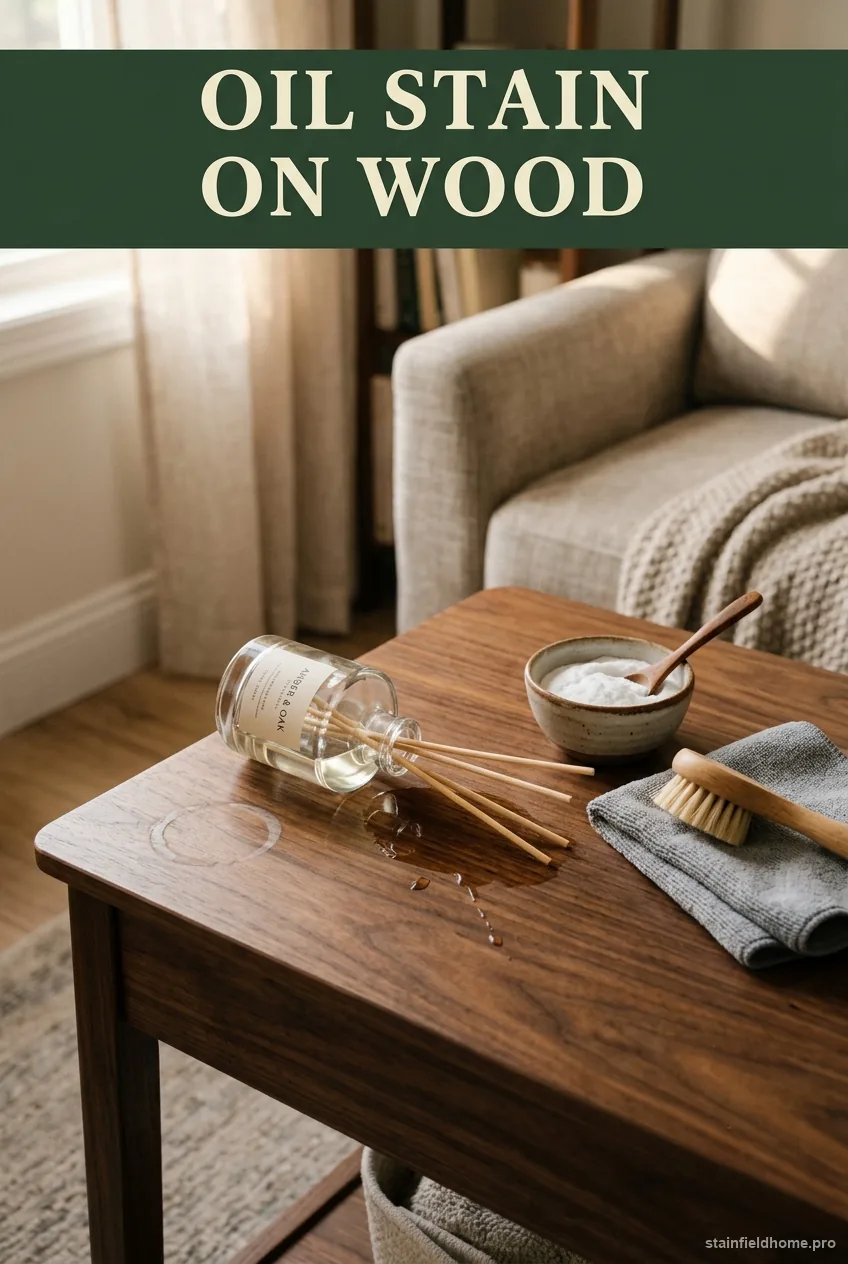
Essential oil and reed-diffuser oil on Finished wood furniture
How to Remove Essential Oil and Diffuser Stains From Wood Furniture
Blot a diffuser-oil spill on finished wood, use a cautious absorbent step, and recognize when the finish needs a furniture repair professional.
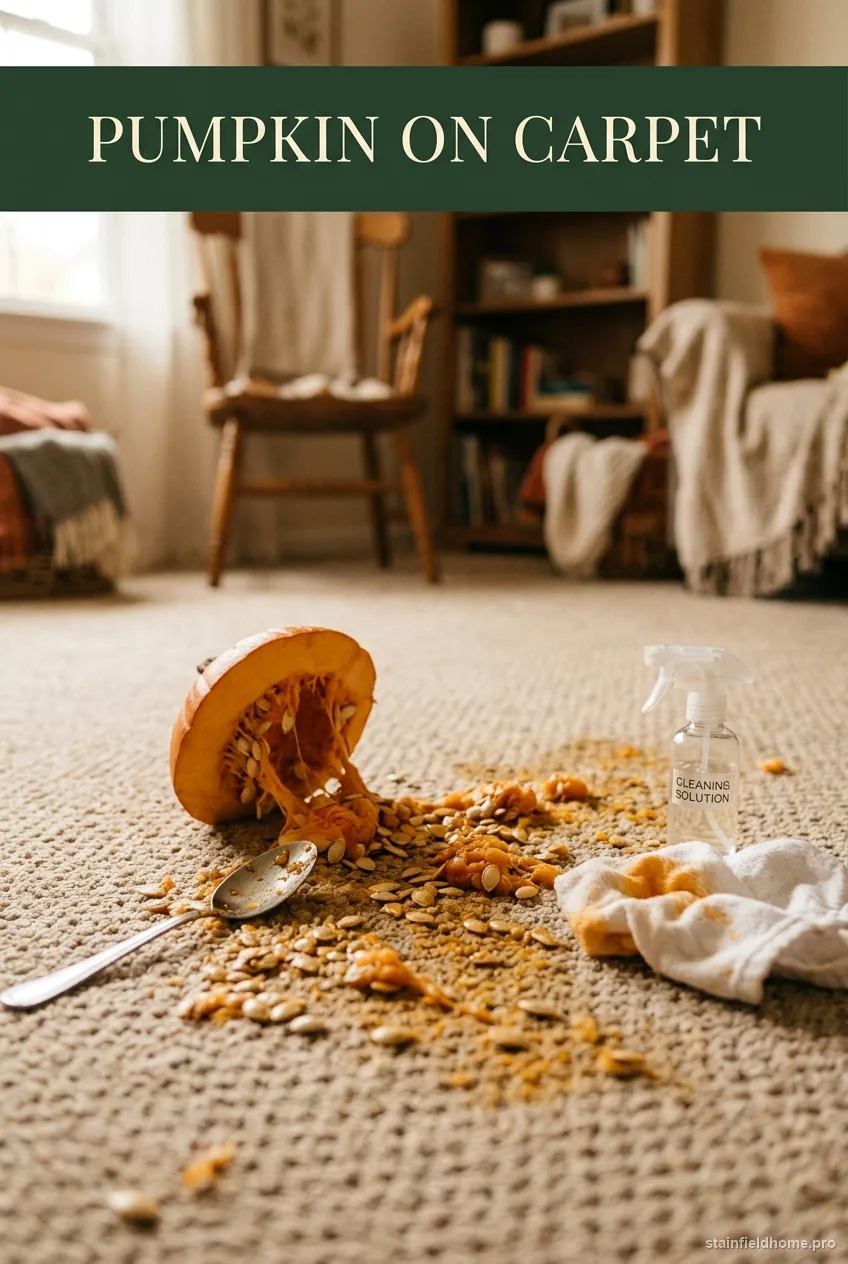
Pumpkin (carving, decorating, or puree) on Carpet
How to Remove Pumpkin Stains From Carpet
Remove pumpkin pulp and treat any remaining orange mark on carpet with a careful, low-moisture sequence that follows the carpet maker's guidance.
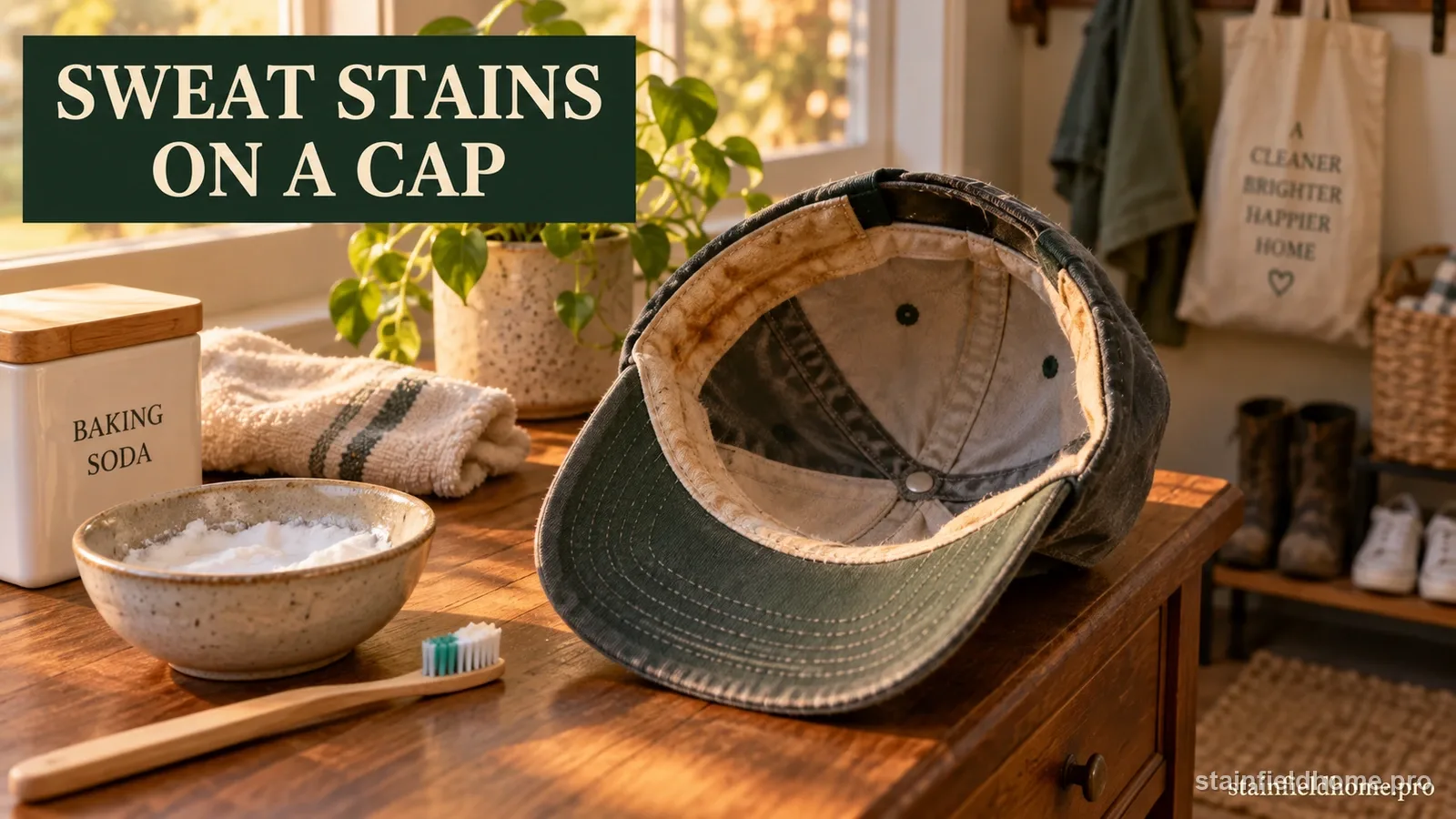
Sweat on Baseball cap
How to Remove Sweat Stains and Odor From a Baseball Cap
Lift yellow sweat stains and odor from the sweatband of a baseball cap without warping the brim or shrinking the crown.