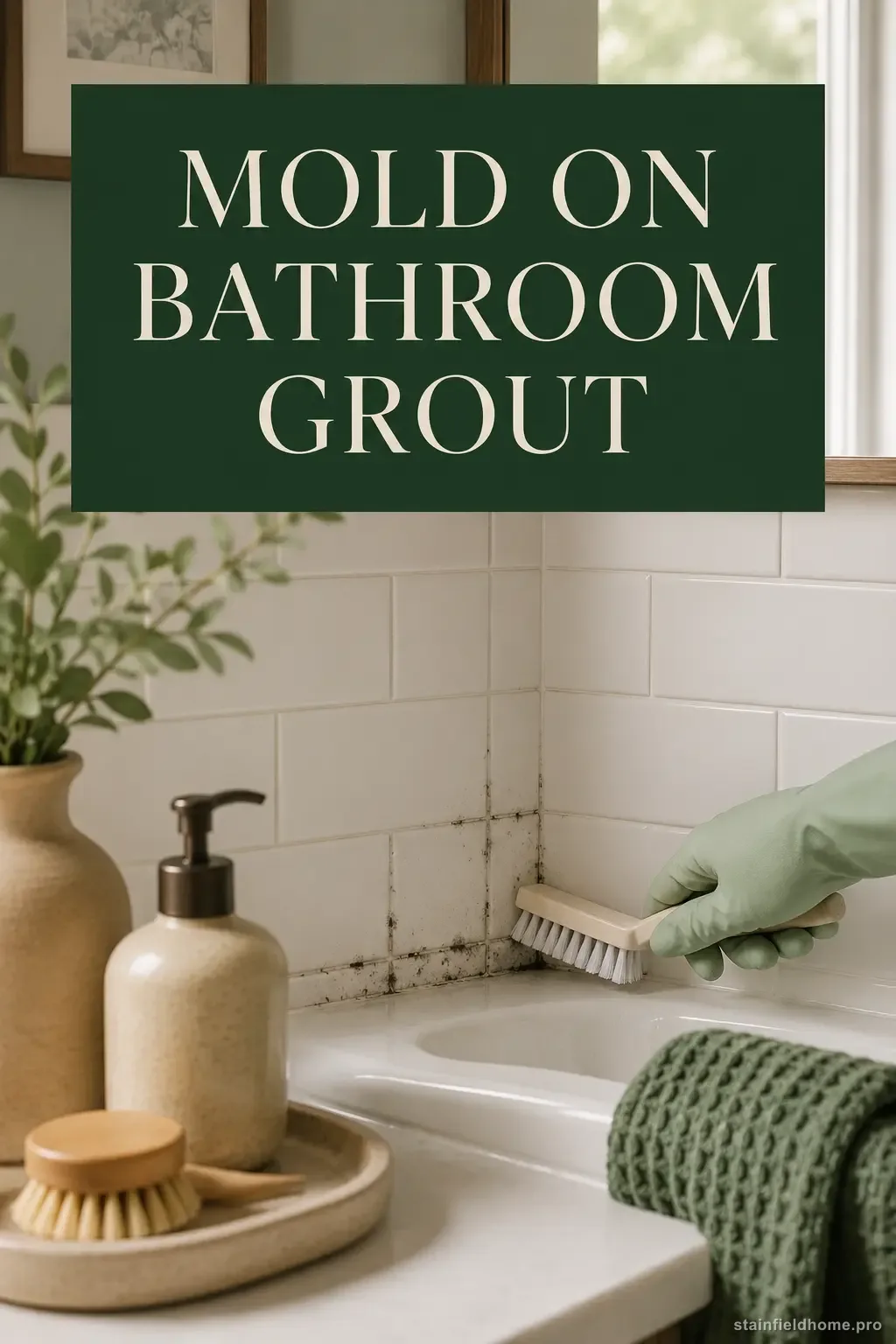
The quick answer
For a small patch—roughly under 10 square feet—on glazed ceramic tile and intact cement grout, first stop the moisture source and ventilate. Wear gloves, goggles, and at least an N95 respirator. Scrub the hard surface with detergent and water, wipe away loosened material, rinse in a controlled way, and dry completely. Do not paint or caulk over growth. If the area is larger, keeps returning, follows sewage or major water damage, involves soft drywall or failed caulk, or anyone in the home is medically vulnerable, get qualified help.
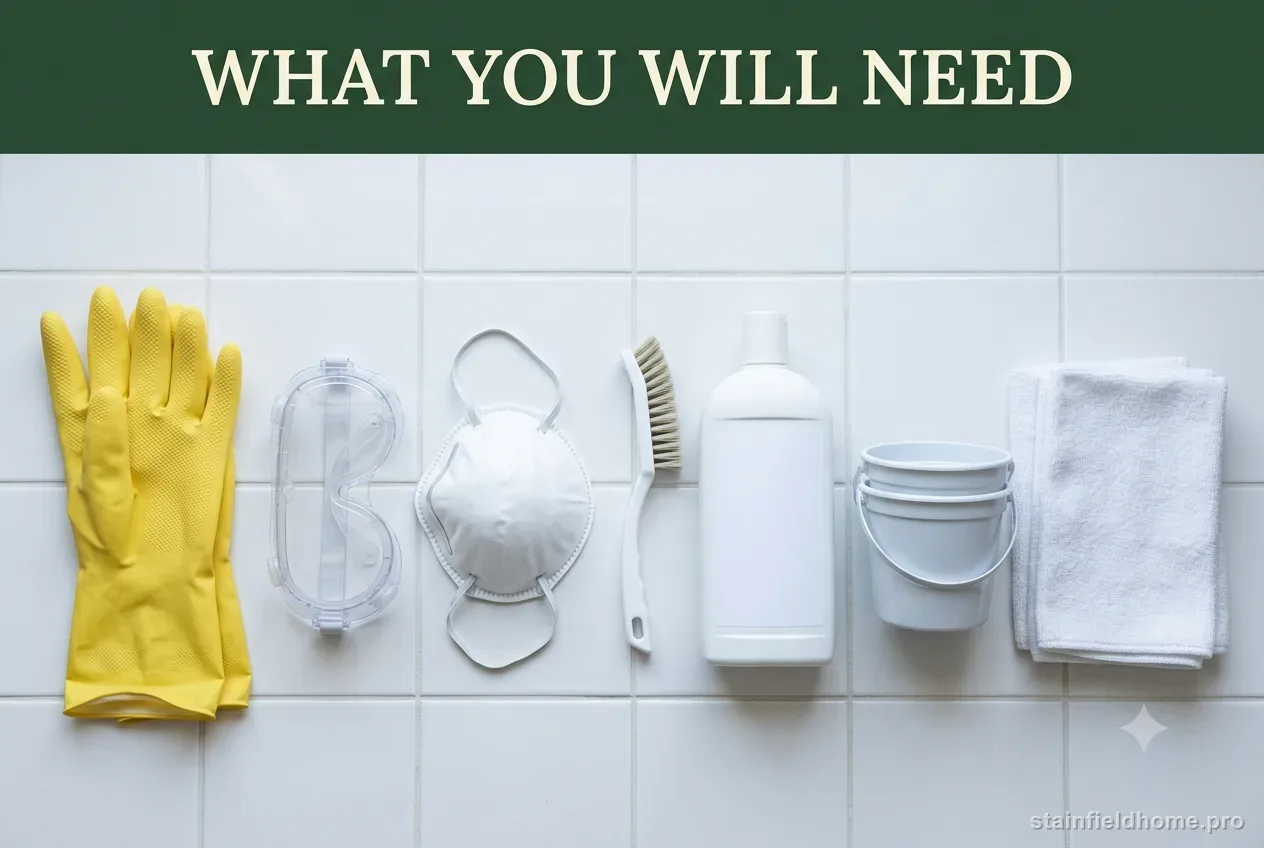
What you’ll need
- Household cleaning gloves that extend past the wrist
- Protective goggles without open ventilation holes
- At least an N95 respirator
- Mild household detergent
- Two buckets or containers for wash and clean rinse water
- A small nylon grout brush
- Disposable or washable white cloths
- A fan or bathroom exhaust for drying after cleaning
Decide whether this is a small hard-surface job
This method is limited to a small visible patch on glazed ceramic or porcelain tile with intact cementitious grout. The U.S. Environmental Protection Agency says an area smaller than about 10 square feet can often be handled by a homeowner, while larger contamination calls for its mold-remediation guidance and usually professional judgment. Measure the whole affected area, including nearby ceiling, baseboard, vanity, and wall—not only the darkest grout line.
Do not use this routine after sewage, floodwater, or major water damage; when mold is inside a wall or HVAC system; when drywall is soft; when tile is loose; or when grout, caulk, insulation, or backer board is crumbling. Porous materials can be difficult or impossible to clean completely. Failed shower caulk normally needs proper removal and replacement after the area is dry, not surface scrubbing and a new bead over the top.
People with asthma, severe allergies, immune suppression, chronic lung disease, or other health concerns should follow medical advice and may need to stay away from cleanup. The CDC recommends protective gloves, goggles, and at least an N95 during mold cleanup. Keep children and pets out of the room, close the door to limit traffic, and do not run a fan that blows contaminated air into the rest of the home.
Stop the moisture before you scrub
Mold grows because moisture persists. Check for a plumbing leak, failed shower seal, wet bath mat against the wall, condensation on a cold surface, or an exhaust fan that is clogged or not vented outdoors. Repairing the moisture source is part of removal; otherwise a clean-looking grout line can become spotted again in days.
Run the bathroom exhaust during bathing and afterward according to its instructions, and leave the shower enclosure open when practical so surfaces can dry. The EPA recommends keeping indoor relative humidity below 60 percent and ideally around 30 to 50 percent. A small hygrometer can show whether the room stays damp long after use, but it does not locate a hidden leak.
If the wall remains wet when the shower has not been used, the grout line warms or cools oddly, paint bubbles nearby, or a musty odor is stronger inside a cabinet or wall opening, stop. Cleaning the surface without finding hidden moisture can delay necessary repair and allow damage to spread.
For a fresh, small patch on intact grout
EPA guidance for hard surfaces is straightforward: scrub with detergent and water and dry completely. Physical removal and moisture control matter. Work in small sections so you can see whether black or colored material is leaving the grout and so dirty wash water is not spread across already cleaned lines.
Grout is more porous than glazed tile, so use enough liquid to clean but not enough to saturate the wall assembly. A stiff metal brush can erode grout and scratch tile; nylon is safer. If grout crumbles under light brushing, stop and have the joint evaluated before more water is added.
- 01
Put on gloves, goggles, and an N95. Open an exterior window or use the bathroom exhaust if it vents outdoors.
- 02
Remove towels, toiletries, and washable mats without brushing them against the affected area. Launder or clean them by their own labels.
- 03
Mix mild detergent and water according to the detergent label. Do not combine it with bleach, vinegar, ammonia, or another cleaner.
- 04
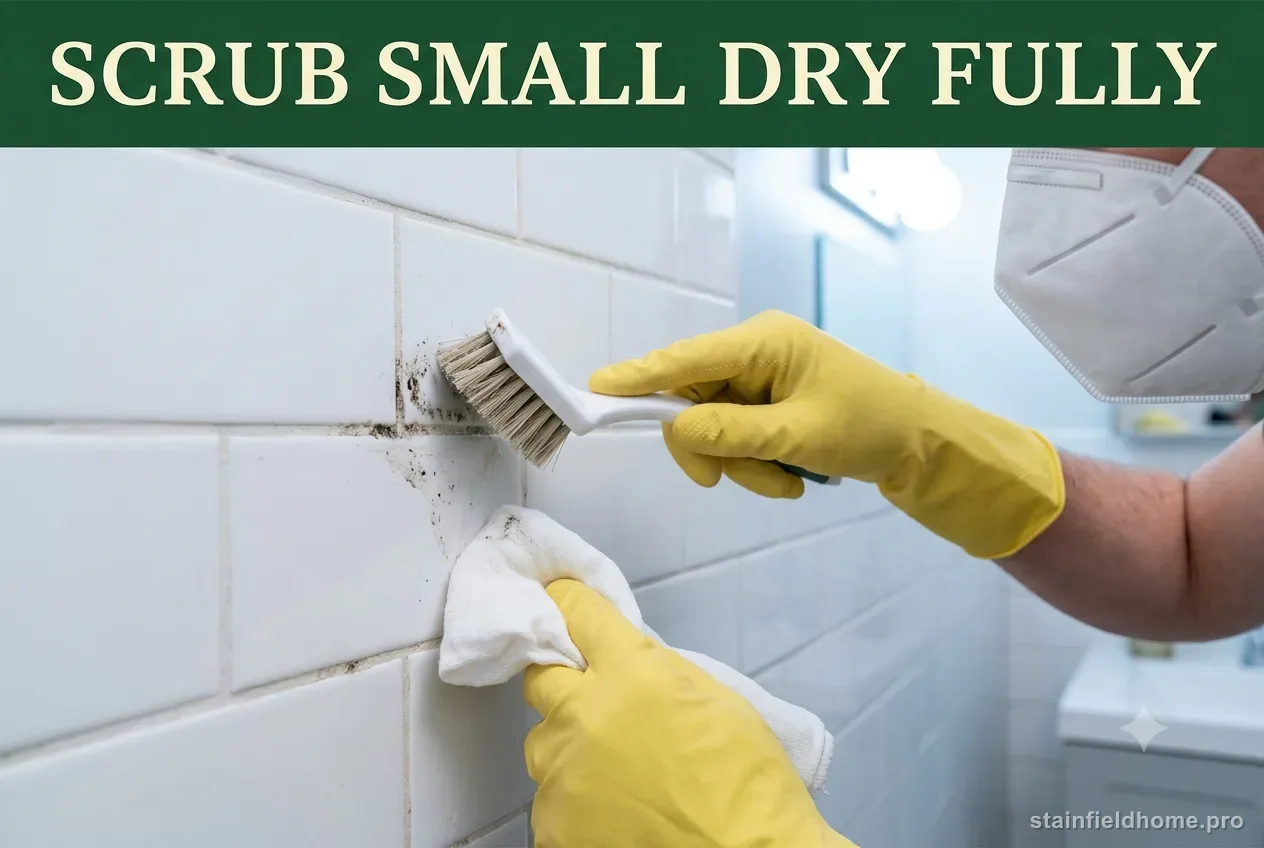
Wet a cloth with the solution and wipe the tile and grout to control loose material. Avoid spraying a forceful mist into the air.
- 05
Use a small nylon brush on the grout with short, controlled strokes. Wipe the loosened residue into a cloth as you work.
- 06
Rinse with a clean damp cloth, changing the water when it becomes dirty. Do not flood joints or force water behind fixtures.
- 07
Dry the tile and grout with clean cloths, then use exhaust ventilation or a fan directed toward an exterior window until the area is completely dry.
- 08
Bag disposable cloths before carrying them through the home. Wash reusable tools separately and dry them completely.
For a set dark shadow after cleaning
Let the area dry fully—often until the next day—before deciding what remains. Wet cement grout looks darker than dry grout. A clean, dry line can retain mineral, soap, or pigment discoloration even after surface growth is removed. A stain is not proof of active mold, and repeated harsh scrubbing can wear the grout without improving color.
Run a white-cloth check on the dry line. If nothing transfers, there is no musty odor, and the area stays dry, photograph it and monitor. If the grout continues to shed dark residue, smells musty, or quickly becomes spotted again, a moisture source or deeper contamination is likely. A tile or mold-remediation professional can distinguish cleanable surface discoloration from failed grout, backer damage, or growth behind the assembly.
Do not seal or recolor grout until it is clean, dry, structurally sound, and the moisture problem is fixed. Sealer can reduce water absorption in compatible grout but does not waterproof a failed shower system or kill contamination behind tile. Follow the grout and sealer manufacturer’s curing, ventilation, and compatibility directions.
Why bleach is not the default answer
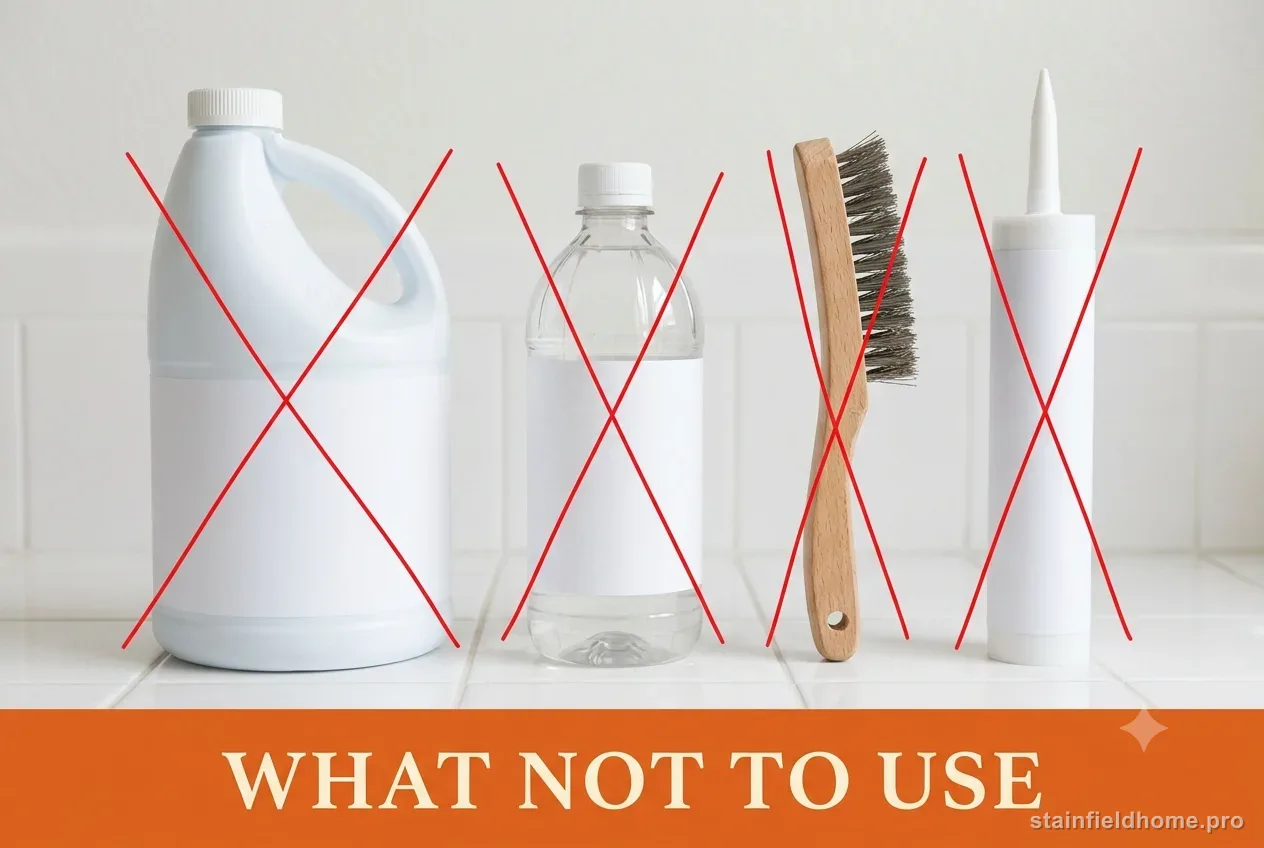
The EPA does not recommend biocides such as chlorine bleach as a routine practice during mold cleanup. Dead mold can still trigger reactions in some people, so the material must be removed, not merely discolored. On porous grout, a bleach solution may lighten the surface while the moisture condition that caused growth remains unchanged.
Bleach also creates serious risks when mixed with ammonia, acids, toilet-bowl cleaner, vinegar, or other products. Never combine cleaners, even if one has been rinsed casually. If a product or restoration professional specifies a disinfectant for a particular contamination event, follow that label and safety plan exactly; that is different from improvising a stronger bathroom mixture.
Do not substitute undiluted vinegar, peroxide, essential oil, or a steam cleaner as a universal mold cure. Acids can affect cement grout and natural stone, peroxide may change color, oils leave residue, and steam adds heat and moisture to an assembly that already has a moisture problem. Detergent cleaning, removal, and complete drying are the safer general foundation.
What not to do around moldy grout
Natural-stone tile is outside this method because detergents and acids must be selected for the exact stone. So are acrylic shower panels, painted grout, epoxy grout, and specialty sealants unless their manufacturers approve the procedure. Identify the assembly before treatment rather than assuming every tiled wall is ordinary ceramic and cement grout.
- Do not dry-brush, sand, or power-scrub visible mold without containment and protection.
- Do not mix bleach with ammonia, vinegar, acids, toilet cleaner, or any other household product.
- Do not paint, seal, or caulk over visible growth or damp material.
- Do not flood grout, spray a high-pressure stream, or direct a fan from the bathroom into the home.
- Do not assume every dark line is mold; rust, old caulk, soap residue, and grout pigment can look similar.
- Do not keep repeating home cleanup when the patch returns, expands, or follows a leak.
Prevent the grout from staying wet
After each shower, squeegee or wipe the tile and horizontal ledges, hang towels and mats where they can dry, and keep bottles from trapping water in corners. Clean soap film on a regular schedule with a product compatible with the tile and grout. Soap residue holds soil and makes it harder to see whether a new dark mark is surface dirt or returning growth.
Check the exhaust fan by holding a square of tissue near the grille; it should draw air when running, though a ventilation professional should assess poor airflow or ducting. Clean the grille with power off as the manufacturer directs. Repair dripping valves, failed seals, and cracked joints promptly, and document a recurring patch with dates and photos so a landlord, contractor, or remediator can see the pattern.
After cleanup, inspect the area weekly for a month. A dry, stable grout line suggests the moisture correction worked. New spotting, soft wall material, loose tile, or persistent odor means the problem is larger than routine surface cleaning and deserves investigation before another cleaning cycle.
Common questions
FAQ
Should I use bleach to remove mold from shower grout?
Not as the routine first step. EPA guidance emphasizes detergent-and-water cleaning of hard surfaces, physical removal, and complete drying. Never mix bleach with other cleaners, and address the moisture source.
When is a bathroom mold patch too large to clean myself?
EPA uses about 10 square feet as a general threshold. Get help sooner for sewage, major water damage, hidden growth, soft building materials, recurring contamination, HVAC involvement, or health concerns.
Why did the grout stay dark after I scrubbed it?
Wet grout naturally darkens, and old pigment, mineral, or soap staining can remain after surface material is removed. Let it dry fully. Recurring spots, odor, or continuing transfer point to moisture or deeper damage.
Sources reviewed
Keep reading
Related guides
Slime on Carpet
How to Remove Slime From Carpet Without Damaging the Fibers
Lift dried or fresh slime out of carpet fibers with an ice-and-scrape method plus a vinegar or rubbing alcohol rinse, without soaking the backing or bleaching the color.
Essential oil and reed-diffuser oil on Finished wood furniture
How to Remove Essential Oil and Diffuser Stains From Wood Furniture
Blot a diffuser-oil spill on finished wood, use a cautious absorbent step, and recognize when the finish needs a furniture repair professional.

Pumpkin (carving, decorating, or puree) on Carpet
How to Remove Pumpkin Stains From Carpet
Remove pumpkin pulp and treat any remaining orange mark on carpet with a careful, low-moisture sequence that follows the carpet maker's guidance.
Sweat on Baseball cap
How to Remove Sweat Stains and Odor From a Baseball Cap
Lift yellow sweat stains and odor from the sweatband of a baseball cap without warping the brim or shrinking the crown.