The quick answer
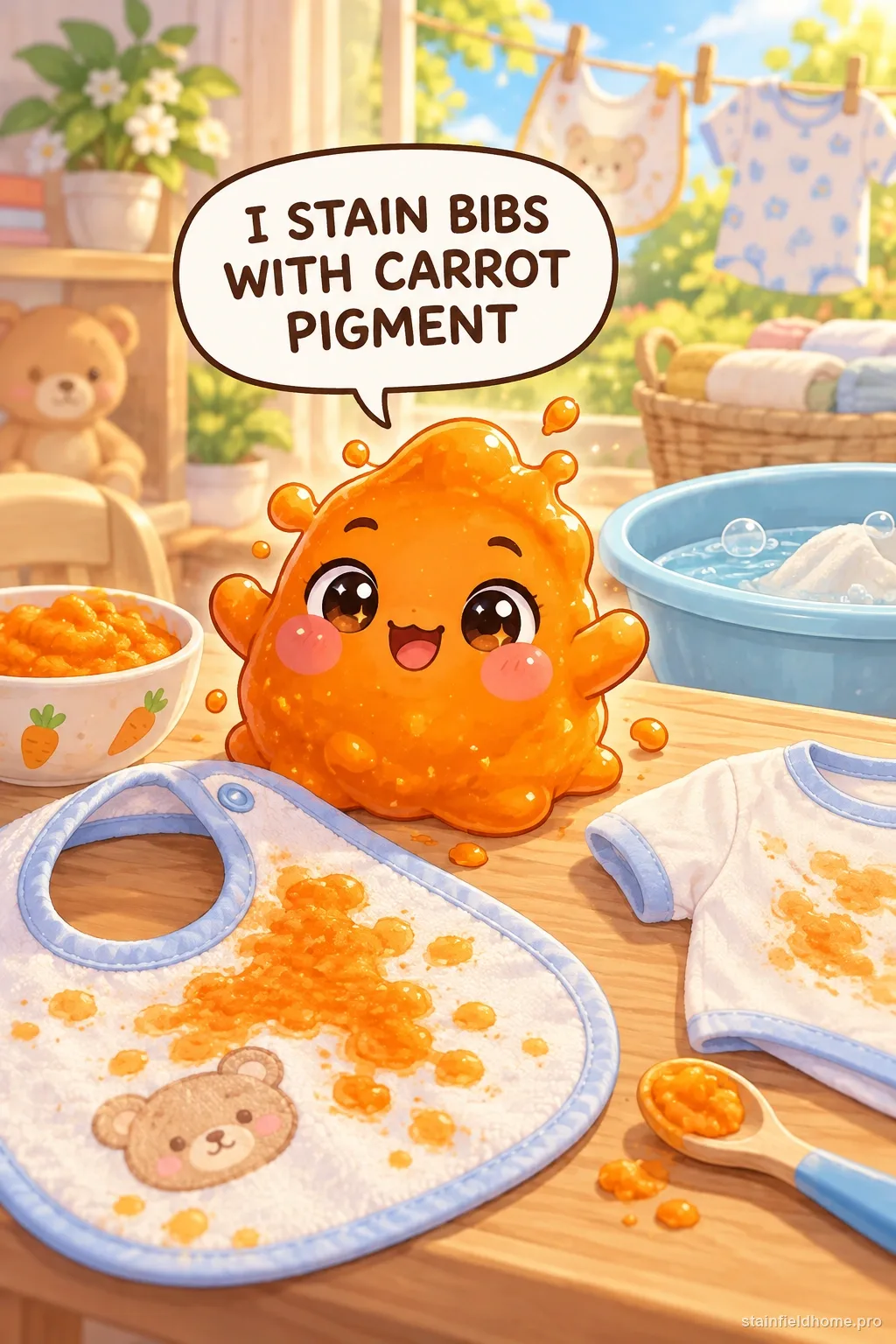
Lift away puree, flush the fabric from the back with cool water, and pretreat with liquid laundry detergent or a baby-food stain product according to its label. Wash at the temperature allowed by the garment tag and check before using a dryer. A short sun-drying step may lighten a remaining shadow on white cotton, but direct sun can fade prints and colors.
What you’ll need
- A spoon
- Cold running water
- Clear dish soap or an enzyme laundry stain remover
- Laundry detergent
- Oxygen bleach safe for the fabric
- A sunny windowsill or outdoor line
Why carrot and squash stains are so orange and so stubborn
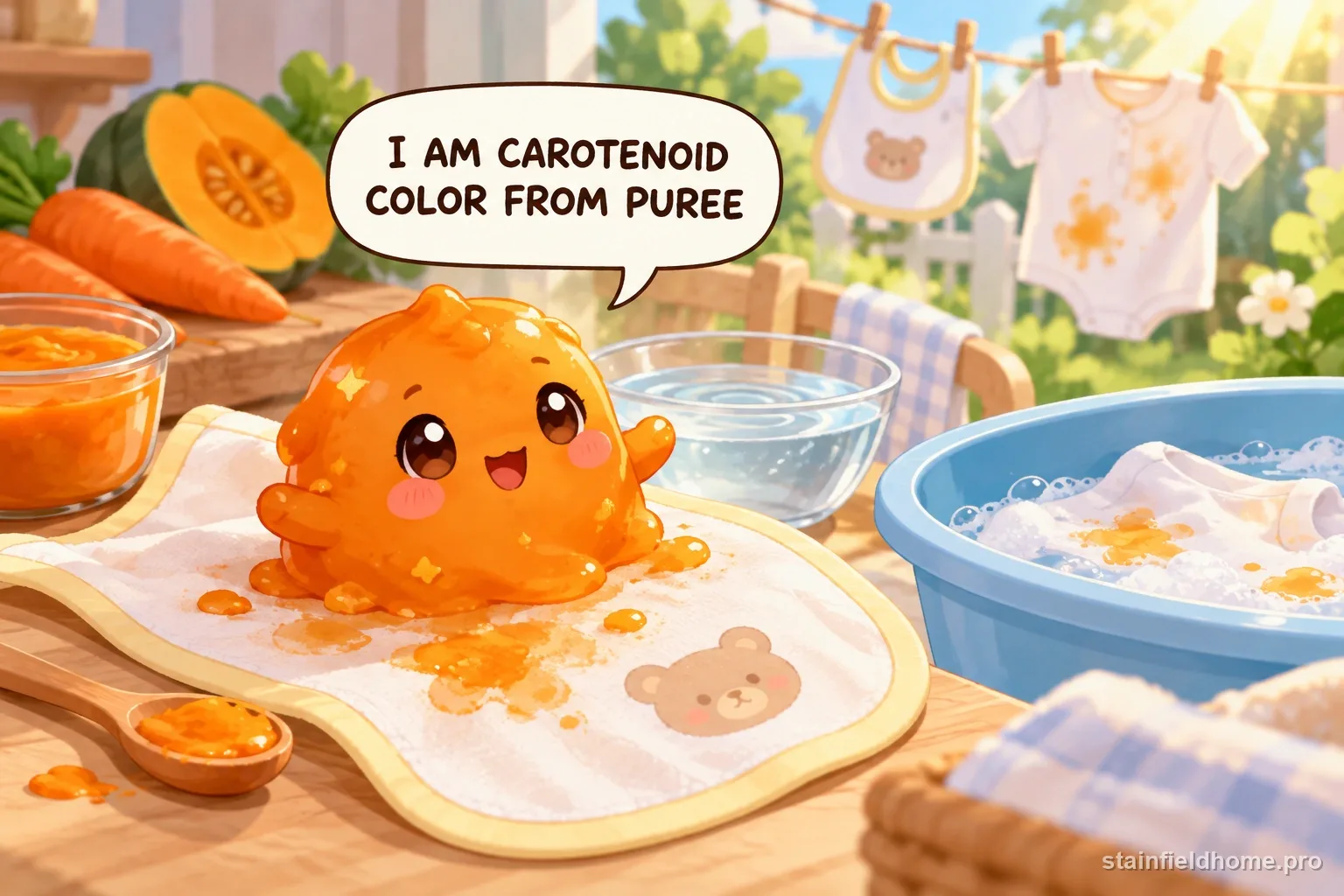
The orange in carrots, sweet potatoes, and winter squash comes from carotenoids, the same family of pigments as beta-carotene. They are fat-soluble, which means they cling to fabric with the small amount of oil in the food and resist plain water. They are also fairly stable dyes on cotton, so a normal wash often leaves a distinct orange ghost even after the food itself is gone.
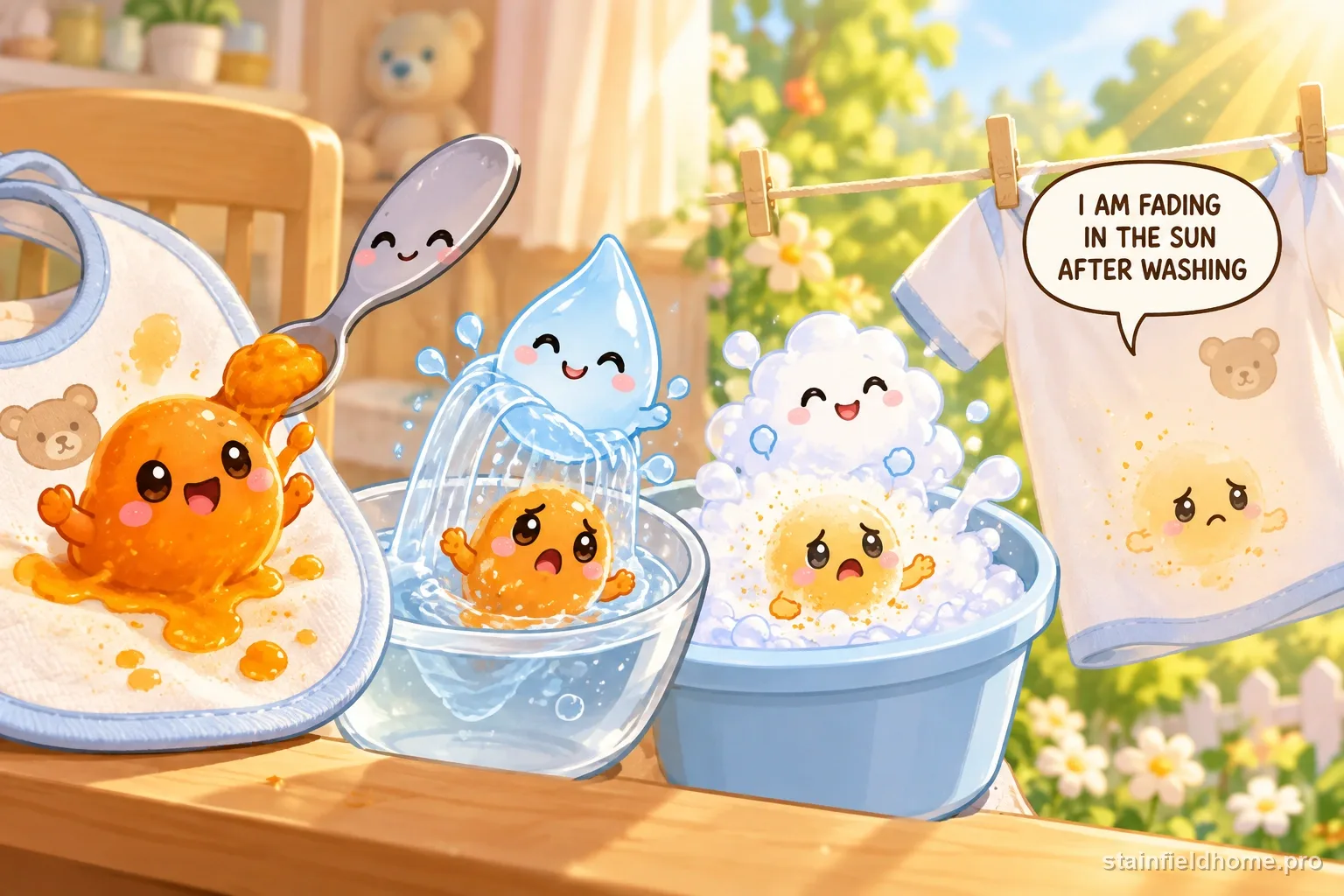
A remaining orange cast can be pigment rather than leftover food, so a repeated detergent wash or controlled sun exposure may lighten it. Sun is optional, not a substitute for pretreatment, and it can fade the garment itself.
Remove the food and flush cold
Lift the puree off with a spoon, scraping toward the middle of the mark. Hold washable fabric under cool running water from the back to flush food particles out before pretreatment. Avoid rubbing the orange puree into the weave; cool water is a practical first flush while you remove the bulk of the food.
For a bib with a laminated or silicone backing, wipe the backing separately and do not soak it. Check that the laminate is intact and follow its care label; water can collect between layers if a seam has split.
Pretreat the oil and the pigment
Apply a liquid laundry detergent or a baby-food stain remover the maker says is safe for the fabric. Follow its label for dwell time. A small amount of clear dish soap can help with an oily puree mark, but rinse it out before machine washing and avoid using dish soap on delicate or coated fabrics unless the care instructions allow it.
Work gently from the back of the cloth with fingers or a soft brush, then rinse. Do not use an enzyme product on wool or silk unless it is specifically labeled safe for those fibers. Repeat pretreatment once if food remains; do not scrub hard enough to roughen terry loops or stretch a bib.
Wash warm with oxygen bleach
Wash the item at the temperature its care label permits with the detergent dose recommended for the load. Use oxygen bleach only if both the garment label and product directions allow it, and test a printed item first. Do not assume a white center makes the colored trim or waterproof backing bleach-safe.
Wash bibs and baby clothes with room to move and use an extra rinse if detergent remains. Separate heavily stained items from clean clothes until you know the puree has lifted.
Finish the orange ghost with sunlight
If a light shadow remains on white cotton and the care label permits line-drying, a short period of sunlight may fade it. Check often and bring the item inside if the surrounding fabric starts to lose brightness. Do not deliberately leave elastane, dark colors, prints, or waterproof bibs in strong sun; UV can fade the whole garment and weaken stretchy components.
You can also repeat the labeled pretreatment and wash before drying. Let the item dry in shade between rounds so you can inspect it without extra UV exposure. If the mark no longer changes after two careful cycles, accept the remaining tint rather than increasing bleach concentration or exposure time.

For a whole basket of stained bibs
Treat items individually first so you can spot removable bib inserts and check each care label. If soaking is allowed, use the product's stated temperature and time, then wash with room to move. Do not leave baby clothing sitting in dirty food water for days; rinse promptly, let it dry until laundry time, and keep it separate from clean items.
A dried stain may need another pretreatment cycle, but repeated hot washing is not always better. Inspect the bib's waterproof layer and elastic for damage. If an old orange trace remains after proper washing, it may be pigment retained in the fiber rather than food or a hygiene problem.
Treat terry bibs, knits, and waterproof layers differently
Terry cloth has loops that hold puree; rinse both sides and wash it without overloading the machine. A stretchy onesie can snag under a stiff brush, so use fingers and the detergent label rather than scrubbing. Printed graphics and snaps may have separate limits, and some bibs combine absorbent cloth with a waterproof film that cannot tolerate a long soak.
If the garment is dry-clean-only, wool, silk, or a specialty stain-resistant fabric, do not put it through the routine for cotton baby clothes. Lift solids, blot with a clean cloth, and ask a cleaner or manufacturer how to treat the pigment.
Make the next meal easier to clean
Use a bib with a catch pocket or a washable cover over the baby's clothes, and rinse puree off the bib after the meal so it does not dry into the terry loops. Keep a spoon for scraping solids into the trash rather than wiping them across the fabric. A quick cool rinse before the item enters the hamper helps the later detergent wash reach the stain.
For large spills, remove the garment before pretreating and check the baby's skin for food residue. Keep laundry detergent, stain removers, and oxygen bleach stored out of reach, and rinse treated clothing thoroughly before putting it back on the child.
If the puree contains oil or mixed ingredients
Some baby foods include oil, dairy, or mixed vegetables, so the orange color may be only one part of the stain. A greasy ring suggests oil remains; a sticky patch may be dried sugar or starch. Remove solids first, pretreat with a compatible detergent, and rinse before washing. If the product label lists turmeric or tomato, the residue may need a second labeled stain treatment after the oil is gone.
Do not apply dish soap and laundry stain remover together in a thick layer. Use one product at a time, rinse it out as directed, and keep the garment away from the dryer until the mark is gone. This avoids leaving soap film on a child's clothing and makes it easier to tell which step helped.
If the color stays after the food is removed
A remaining pale orange shadow can be pigment trapped in the fiber, while a dark wet-looking patch may still contain oily puree. Let the item dry in shade and inspect it in good light. Repeat detergent pretreatment if it still feels greasy; consider a brief supervised sun-drying period only for white cotton that permits it.
If the garment is a high-visibility print, a school uniform, or an heirloom item, do not use untested bleach or concentrated peroxide. Ask a professional cleaner and identify the food, fabric, and prior treatments.
Common questions
FAQ
Does sunlight really remove orange baby food stains?
Sunlight may fade a residual orange pigment on white cotton, but results vary and the sun can fade colored fabric, prints, or elastic too. Pretreat and wash first, then use only a short supervised sun-drying period if the garment label allows it. Shade-dry stretchy or waterproof bibs.
Should I use hot water on carrot stains?
Start by lifting solids and flushing with cool water, then pretreat. After that, wash at the temperature allowed by the clothing label; warm water is not automatically harmful, but it may damage elastic, prints, or specialty bib coatings.
The bib has been washed and dried several times and is still orange. Can I fix it?
Try another pretreatment and wash only if the label permits the product and temperature. Oxygen bleach may be suitable for some colorfast washable cotton, but follow its maximum soak time; it will not restore a faded print or damaged backing. A brief supervised sun-drying step may fade a shadow on white cotton, while colored or stretchy bibs should dry in shade.
Can I use hot water or chlorine bleach right away?
Start by lifting solids and flushing with cool water, then check the clothing label. Use only the wash temperature and bleach type permitted for that fabric; chlorine bleach may damage colors, elastic, or waterproof backing. Pretreatment and a thorough rinse matter more than making the first wash hotter.
Is an orange stain on a bib unsafe for my baby?
A leftover color shadow after washing is not the same as leftover food, but wash and rinse the bib thoroughly before reuse. If the fabric remains greasy, sticky, or smells like food or cleaner, repeat a compatible wash and let it dry fully. Replace a bib if its waterproof layer is peeling or cracked.
Can I treat a bib with a plastic backing the same way as a onesie?
No. Scrape and rinse the cloth face, but wipe the backing with a damp cloth and follow the bib maker's care instructions. Do not use bleach or a long soak unless the manufacturer approves it; water can get between layers or weaken the waterproof coating.
Sources reviewed
Keep reading
Related guides

Slime on Carpet
How to Remove Slime From Carpet Without Damaging the Fibers
Lift dried or fresh slime out of carpet fibers with an ice-and-scrape method plus a vinegar or rubbing alcohol rinse, without soaking the backing or bleaching the color.

Essential oil and reed-diffuser oil on Finished wood furniture
How to Remove Essential Oil and Diffuser Stains From Wood Furniture
Blot a diffuser-oil spill on finished wood, use a cautious absorbent step, and recognize when the finish needs a furniture repair professional.

Pumpkin (carving, decorating, or puree) on Carpet
How to Remove Pumpkin Stains From Carpet
Remove pumpkin pulp and treat any remaining orange mark on carpet with a careful, low-moisture sequence that follows the carpet maker's guidance.
Sweat on Baseball cap
How to Remove Sweat Stains and Odor From a Baseball Cap
Lift yellow sweat stains and odor from the sweatband of a baseball cap without warping the brim or shrinking the crown.