
The quick answer
Rinse the suit promptly in cool clean water and blot away any oily sunscreen. Check the suit label before applying a stain product: avobenzone can form rust-orange marks in iron-rich water, but acid and rust removers may damage elastane or printed panels. Use only a product whose label permits swimwear and the suit's fiber, rinse thoroughly, and air-dry flat in shade.
What you’ll need
- Clear, dye-free dish soap
- A sunscreen or rust stain product labeled safe for this swimsuit's fiber, if available
- A soft brush
- Cool water
- Mild detergent suitable for swimwear
- A basin for soaking
Why the stain is orange, not white or yellow
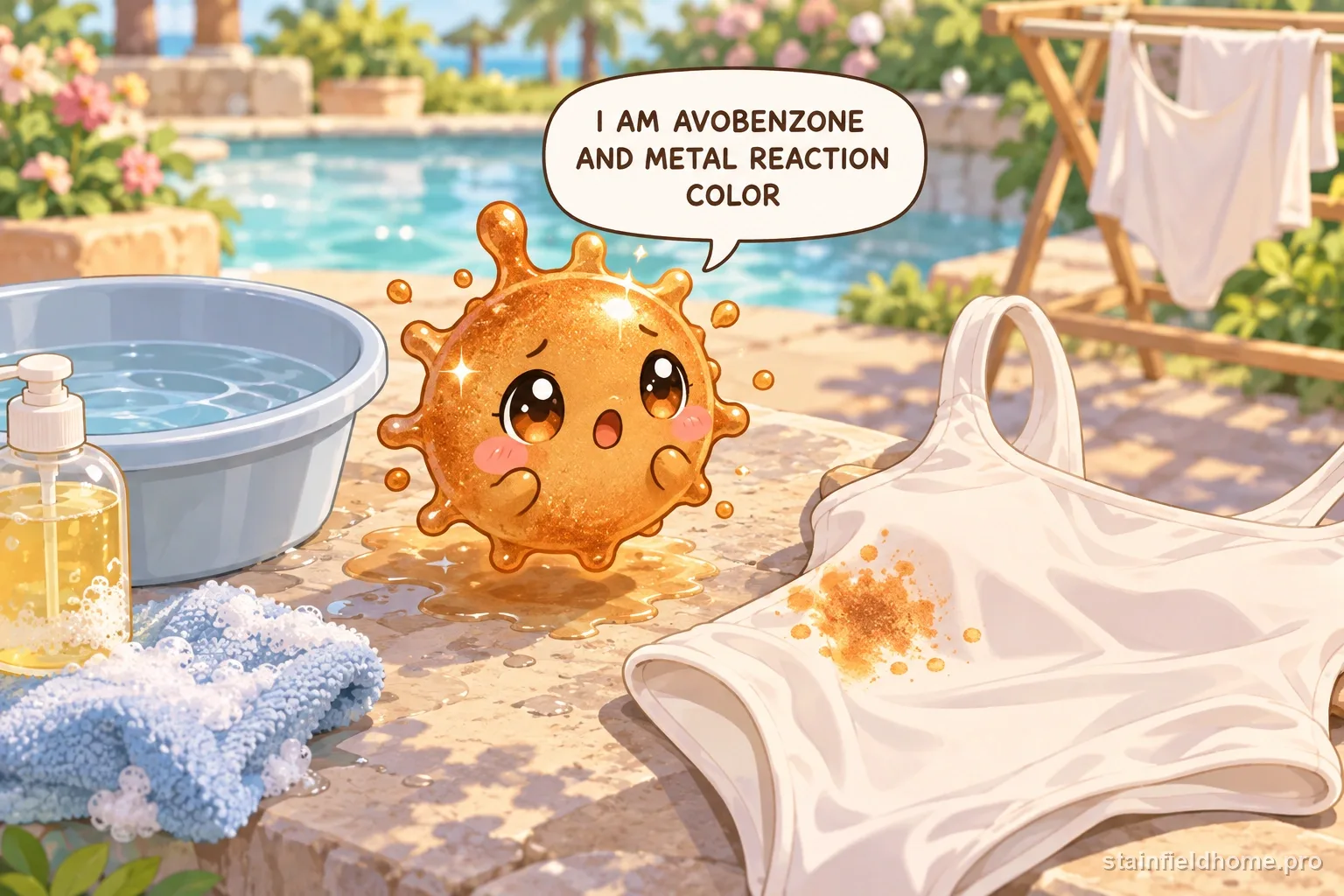
Some chemical sunscreens contain avobenzone, which can react with iron in hard water and leave an orange or rust-colored mark. Sunscreen stains can also be oily without an iron reaction, and the exact result depends on the sunscreen formula, water, and fabric. A pale greasy mark and a distinct orange mark may need different treatment, so do not assume every discoloration is rust.
Swimwear often contains nylon or polyester blended with elastane, plus lining, prints, and elastic seams. It is more delicate than a white cotton towel. Begin with the suit's care label and sunscreen ingredients, and use a gentle rinse before selecting any stain treatment.
Rinse cool and treat the oil
Rinse the swimsuit thoroughly in cool water as soon as you can, working water through the marked areas from the back. Keep everything cool: heat sets both the oil and the orange reaction.
Work a small amount of clear dish soap into the stained areas with your fingers or a soft brush and let it sit for 10 minutes, then rinse. This removes the greasy sunscreen film sitting on top, which has to come off before you can address the color underneath.
Treat the orange color as a rust stain
If the orange mark remains after the oily residue is removed, check the swimsuit maker's instructions before trying a rust treatment. Use only a product that explicitly permits the suit's synthetic fiber and elastane, and follow its dilution and contact-time directions exactly. Test an inside seam first and rinse immediately if the color, stretch, or surface changes.
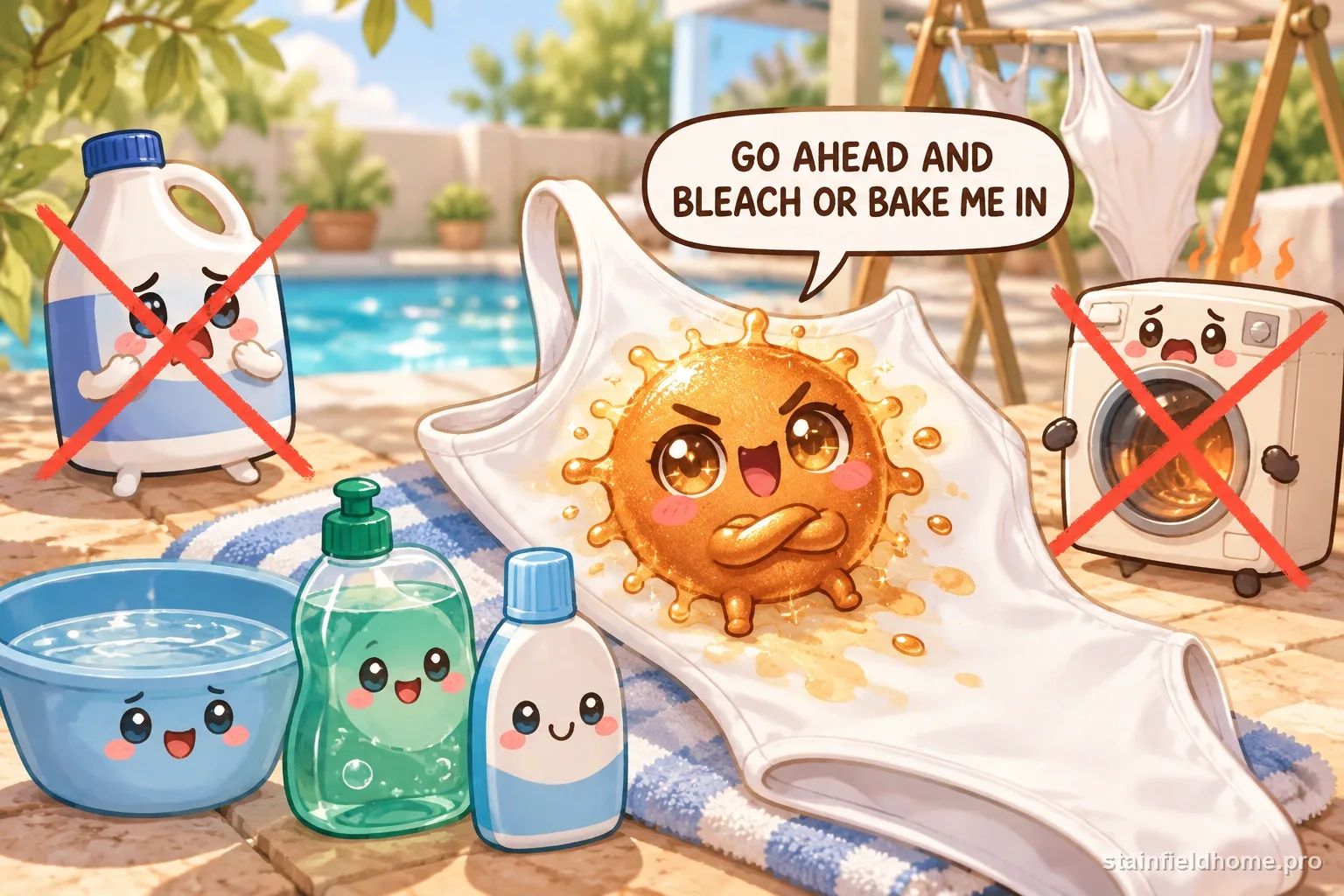
Avoid homemade citric-acid or lemon soaks on an unknown swimsuit. Acids and rust removers can weaken elastane, fade prints, or affect decorative hardware; a cotton-safe rust remover is not automatically swimwear-safe. Do not use bleach or a strong rust chemical unless the garment and product labels both allow it. If compatibility is unclear, stop at the cool rinse and ask the suit maker or a professional cleaner.

Rinse well and wash cool
After any approved spot treatment, rinse very thoroughly and hand-wash the suit in cool water with a mild detergent or swimwear wash, following its label. Do not wring or twist; press water out with a towel. If your tap water is visibly rusty or iron-rich, use clean water for the final rinse only if the suit maker permits it.
Do not leave the suit soaking for hours. Chlorine, sunscreen oils, salt, and repeated chemical treatments all shorten swimwear life. Keep the treatment limited to the mark and rinse away cleaner before it can dry in the fabric.
Air-dry and inspect
Press the suit in a towel and lay it flat in the shade. Follow the label's drying directions; heat and prolonged direct sunlight can weaken elastane or fade swimwear colors. Check the stain when fully dry before deciding whether to repeat an approved product treatment.
If the mark remains after one careful cycle, do not simply make the acid stronger or soak longer. The color may be a permanent fiber change or a finish reaction. A faint mark is preferable to a stretched, faded, or weakened suit.
Preventing it next time
Let sunscreen dry on skin according to its label before dressing, then rinse the suit promptly after swimming. Wash it separately from laundry products that may leave residue and store it only after it is fully dry.
If your water leaves orange deposits on sinks or tubs, ask the local water provider or test the water rather than assuming the sunscreen alone caused the mark. An avobenzone-free sunscreen may reduce this particular interaction, but choose sun protection for its labeled use and reapply as directed; do not compromise skin protection to protect a swimsuit.
Tell sunscreen oil from rust-colored residue
A translucent or greasy patch suggests sunscreen oils remain. A dry orange-brown mark that darkens after washing in hard water may involve avobenzone and iron. White chalky residue can come from mineral filters such as zinc oxide or titanium dioxide. These are different stain components: first remove surface oils with a mild detergent, then decide whether the color needs a compatible rust treatment.
If the swimsuit is printed, lined, or a color-block design, test every cleaner on a hidden area and inspect after it dries. A product that removes orange from a white cotton shirt could leave a pale ring or damage the stretchy panel. Do not use chlorine bleach to make the suit white again unless its maker specifically approves that exact treatment.
When a professional or replacement is the better choice
Use a professional cleaner for an expensive suit, a stain on a delicate lining, or an unknown surface treatment. Tell them the sunscreen brand, whether the suit was washed in hard water, and what cleaners have already touched it. That helps them avoid repeating an incompatible acid or bleach step.
Replace a suit if elastic has lost recovery, seams are thinning, or the fabric is becoming translucent; stain treatments cannot restore stretch or chlorine damage. If the orange mark stays but the suit is otherwise sound, wearing it as-is may be the least damaging option.
A white swimsuit is not the same as white cotton
Many swimsuits use elastane blended with nylon or polyester, along with a lining, elastic bands, and sometimes glued or printed trim. Those parts may react differently to the same stain remover. A product approved for white cotton can stretch out a suit, weaken elastic, or create a pale halo around a print. Check the garment label, not only the care directions on the stain product.
Use a mild wash by hand and press the suit in a towel instead of wringing it. Chlorine, salt, and friction already stress swimwear; a long chemical soak adds more exposure. If the label says rinse-only or hand-wash, do not transfer laundry-machine directions from a T-shirt to the swimsuit.
Choose a sunscreen stain treatment by label, not ingredient alone
A rust remover can contain acids or other reducing agents. Some are designed for washable cotton, while others are intended for hard surfaces and must never touch clothing. Read the full label for fiber compatibility, dilution, protective gear, and rinse directions. If it does not specifically allow elastane or swimwear, do not apply it to the suit.
If the stain remains after a gentle detergent wash and no compatible rust product is available, stop. A professional textile cleaner may be able to test a hidden seam and treat the mark without compromising stretch. Keep the sunscreen package or photograph its active ingredients so the cleaner can distinguish an avobenzone mark from a plain oil or mineral-filter residue.
Common questions
FAQ
Why did the orange stain appear only after I washed and dried the suit?
Some sunscreen ingredients, including avobenzone, can form orange marks when they meet iron in hard water. A wash may reveal the discoloration or add heat that sets remaining residue, but the reaction depends on the specific formula, water, and fabric. Rinse promptly in cool water and follow the swimsuit's care label.
Can I use Bar Keepers Friend or another rust remover on a swimsuit?
Only if the product label permits the suit's exact fiber, including elastane, and the garment maker allows it. A product intended for sinks or cotton clothing may damage stretch fibers, lining, or prints. Never scrub powder into the fabric; test a hidden seam and stop if it fades or loses stretch.
Is the stain from my sunscreen or from the pool?
Usually both. The avobenzone comes from the sunscreen; the iron comes from tap, pool, or well water. Combining a chemical sunscreen with iron-containing water is the common recipe, which is why the same suit and sunscreen may not stain at a different pool.
Can sunlight bleach the stain out?
Do not use prolonged direct sun as a stain treatment for swimwear. UV can fade the suit and degrade elastane, even when the fabric is white. Rinse, wash, and dry it according to the label; use only a compatible stain product if needed.
Can I use this method on a white swim cap or rash guard?
Check the item's own care label and fiber content. Rash guards and swim caps can use different elastane, silicone, coatings, or prints from a swimsuit. Keep the treatment gentle and avoid any acid or rust remover unless the item's manufacturer explicitly approves it.
Sources reviewed
Keep reading
Related guides

Slime on Carpet
How to Remove Slime From Carpet Without Damaging the Fibers
Lift dried or fresh slime out of carpet fibers with an ice-and-scrape method plus a vinegar or rubbing alcohol rinse, without soaking the backing or bleaching the color.

Essential oil and reed-diffuser oil on Finished wood furniture
How to Remove Essential Oil and Diffuser Stains From Wood Furniture
Blot a diffuser-oil spill on finished wood, use a cautious absorbent step, and recognize when the finish needs a furniture repair professional.

Pumpkin (carving, decorating, or puree) on Carpet
How to Remove Pumpkin Stains From Carpet
Remove pumpkin pulp and treat any remaining orange mark on carpet with a careful, low-moisture sequence that follows the carpet maker's guidance.
Sweat on Baseball cap
How to Remove Sweat Stains and Odor From a Baseball Cap
Lift yellow sweat stains and odor from the sweatband of a baseball cap without warping the brim or shrinking the crown.