The quick answer
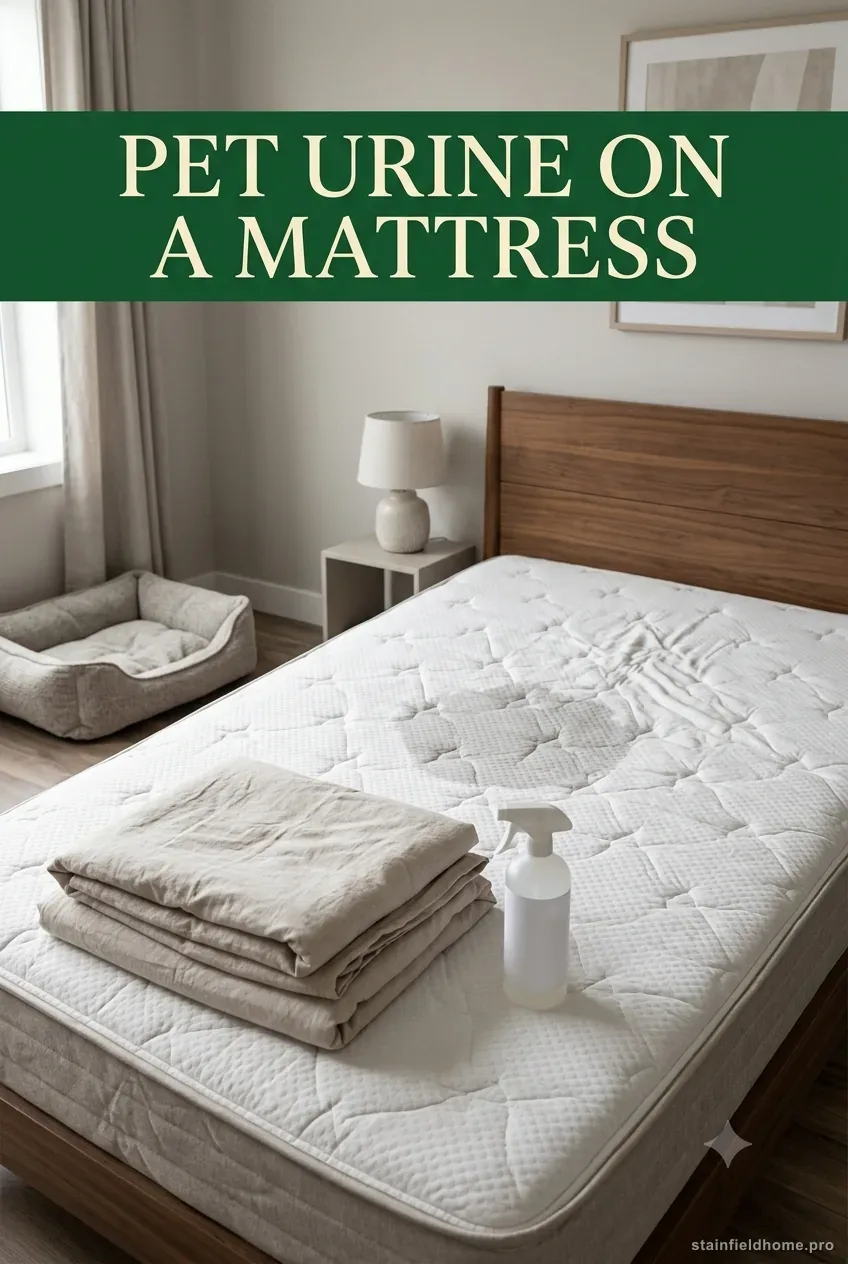
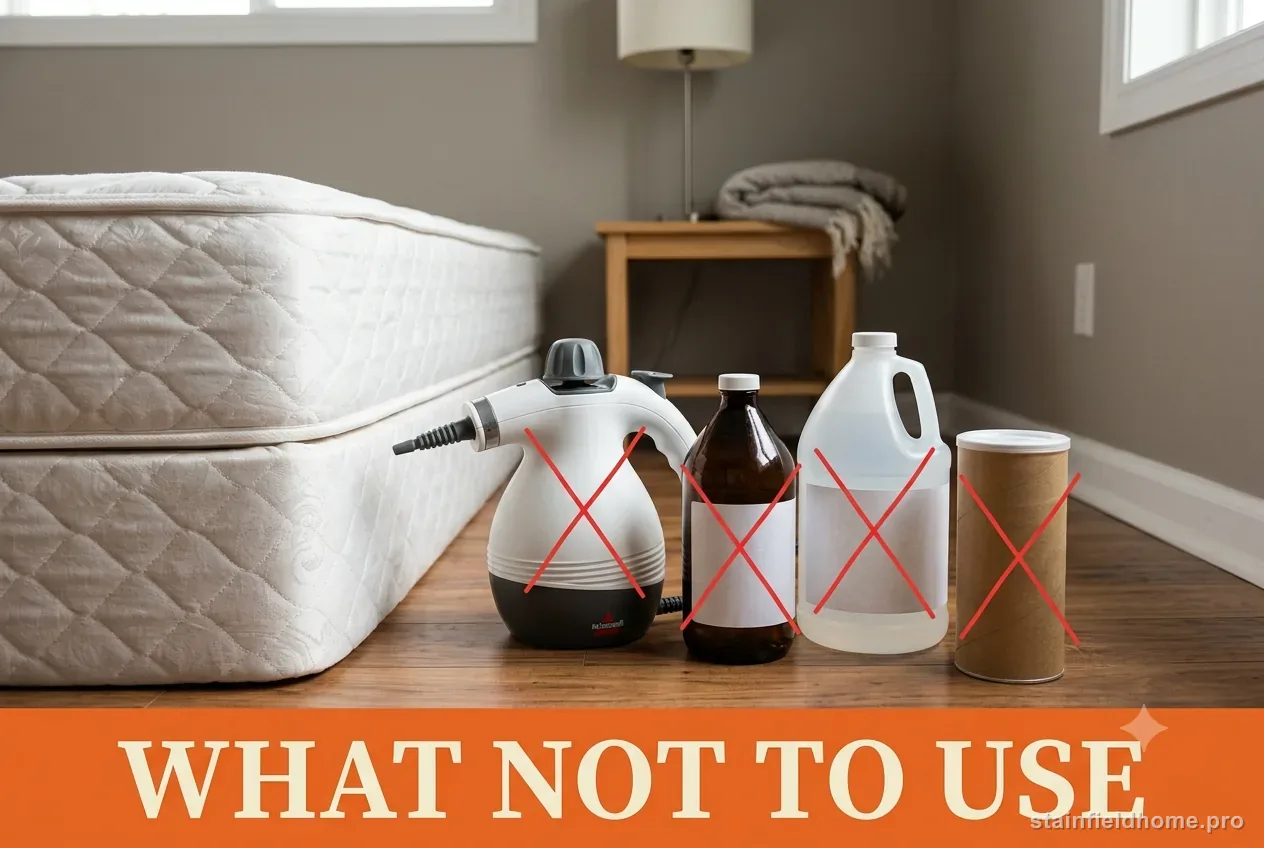
Blot up everything you can with dry towels—no rubbing. Blot the spot with cool water to dilute what is left, then soak the area thoroughly with an enzymatic pet cleaner and keep it wet for the full time on the label, often several hours, covered loosely with plastic so it cannot dry early. Blot, then air-dry the mattress completely with a fan, and repeat once if any smell returns. Do not use ammonia, a vinegar-heavy mix as the main treatment, or a steam cleaner—heat and ammonia can set the odor.
What you’ll need
- Clean white towels or paper towels
- Cool water
- Enzymatic cleaner made for pet urine
- Plastic sheet or wrap
- Fan
- Baking soda
- Waterproof mattress protector (for afterward)
Why pet urine is different from a normal spill
Fresh urine is mostly water, urea, and salts, and on its own it would rinse out. As it dries and bacteria break it down, it leaves behind uric acid, which forms hard crystals that bind to fabric and are not water-soluble. Those crystals are the source of the lingering smell: whenever the air turns humid they partly dissolve and release odor again, which is why a spot can seem clean when dry and reek on a rainy day.
Detergent, vinegar, and ordinary cleaners mask the smell without removing the crystals. An enzymatic cleaner is the tool that works, because its enzymes and bacteria digest the uric acid and the protein with it. Humane-society cleaning guides make the same point and add a specific warning: avoid a steam cleaner, and do not rely on cleaners containing ammonia or vinegar—ammonia in particular smells enough like urine to a dog or cat that it can draw them back to the same spot.

Cat urine, dog urine, and what to expect
Dog and human urine respond well to a standard enzymatic cleaner. Cat urine carries an extra sulfur compound that makes it smell stronger and sometimes makes a second treatment necessary; a cleaner labeled specifically for cat urine is worth using. Intact male cats and marking behavior produce the most concentrated urine of all.
Be realistic about a deep or old soak. If urine has gone through the cover and into the foam or coils, surface treatment may not reach all of it, and a heavily saturated mattress sometimes cannot be fully saved. A mattress protector from here on is what prevents a repeat.
Fresh accident: blot, rinse, then enzymes
- 01
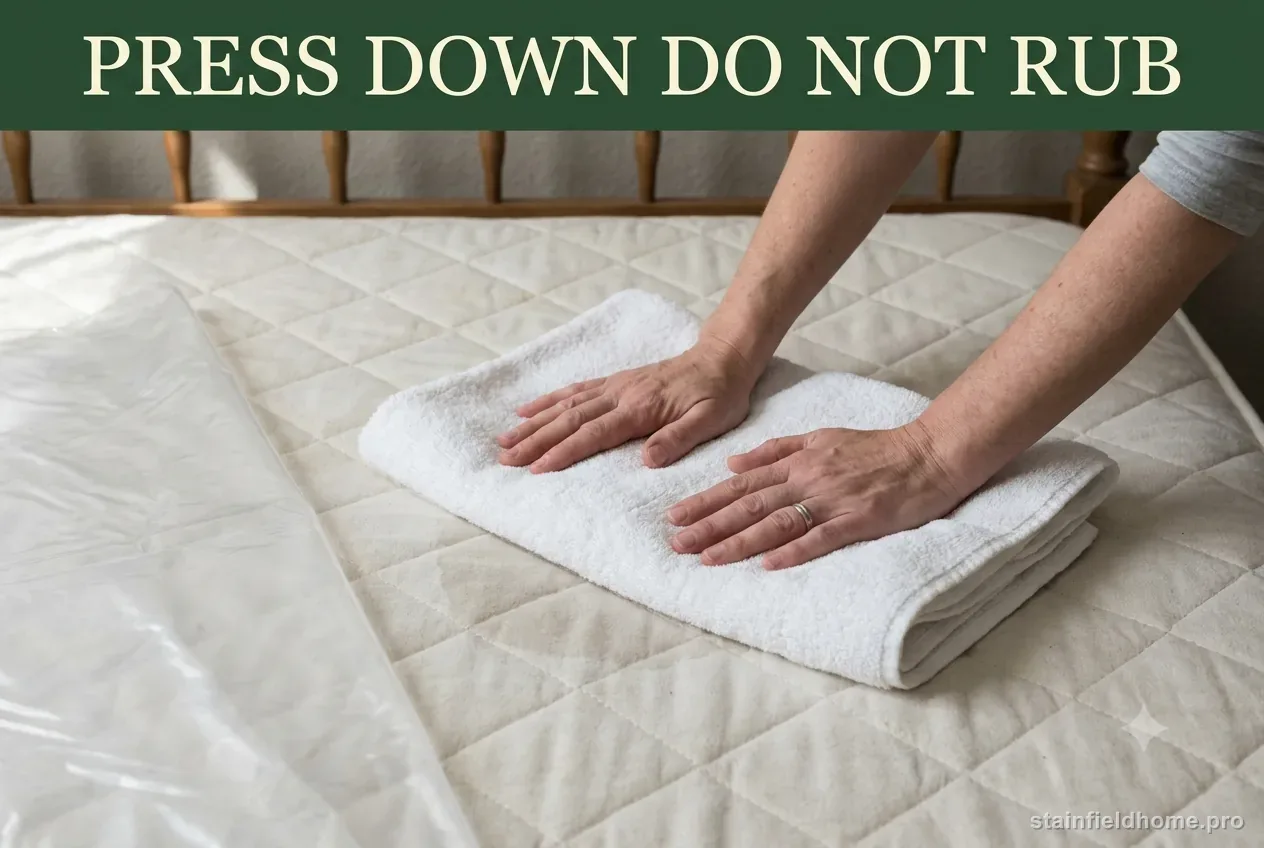
Press dry towels straight down onto the wet area, standing on them if needed. Lift, replace with dry towels, and repeat until almost no moisture transfers. Do not rub—rubbing spreads the urine and works it deeper.
- 02
Blot the spot with cool water on a fresh towel to dilute what is left, then blot dry again. Skip hot water; heat helps set the odor.
- 03
Soak the whole affected area, a little wider than the stain, with an enzymatic pet cleaner until the fabric is visibly wet. Do not wipe it off.
- 04
Lay a sheet of plastic loosely over the area so the cleaner stays wet and the enzymes keep working. Leave it for the full time on the label, which is often several hours.
- 05
Remove the plastic, blot up the excess, and let the mattress air-dry completely. A fan aimed across it speeds this up and prevents a musty smell. Do not put bedding back until it is bone dry.
- 06
When dry, sniff-check. If any odor remains, treat the spot a second time the same way. A light dusting of baking soda left overnight and then vacuumed can absorb the last of a faint smell.
Dried or previously cleaned stains
If the spot was already cleaned with a non-enzymatic product or something containing ammonia, the enzymatic cleaner still works, but leftover residue can slow it down. Rinse first by blotting with plain cool water, let it dry, then start the enzyme process.
- 01
Lightly re-wet the area with cool water so the enzyme solution can penetrate the old residue, and blot off the excess.
- 02
Apply the enzymatic cleaner generously, enough to reach as deep as the urine originally went.
- 03
Cover with plastic and leave it far longer than for a fresh stain, up to overnight, checking that it has not dried out and adding more cleaner if it has.
- 04
Blot, then dry thoroughly with a fan; give a large area a full day.
- 05
Expect to repeat. An old stain often needs two or three enzyme treatments, with complete drying between them, before the smell is gone for good.
Working around the mattress itself
Keep the mattress as flat and dry as you can. Over-wetting is the most common mistake: more cleaner than the spot can hold just carries urine deeper and takes days to dry, which invites mildew. Use enough to saturate the stained layer, no more, and always dry with airflow afterward.
If the mattress has a removable, washable cover, unzip it and launder it separately according to its own care tag—add an enzyme presoak and wash in the warmest water that tag allows. Waterproof membranes and quilted covers may have different heat limits than the mattress fabric.
Do not use a steam cleaner or hot-water extraction on a urine stain that has not been fully treated with enzymes first. The heat can bond the odor permanently into the fibers, and then even enzymes struggle.
What makes urine odor permanent
- Ammonia and ammonia-based cleaners—the smell mimics urine and can re-attract the pet to the spot
- A steam cleaner or hot water on an untreated stain, which sets the odor
- Rubbing or scrubbing, which spreads urine deeper into the mattress
- Saturating the mattress with far more liquid than the stain area can hold
- Putting bedding back before the mattress is completely dry—trapped moisture turns musty
- Relying on baking soda or a scented spray alone; they cover the smell but leave the uric acid crystals behind
Prevent the next accident from soaking in
A washable waterproof mattress protector is the practical fix. It keeps the next accident on a surface you can put in the machine, and it costs far less than replacing a mattress. Wash it with an enzyme detergent so it does not hold odor itself.
Repeated accidents in the same place are worth a vet visit—urinary tract infections, kidney issues, and diabetes all cause them, and in cats a litter-box or stress problem is common. Solving the cause is what stops the cycle; cleaning only manages the aftermath.
Common questions
FAQ
Why does the urine smell come back when the weather is humid?
Uric acid crystals left in the fabric are not water-soluble and stay put after ordinary cleaning. When humidity rises they partly dissolve and release odor again. Only an enzymatic cleaner that digests those crystals removes the smell for good.
Can I just use vinegar and baking soda on pet urine?
They can help with a very fresh spot by neutralizing some odor, but they do not break down uric acid crystals, so the smell usually returns. Humane-society guides advise against relying on vinegar or ammonia and recommend an enzymatic cleaner as the main treatment.
Is cat urine harder to remove than dog urine?
Generally yes. Cat urine contains a sulfur compound that makes it smell stronger and can require a second enzyme treatment. Use a cleaner labeled for cat urine, and expect an old or marked spot to need repeating.
Sources reviewed
Keep reading
Related guides
Slime on Carpet
How to Remove Slime From Carpet Without Damaging the Fibers
Lift dried or fresh slime out of carpet fibers with an ice-and-scrape method plus a vinegar or rubbing alcohol rinse, without soaking the backing or bleaching the color.
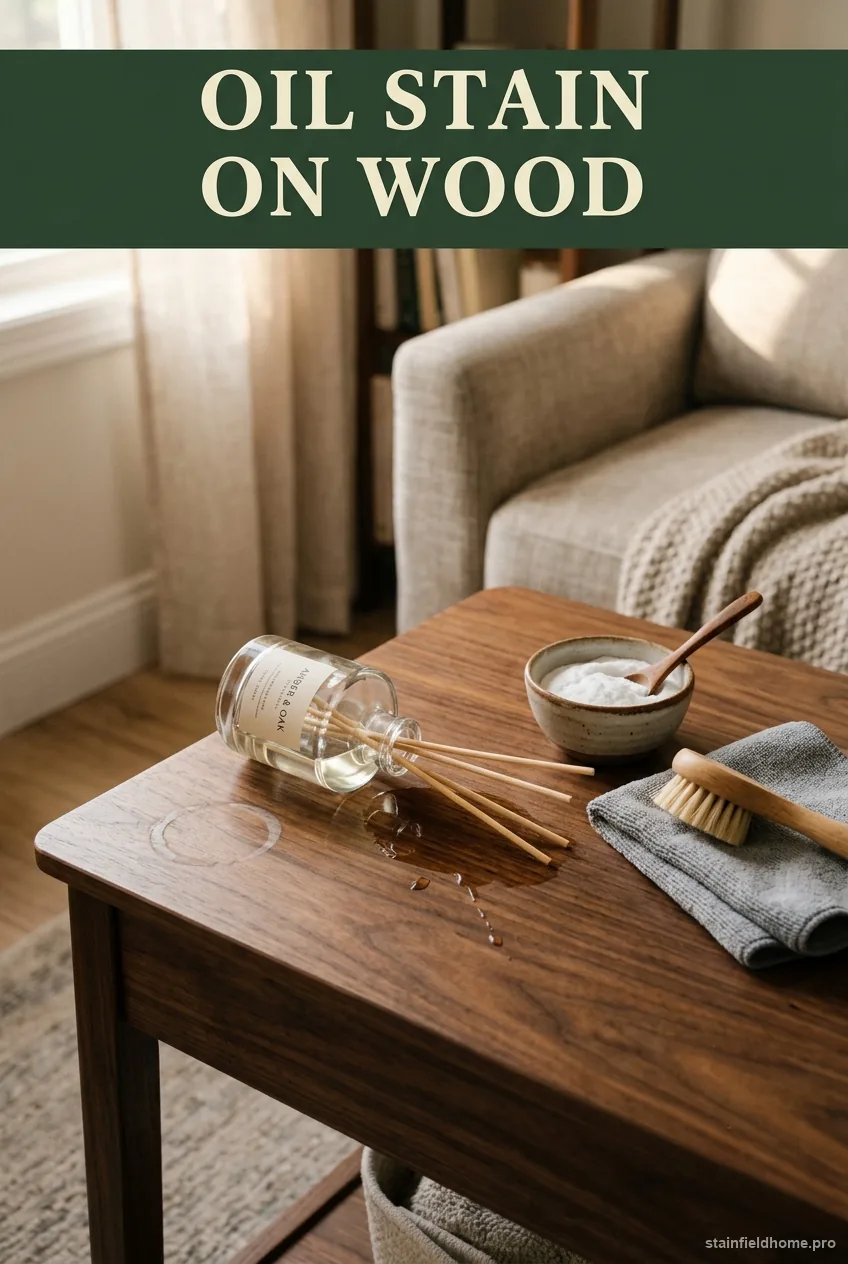
Essential oil and reed-diffuser oil on Finished wood furniture
How to Remove Essential Oil and Diffuser Stains From Wood Furniture
Blot a diffuser-oil spill on finished wood, use a cautious absorbent step, and recognize when the finish needs a furniture repair professional.
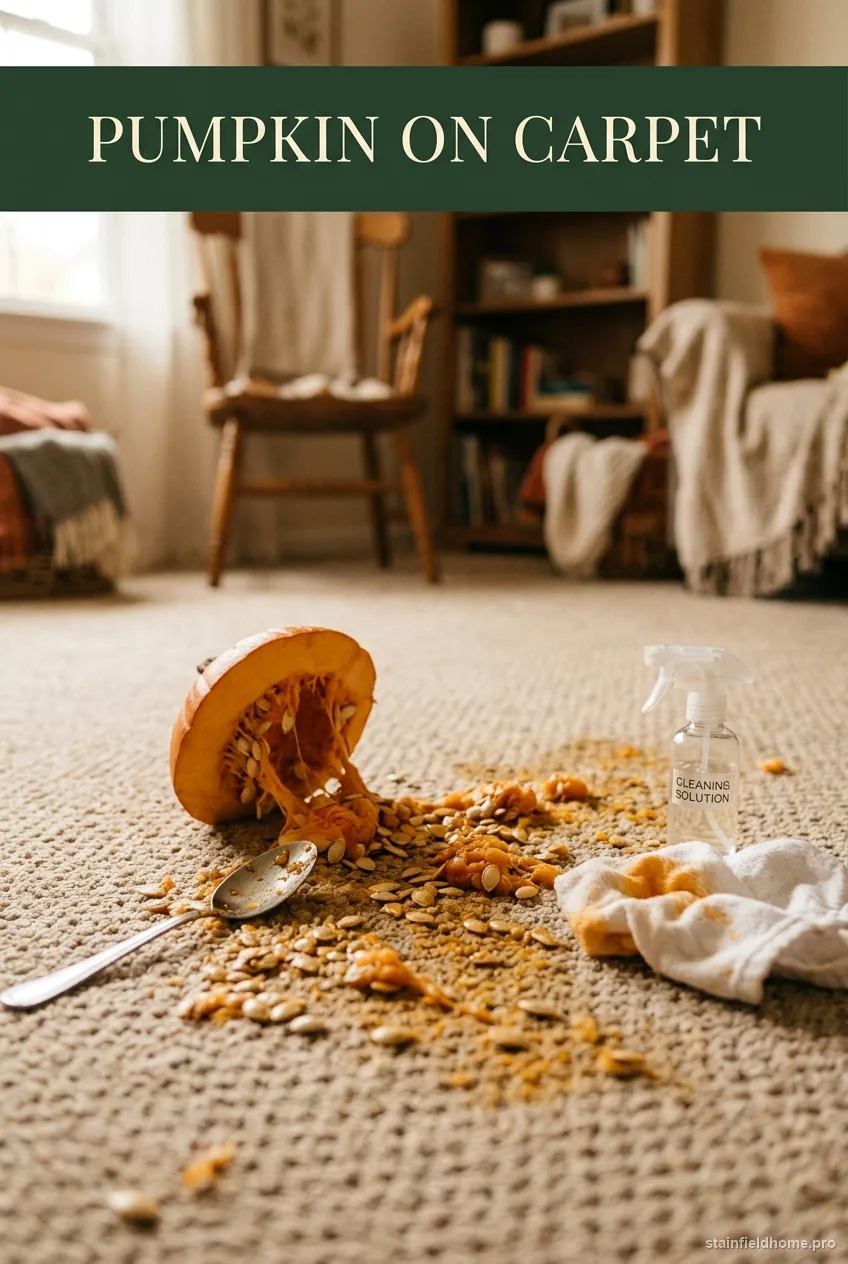
Pumpkin (carving, decorating, or puree) on Carpet
How to Remove Pumpkin Stains From Carpet
Remove pumpkin pulp and treat any remaining orange mark on carpet with a careful, low-moisture sequence that follows the carpet maker's guidance.
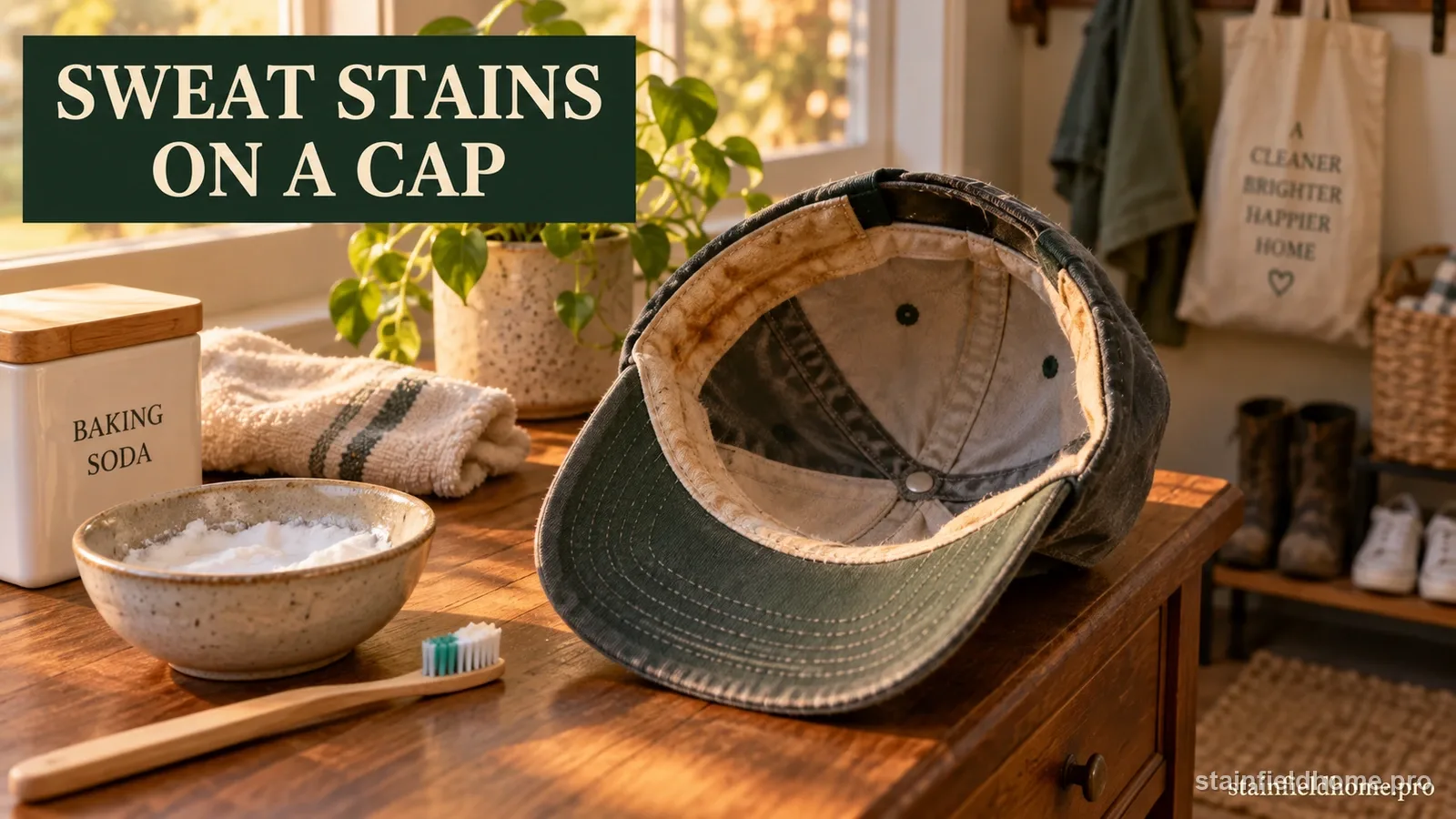
Sweat on Baseball cap
How to Remove Sweat Stains and Odor From a Baseball Cap
Lift yellow sweat stains and odor from the sweatband of a baseball cap without warping the brim or shrinking the crown.