
The quick answer
Read the coat label and identify its shell and finish before adding anything. Chill a raised sap bead with a sealed ice pack, then lift it gently with a dull plastic edge. Do not use alcohol, oil, or solvent on waterproof, waxed, wool, or unknown fabric. Wash only if the maker permits it, air-dry, and inspect before any repeat treatment.
What you’ll need
- Care label or maker instructions
- Sealed ice pack
- Dull plastic card
- White absorbent cloth
- Mild detergent approved for the coat
- Basin or washer only if label permits
Identify the coat before treating the sap
Pine sap is a sticky resin, not an ordinary water-based spill. A fresh bead can sit on the surface, while a rubbed or warmed mark can smear between yarns and leave an amber shadow. Winter coats add another complication: the visible shell may be waterproof, coated, waxed, insulated, or backed with a membrane, even when the fiber itself seems sturdy. Choose the method from the coat maker's instructions, not from the word polyester or nylon alone.
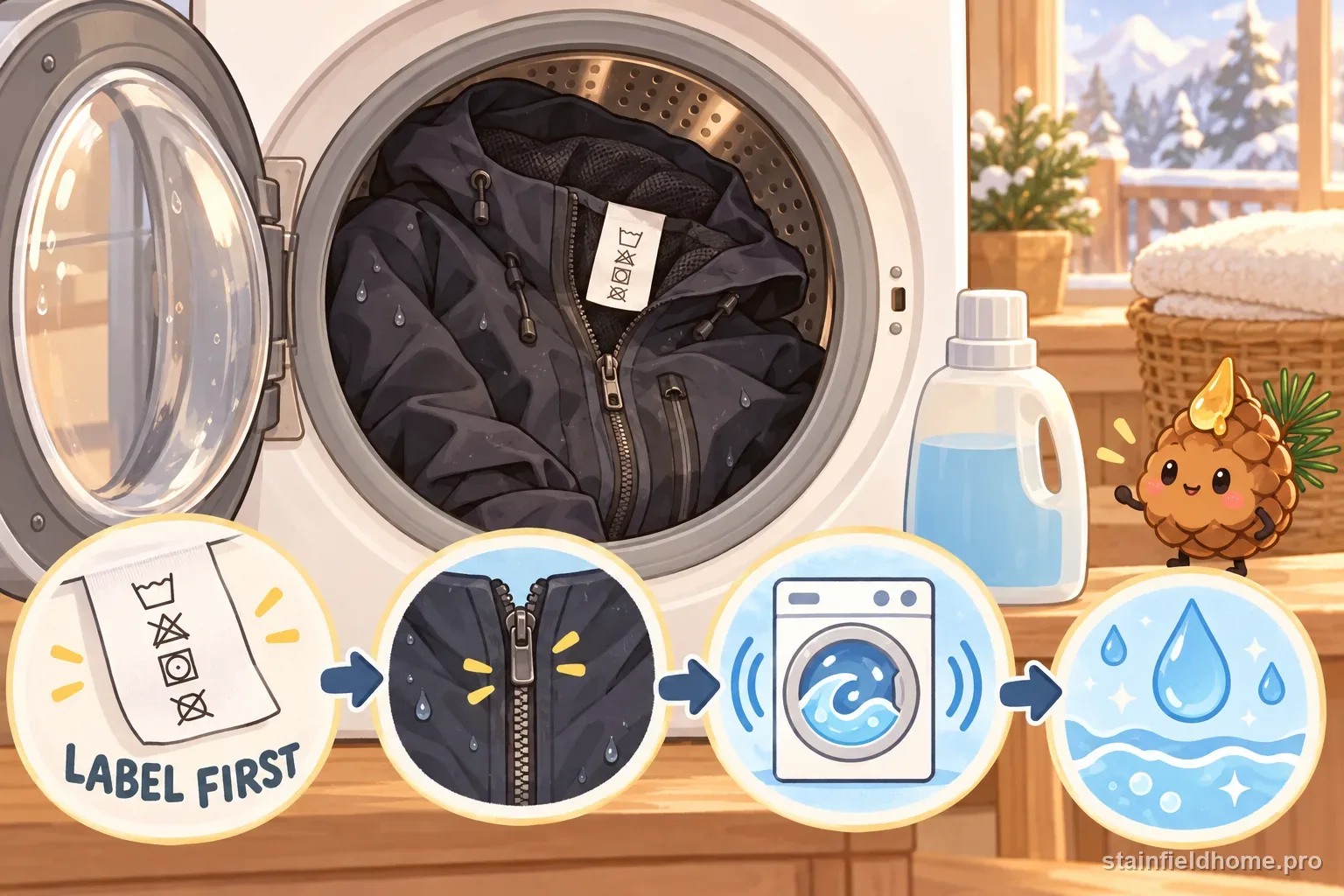
Read the care tag and look up the brand's current instructions if the tag is abbreviated. Note the shell material, lining, filling, trim, wash temperature, and whether the coat is washable or dry-clean only. Down, wool, faux fur, leather trim, seam tape, and detachable liners may have different limits. A shell can tolerate water while its finish or bonded layers do not tolerate a household stain remover.
GORE-TEX instructs owners to follow the garment maker's label and warns that some products have special care. Patagonia distinguishes washable waterproof shells from waxed cotton, which it says to spot-clean rather than wash, dry, iron, or steam. Treat those directions as product-specific examples, not permission to apply the same recipe to every coat. If the coat is valuable, vintage, waxed, dry-clean only, or has no legible label, stop and ask the manufacturer or a cleaner before using liquid.
Keep the sap from spreading
Use a clean white cloth beneath a thin shell only if it can be placed without stretching or crushing insulation. Avoid setting the sticky area against another part of the coat, a table covering, or the lining. Keep the fabric away from a radiator, sunlight, iron, hair dryer, and hot water while you decide what its care label allows. Warmth can soften resin and make a neat bead harder to remove.
If the sap is a tiny surface drop, do not rush to dissolve it. A controlled mechanical first step is easier to assess and keeps untested cleaner away from coatings, dyes, and neighboring panels. Take a photo before treatment if you may need to ask the brand or a professional cleaner for advice.
- 01
Move the coat to a clean, stable surface and keep the stained panel facing up. If the coat is still being worn, take it off before working so pressure does not push resin inward.
- 02
Do not rub, blot with a wet cloth, or press a paper towel into fresh sap. Those actions can spread the sticky material and pull lint into it.
- 03
If grit, needles, or loose debris are caught in the sap, lift the loose pieces straight up with tweezers or a dry cloth. Do not drag them across the fabric.

Chill the bead and lift what comes away
For a raised bead on a coat whose fabric can be handled, place ice cubes in a sealed bag or use a sealed cold pack. Rest it lightly on the sap for a short interval, checking often. The goal is to make the resin firmer, not to soak the panel or freeze a wet patch. Do not apply ice directly to delicate fabric, leather, or a finish that the maker says must stay dry.
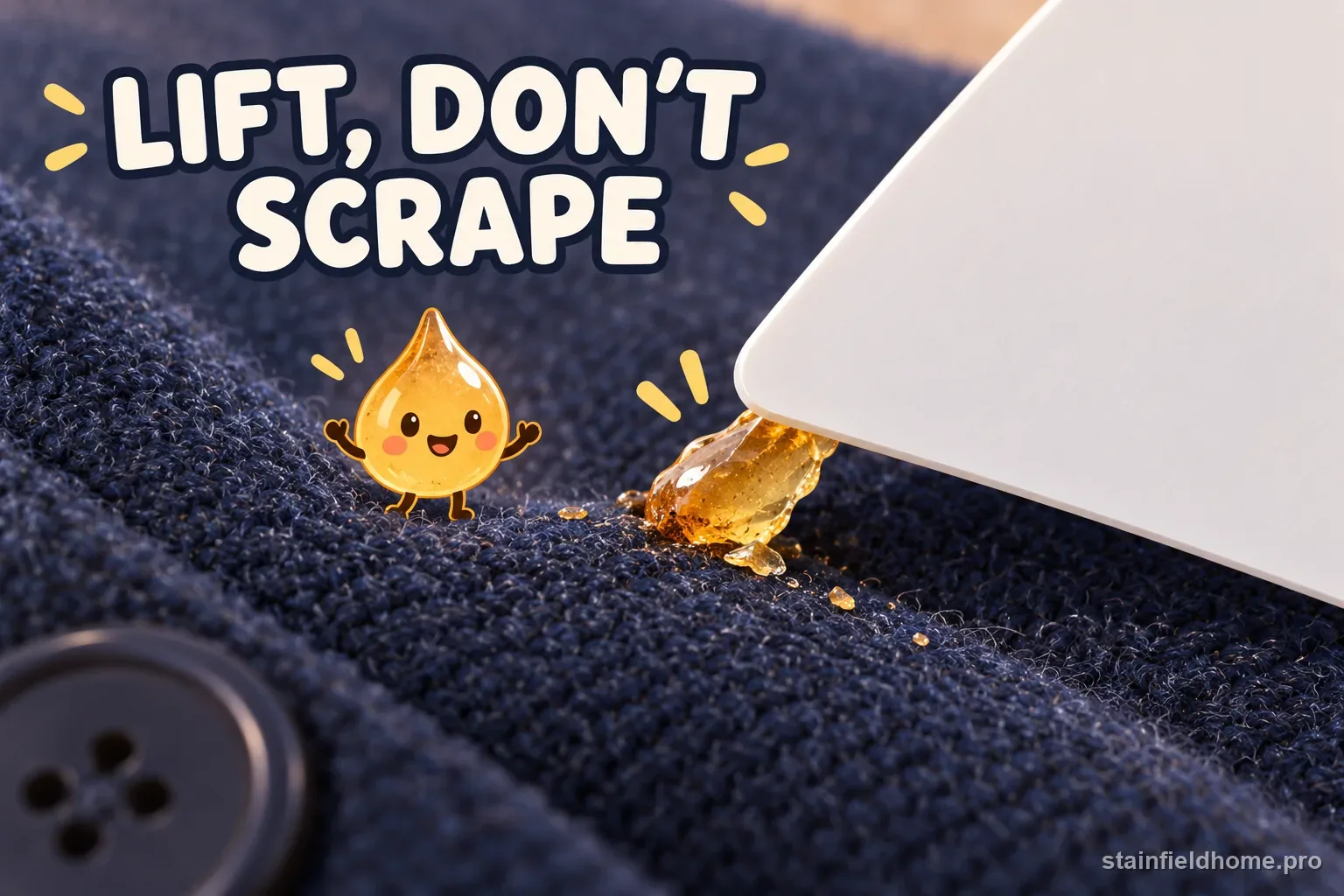
Once the bead feels less tacky, hold a dull plastic card nearly parallel to the fabric and nudge the resin upward from its edge. Work in small motions, away from the clean area. Lift the pieces onto scrap paper and wipe the card between passes. Stop if the weave begins to snag, the coating flakes, the surface pills, or the sap only smears. A stiff knife, fingernail, metal scraper, or vigorous brushing can cut fibers and damage the shell.
A flat stain with no raised resin may not respond to chilling. Do not keep scraping it in an attempt to reach the fiber. First remove only what can be lifted without force, then use the label decision below to decide whether any spot treatment is appropriate.
| Coat type | First response | Avoid |
|---|---|---|
| Washable plain shell | Chill and lift, then test the label-approved wash | Solvent before a hidden test |
| Waterproof membrane | Chill and lift, then follow the garment maker | Alcohol, oil, generic stain remover |
| Waxed cotton | Lift loose resin and ask the maker if needed | Machine wash, heat, solvent |
| Wool or dry-clean only | Lift only loose hardened resin, then consult a cleaner | Water, rubbing, home solvent |
| Unknown or valuable coat | Pause and identify the maker's care instructions | Guessing from fiber content |

Test the care-approved option in a hidden place
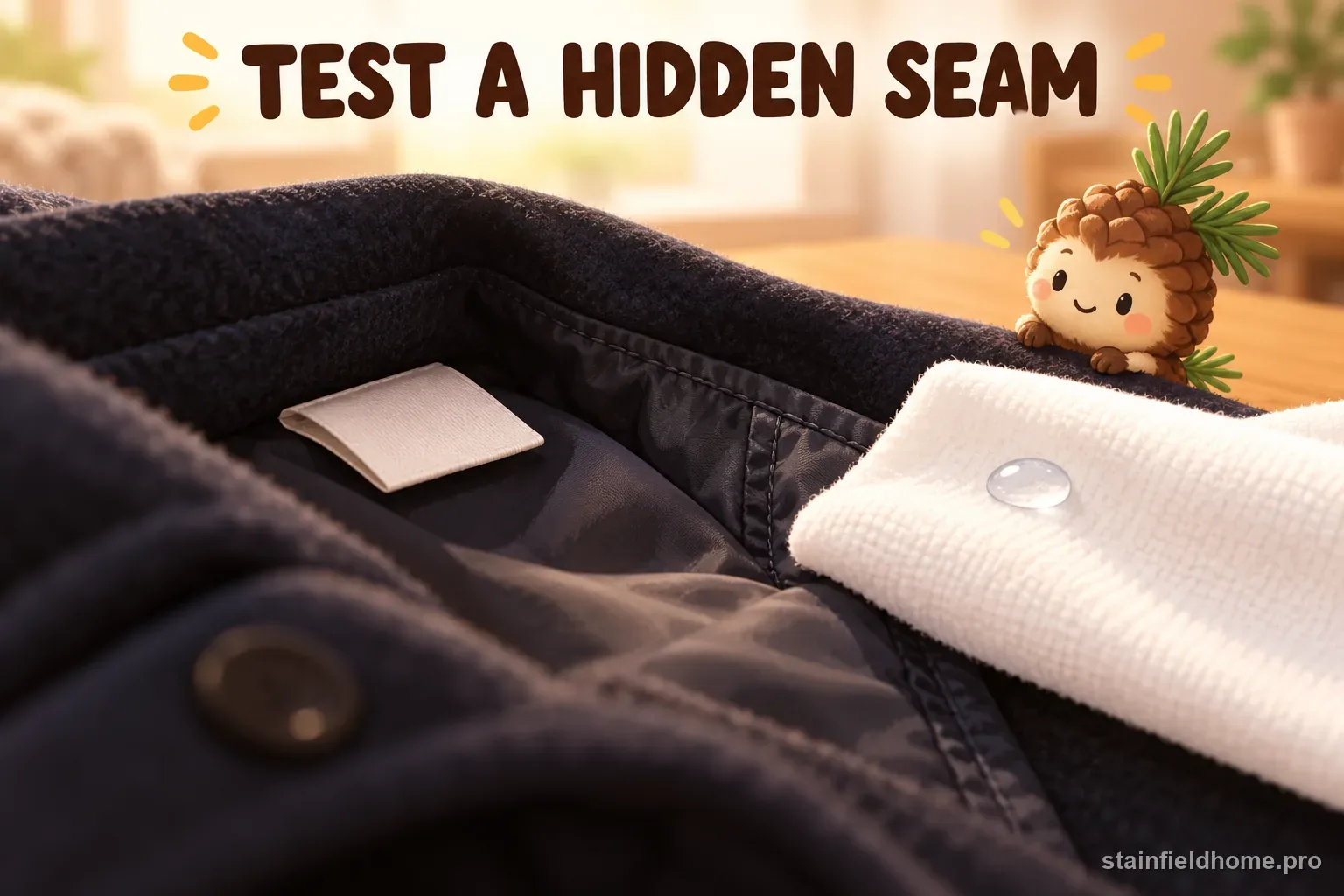
If the manufacturer permits spot cleaning, test the exact product and method on an inside seam or another hidden area. Use a white cloth to check for dye transfer and inspect the finish after it dries. A water-only test is not a safety test for alcohol, detergent, or solvent; each product can affect color and coatings differently. Do not test on the visible sap mark, where a change would be difficult to distinguish from the stain.
For a conventional washable fabric coat, a small amount of its label-approved liquid detergent may be appropriate after loose resin is removed. Use it only if the care directions allow local wetting and the hidden test dries with no ring, color loss, texture change, or tacky finish. Follow the detergent label and the coat maker's instructions. Do not make a stronger mix or leave concentrated detergent to dry on the shell.
Do not use rubbing alcohol, hand sanitizer, nail-polish remover, citrus cleaner, cooking oil, butter, WD-40, or a general-purpose solvent as a universal sap remover. These products may soften resin, but they can also strip a water-repellent finish, alter dye, leave oil behind, or affect seam tape and adhesives. Ariel's general laundry article offers advice for conventional washable fabric; it does not replace technical outerwear instructions. If the hidden test is uncertain, stop instead of escalating.
Clean only when the label allows washing
Ariel's tree-sap guidance describes a detergent-and-wash sequence for ordinary washable fabrics, using the hottest temperature allowed by the label. For a winter coat, the label and the brand's instructions control, especially when the garment has a membrane, down fill, seam tape, trims, or a water-repellent treatment. Do not assume that a regular laundry cycle or a commercial stain remover is acceptable simply because the outer fabric looks synthetic.
Never put a coat in a dryer to see whether the mark will disappear. Heat can set a remaining stain and may affect a coating, adhesive, or fill. If the label requires a professional cleaner, or the brand prohibits spot treatment, do not proceed with a home wash.
- 01
Remove as much hardened surface resin as comes away without force. Close zippers and fasteners and prepare the coat exactly as its care instructions say.
- 02
Use only a detergent compatible with the coat. GORE-TEX, for example, advises a small amount of liquid detergent and says to avoid fabric softener, powder detergent, and stain removers for the products covered by its care page.
- 03
Wash at the stated temperature and on the stated cycle, with the coat alone or as the maker directs. Do not add bleach, vinegar, ammonia, or a second cleaner.
- 04
Rinse and dry only as the garment instructions specify. Some shells need a particular drying step for durable water repellency, while others require a different approach.
Recheck old sap and anything left after the first pass
Sap that has hardened for days may lift more cleanly than fresh tacky resin, but the stain can be pressed into the weave or mixed with dirt. Chill and lift the raised portion once, without picking at the fabric. For a coat that passes its care check, perform one label-approved cleaning pass and then let it dry exactly as directed. Do not judge a damp panel, because moisture can darken fabric and conceal an outline.
After the first pass, inspect the front, reverse, seams, and nearby lining in good light. If the resin is still raised, repeat the gentle chill-and-lift step once. If only a faint color remains, do not automatically add alcohol or another stronger product. The remaining amber tone could be resin, dye change, finish disturbance, or a shadow in the insulation; more chemistry may make the damage larger without removing it.
If the coat has already been washed or dried, check whether the mark is still sticky and whether the shell's beading or surface texture changed. Do not try to reverse a dryer cycle with a solvent. Contact the maker or a professional cleaner, explain which detergent and cycle were used, and share a photo. Record any product that touched the spot so the next person does not unknowingly combine treatments.
Dry, assess the finish, and know when to stop
Allow the coat to dry by the method on its own care tag. A shell that tolerates low heat may have manufacturer-specific instructions for restoring water repellency, but that does not mean every jacket should go in a dryer. GORE-TEX describes a warm tumble-dry step for the products covered by its outerwear page, while Patagonia's waxed-cotton guidance says not to machine dry. These are not interchangeable instructions. Follow the exact coat maker, not a general rule.
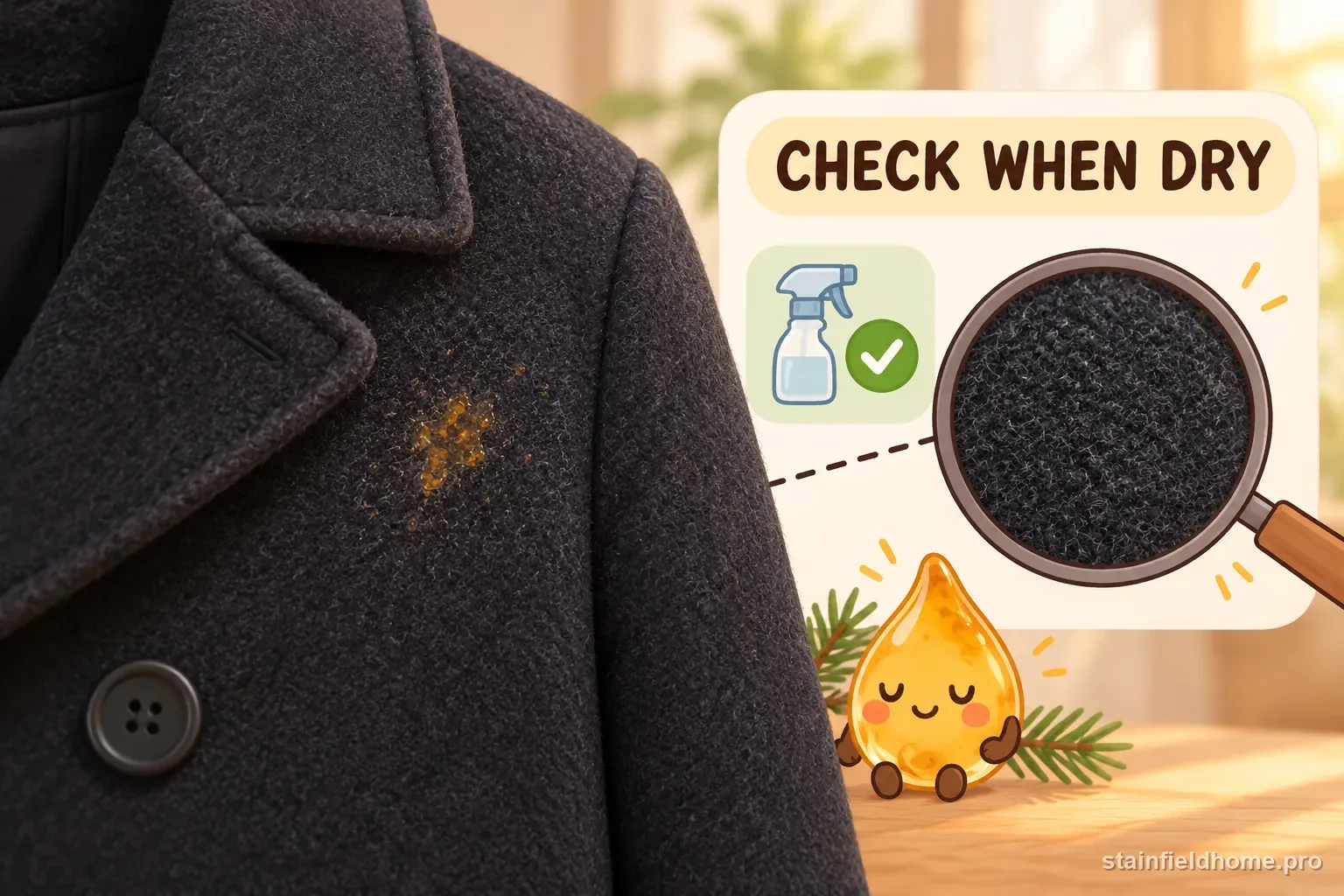
When the panel is dry, inspect for a resin shadow, lifted coating, seam-tape change, loss of water beading, odor, or a rough patch. Stop if you see any of those signs. Do not reproof a shell just to hide a sap mark; DWR products are for restoring an approved water-repellent finish and will not remove embedded resin.
Call the manufacturer or a cleaner experienced with technical outerwear if the mark remains after one permitted pass, the coat is wool, waxed, down-filled, expensive, vintage, or dry-clean only, or the sap reached a seam, lining, or insulation. Also stop if the hidden test changes color or texture, or if water no longer beads where it did before. Give the cleaner the care label details and the history of every product used.
Prevent sap from reaching your coat again
When carrying a live tree or walking under low conifer branches, keep the coat from brushing resinous limbs and use a cover over the outer shell when practical. Check sleeves, cuffs, and shoulders after handling a tree before folding or hanging the garment. A small raised bead is easier to isolate before it is pressed into a bag, seat, or another coat panel.
Keep the care label readable and save a link or photo of the brand's instructions before winter. Store a clean plastic card and a sealed cold pack with household spill supplies, but keep stain products separate from the coat until you have checked compatibility. Quick identification and a gentle first lift are safer than reaching for the strongest solvent nearby.

Common questions
FAQ
Will rubbing alcohol remove pine sap from a coat?
It may dissolve some resin, but it can also affect dyes, DWR, membranes, seam tape, or coatings. Do not use it unless the coat maker approves it and a hidden test dries unchanged.
How do I get dried pine sap off a winter jacket?
Chill a raised bead with a sealed cold pack and lift only what releases with a dull plastic edge. Then follow the coat label. Stop if sap is flat in the weave or the fabric begins to snag.
Can I wash a waterproof jacket with sap on it?
Only if the jacket's care label and manufacturer permit washing. Remove loose resin first, use the recommended detergent and cycle, and avoid generic stain removers or fabric softener.
Can I use WD-40 or cooking oil on tree sap?
Avoid both on a winter coat. They may leave an oily mark or affect a water-repellent finish, and a later wash may not remove the residue safely.
When should I take a coat to a cleaner?
Use a cleaner for waxed, wool, valuable, dry-clean-only, or unknown coats, and when sap remains after one approved pass or a finish, seam, lining, or color changes.
Sources reviewed
Keep reading
Related guides

Winter salt on Suede boots
How to Remove Winter Salt Stains From Suede Boots
Remove white winter salt rings from suede boots with controlled moisture and careful nap restoration; avoid soaking or heat-drying the leather.
Winter de-icing salt on Hardwood floors
Remove Winter Salt Stains From Hardwood Floors
Remove winter salt residue from hardwood with a finish-safe, low-moisture method, and learn when a pale haze or dark mark needs a flooring pro.

Pet urine on Mattress
How to Remove Pet Urine From a Mattress
Remove dog or cat urine odor and residue from a mattress with an enzyme cleaner and careful drying; avoid ammonia and soaking the core.

Red wine on Silk blouse
Red Wine on a Silk Blouse: What to Do First
Blot red wine from silk without salt, bleach, or rubbing, then use the blouse care label to decide whether home treatment is safe when dye may bleed.