
The quick answer
Let suede boots dry, brush away loose salt, then blot the remaining white ring with the suede maker's recommended cleaner; Timberland, for example, specifies one part vinegar to two parts water for salt stains. Wipe away residue, stuff the boots with plain paper, air-dry away from heat, and brush the nap only after it is dry.
What you’ll need
- suede brush
- clean white cloths
- room-temperature water
- white vinegar if approved by the boot maker
- plain white paper for stuffing
- suede eraser
- manufacturer-approved suede protector
Let them dry before you touch them
Wet suede is fragile: the nap mats down, dye moves, and rubbing it grinds salt crystals into the fibers. Resist the urge to attack a salt line the moment you walk in. Pull the insoles, loosen the laces, stuff the boots loosely with plain white paper (not newspaper — the ink transfers), and let them come to room-dry away from any heat source.
The white ring is sodium and calcium chloride left behind as the slush evaporated. It is not bonded to the suede; it is sitting on and just inside the surface, which is why gentle treatment works once the boot is dry.

Brush first, always
Once dry, work the whole salt-affected area with a suede brush, using short strokes in one direction and then crosswise. A surprising amount of salt is just powder on the surface and comes off dry. A suede eraser (or a clean pencil eraser) rubbed over the edge of the ring lifts more.
Only move to liquid for what is left after brushing. Every bit you remove dry is a bit you do not have to risk with water.
The vinegar-and-water method
- 01
Mix the dilution your boot maker specifies — Timberland calls for 1 part white vinegar to 2 parts water for salt stains.
- 02
Lightly dampen a clean white cloth with the solution; it should be barely wet, not dripping.
- 03
Blot along the salt line, following the tide mark, working from the outside toward the center.
- 04
Wipe with a second cloth dampened in plain water to lift the vinegar.
- 05
Dampen the entire panel lightly and evenly so the treated area does not dry as a visible patch — suede shows water rings if you spot-treat.
- 06
Re-stuff with fresh paper and air-dry at room temperature, never near a radiator or with a hair dryer.

Restoring the nap and the flattened spots
When the boot is completely dry, brush the whole area again to stand the nap back up. Brush in several directions, then settle it in the direction the rest of the boot lies. A suede eraser knocks down any remaining stiff or shiny patches where the salt crusted.
For a stubborn crushed area, hold the boot briefly in the steam from a kettle (a few seconds, from a distance) and brush immediately — the moisture relaxes the fibers. Then let it dry again fully before wearing.
Salt that has been through several soak-dry cycles
A boot that has been salted, dried, salted again, and worn for weeks develops a stiff, pale, slightly crusty zone where the leather itself has been affected, not just the surface. Repeated gentle vinegar-and-water treatments with full drying between them will improve it, but some permanent lightening and stiffness is likely.
At that point a suede renovator spray in a matching color can even out the appearance. Do not try to force it with stronger vinegar or scrubbing — you will pull dye and thin the nap.

Protecting suede before the next storm
- Apply a suede protector spray to clean, dry boots and re-apply through the season — it makes salt sit on top instead of soaking in.
- Wipe boots down with a barely-damp cloth after every salted walk, before the slush dries.
- Keep a pair of rubber overshoes or a beater pair for the worst days.
- Dry boots slowly and away from heat every time; fast heat drying is what cracks salted suede.
Common questions
FAQ
Can I use plain water on the salt stain?
Plain room-temperature water blotted on lightly can lift a mild fresh salt line, but salt is alkaline and a slightly acidic solution neutralizes it better — that is why boot makers recommend diluted white vinegar. Whatever you use, dampen the whole panel evenly afterward so you do not leave a water ring, and dry slowly.
The white ring came back after the boots dried. Why?
Salt still in the suede migrated back to the surface as the moisture evaporated — the same thing that happens with efflorescence on brick. Repeat the brush-and-blot cycle, dampen the area a little more evenly, and dry it slowly. It often takes two or three passes to pull all the salt out.
My suede is stiff and crunchy now. Did the salt ruin it?
Repeated salt exposure and fast drying can stiffen and lighten suede permanently. Gentle diluted-vinegar treatments with full air-drying between them help, and a suede renovator spray in a matching shade evens out the look. Avoid stronger vinegar or hard brushing, which pulls dye and thins the nap.
Sources reviewed
Keep reading
Related guides

Slime on Carpet
How to Remove Slime From Carpet Without Damaging the Fibers
Lift dried or fresh slime out of carpet fibers with an ice-and-scrape method plus a vinegar or rubbing alcohol rinse, without soaking the backing or bleaching the color.

Essential oil and reed-diffuser oil on Finished wood furniture
How to Remove Essential Oil and Diffuser Stains From Wood Furniture
Blot a diffuser-oil spill on finished wood, use a cautious absorbent step, and recognize when the finish needs a furniture repair professional.

Pumpkin (carving, decorating, or puree) on Carpet
How to Remove Pumpkin Stains From Carpet
Remove pumpkin pulp and treat any remaining orange mark on carpet with a careful, low-moisture sequence that follows the carpet maker's guidance.
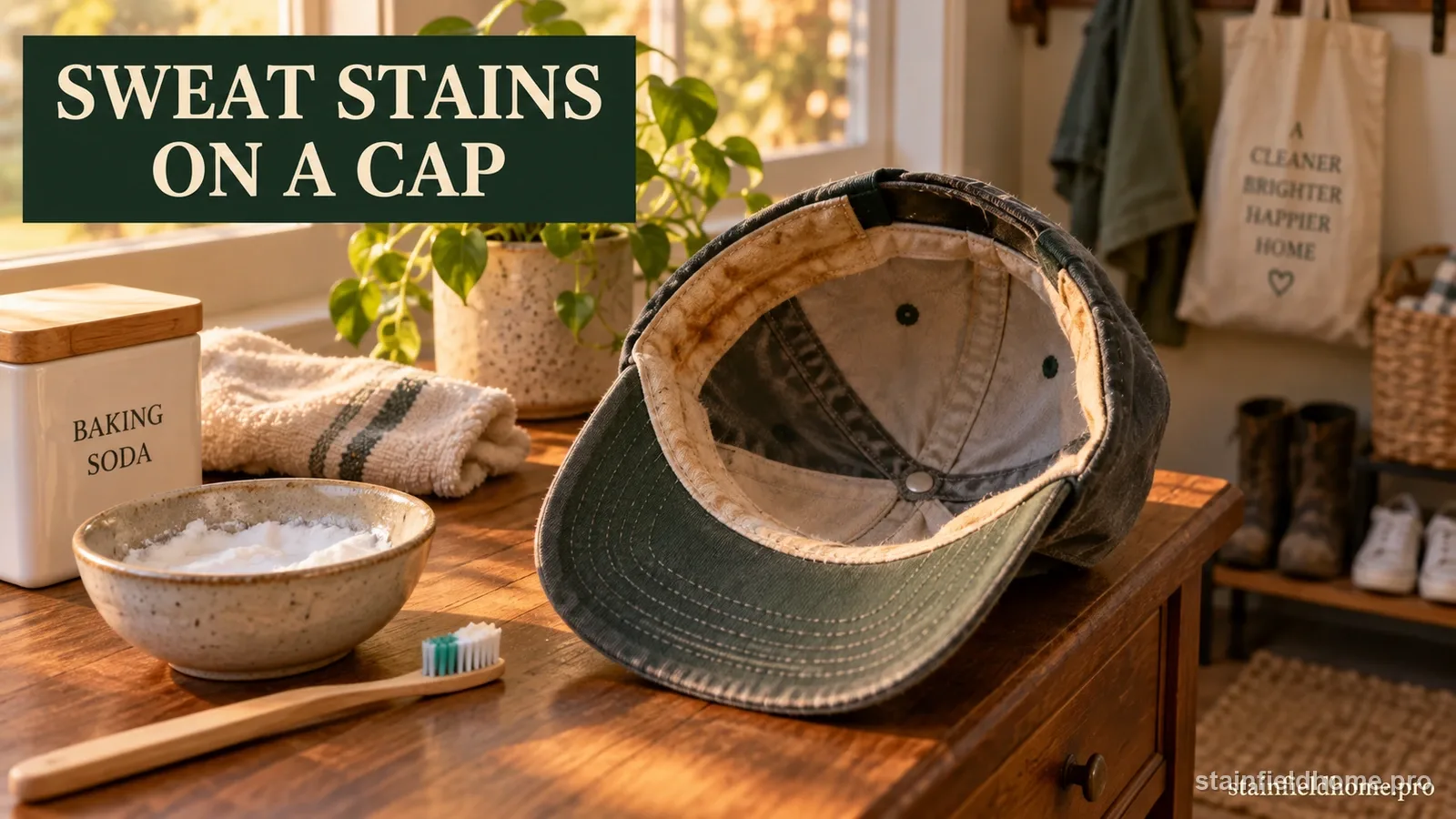
Sweat on Baseball cap
How to Remove Sweat Stains and Odor From a Baseball Cap
Lift yellow sweat stains and odor from the sweatband of a baseball cap without warping the brim or shrinking the crown.