The quick answer
If the dog bed is washable and colorfast, treat skunk spray promptly with the classic fresh mixture of 1 quart 3% hydrogen peroxide, 1/4 cup baking soda, and 1 teaspoon liquid soap, then rinse thoroughly and launder if the care label allows. Test first because peroxide can lighten fabric, never store the mixed solution in a sealed container, and dry the bed completely through the stuffing before use.
What you’ll need
- 3% hydrogen peroxide
- baking soda
- liquid dish soap
- measuring cup and spoon
- open mixing bowl
- gloves
- white towels
- laundry detergent
- fan or dryer if care label allows
Why skunk smell resists normal washing
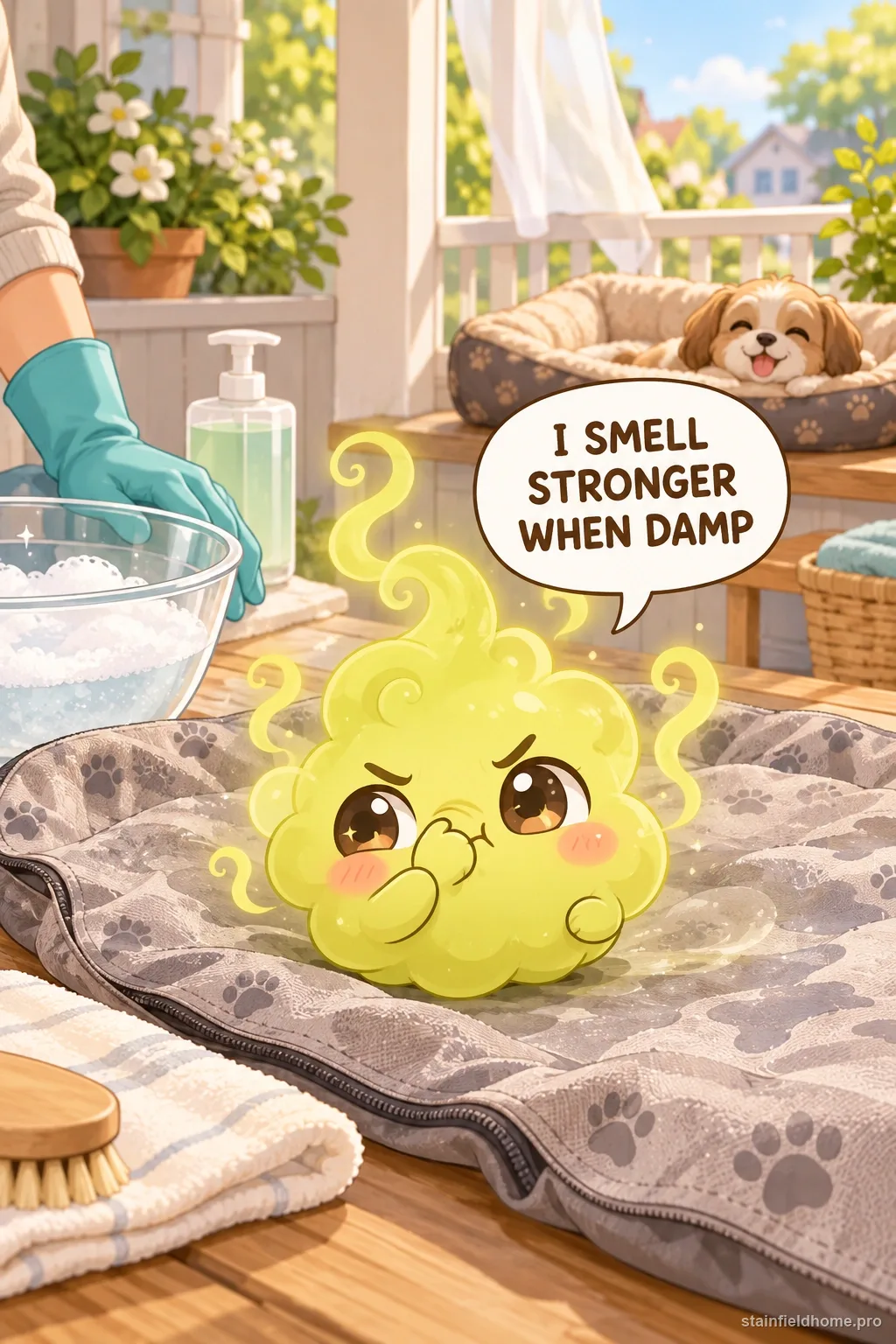
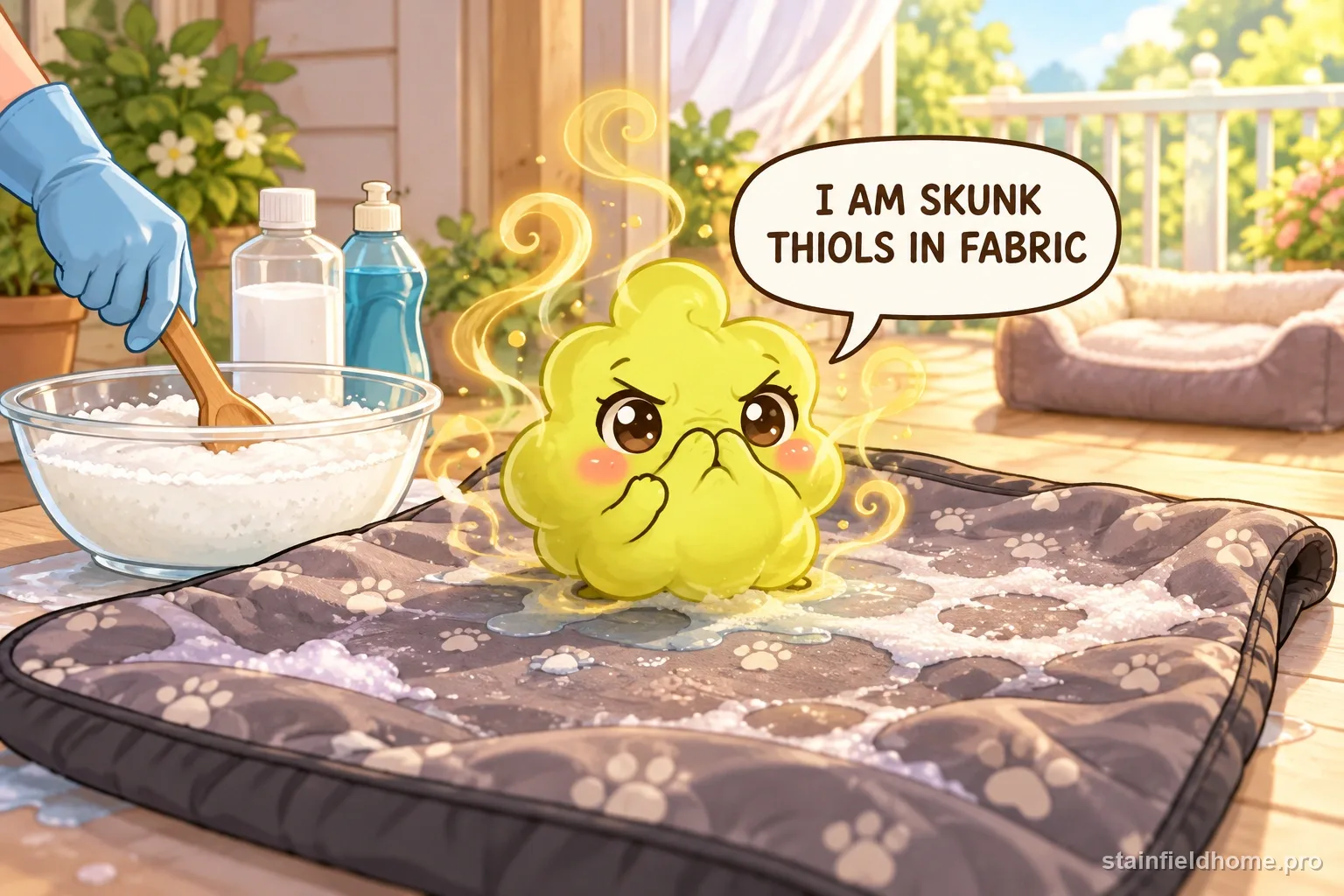
Skunk spray is an oily mix of sulfur compounds called thiols. Two things make it stubborn: it is oily, so water and ordinary detergent slide off it, and the thiols are detectable by the human nose at almost unimaginably low concentrations, so 'mostly gone' still smells strong. Worse, thiols that are not neutralized can re-activate with humidity weeks later — which is why a bed can smell fine when dry and reek again on a damp day.
The fix is a chemical reaction that changes the thiols into odorless compounds, not masking and not just washing. That is what the peroxide mixture does.
Fresh peroxide treatment — after a hidden-spot test
- 01
In an open bowl, mix 1 quart (about 1 liter) of fresh 3% hydrogen peroxide, 1/4 cup baking soda, and 1 teaspoon of liquid dish soap.
- 02
Use it immediately — the reaction starts right away and the mix loses strength within an hour or two.
- 03
Test a hidden corner of the bed cover first; peroxide can bleach or lighten color.
- 04
Wet the sprayed area and work the solution well into the fabric with a gloved hand, out to the edges of the smell.
- 05
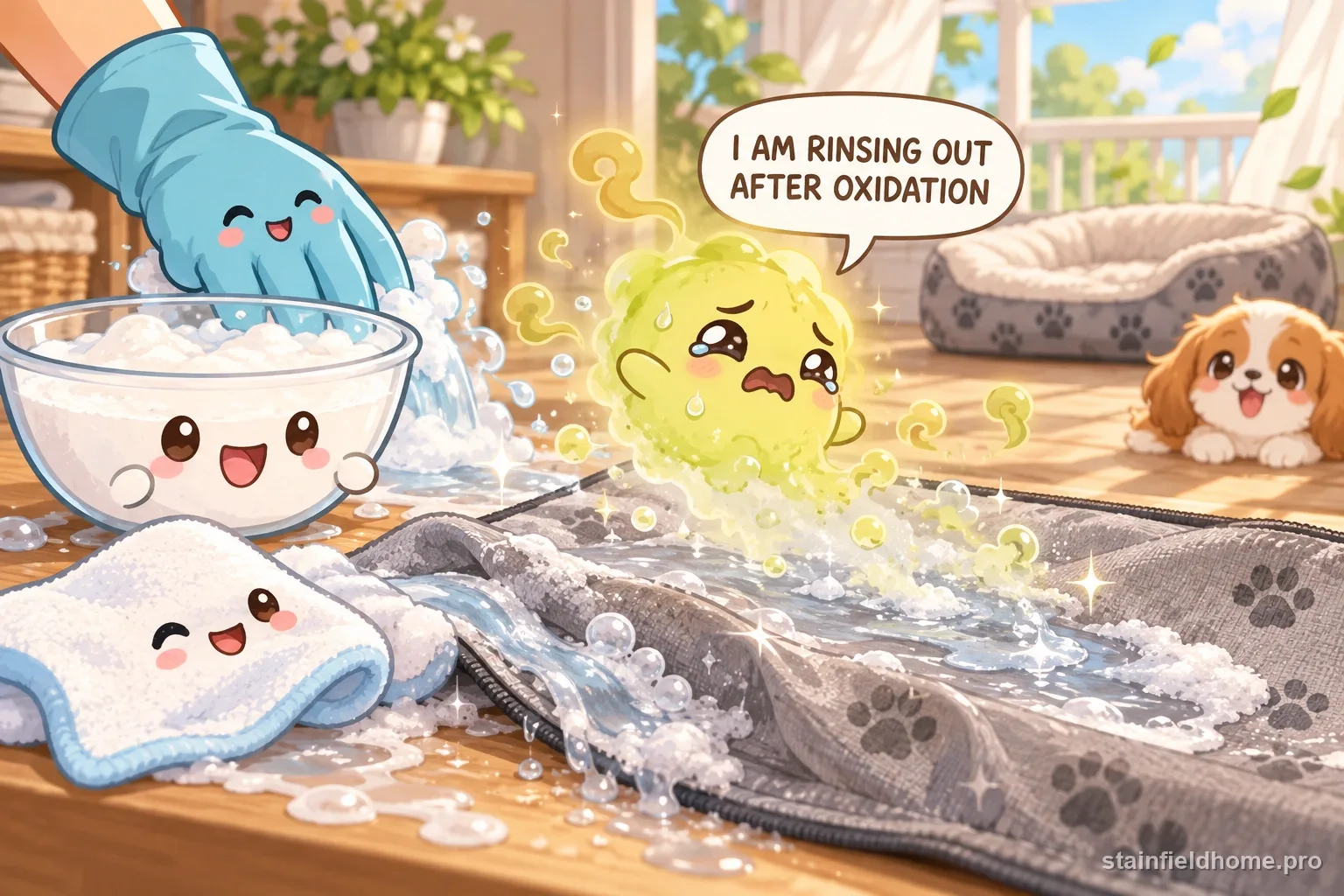
Let it sit 15-20 minutes, then rinse thoroughly with plain water.
Never seal the mixed solution
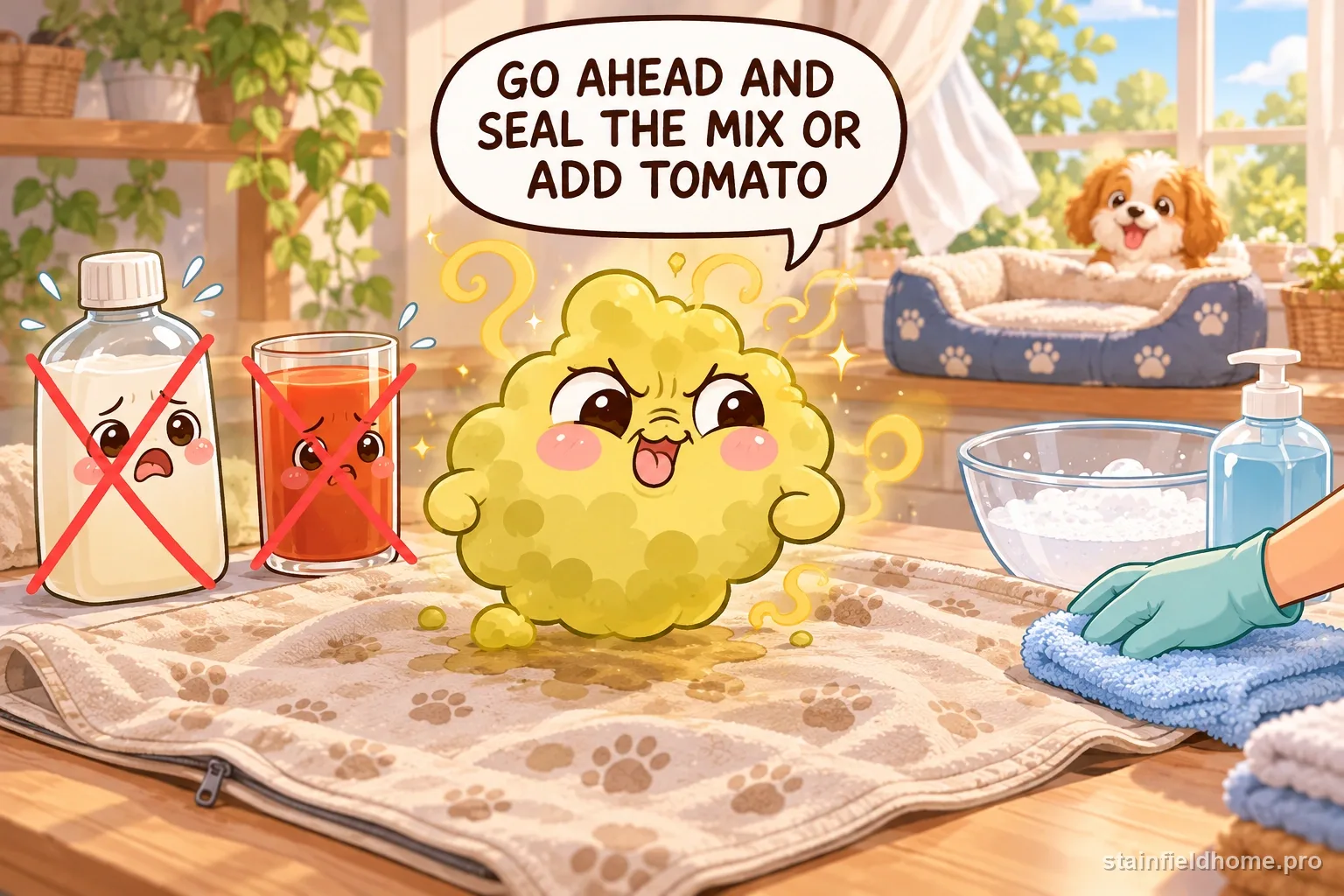
This matters for safety: the peroxide-baking-soda-soap mix releases oxygen gas as it works. In a closed bottle or jug it builds pressure and can burst. Always mix it in an open container, use it right away, and pour any leftover down the drain with running water.
Do not premix it 'to have on hand.' It has to be fresh to work anyway.
Washing the cover and reaching the stuffing
After the peroxide treatment and rinse, unzip and machine-wash the cover on the warmest setting its label allows, with detergent plus a cup of baking soda in the drum. A capful of an enzyme laundry additive or a skunk-specific pet deodorizer in the wash helps with any residual smell.
The stuffing or foam insert is the part people miss. If it is washable, wash it. If it is a foam bolster that cannot be washed, the peroxide solution has to be worked into it directly and rinsed by pressing clean water through repeatedly — or the insert replaced, which is often the realistic answer for a heavy hit.
Choose a route for the cover, foam, or whole bed
A zip-off cover is the easiest part to save: treat only the sprayed panel, rinse it well, then wash it separately so odor does not transfer to the rest of the load. A non-removable fabric shell can be spot-treated in sections with a small amount of fresh solution, pressing it into the weave and blotting it back out with clean towels. Do not saturate a large mattress-style bed unless you can rinse and dry the interior; detergent or peroxide left in the foam can irritate a pet's skin and can continue to bleach fabric.
A removable foam insert should be checked against the bed maker's care instructions before it is immersed. Many foams trap liquid and take days to dry. If the insert cannot be washed, use a fabric-labeled commercial odor remover according to its label, or replace the insert after a heavy soak. Keep the dog away until the bed is fully rinsed, dry, and free of cleaner smell. If using an enzymatic or skunk-specific product instead of peroxide, do not combine treatments; rinse out one product and let the bed dry before switching.
For an odor product, check that its label explicitly allows bedding or the bed's fabric type, and follow the stated contact and rinse directions. A pet shampoo may be intended for fur only, while a laundry additive may require a machine wash; transferring directions between surfaces can leave residue without treating the padding.
Sort laundry and prevent odor transfer
- Keep the dog, bed, collar, towels, and clothing away from clean laundry until the odor is treated.
- Wash heavily affected covers separately; use the hottest water allowed by the fabric label, not a hotter setting chosen just for odor.
- Run an empty rinse cycle if the washer itself picks up the smell, and wipe the gasket or drum before the next load.
- Inspect the seams, zipper tape, underside, and any sewn-in label area; skunk oil can collect where the outer face looks clean.
- If the bed still smells after drying, target the untreated seam or foam instead of adding fragrance or fabric softener, which masks odor without neutralizing it.
Keep the treatment chemically simple
Use the peroxide mixture by itself on the test area and do not pour bleach, vinegar, ammonia, or another stain remover into it. Combining cleaners can create hazardous fumes or unwanted reactions, and adding more products does not make the thiol oxidation more reliable. If you choose a labeled pet odor product instead, follow that product's own dilution and contact directions rather than adding the homemade ingredients to the same bucket or wash cycle.
Wear gloves, protect nearby colored floors, and keep the dog away from the wet bed until it has been fully rinsed and dried. If the spray hit a large bed or a delicate fabric, consider a product labeled for that exact surface or professional cleaning before applying peroxide across the whole piece. The extra test is especially worthwhile on navy, red, or black covers, where a pale peroxide mark may be more visible than a faint remaining odor.
Dry it completely or the smell returns
Because unneutralized thiols re-activate with moisture, a bed that is put back into use slightly damp will smell skunky again. Dry the cover fully — dryer if the label allows, otherwise a fan and good airflow for a day or more — and make sure the stuffing is dry all the way through before reassembling.
If a faint smell lingers after everything is dry, repeat the peroxide treatment once. Vinegar soaks and tomato juice are weaker fallbacks and mostly just add their own smell.
Do not judge the result while the stuffing is still damp: open the cover and smell the interior after a full dry, then recheck the bed in a humid room. A persistent odor localized to one seam or foam block points to a missed reservoir; a uniform faint smell after repeated treatment may mean the material has absorbed more spray than it can reasonably release.
If the bed is not washable
- A 'spot clean only' or dry-clean bed is a poor candidate — skunk oil in non-washable foam is very hard to fully clear.
- Try the peroxide solution on the fabric surface and a long airing outdoors in sun and wind.
- An ozone treatment or a professional cleaner is the next step for a valuable orthopedic bed.
- For an inexpensive bed that took a direct hit, replacement is usually cheaper than the products and effort to save it.
Common questions
FAQ
Can I mix the peroxide solution ahead of time?
No, for two reasons. It loses effectiveness within an hour or two, and it releases oxygen gas that can burst a sealed container. Always mix it fresh in an open bowl, use it immediately, and pour leftovers down the drain with running water.
The dog bed smelled fine, then smelled skunky again on a rainy day. Why?
Skunk thiols that were not chemically neutralized re-activate with humidity. It means the odor was masked or diluted, not converted. Re-treat with the fresh peroxide-baking soda-soap solution, rinse well, and this time dry the cover and stuffing completely before use.
Will the peroxide mixture bleach the dog bed?
It can lighten some dyes, so test a hidden corner first and wait a few minutes. 3% hydrogen peroxide is mild, but on dark or bright fabric there is some risk. If the test spot changes color, wash the cover with an enzyme pet deodorizer and baking soda instead and treat only the stuffing with peroxide.
Sources reviewed
Keep reading
Related guides

Slime on Carpet
How to Remove Slime From Carpet Without Damaging the Fibers
Lift dried or fresh slime out of carpet fibers with an ice-and-scrape method plus a vinegar or rubbing alcohol rinse, without soaking the backing or bleaching the color.

Essential oil and reed-diffuser oil on Finished wood furniture
How to Remove Essential Oil and Diffuser Stains From Wood Furniture
Blot a diffuser-oil spill on finished wood, use a cautious absorbent step, and recognize when the finish needs a furniture repair professional.

Pumpkin (carving, decorating, or puree) on Carpet
How to Remove Pumpkin Stains From Carpet
Remove pumpkin pulp and treat any remaining orange mark on carpet with a careful, low-moisture sequence that follows the carpet maker's guidance.
Sweat on Baseball cap
How to Remove Sweat Stains and Odor From a Baseball Cap
Lift yellow sweat stains and odor from the sweatband of a baseball cap without warping the brim or shrinking the crown.