The quick answer
Scrape off the excess sauce, then flush the shirt from the back with cold water. Work grease-cutting dish soap into the mark to break the oil, rinse, and repeat until no more red lifts. Soak in oxygen bleach if a pale orange shadow stays, then wash cold and air-dry, ideally flat in bright indirect daylight. Keep the shirt away from hot water, the dryer, and the iron until the stain is completely gone, because heat turns a faint orange cast permanent.
What you’ll need
- A spoon or dull knife
- Cold running water
- Grease-cutting liquid dish soap
- Oxygen bleach labeled safe for the fabric
- A white towel for checking transfer
- Regular laundry detergent
Hello. I'm the tomato sauce on your shirt.
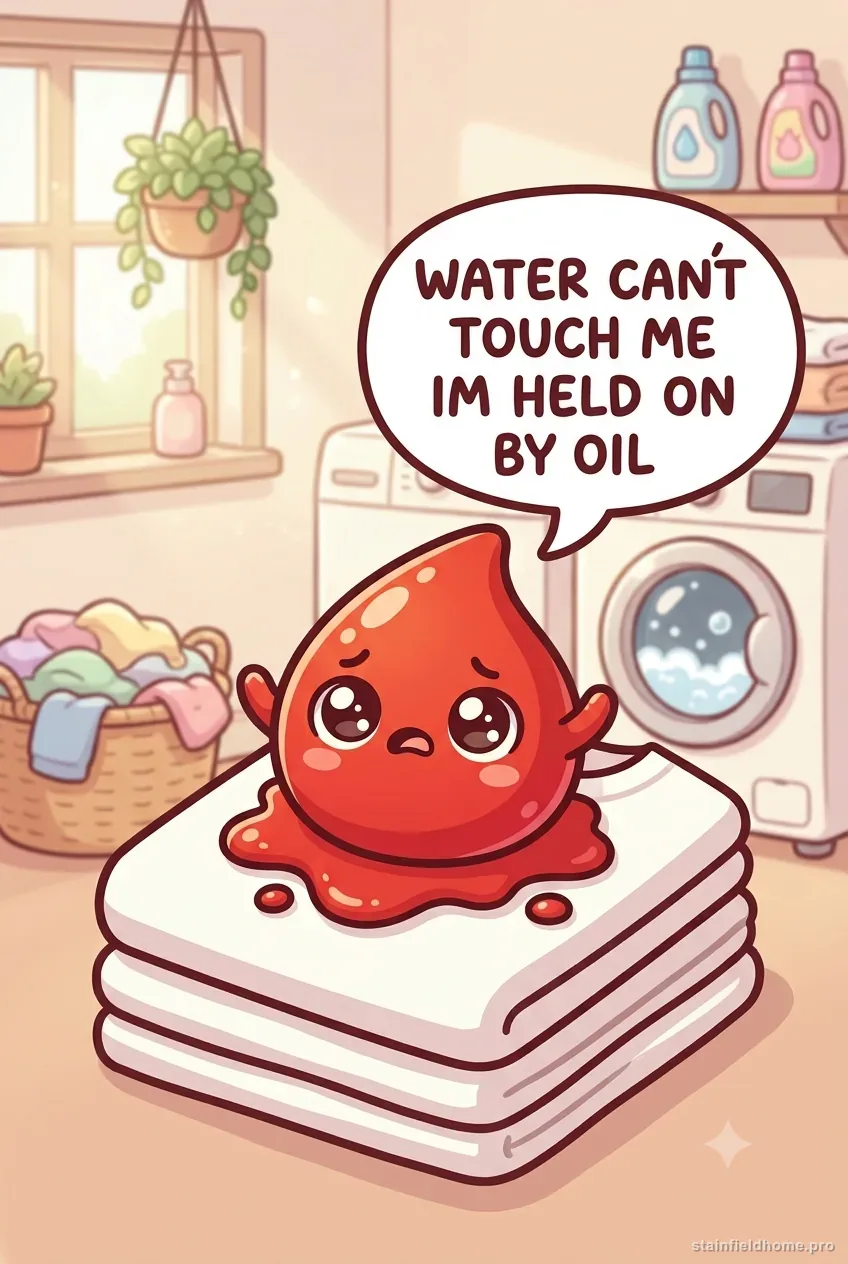
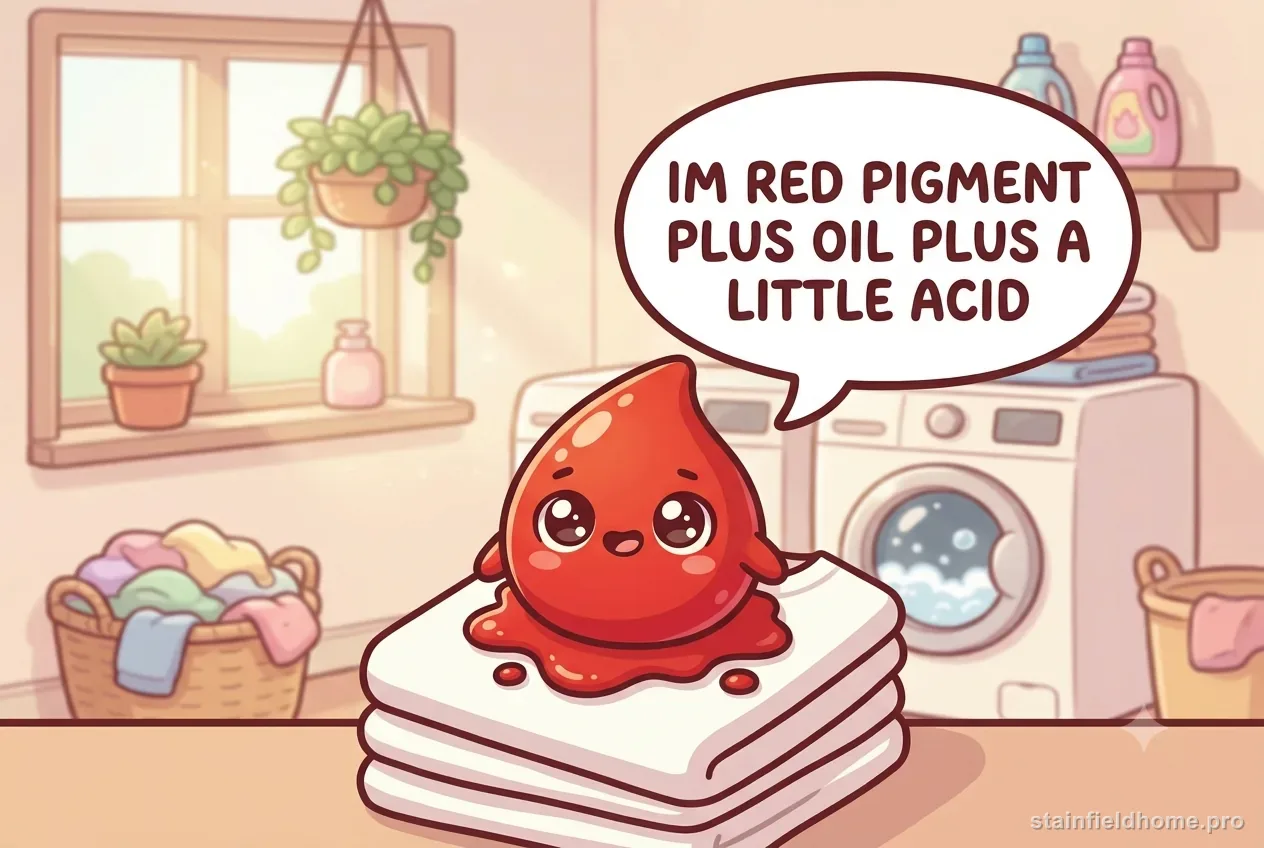
I'm the bright red comma just under your collar, and I want you to know something before you panic: I'm not one stain, I'm three working together. There's my red pigment (that's lycopene), plus the oil the sauce was cooked in and a little acid. Plain water barely moves me because the oil pins me to the cotton.
Beat the oil and the rest of me falls apart. But speed matters. While I'm still wet I'm easy. Once you run me through a hot wash or a dryer, my orange ghost bonds into the fibers and I become very hard to remove.
First, is your shirt washable?
This plan is for washable white or light cotton. If the shirt is silk, wool, marked dry-clean-only, or a delicate blend, hand me to a professional and call me a combination oil-and-pigment stain.
Check the care label for the hottest water allowed. You want cool to warm for the rinse, never hot. If the shirt is bright white with a wrinkle-resistant finish or contrast stitching, test any bleach step on an inside seam first; those finishes can react and leave a pale patch bigger than I am.
Catch me wet and I rinse out
- 01
Lift off every bit of surface sauce with the edge of a spoon. Do not grind me into the weave.
- 02
Turn the shirt inside out and hold the back of the stain under cold running water so the flow pushes me out the way I came in. Skip hot water; it sets my color.
- 03
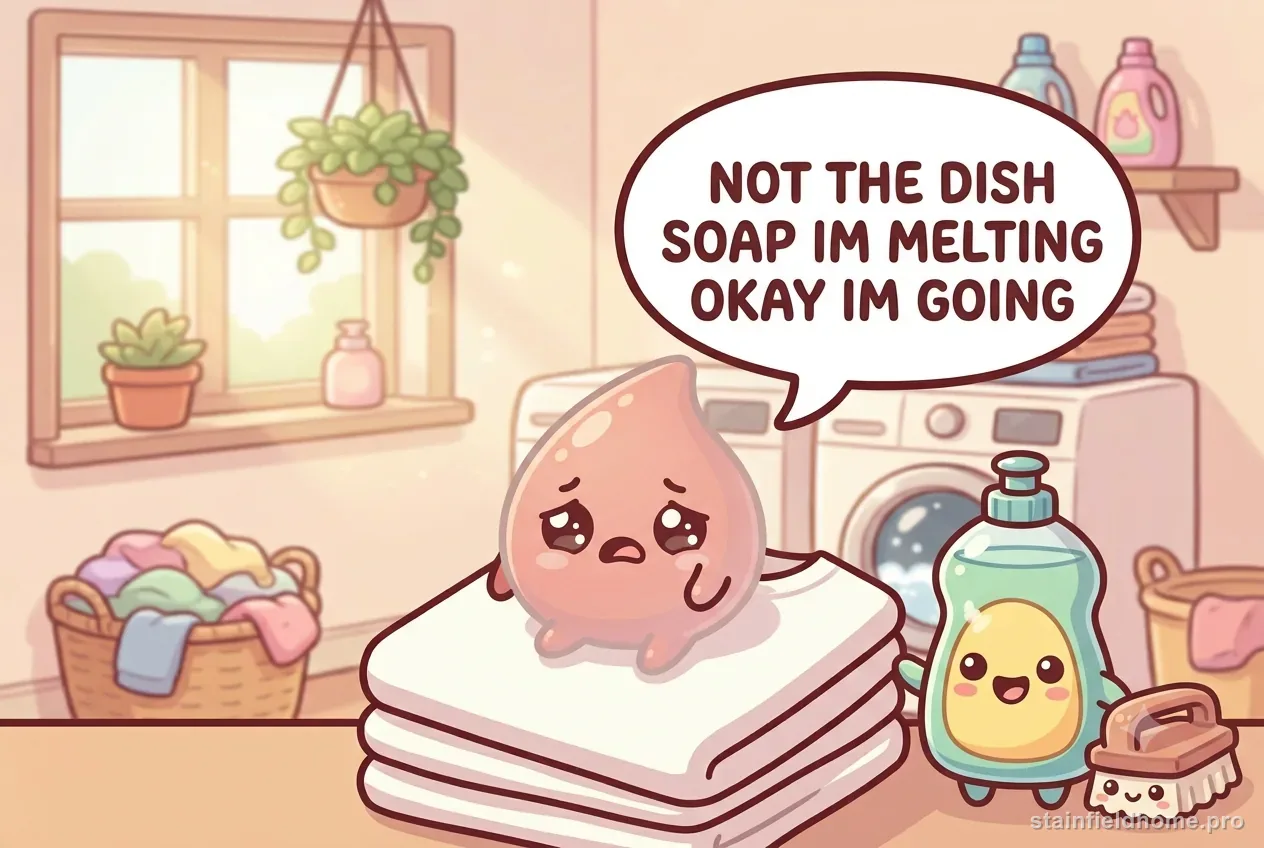
Put a few drops of grease-cutting dish soap directly on the mark, front and back. Work it in with your fingertips in small circles for about a minute.
- 04
Let the soap sit 5 to 10 minutes so it can surround the oil.
- 05
Rinse with cold water and look in bright light. If red is still lifting, repeat the soap step once or twice.
- 06
Wash the shirt in cold water with your usual detergent. Do not put it in the dryer yet.
- 07
Air-dry and check in daylight. If I'm gone, you are finished.
If I left an orange ghost behind
Sometimes the oil is gone but a pale orange tint stays. That is leftover lycopene. For white or confirmed colorfast cotton, mix an oxygen-bleach soak at the package ratio and leave the shirt in it for one to several hours, then wash again. Oxygen bleach is gentler on cotton than chlorine and will not yellow it.
Two more things fade lycopene: rinsing until no soap film remains to trap it, and drying the damp shirt flat in bright, indirect daylight, because UV light slowly breaks lycopene down. Do not leave cotton baking in harsh direct sun for hours, which weakens and yellows the fibers.
What sets me for good
- Hot water, a warm dryer, or an iron before I am fully gone; heat locks in my orange cast
- Chlorine bleach as a first move; it does nothing to the oil and can react with the acid and residue, sometimes turning me brown
- Scrubbing hard with a stiff brush, which frays the cotton and drives my pigment deeper
- Blotting from the front, which pushes me further into the weave instead of out the back
- Leaving the shirt crumpled in a warm hamper for days before treating me
- Stacking dish soap, bleach, and stain spray on wet fabric at once instead of rinsing between each

White cotton, dyed cotton, and blends
Plain white cotton is my easy defeat: it takes repeated treatment and an oxygen-bleach soak without complaint. A cream or off-white shirt can end up patchy if you bleach only the stain, so soak the whole shirt instead.
On colored or printed cotton, skip the oxygen bleach. Lean on repeated cold rinses and a color-safe enzyme detergent, and accept that a faint shadow of me may stay. Cotton blended with polyester holds my oil more stubbornly and is heat-sensitive, so keep the water warm at most, never hot, and never iron the shirt while any of me still shows.
My cousins behave the same way, with one twist each. Ketchup adds vinegar and sugar, so an extra cold rinse before the dish soap helps. Marinara and pizza sauce carry more oil, so expect two soap rounds. Bolognese and any meat sauce add grease and a little protein, which means a cool soak with an enzyme detergent after the dish-soap step. Tomato soup is the mildest of us; caught fresh it often rinses out with cold water and a single pass of soap.
Keeping tomato off your shirt
A napkin on your lap does most of the work. If you cook with tomato often, keep a small bottle of dish soap near the laundry and treat any splatter the day it lands; a fresh me takes five minutes, a week-old me takes an afternoon.
Pre-treating the shirt front with a little detergent before each wash keeps any faint residue of me from building into a permanent tint.
Common questions
FAQ
Can I still get a tomato sauce stain out after it has been washed and dried?
Often you can fade it a lot, but the dryer bakes the orange lycopene into the cotton, so it may not fully clear. Try two or three rounds of dish soap with a short soak, then an oxygen-bleach soak. If nothing changes after that, it is likely set for good.
Does sunlight really help with tomato stains?
Yes, for the leftover orange tint. Lycopene breaks down under UV, so drying an already-treated, damp white shirt in bright indirect daylight can lighten a residual cast. Do not rely on sun alone, and do not leave cotton in harsh direct sun for hours.
Why did my tomato stain turn brown?
Usually heat or chlorine bleach. A hot wash, the dryer, or bleach reacting with the sauce's oil and acid can shift a red mark to dull brown. Re-soak in cool water, treat the oil with dish soap, then use oxygen bleach, not chlorine, on white cotton.
Sources reviewed
Keep reading
Related guides
Slime on Carpet
How to Remove Slime From Carpet Without Damaging the Fibers
Lift dried or fresh slime out of carpet fibers with an ice-and-scrape method plus a vinegar or rubbing alcohol rinse, without soaking the backing or bleaching the color.
Essential oil and reed-diffuser oil on Finished wood furniture
How to Remove Essential Oil and Diffuser Stains From Wood Furniture
Blot a diffuser-oil spill on finished wood, use a cautious absorbent step, and recognize when the finish needs a furniture repair professional.
Pumpkin (carving, decorating, or puree) on Carpet
How to Remove Pumpkin Stains From Carpet
Remove pumpkin pulp and treat any remaining orange mark on carpet with a careful, low-moisture sequence that follows the carpet maker's guidance.
Sweat on Baseball cap
How to Remove Sweat Stains and Odor From a Baseball Cap
Lift yellow sweat stains and odor from the sweatband of a baseball cap without warping the brim or shrinking the crown.