
The quick answer
Wipe turmeric from quartz promptly with warm water, mild detergent, and a soft cloth, then use only a stain cleaner approved by your specific quartz manufacturer if yellow color remains. Quartz brands differ in which stronger cleaners they permit, so check the maker before using bleach, peroxide, oxalic acid, vinegar, or abrasives. Rinse and dry the surface after every treatment.
What you’ll need
- quartz manufacturer care guide
- soft microfiber cloths
- warm water
- mild dish detergent
- plastic scraper for dried residue
- manufacturer-approved nonabrasive cleaner
- paper towels
What actually stains engineered quartz
Quartz slabs are roughly 90% ground quartz held in a polymer resin. The quartz does not absorb anything; the resin can, slowly, and it is also what a strong acid or a harsh solvent attacks. Turmeric's pigment, curcumin, is a potent yellow dye that clings to that resin and to any micro-porosity around the surface, which is why a wiped-up spill can still leave a yellow ghost.
The good news is that curcumin is not very stable. It breaks down under light and mild oxidizers, so most turmeric marks on quartz fade on their own within days and can be pushed along safely.

Fresh turmeric: wipe within the hour
- 01
Scrape any paste or wet curry off with a plastic scraper, not a knife.
- 02
Wipe with a cloth and warm water plus a drop of dish soap, working from the edge of the mark inward.
- 03
Rinse the cloth, wipe again with clean water, and dry with a paper towel.
- 04
If a faint yellow film remains, make a paste of a nonabrasive soft cleaner the maker approves, spread it on, leave it the time the label states, then rinse and dry.
Dried or overnight turmeric
A set mark responds to a short dwell rather than force. Lay a paper towel soaked in warm soapy water over the stain, cover it with a bit of plastic wrap so it does not dry out, and leave it 30 minutes, then wipe. Repeat this a few times across a day before considering anything stronger.
If your manufacturer permits it, a paper towel dampened with a little 3% hydrogen peroxide laid on the mark for ten minutes will often clear the last of the yellow — check your brand's guidance first, keep it brief, and rinse well.
The vinegar and Bar Keepers Friend problem
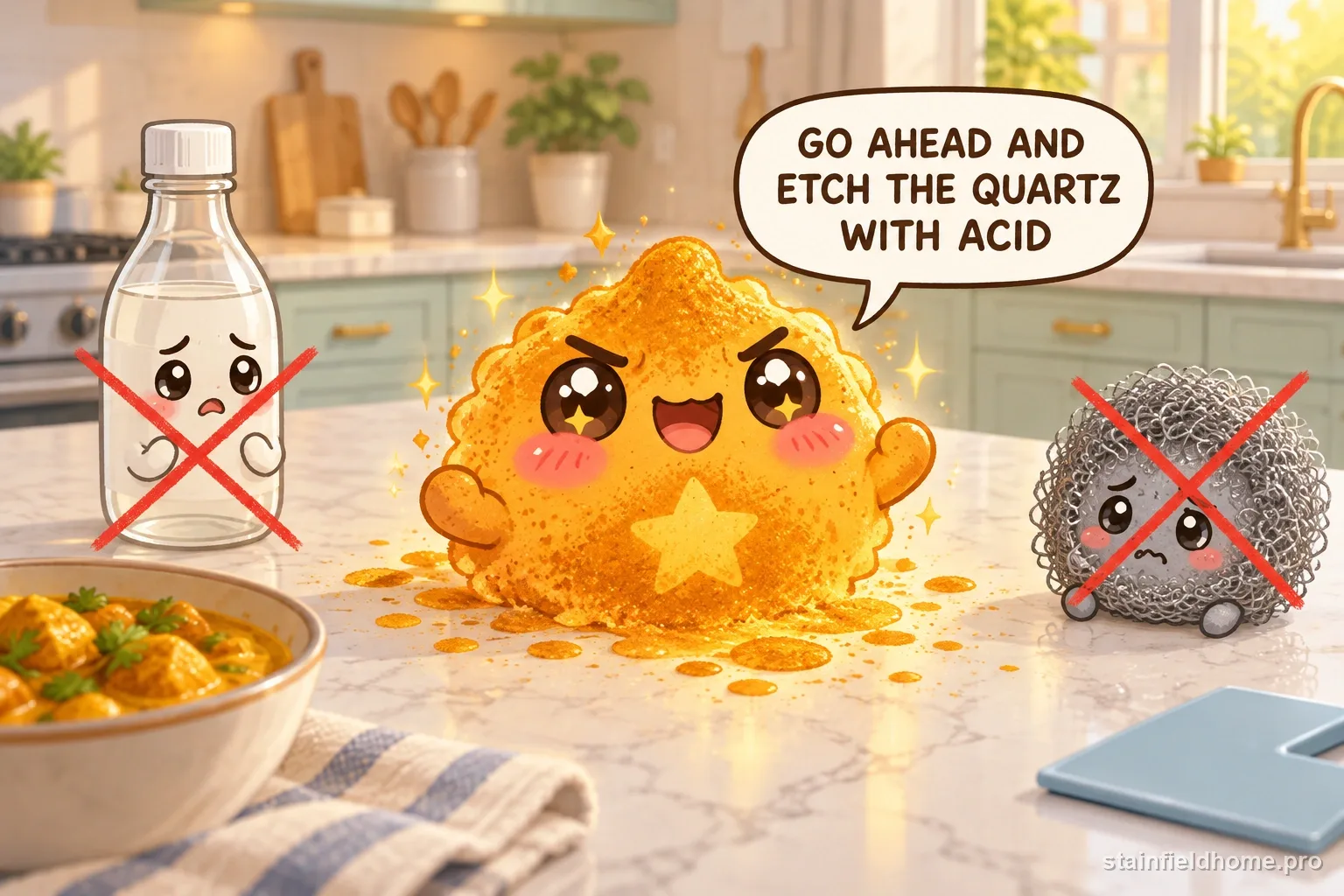
The internet is full of quartz stain 'fixes' that are actually for natural stone or solid plastic. Vinegar and lemon are acids that can etch and dull the resin in quartz over repeated use. Bar Keepers Friend contains oxalic acid and a mild abrasive; some quartz brands tolerate an occasional gentle use and others explicitly warn against it.
Magic-eraser pads, scouring powders, and steel wool will haze the polished finish permanently. When a surface is dulled, no amount of cleaning brings the shine back — you would be trading a temporary stain for permanent damage.

Sunlight is the free curcumin bleach
If the stained section of counter gets direct sun, just leave it uncovered and clean for a day or two. Curcumin is famously light-sensitive, and a yellow turmeric shadow on quartz often lightens noticeably or disappears with sun exposure and no chemistry at all.
For an interior counter, a bright LED work light positioned close for several hours has a similar, slower effect. This is the lowest-risk option and worth trying before anything else on a stain that is not urgent.
Check your brand — Cambria, Caesarstone, Silestone differ
Cambria's care guidance centers on mild soap and water and warns against abrasives and harsh chemicals. Caesarstone lists specific products and dwell times for stubborn stains and names what voids the warranty. Silestone and others publish their own approved-cleaner lists.
Pull up your actual brand's product-care page before using anything beyond soap. Following the wrong brand's instructions is how people damage a slab and lose warranty coverage on a countertop that cost thousands.
Keeping curry off the counter
- Wipe turmeric, mustard, and curry spills right away — same-hour cleanup almost always prevents a shadow.
- Use a board for turmeric paste and fresh turmeric root rather than working directly on the slab.
- Keep a bottle of the maker-approved cleaner under the sink so you are not improvising with vinegar.
- Blot, do not wipe across, a large spill first so you are not painting a wider yellow area.
Common questions
FAQ
Turmeric left a yellow shadow that will not wipe off. Permanent?
Almost never. Curcumin breaks down with light and mild oxidizers. Try a covered warm-soapy-towel compress repeated over a day, give the spot direct sunlight if possible, and — if your quartz brand allows it — a brief 3% hydrogen peroxide compress. Most turmeric marks on quartz clear within a few days.
Can I use hydrogen peroxide on quartz?
Some quartz manufacturers permit a brief application of 3% hydrogen peroxide for stubborn stains and others do not, so check your specific brand's care page first. When it is allowed, keep the contact time short, do not scrub, and rinse thoroughly afterward.
Why can't I use vinegar or lemon on quartz?
They are acidic, and repeated exposure can etch and dull the polymer resin that binds a quartz slab, leaving a permanent cloudy patch. Acidic cleaners, alkaline degreasers, and abrasives are the main things quartz makers tell you to avoid. Stick to mild dish soap and manufacturer-approved products.
Sources reviewed
Keep reading
Related guides

Turmeric on Plastic container
How to Remove Turmeric Stains From a Plastic Container
Turmeric's yellow is curcumin, a fat-soluble pigment that clings to oil and to tiny scratches in the plastic. Cut the oil with soap, lighten the color with an oxygen soak, and let sunlight finish it.

Slime on Carpet
How to Remove Slime From Carpet Without Damaging the Fibers
Lift dried or fresh slime out of carpet fibers with an ice-and-scrape method plus a vinegar or rubbing alcohol rinse, without soaking the backing or bleaching the color.

Essential oil and reed-diffuser oil on Finished wood furniture
How to Remove Essential Oil and Diffuser Stains From Wood Furniture
Blot a diffuser-oil spill on finished wood, use a cautious absorbent step, and recognize when the finish needs a furniture repair professional.

Pumpkin (carving, decorating, or puree) on Carpet
How to Remove Pumpkin Stains From Carpet
Remove pumpkin pulp and treat any remaining orange mark on carpet with a careful, low-moisture sequence that follows the carpet maker's guidance.