The quick answer
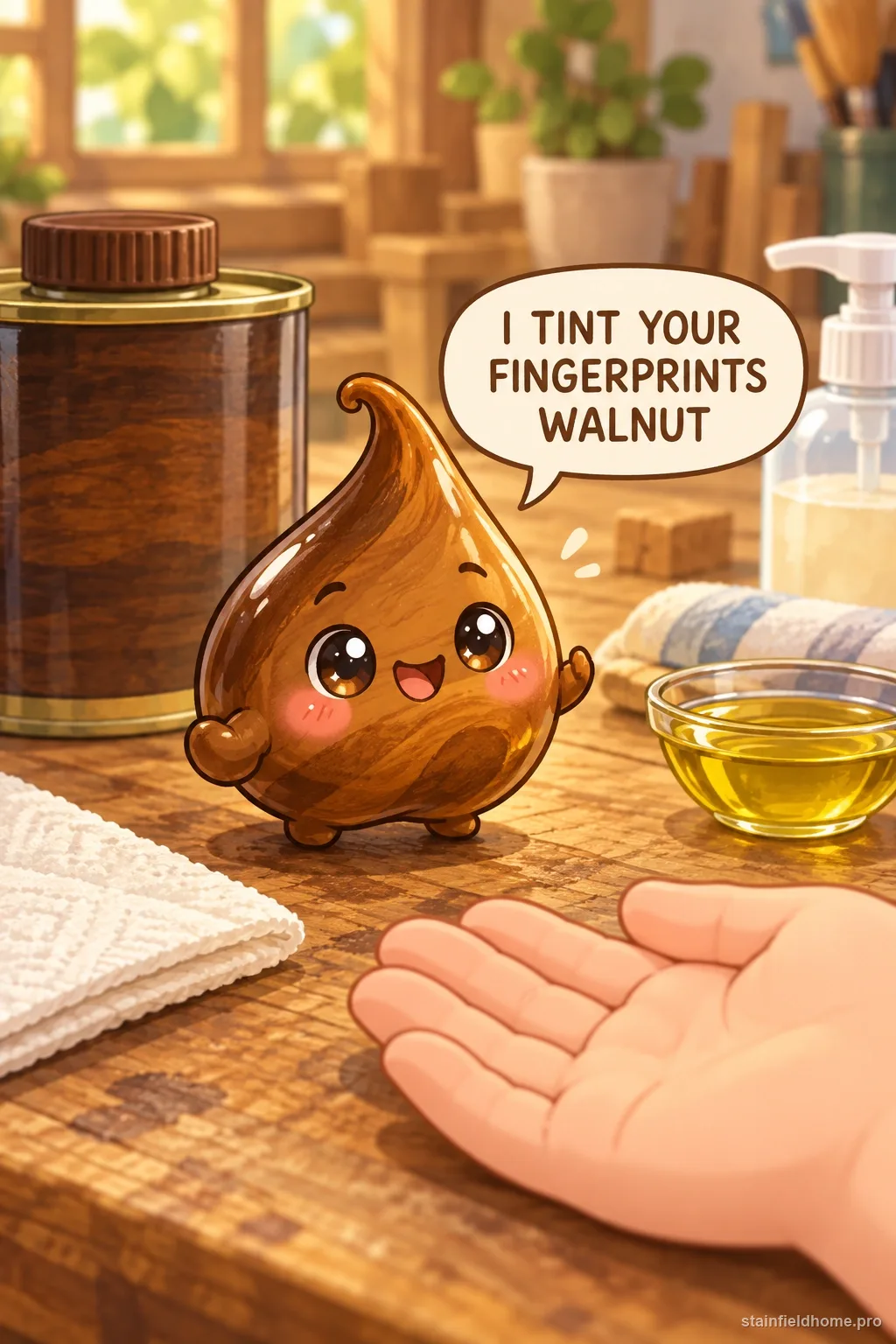
Wash wood stain from skin promptly with soap and water, following the product label or safety data sheet. Do not use paint thinner, mineral spirits, gasoline, acetone, or other harsh solvents on skin. If oily residue remains, use repeated gentle washing rather than solvent degreasing, and seek medical advice for persistent irritation, burns, or a large exposure.
What you’ll need
- product label or SDS
- running water
- mild soap
- soft washcloth
- disposable paper towels
- clean clothing
- nitrile gloves for future work
Read the can before you reach for a solvent
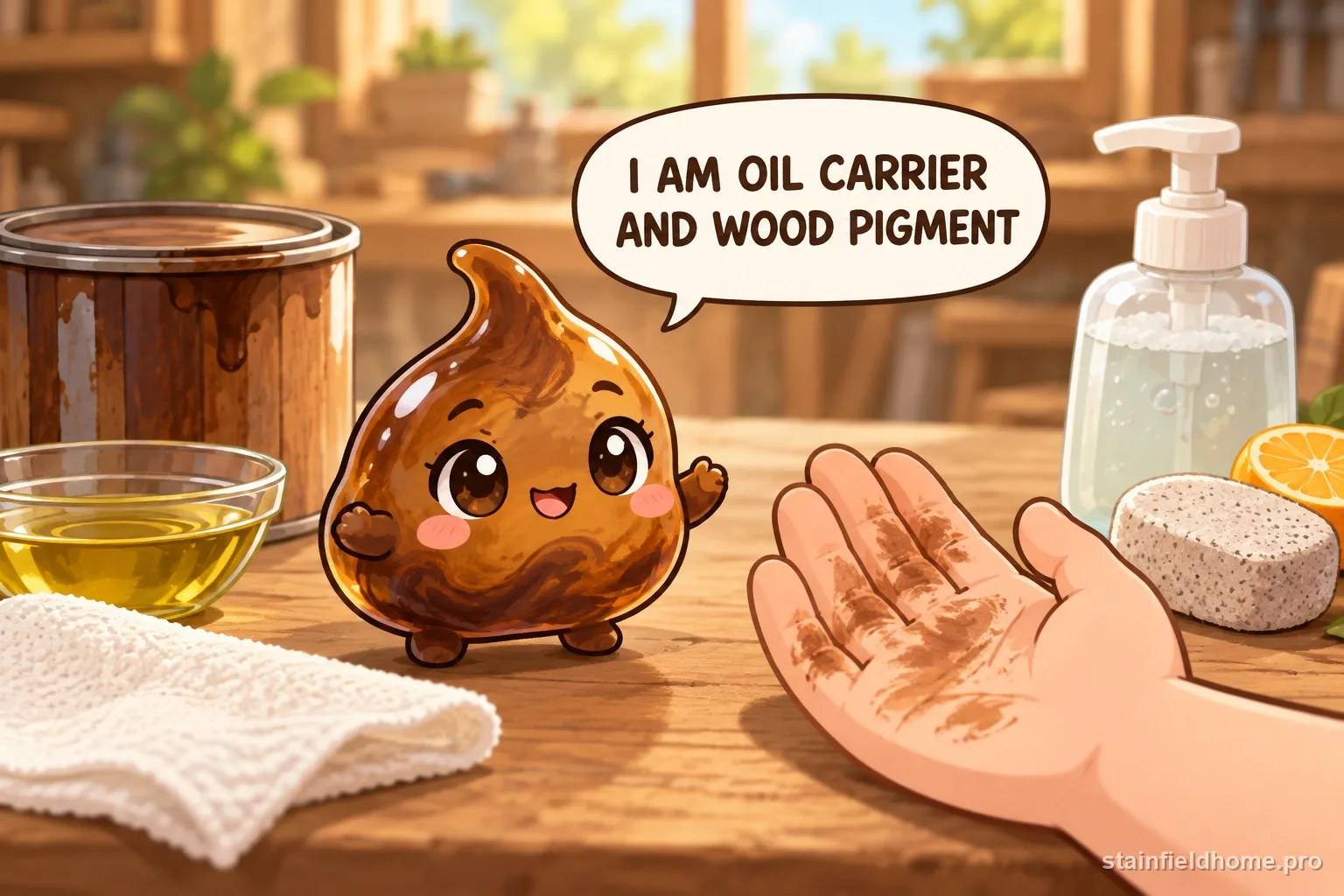
Wood stains fall into two families and they come off differently. Water-based and 'soap and water cleanup' stains (many Varathane and Minwax water-based lines) rinse off skin with plain soap and water if you act before they dry. Oil-based stains (Minwax Wood Finish, most penetrating oil stains) carry pigment in a petroleum-distillate or linseed-oil vehicle and leave a greasy tinted film.
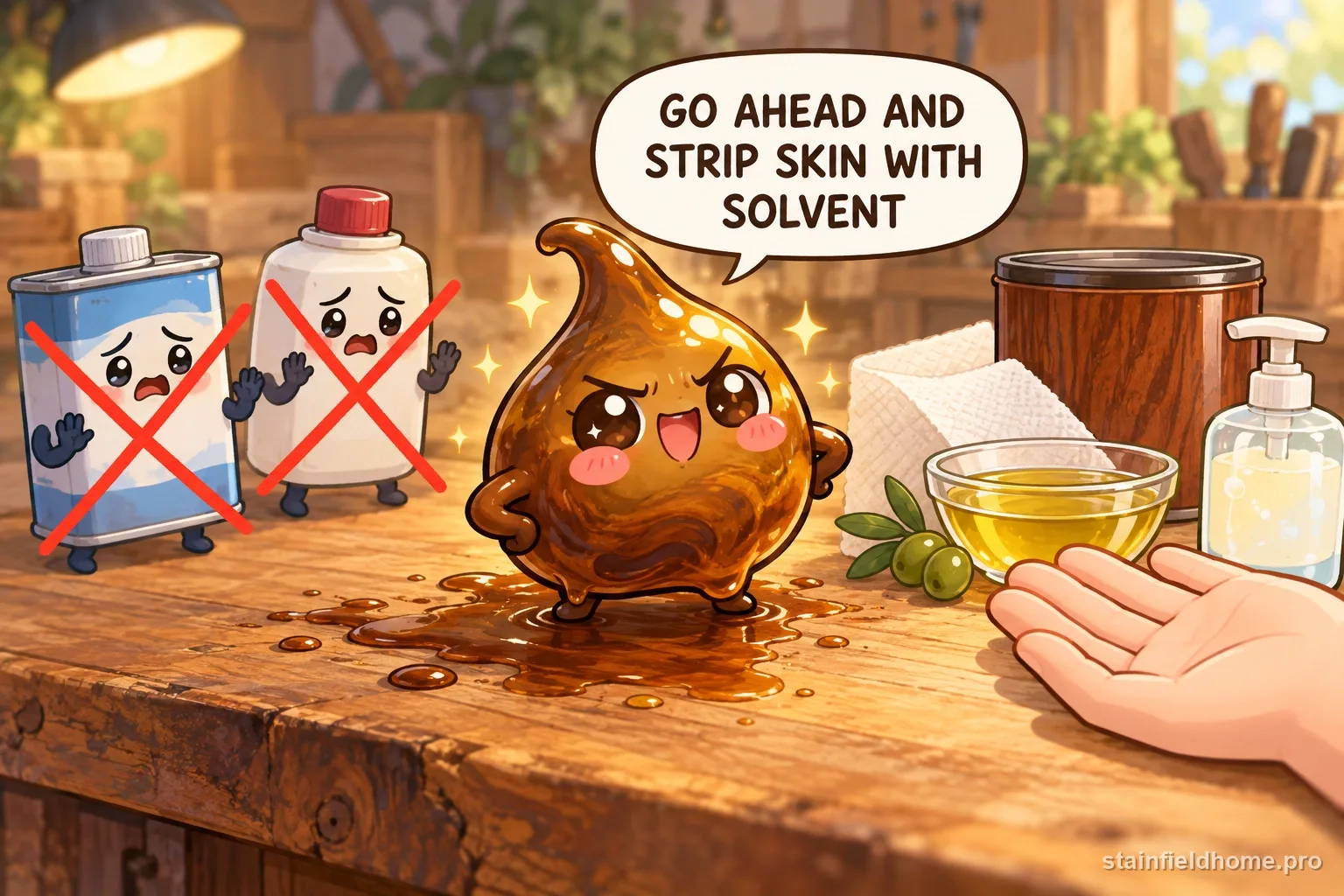
The product's safety data sheet has a 'first aid — skin contact' line. It almost always says wash with soap and water and explicitly not to use solvents on skin, because thinners drive the chemicals through the skin faster and cause their own chemical burns and dermatitis.
Fresh stain: wash now
- 01
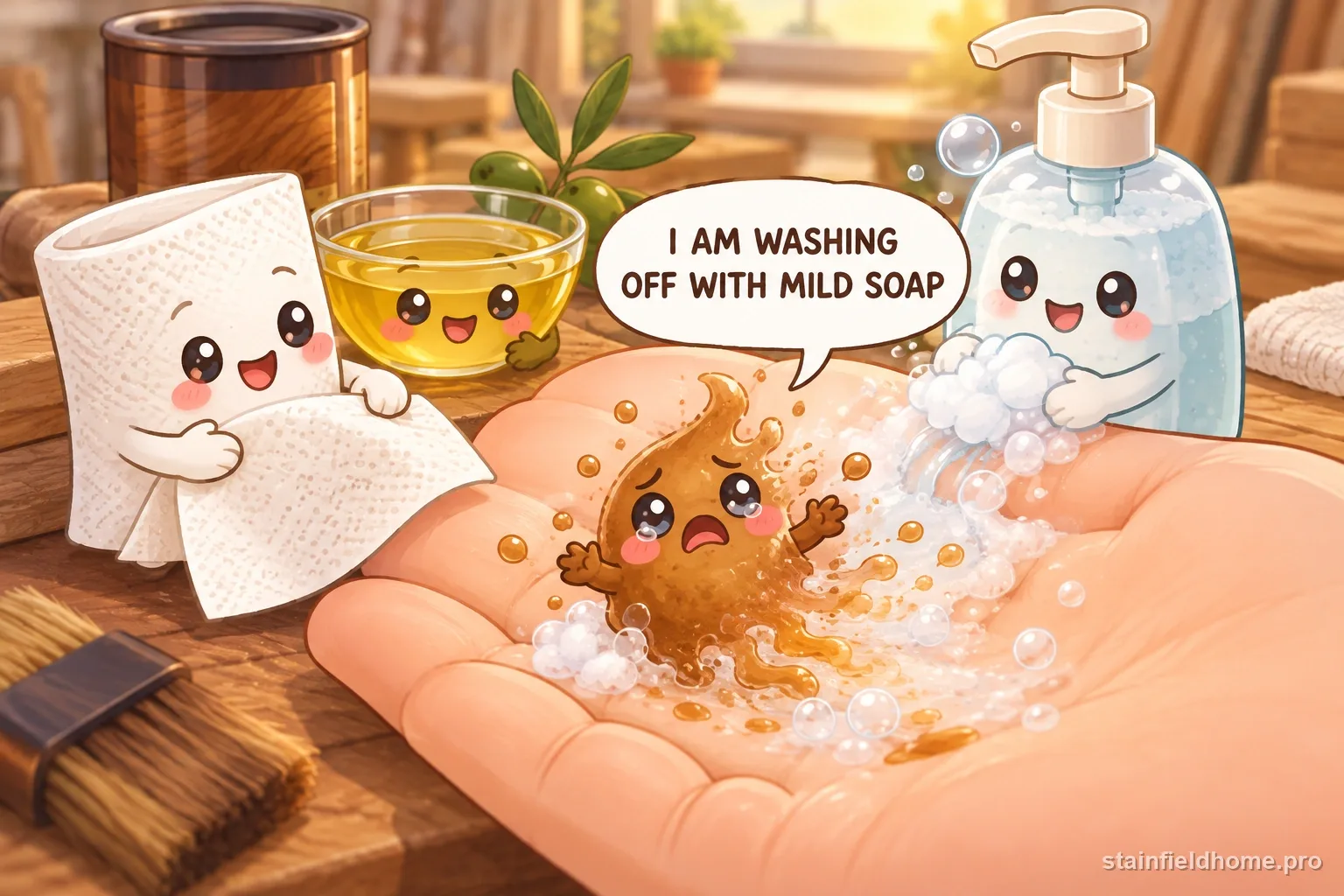
Get to a sink before the stain dries — wet stain comes off far more easily than cured stain.
- 02
Wipe the bulk off with a dry paper towel first so you are not spreading it.
- 03
Wash with plenty of mild soap and warm (not hot) water, working up a lather and rinsing repeatedly.
- 04
Use a soft washcloth for the creases around knuckles and nails; do not use a scrub brush hard enough to abrade skin.
- 05
Repeat the wash two or three times. Each pass takes off another layer.
Oily tinted residue that will not wash off
For the greasy stain that remains after washing, the safe approach is a skin-friendly oil, not a solvent. Rub a generous amount of cooking oil, olive oil, or a heavy hand cream into the stained skin for a minute — like dissolves like, and the oil loosens the stain's oil vehicle. Then wash it all off with dish soap, which is formulated to cut grease.
A dedicated hand cleaner such as GOJO or Fast Orange (the pumice-and-citrus type made for mechanics and painters) is designed exactly for this and is far gentler on skin than mineral spirits. Follow that with normal soap and a moisturizer.
What the pigment left behind
After the oily film is gone, a faint brown tint often stays in the skin, concentrated in fingerprints, knuckle creases, and around the nails. That is dye that has stained the outermost dead skin layer. It is harmless and it wears off in a couple of days as that skin sheds.
You can speed it slightly with a gentle exfoliating scrub or a paste of baking soda, but do not scrub raw skin trying to erase it — you will irritate the skin long before the tint is gone.
When skin contact needs more than washing
- Redness, blistering, or a burning feeling that does not settle after washing — rinse 15 minutes and call a doctor or Poison Control (1-800-222-1222 in the US).
- Stain in the eyes — flush with water for 15-20 minutes and seek medical care.
- A large splash over a wide area, or stain-soaked clothing against skin — remove the clothing, wash, and get advice.
- Any signs of feeling unwell (dizziness, headache, nausea) after working with stain in a closed space — get to fresh air.
Not getting it on your hands next time
- Wear nitrile gloves — latex and vinyl are less resistant to stain solvents.
- Keep a citrus-pumice hand cleaner and paper towels at the workbench, not across the house.
- Barrier cream on hands and forearms before you start makes the after-wash much easier.
- Wipe drips off the can and your hands as you go rather than at the end.
Common questions
FAQ
Can I use paint thinner or mineral spirits to get stain off my hands?
No. Product safety data sheets specifically tell you not to use solvents on skin — they cause chemical burns and dermatitis and increase how much of the chemical your skin absorbs. Use soap and water, then an oil or a citrus-pumice hand cleaner for greasy residue.
There is still a brown tint in my fingerprints. How do I remove it?
That is dye in the outer dead-skin layer and it wears off in a day or two on its own. A gentle exfoliating scrub or a baking-soda paste speeds it a little. Do not scrub hard enough to irritate the skin — the tint is harmless and temporary.
Is it dangerous if oil-based stain soaked into my skin?
A small amount washed off promptly is generally low risk, but oil stains contain petroleum distillates that can irritate and defat skin. Wash thoroughly, moisturize, and watch for lasting redness or burning. For a large exposure, persistent irritation, or any eye contact, contact a doctor or Poison Control.
Sources reviewed
Keep reading
Related guides

Slime on Carpet
How to Remove Slime From Carpet Without Damaging the Fibers
Lift dried or fresh slime out of carpet fibers with an ice-and-scrape method plus a vinegar or rubbing alcohol rinse, without soaking the backing or bleaching the color.

Essential oil and reed-diffuser oil on Finished wood furniture
How to Remove Essential Oil and Diffuser Stains From Wood Furniture
Blot a diffuser-oil spill on finished wood, use a cautious absorbent step, and recognize when the finish needs a furniture repair professional.

Pumpkin (carving, decorating, or puree) on Carpet
How to Remove Pumpkin Stains From Carpet
Remove pumpkin pulp and treat any remaining orange mark on carpet with a careful, low-moisture sequence that follows the carpet maker's guidance.
Sweat on Baseball cap
How to Remove Sweat Stains and Odor From a Baseball Cap
Lift yellow sweat stains and odor from the sweatband of a baseball cap without warping the brim or shrinking the crown.