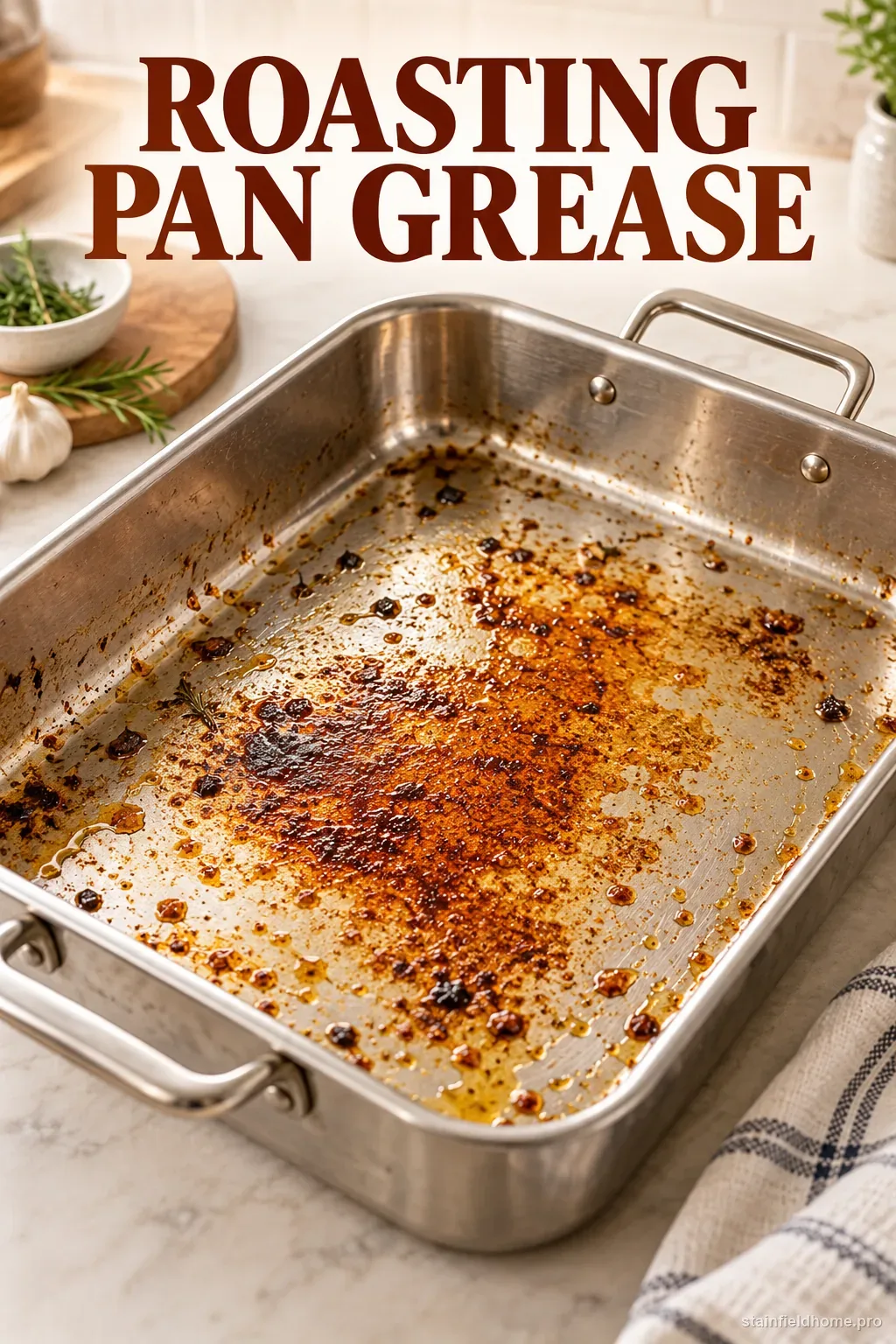
The quick answer
Let the pan cool completely, remove grease safely, and wipe away loose food. Check the maker's instructions. For stainless steel, start with warm soapy water and a brief soak, then lift residue with a soft scraper or sponge. For enamel or nonstick, use only approved soft tools and cleaner. Rinse and dry. Stop if a coating is damaged or unknown; avoid oven cleaner or metal wool unless approved.
What you’ll need
- Dishwashing liquid
- Warm water
- Paper towels or a grease-safe container
- Wooden or silicone scraper
- Soft nonabrasive sponge
- Clean towel
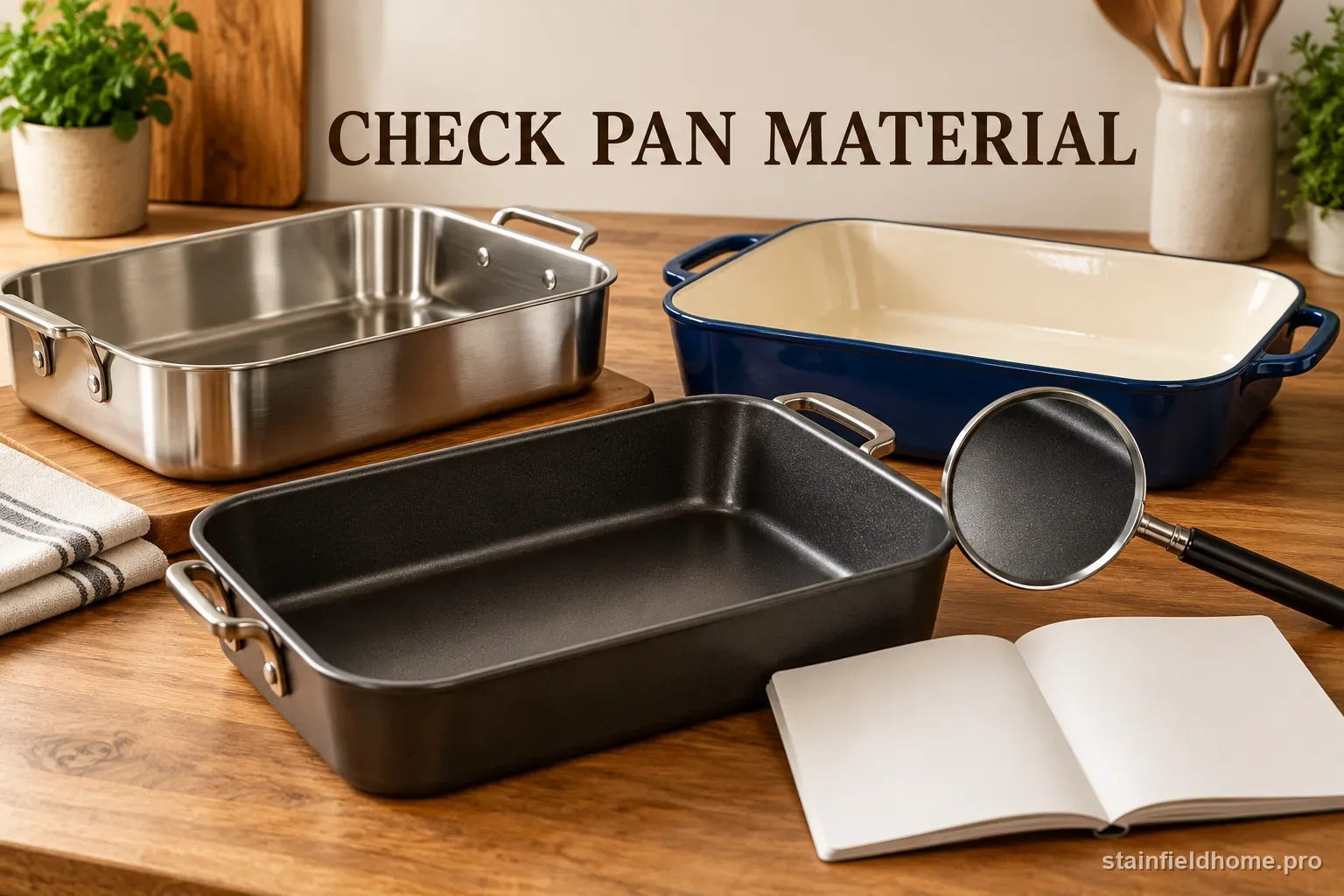
Identify the pan material before cleaning
Baked-on grease can be a thin oily film, a sticky amber layer, or dark polymerized drippings bonded to the cooking surface. A pan may also have browned food stuck to it, which needs softening before it can be lifted. These marks look similar, but the right cleaning pressure and product depend on what the pan is made of.
Check the packaging, model number, care booklet, or manufacturer's website before treating a valuable or coated pan. Roasting pans may be stainless steel, aluminum, hard-anodized aluminum, nonstick, enamel-coated steel, enameled cast iron, or a combination with a nonstick rack. The handles, rack, and cooking surface may each have different instructions. If you cannot identify the surface, stick to cool-down, grease removal, warm water, dish soap, and a soft cloth while you contact the maker.
This guide begins with a low-risk first pass and then branches by surface. Made In's roasting-pan guide applies its detailed cleaning sequence to stainless steel. Le Creuset's care instructions apply to its enameled cast iron. Neither should be treated as permission to use the same cleaner or scrubber on every pan. Follow your own pan maker's directions wherever they differ.
Let the pan cool and remove excess grease safely
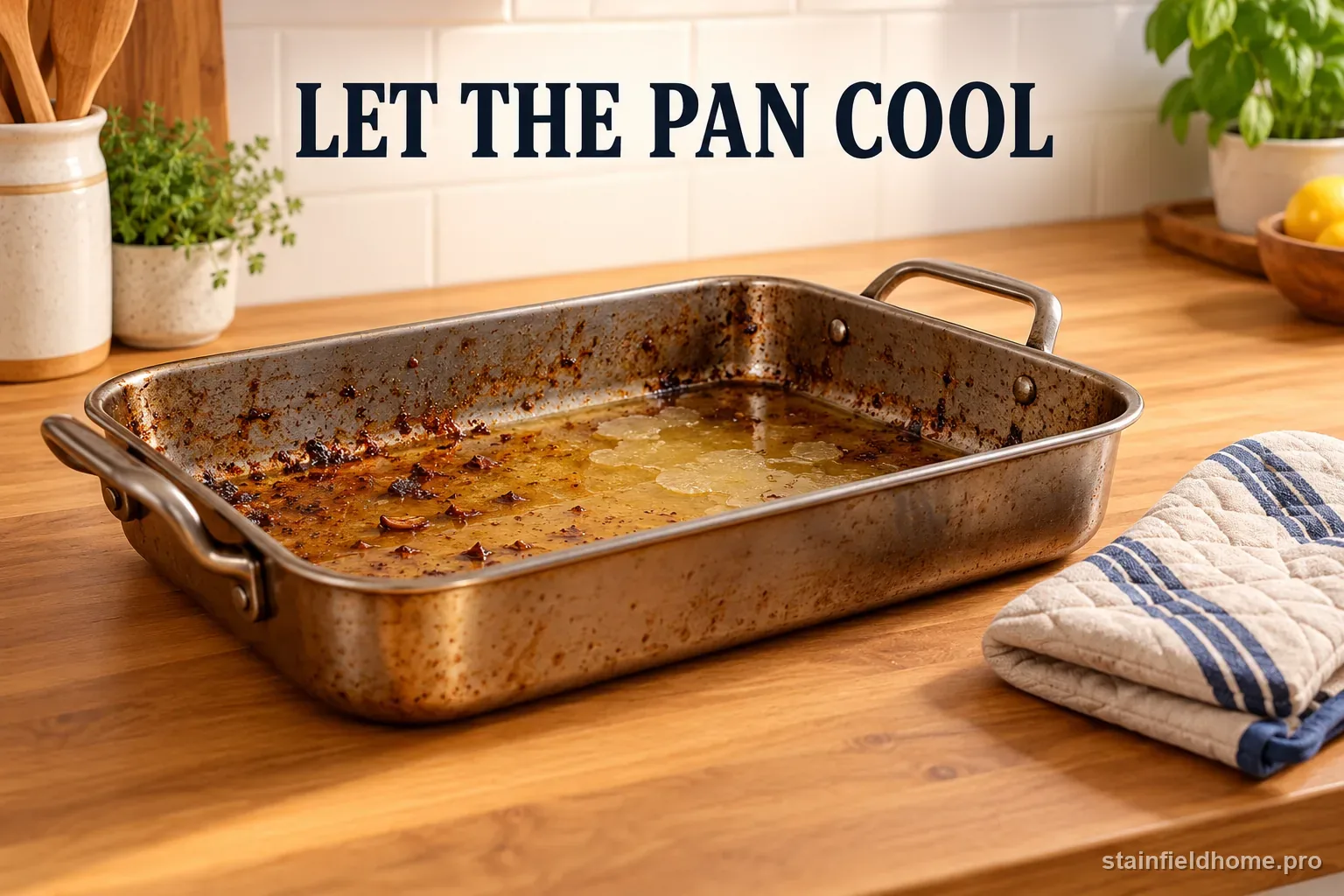
Hot grease can cause severe burns, and cold water in a hot pan can cause a damaging temperature shock. Start with the pan fully cool. If grease is still liquid, keep the pan level while moving it and use oven mitts if there is any remaining warmth. Avoid wiping with a cloth you plan to reuse for dishes until grease has been removed from it.
- 01
Set the pan on a stable, heat-safe surface and let it cool to room temperature. Do not put a hot pan in cold water; a sudden temperature change can warp metal or damage enamel.
- 02
If there is a pool of liquid fat, wait until it cools enough to handle safely, then transfer it to a designated container. If it has solidified, lift it with a scraper. Do not pour hot grease down the drain, where it can cool and block plumbing.
- 03
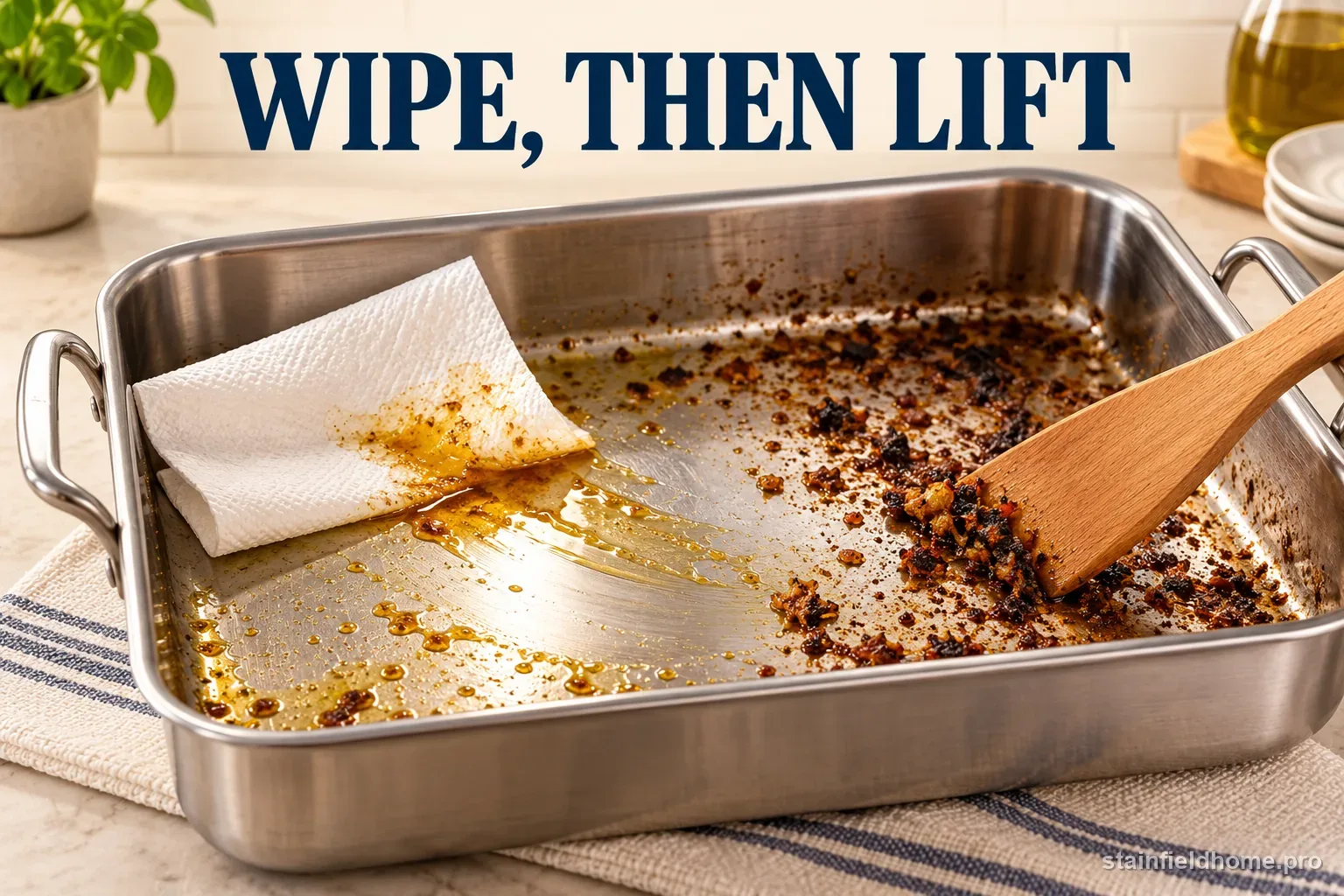
Wipe loose oil from the pan with paper towel and discard it in the trash. Remove large food pieces with a wooden or silicone utensil that will not gouge the surface.
- 04
Separate removable racks and handles only if the design allows it, then check their care instructions too. Do not force a rack that is stuck by baked-on residue.
Use a warm soapy soak as the first cleaning pass
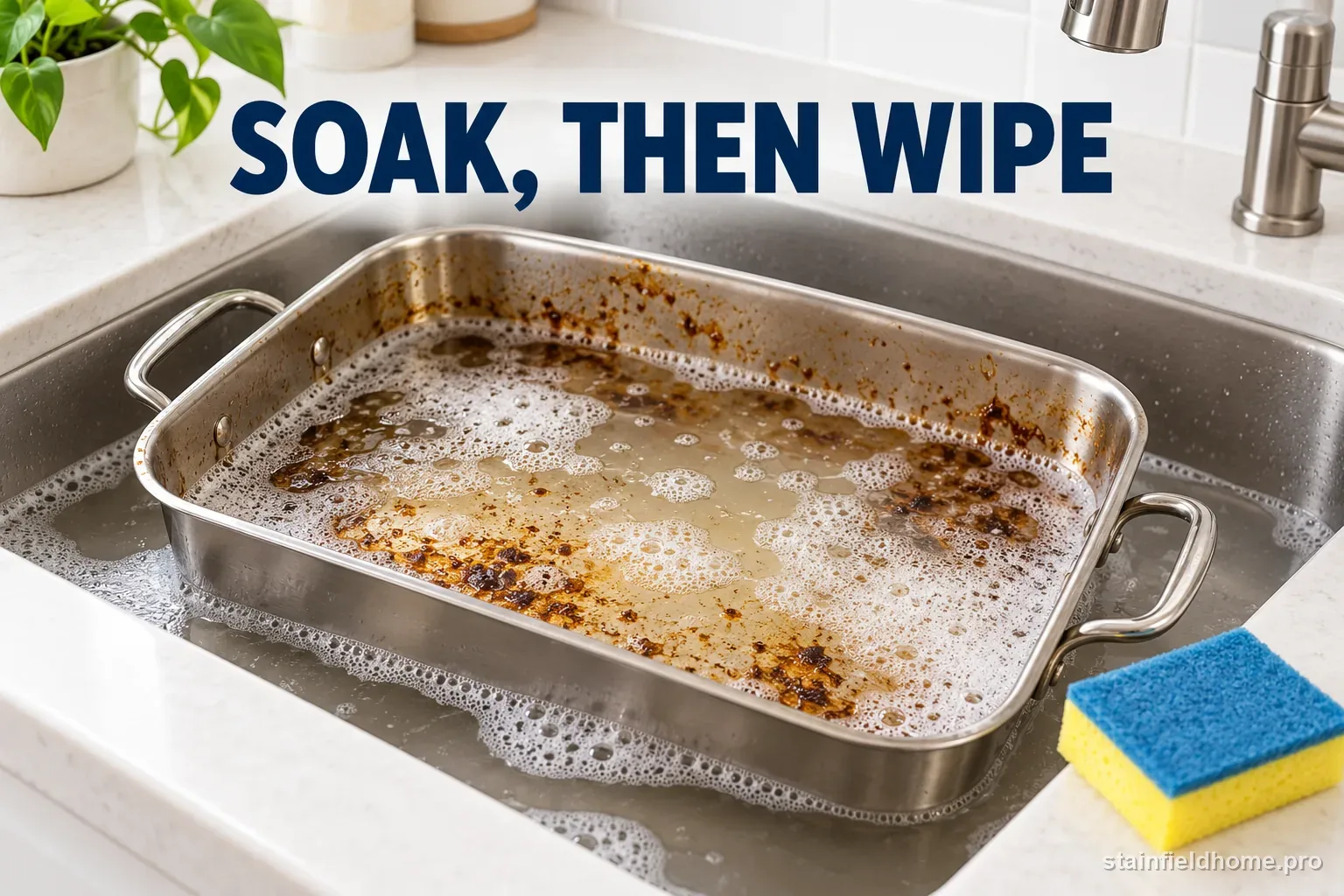
For an uncoated stainless-steel pan whose maker permits hand washing, fill the cool pan with warm water and a small amount of dish soap. Let it sit for a few minutes, then try lifting softened bits with a wooden or silicone scraper. Made In recommends this short soak for its stainless roasting pan before using a compatible stainless cleaner. A brief soak is a sensible first pass; hours of standing water are unnecessary unless the pan maker says otherwise.
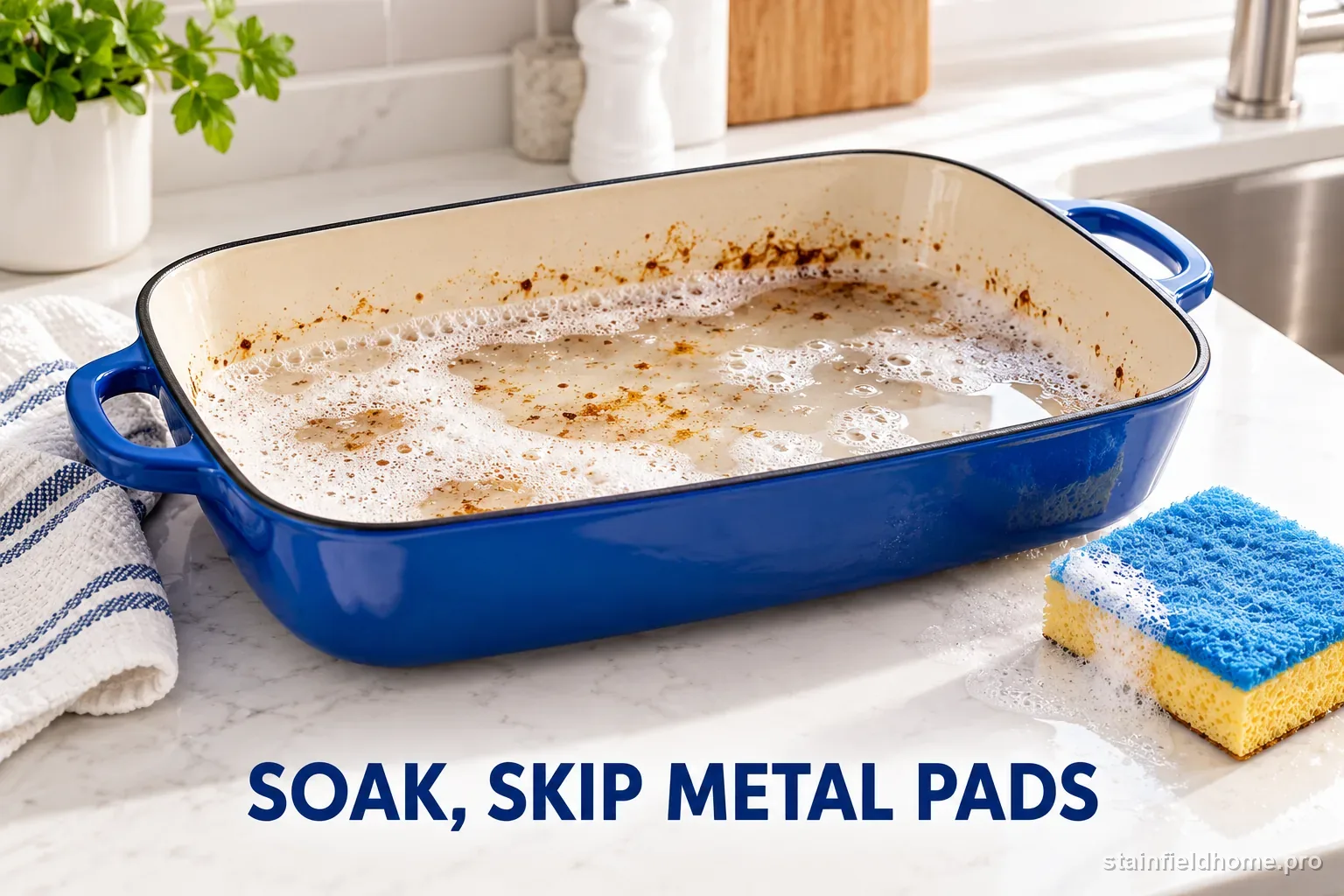
For enameled cast iron, Le Creuset says to let the product cool first, then wash with warm soapy water and a soft, nonabrasive sponge. Stubborn residue can soften in a warm soapy soak. Avoid metal pads and harsh abrasives on enamel. Other enamel finishes may have different instructions, so check the exact pan maker's guidance.
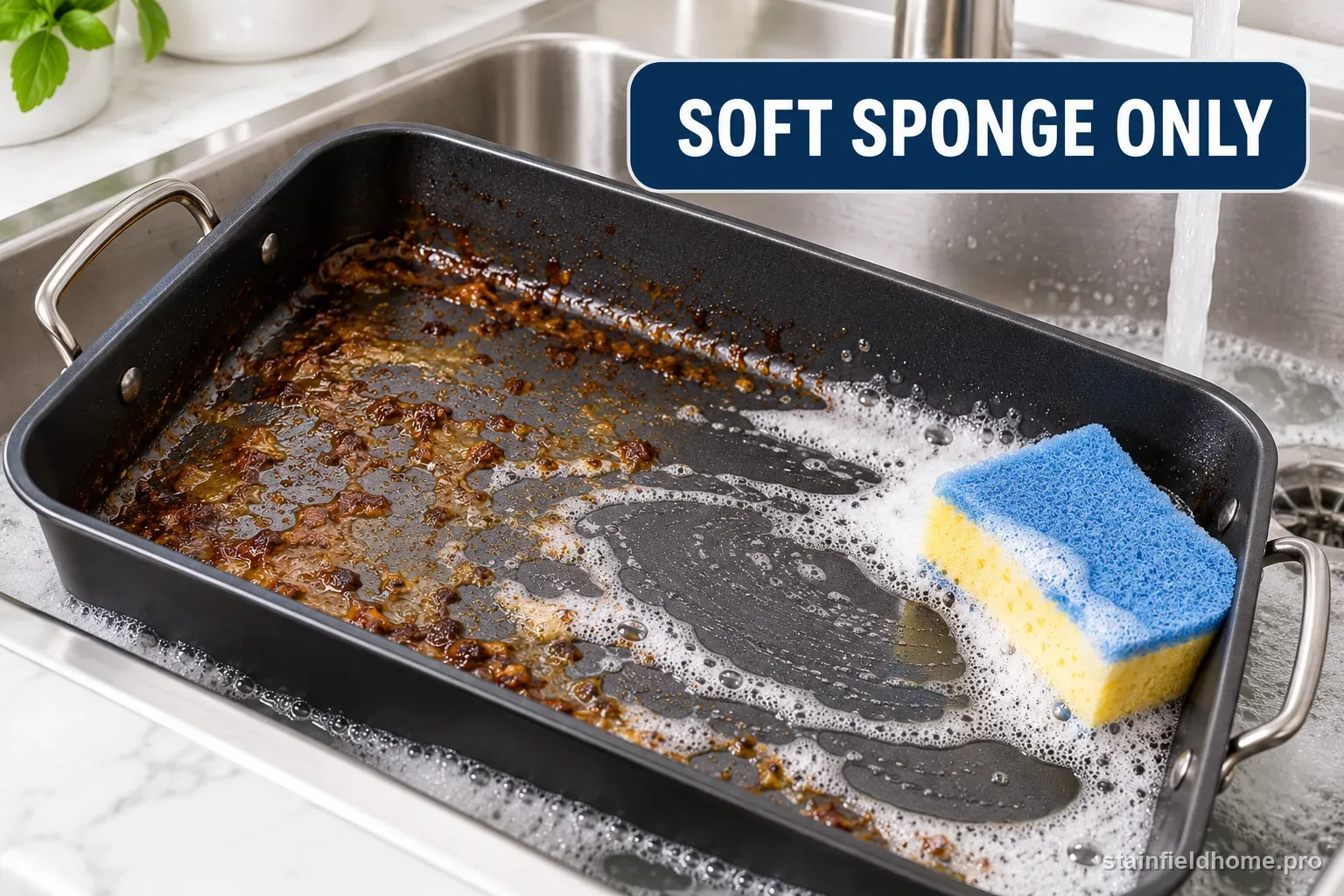
For a nonstick roasting pan or rack, use the product's directions. Calphalon's cookware-care guidance for nonstick calls for warm sudsy water and a nonabrasive sponge or soft-bristle brush. Never assume that stainless-steel powder, a metal pad, or a dishwasher is safe for a coated pan simply because the pan looks sturdy.
| Surface | Start here | Avoid unless the maker approves |
|---|---|---|
| Uncoated stainless steel | Warm soapy soak; soft sponge or wooden scraper | Steel wool, strong acids, prolonged boiling |
| Enameled cast iron | Cool fully, warm soapy water, soft sponge, soak | Metal pads, harsh abrasives, thermal shock |
| Nonstick or coated | Care-label wash, mild soap, soft nonabrasive sponge | Metal tools, powders, oven cleaner, scratchy pads |
| Aluminum or unknown | Maker's guide; mild soap and soft cloth first | Acids, alkalis, strong degreasers, aggressive scouring |
Lift softened grease without scratching or spreading it
A dark brown mark may be cooked-on oil rather than loose grease. A greasy wipe can remove the slick layer while leaving a brown shadow behind. That does not mean the first pass failed; it means the remaining material may need a cleaner chosen specifically for that surface. Do not scrub harder simply because the color remains.
If you are cleaning an uncoated stainless pan and its maker allows a stainless-steel cleanser, use that product exactly as directed. Made In recommends a compatible stainless cleaner after soaking and warns against overly abrasive scrubbers that can leave deep scratches. The cleaner's label matters: a product formulated for stainless steel is not a universal pan cleaner.
A dark stain can also be a harmless heat tint or a worn finish rather than removable grease. Compare the pan with a clean area and check whether the mark feels sticky or greasy after rinsing. If it is smooth and the manufacturer identifies it as discoloration, stop instead of repeatedly scouring the metal. A scratched or dull finish will not become new through stronger pressure, and a remaining shadow does not necessarily affect how an intact pan cooks.
- 01
After the first soak, pour off the soapy water and inspect the surface. If the brown film has softened, wipe it with a soft sponge in short strokes.
- 02
Use a wooden or silicone scraper to nudge stuck food from a compatible uncoated metal pan. Keep the edge low and work with the surface rather than digging at one spot.
- 03
Rinse the sponge often so that grease does not smear back across the pan. Replace the soapy water if it becomes heavily oily.
- 04
Stop if you see the pan's coating lifting, scratches appearing, or enamel chips showing. Do not keep testing a sharper tool on the damaged area.
Use different limits for stainless steel, enamel, and nonstick
Uncoated stainless steel is generally the most tolerant of a compatible nonabrasive cleanser, but brushed, polished, or clad surfaces can still scratch. Follow the grain when the manufacturer recommends a direction, use a soft sponge first, and reserve a labeled stainless cleaner for a persistent stain. Do not use steel wool just because a recipe says it will remove a black mark; metal fibers can scratch the finish and may leave residue.
Enameled cast iron has a hard glass-like surface that can chip if struck or shocked by sudden temperature changes. Le Creuset's instructions say to cool it to room temperature, soak stubborn residue in warm soapy water, use a soft nonabrasive sponge, and avoid metal cleaning pads and harsh abrasives. If the enamel is cracked or chipped, stop scraping and contact the manufacturer about care and safe use.
Nonstick coatings require the gentlest approach. Wash with the detergent and tool named by the maker; Calphalon's care guidance calls for warm soapy water and a nonabrasive sponge or soft brush. Do not apply oven cleaner, steel wool, a razor, or abrasive powder unless the pan's instructions explicitly allow it. If the coating is scratched, peeling, or blistered, stop trying to restore it and ask the manufacturer whether the pan should be replaced.
Aluminum and hard-anodized surfaces vary by finish and construction. Acids, alkalis, and aggressive cleaners can discolor or damage some aluminum cookware. Avoid vinegar, peroxide, oven cleaner, or a highly alkaline degreaser unless the exact product instructions approve it for that pan. With an unknown metal, a soft cloth, warm water, and mild detergent are the safer starting point.
Check after the first pass before escalating
Rinse away soap and inspect the surface under good light. Feel for a slick film with a clean fingertip only after the pan is cool. If the pan is clean but has a faint brown or rainbow-colored tint, do not assume it is still grease; stainless can show heat discoloration, while enamel or coating can show wear. The right response depends on the finish and the maker's care guide.
If residue remains on compatible stainless steel, repeat one brief warm soapy soak or use a stainless-specific cleaner according to its label. For enamel, repeat a warm soapy soak and a soft sponge. For nonstick, repeat mild soap and the maker-approved soft tool. Do not switch to a more aggressive recipe just because the first round did not make the pan look new.
Avoid stacking vinegar and baking soda, peroxide, bleach, ammonia, oven cleaner, and salt into a single improvised treatment. Household recipes often disagree about dwell time and scrubber type, and a method that works on plain steel may damage enamel or a nonstick layer. Use one compatible product at a time, rinse thoroughly, and stop when the surface changes or the grease no longer lifts.
Rinse, dry, and know when to stop
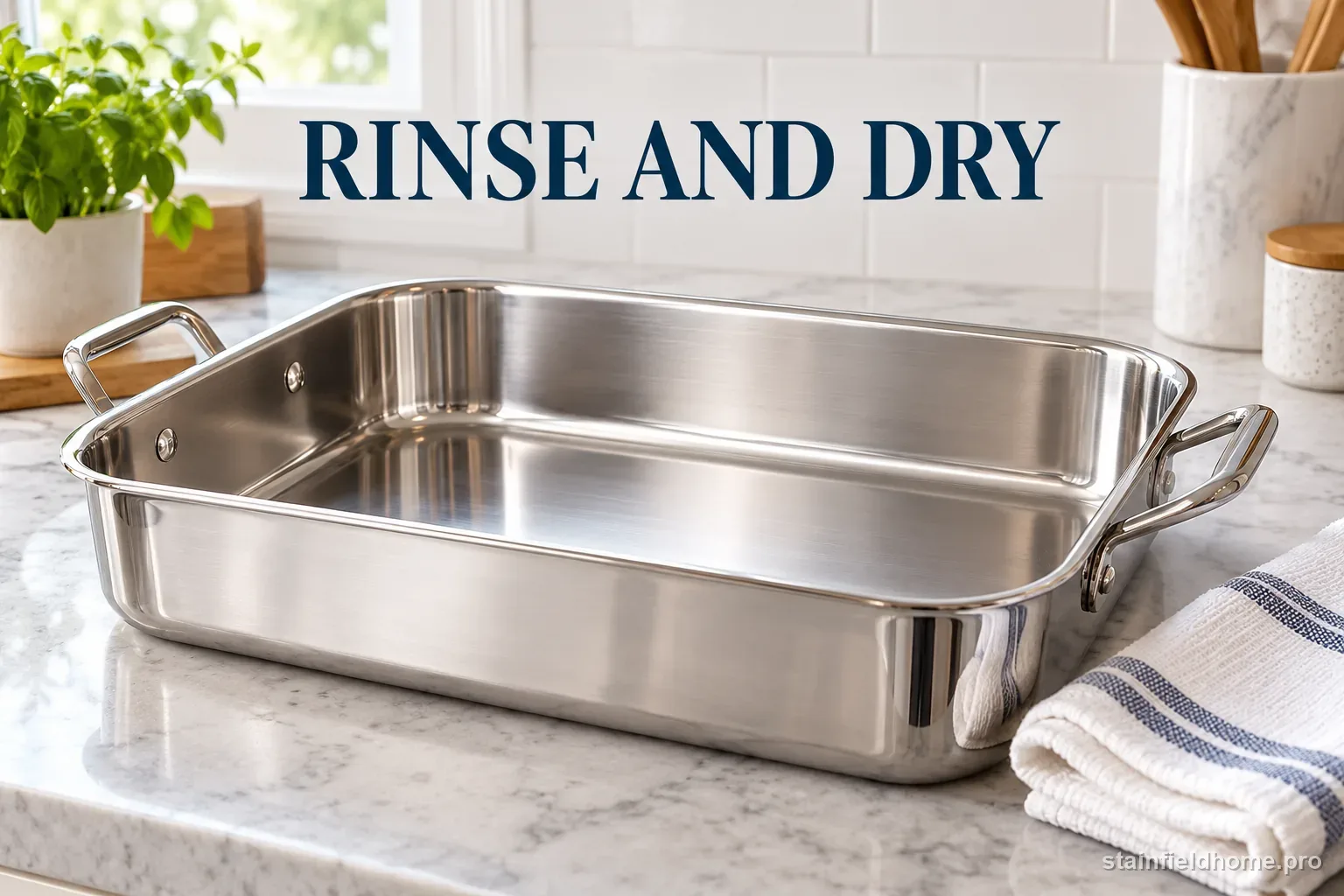
When the residue is removed, rinse the pan thoroughly so no detergent or cleaning powder remains. Dry it completely with a clean towel before storing it. Le Creuset specifically advises rinsing and drying its enameled cookware to prevent rust on exposed rims; Made In also recommends drying stainless steel to avoid water spots.
Stop and contact the cookware maker or a cookware-restoration professional if the pan is valuable or vintage, its surface is unknown, the coating is damaged, enamel has chipped, or a compatible first pass fails. Do not put a pan with flaking nonstick or chipped enamel back into food use until the maker advises what to do. A small stain is not worth sacrificing a sound surface or continuing to expose yourself to a strong cleaner.
If you used a packaged cleaner, follow its rinsing and disposal directions. Ventilate the kitchen, keep products in their original containers, and never mix cleaners. For a large amount of greasy wastewater, wipe up floating oil before draining so it does not coat the sink or pipe.
Prevent baked-on grease after the next roast
After cooking, let the pan cool safely, pour off usable drippings for gravy if desired, and wipe away excess fat before it hardens. If you want fond for pan sauce, deglaze the compatible stainless roasting pan while the drippings are still warm, following a cooking method that is safe for that pan and stovetop. Do not use a pan on a burner unless its maker says it is stovetop-safe.
Wash the pan soon after the meal instead of leaving grease to cure overnight. Use parchment or a compatible oven-safe liner only when it fits the recipe; Made In notes that a liner can prevent fond from forming when you plan to make gravy. Store pans dry and protect coated or polished surfaces from scratches when stacking them. A quick, material-safe wash prevents the slow build-up that makes holiday pans difficult to clean.
Common questions
FAQ
What dissolves baked-on grease from a roasting pan?
For a compatible pan, warm water and dish soap can soften residue during a brief soak. Then use the soft tool and cleaner approved for that surface. There is no universal solvent that is safe for stainless steel, enamel, nonstick, and aluminum.
Can I use baking soda and vinegar on a roasting pan?
Only if the pan maker approves both ingredients for that material. The fizz is not a substitute for choosing a coating-safe cleaner, and the mixture can be a poor fit for some finishes.
Can I use steel wool on a roasting pan?
Avoid steel wool on enamel and nonstick, and do not use it on stainless unless the maker explicitly permits it. It can scratch or damage a finish; start with a soft sponge and a soak.
How do I clean a nonstick roasting pan with baked-on grease?
Let it cool, follow its care guide, then wash with warm sudsy water and a soft nonabrasive sponge if the maker allows. Skip oven cleaner, metal tools, and abrasive powders unless the product instructions say otherwise.
When should I stop cleaning a roasting pan?
Stop if the coating is peeling, enamel is chipped, the surface scratches, or you cannot identify the material. Contact the manufacturer or a cookware-restoration professional before using a stronger cleaner.
Sources reviewed
Keep reading
Related guides
Burnt-on food on Nonstick pan
How to Remove Burnt Food From a Nonstick Pan
Loosen burnt food from a nonstick pan with soaking and gentle cleaning; skip steel wool, knives and abrasives that can damage its coating.
Set-in grease on Washable clothing
Set-In Grease Stains After Washing: How to Remove Them
Remove set-in grease from clothes after washing or drying with repeatable surfactant steps for washable cotton and polyester blends.
Cooking grease on Velvet upholstery
How to Remove Cooking Grease From Velvet Upholstery
Treat cooking grease on velvet without flattening its nap or soaking the cushion; check the furniture cleaning code before using a product.
Grease splatter on Ceramic tile backsplash
How to Remove Grease Splatter From a Ceramic Tile Backsplash
Cut cooking grease from glazed tile without scratching the surface, spreading oil into grout or leaving a detergent film behind.