The quick answer
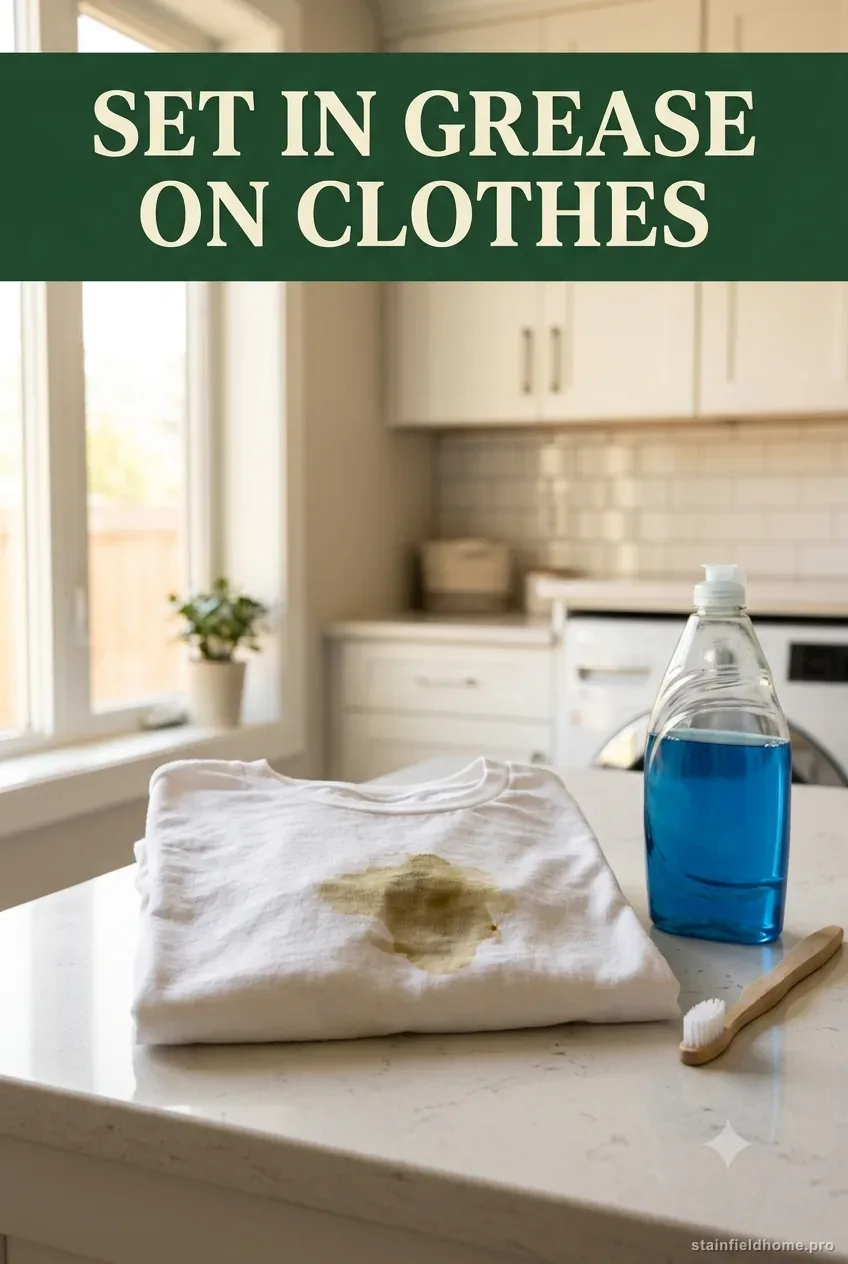
Lay the dry garment on a towel and work grease-cutting liquid dish soap, or a heavy-duty liquid laundry detergent, into the mark with your fingers or a soft toothbrush. Let it sit 10 to 15 minutes, then flush from the back with the hottest water the care label allows. Reapply if a shadow remains, wash on the warmest safe setting, and air-dry. Check in daylight before the garment goes near the dryer again, because any leftover oil bakes in a little more with each heat cycle.
What you’ll need
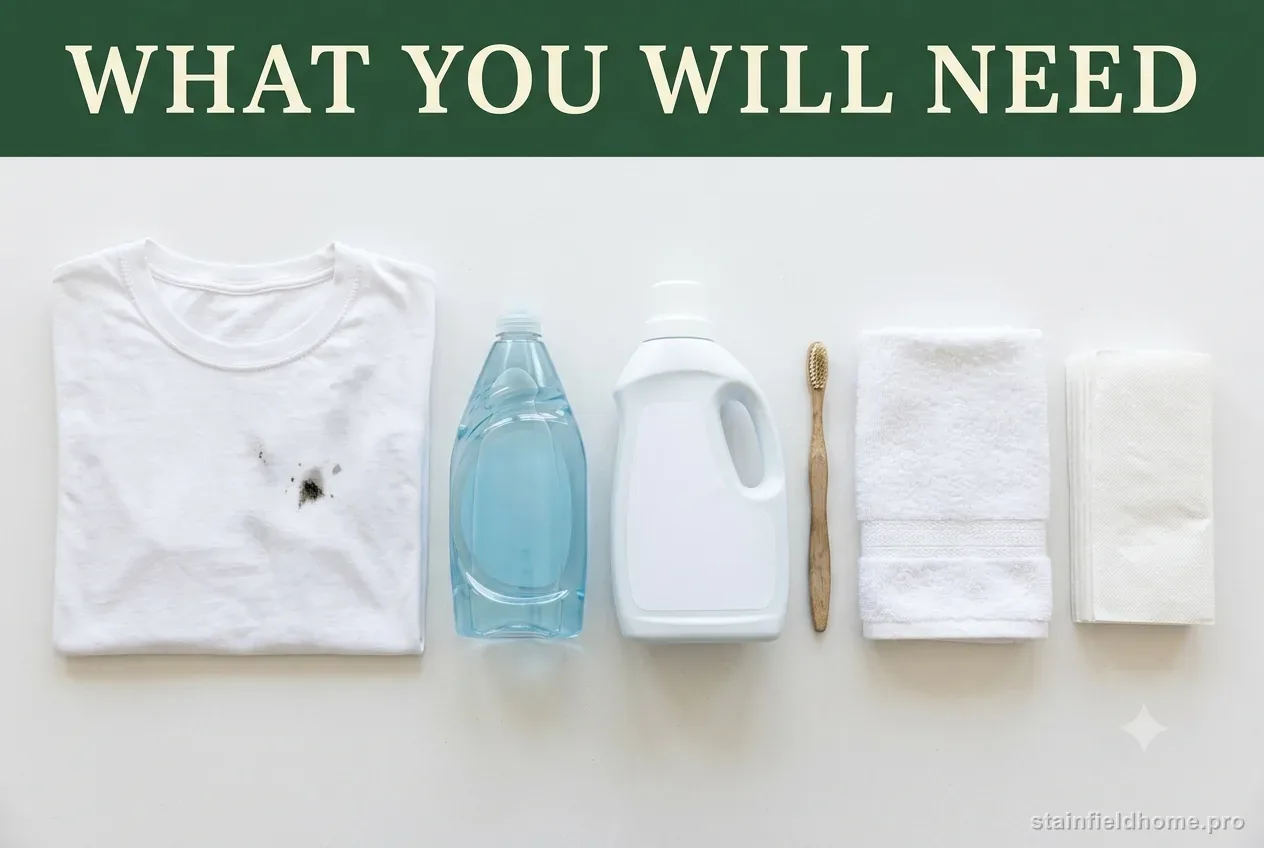
- Liquid dish soap that says it cuts grease, or a heavy-duty liquid laundry detergent
- Soft old toothbrush, or just your fingers
- Clean white towel or rag to work on
- Warm to hot water, within the care-label limit
- Oxygen bleach labeled safe for the fabric, for a lingering shadow
- Dry-cleaning solvent for a stubborn old mark on sturdy fabric (optional)
- White paper towels
Why a washed-and-dried grease stain is still there
Grease and cooking oil do not dissolve in water. A normal wash pushes the oil around the fibers instead of carrying it away, and the dryer then heats what is left until it oxidizes and bonds more tightly to the cloth. That is why an oil spot you thought was gone reappears as a dull, slightly darker patch—often looking a little translucent when you hold the fabric to the light—after the load comes out of the dryer.
The fix is not a harder scrub. It is a surfactant made to lift oil, enough dwell time for it to surround the grease, and warm water to carry the loosened oil out. The University of Illinois Extension's stain guide is blunt about timing: once a greasy stain has been laundered and dried it is “almost impossible to remove.” Almost is not the same as impossible, so two or three careful attempts are worth making before you give up on a garment.
Check the fabric before you start
This method is for washable cotton, linen, polyester, and cotton-poly blends—the fibers most work clothes, T-shirts, and kitchen aprons are made from. Do not use it on silk, wool, acetate, rayon marked dry-clean-only, or anything with a circled “P” or “F” on the care tag; those need a solvent process a home laundry cannot do safely.
Read the care label for the top water temperature the garment allows. Grease releases far better in warm or hot water, but a shirt rated for cold will shrink or distort if you ignore that. Work within the limit you are given, and lean on longer dwell times instead of hotter water when the label is restrictive. If the item is dark or brightly dyed, plan to test any bleach step on an inside seam first.
The core method for a set-in grease mark
- 01
Work on a dry garment. Wetting it first would only spread the oil. Slide a clean white towel between the front and back layers so the treatment cannot wick through.
- 02
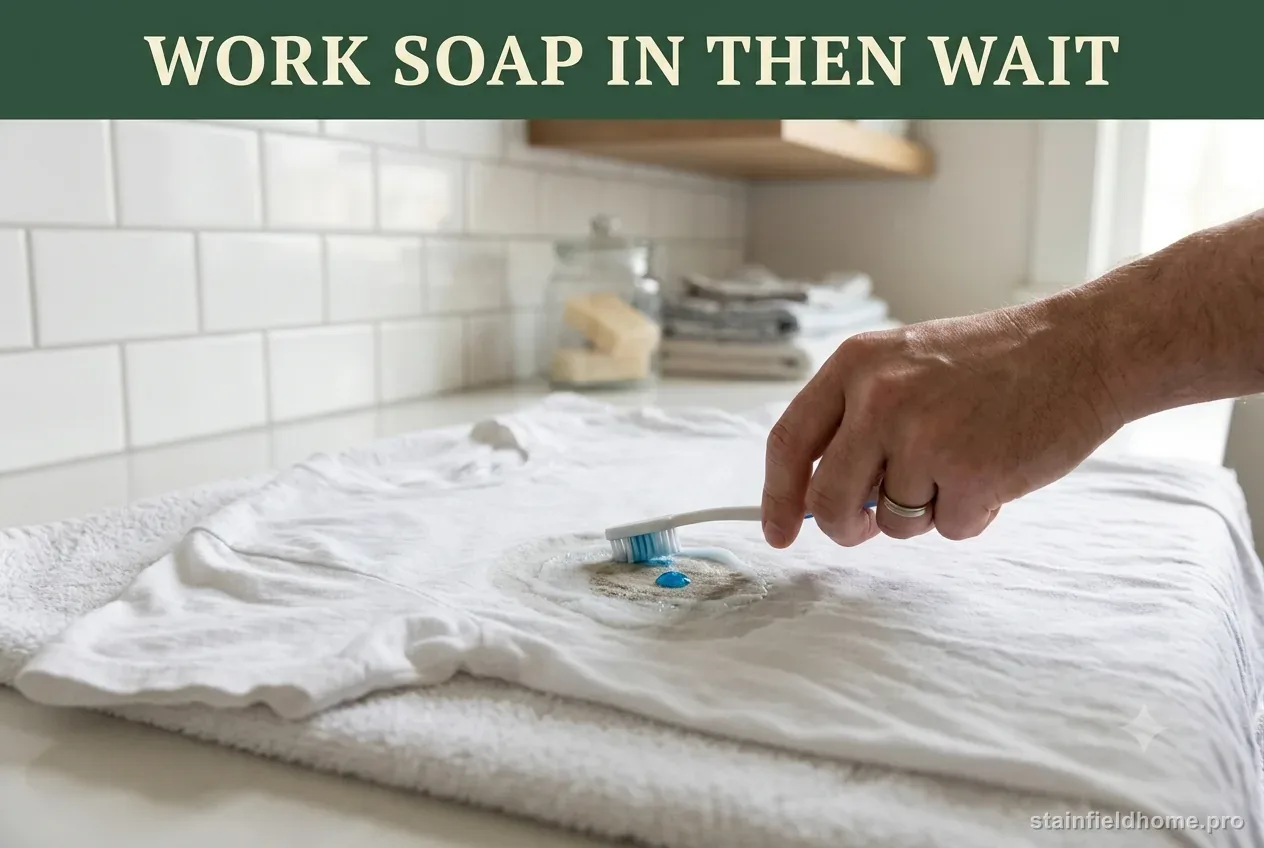
Put a small amount of grease-cutting dish soap or heavy-duty liquid detergent directly on the stain: a drop or two for a spot the size of a coin, about a teaspoon for a hand-sized patch.
- 03
Work it in with your fingertips or a soft toothbrush in small circles until the fabric looks saturated and slightly darkened. Do not press hard enough to distort the weave.
- 04
Let it sit 10 to 15 minutes so the surfactant can surround the oil. On an old mark, 30 minutes is fine; just add a few drops of water if it starts to dry out.
- 05
Flush from the back of the fabric with the hottest water the care label allows, so the flow pushes oil back out the way it went in rather than deeper into the cloth.
- 06
Look at the spot in bright light while it is still wet. If a shadow is still visible, repeat the soap-and-dwell step once or twice before moving on.
- 07
Wash the garment by itself or in a small load, on the warmest setting the label permits, with your normal detergent.
- 08
Air-dry it on a rack or line and inspect again in daylight. Only return it to the dryer once the mark is truly gone.
If a faint shadow remains after washing
A grease stain often leaves a pale outline even after the oil itself is gone, especially on white or light fabric that has been through the dryer before. For a white or confirmed colorfast item whose label allows it, soak the garment in an oxygen-bleach solution at the package ratio for one to several hours, then wash again. Oxygen bleach is gentler than chlorine on fibers and dyes and is the sensible next step for colored clothes.
For a stubborn old mark on sturdy fabric such as a cotton work shirt or denim, the Illinois Extension method is to apply a dry-cleaning solvent to the back of the stain over a pad of white paper towels, let it dry, rinse, and then repeat the detergent step. Work in a ventilated space, keep solvent away from any flame, and never put a solvent-treated garment in the dryer before it has been washed. Skip solvent entirely on anything you are unsure about.
Between attempts, rinse the fabric well. Do not stack dish soap, then bleach, then solvent on top of one another on wet cloth—stop, rinse, and begin the next method on a clean surface.
Adjust for the fabric and the type of oil
Cotton and linen tolerate warm water and repeated treatment well, which helps because they also hold onto oil. Polyester shrugs off a single grease spot more easily but is heat-sensitive: keep the water warm rather than scalding, and never iron a poly garment that still has a stain, because the iron will set it permanently. Cotton-poly blends fall in between; go by the more delicate of the two fibers.
The oil matters too. Butter, salad oil, and cooking-spray overspray are lighter and usually clear in one or two rounds. Motor oil, chain lube, and cooking grease that has cooked onto a work shirt are heavier and pigmented; expect three rounds plus an oxygen-bleach soak, and accept that a years-old mechanic's-shirt mark may only fade. Salad dressing and lipstick are combination stains—an oily carrier plus dye—so you treat the grease first, then handle any leftover color as a dye stain.
Corduroy, twill, and other textured weaves trap oil in the low points of the pile. Brush the treatment in along the direction of the wale, not across it, and give it extra dwell time.
What not to do with old grease
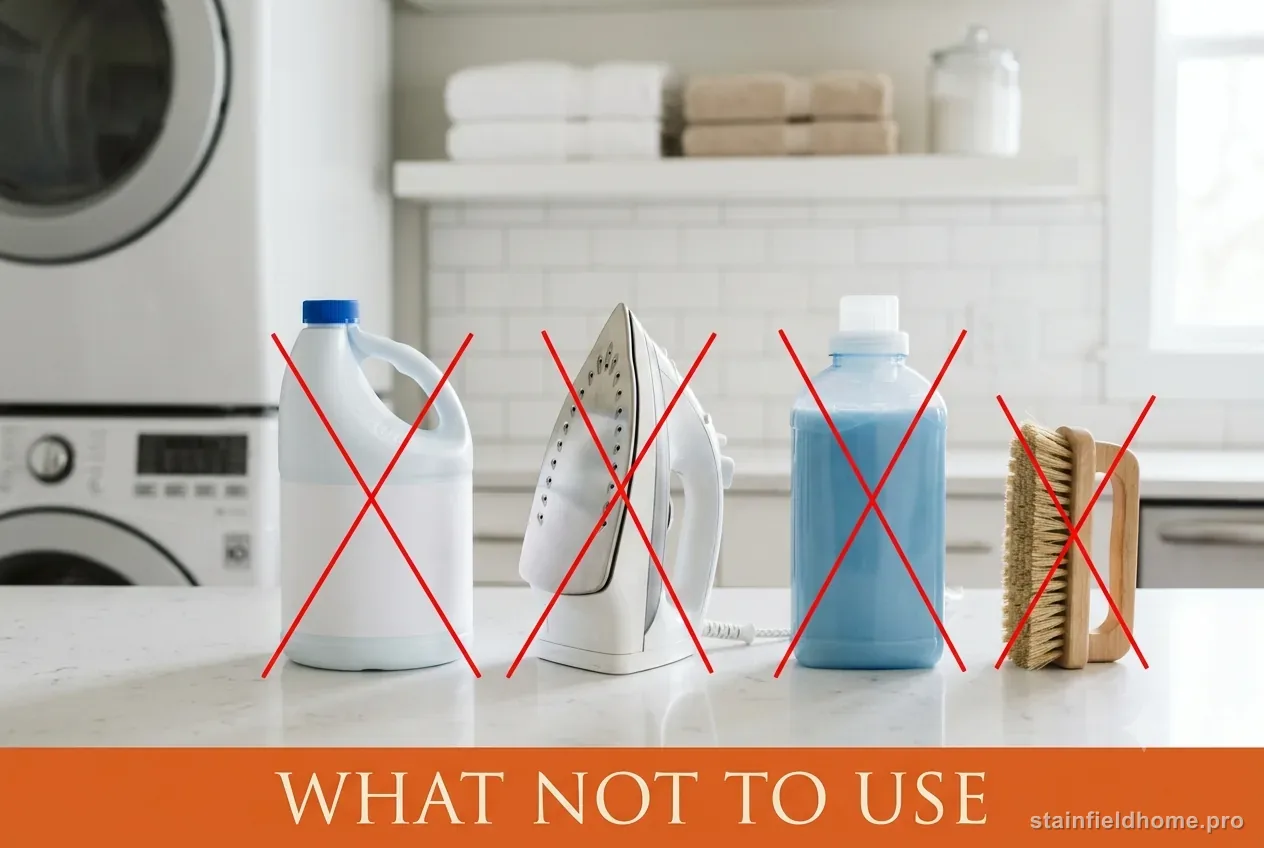
- The dryer, a hot iron, or hot storage such as a summer car trunk before the stain is fully gone—heat sets grease with every exposure
- Bar soap or hand soap, which can leave their own film and lock the stain in; use a liquid made to cut grease
- Wetting the fabric before you apply the surfactant, which spreads the oil outward
- Chlorine bleach as a first move—it does nothing to the oil itself and can react with residues and weaken fibers
- Scrubbing hard with a stiff brush, which frays the weave without releasing more oil
- Layering dish soap, bleach, and solvent on the fabric at once instead of rinsing between steps
Keep the next spill from setting
The most useful habit is to check every garment in good light before it goes in the dryer, and to treat any grease spot right away—a dab of dish soap worked in and left until laundry day does most of the work for you. Keep a small bottle of grease-cutting dish soap or a stick pretreater where you sort laundry.
An apron at the stove and the grill genuinely prevents most of these stains. For work clothes that get oily every day, pretreating the whole shirt front with heavy-duty detergent before each wash keeps buildup from becoming permanent.
Common questions
FAQ
Can I still save a grease stain that has been through the dryer several times?
Sometimes. Each heat cycle bonds more of the oil to the fiber, so a spot dried repeatedly may only lighten. Give it two or three rounds of grease-cutting soap with a 15 to 30 minute dwell, then an oxygen-bleach soak if the fabric allows. If nothing changes after that, it is likely permanent.
Dish soap or laundry detergent for set-in grease?
Both work if they are built to cut oil. Liquid dish soap is a strong degreaser and easy to apply to a spot. Heavy-duty liquid laundry detergent is formulated for a full wash and is the better choice for treating a whole oily shirt front. Avoid bar soap and gentle “free and clear” liquids for this job.
Why does the stain look like fresh grease again only after drying?
The oil was still in the fibers after washing; water alone cannot remove it. Drying heat darkens and oxidizes that leftover oil so it becomes visible again. It means the degreasing step needs repeating before the garment sees heat, not that the stain came back.
Sources reviewed
Keep reading
Related guides
Printer toner on Washable clothing
How to Remove Printer Toner From Clothes
Remove loose printer toner from clothing with dry handling and cold water before heat melts the resin powder into the fibers.

Halloween face paint on Washable clothing
How to Remove Halloween Face Paint From Clothes
Remove Halloween face paint by identifying water- versus oil-based makeup first, then pretreating without heat-setting pigment.
Slime on Carpet
How to Remove Slime From Carpet Without Damaging the Fibers
Lift dried or fresh slime out of carpet fibers with an ice-and-scrape method plus a vinegar or rubbing alcohol rinse, without soaking the backing or bleaching the color.
Essential oil and reed-diffuser oil on Finished wood furniture
How to Remove Essential Oil and Diffuser Stains From Wood Furniture
Blot a diffuser-oil spill on finished wood, use a cautious absorbent step, and recognize when the finish needs a furniture repair professional.